
On the Ummahat Islands in the Red Sea, a Marriott group property has just earned a label designed in 2026 for large resort destinations. It rewards nothing that can be seen, but what one chooses to switch off.
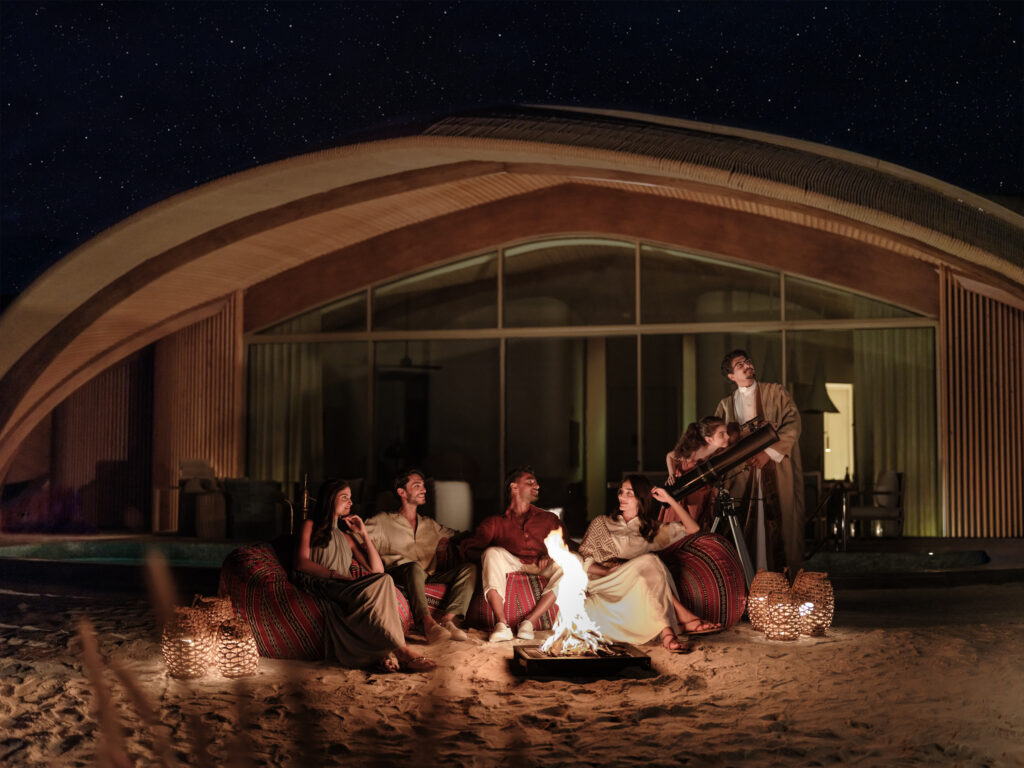
Nujuma means “stars” in Arabic. Since opening on the Ummahat Islands, at the heart of Saudi Arabia’s Red Sea coast, the Marriott group property has built its identity around this nocturnal promise. It has just obtained DarkSky Approved Resort certification, awarded by DarkSky International in collaboration with Red Sea Global, the destination’s developer.
The label, launched in 2023 under the name DarkSky Approved Lodging, was reworked this year to meet the operational constraints of large resort destinations, a format distinct from the one devised for smaller properties. It assesses lighting design, environmental management and operating practices against international criteria for protecting the night sky.
What darkness protects
The approach goes beyond guests’ visual comfort. Natural darkness governs the behaviour, movements and survival of the archipelago’s nocturnal species. The sea turtles that come here to lay their eggs head towards the natural brightness of the horizon when they hatch, an instinct that artificial light can disrupt. Reducing unnecessary lighting therefore means preserving a documented biological cycle, as well as an atmosphere.
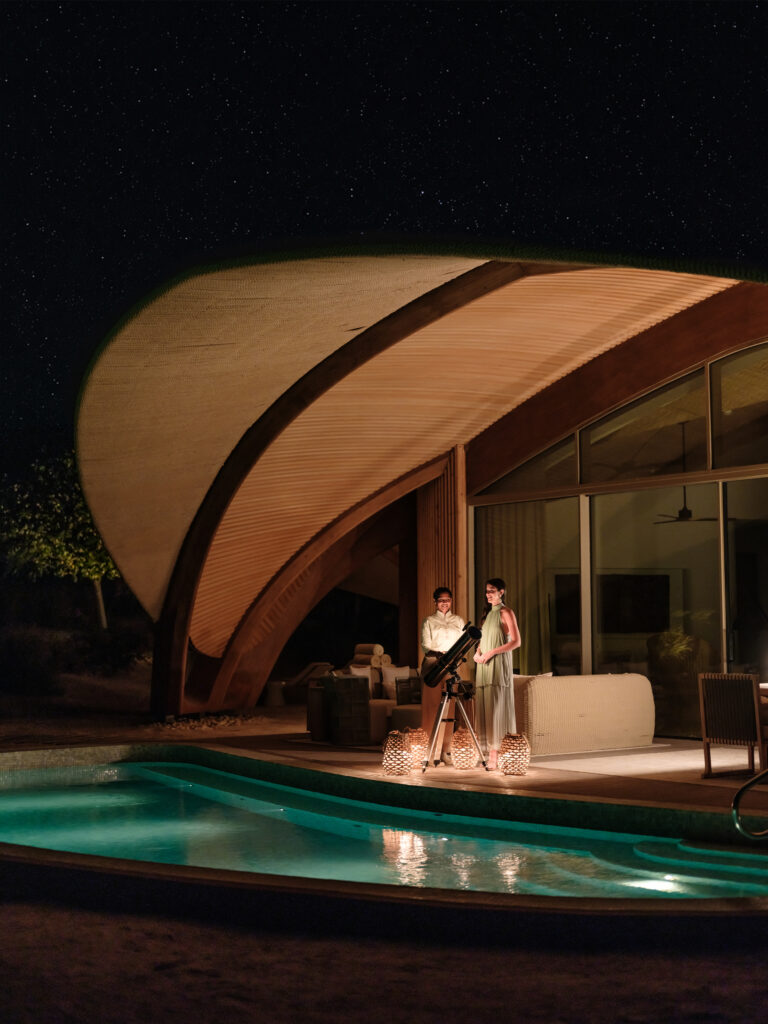
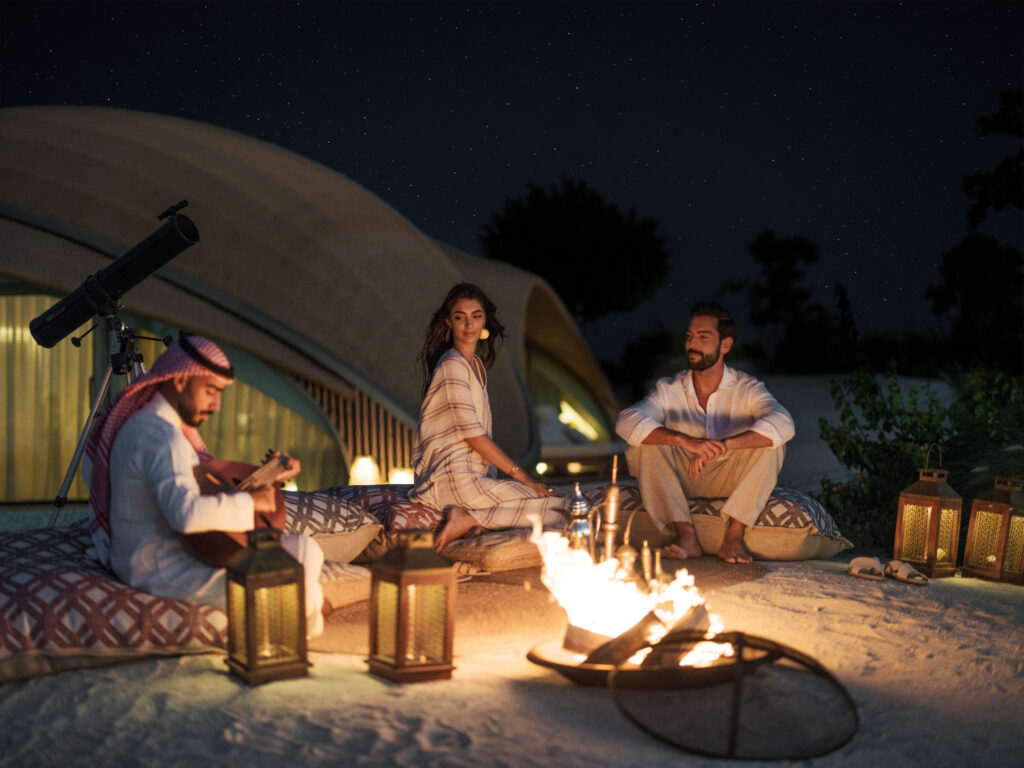
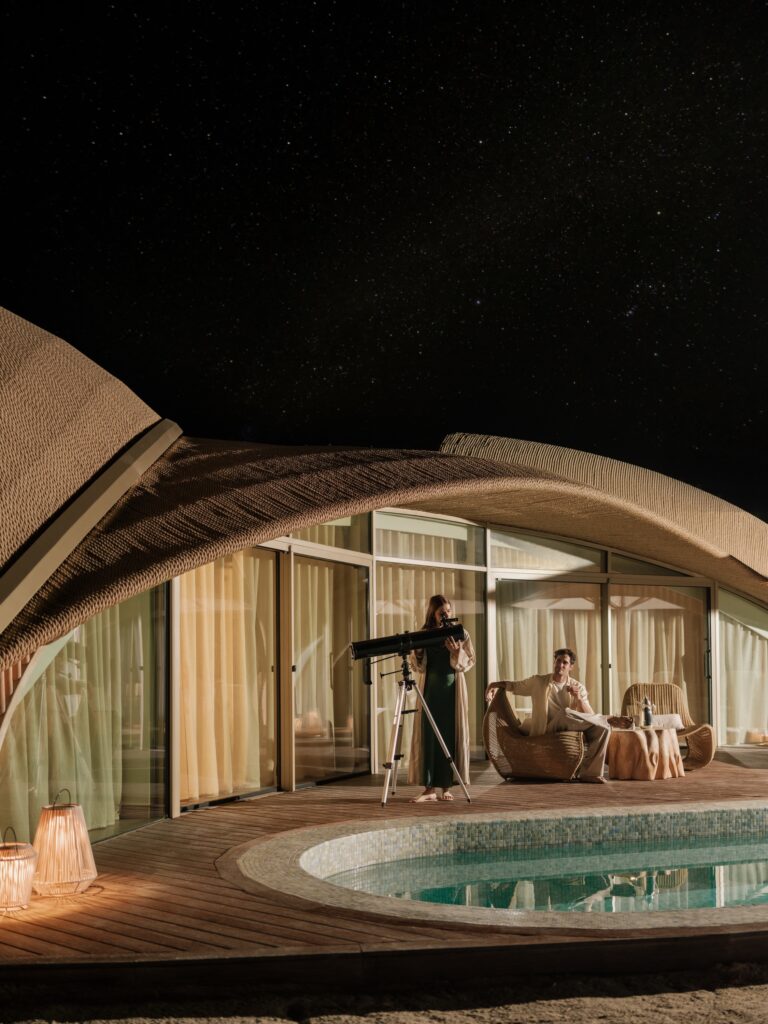
The property has sixty-five beach villas and overwater villas on stilts, each with a private pool, designed using local materials and inspired by the curves of seashells. Four restaurants and the Neyrah spa round out an offering designed to connect guests with nature’s rhythms, including stargazing: guided sessions allow guests to follow the constellations from the shore once the last daylight has faded over the Red Sea.
“The night sky is an integral part of the experience at Nujuma. It gives our guests the opportunity to pause, look beyond the everyday and connect with the landscape in a deeply personal way,” says Dennis Sorensen, Resort Manager of Nujuma, a Ritz-Carlton Reserve.
A standard designed for scale
For Ruskin Hartley, Chief Executive Officer of DarkSky International, the collaboration with Red Sea Global has enabled the development of lighting practices tailored to the specific needs of large resort destinations, while maintaining the organisation’s standards for protecting the night. Raed Albasset, Group Chief Environment and Sustainability Officer at Red Sea Global, places the initiative within a broader strategy: integrating responsible lighting into every stage of development, from design to operation, rather than treating it as a corrective measure applied afterwards.
“Nujuma means stars in Arabic, and the night sky has always been central to the resort’s identity,” notes Tony Coveney, Area General Manager for Marriott Luxury Group at The Red Sea. He sees it as a precedent for the entire destination, where hospitality and environmental responsibility cease to be treated as separate ambitions.
One part of a larger whole
Nujuma is the first Ritz-Carlton Reserve in the Middle East, a distinction the brand reserves for a limited number of properties worldwide. It is part of a group of three destinations developed by Red Sea Global on the Red Sea, alongside The Red Sea, which opened in 2023, and AMAALA, which welcomed its first guests this year. A third property, Thuwal Private Retreat, had already opened in 2024.
As travellers seek experiences shaped by nature rather than added to it, Nujuma’s certification raises a question that goes beyond Saudi tourism alone: whether tomorrow’s luxury will be measured by what it reveals, or by what it chooses to leave unlit.
Cette publication est également disponible en :


