
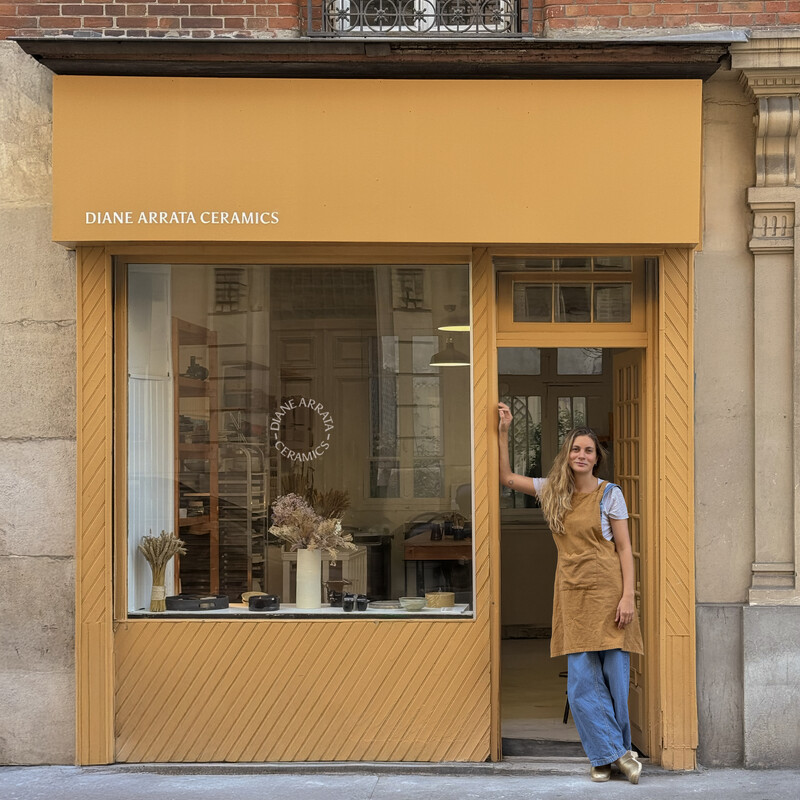
In the eighteenth arrondissement, an ochre-yellow shopfront houses Diane Arrata’s studio. There she throws stoneware extracted less than 200 kilometres from Paris and fires it twice, to make tableware intended for everyday meals.
A façade you spot from afar
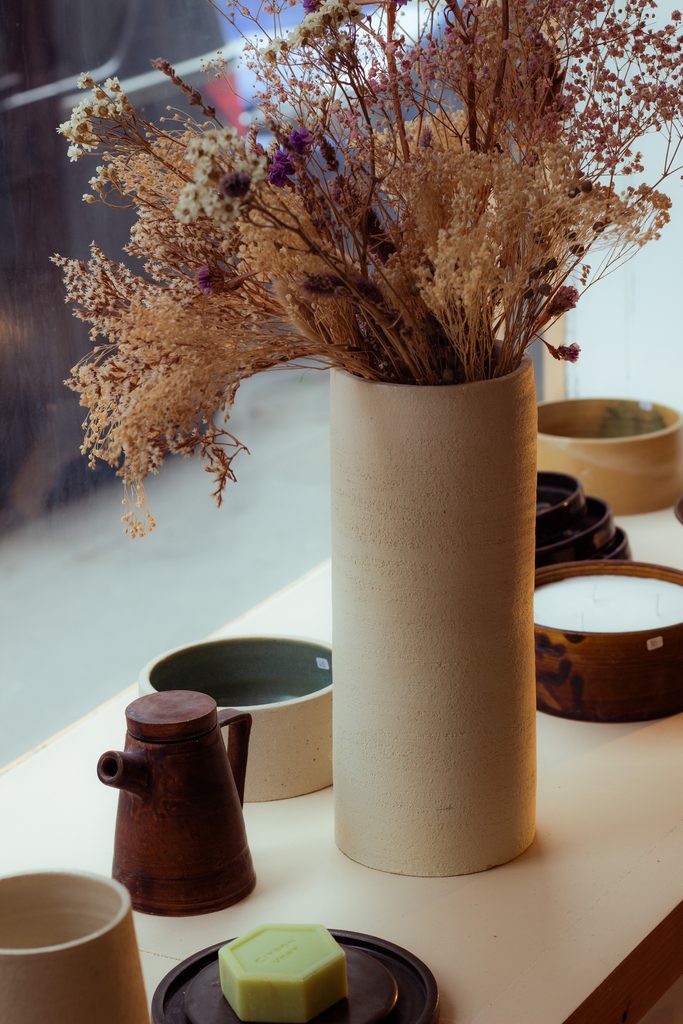
At 53 rue Eugène Carrière, the ochre yellow of the shopfront stands out against the brick and stone of the building. The studio’s name is written in small, fine letters. The window shows shelves, a dried bouquet in a vase, pieces set down there. You want to push the door open even before knowing what you will find.
From Saint-Amand-en-Puisaye stoneware to the table
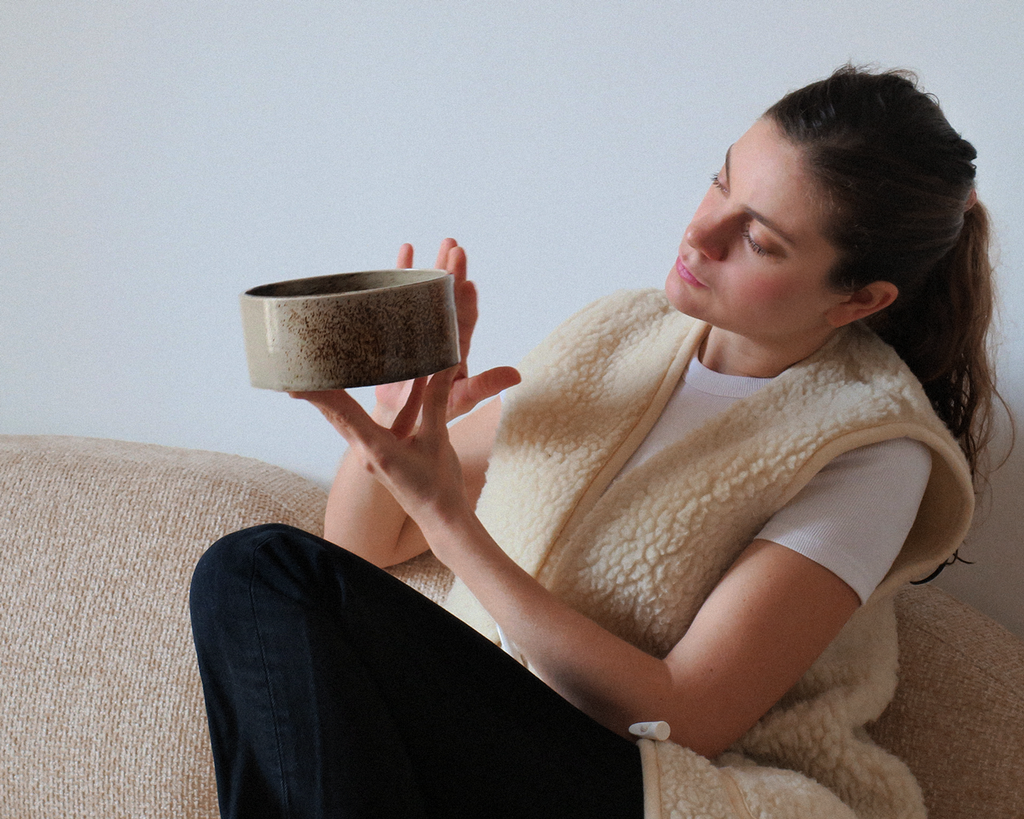
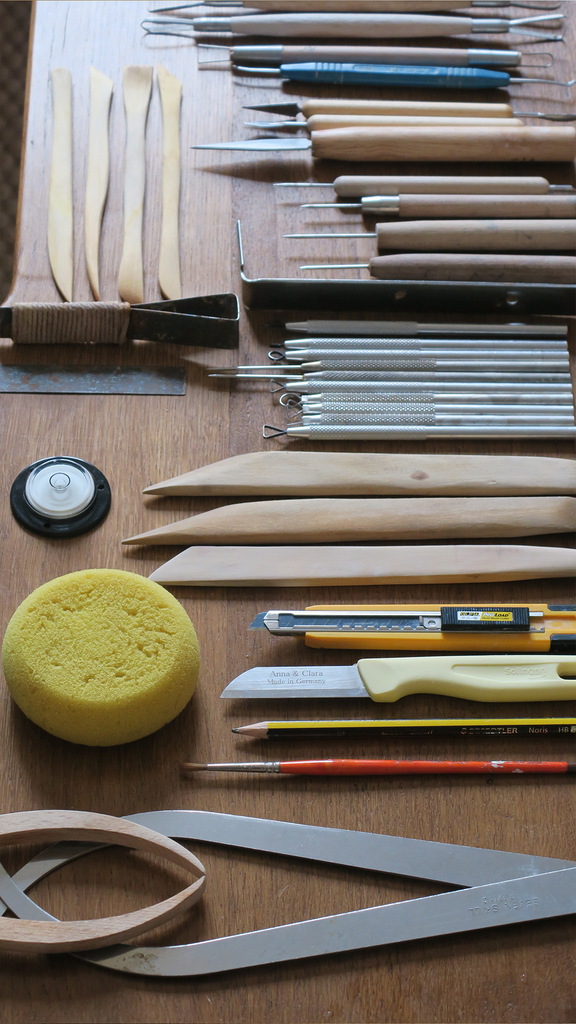
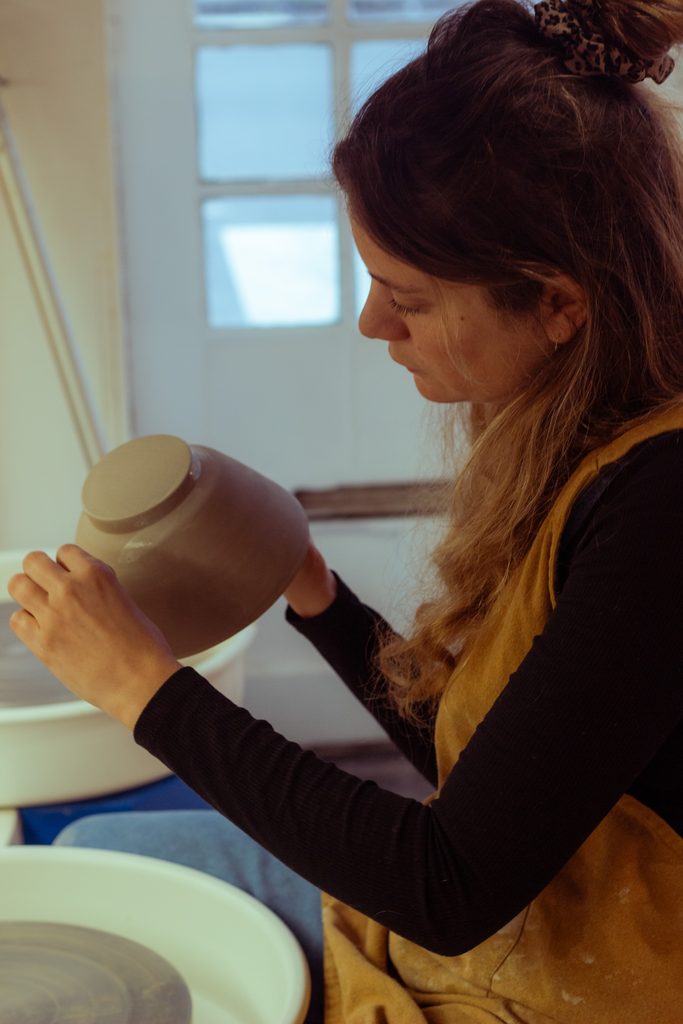
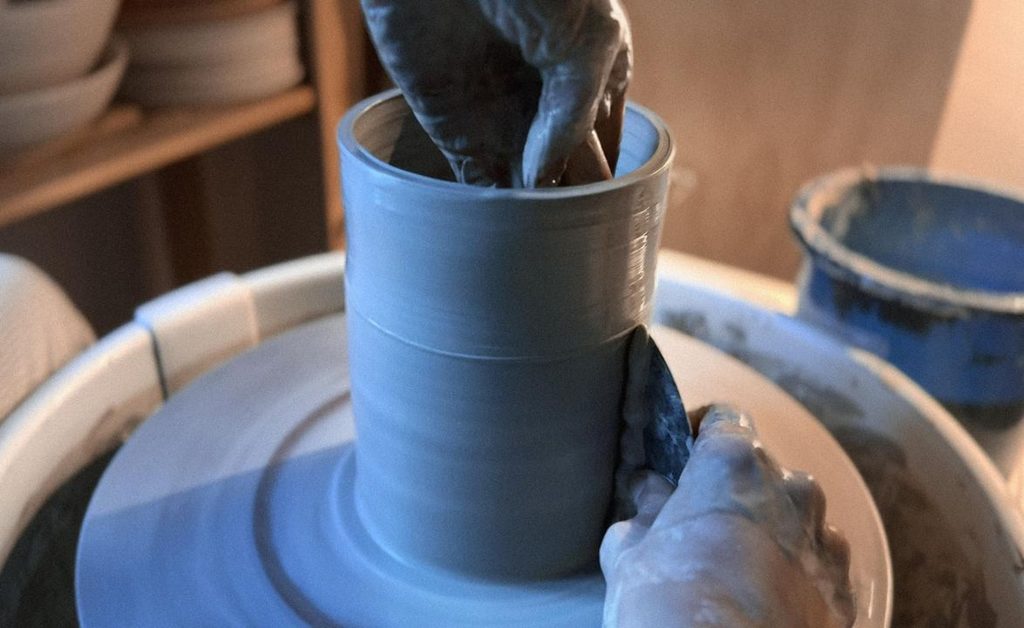
All of Diane Arrata’s pieces are in Saint-Amand-en-Puisaye stoneware. She shapes them on the wheel, one by one, and none has a twin. Among them, a wide dish with a raised rim whose glossy glaze catches the light, cylindrical tumblers without handles, to pair with chopsticks or a wooden spoon. Simple forms, designed to serve.
After throwing comes drying, which demands patience. First firing: 980 °C. The glaze is then applied to the clay, and the second firing rises to more than 1,200 °C. At least 220 degrees separate the two fires, and it is at this heat that the glaze melts onto the stoneware. The result is tableware that is raw and finely drawn, meant to be served as much as to be looked at.
Four shores and one long table
Before clay, Diane Arrata explored other artistic languages. She found in ceramics the one that suited her best. Her roots are Lebanese, Greek, Egyptian and Corsican: four shores of the same sea. The Mediterranean landscapes, shaped by sea, wind and time, return in supple forms and glazes that she keeps discreet. There are also the meals of her childhood, large, generous, sunlit gatherings where sharing held the household together.
“Ceramics is for me a language that is both intimate and universal.” She imagines her creations as “everyday companions”, which invite “sharing and the simple pleasure of gathering around a table”. The word seems modest for an object that has passed through two fires. Yet it states the use: a dish is passed around, a tumbler is held in both hands.
People come here for a plate, a candle holder, a cup whose clay they will be able to place, and how many fires it has passed through.
Diane Arrata Ceramics
53 rue Eugène Carrière, 75018 Paris
dianearrata.com
Also on Luxsure: Keramos: when the table rereads Antiquity at the Louvre · Buccellati, Pierre Lacroix and the table as a seascape · Louis XIII and J.L Coquet: the mineral extension of ritual · Buccellati sublimates the art of the table: between heritage, Murano glass and inspirations…
Cette publication est également disponible en :


