
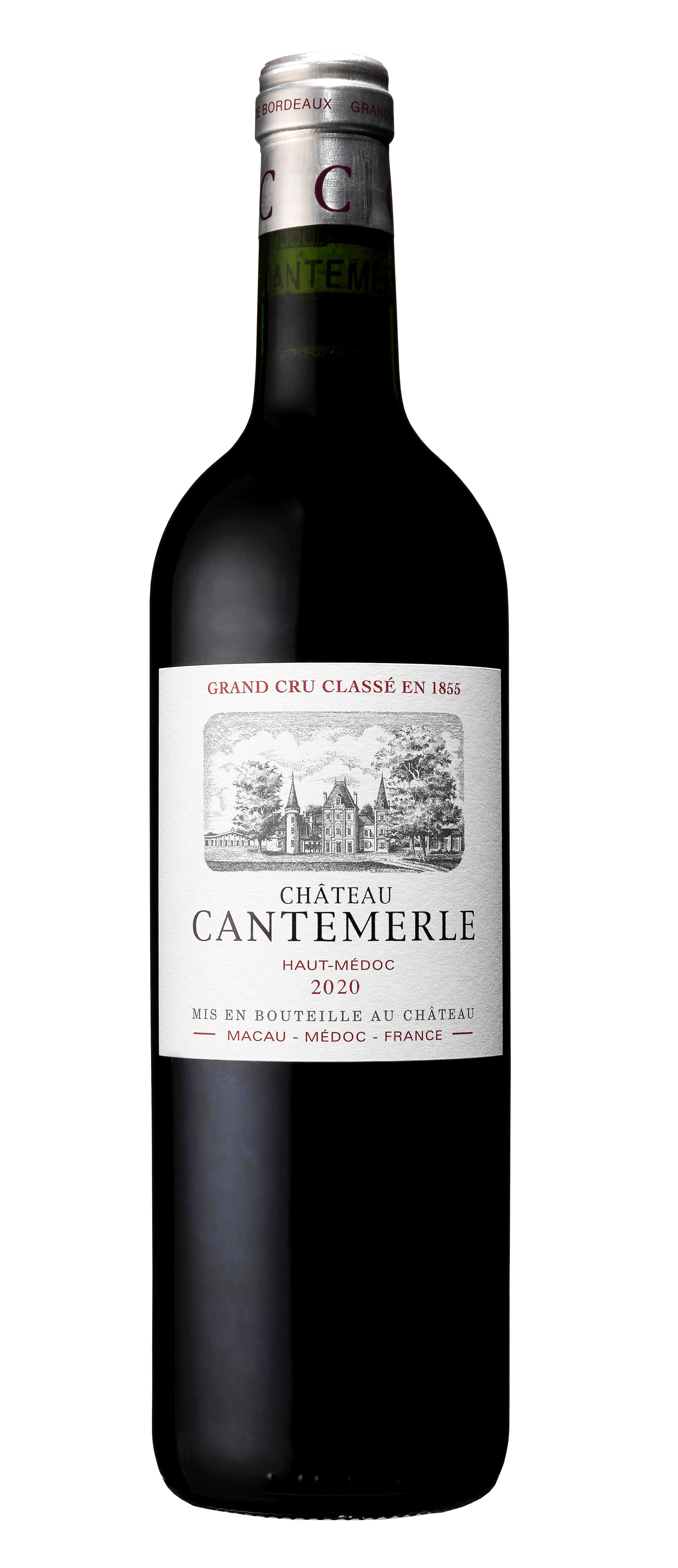
Some vintages seek to impress, and others prefer to convince. Château Cantemerle, a Grand Cru Classé in 1855, firmly places its 2020 in the second category: a wine the estate itself describes as precise and harmonious rather than spectacular — two words which, taken together, say a great deal about the philosophy of the house, more attached to the consistency of its style than to the showy effects sought elsewhere on the Left Bank, in a vintage that time alone will finish judging, patiently, as it has already done for the vintages that preceded it.
The 98-hectare vineyard rests on Quaternary gravel and silica soils, naturally draining, where the vines average forty years of age — an age which, in Bordeaux, generally translates into a root maturity conducive to regularity rather than exuberance. The vintage’s blend brings together 58% Cabernet Sauvignon, 29% Merlot, 7% Cabernet Franc and 6% Petit Verdot, a proportion that places Cabernet Sauvignon clearly in the lead, the usual guarantor of structure and staying power over time.
This dominance of Cabernet Sauvignon, combined with the natural drainage of the gravel soils, sketches the profile of a wine conceived for the long term rather than for immediate appeal. Unlike blends in which Merlot takes the lead to offer a quicker roundness on the palate, Cantemerle chooses here to rely on the slowness of maturation in bottle — a choice that implies particular confidence in the vintage’s ageing potential.
After hand harvesting and a meticulous sorting of the berries, the wine is aged for twelve months in French oak barrels, 40% of them new — a measured ageing that accompanies the fruit without seeking to dominate it, thus preserving the finesse claimed as the style of the house. This proportion of new oak, more measured than in many Grands Crus Classés that rely on barrels renewed at 100%, reflects a deliberate stylistic choice: letting the fruit and the terroir express themselves without the barrel imprinting its own woody signature first.
On tasting, the nose reveals notes of cherry and dark fruit, punctuated by floral and delicately spiced touches. The palate aims to be enveloping, supported by melted tannins and an elegant texture, before a fresh, balanced finish that hints at a definite ageing potential. All of this is offered at a recommended retail price of 36 euros — a positioning that, for a Grand Cru Classé of 1855, remains relatively accessible compared with comparable Médoc crus.
What this 2020 vintage tells us, between the lines, is the deliberate choice of an estate classified for more than a century and a half to continue to favour balance over a show of force — a more discreet wager, but often a more lasting one, than that of power at any price. A wager that is, moreover, never judged on opening the bottle, but years later, when time will have confirmed — or belied — the promise of ageing announced from the first tasting.
Also on Luxsure: Château Siran: the story of an unclassified Margaux grand cru · Château La Lagune 2015: finesse and elegance of a Grand Cru Classé · Château de Ferrand 2019: the refined elegance of a Saint-Émilion Grand Cru Classé · Initial de Desmirail 2015: the elegance of the Third Growth of the 1855 Margaux classification
Cette publication est également disponible en :


