
A study signed by Knight Frank has just formulated what many brokers were observing without daring to theorise it: in France, the best address no longer suffices to guarantee the best value. Rarity, service, image and experience are emerging as the new yardsticks of a market where luxury is no longer a mere segment, but a structuring principle.
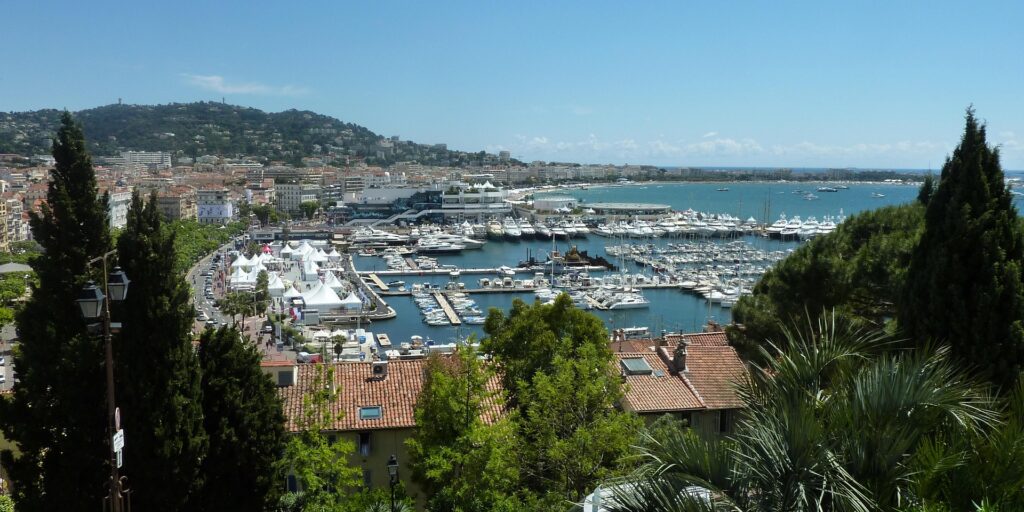
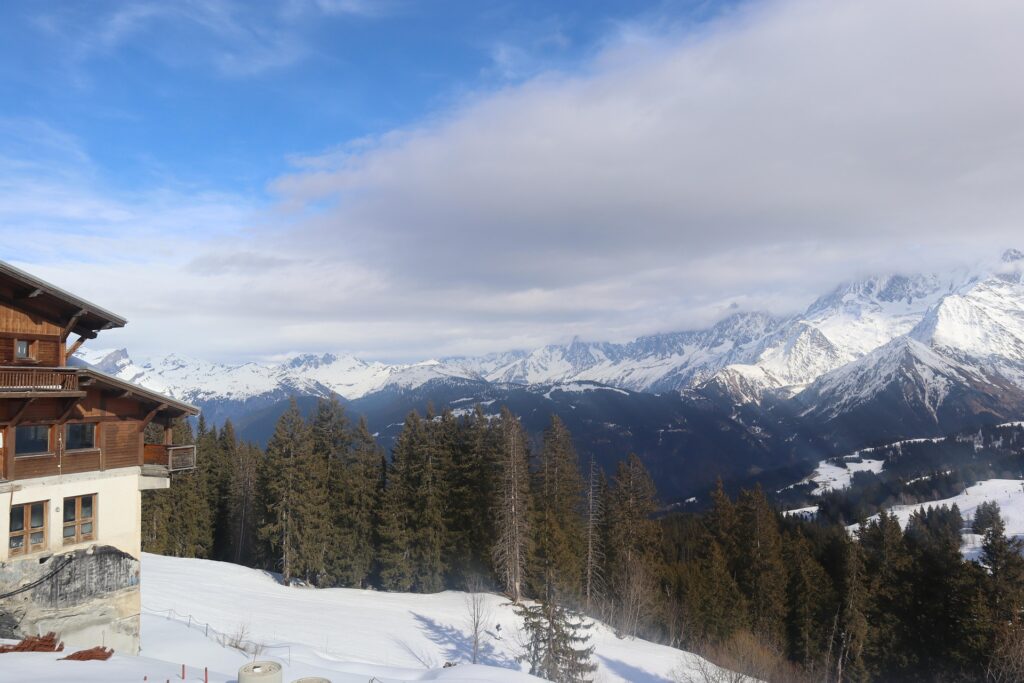
For decades, prestige real estate obeyed a simple, almost tautological grammar: the value of a property was measured by its position on the map. Paris intra-muros, the Croisette, the heights of Megève — geography set the price, and the price validated the geography. The study Knight Frank has just published on the French market upsets this certainty. What the agency documents, through data on great fortunes, prices per square metre and new uses, is a recasting of the value system itself. Five criteria now carry authority — rarity, service, use, image, experience — and none can be reduced to a street number.
This shift is not anecdotal in a country where luxury accounts for more than 76 billion euros of annual exports and where LVMH, Hermès, Kering and L’Oréal feed entire territorial ecosystems, from Limousin leather goods to Parisian haute couture ateliers. Magali Marton, head of research at Knight Frank France, sums up the diagnosis plainly: luxury no longer merely supports certain real estate segments, it redefines their very criteria. A well-located Haussmann building lacking a concierge, services or a recognisable identity loses ground to an address that is more modest geographically but capable of offering a total experience.
This mutation has its source in the demographics of wealth. The number of ultra-rich (UHNWI, more than 30 million dollars in wealth) continues to grow worldwide, and this class increasingly regards real estate as a tangible asset as much as a daily use. A property is no longer chosen only to live in: it is selected as one would choose a collector’s piece, for its capacity to tell a story, to offer a service and to withstand time. This logic runs through the whole spectrum of assets — turnkey branded residences, ultra-premium offices with private clubs, five-star hospitality concentrated on iconic avenues.
But this generalised premiumisation has a flip side that the study names plainly: polarisation. Between Paris and lifestyle destinations such as the Alps or the Côte d’Azur, between neighbourhoods of the same arrondissement, down to the scale of a single building, markets split into two populations of assets — those that embody the codes of luxury and concentrate demand, and the others, which face growing pressure and a gradual desertion by investors. Prime residential shows price increases above the conventional market; offices are reinventing themselves as places of belonging rather than mere work surfaces; retail concentrates on a limited number of avenues capable of generating desire.
One question remains that the study does not pose head-on, but that its figures suggest between the lines: what becomes of the French real estate heritage that ticks none of these boxes? Between the great signatures that capture the attention of global fortunes and the ordinary urban fabric, a vast intermediate segment — neither rare enough, nor serviced enough, nor photogenic enough — risks paying the price of this redefinition of the desirable. Luxury, by becoming the grammar of the market, no longer merely sells square metres: it draws a dividing line whose effects will extend far beyond the narrow circle it claims to describe.
Cette publication est également disponible en :


