
In taking up the work of American photographer Francesca Woodman, the young Danish label Martin Quad is not seeking an easy aesthetic homage. Its collection Woodman Pt. 2, presented at Berlin Fashion Week as an opera, attempts something riskier: translating into clothing a body of work built entirely on the erasure of the body.
Francesca Woodman is not an innocuous reference to summon in fashion. The American photographer, who died at 22 in 1981, built in a few years a body of work haunted by disappearance — self-portraits in which her own body melts into the walls, doubles, blurs, moves out of the frame at the very moment of the shutter. Choosing this work as the matrix of a collection exposes one to an obvious risk: that of reducing a work of rare gravity to a mere aesthetic vocabulary, soft focus and chiaroscuro as cultural credentials. This is precisely the trap Martin Quad, a young house founded in 2023 by the Danish designer Martin Juncker, tries to avoid by translating Woodman’s formal strategies — and not simply her atmosphere — into a method of garment construction.
The guiding principle of the collection fits in one word: the mirror, conceived both as image and as method. Garments are duplicated, displaced, inverted, fragmented through manipulations of classic tailoring. A jacket can thus be built to drape above the hips rather than at their natural level; trousers or a skirt are cut abnormally high, under the chest; felt hats conceal half the face; translucent layers of silk organza blur the silhouettes. The distortion never consists of a pure and simple abolition of the classic garment — it shifts its landmarks, producing forms that remain recognisable while seeming to escape their own definition.
This collection is not the first appearance of Woodman Pt. 2: it is a reinterpretation of a show already presented in Milan in June, as an original operatic choreography. For Berlin, the house chose to rework the same material from a new angle, with a musical composition signed by the designer himself in collaboration with the Copenhagen artist and composer Soli City. The scenography, entrusted to Kristian Kirk (inter.agcy), and the styling, by the Berliner Tim Heyduck, complete a set-up that explicitly claims performance and theatre as the brand’s natural territories, more than the simple runway show.
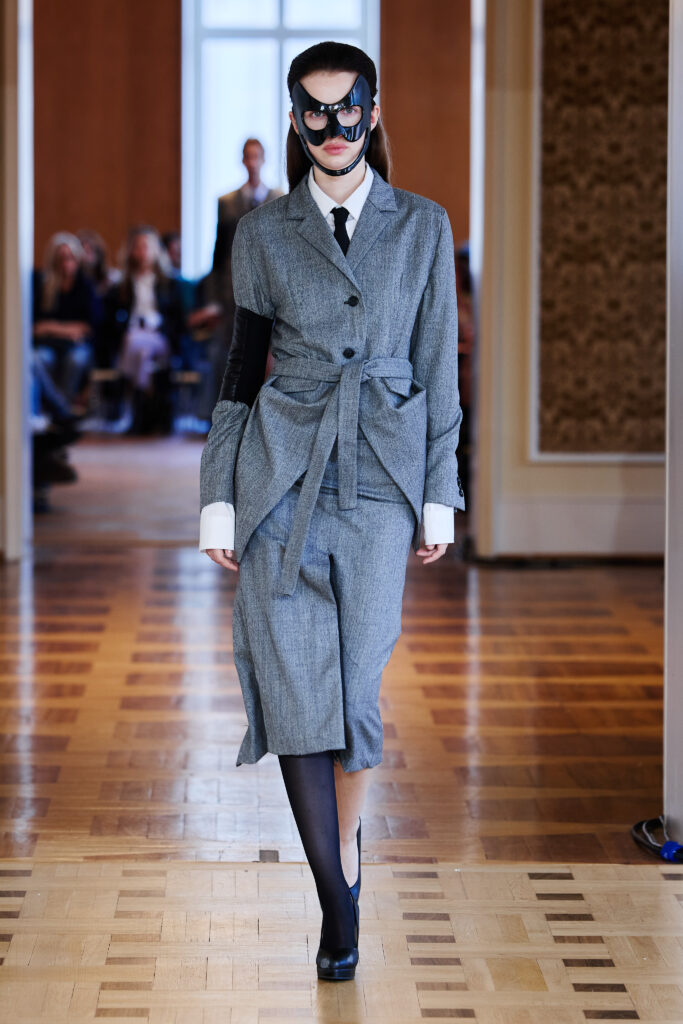
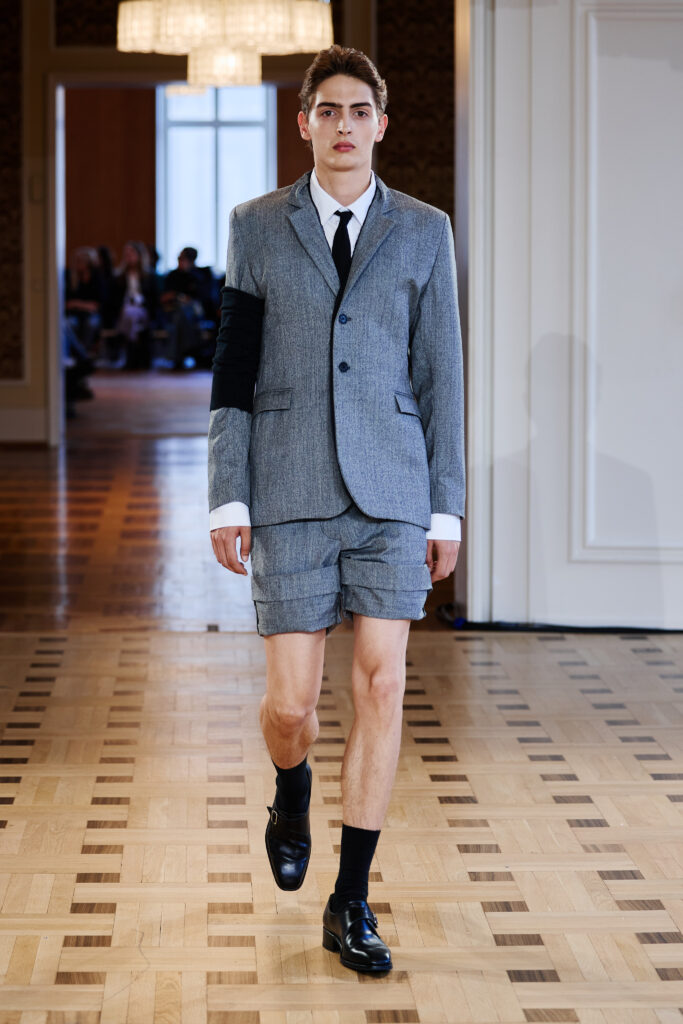
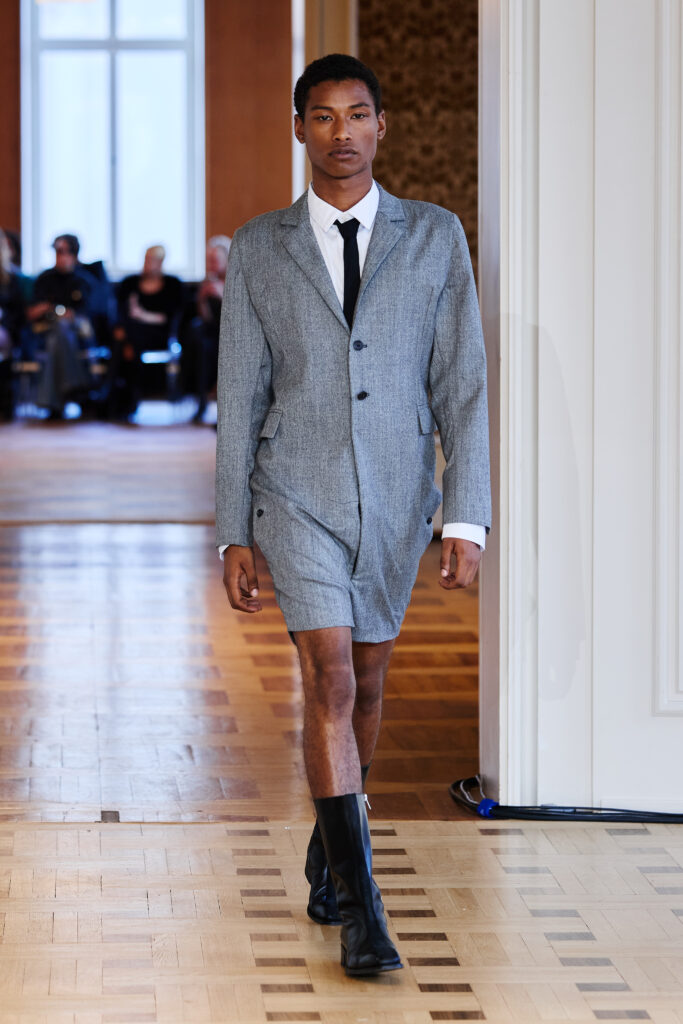
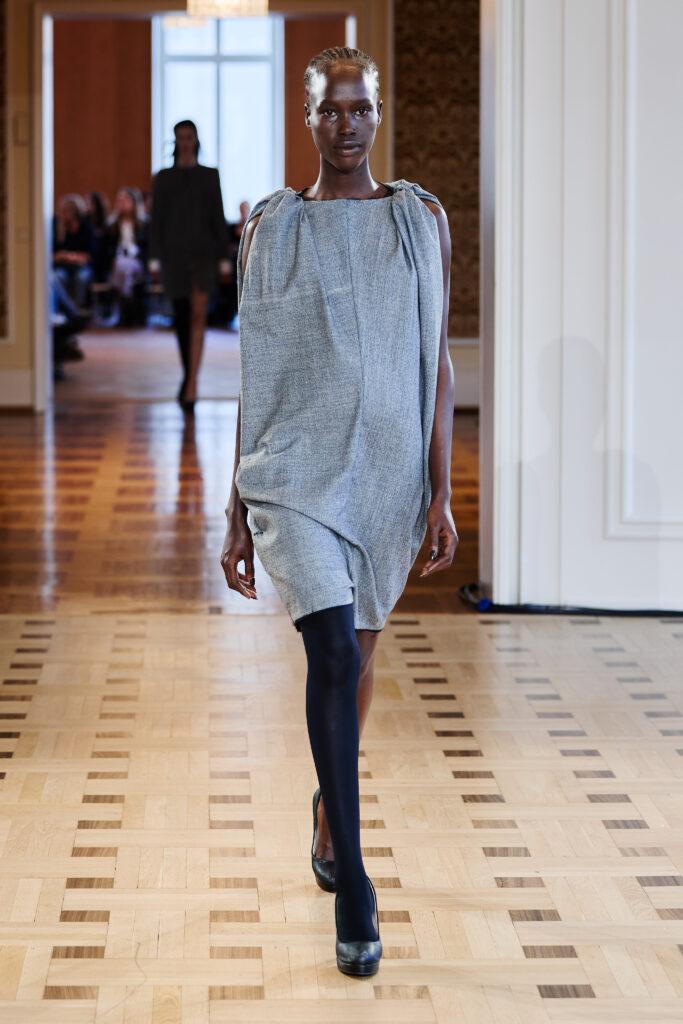
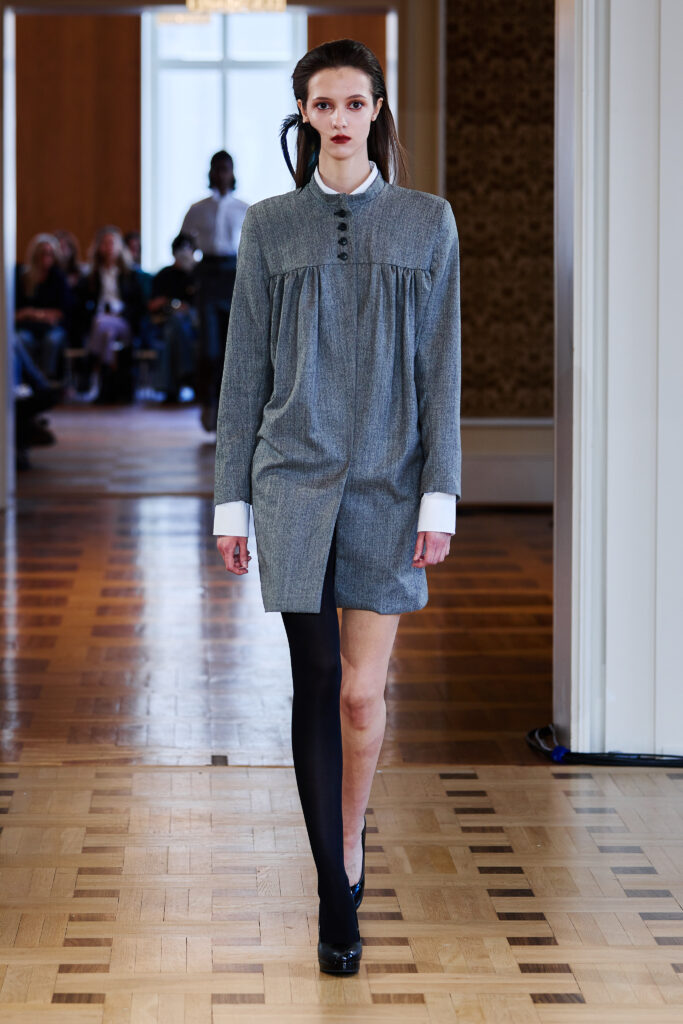
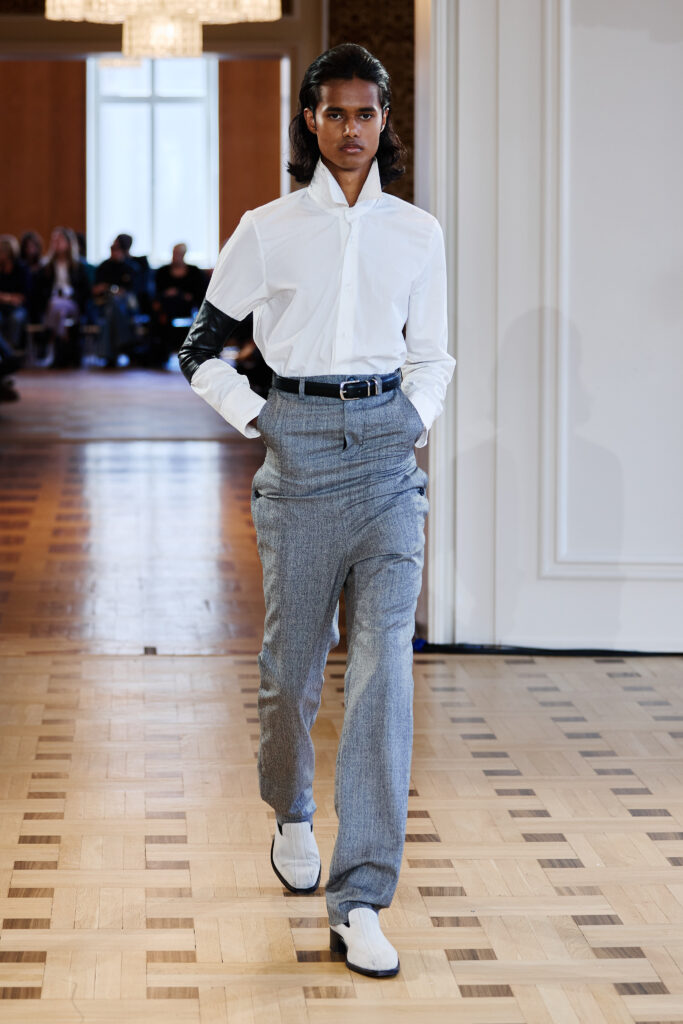
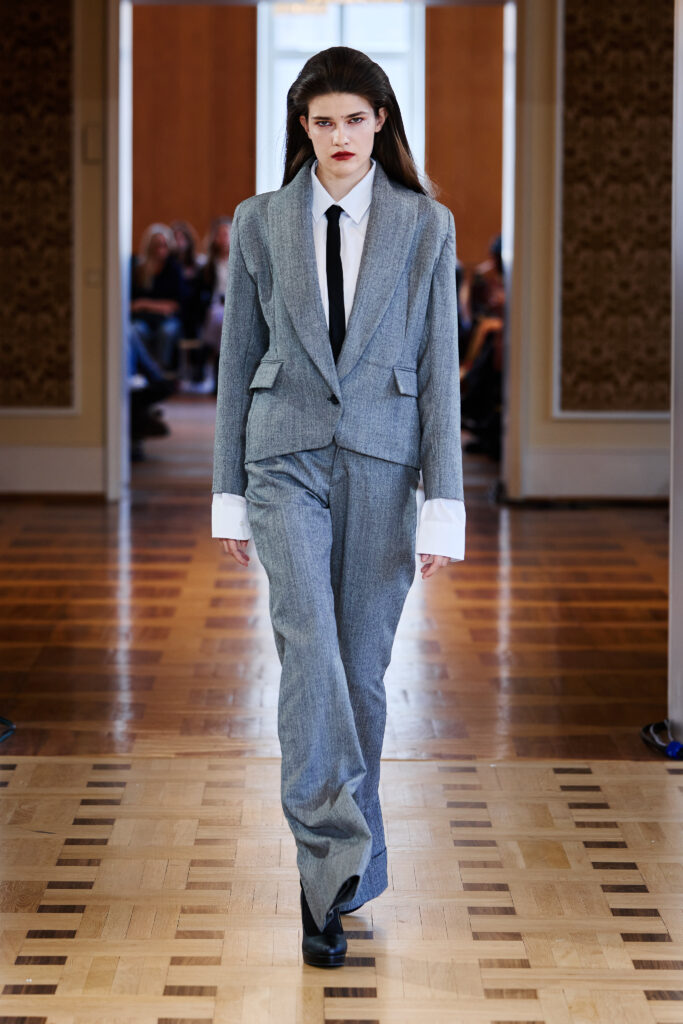
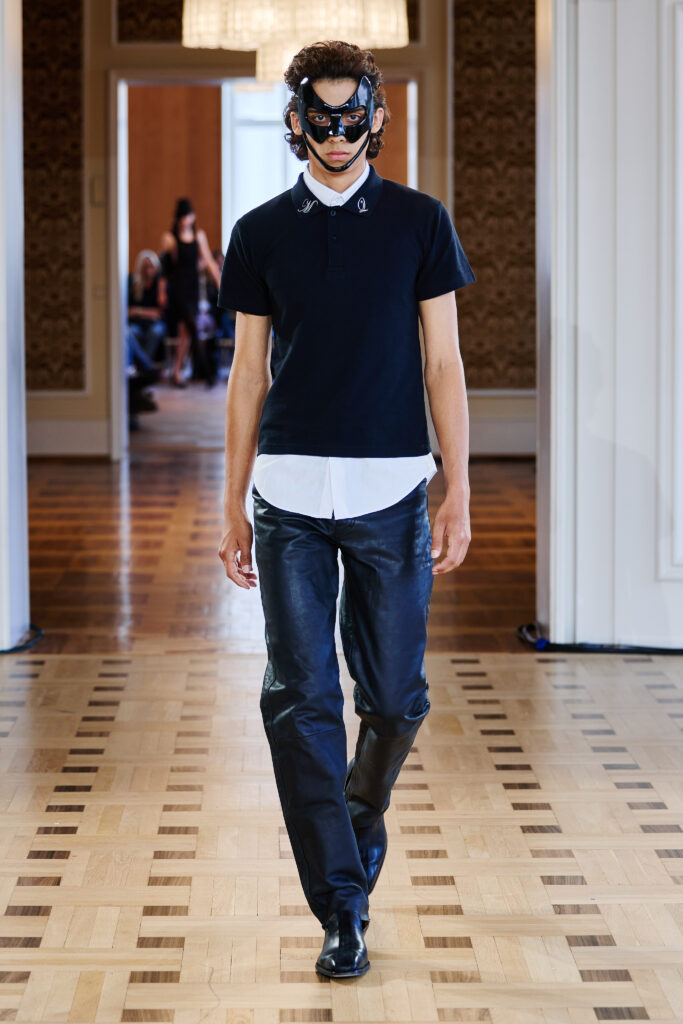
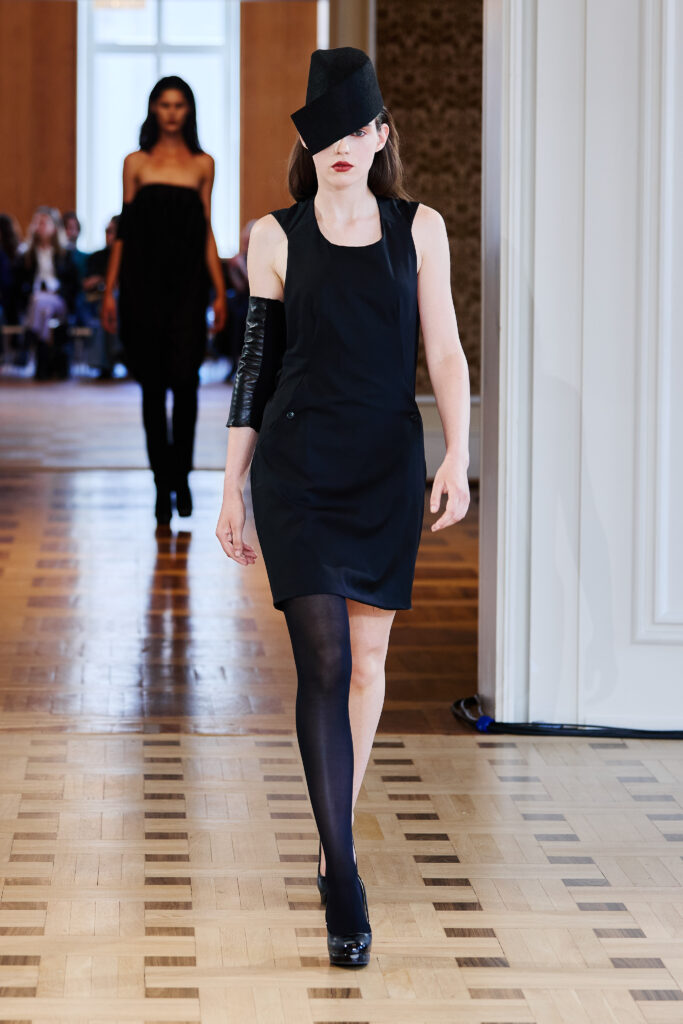
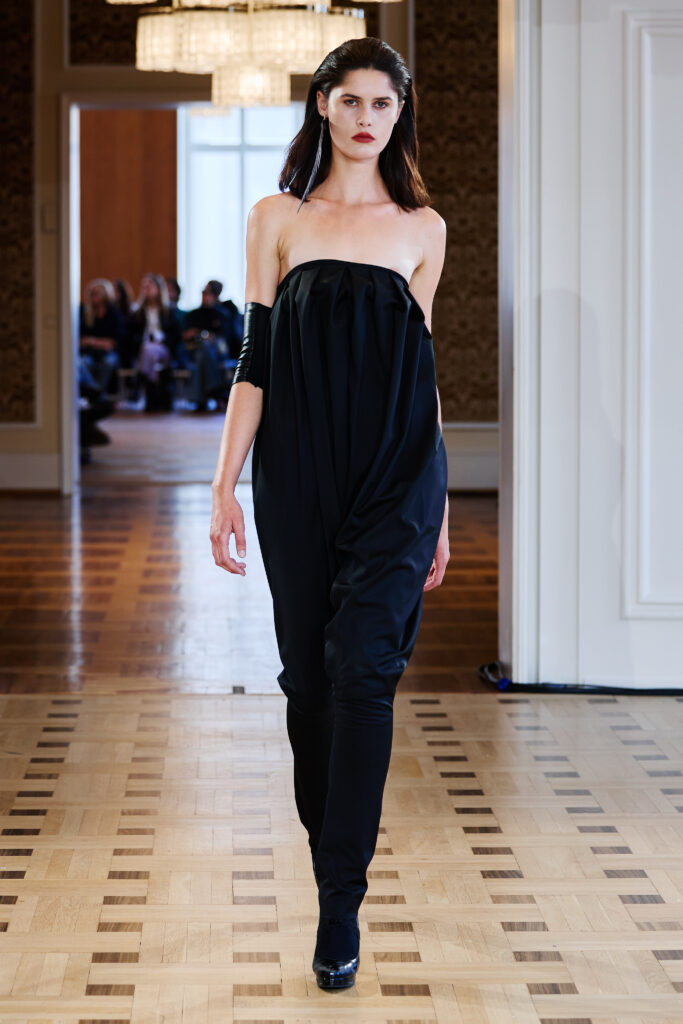
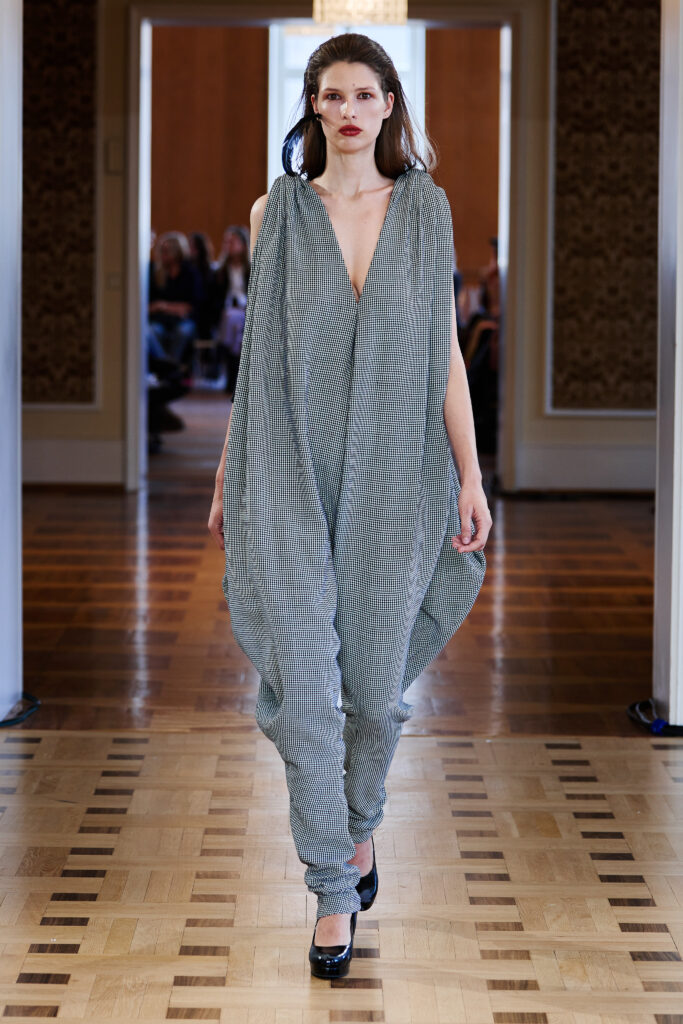
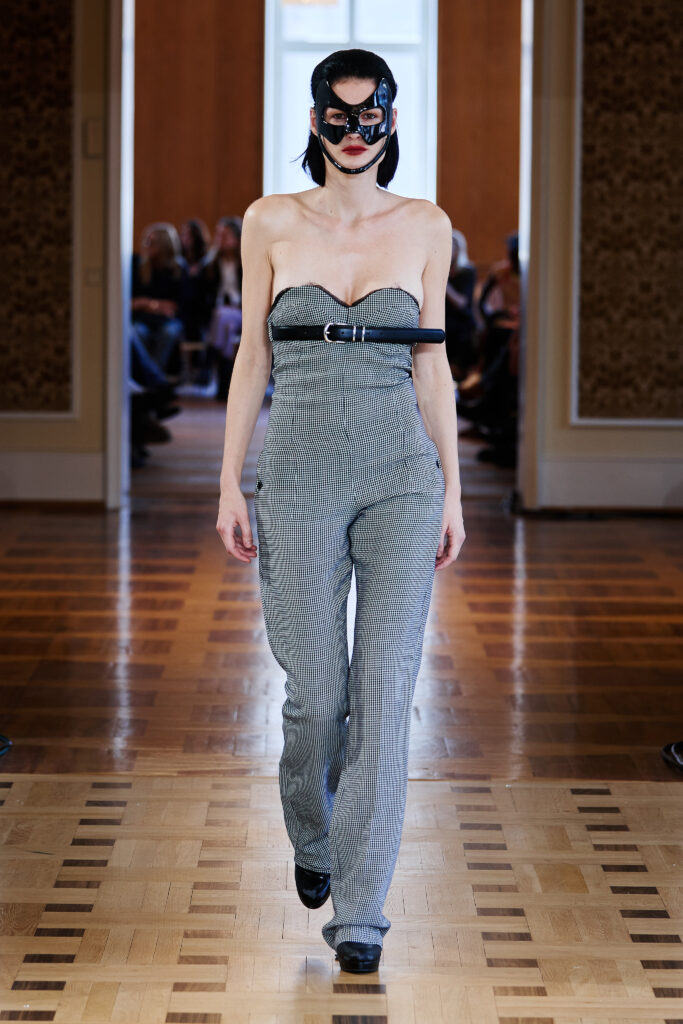
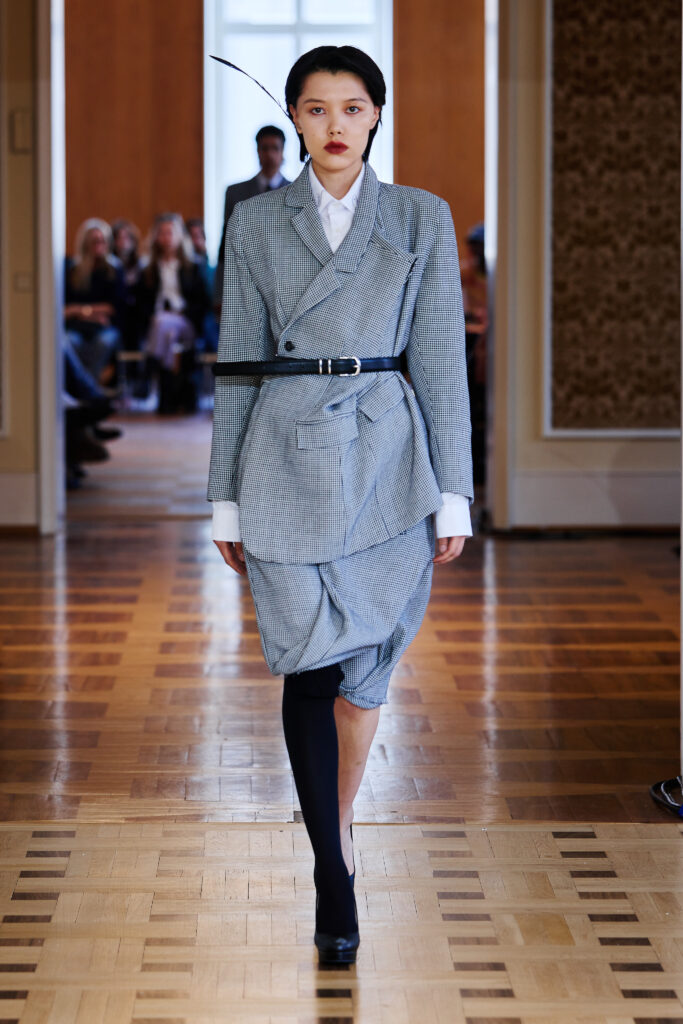
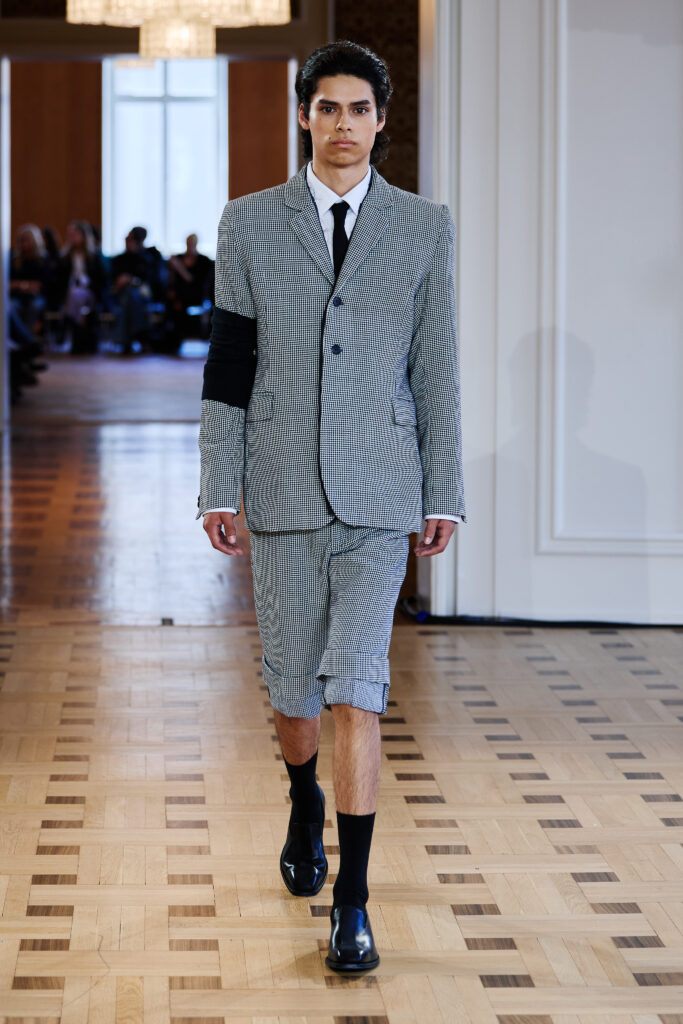
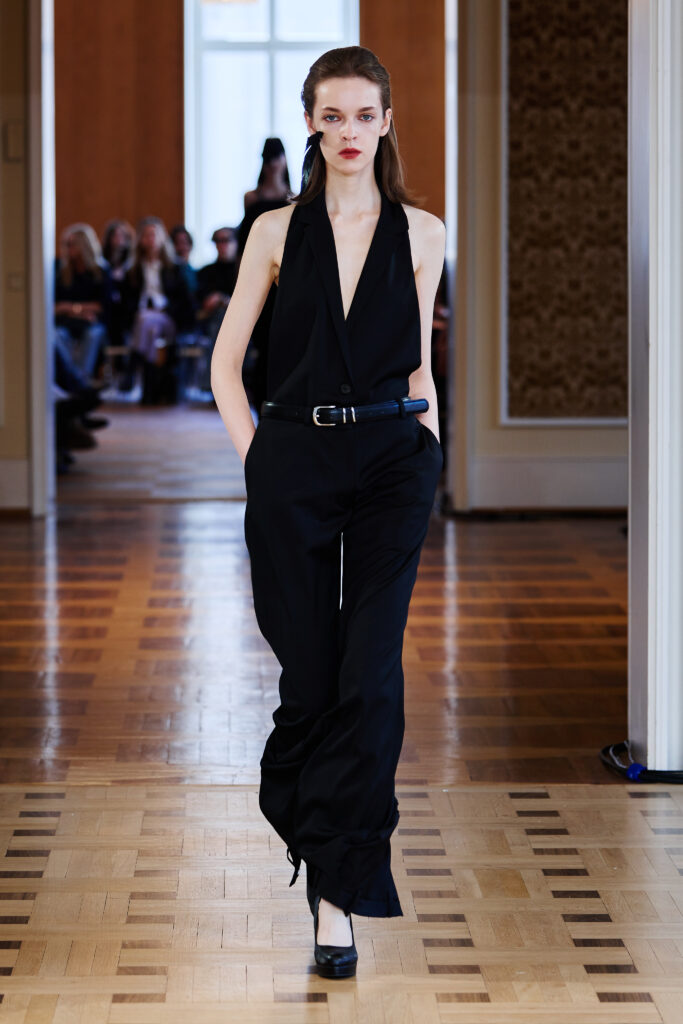
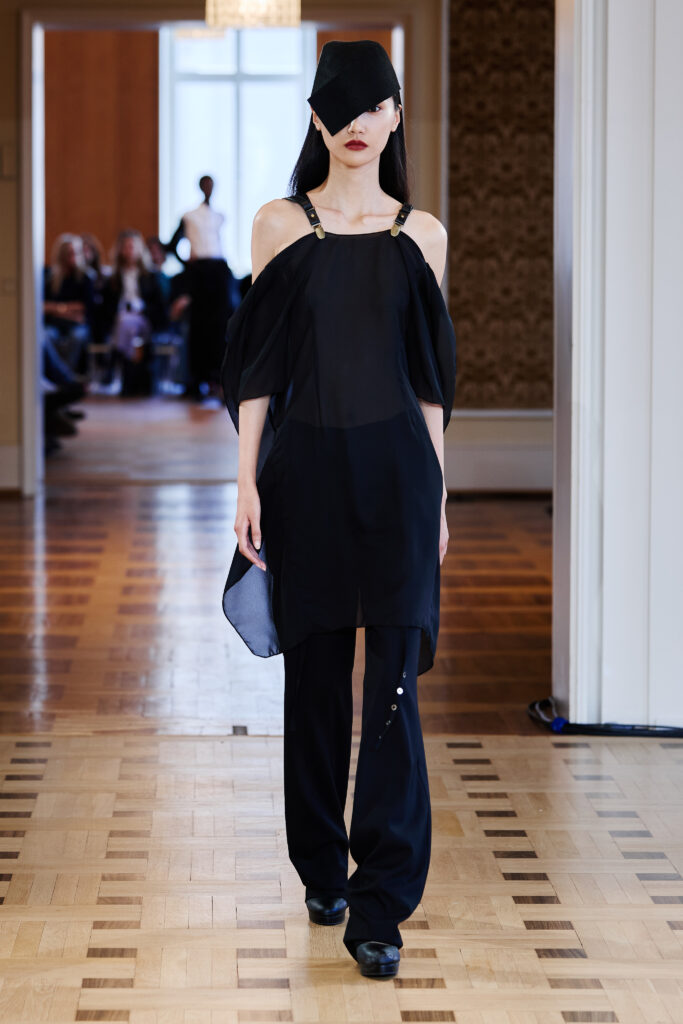
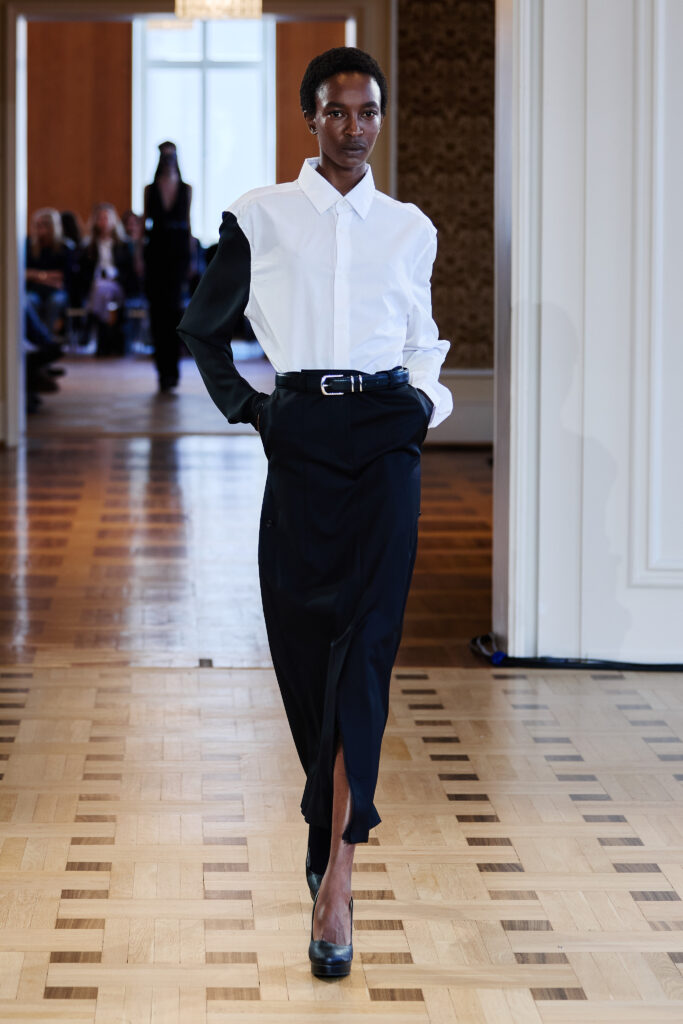
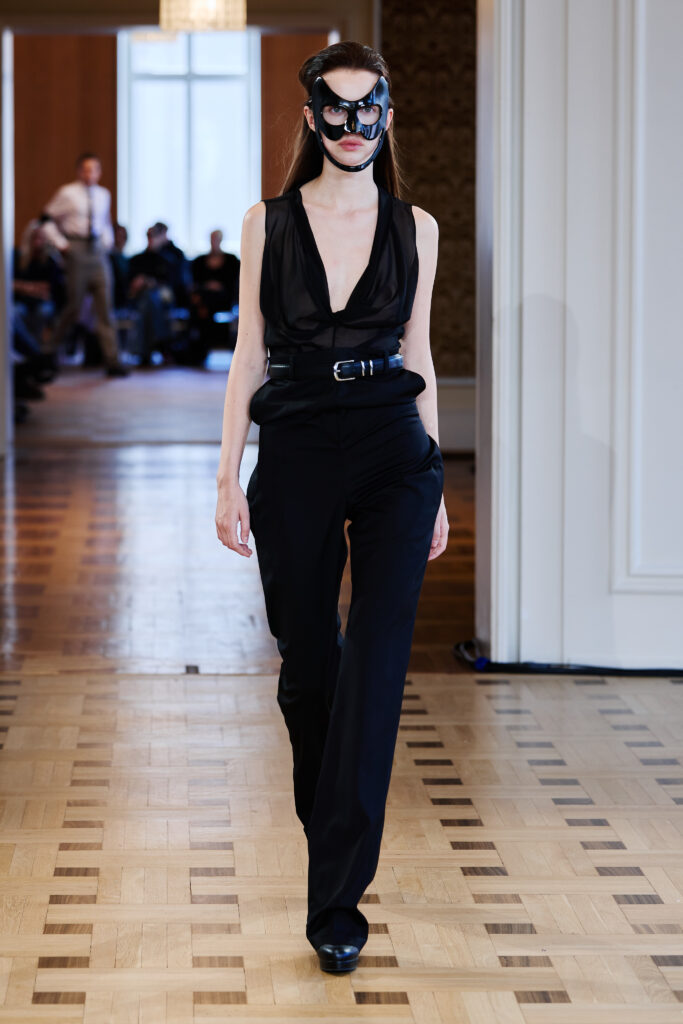
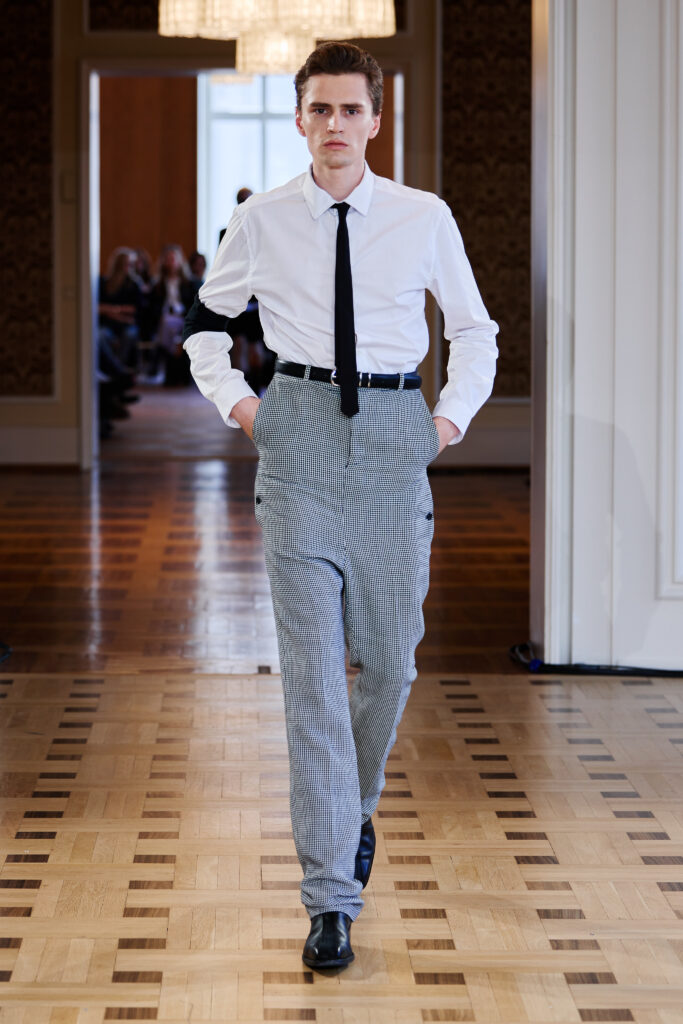
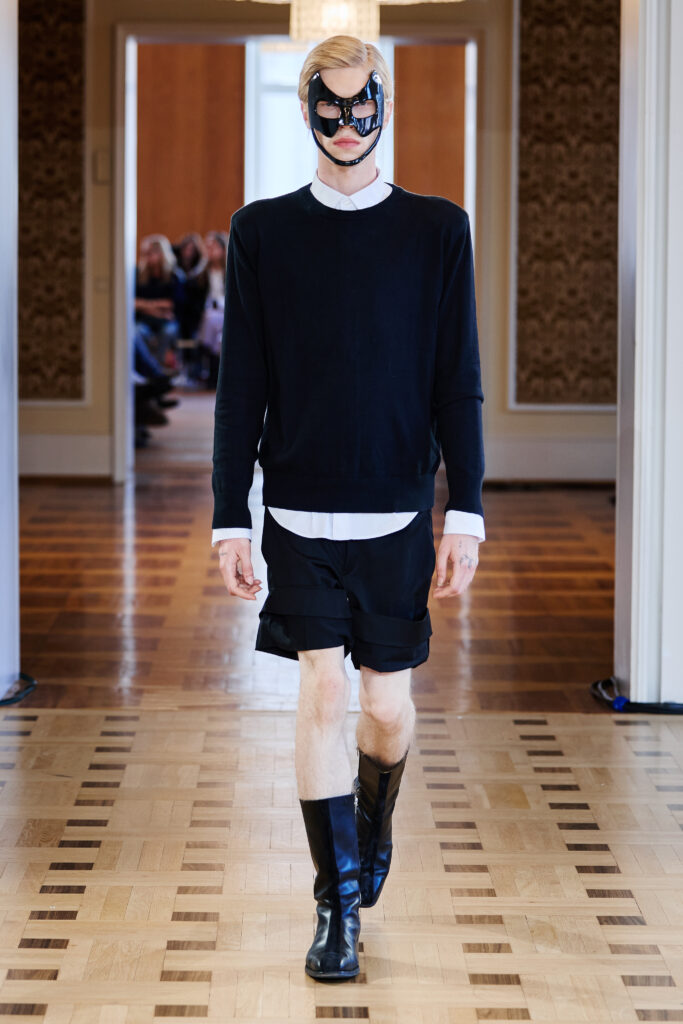
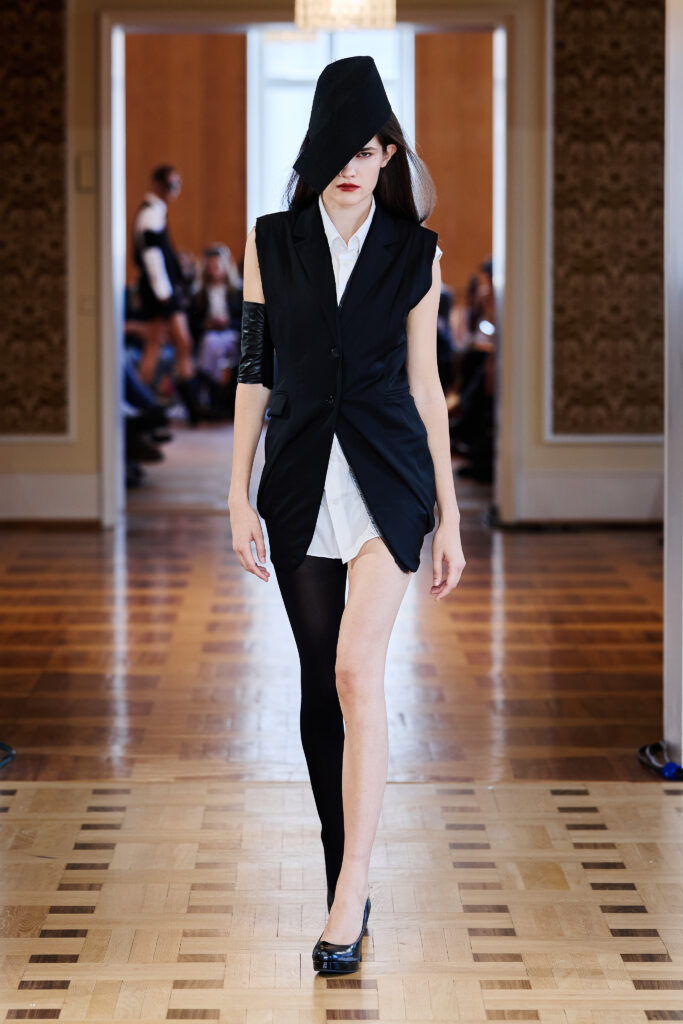
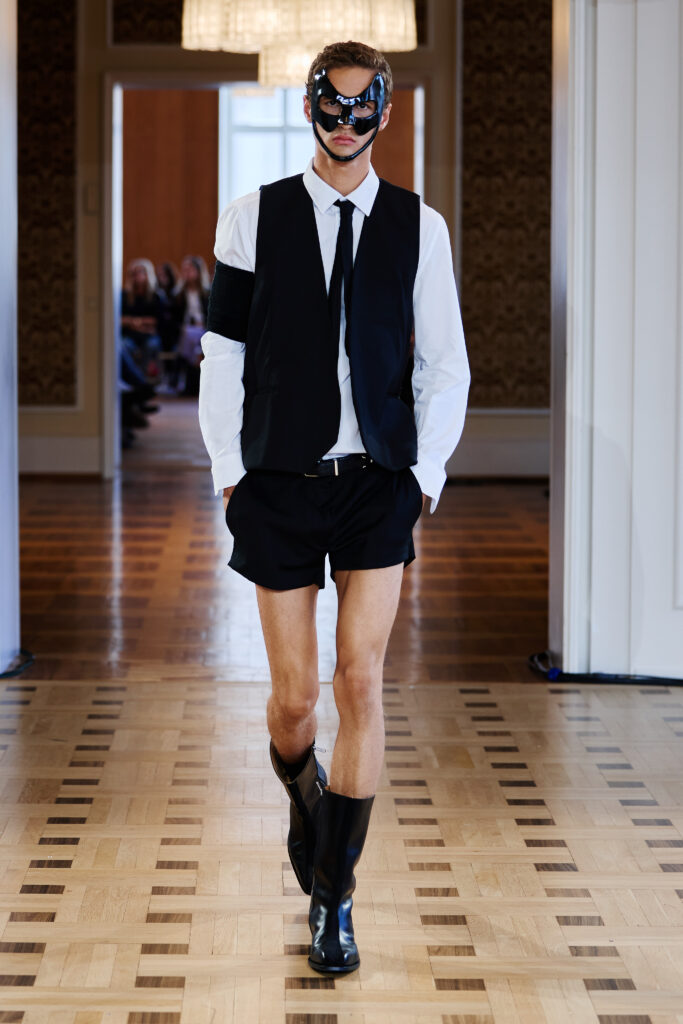
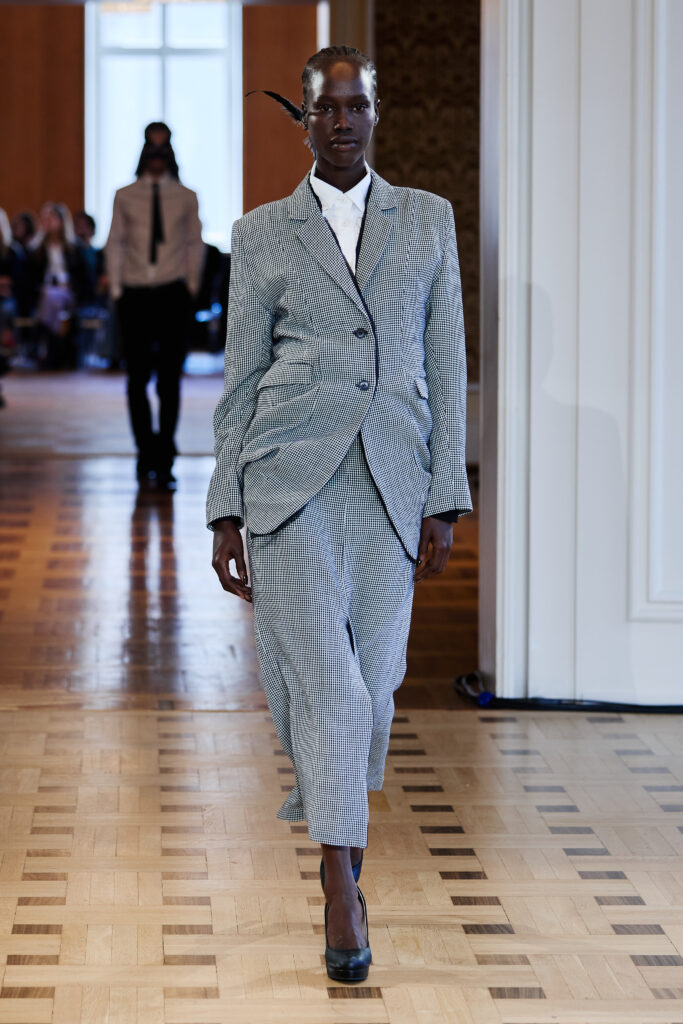
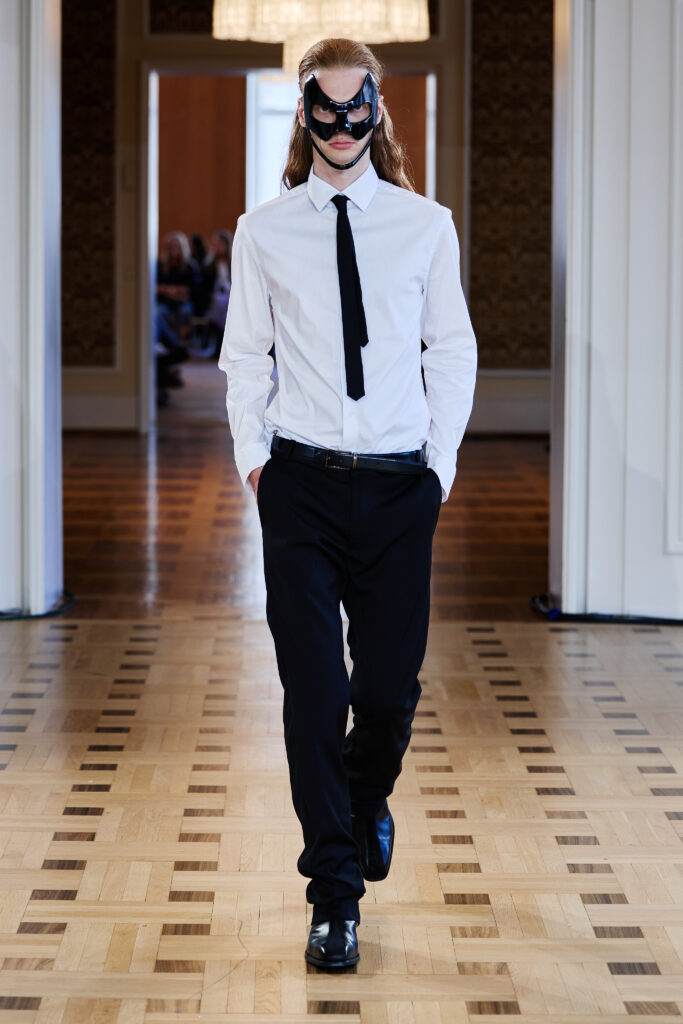
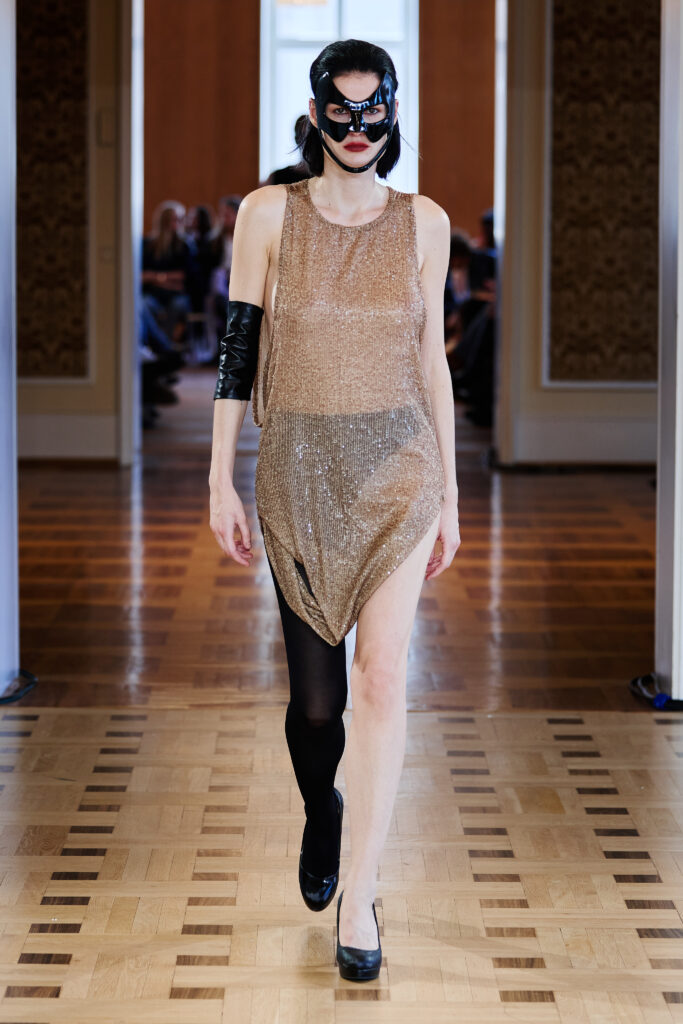
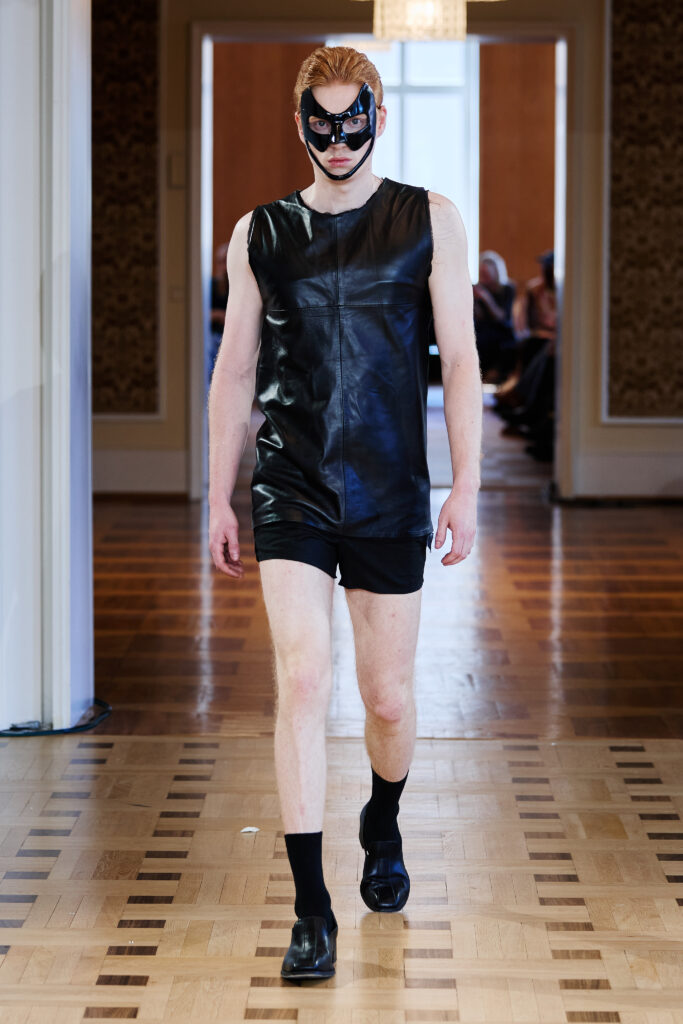
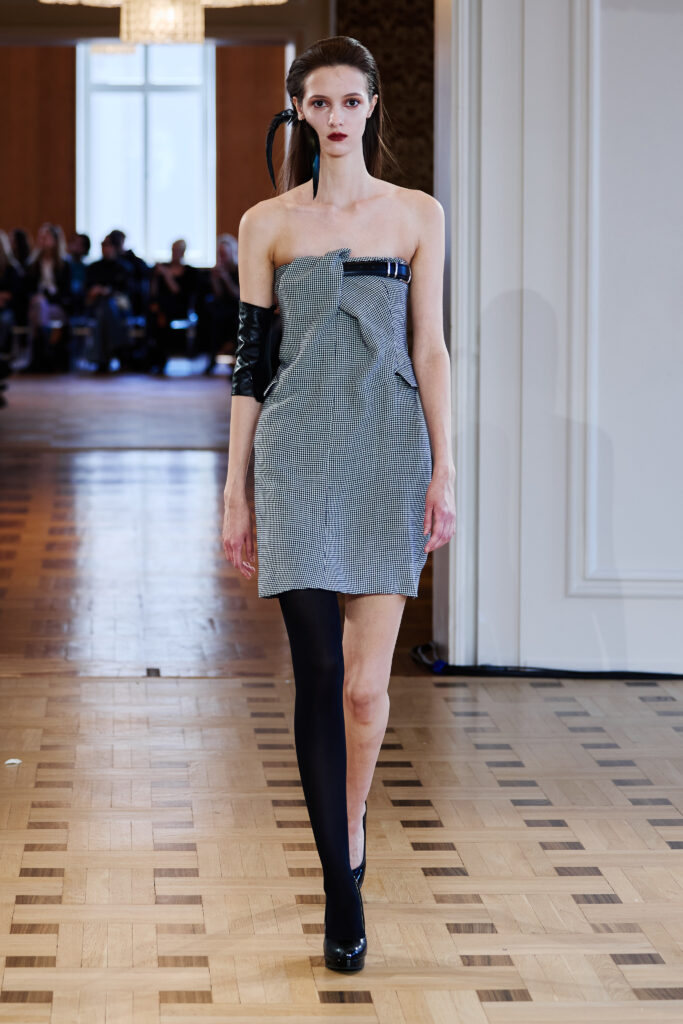
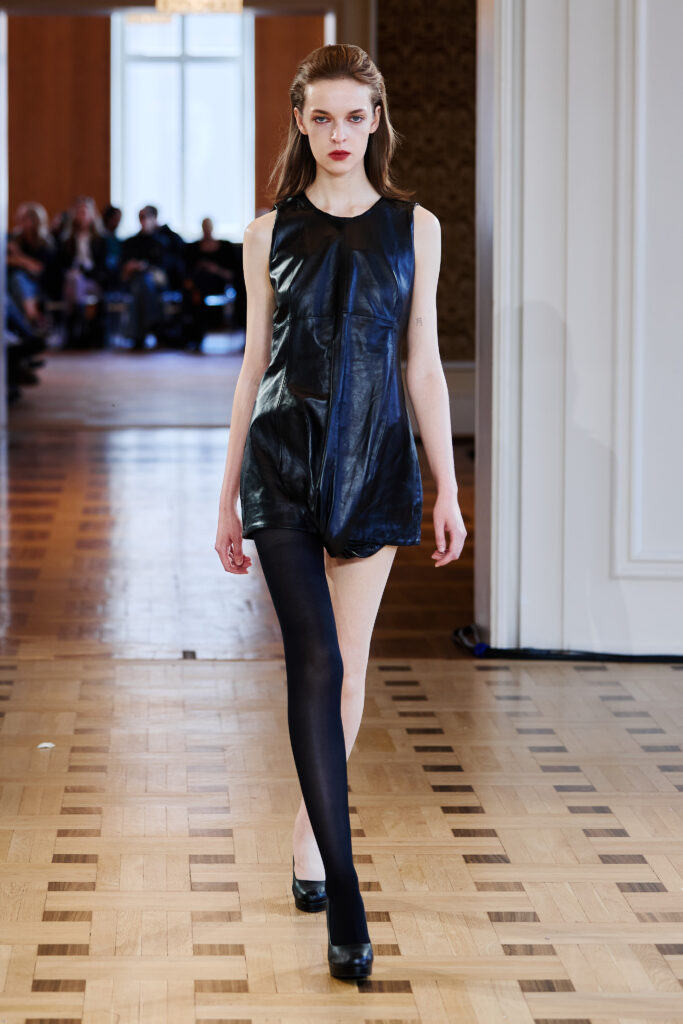
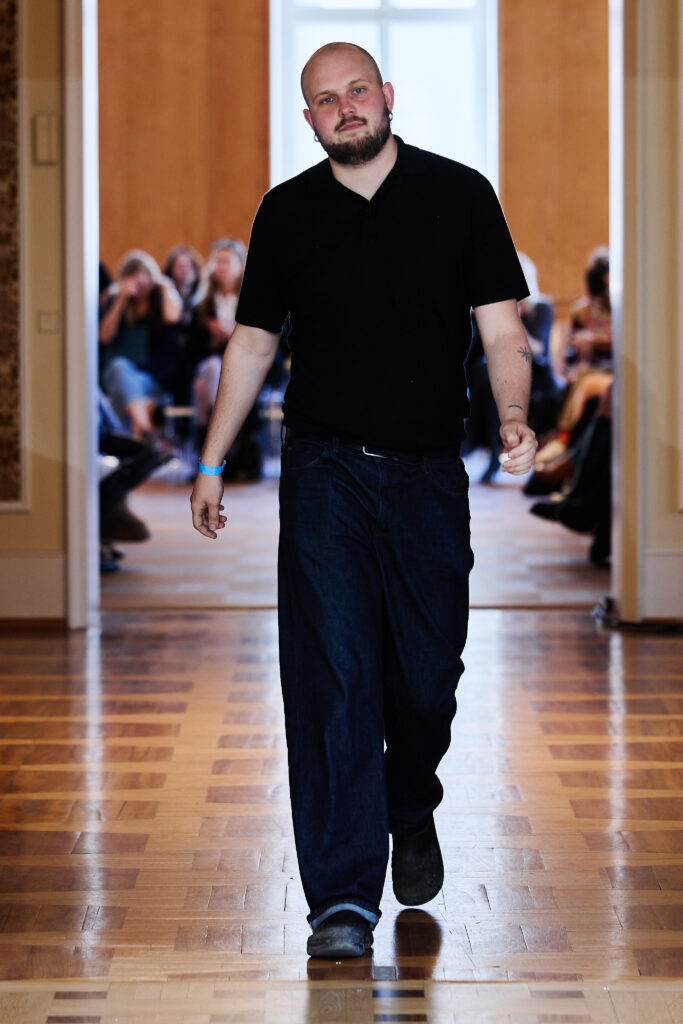
This approach belongs to a coherent trajectory for Martin Quad, which has built its identity on presentations conceived as autonomous works rather than as mere commercial showcases — a self-written opera titled Voici Venir Les Oiseaux!, a piece on mortality titled In Loving Memory Of…, a pantomime production presented at Copenhagen Fashion Week with the support of the Danish Arts Foundation. The garment, at this young house, always seems secondary to the overall narrative apparatus that encompasses it — an acknowledged hierarchy, which raises the question of whether fashion remains the end purpose there or becomes the mere medium of a larger project, between performance and installation.
This stance could prove to be both Martin Quad’s greatest strength and its structural limit. By refusing to separate the garment from its presentation apparatus, the brand takes the risk that its work will not survive the live experience that carries it — a fragility that, after all, is not so far removed from that of Woodman’s photographs themselves, conceived to capture an instant already in the process of fading.
Cette publication est également disponible en :


