
For spring-summer 2027, ALAINPAUL leaves the stage for what follows it. The collection The Scene entrusts to the wearer a part of the garment’s construction, and announces a live performance for the first time.
For spring-summer 2025, contemporary dance already fed ALAINPAUL’s collection. The 2027 season keeps that source and changes the moment: The Scene follows the performer after the show. According to the House, codified choreography loosens and the border between the institutional stage and the underground scene fades. The choreographers it cites, Hofesh Shechter, (LA)HORDE and Sharon Eyal, share a body of work that draws on the energy of nightlife.
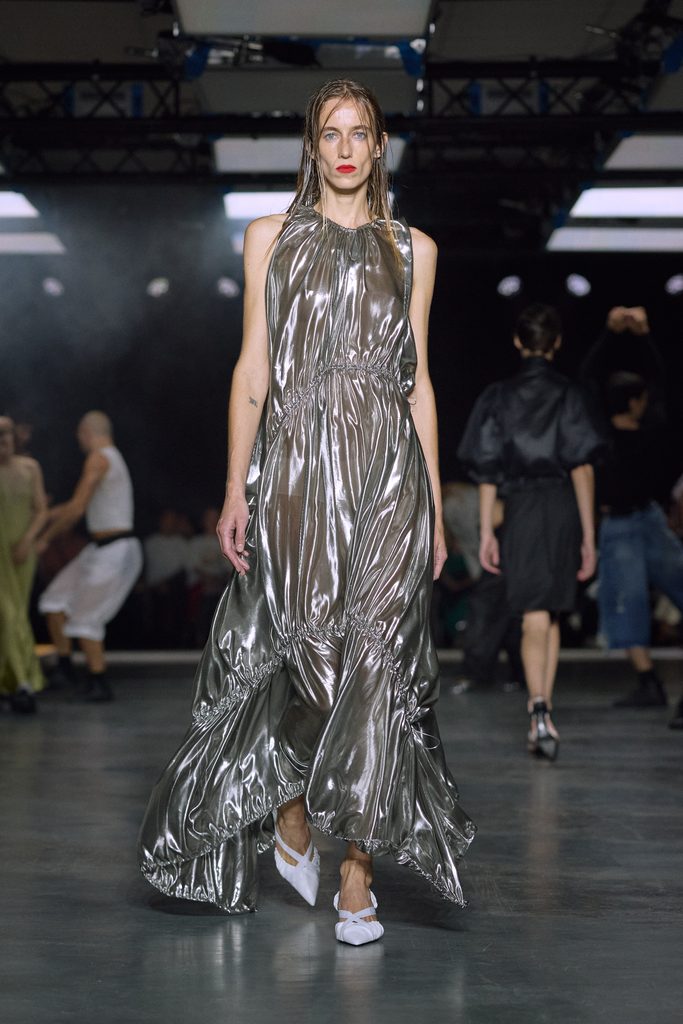
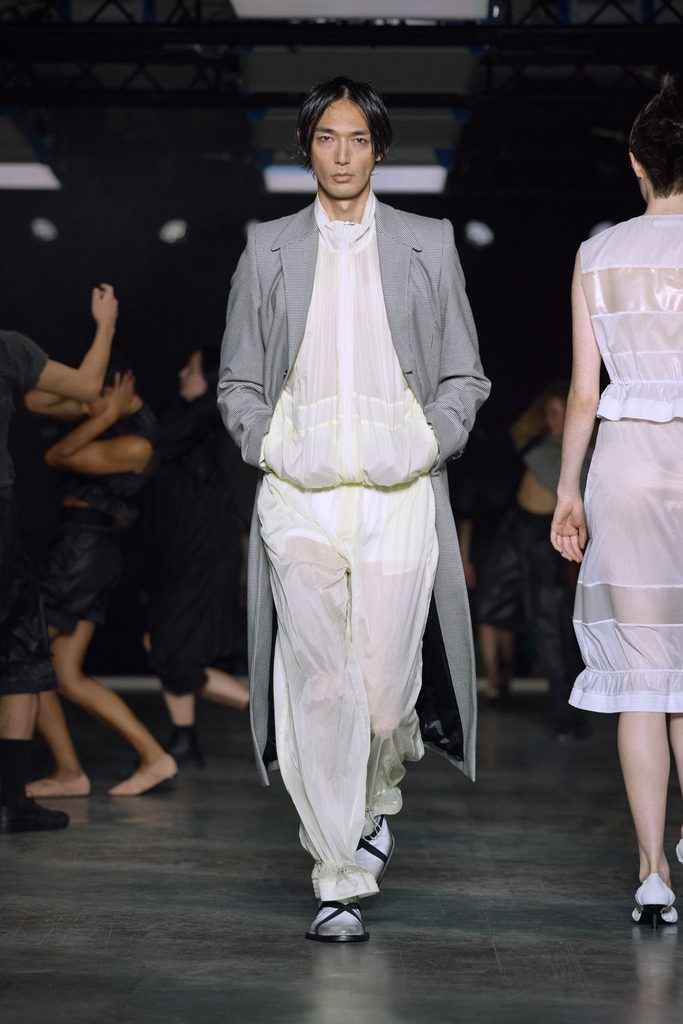
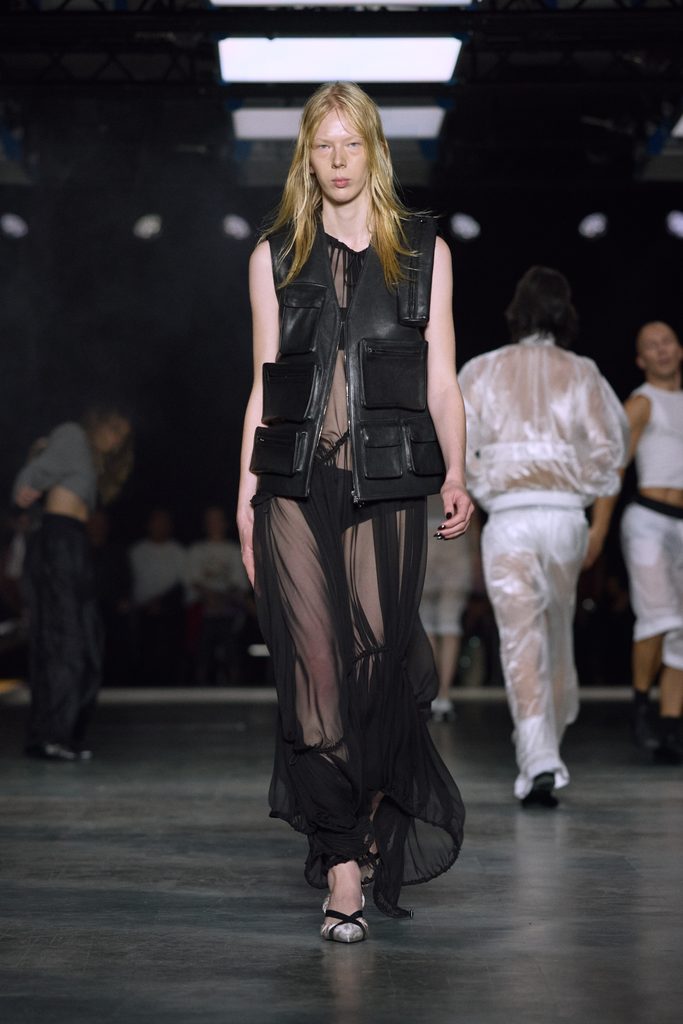
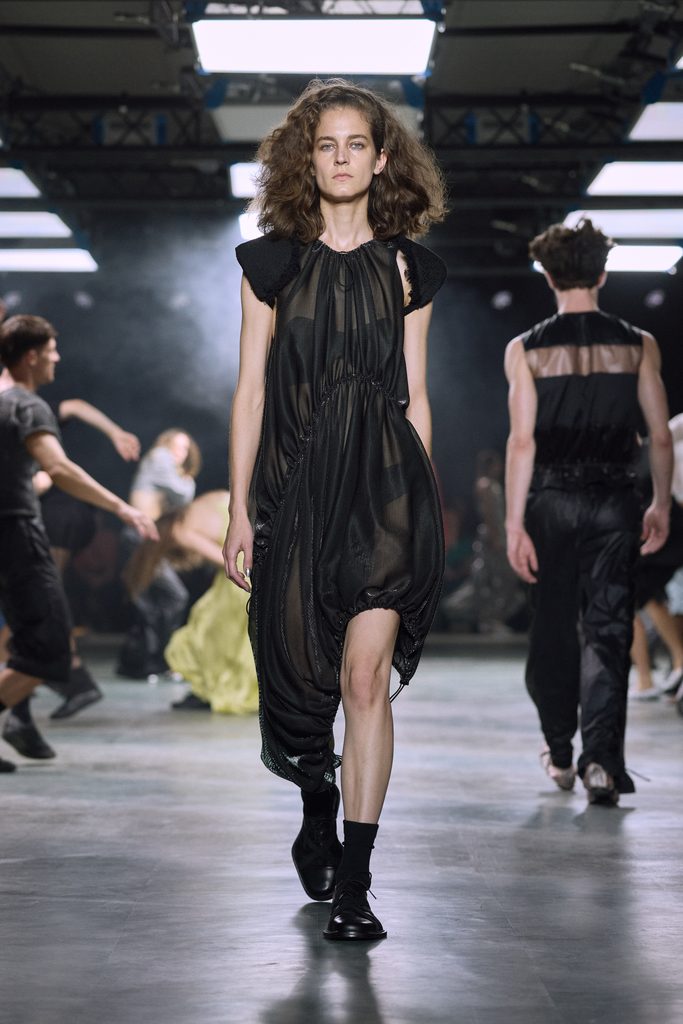
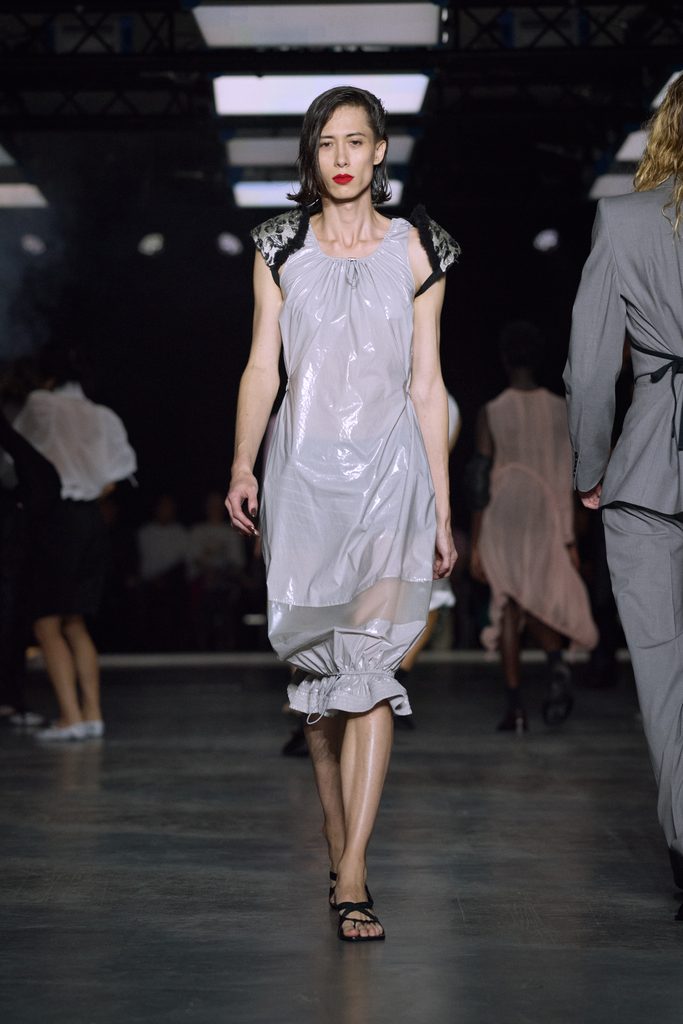
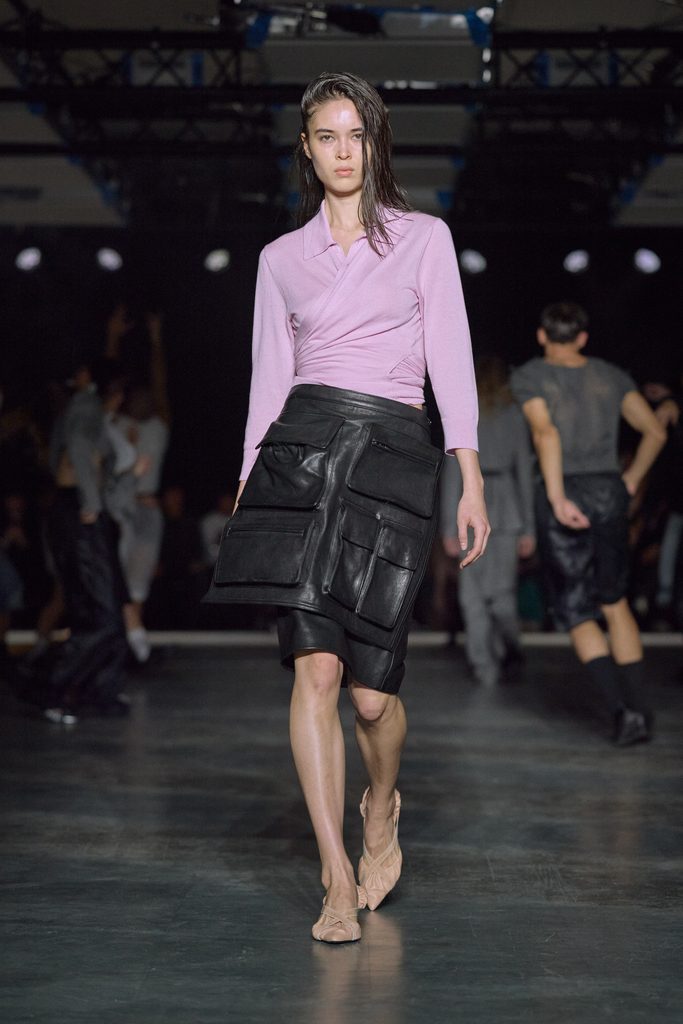
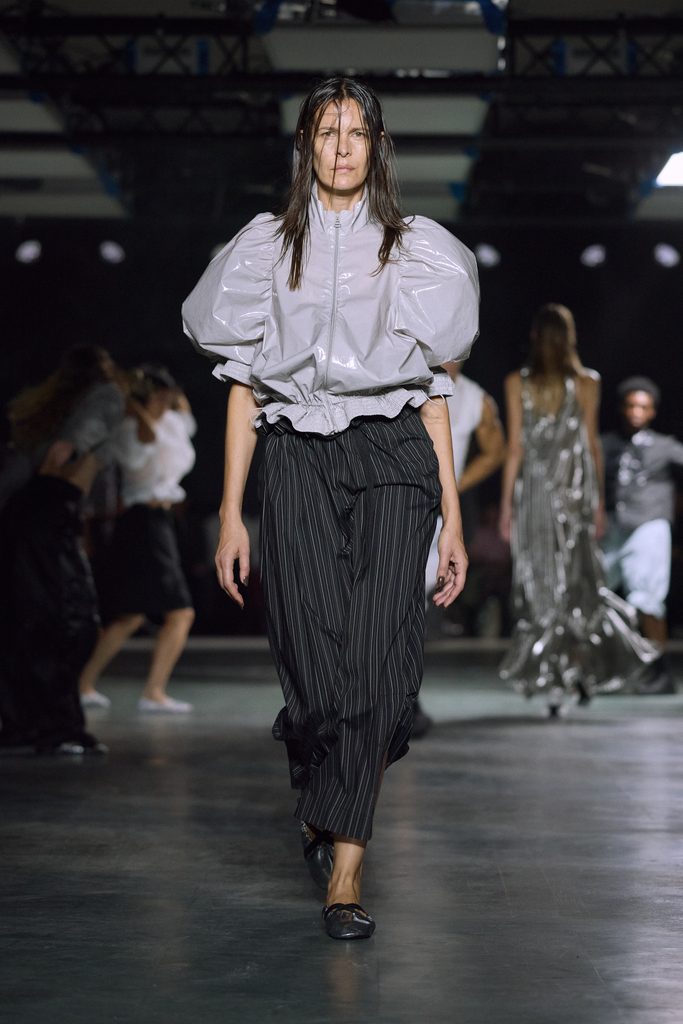
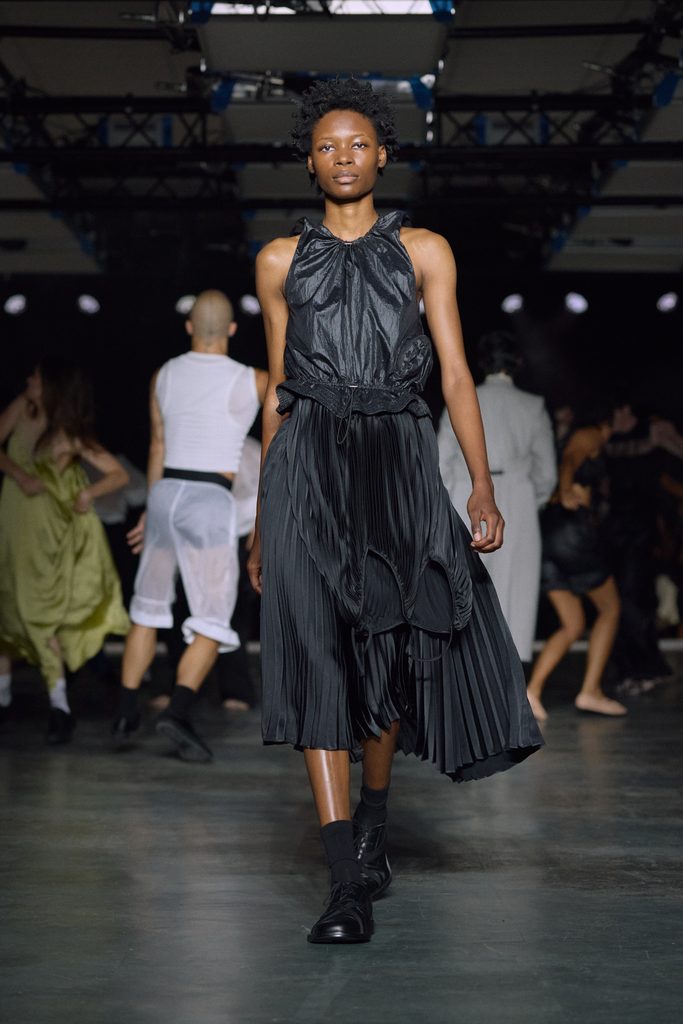
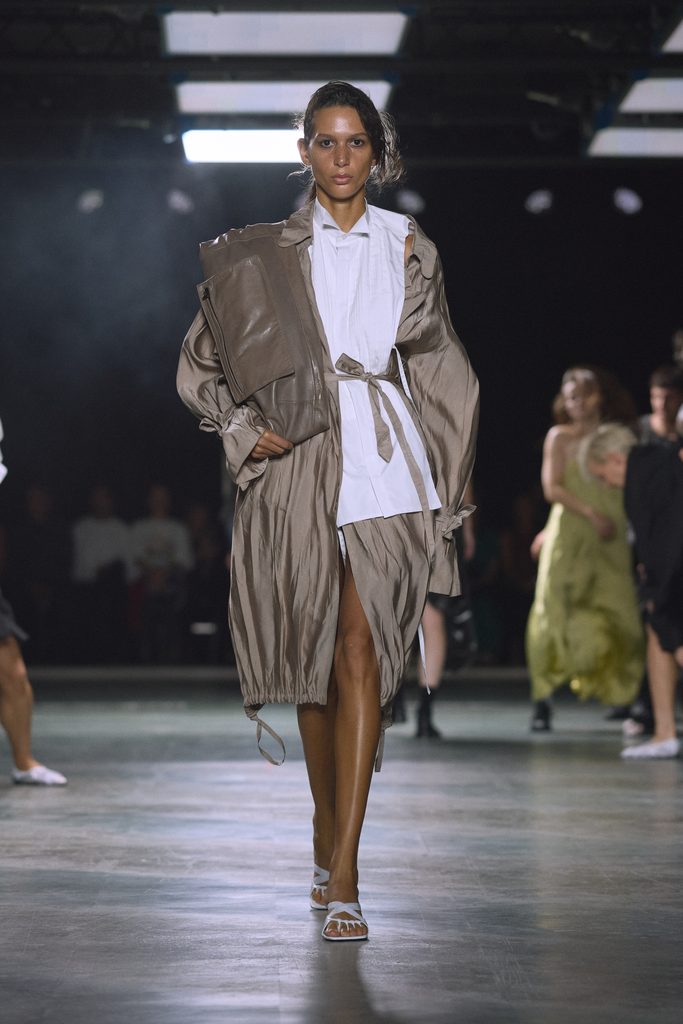
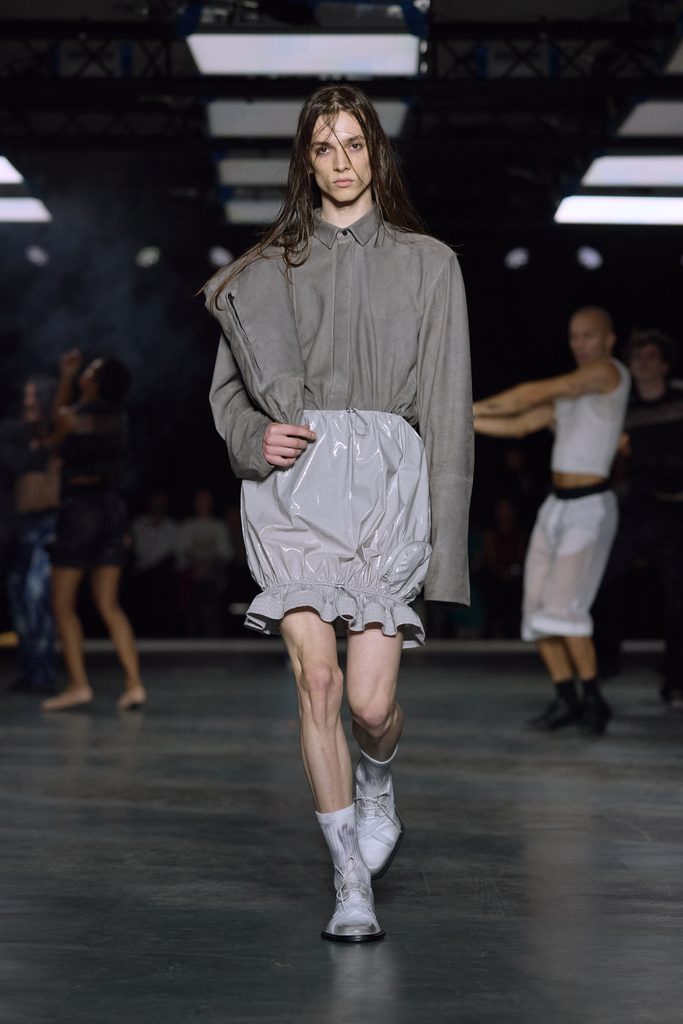
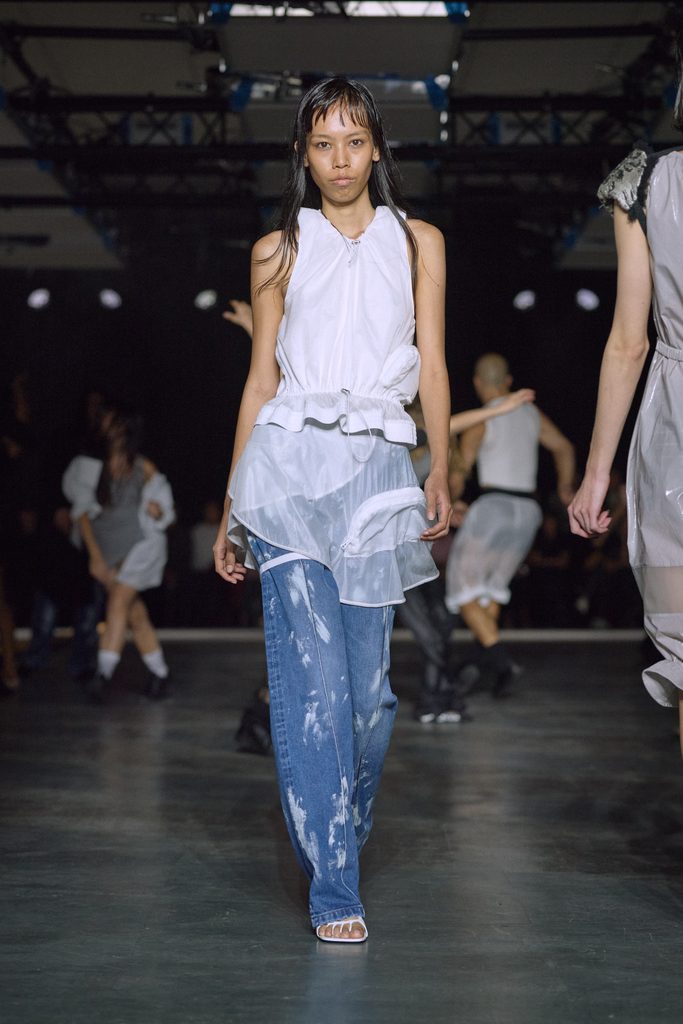
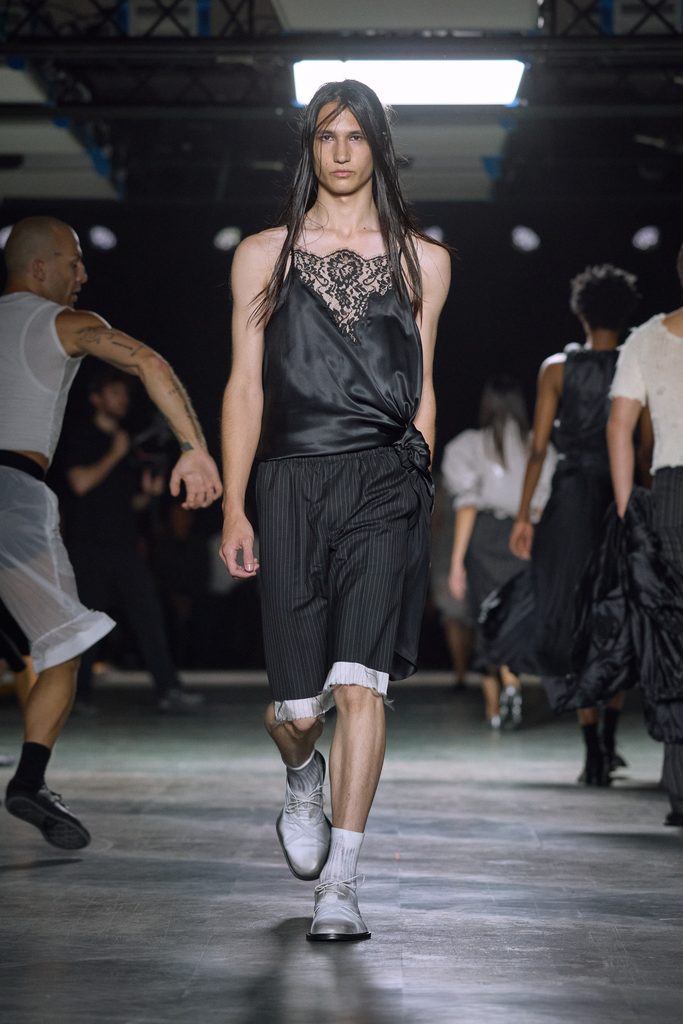
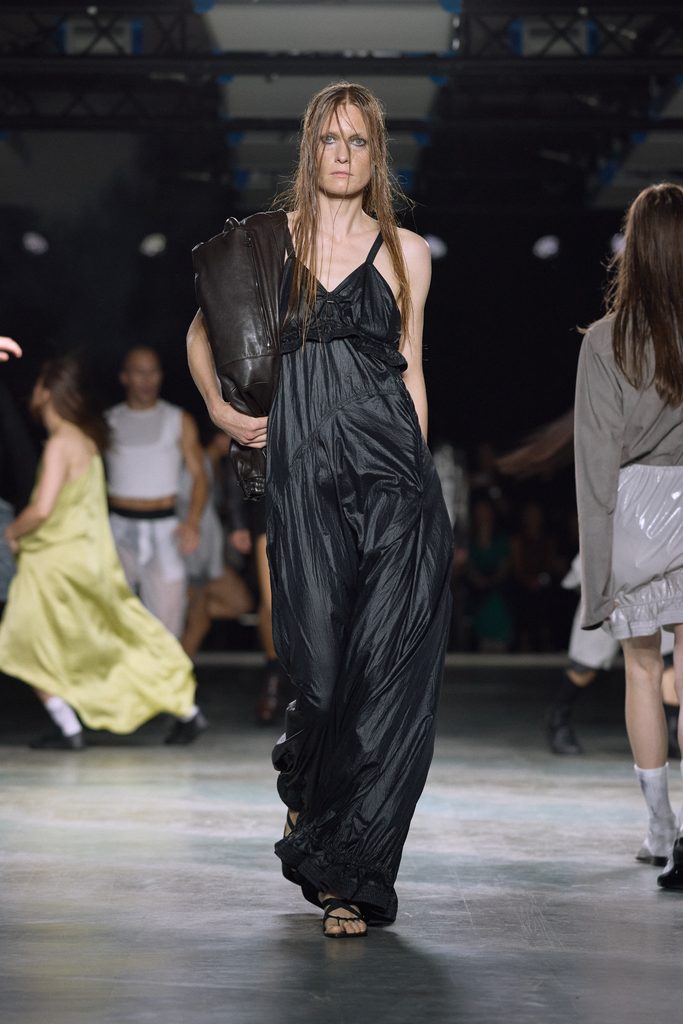
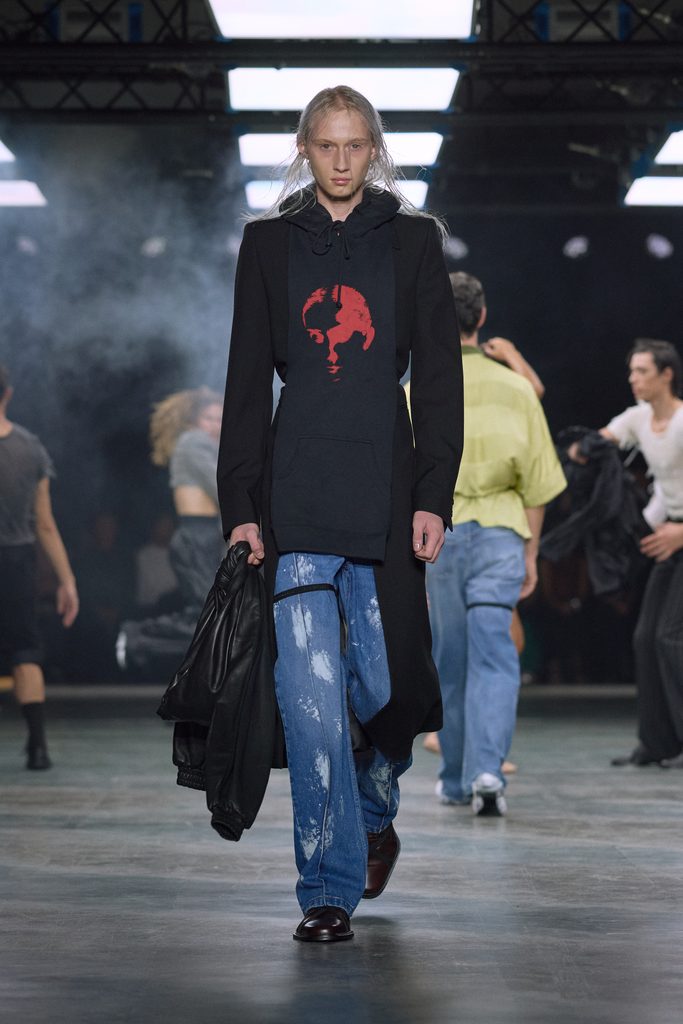
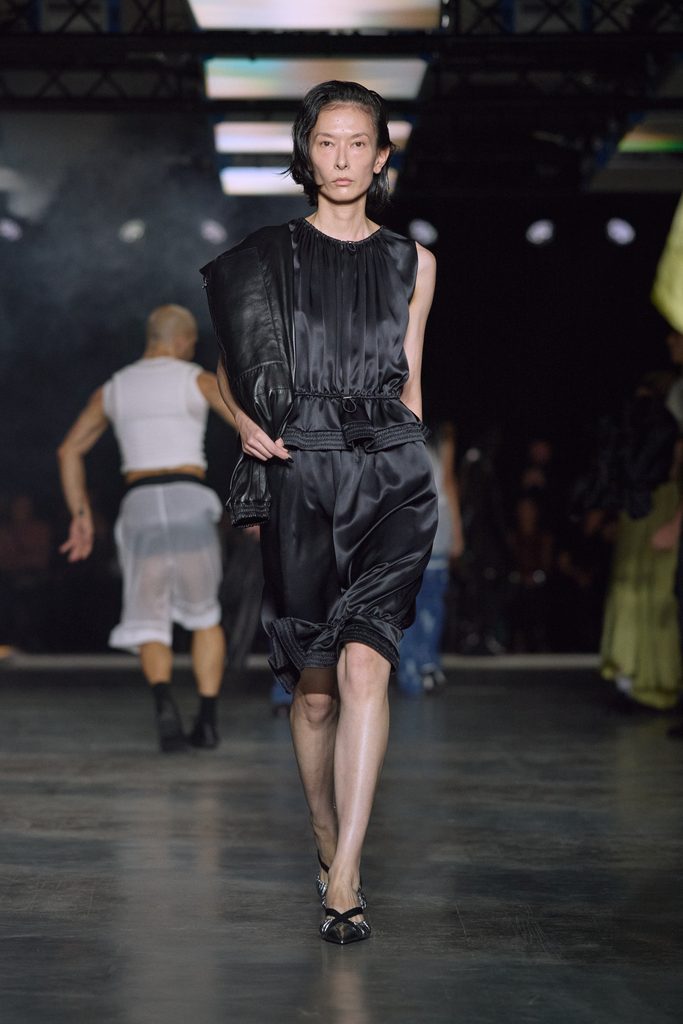
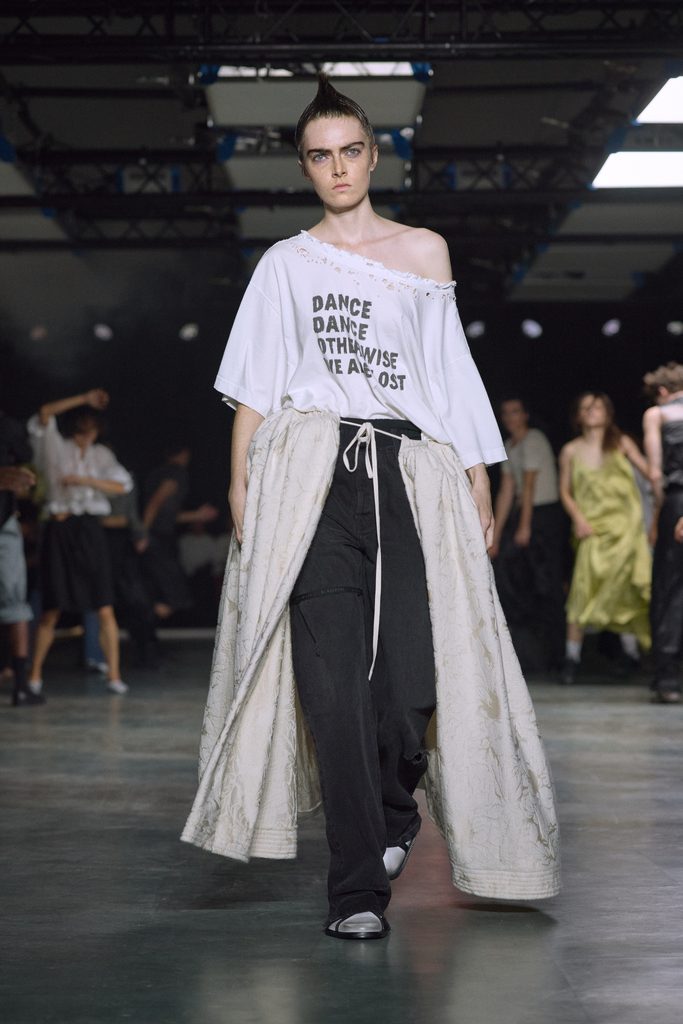
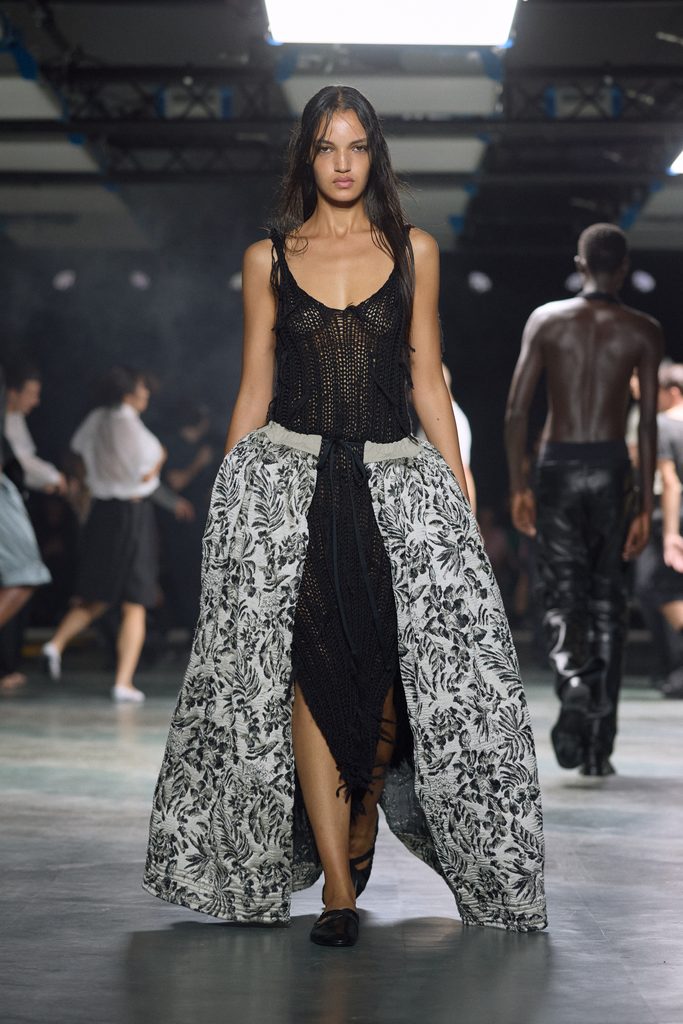
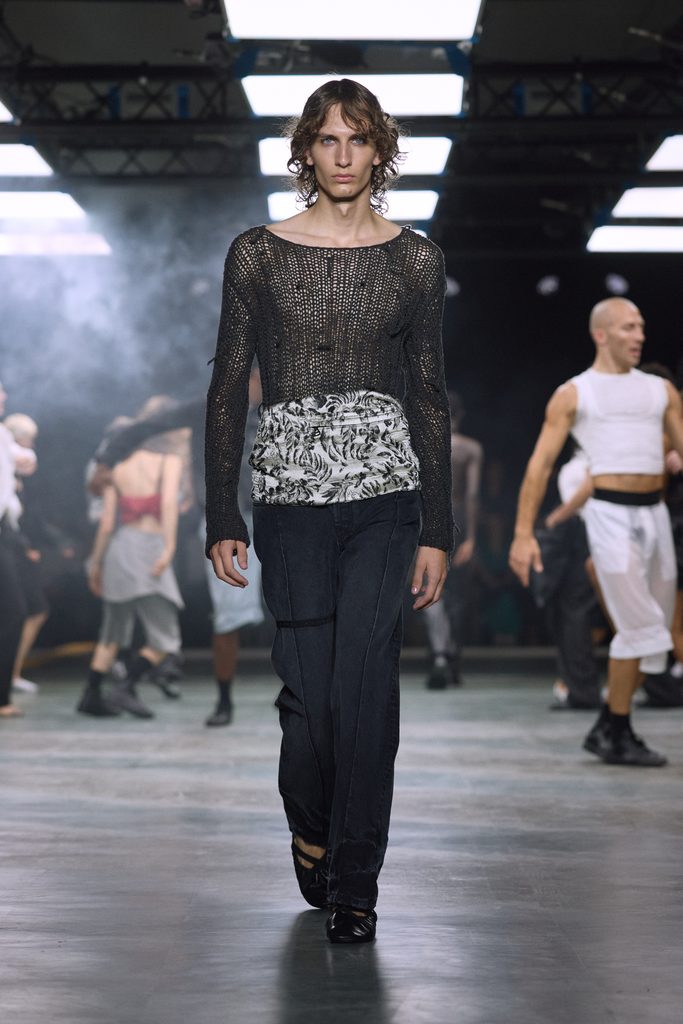
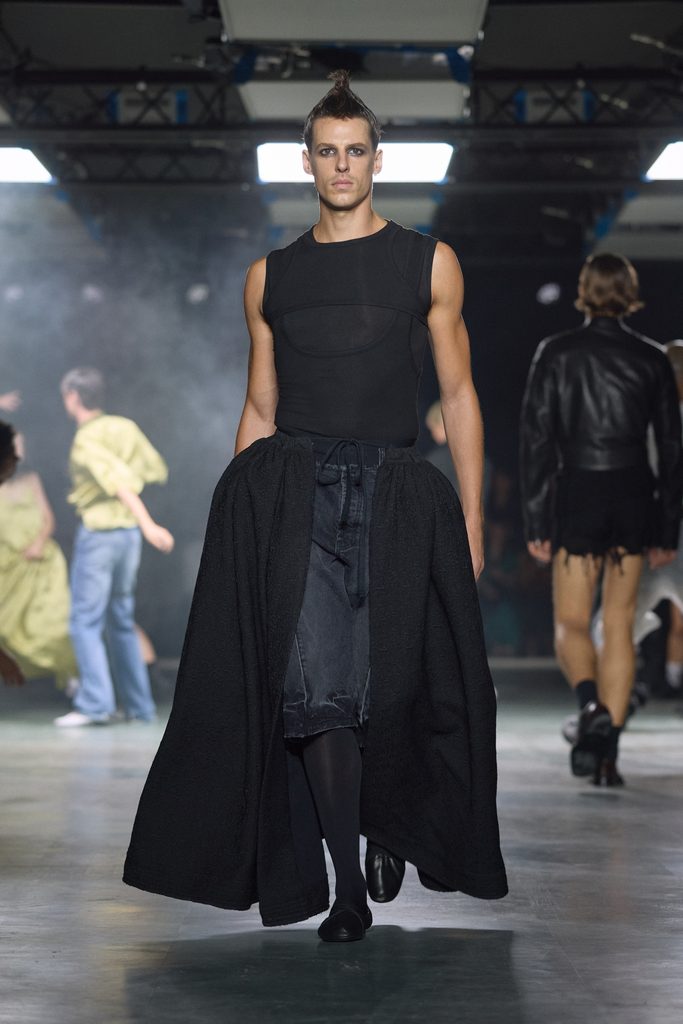
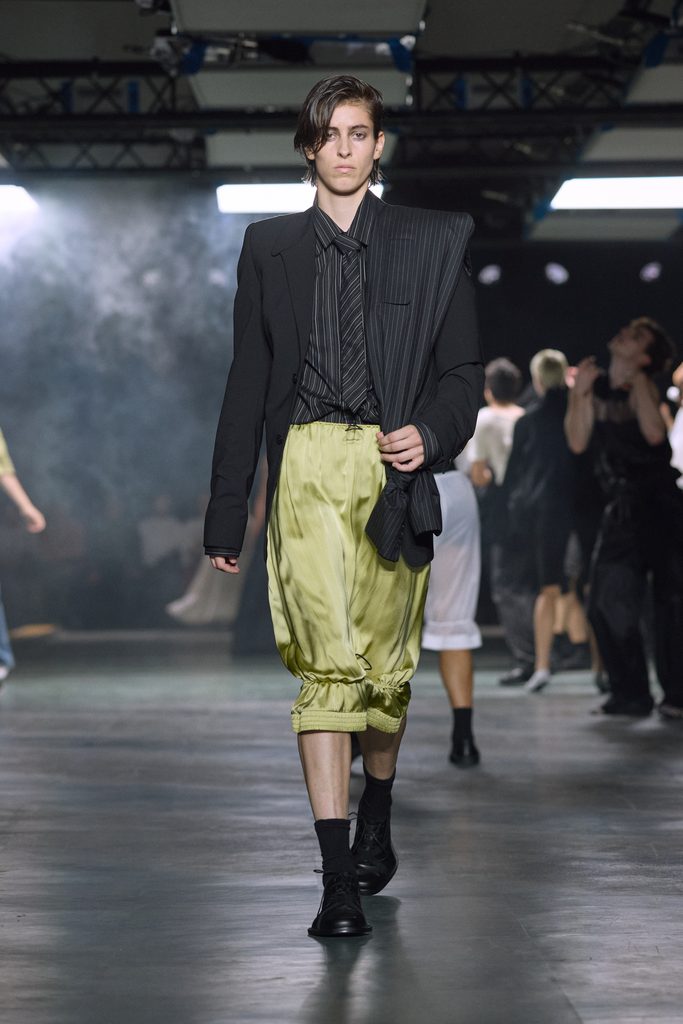
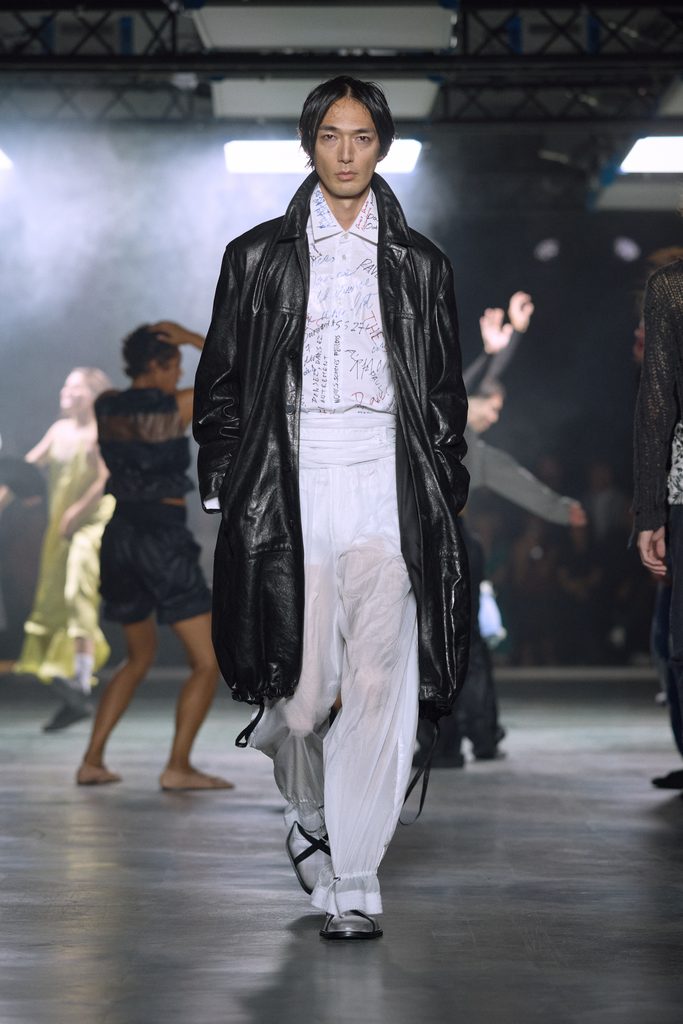
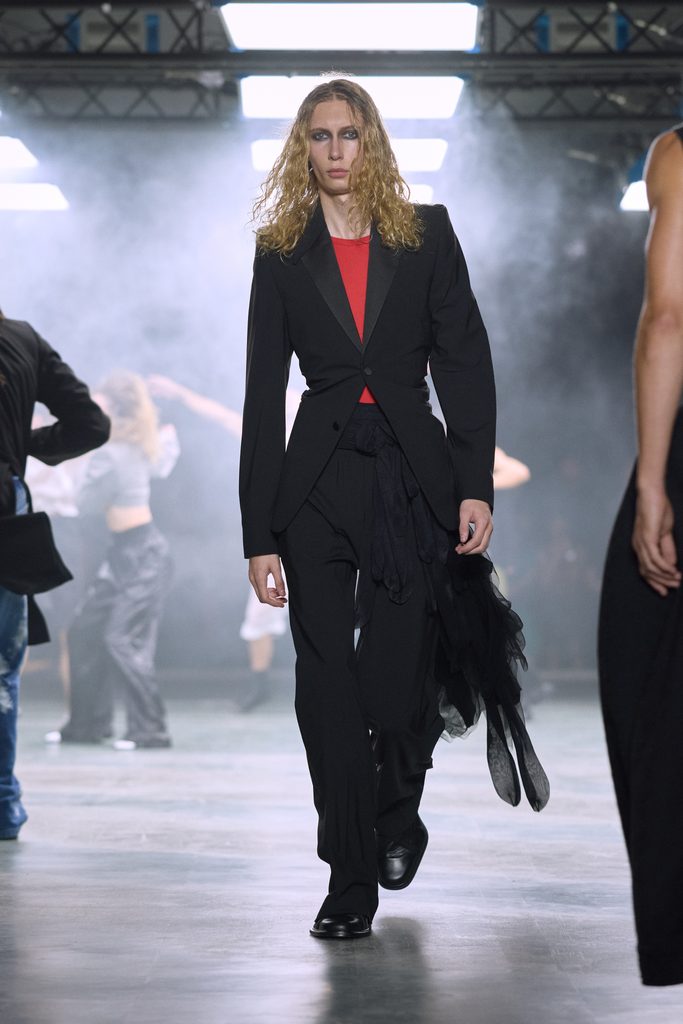
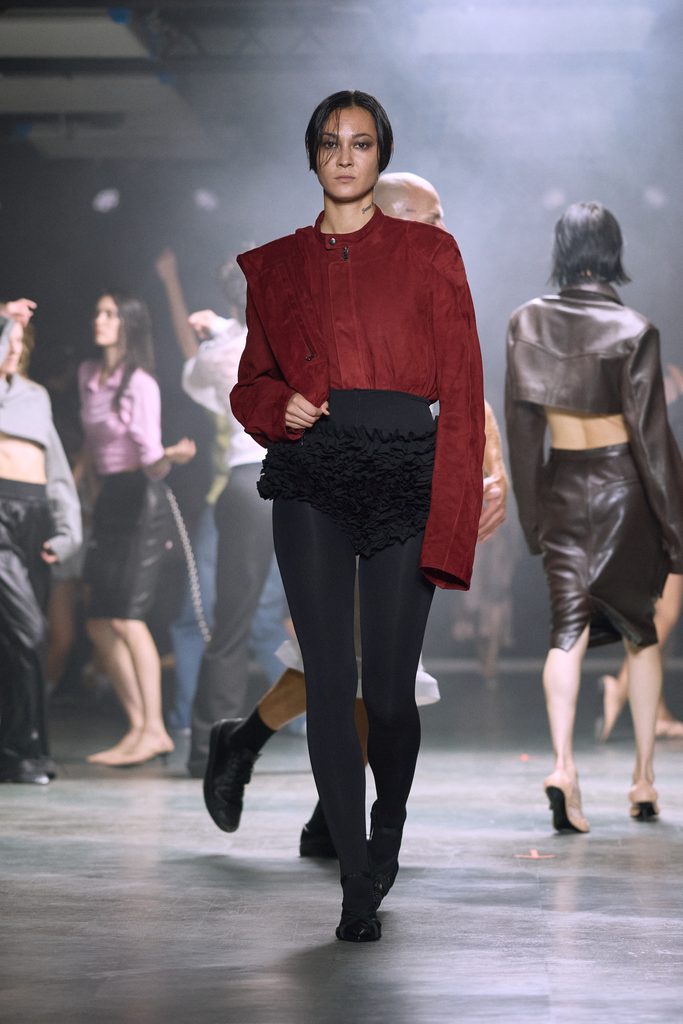
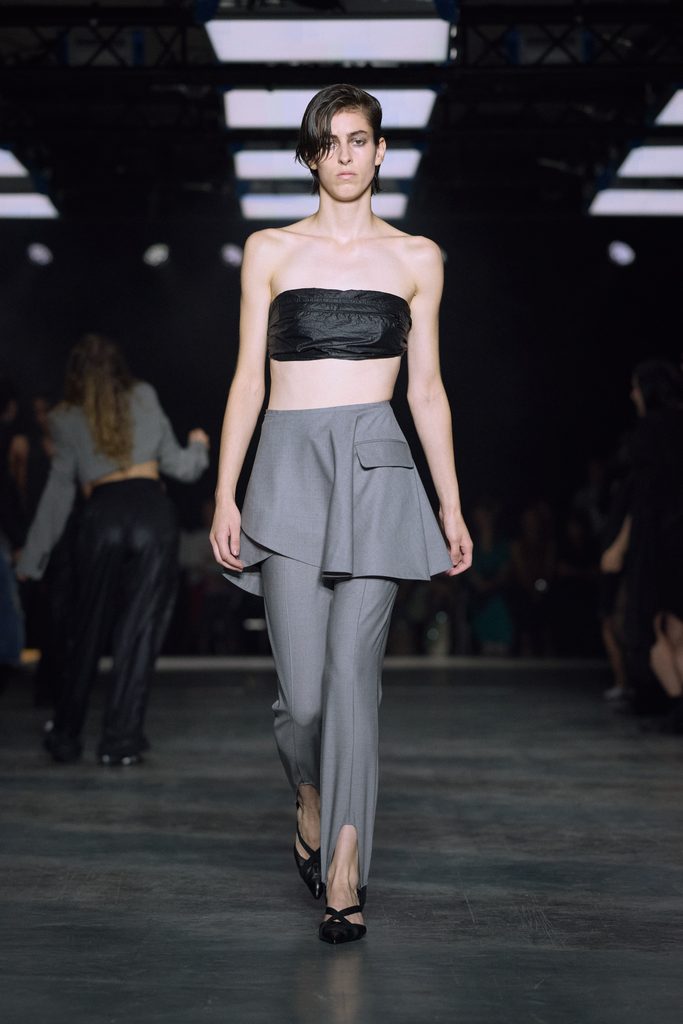
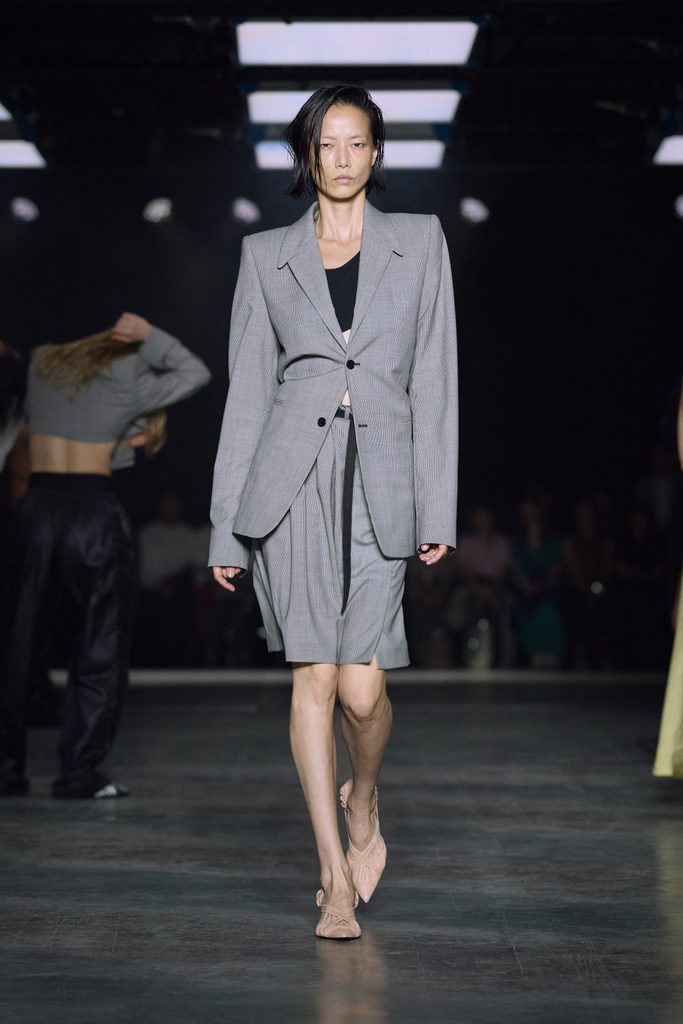
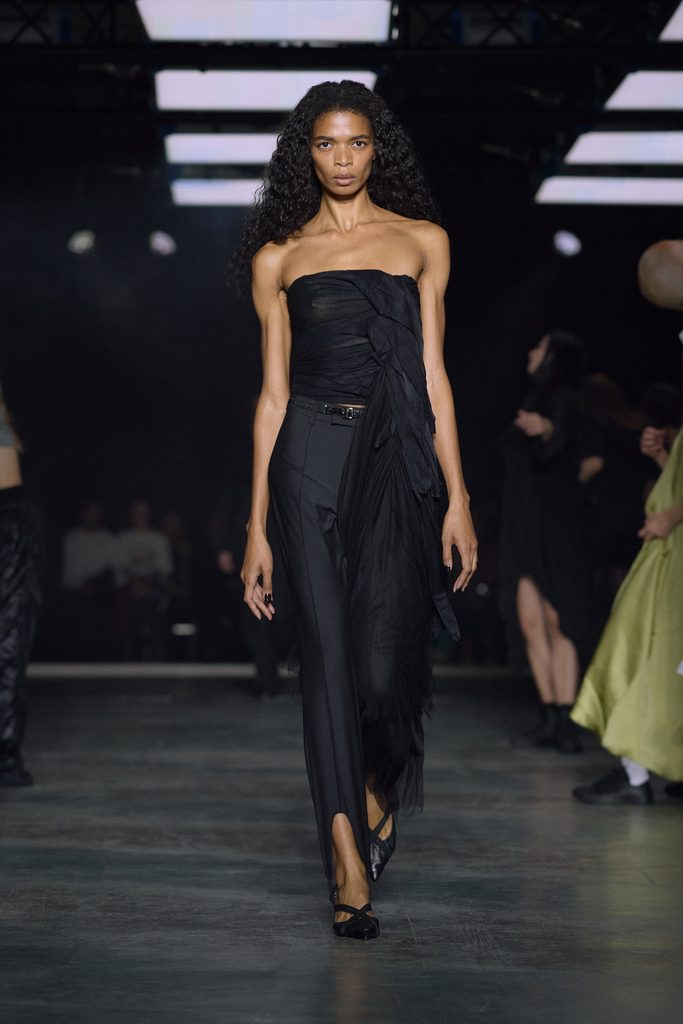
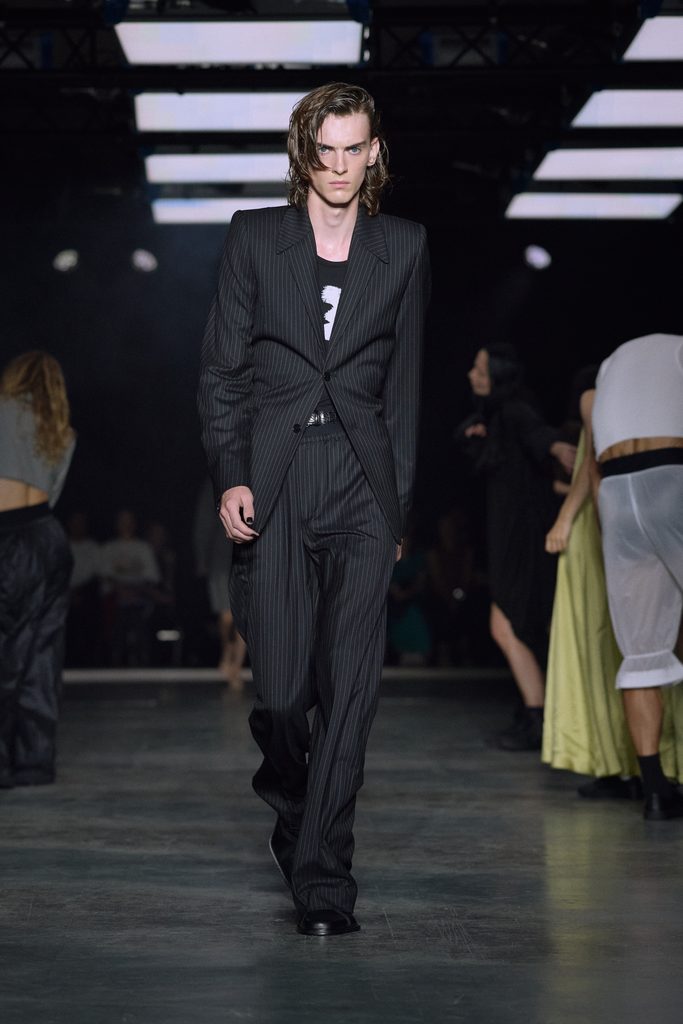
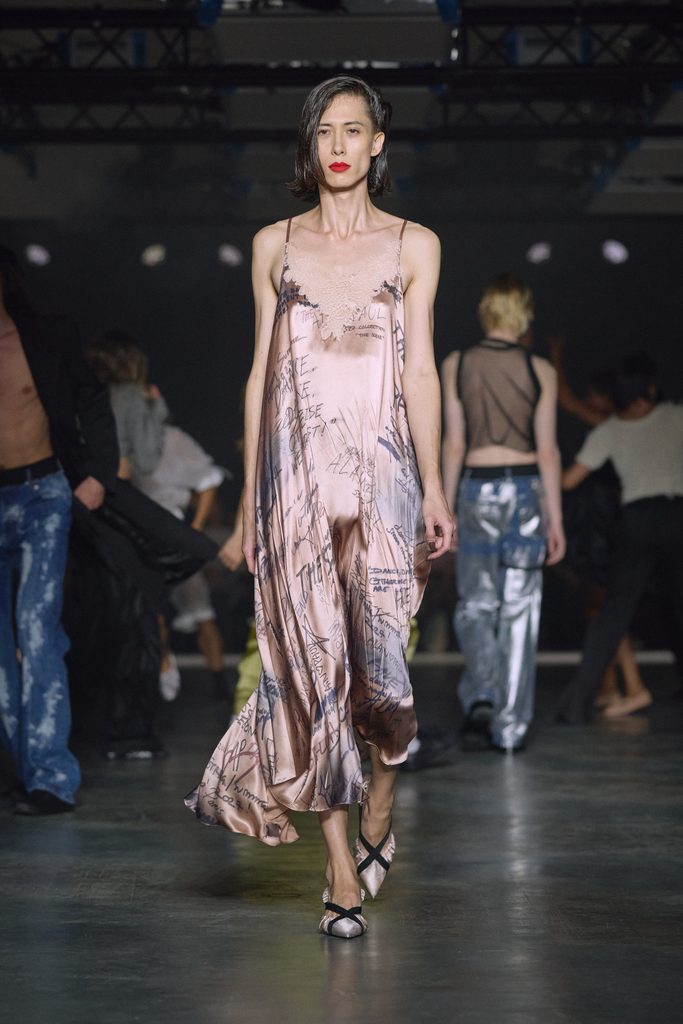
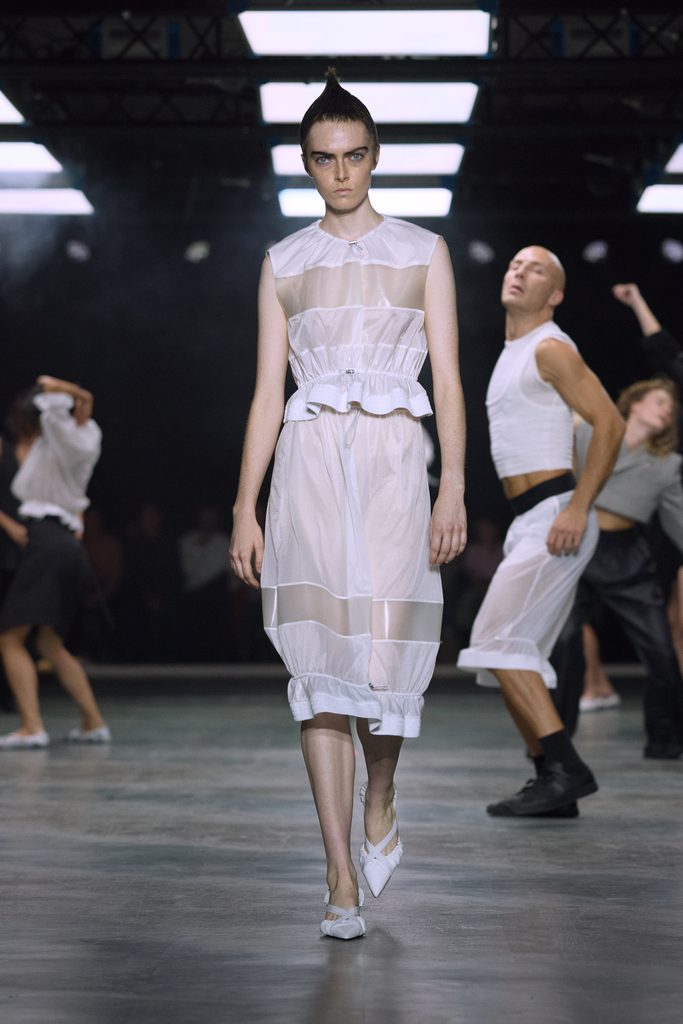
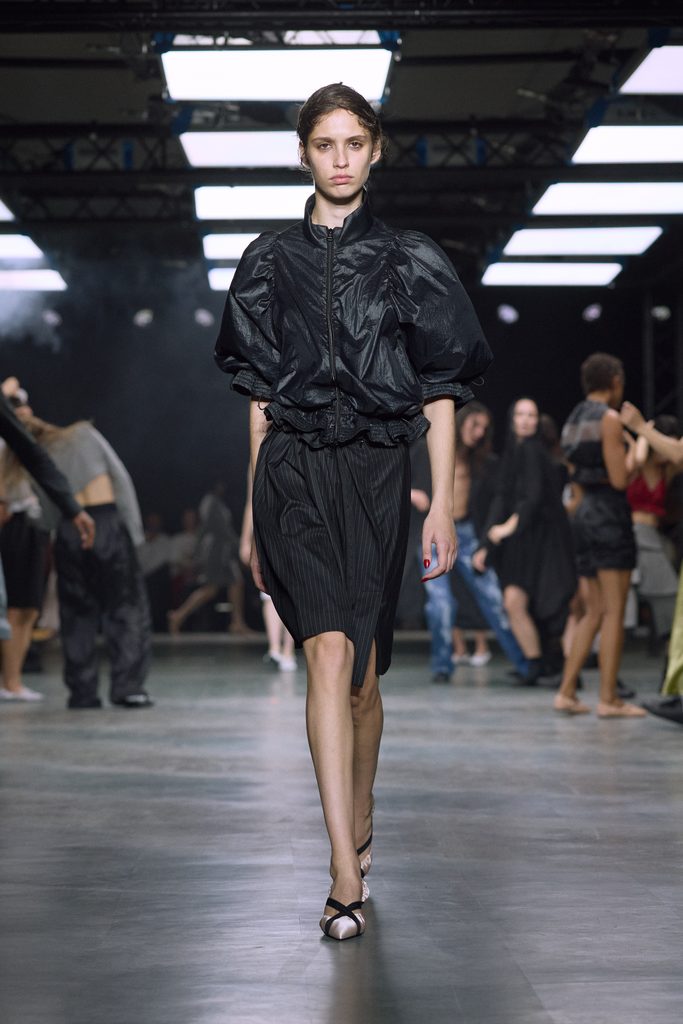
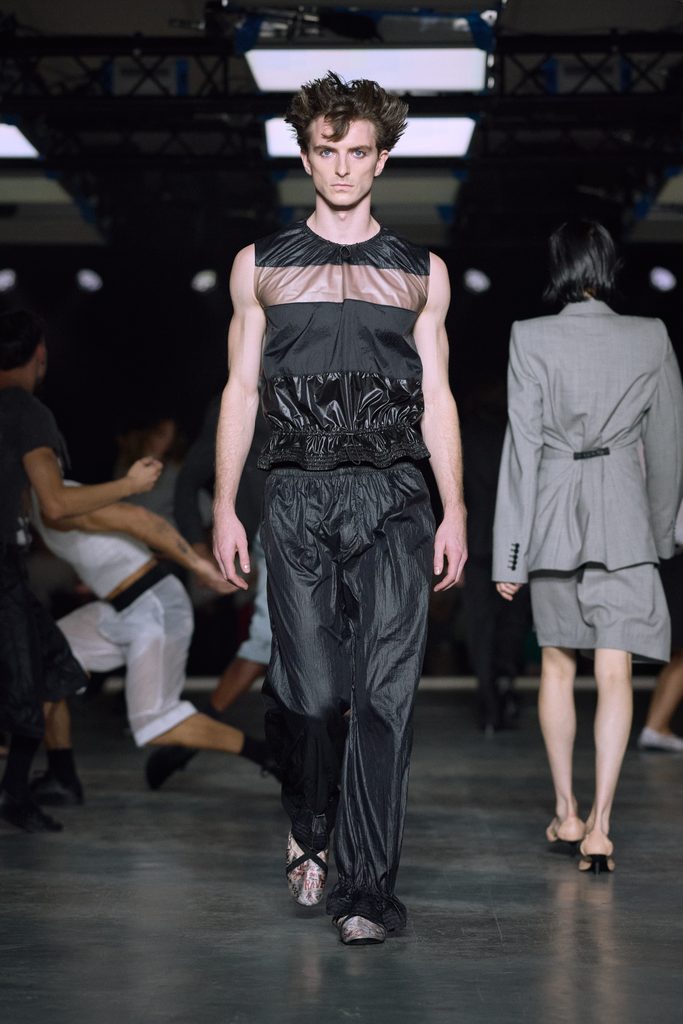
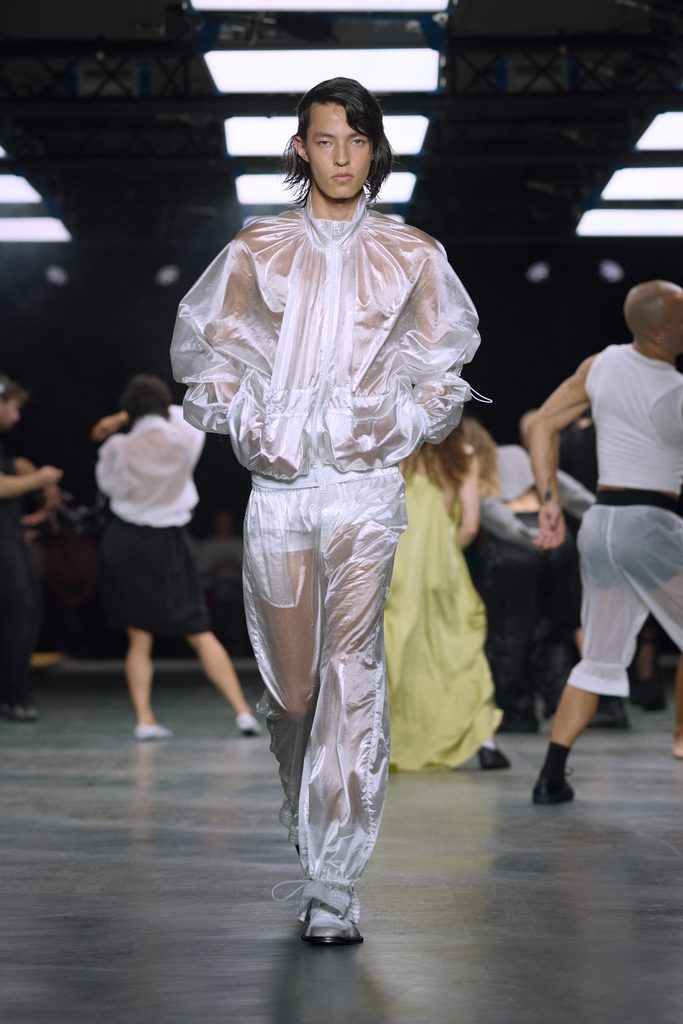
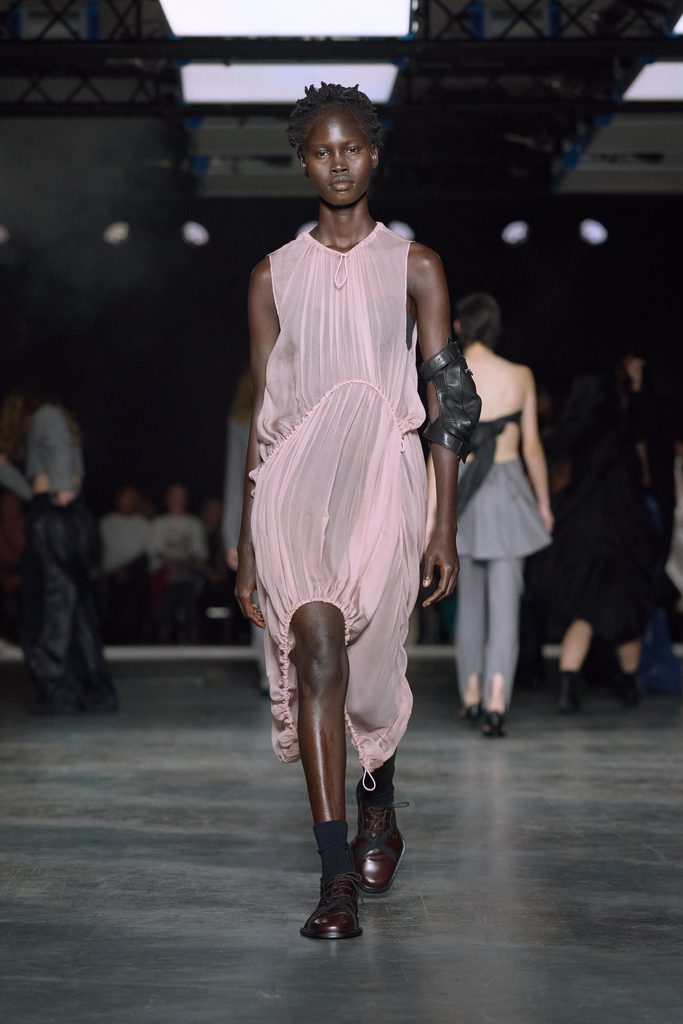
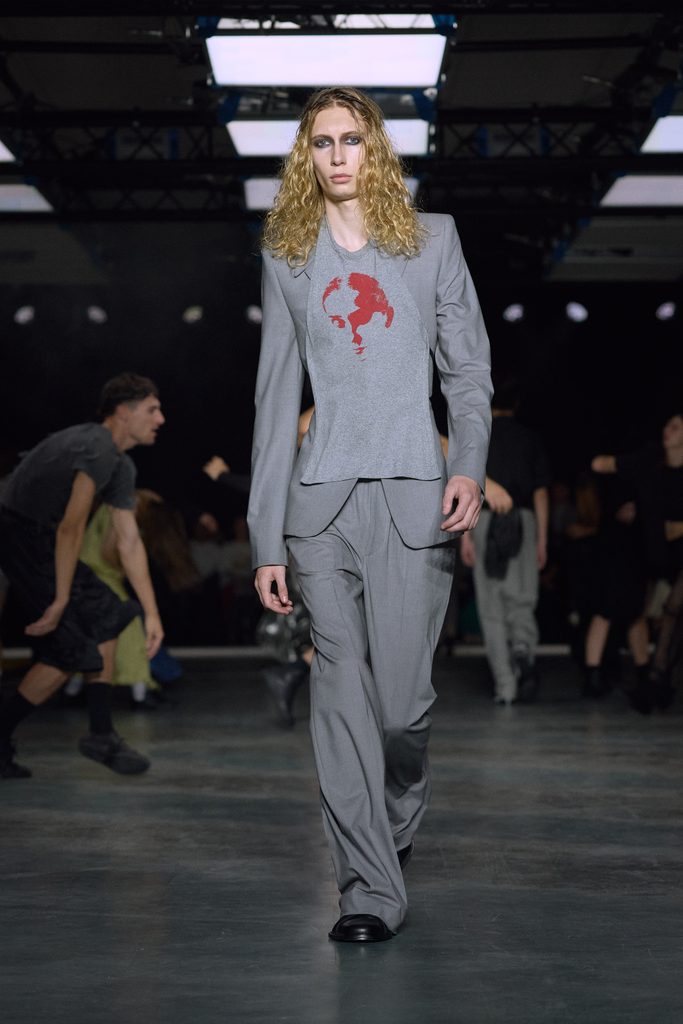
The detail that structures the collection is adjustable construction. An oversized tailored skirt has several button positions and an interior elastic system: the wearer decides the waist and the fall of the wool. In the fluid pieces, dresses in light mousseline incorporate tunnels, drawcords and stoppers, so that pulling or releasing the fabric transforms the silhouette. The drawcords, pull tabs and elastics of the nylon tracksuit migrate onto pencil skirts, sleeveless tops and dresses, while women’s track jackets receive balloon sleeves. The House also reverses materials: a dry, sheer silk built to look like nylon, a light nylon that takes on the fluidity of silk.
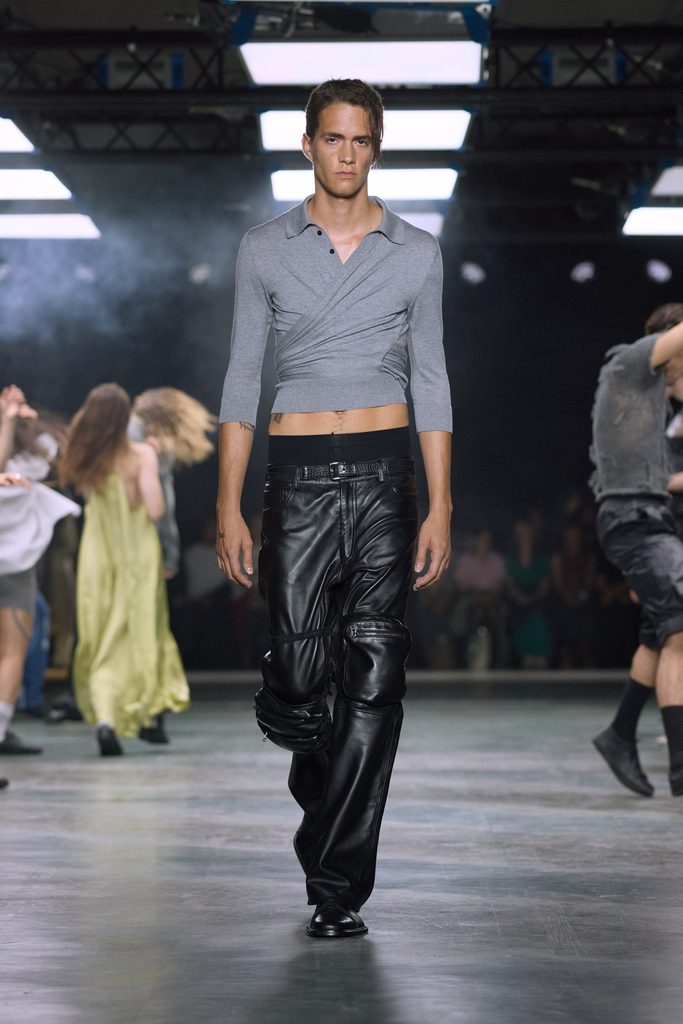
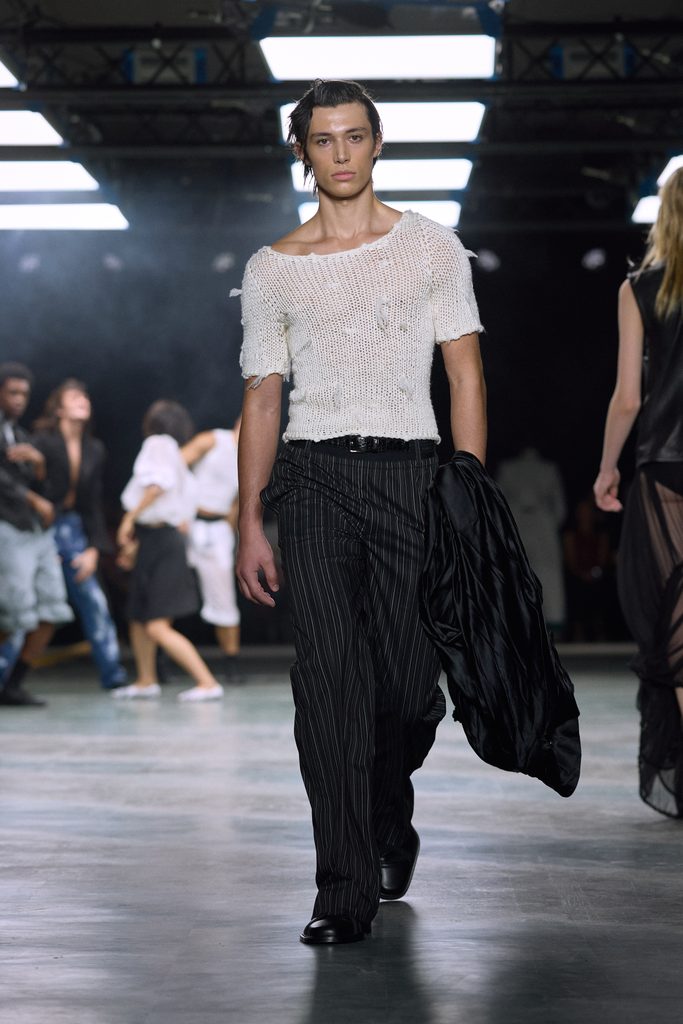
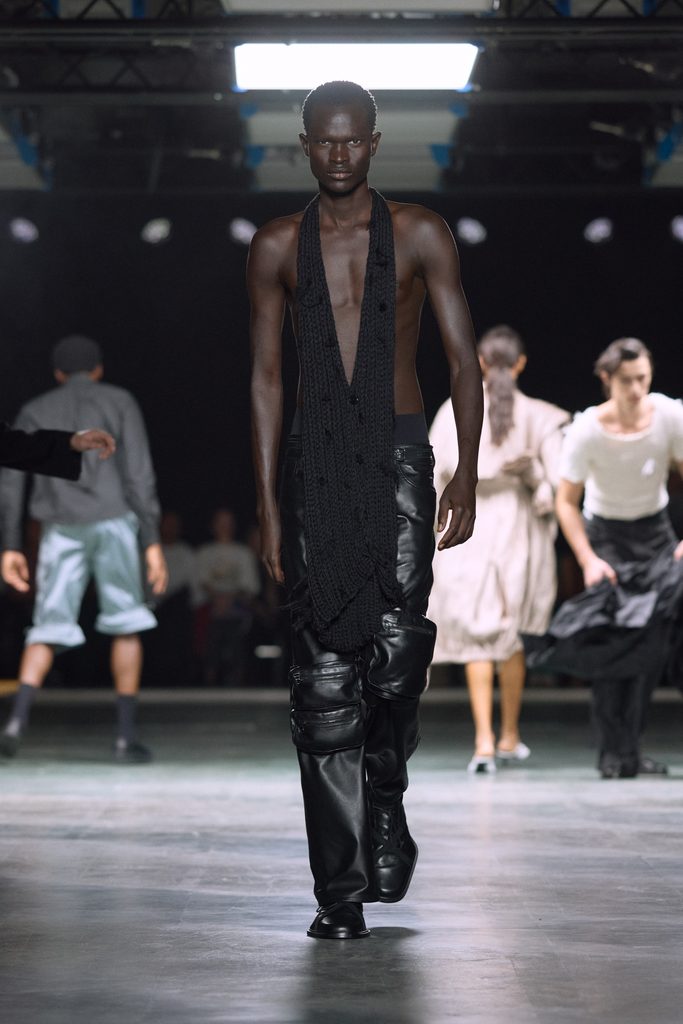
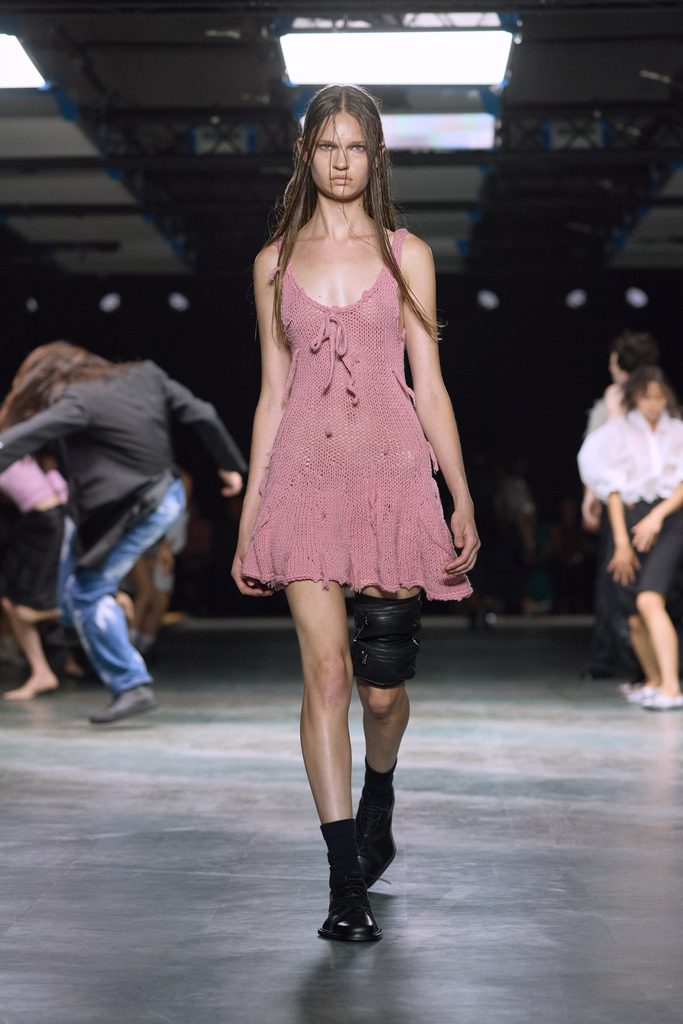
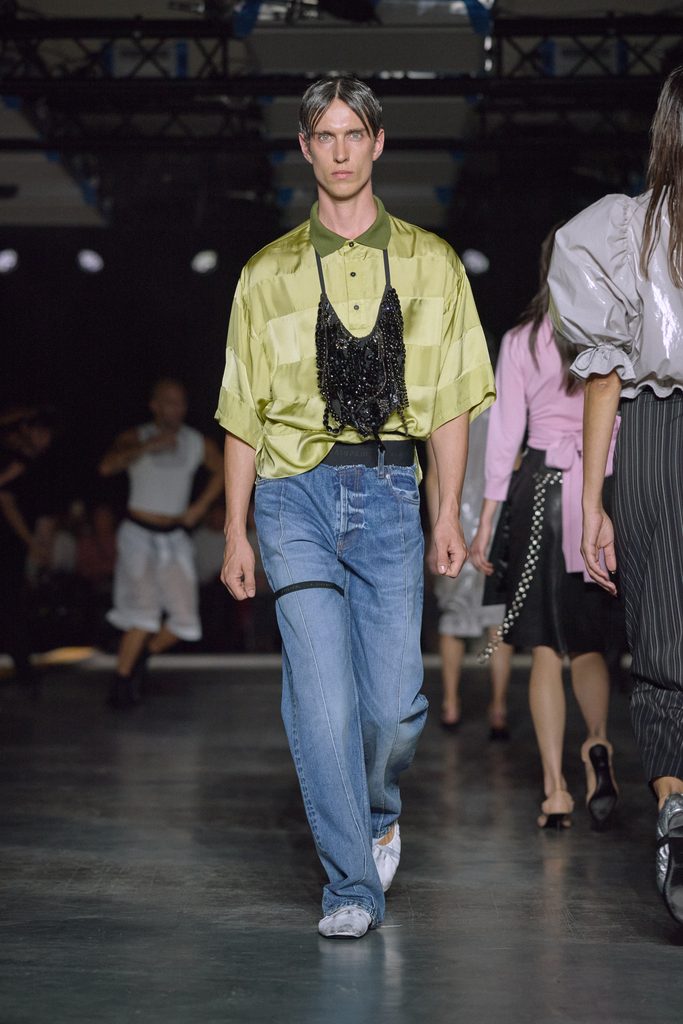
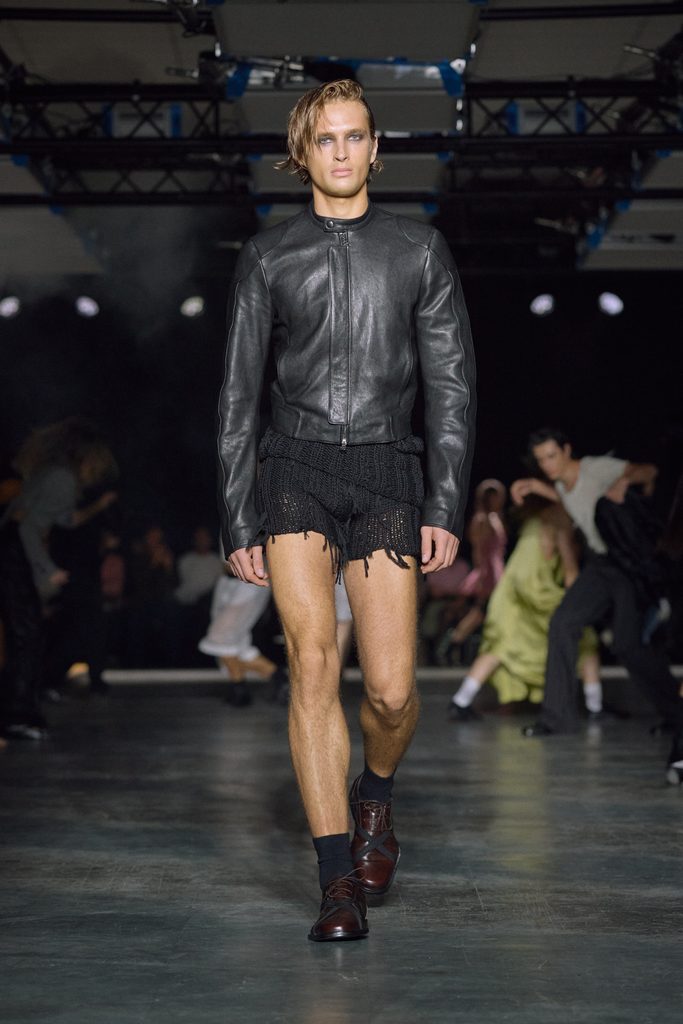
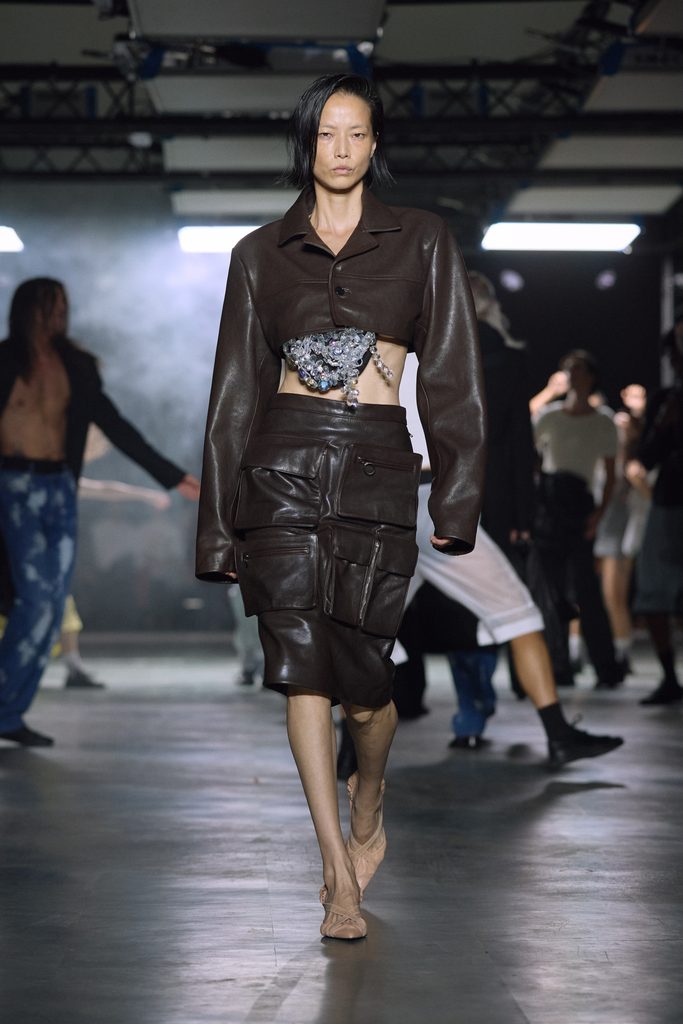
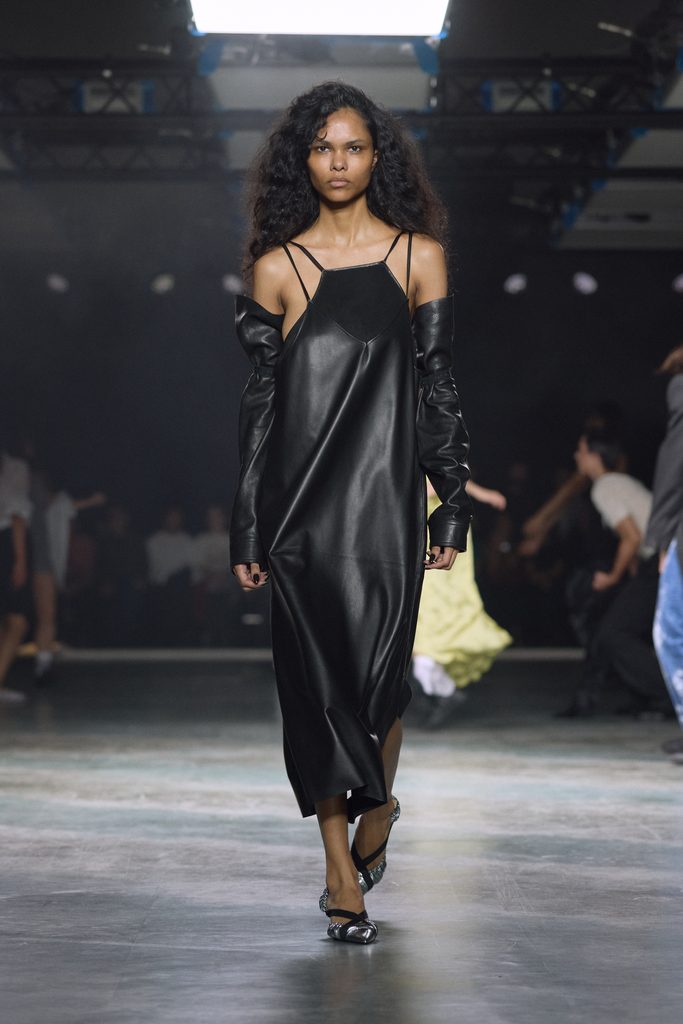
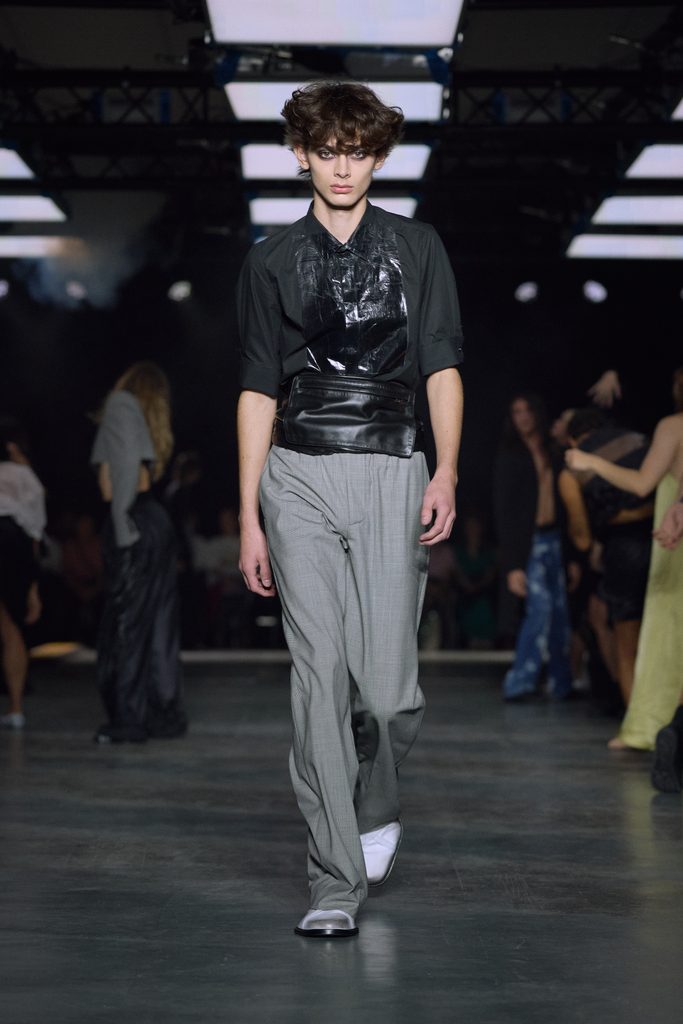
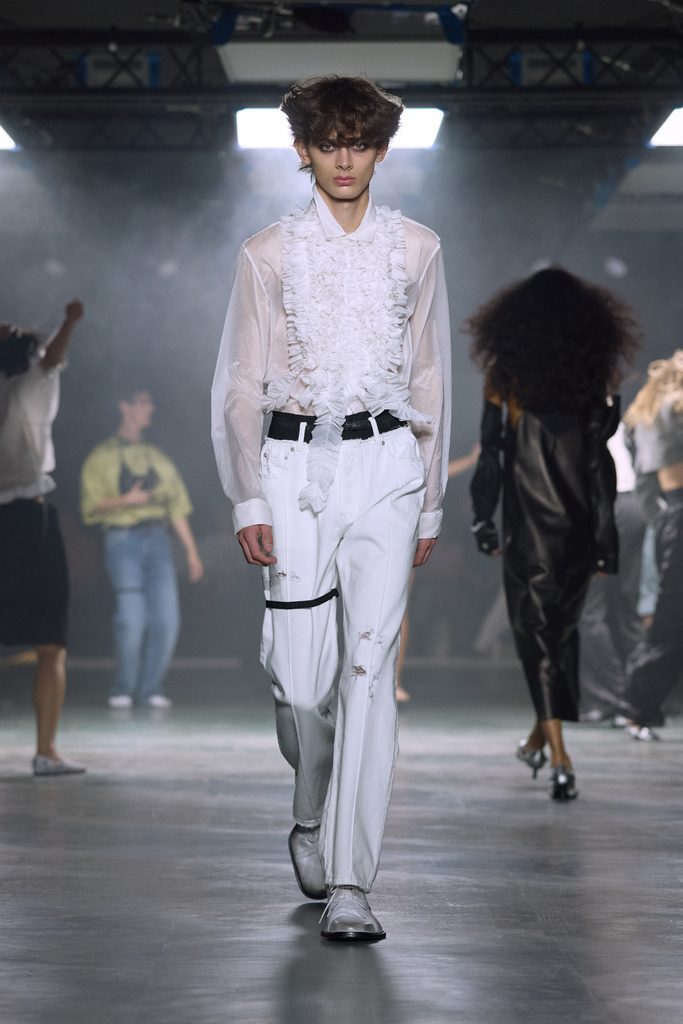
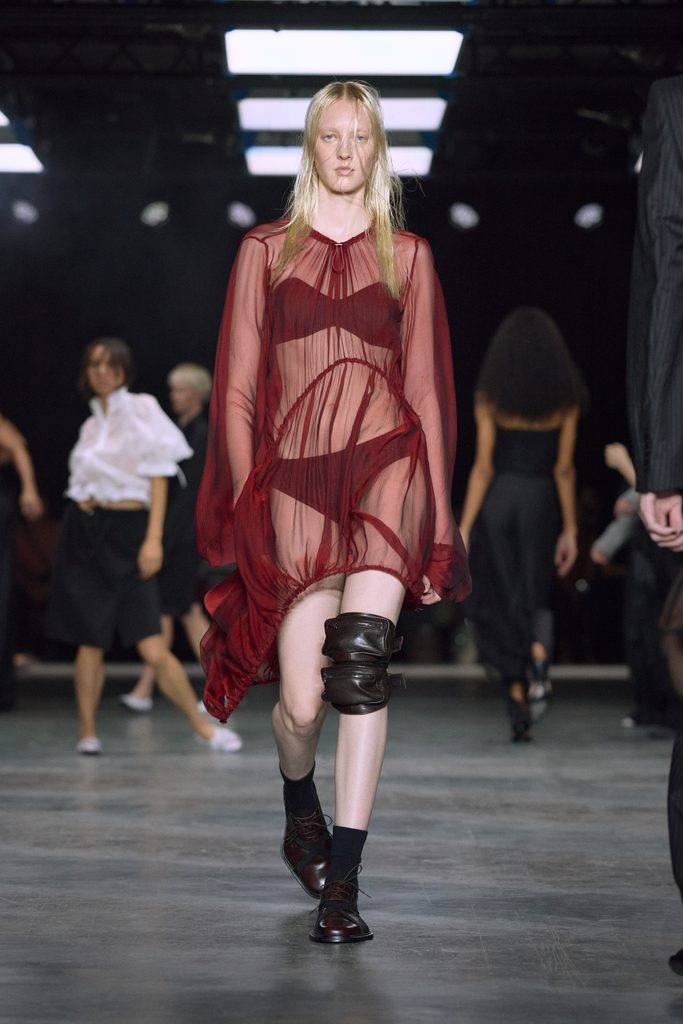
The second principle comes from ALAINPAUL’s collaboration with Imre and Marne Van Opstal for the Opéra de Paris in 2025. It showed, the House says, that a stage costume is built only for the audience’s gaze. The collection draws from it trompe-l’œil fragments: a shirt reduced to its front, a tank top or a cardigan reduced to its visible surface, an ornamental plastron that stands in for jewellery. The garment keeps the memory of a costume without reproducing it in full. The leather knee pad, designed to protect the dancer’s body, is detached from its function and becomes an accessory worn on the leg or a bag; a jacket sleeve can be tied at the top, as a belt or as a bag.
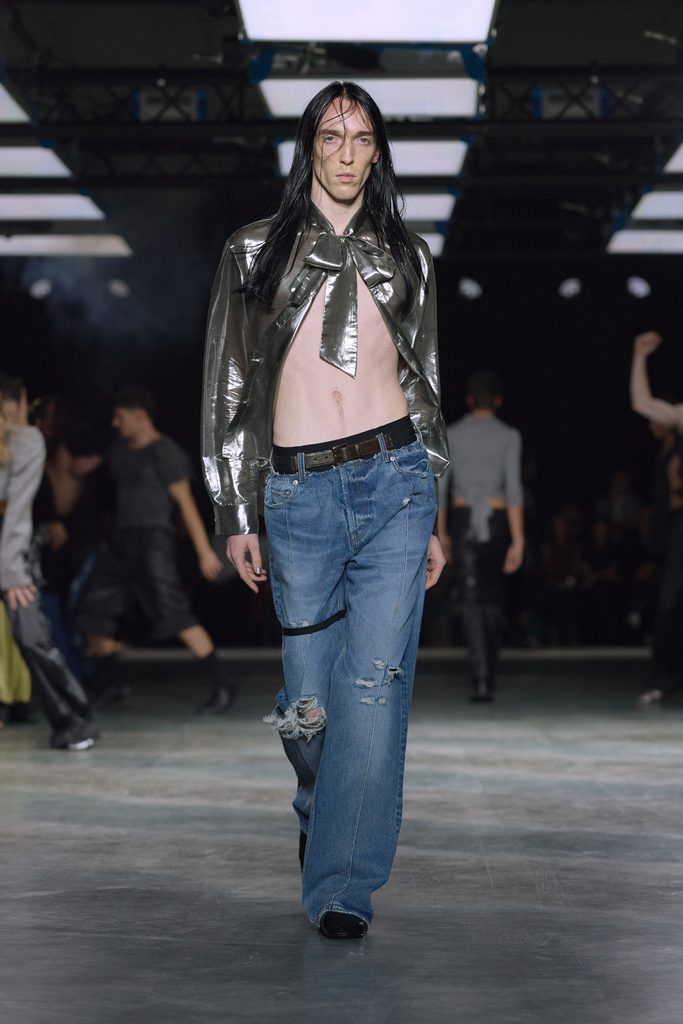
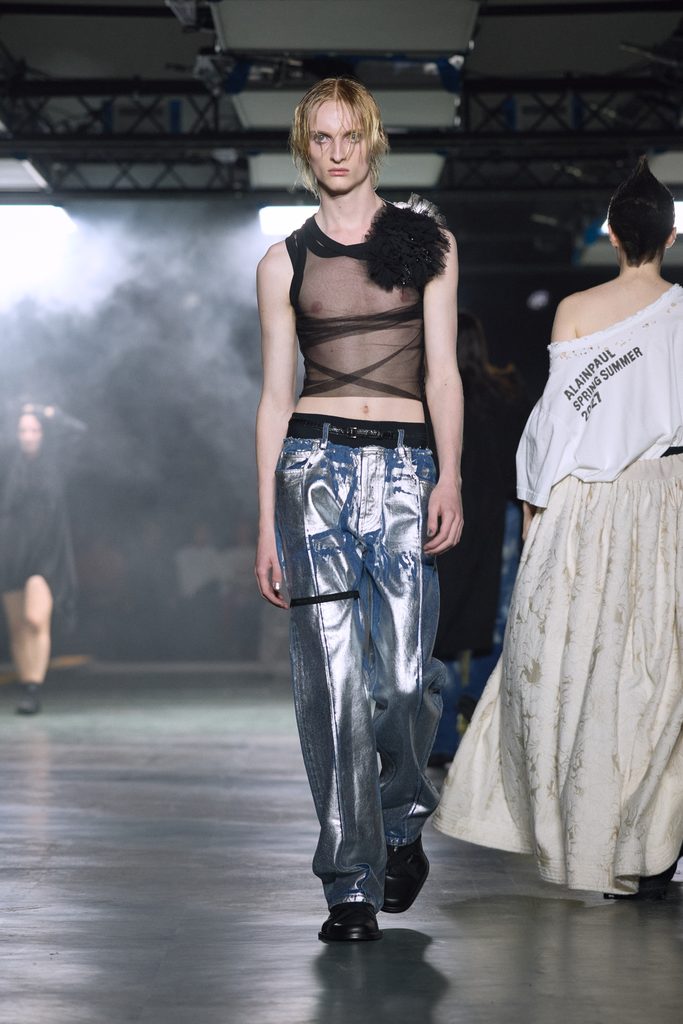
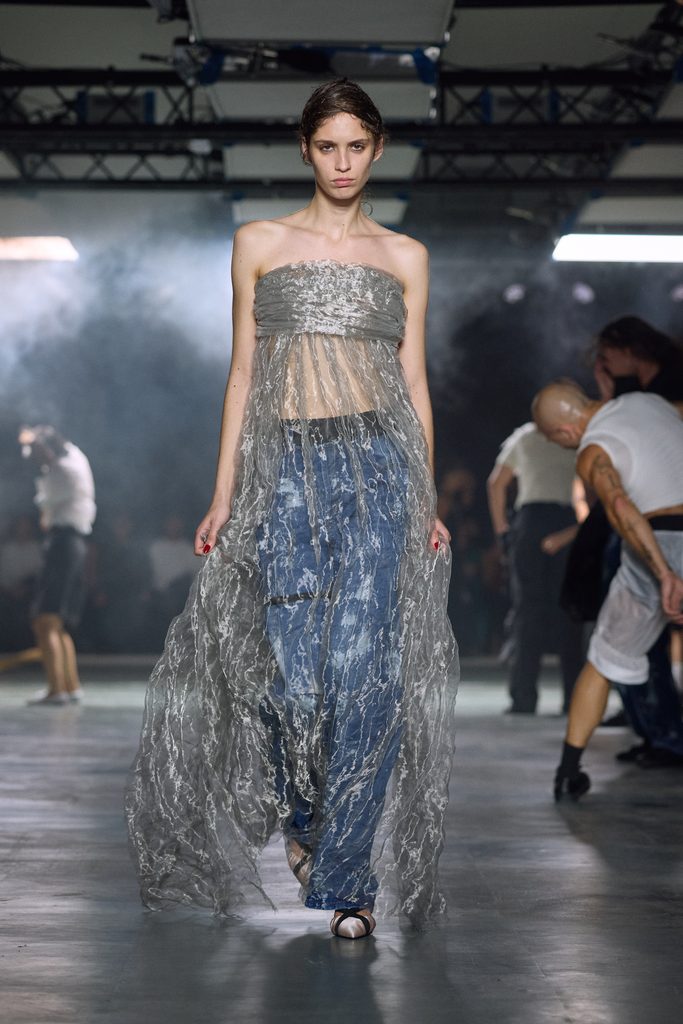
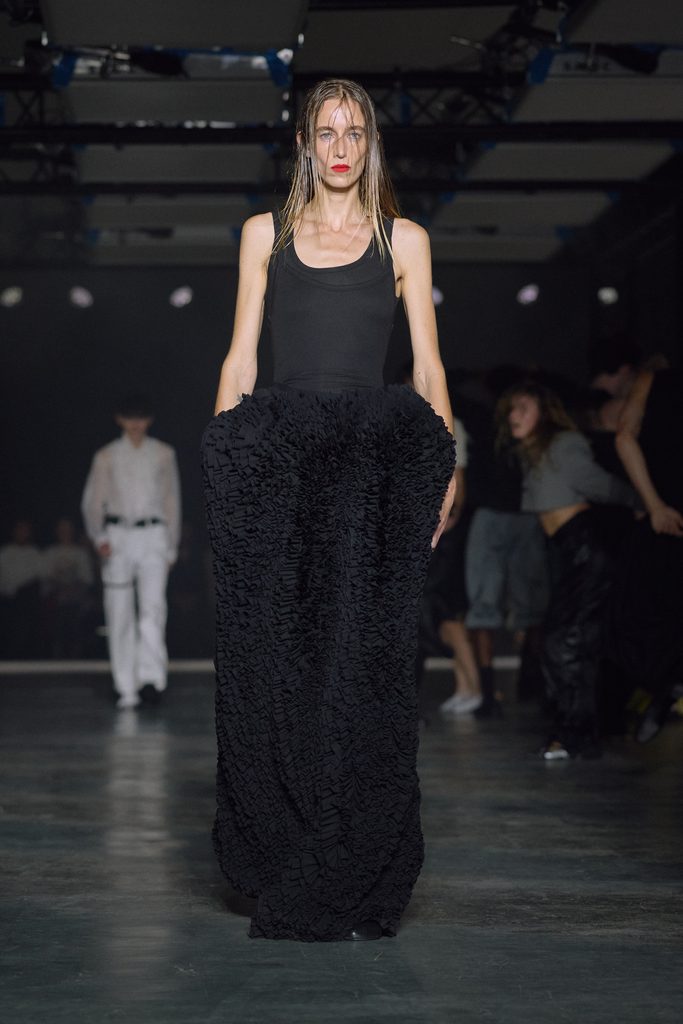
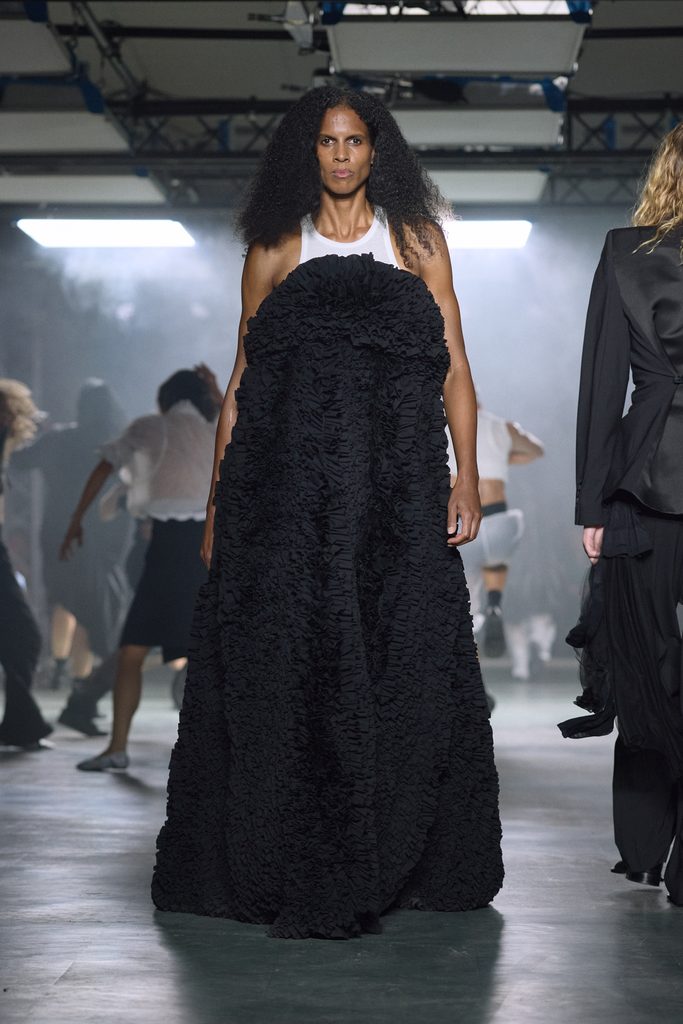
These two principles do not point the same way. The first gives control to the wearer: the piece adjusts, tightens, lets itself fall. The second admits that a piece may exist only to be seen. Their coexistence is the collection’s main tension, and the criterion for judging it is simple: does the construction keep the promise of the idea? A tutu reduced to its structure, turned into a dress of “a thousand ruffles” placed one by one around an inner corset, belongs to the second principle. The final silhouette, in silk organza woven with metallic thread that holds its shape in space with almost no weight, held by a single band of grosgrain at the bust, is more a technical demonstration. The denim, worked piece by piece through wear, fading and metallic foil, carries the clearest idea: a collective silhouette composed of individual identities.
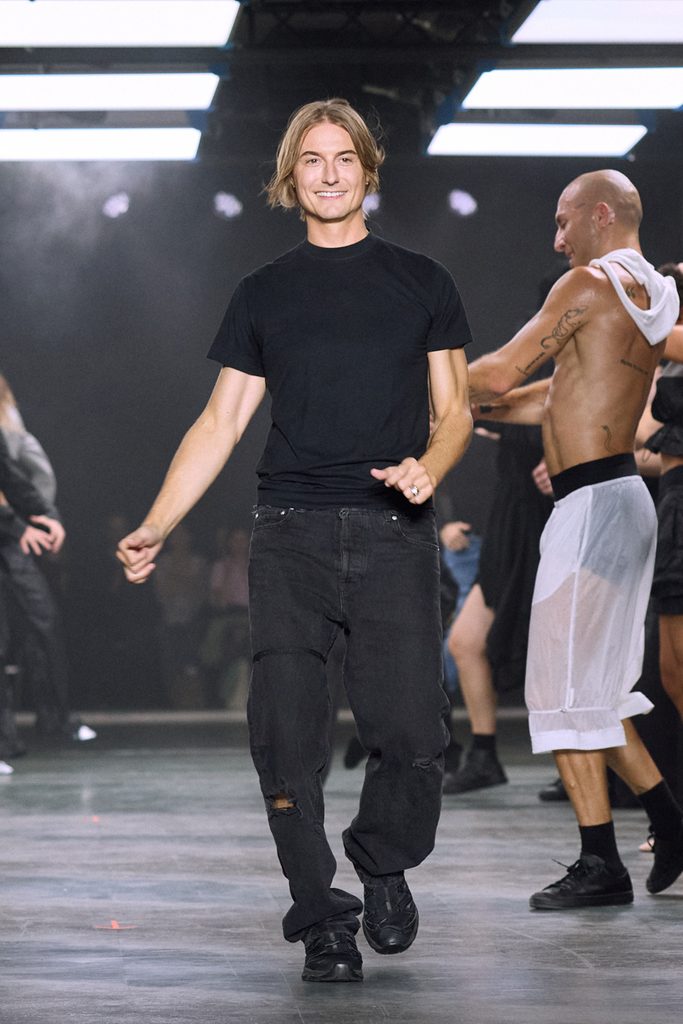
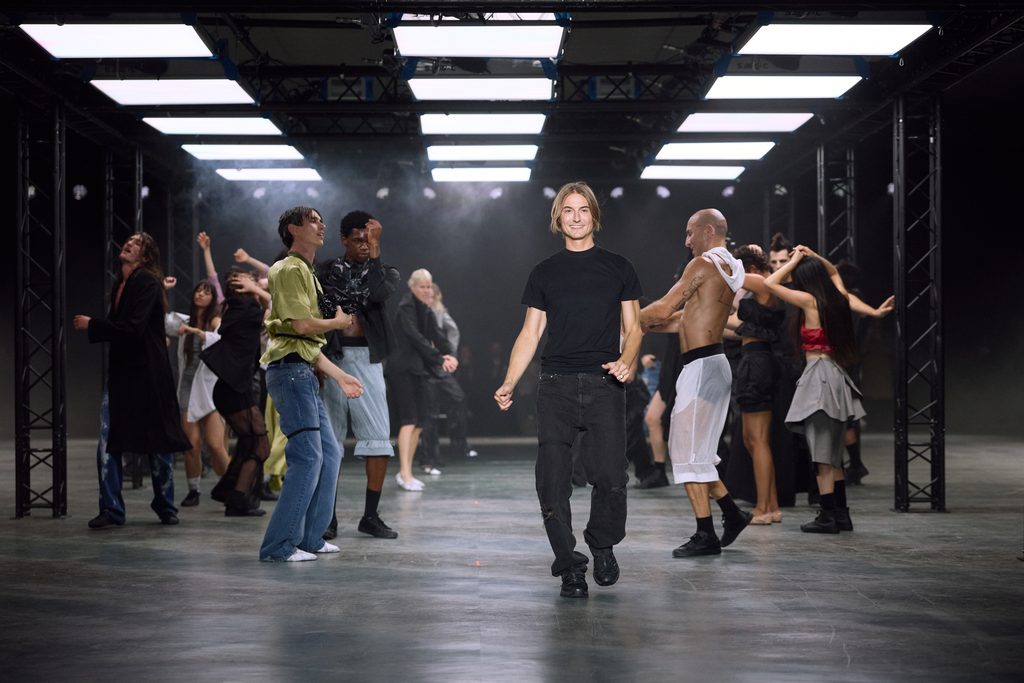
The presentation extends this research. For the first time, the House announces, a live performance combines contemporary dance and the pulse of the underground night: a choreography by Eric Christison, to a composition by Senjan Jansen with Shygirl, which starts from isolated bodies and gathers into a group. It remains to be seen, on the pieces themselves, whether the adjustment offered to the wearer is a real use or an effect of construction.
Cette publication est également disponible en :


