
In the collective imagination, bourbon belongs to the world of distillation. Bread belongs to the world of fermentation. The two worlds seem far apart.
Yet they share a common language: that of cereals.
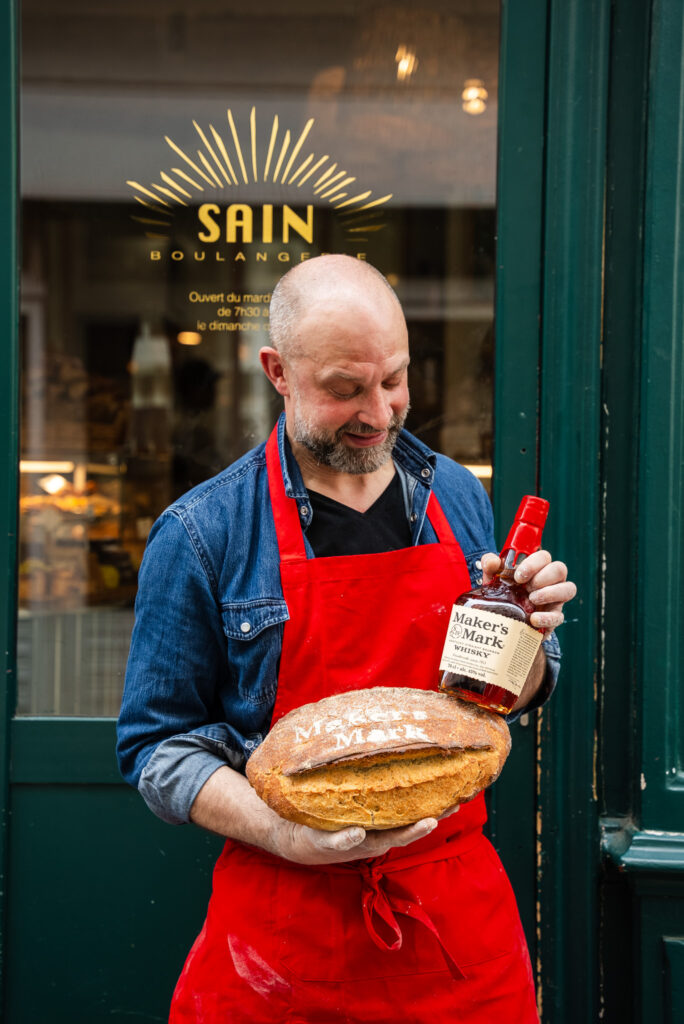
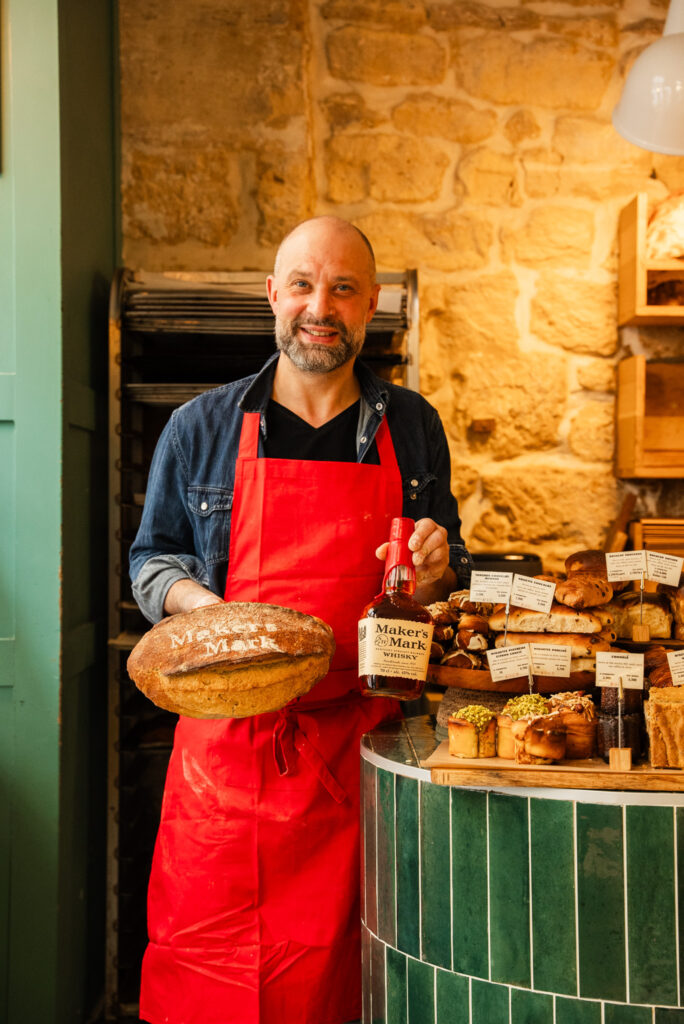
The collaboration between Maker’s Mark and Anthony Courteille, founder of SAIN Boulangerie in Paris, is based precisely on this often overlooked proximity. Far from a classic promotional operation, it offers the opportunity to re-read a spirit through the raw materials that give it birth.
The loaf created for the occasion uses the three cereals that make up the Maker’s Mark bourbon recipe: corn, red winter wheat and malted barley. To this base is added a bourbon-enriched sourdough, designed to prolong the aromatic markers of the spirit in an everyday object.
The interest of this approach lies in its historical coherence.
In 1953, in Loretto, Kentucky, Bill Samuels Sr. decided to produce a bourbon different from those of his time. Where many recipes used rye to provide structure and spice, he chose red winter wheat. This change became one of the signatures of Maker’s Mark, renowned for its smoothness and balance. According to the company’s story, this research was based in particular on experiments carried out in bread form, to assess the taste behavior of cereals before they undergo fermentation and distillation.
The loaf imagined by Anthony Courteille thus acts as a form of translation. It does not seek to reproduce bourbon, but to go back upstream to the ingredients that make up its structure.
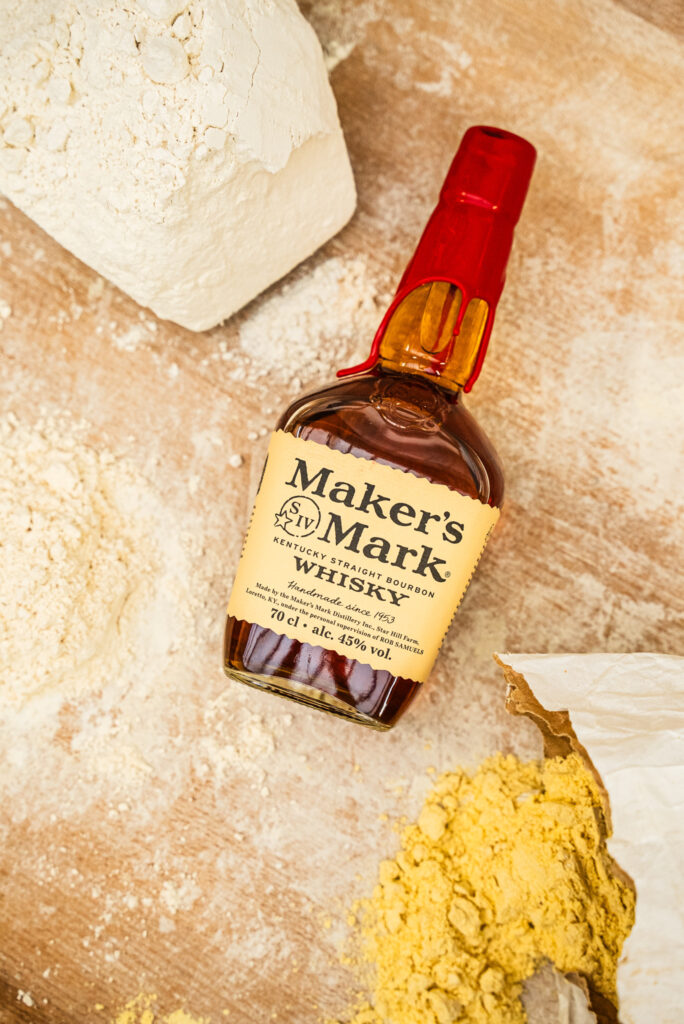
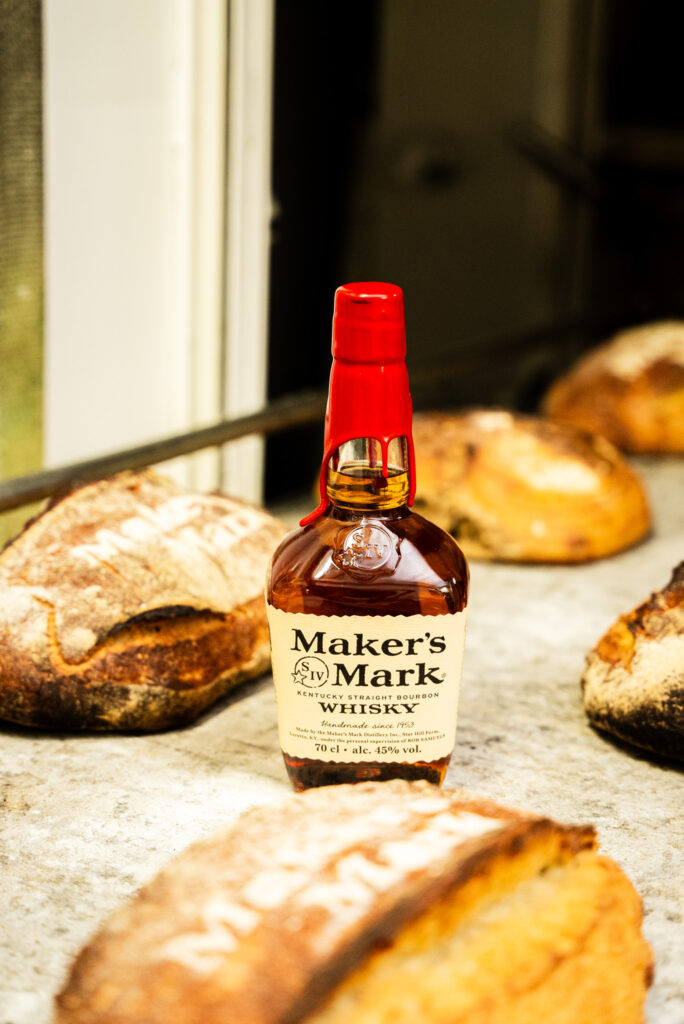
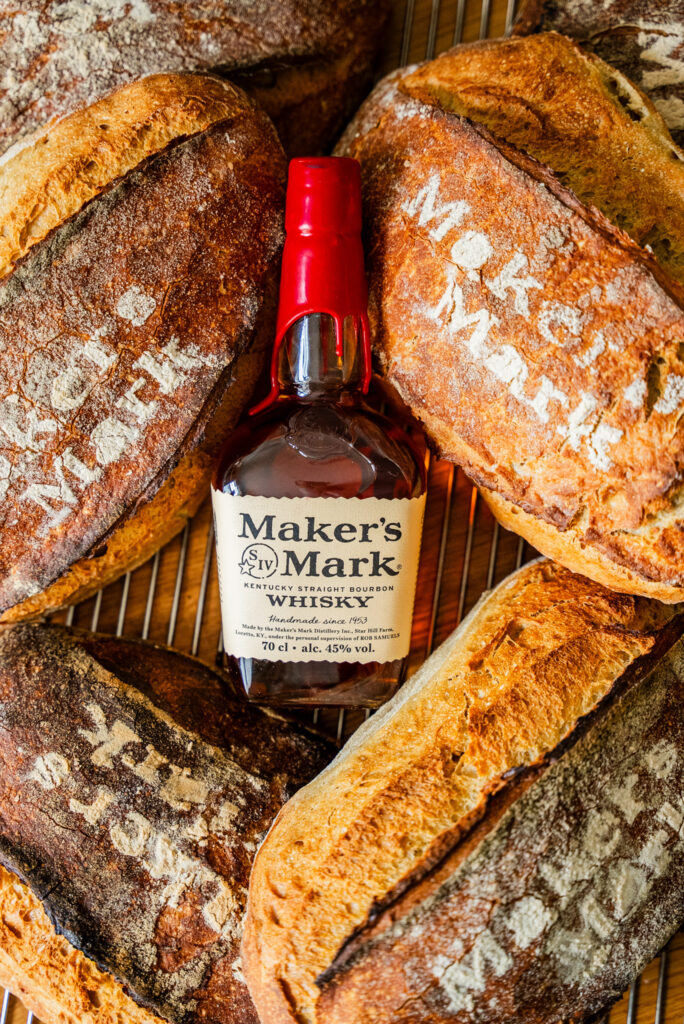
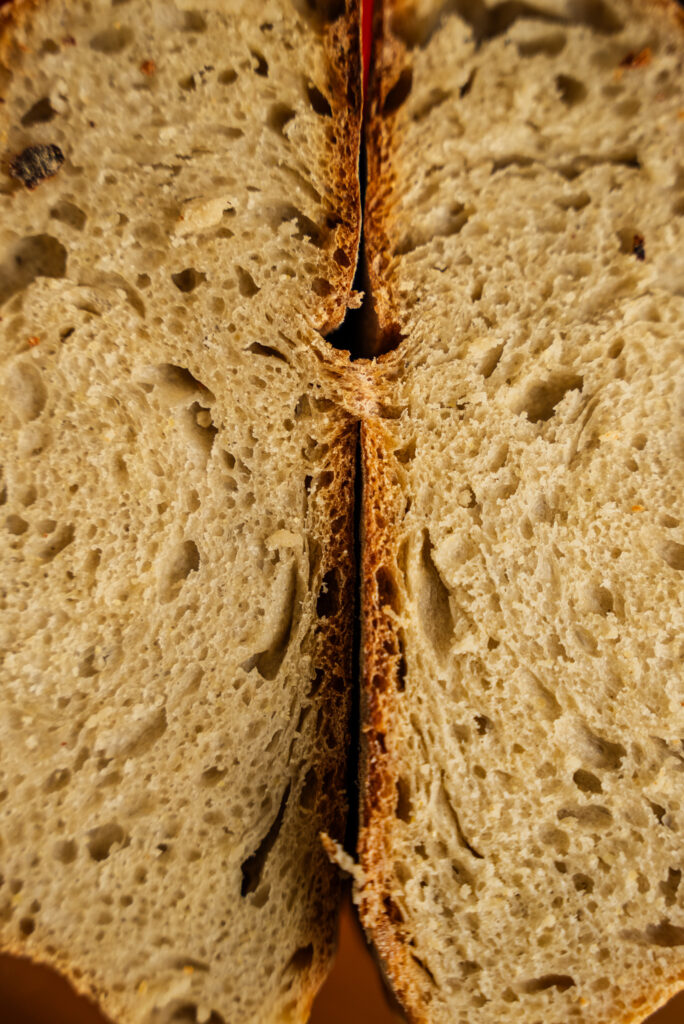
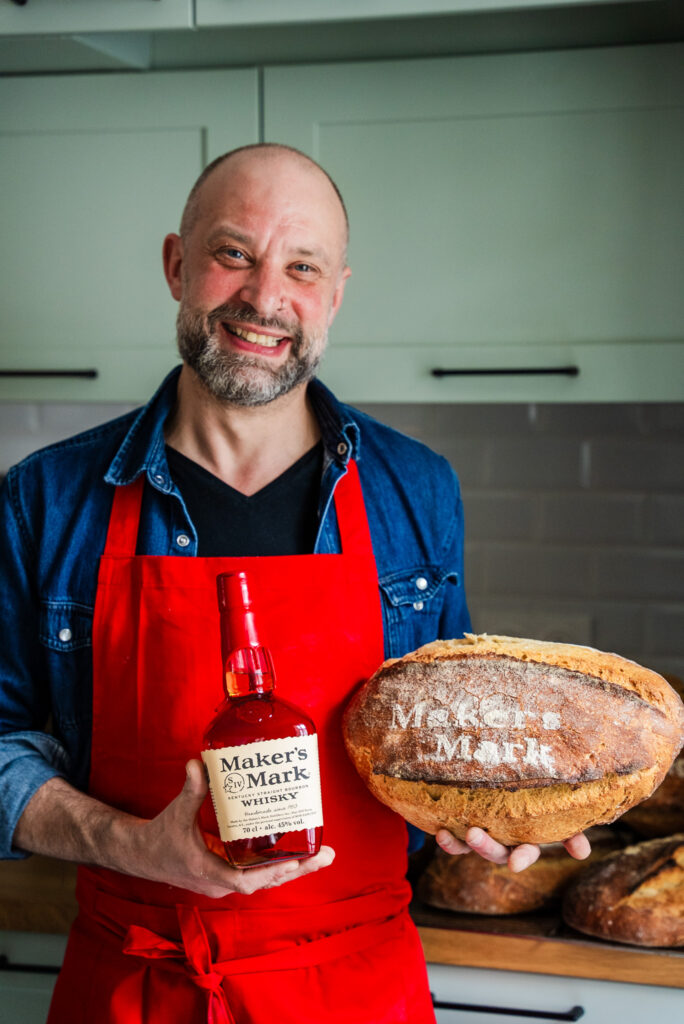
Maker’s Mark bourbon is distinguished by a number of technical choices rarely featured in collaborations of this kind: no rye, fermentation in cypress vats, double distillation in copper stills and aging in new burnt American oak barrels. Each batch is tasted until it reaches its equilibrium point, generally between six and seven years of ageing.
These elements find a natural echo in the SAIN philosophy. For several years now, Anthony Courteille has been advocating a bakery centered on natural sourdough, long fermentations and working with raw materials. In both cases, the logic is identical: accept time as an ingredient.
This rapprochement tells a broader story about the contemporary evolution of taste. The boundaries between gastronomy, baking and spirits are becoming more porous. The most interesting collaborations no longer seek to juxtapose two logos, but to identify a common ground of know-how.
Here, the terrain is that of cereals.
Corn, wheat and barley are usually invisible in a glass of bourbon. Distillation transforms them to the point where their agricultural origins are forgotten. By reintroducing them in a sourdough loaf, Anthony Courteille makes perceptible what usually remains hidden.
At heart, this limited edition is less about whiskey than about transmission. It reminds us that, before being a bottle sealed in red wax, bourbon is first and foremost a story of grains, fermentation and repeated gestures. The same elements that, for centuries, have also underpinned the art of bread-making.
Cette publication est également disponible en :

