
The Spring/Summer 2026 season in Milan brought to the forefront an idea that MM6 Maison Margiela has been exploring since its inception: the most perfect form is one from which nothing can be taken away. The Bauletto is the latest embodiment of this concept.
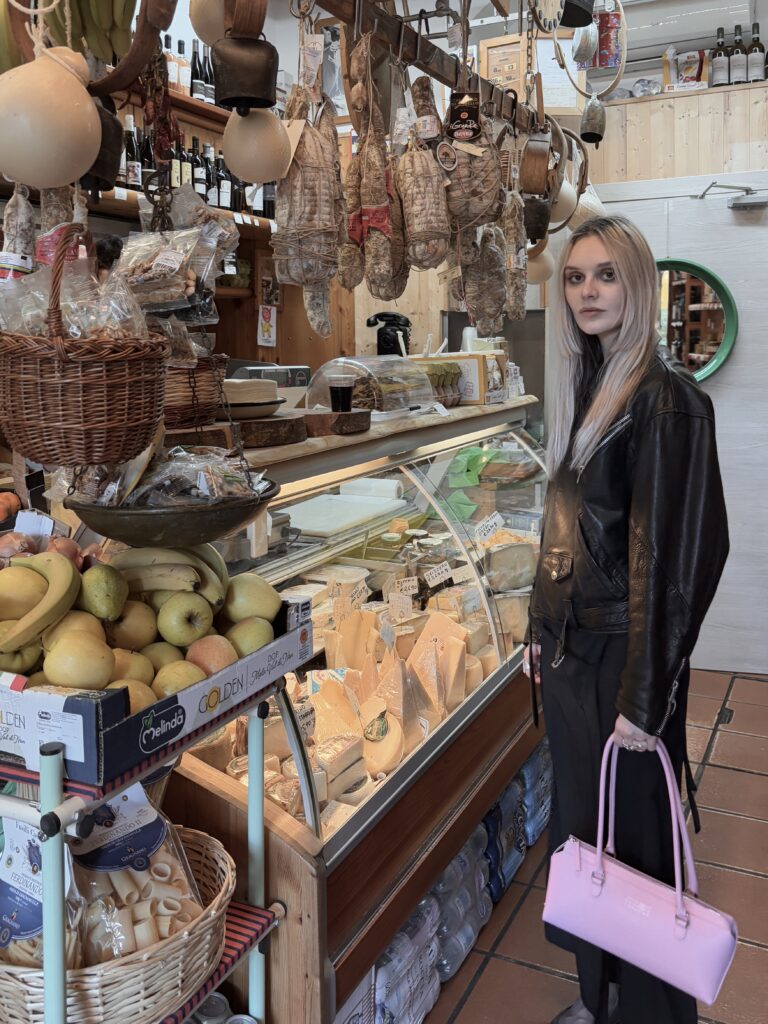
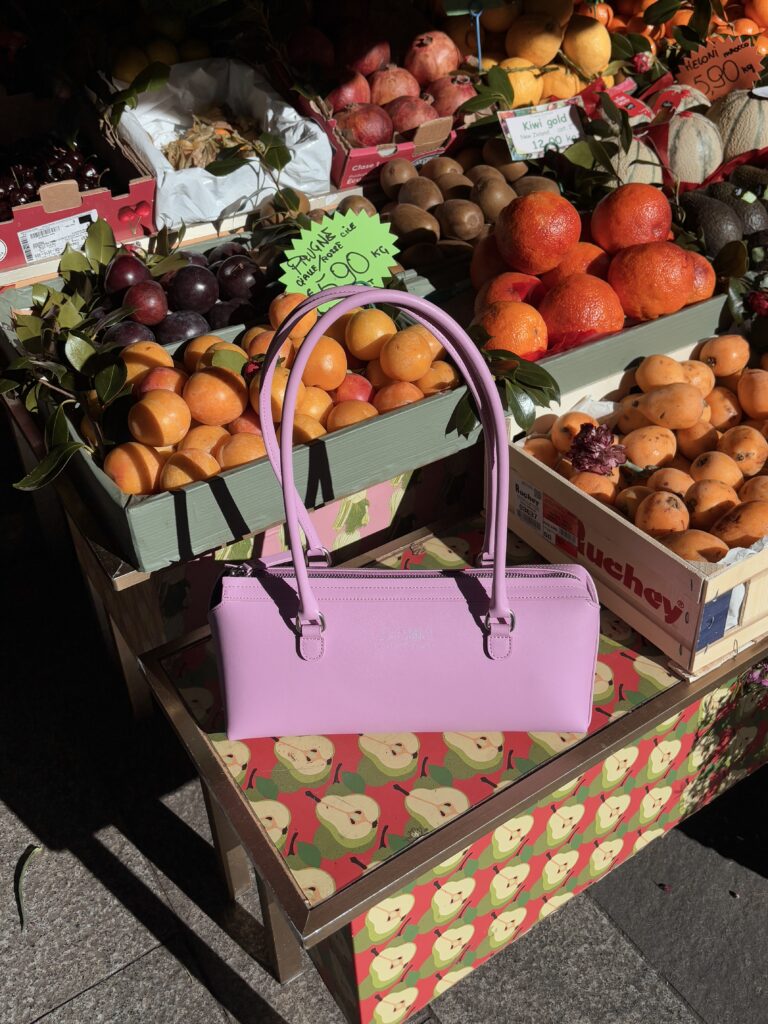
The starting point is a bowling bag—a functional archetype, a sports bag repurposed as an urban accessory in the 1990s. MM6 does not reinterpret it in a decorative sense: the House stretches it horizontally until the cylindrical silhouette disappears, giving way to a flat, long, bold shape. The zipper runs the entire length of the top. The long, parallel handles serve no other purpose than to carry the bag.
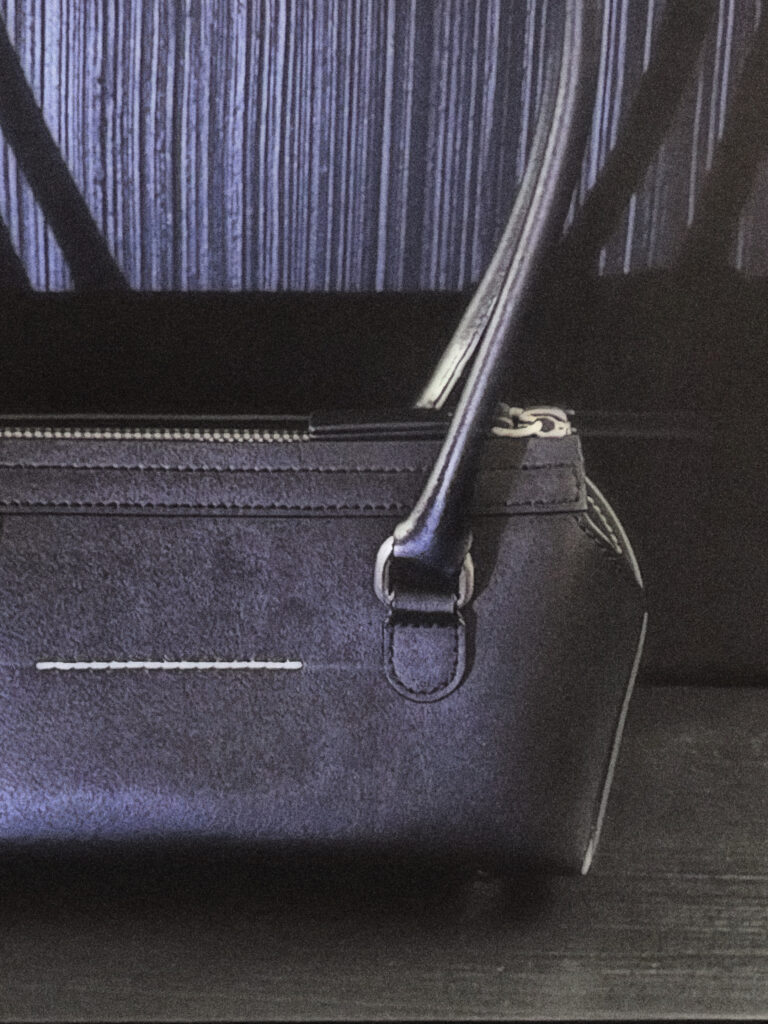
What catches the eye is on the sides. The construction seams form triangular folds—the same concept as the Japanese Bag, MM6’s signature piece for several seasons now, whose geometry is inspired by origami folding. The Bauletto doesn’t simply reference this piece; it extends its method. Here, origami isn’t a decorative cultural reference; it’s a construction system that creates a three-dimensional shape from a flat surface, without excess material or unnecessary seams.
The smooth leather chosen for the first collection does not seek to showcase its texture. It absorbs light without diffusing it, highlighting the sharpness of the edges. The silver-lined interior introduces the only chromatic variation in a collection otherwise built on restraint: black, khaki, orange, lilac—four colors that cover the spectrum of everyday life without seeking to comment on it. The MM6 digital artwork featured on the front serves as a reminder that the House treats its pieces as canvases, never as showcases.
Three available sizes allow the same geometry to function at different scales without altering its underlying logic. This is, perhaps, the ultimate test of a well-resolved form: it withstands changes in scale.
Details — The triangular pleats on the sides of the Bauletto echo the design principle of the MM6 Japanese Bag, whose structure is inspired by origami: creating a functional shape by manipulating a flat surface, without any decorative seams.
The question that remains open—given the direction MM6 has been taking for several collections now—is less about the object itself than about the method: How far can subtraction go before the object is reduced to nothing but itself? The Bauletto doesn’t answer that question yet—and that is precisely what makes it interesting.








Cette publication est également disponible en :

