
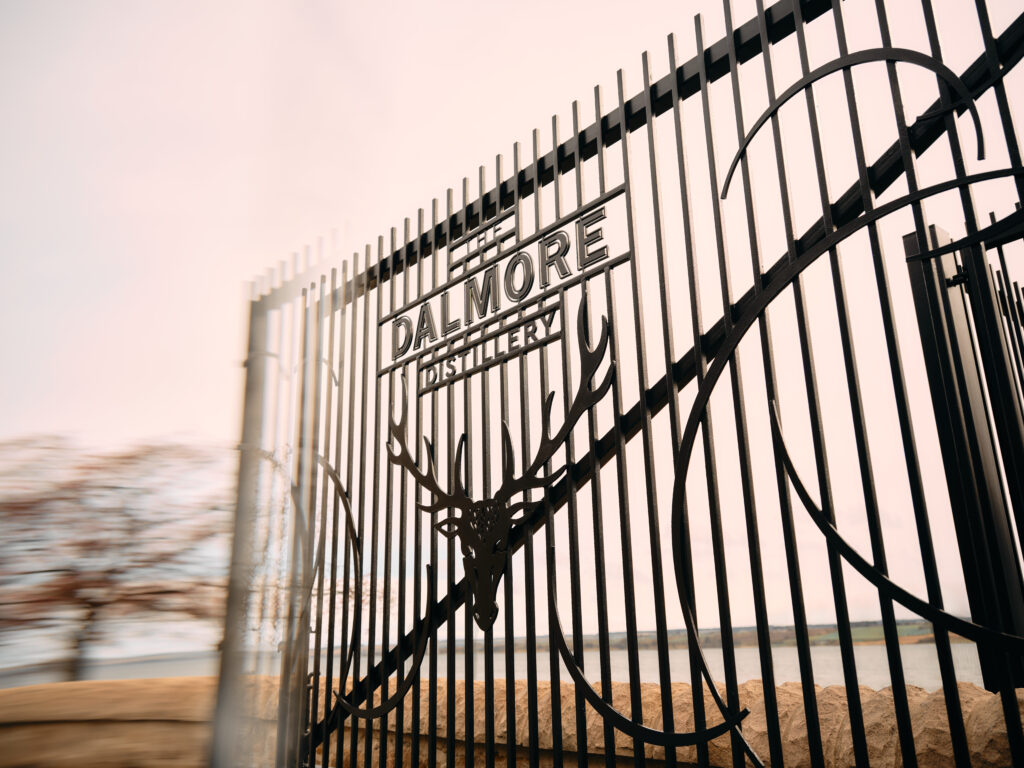
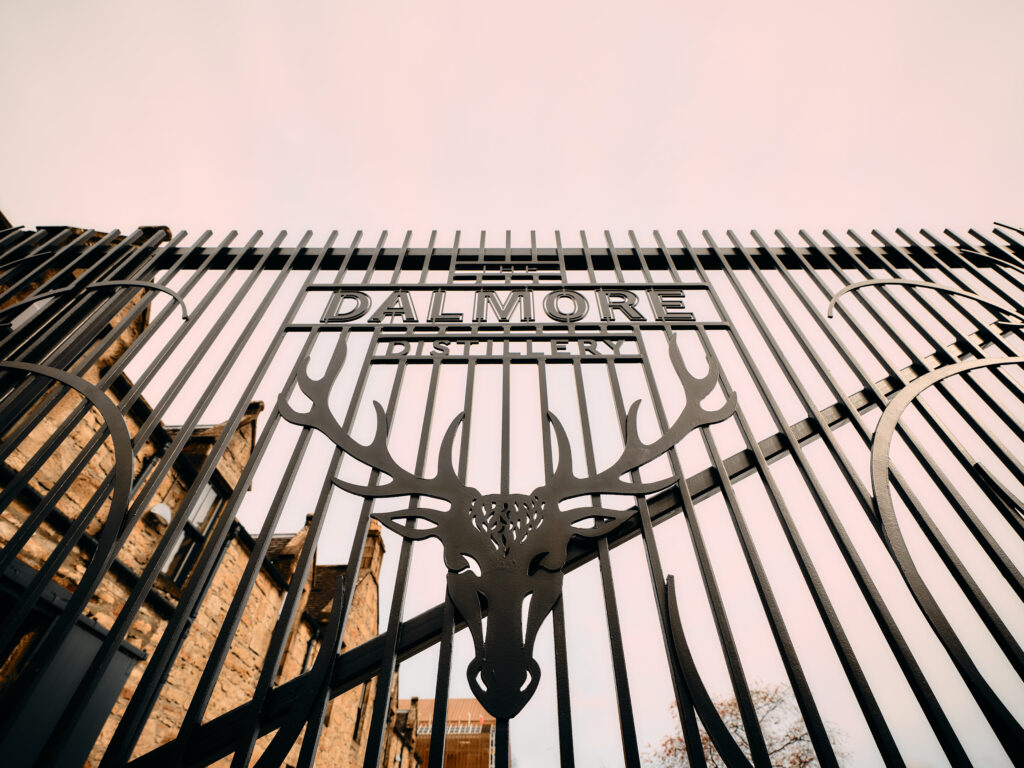
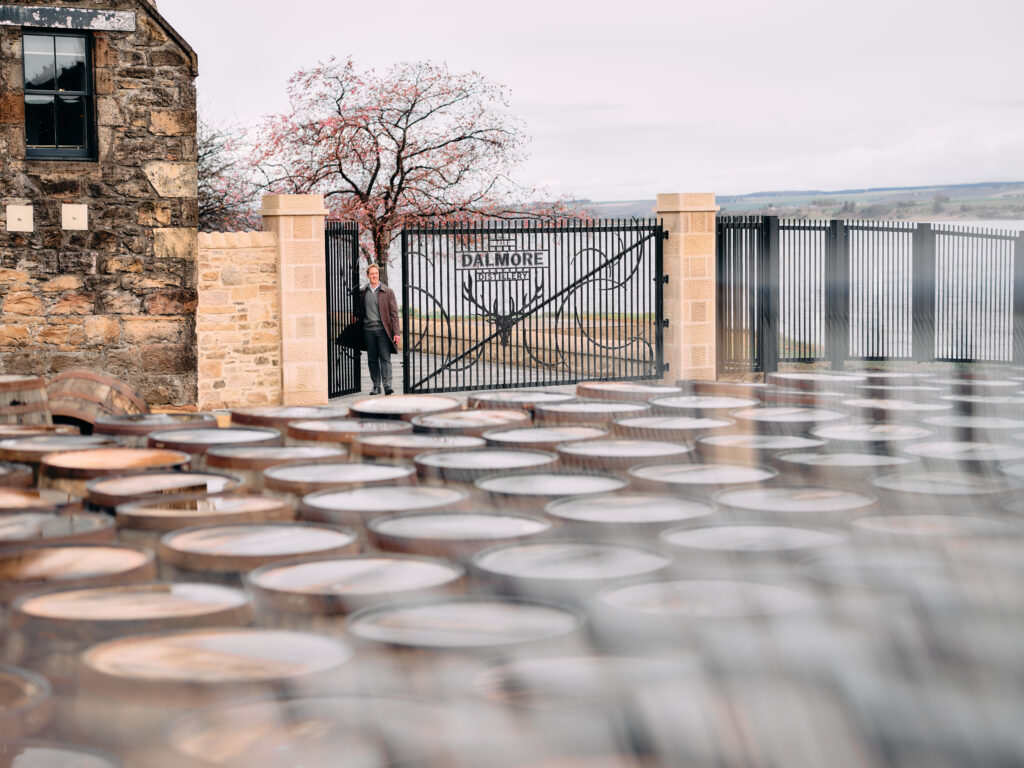
On the shores of the Cromarty Firth, in the Scottish Highlands, The Dalmore isn’t simply reopening a distillery to the public. The House is orchestrating a presentation of whisky as a total cultural experience—blending industrial architecture, commissioned art, and sensory drama. At a time when major spirits houses are seeking to transform their production sites into experiential destinations, The Dalmore has chosen a more understated path: that of controlled immersion, where the setting tells as much of the story as the liquid itself.
Founded in 1839, the distillery has long cultivated an almost intimate image—a single malt associated with long maturation, complex blends, and a certain vision of Scottish opulence. The reopening of this completely reinvented site thus marks a strategic shift: making the production process itself a visible language.
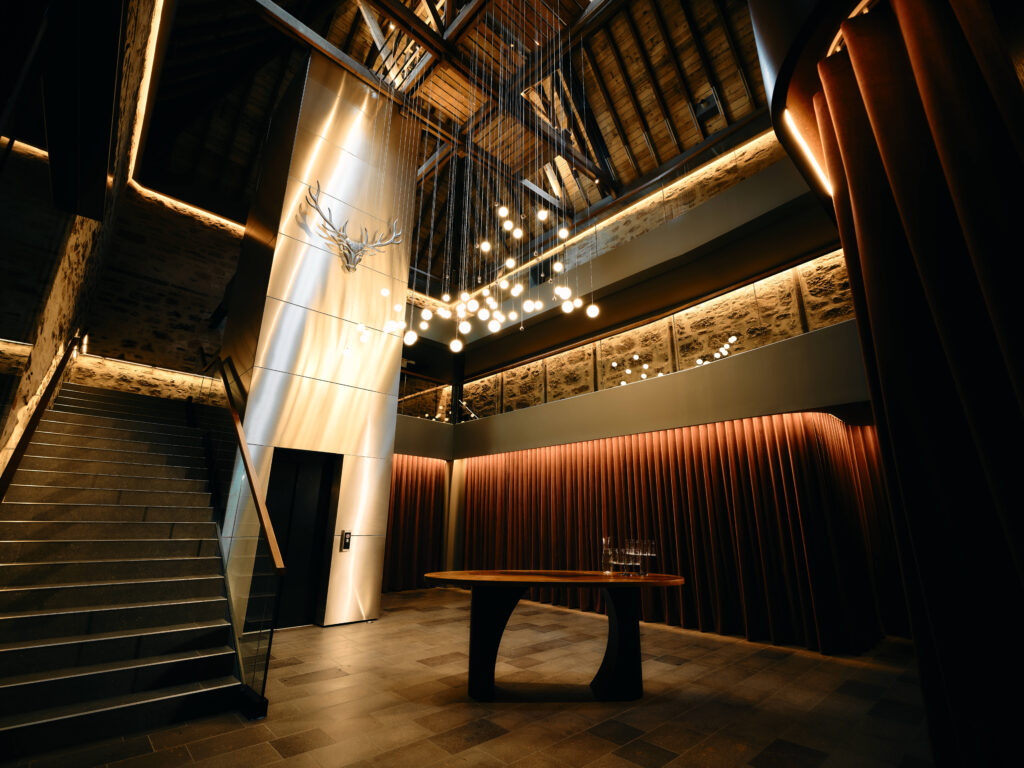
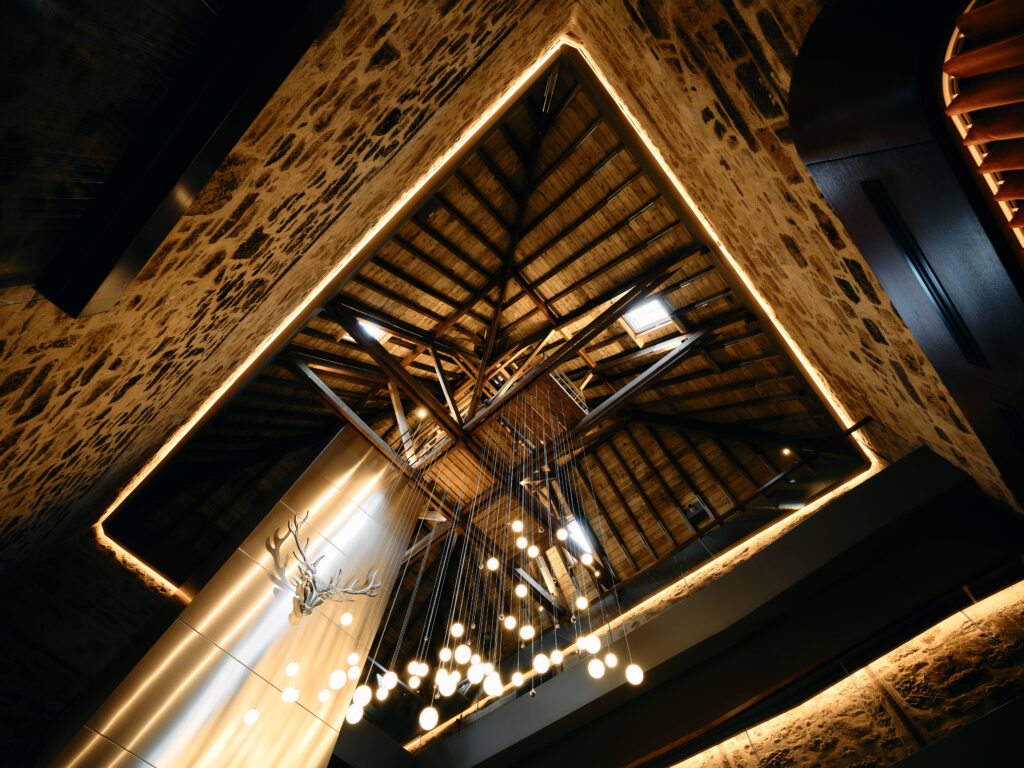
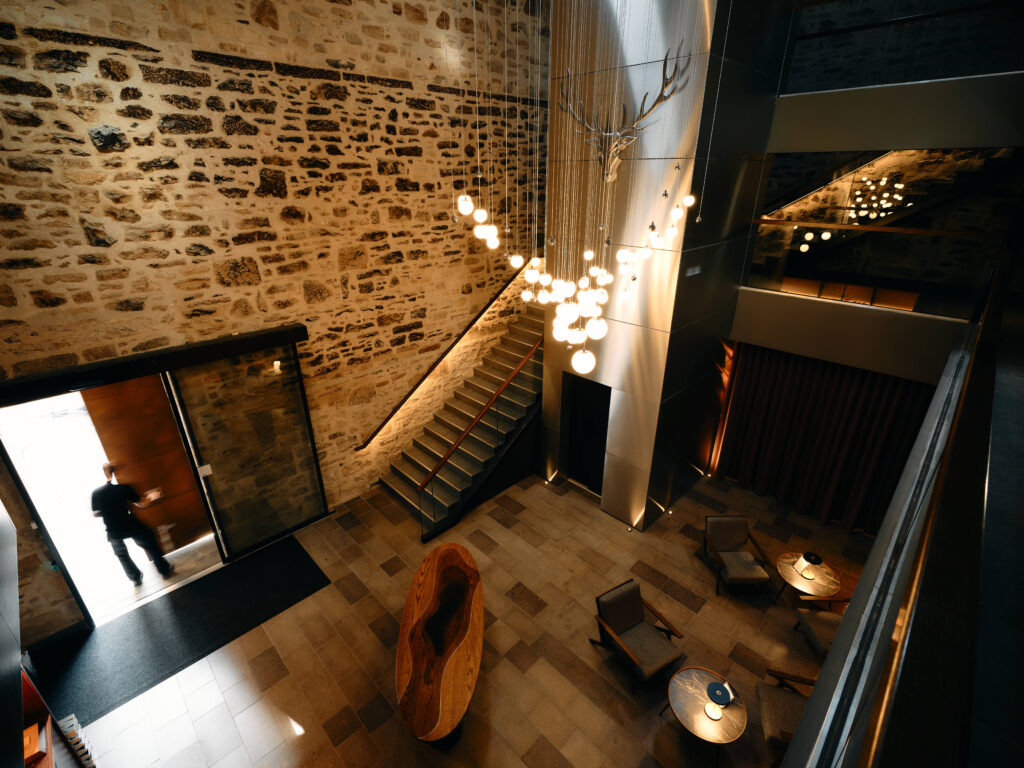
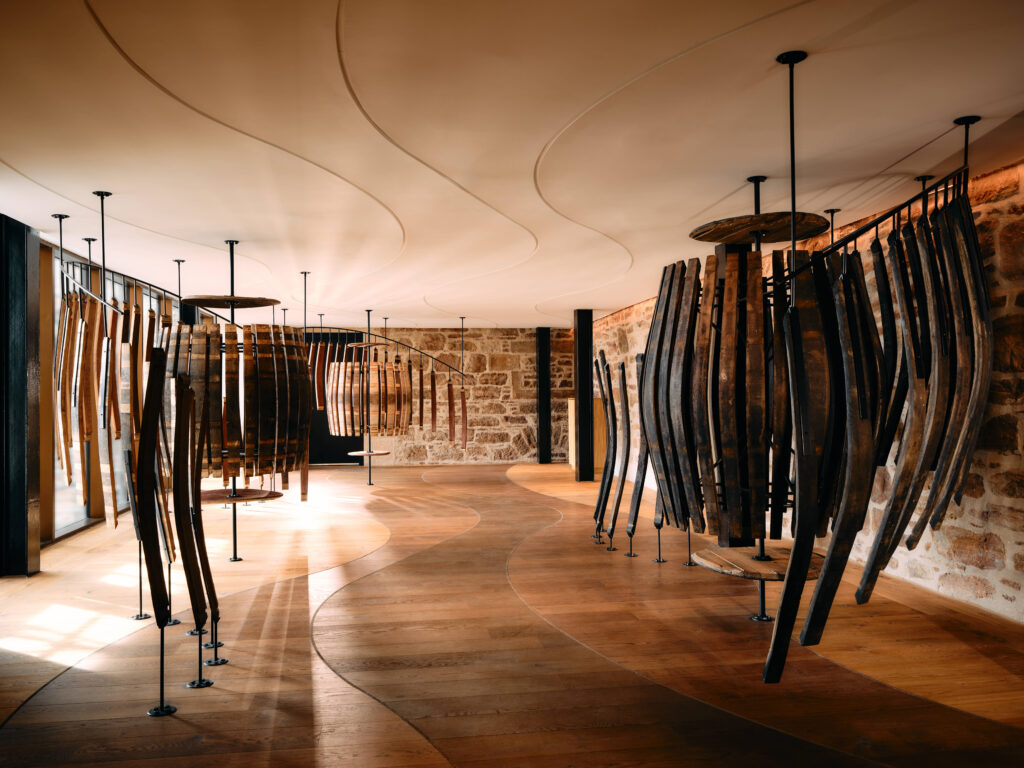
The architectural project, entrusted to the Scottish firm ThreeSixty Architecture, carefully avoids the pitfalls of a corporate museum. The existing Victorian buildings have been preserved, opened up, and reinterpreted. The original stone has been reused. The visitor pathways have been designed to create a narrative journey rather than a mere technical tour.
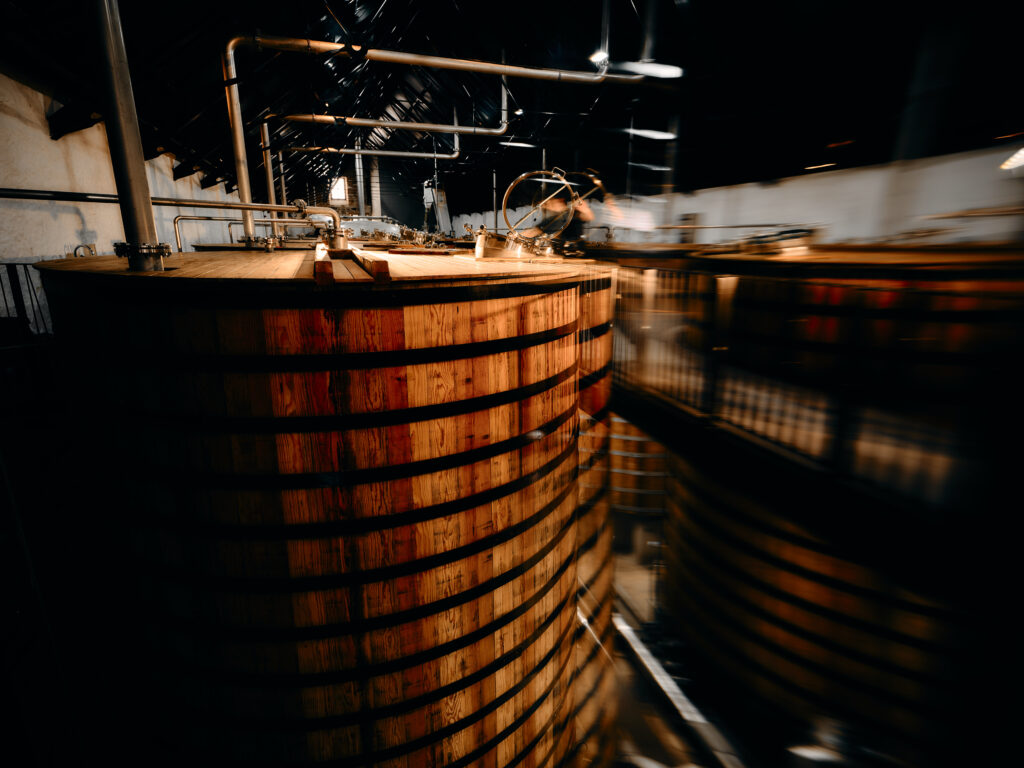
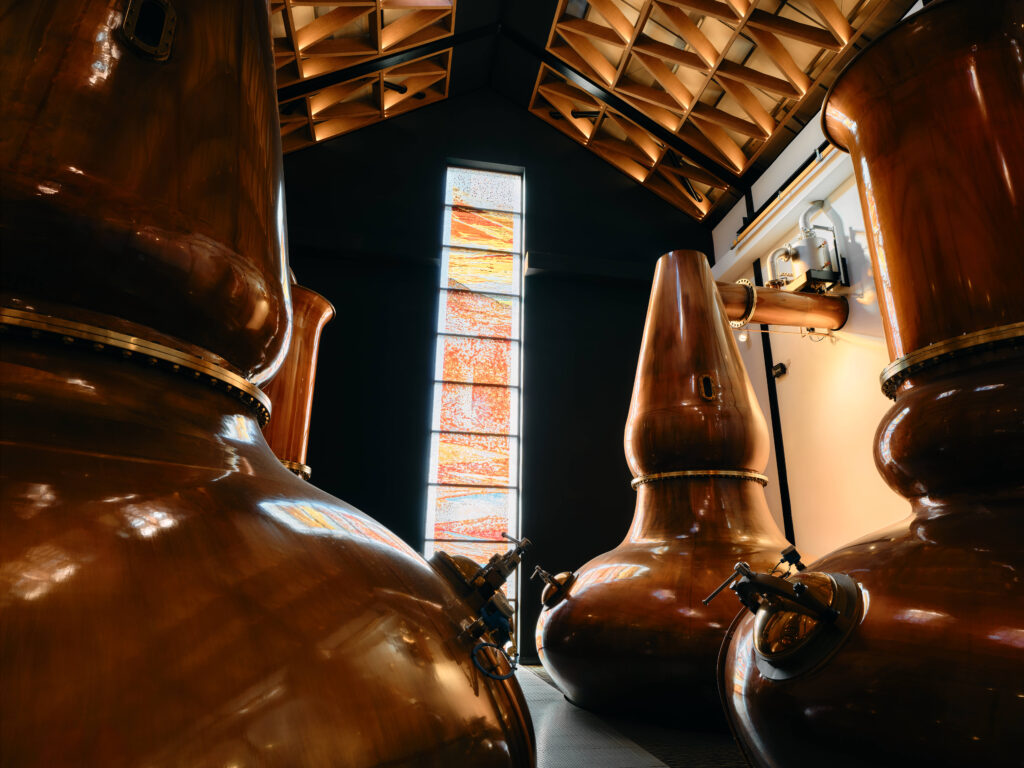
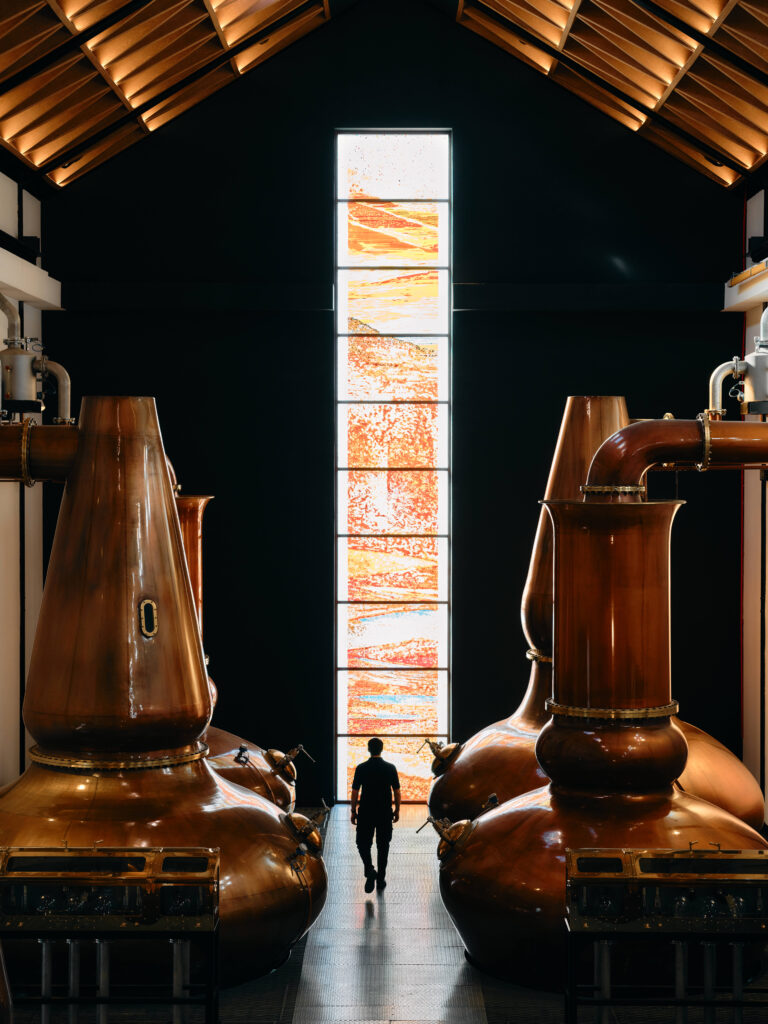
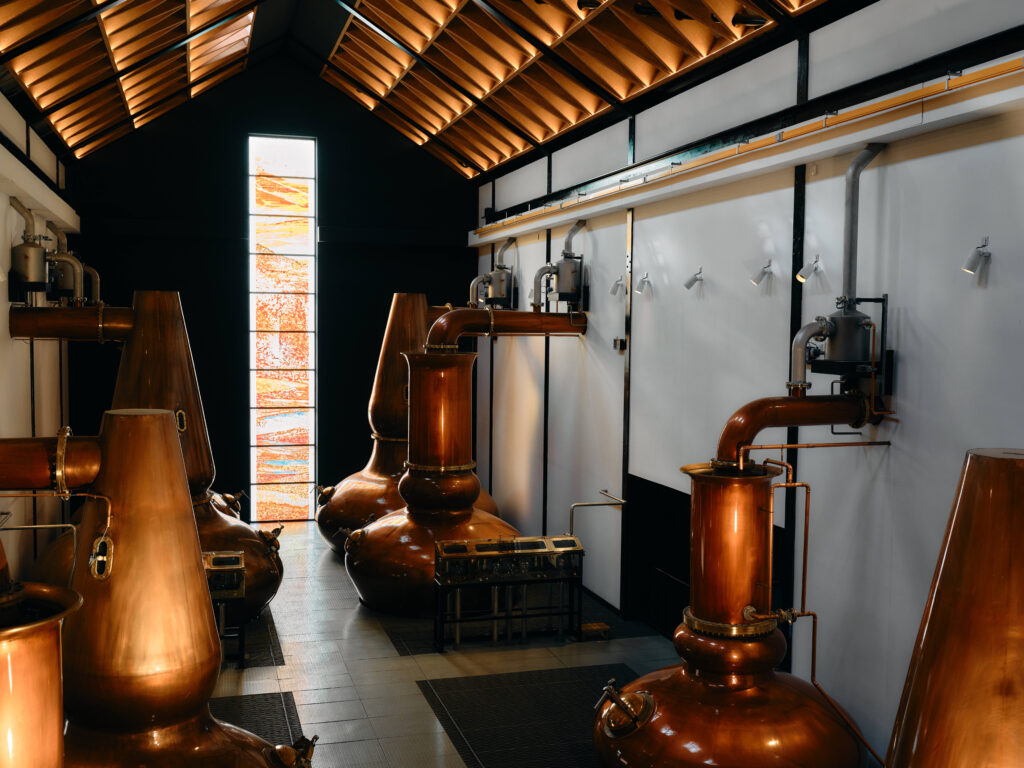
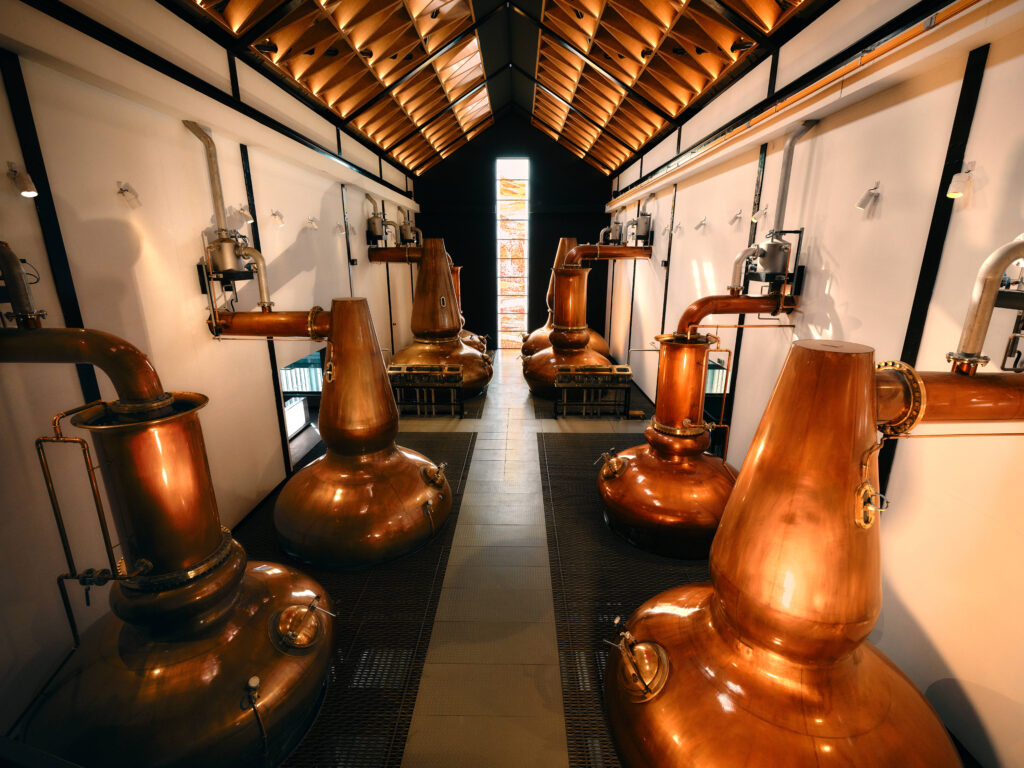
The tour begins in the restored historic kiln before passing through the fermentation rooms and then the still room, the true heart of the distillery. Here, four sets of copper stills have been replicated with almost obsessive precision to preserve the distillate’s historic aromatic profile. This technical fidelity is no mere detail: at The Dalmore, the shape of the stills directly contributes to the spirit’s dense, oily texture.
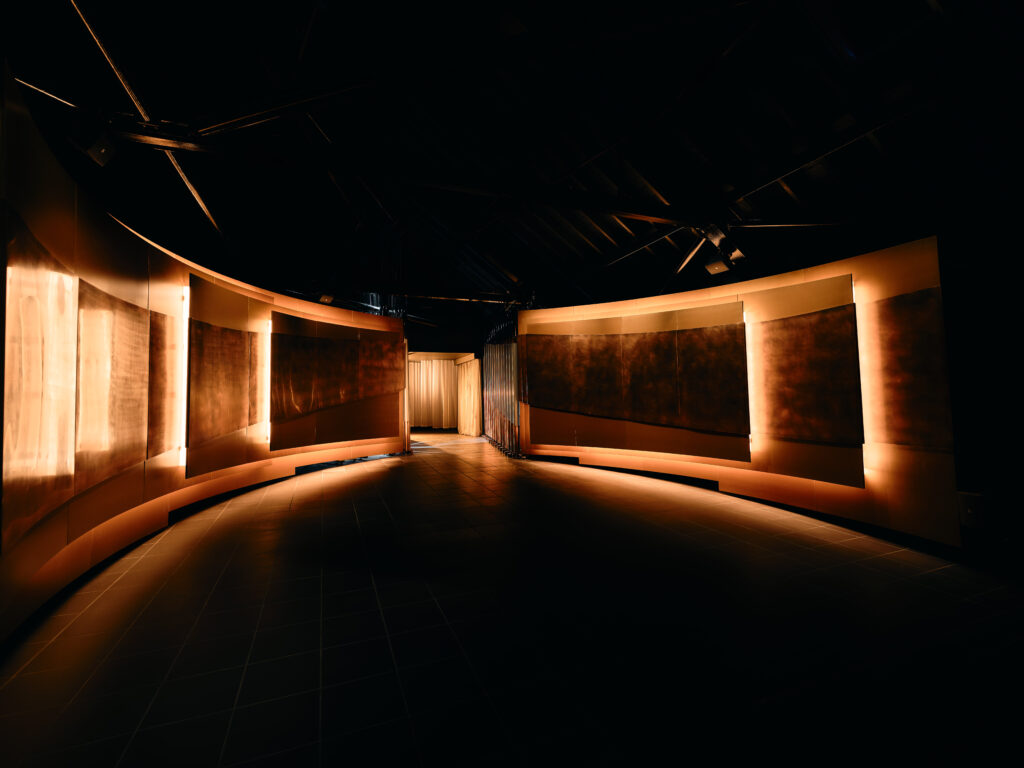
But it is above all the light that shapes the experience. A monumental ten-meter-high glass canopy, created by Scottish artist John Kenneth Clark, spans the still room like a permanent installation. Fused glass, mineral textures, amber and copper tones: the work translates the stages of whisky production into chromatic variations. At certain times of the day, light from the Cromarty Firth passes through the glass and casts red, copper, and honey-colored reflections onto the metal surfaces of the stills. The room then ceases to be an industrial space and becomes an atmospheric chamber.
This desire to foster a dialogue between craftsmanship and contemporary art runs throughout the entire project. The artistic curation was entrusted to Maria Katehis, founder of MK Studios in London, who is developing an evolving program of collaborations for The Dalmore with creators whose practices are rooted in gesture and material.
Among them, Scottish designer and artisan Iseabal Hendry takes center stage. Her welcoming installation, crafted from vegetable-tanned leather, cotton, and local wood, draws direct inspiration from the contours of the Highland coastline. Trained in traditional clinker boatbuilding and embroidery at the Glasgow School of Art, Hendry has developed a practice in which weaving takes on an almost topographical quality. Her works establish a physical connection to the landscape from the moment visitors enter.
This reopening also says something about the current evolution of premium whiskey. Long focused on the product itself, the industry is now investing heavily in architecture, design, and cultural hospitality. In Scotland, several distilleries have become destinations in their own right, combining heritage-inspired dining, commissioned art, and private experiences. The Dalmore takes this concept a step further by embracing an almost museum-like aesthetic, without ever compromising the venue’s primary function: producing whiskey.
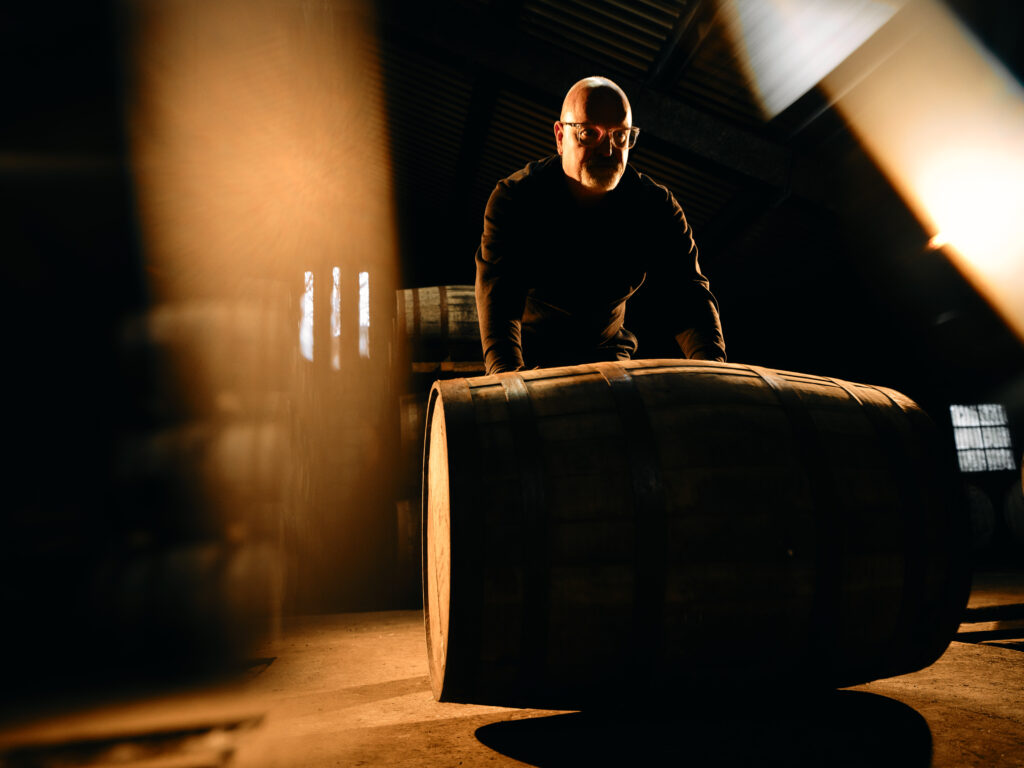
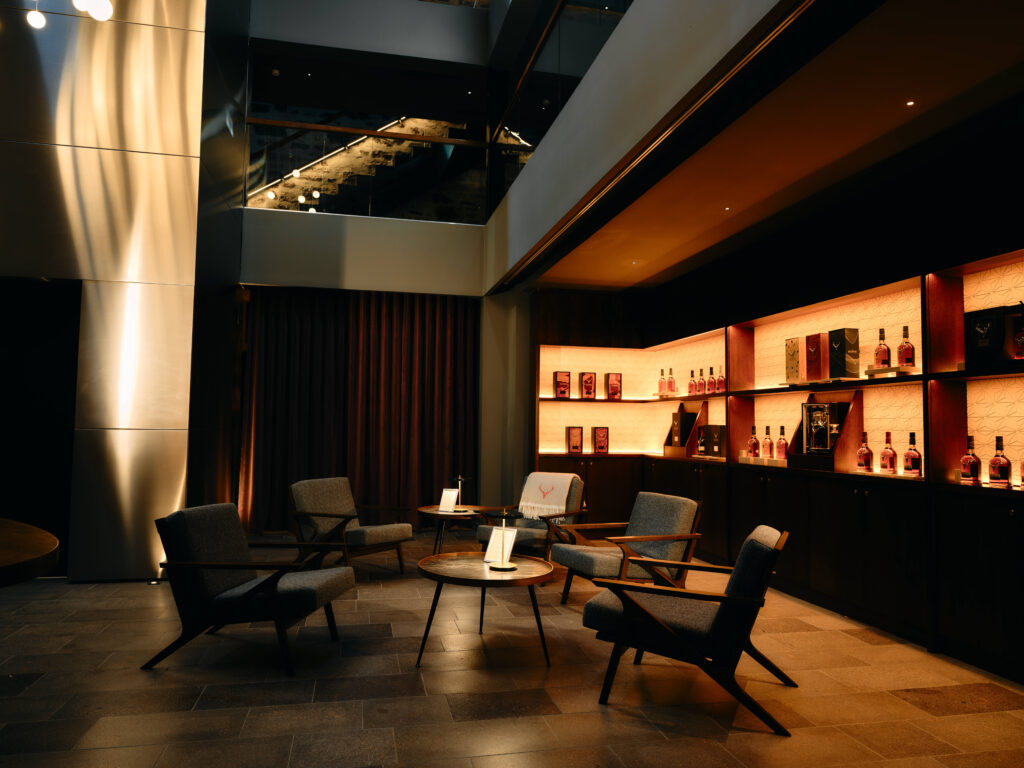
The tour is, in fact, entirely private. Each itinerary is customized in advance with a dedicated concierge, followed by a final tasting featuring select items from the Principal Collection as well as editions exclusive to the distillery.
Ultimately, what this reinvented distillery reveals goes beyond the question of spirits. The Dalmore embodies a contemporary vision of Scottish luxury: less ostentatious, more cultural; based less on flaunted rarity than on a mastery of rhythms, materials, and narratives. In the Highlands, silence remains a building block.
Cette publication est également disponible en :

