
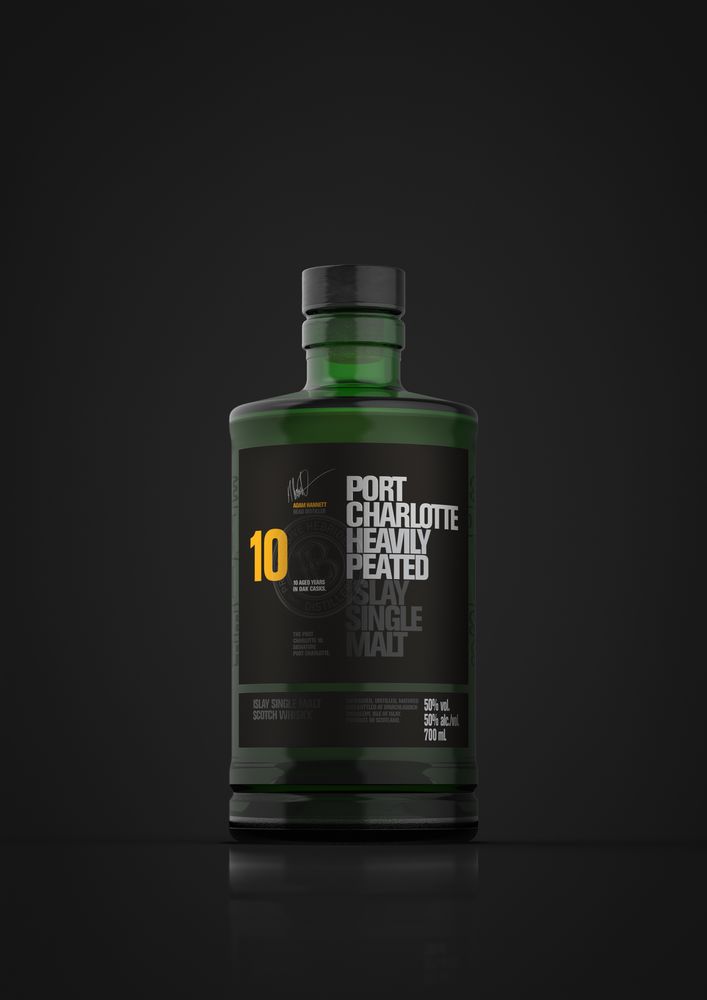
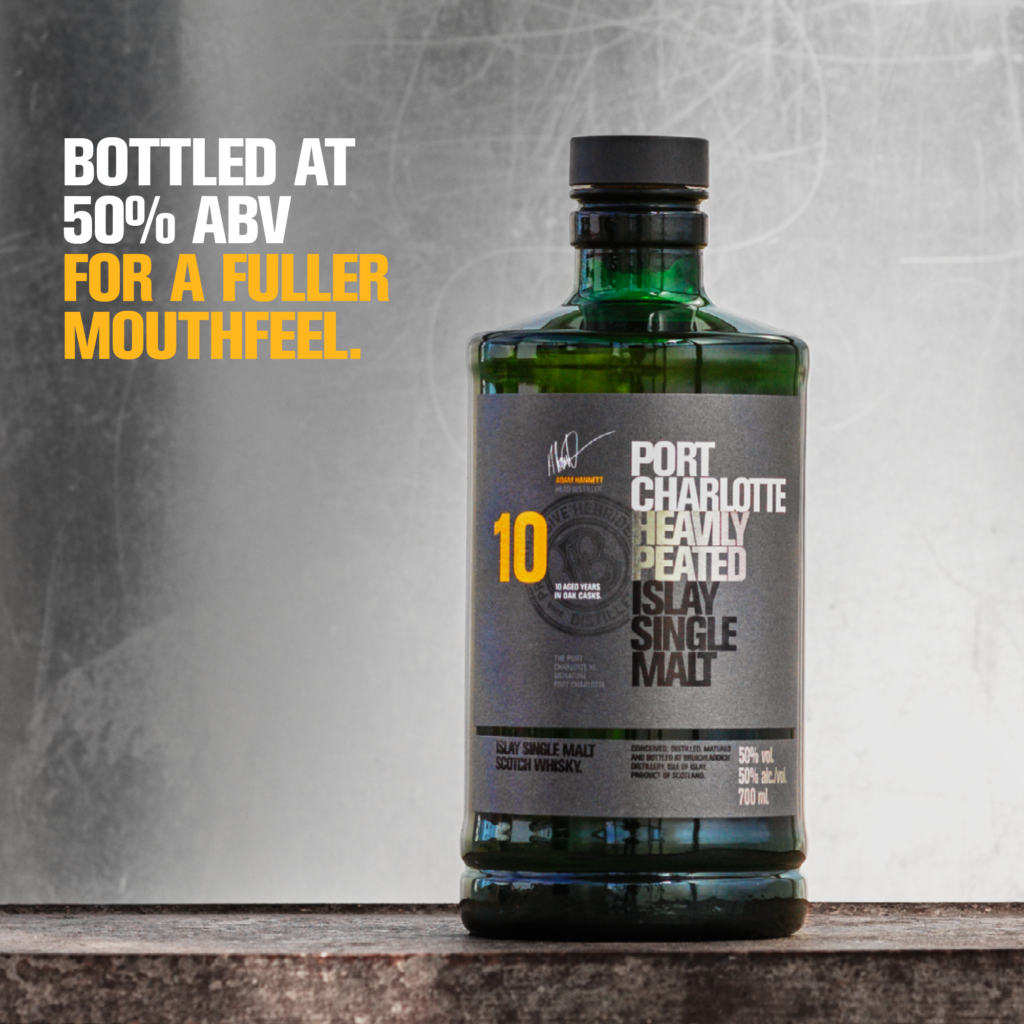
Peat content is measured in parts per million based on the phenols absorbed by the barley during malting. At 40 PPM, Port Charlotte 10 falls into the category known as “heavily peated”—a territory where the smokiness risks overpowering the other flavors if the distillation process isn’t handled with care.
The fact that this Islay single malt has just won the title of World’s Best Scotch Single Malt at the 2025 Spirits International Prestige Awards is no small feat. What makes this distinction so significant is not so much the list of winners as the competition’s methodology: founded in 2009, the SIP Awards do not rely on critics or panels of professionals. Tastings are conducted blind by consumers—several thousand of them, from diverse backgrounds, with no prior knowledge of what they’re evaluating. A peated whisky cannot rely on its reputation to win over this audience. It must stand on its own merits.
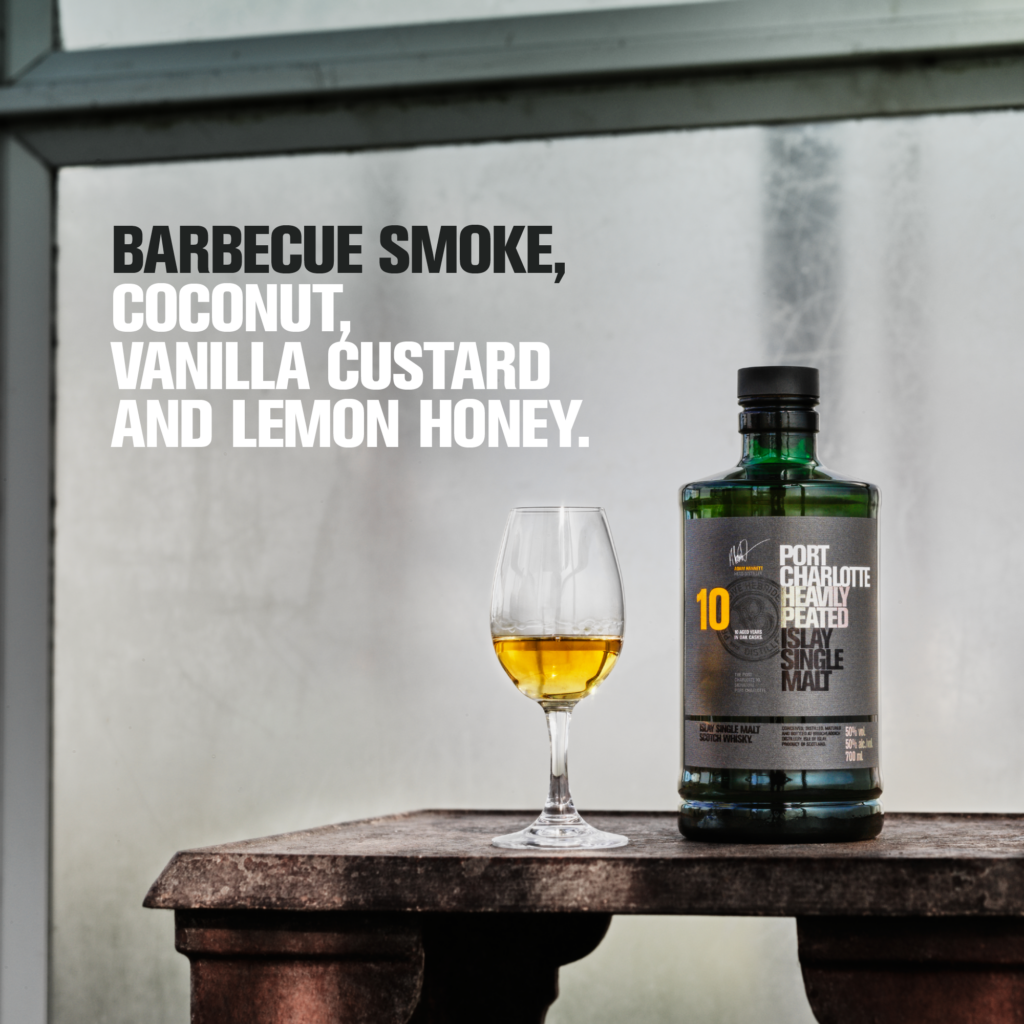
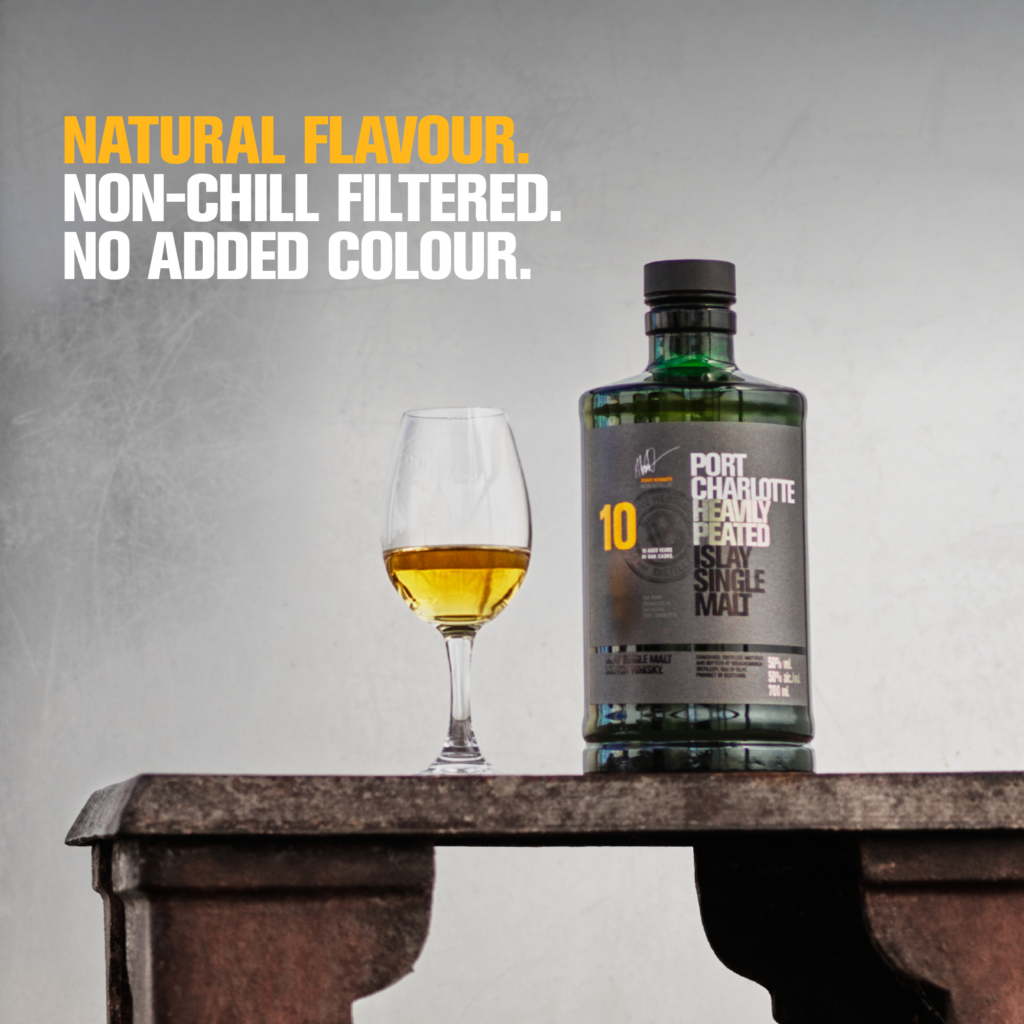
Port Charlotte 10 is produced by the Bruichladdich Distillery on the island of Islay, using Scottish barley from Inverness and local spring water. Distillation takes place in tall stills with narrow swan-neck pots—a design that promotes contact between the vapors and the copper, prolongs the distillation process, and tends to refine the distillate rather than thicken it. It is partly this design that explains why 40 PPM does not produce a monolithic whisky here: the smoke coexists with marine notes, sweet spices, and a finish where the malt and oak gradually take over.
Technical details
40 PPM (parts per million of phenols) is the threshold generally used to classify a whiskey as “heavily peated.” By comparison, some Islay whiskies exceed 50 or even 60 PPM. The narrow swan-neck still, due to its height and constriction, prolongs the reflux of the heaviest vapors and contributes to a more refined distillate.
The question raised by this award goes beyond Bruichladdich. It touches on what a “general public” competition is capable of recognizing that professional juries do not always recognize: the ability of a characterful whisky to remain accessible—not in the commercial sense of the term, but in the sensory sense. A spirit that doesn’t require any prior knowledge to be appreciated isn’t necessarily a simplified spirit.
For two centuries, the island of Islay has been producing whiskies whose peaty character is inextricably linked to the land—the local peat bogs, the mist, and the minerality of the spring water. The fact that this terroir continues to attract fans beyond the circle of connoisseurs suggests that the smoky flavor, when crafted with precision, is not as divisive as people say.
Cette publication est également disponible en :

