
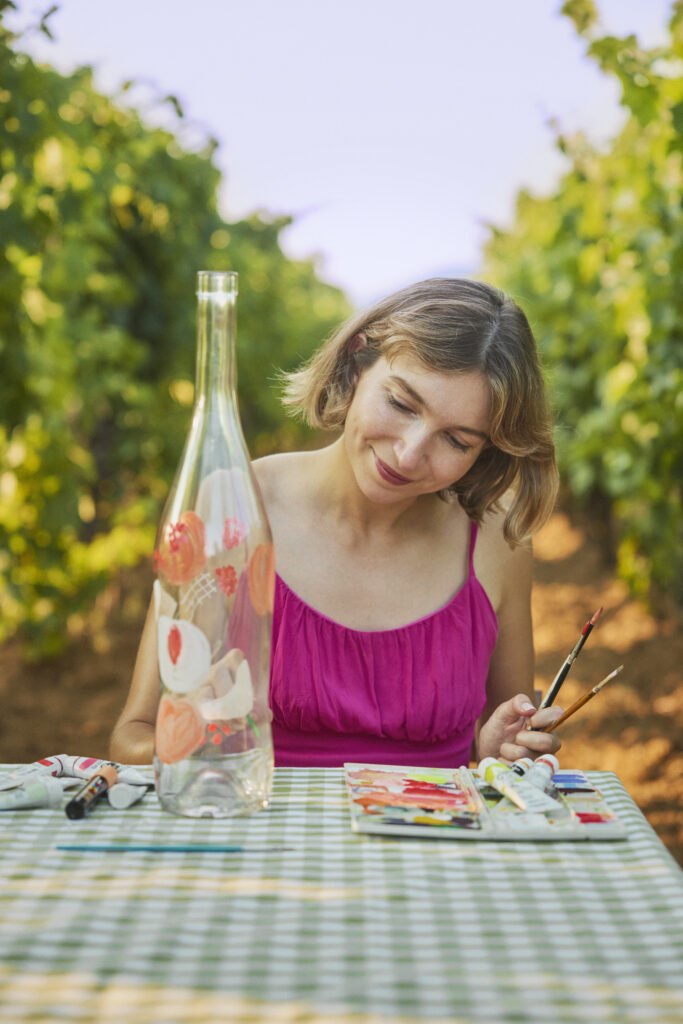
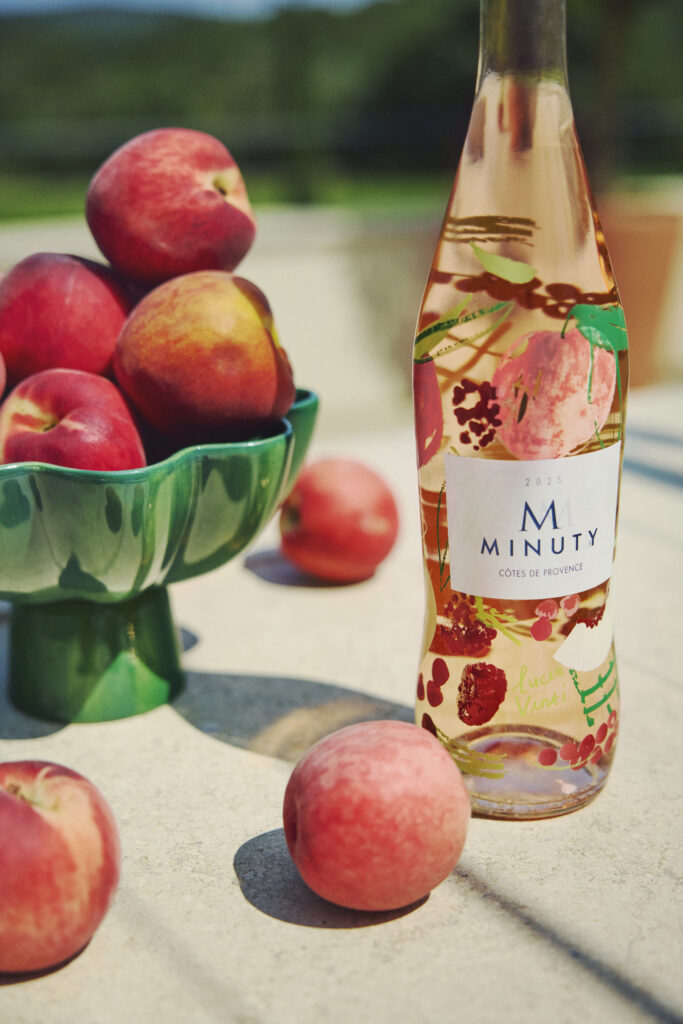
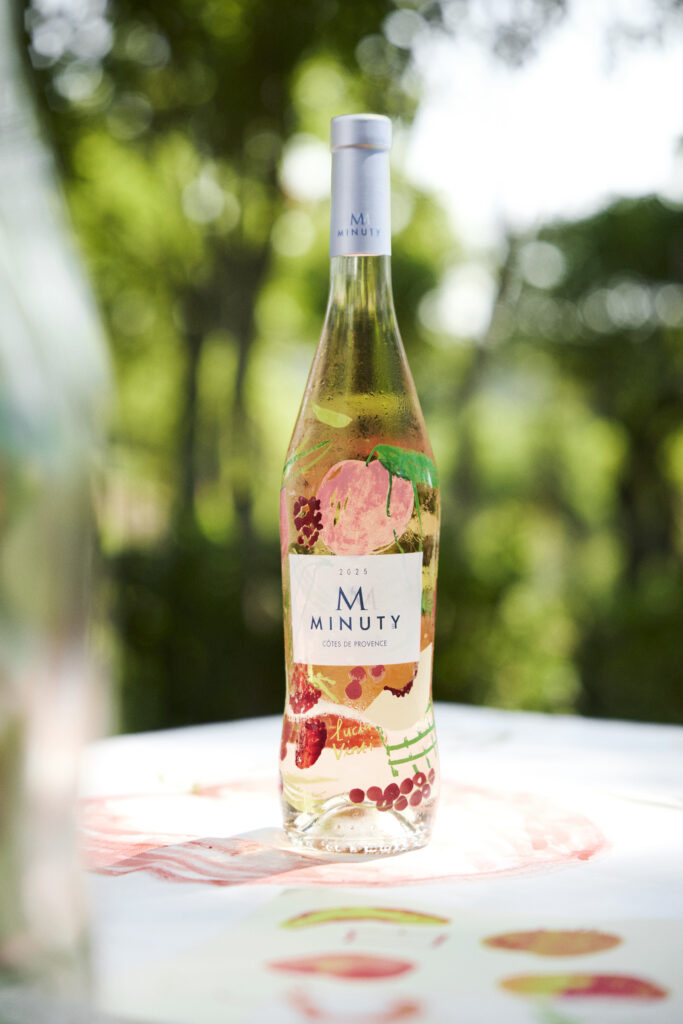
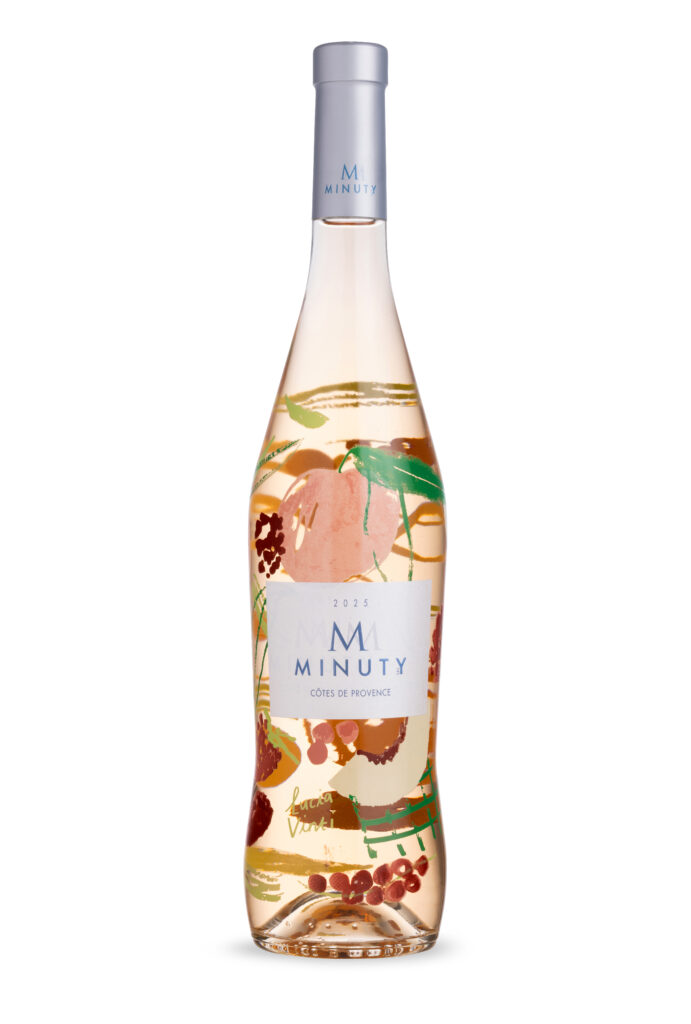
Since the 1960s, the silhouette known as the “Corset Flute” has been a fixture of the visual landscape of Provence’s wine region. Designed by Monique Matton, daughter of founder Gabriel Farnet, this bottle—associated with Minuty’s M Rosé cuvée—has gradually transcended its original function to become a regional icon. In 2026, the House continues this heritage-focused approach with a limited edition entrusted to Italian artist Lucia Vinti—less a decorative endeavor than an exploration of Mediterranean sensory memory.
This is not merely an aesthetic issue. Since 2018, Minuty has invited an artist each year to design its M Rosé bottle, transforming a seasonal consumer product into a canvas for cultural expression. This ongoing initiative reflects a broader evolution of Provençal wine: the transition from a simple tourist product to a symbol of an exportable lifestyle, capable of engaging with contemporary illustration, gastronomy, and vernacular design.
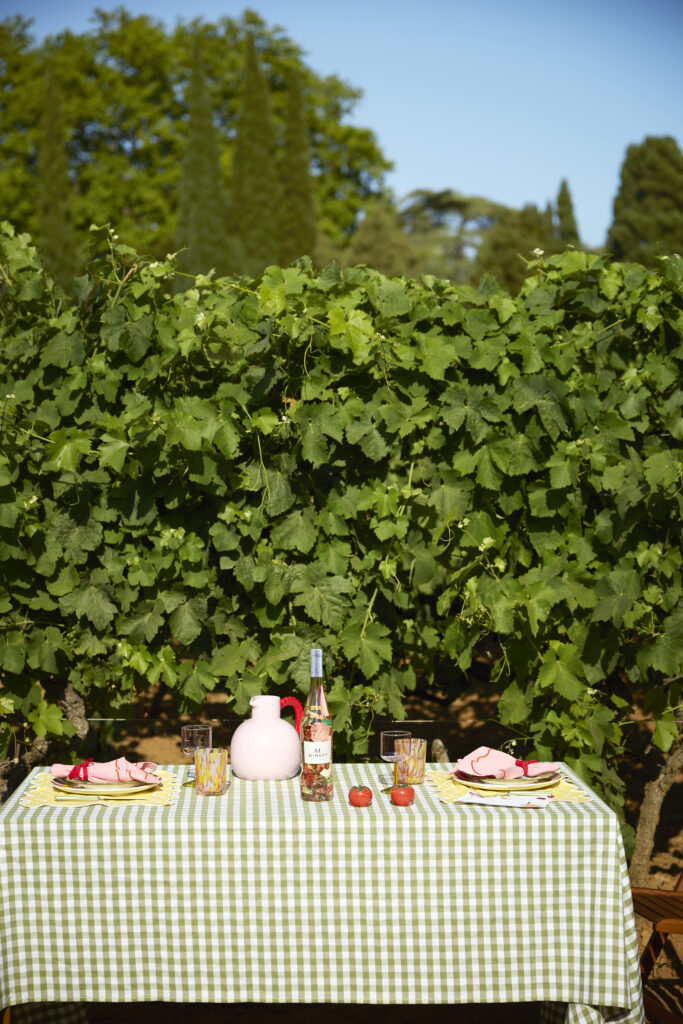
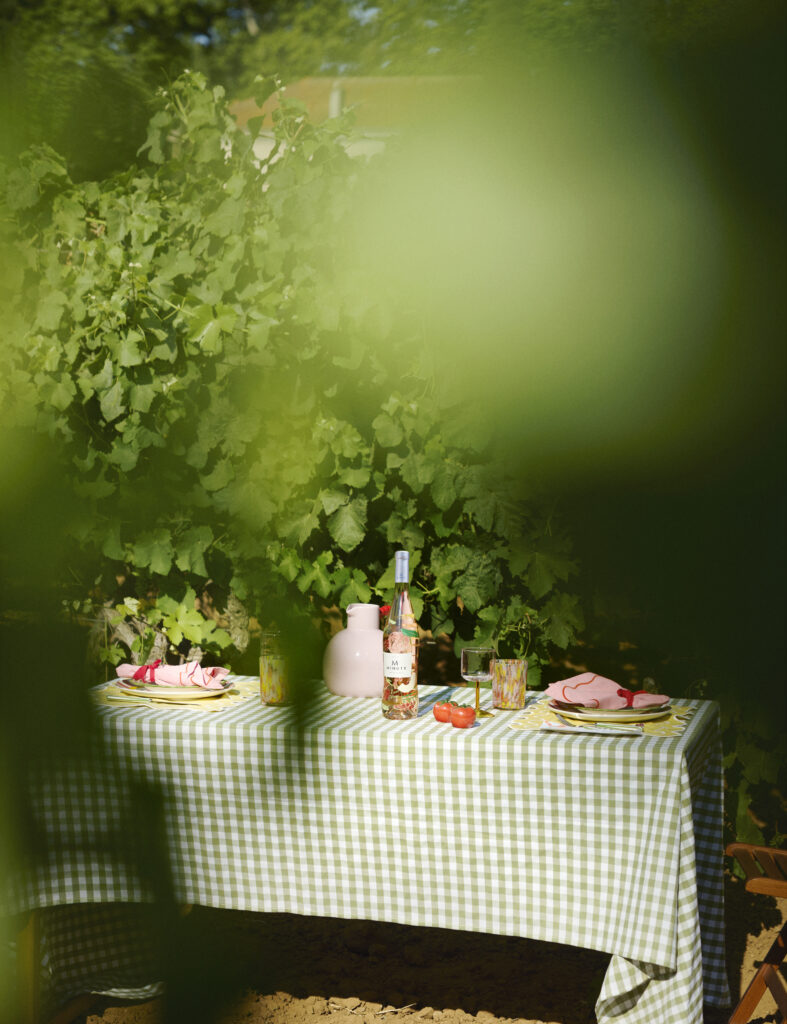
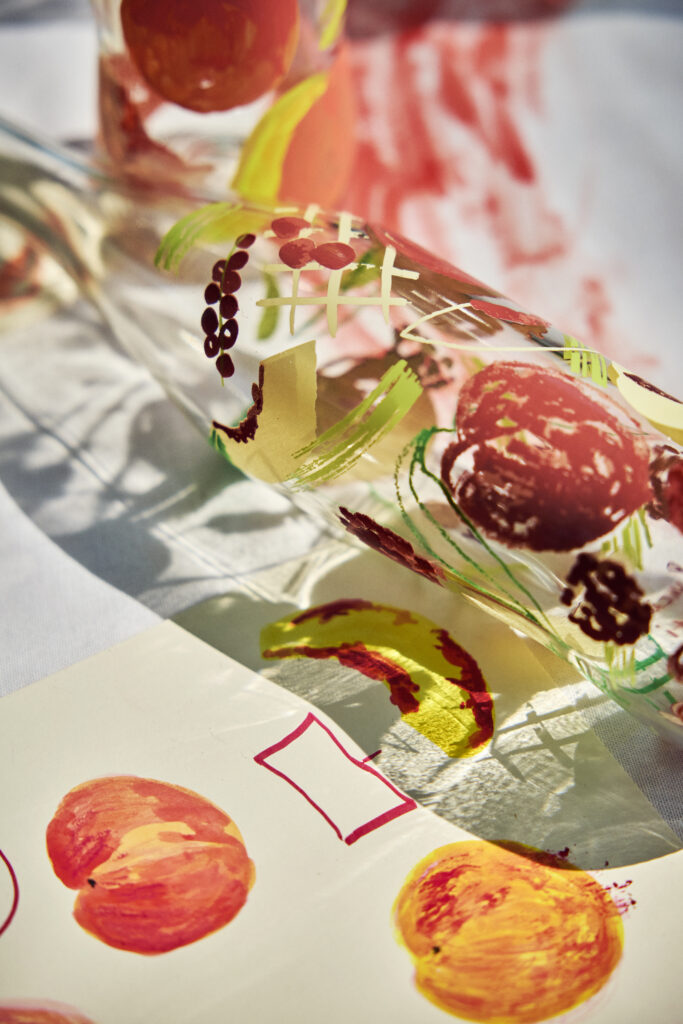
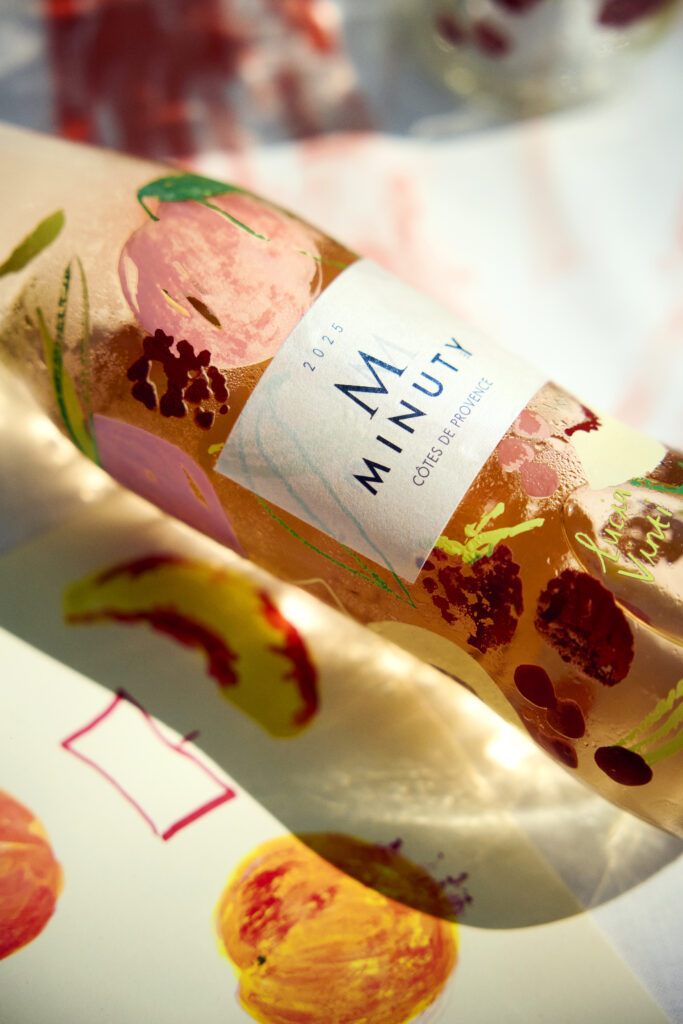
Lucia Vinti, a graduate of the University of Brighton, has developed an artistic practice that blends pencil, paint, and collage. Her visual vocabulary—fruit, foliage, bunches of grapes, fragments of a summer table—does not seek conceptual abstraction. Rather, it evokes an immediate sensation: that of a Mediterranean market, pigments warmed by the sun, checkered tablecloths, and shared plates.
The week-long residency held on the Saint-Tropez Peninsula sheds further light on the project. There, the artist explores the estate’s archives, the vineyard landscapes, and, above all, local customs: markets, summer cuisine, and socializing on terraces. Here again, the interest lies less in the promotional narrative than in the way certain Provençal estates are now seeking to transform their surroundings into a coherent visual language.
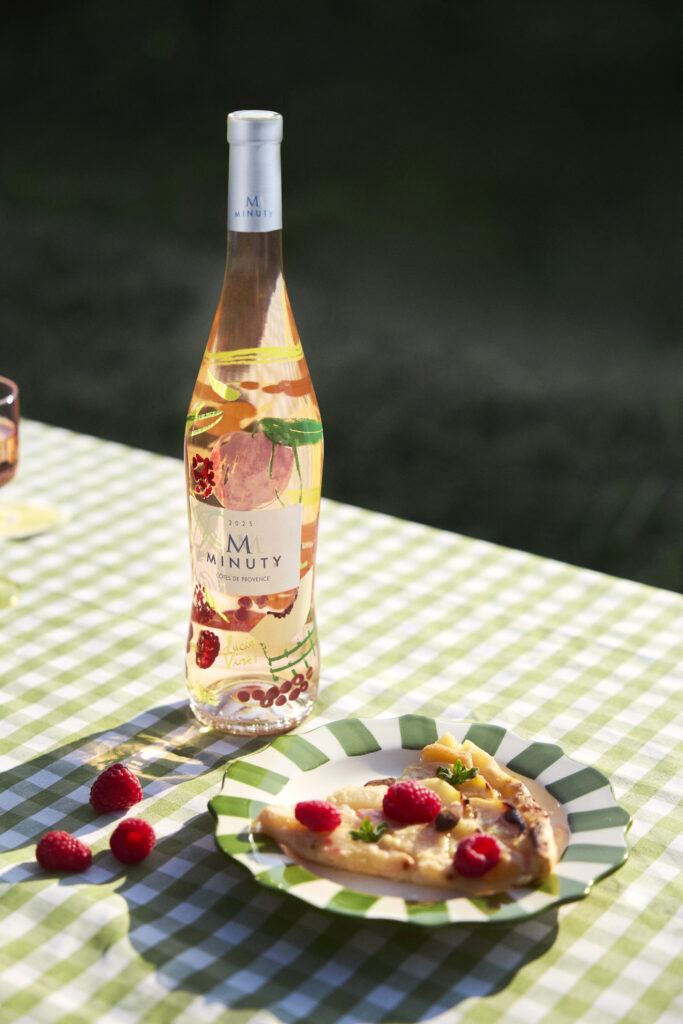
Perhaps the most significant detail lies elsewhere: in the explicit connection between wine tasting and cooking. The bottle’s label design draws direct inspiration from the wine’s aromatic profile—red berries, white peach, and a crisp acidity—and is complemented by a peach tart recipe built around those same flavor notes. This “from the glass to the plate” approach reflects an interesting shift in contemporary Provence rosé: it is no longer presented solely as a summer aperitif, but as part of a broader culinary narrative.
From a technical standpoint, this cuvée remains true to the appellation’s classic balance. The blend consists of 60% Grenache, 20% Syrah, 15% Cinsault, and 5% Tibouren. The grapes come from continental and maritime terroirs in the Côtes de Provence. Winemaking involves pressing followed by low-temperature fermentation, without malolactic fermentation, to preserve the wine’s structure and aromatic freshness.
The result boasts a pale color with hints of rose petals, a nose built around red berries and white-fleshed fruits, followed by a lively and lingering palate. Nothing spectacular here. Rather, a pursuit of clarity—which likely explains why Minuty has remained a fixture in the Provençal landscape for nearly ninety years.
An interesting detail: the bottle itself remains at the center of the design. At a time when the wine industry is flooded with fleeting, event-based collaborations, Minuty continues to use a historically recognizable container as a symbol of continuity. The “Provençale” design, created in the 1960s, thus becomes an object of graphic heritage as much as it is packaging. In the wine industry, few regional bottle shapes have achieved such widespread cultural recognition.
Ultimately, the Lucia Vinti edition is about more than just a simple summer rosé. It documents a more subtle evolution: the way certain Provençal wineries today use illustration, gastronomy, and the local region to construct a coherent, exportable, and instantly recognizable Mediterranean identity.
Cette publication est également disponible en :

