
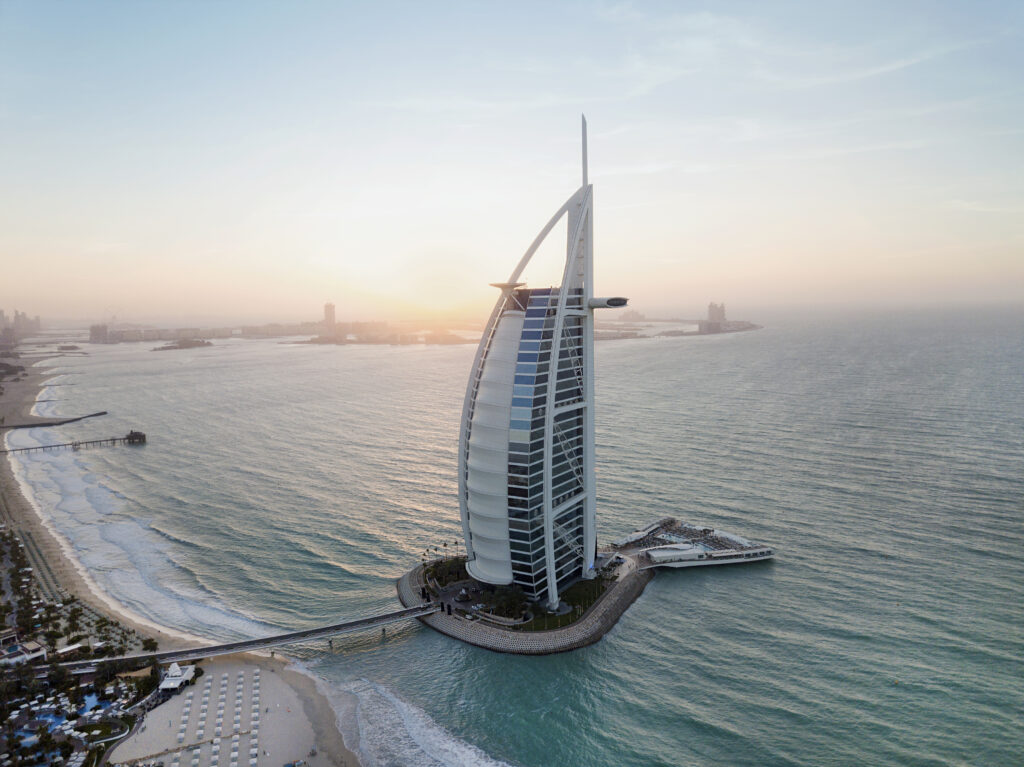
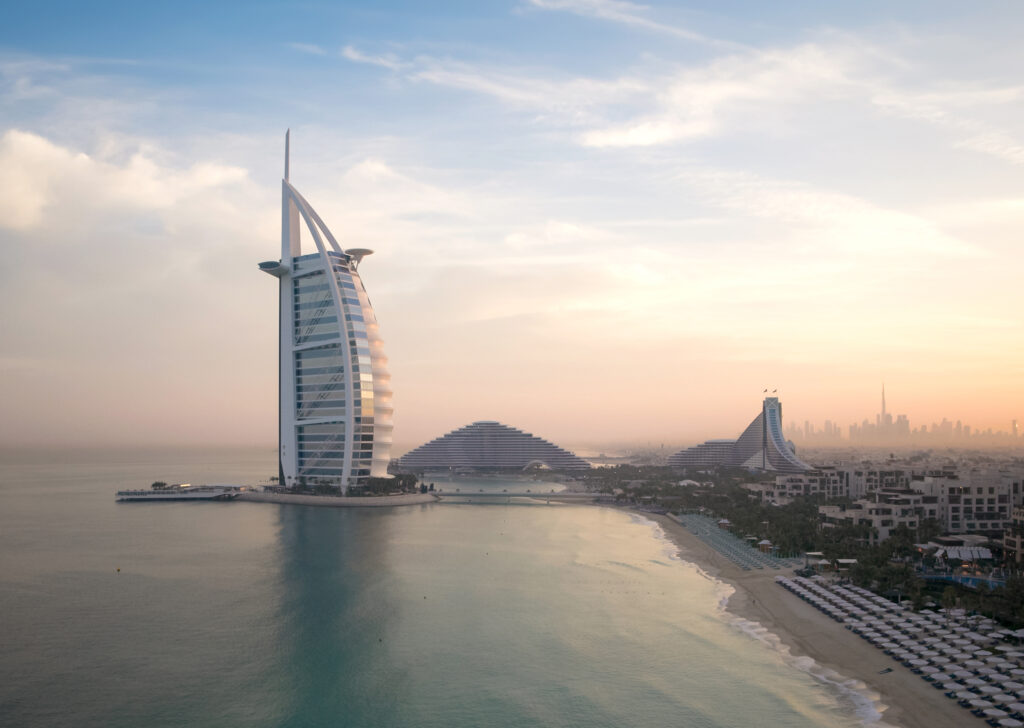
In Dubai, certain landmarks predated the city’s story. Before the skyline became a vertical forest, before the emirate turned hospitality into a tool for global influence, there was that sail resting on the water: the Jumeirah Burj Al Arab. Twenty-seven years after its opening, the hotel is entering a phase that is rare for a building conceived from the outset as a statement: that of restoration.
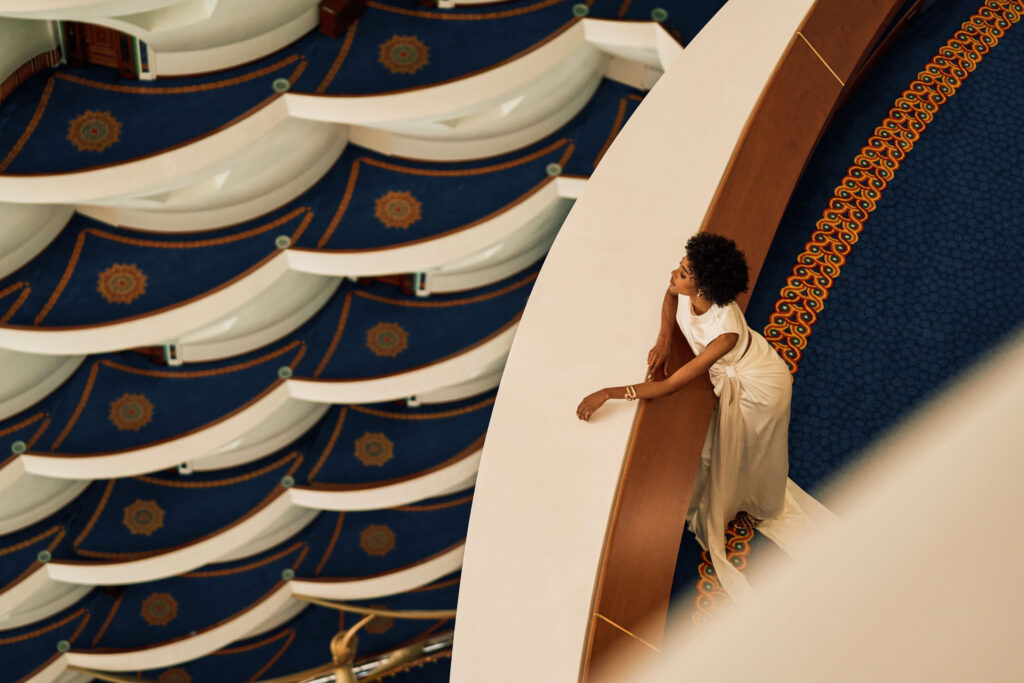
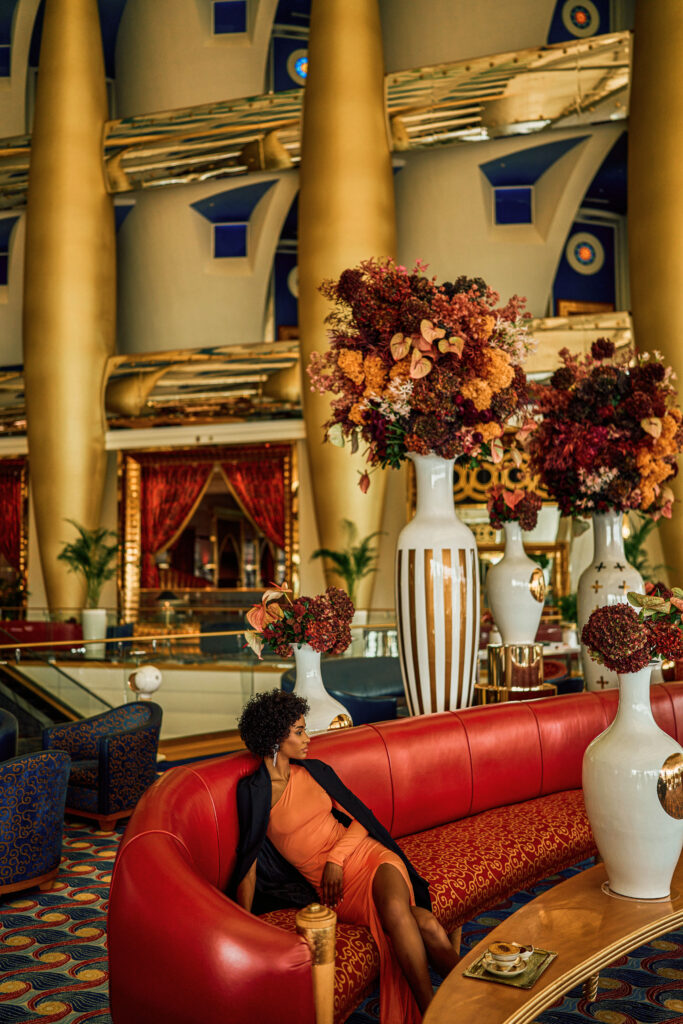
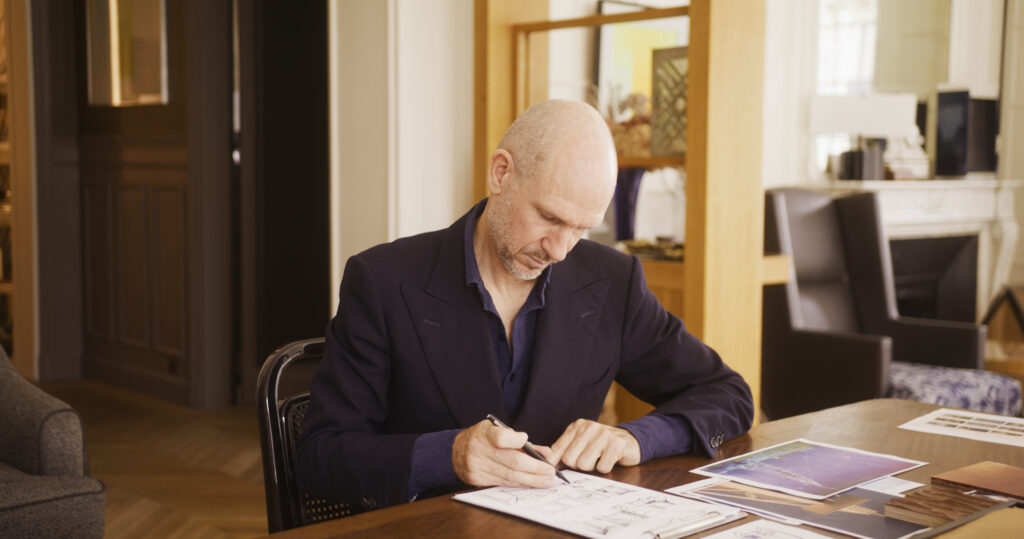
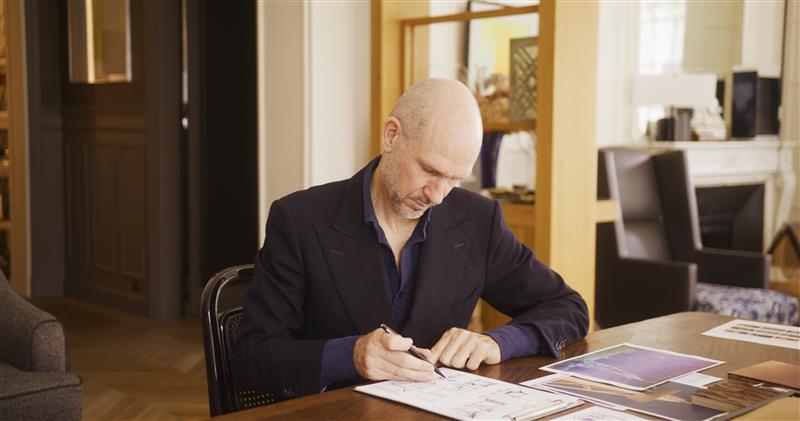
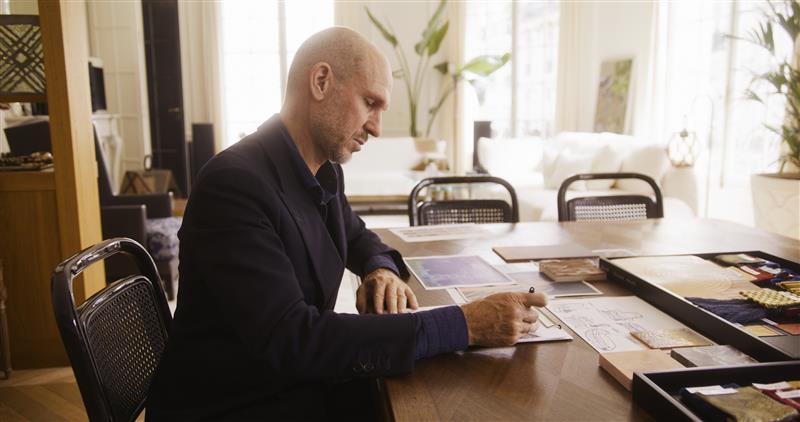
The program announced by Jumeirah will span approximately 18 months and will be carried out in phases, with a clear goal: to preserve the property’s interiors without erasing what has been its visual strength since 1999. The press release emphasizes that the conservation will be carried out “with a level of attention to detail worthy of restoring a work of art” and entrusts this mission to interior architect Tristan Auer. This choice is not insignificant. It signals a shift: the Burj Al Arab is no longer treated merely as a hotel to be maintained to contemporary standards, but as a heritage site of modern luxury.
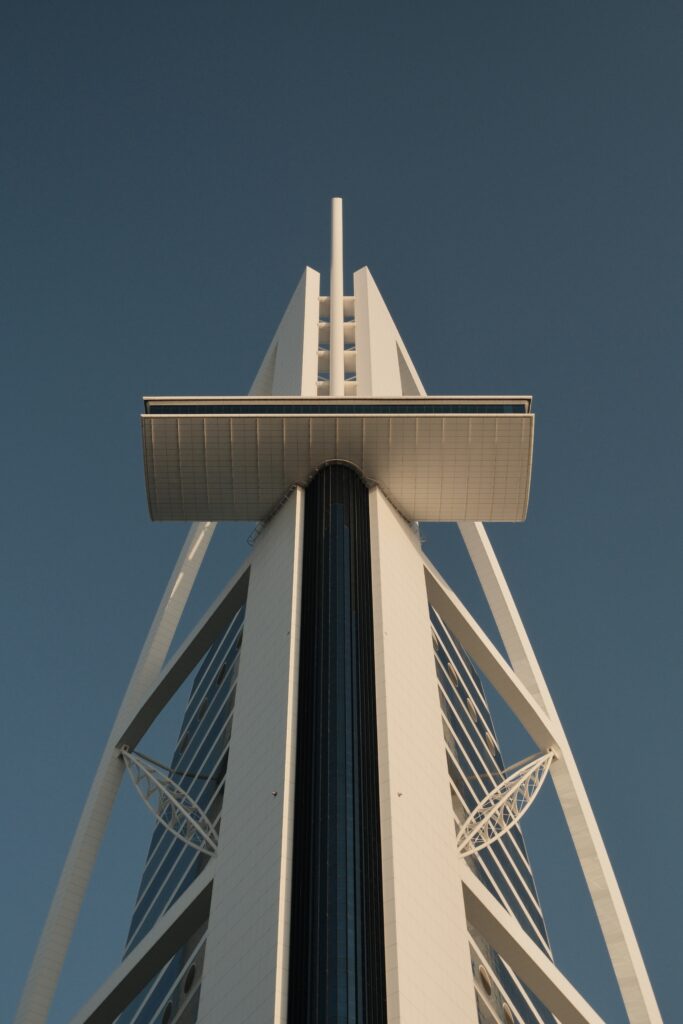
This notion of heritage may seem surprising for such a relatively new piece of architecture. Yet it says a great deal about Dubai. The building, designed by Tom Wright—who was then with WS Atkins—takes the shape of a dhow sail, a direct reference to the region’s maritime history; Jumeirah reminds us that this 321-meter-tall silhouette was born out of a desire to create an instantly recognizable landmark for Dubai, much like the Sydney Opera House is for Sydney or the Eiffel Tower is for Paris. It was not just a hotel. It was an urban emblem, an image destined to travel the world even before its guests had a chance to stay there.
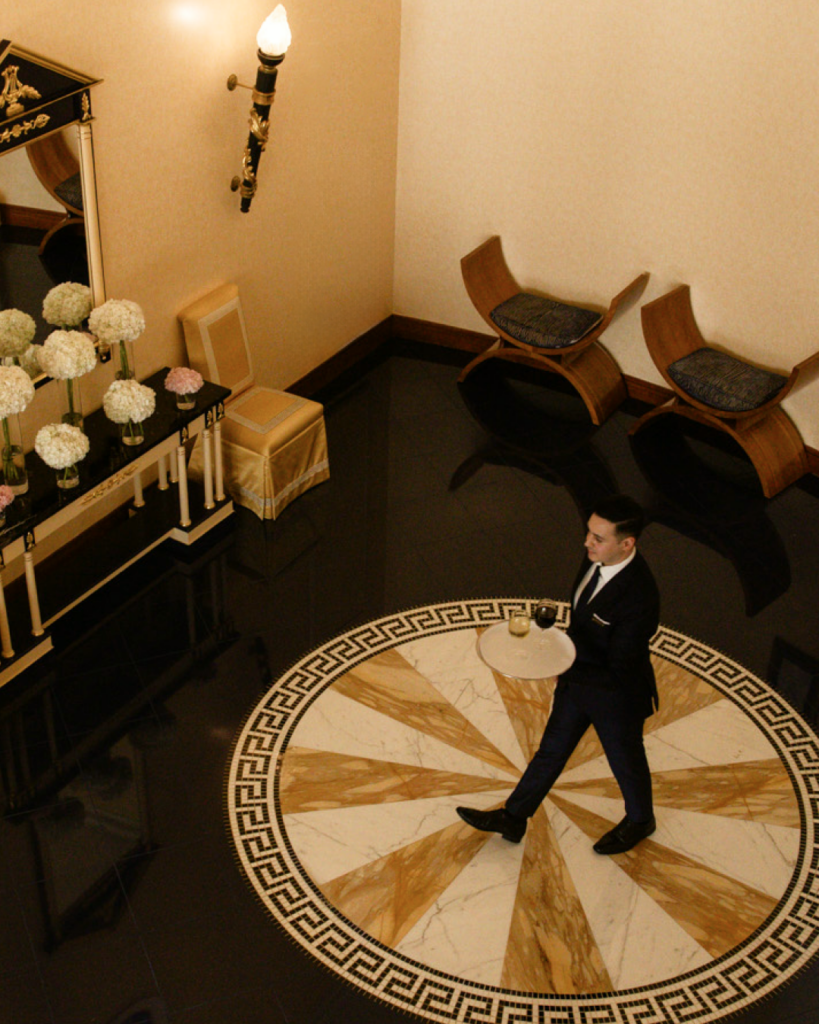
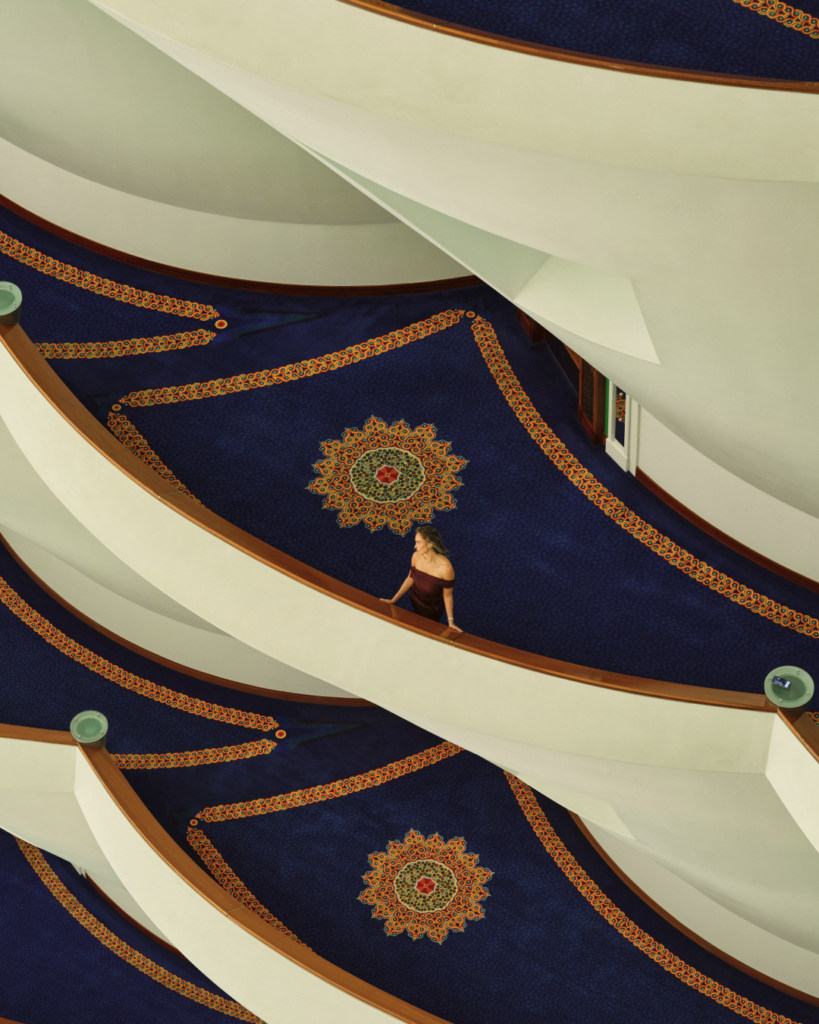
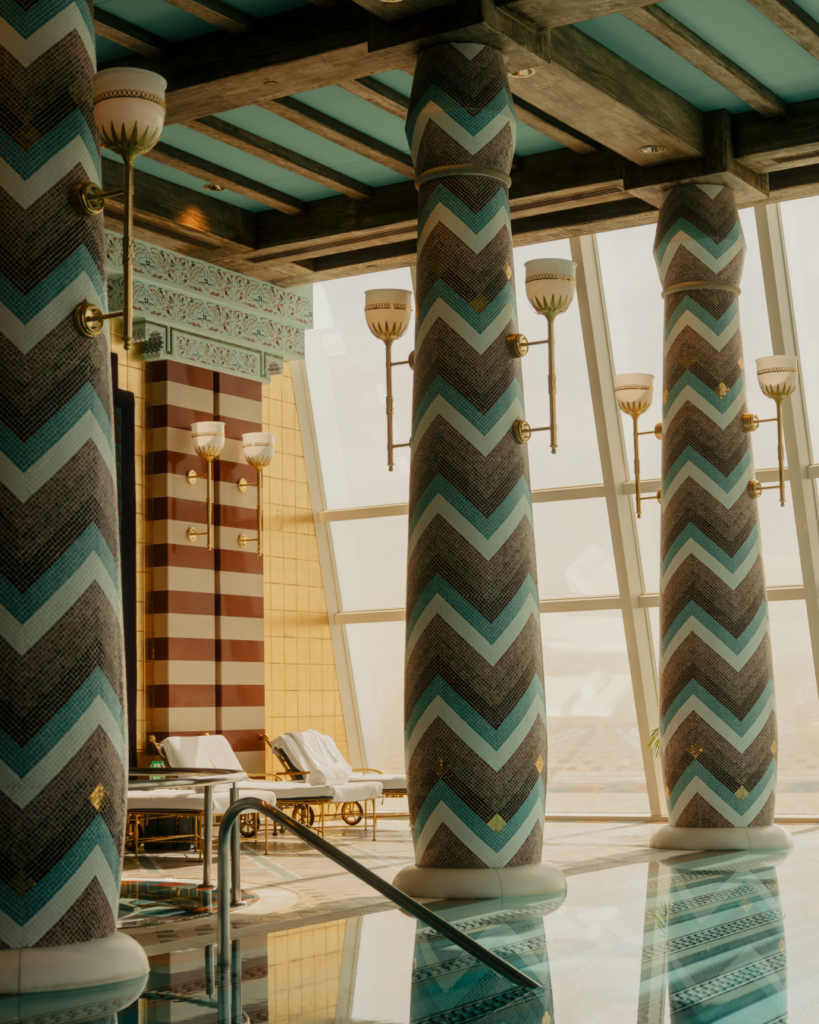
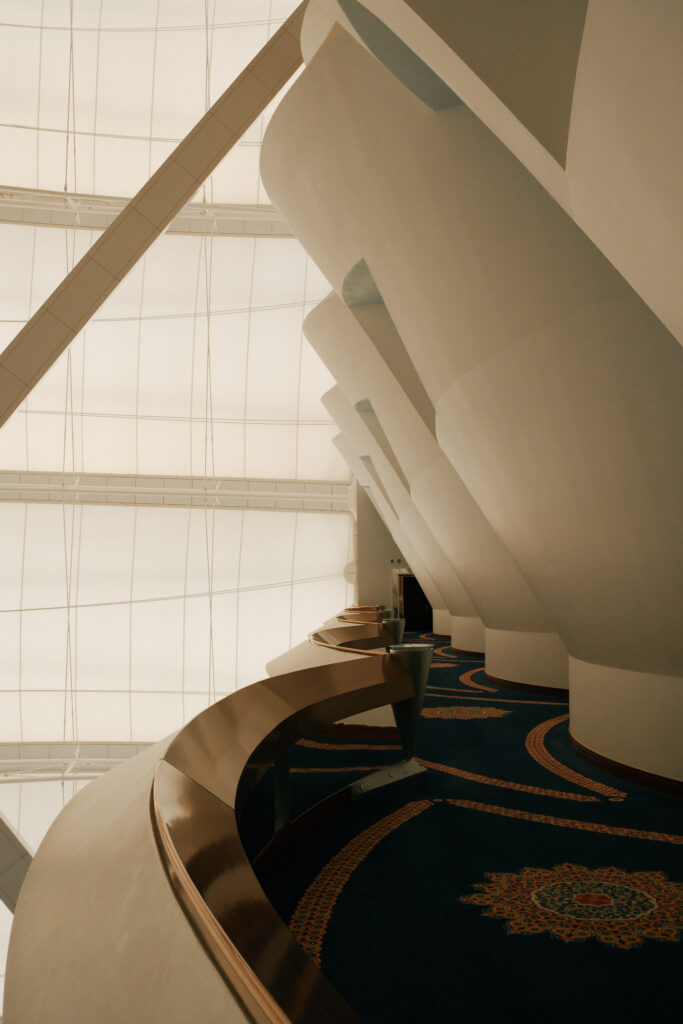
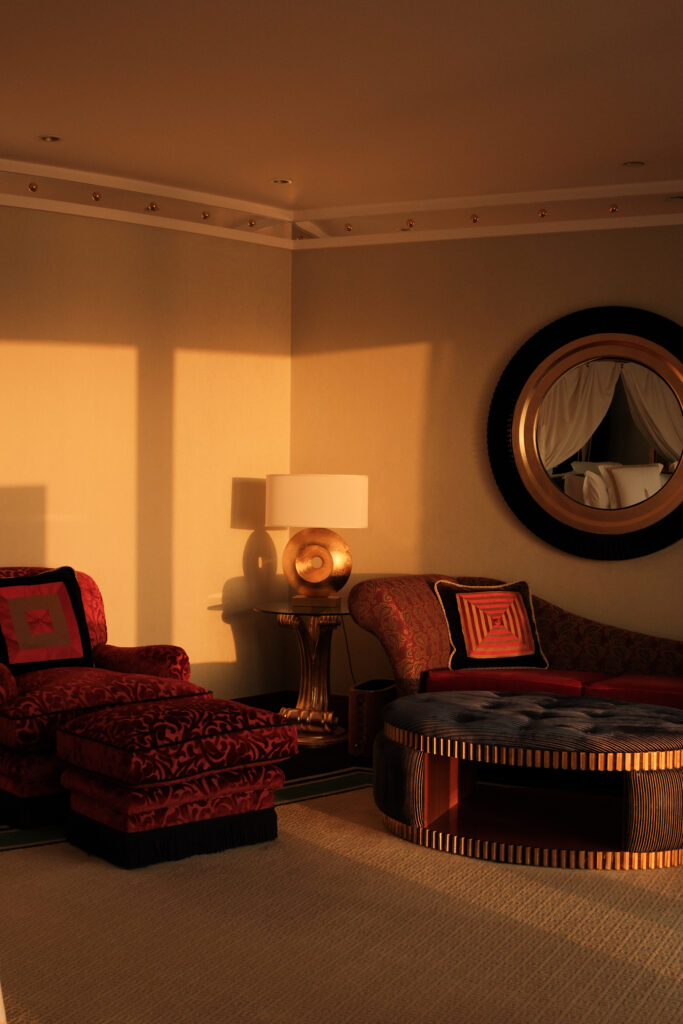
Since its opening in 1999, the Jumeirah Burj Al Arab has helped define a form of ostentatious hospitality, with its suites, personalized butler service, theatrical spaces, marble, Swarovski crystals, and gold leaf, as mentioned in the submitted dossier. These elements may seem far removed from the discretion now sought by a segment of the European luxury market. But they belong to a specific language: that of a Middle East which, in the late 1990s, used hotel architecture as a diplomatic, tourist, and economic language. The Burj Al Arab did not merely host luxury; it staged it as a force to be reckoned with.
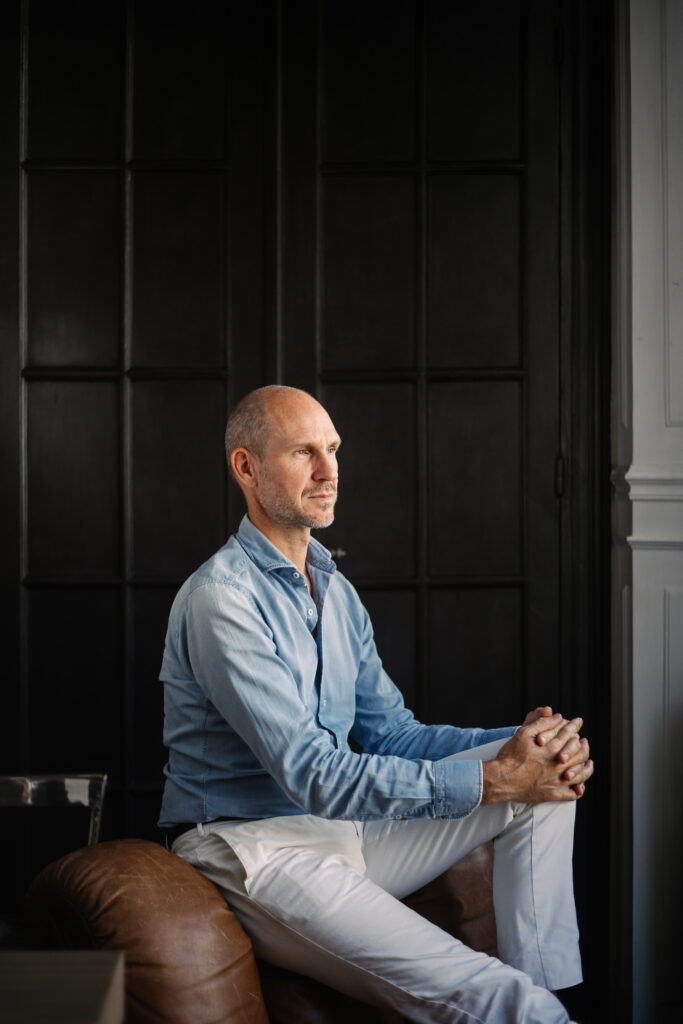
The restoration project entrusted to Tristan Auer will therefore need to resolve a delicate balance: modernizing without neutralizing. Auer, who trained under Christian Liaigre and then Philippe Starck, founded his firm in 2002; his work has notably focused on hotel and heritage projects such as the Hôtel de Crillon and Les Bains in Paris. His value here lies less in a distinctive decorative style than in his ability to work with spaces already steeped in imagery. In the case of the Burj Al Arab, the challenge is not to tone things down at all costs, much less to give the decor a French touch. It is about understanding opulence as an archive.
Thomas B. Meier, CEO of Jumeirah, describes this restoration as “a new chapter” intended to preserve the essence of a place he describes as the only property in the Jumeirah Limited Edition collection. The concept is intriguing, beyond its institutional context: it positions the hotel within a framework of controlled scarcity. At a time when the luxury hotel industry is seeing a proliferation of spectacular new openings, restoration can become a more powerful statement than new construction. This requires accepting that certain buildings have already established their identity, and that their future now hinges on the precision of the restoration work.
Tristan Auer sums up this responsibility by referring to “the first restoration of a site of this scale in Dubai” and the need to preserve its legacy with the utmost care. The statement clearly conveys the symbolic significance of the project. Restoring the Burj Al Arab means delving into one of Dubai’s earliest major international narratives: that of a city capable of transforming a hotel into a monument, and then a monument into a part of contemporary memory.
What will be most revealing is undoubtedly what will remain unchanged. A successful restoration, in such an iconic setting, is not measured solely by visible changes. It is measured by the continuity of proportions, the quality of the replacement materials, the way technology integrates seamlessly, and the ability to preserve extravagance without making it look dated. The Burj Al Arab belongs to an era when luxury still believed in verticality, spectacle, and making a statement through scale. Its restoration will reveal whether this aesthetic can stand the test of time.
Address: Jumeirah Burj Al Arab, Umm Suqeim 3, Dubai, United Arab Emirates
Official website: www.jumeirah.com
Cette publication est également disponible en :

