
In Diriyah, the hospitality industry is not merely advancing according to international standards of comfort. It is entering a political, architectural, and symbolic landscape. Bab Samhan, a Luxury Collection Hotel, Diriyah, is part of this specific moment in which Saudi Arabia is transforming some of its historic sites into cultural destinations, refusing to settle for mere heritage decoration.
The starting point is At-Turaif, a district inscribed on the UNESCO World Heritage List in 2010. The former capital of the Saudi dynasty, founded in the central Arabian Peninsula, At-Turaif exemplifies the Najdi architectural style, unique to central Arabia, with its mud-brick structures, defensive features, and direct adaptation to the climate. This is not merely a picturesque backdrop: it is the historical foundation of Diriyah, now recognized as the cradle of the Kingdom of Saudi Arabia.
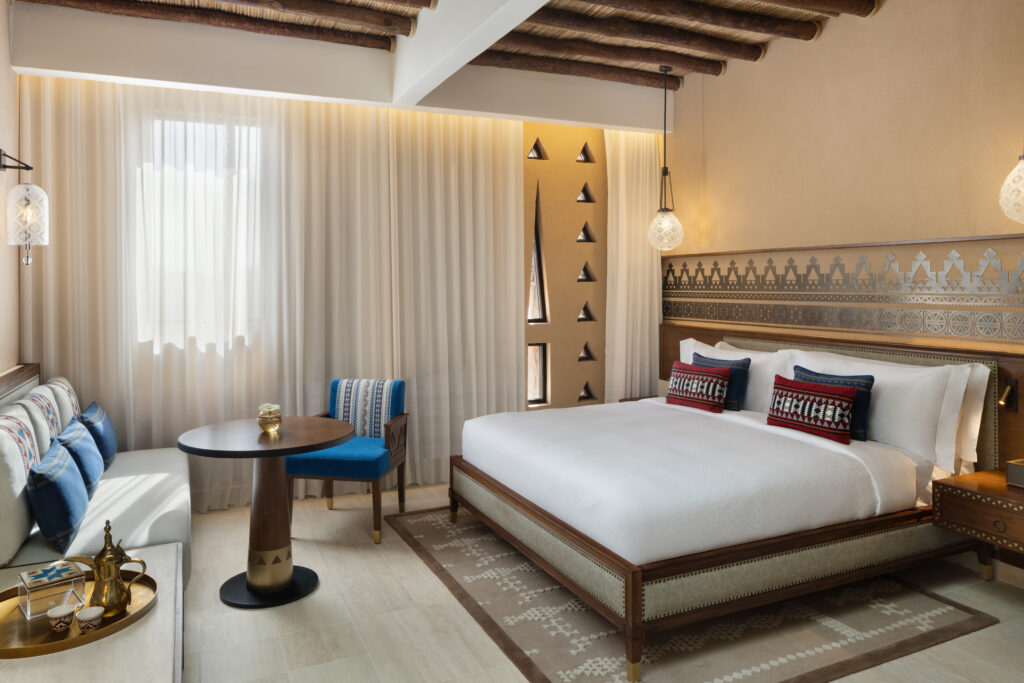
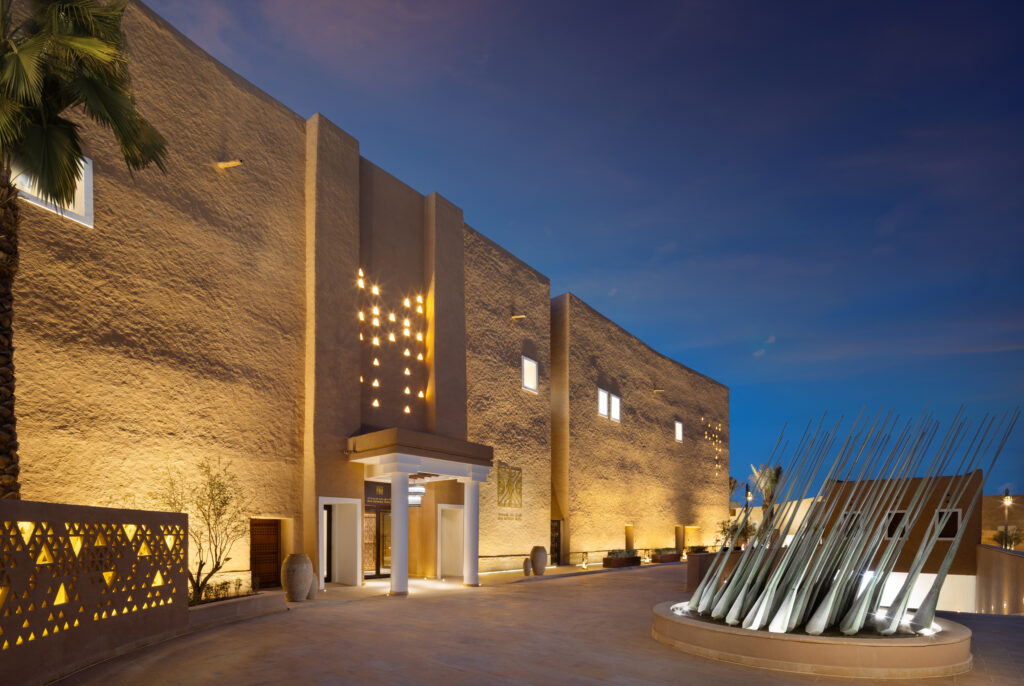
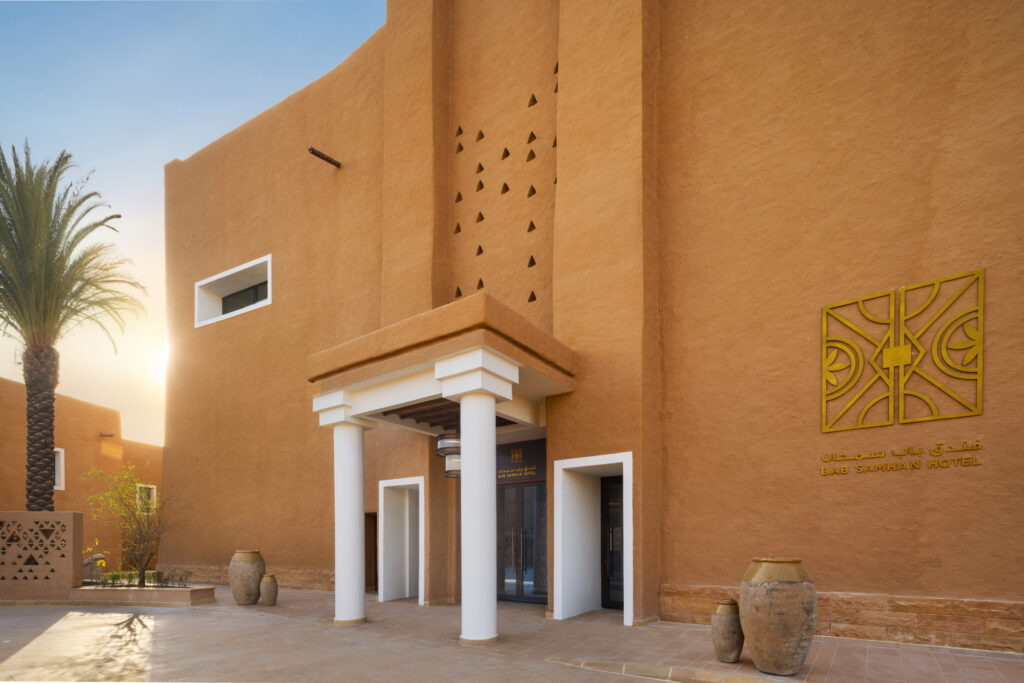
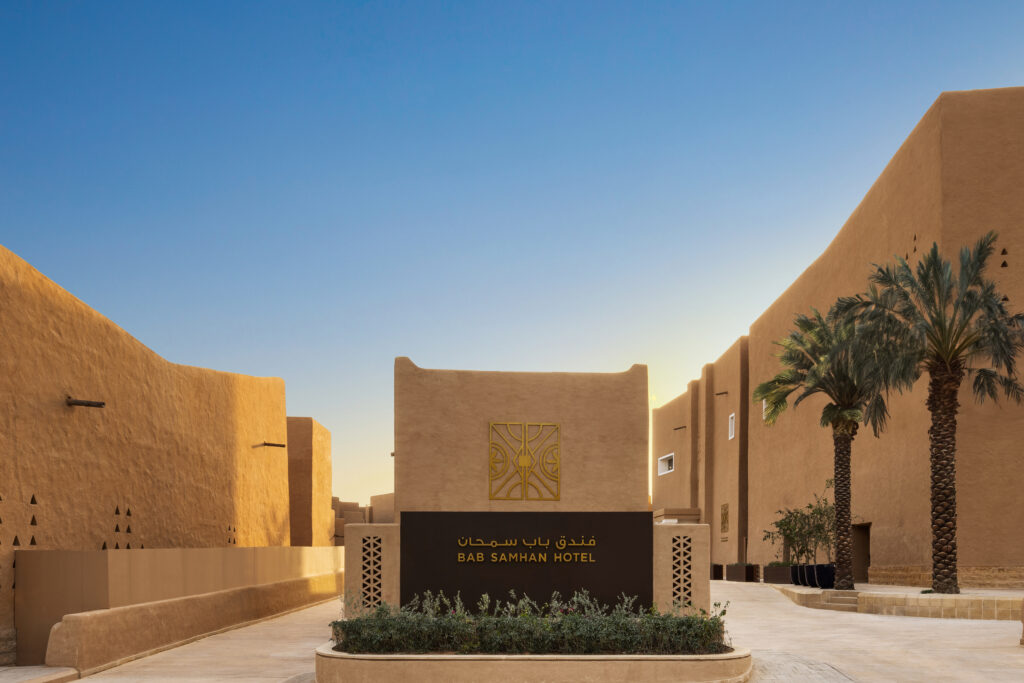
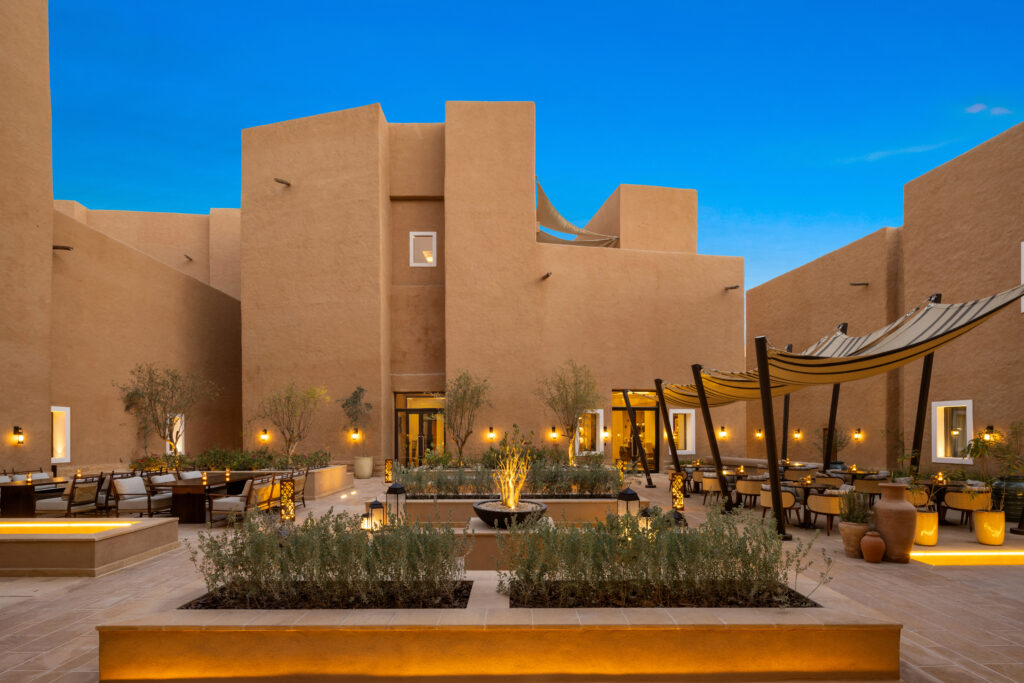
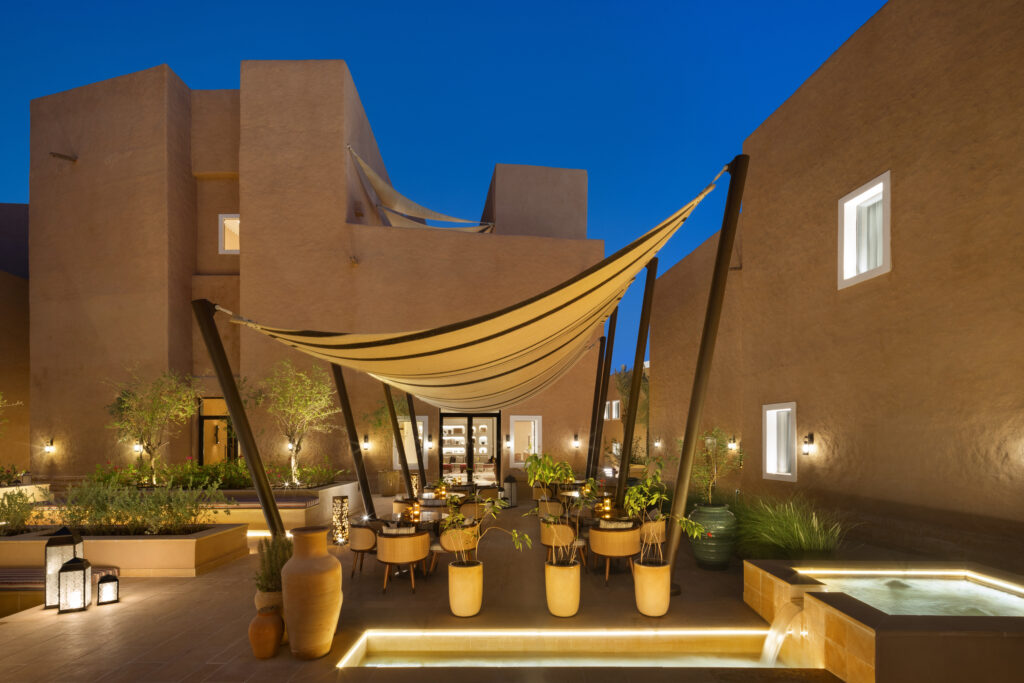
In this context, Bab Samhan plays a delicate role. The hotel incorporates the hallmarks of Najdi architecture, including textured plaster, earthy tones, carved wooden ceilings, and handcrafted details inspired by the region. Marriott lists 134 rooms and suites, designed to reflect Saudi cultural heritage; the page dedicated to accommodations, however, lists 106 rooms and 29 suites—a discrepancy in the figures that warrants verification before final publication.
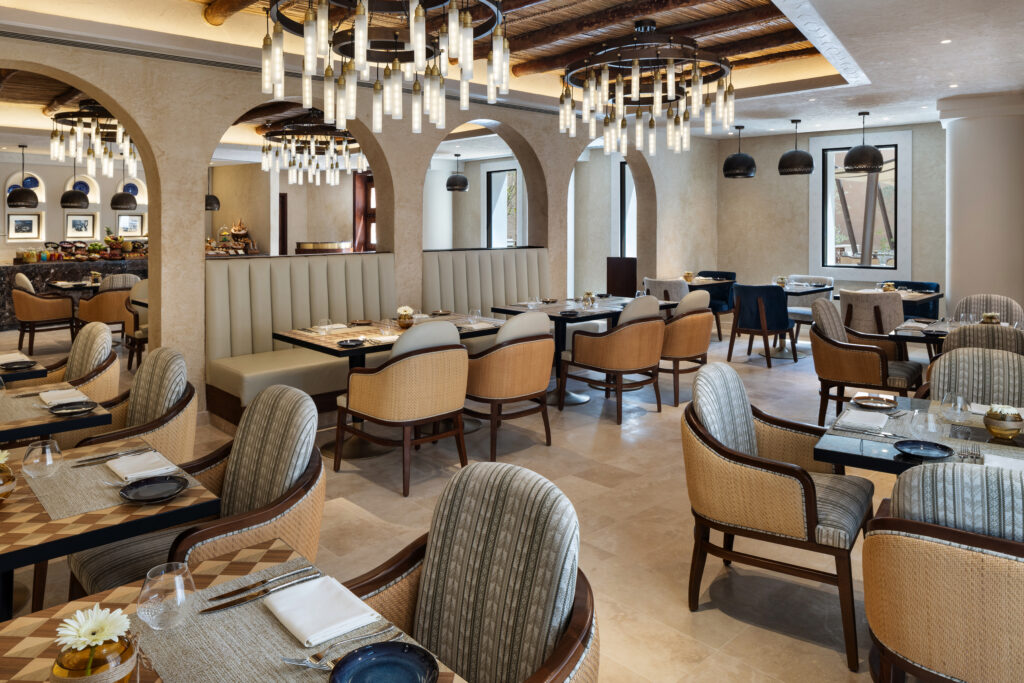
The press kit emphasizes a valid point: here, heritage is not merely preserved—it is lived. However, this claim still needs to be proven in practice. The property features three restaurants—Jareed, Taleed by Chef Michael Mina, and Medheef—a Nafel Alwadi spa, a fitness center, five event spaces, and a large ballroom that can accommodate up to 250 guests. These elements come together to create not so much a secluded retreat as a place for socializing, designed for local guests as much as for international travelers.
The choice of Diriyah is no coincidence. The Diriyah project is one of the Kingdom’s major cultural and urban initiatives, with the goal of transforming this historic area, located on the outskirts of Riyadh, into a heritage and lifestyle destination. The Diriyah Company has announced a comprehensive project valued at $63.2 billion, incorporating cultural, educational, and artistic districts. Here, luxury is not merely a byproduct of tourism development; it is part of a soft power strategy, in which hospitality becomes a language of the nation.
The seasonal offers announced by Bab Samhan build on this concept. The first, valid through May 30, 2026, positions the hotel as a convenient stopover for rediscovering Riyadh from Diriyah, featuring breakfast at Medheef, discounts on dining, high-speed Wi-Fi, and valet parking. The second, valid through August 29, 2026, combines a family getaway with the excitement of Qiddiya, featuring two tickets to Six Flags Qiddiya City or Aquarabia, as well as benefits at the spa and dining venues. The third, valid through August 31, 2026, is designed for a weekend getaway: daily breakfast, a 400 SAR hotel credit, discounts on spa treatments, and a late check-out at 4:00 p.m.
The value of these proposals lies not in their fairly conventional business model, but in what they reveal: Diriyah is no longer visited solely as a historic site. It is now characterized by a sense of time spent there. People come here to sleep, dine, slow down, head off to an amusement park, return to the spa, and wander through an urban landscape still in the process of being reshaped. Nearby, Six Flags Qiddiya City and Aquarabia situate the experience within a new geography of Saudi entertainment, bridging the gap between the country’s founding heritage and next-generation leisure facilities.
The central question remains: how can we bring together earthen architecture, the national narrative, and communal hospitality without turning heritage into a staged spectacle? Bab Samhan seems to answer this through scale rather than spectacle. Its guest rooms draw on local materials and motifs, its restaurants showcase Saudi, Mediterranean, and international cuisine, and its experiences—guided tours, storytelling, and culinary journeys—seek to ground the guest’s stay in an understanding of the place.
Perhaps the most interesting aspect lies in this tension. Bab Samhan is not a hotel detached from the world. It is fully rooted in a Saudi Arabia that invests in memory, architecture, and hospitality as tools for projecting its influence. In Diriyah, luxury is not measured solely by the silence of a room or the precision of service. It is measured by a place’s ability to preserve what it seeks to convey.
Cette publication est également disponible en :

