
At first glance, a single figure doesn’t tell the whole story: a 22% increase in foreign tenants over the course of a year in Paris’s high-end rental market. But behind the statistic just released by BARNES Rentals lies a more profound shift—that of a city that is ceasing to be merely a stopover and becoming a place to call home.
A figure that masks a fundamental shift
On paper, the study looks like any real estate agency’s quarterly report: rents up 6 to 9% in the high-end market, rental vacancy rates below 1%, and an average monthly rent of 4,285 euros. Taken together, these figures paint a picture of a tight market—something entirely predictable for anyone who has been following the Paris real estate market for the past few years.
What the press release downplays, however, is the shift in the profile of the clientele that drives this market. In May 2026, 64% of tenants managed by BARNES Rentals in Paris were international—42% Americans, 33% Europeans, and 25% from the Middle East. Ten years ago, this same statistic would have told a story of executives on business assignments and wealthy tourists looking for a pied-à-terre. Today, it tells a different story: families choosing Paris as their home base—sometimes for several years—and enrolling their children in schools rather than staying in private mansions rented for a single season.
A Shelter Rather Than a Showpiece
The explanation offered by BARNES is summed up in a statement by Jean de Gouvion Saint-Cyr, associate director of BARNES Rentals: “It wasn’t Parisians who decided that Paris was a safe haven. It was international crises that established it as such. ” This statement is worth pausing to consider, because it turns the conventional wisdom about the luxury market on its head. Paris is often portrayed as a capital that captivates with its art de vivre, its heritage, and its gastronomy—a choice driven by pleasure. The BARNES study suggests a more pragmatic, strategic motive: the city is chosen for its perceived stability, just as one might choose a currency or a financial center.”
The Economist Intelligence Unit’s Safe Cities Index 2025, cited in the study, actually ranks Paris ahead of London and New York in terms of perceived safety—an indicator that, for a clientele accustomed to weighing the merits of major cities much as one weighs the merits of asset classes, carries more weight than a Michelin-starred dinner or an exhibition at the Grand Palais. In a world where geopolitical tensions are redrawing the map of trust in real time, residential real estate is becoming as much a hedging instrument as it is a status symbol.
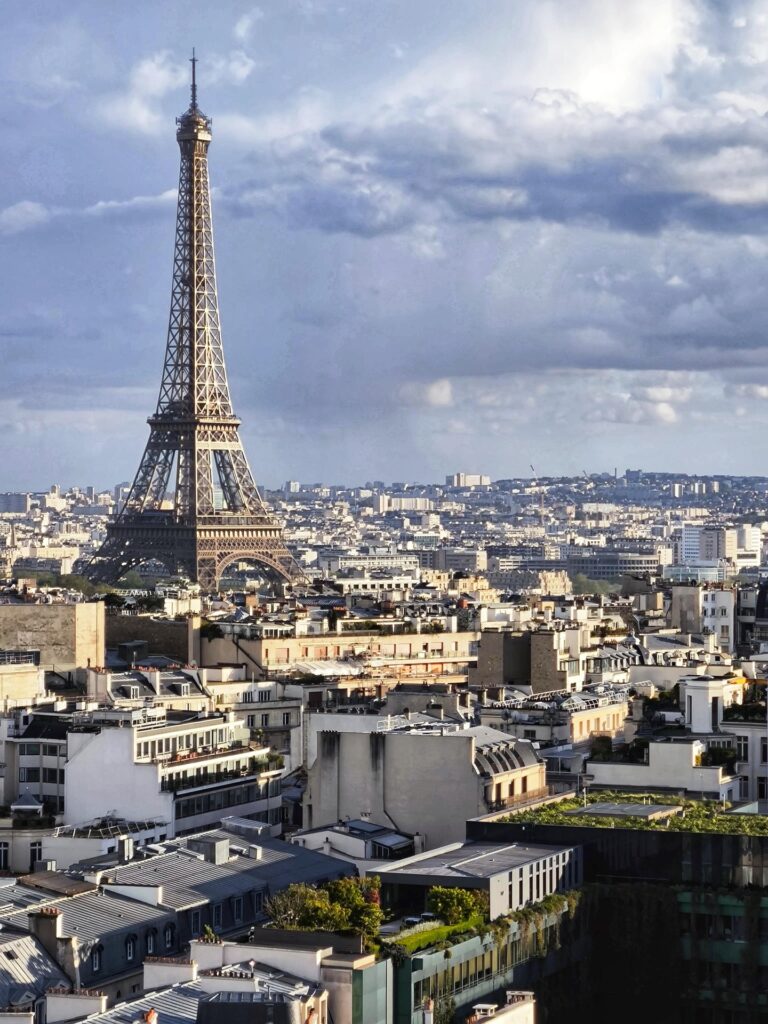
A city that’s changing in scale through its outskirts
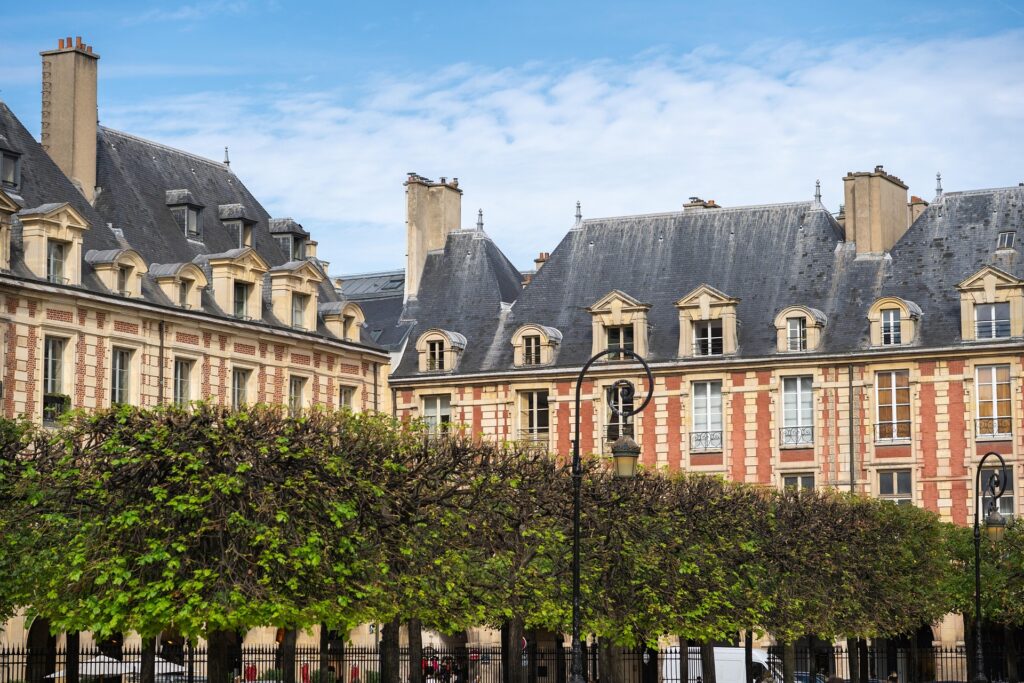
The second, more subtle insight relates to geography. The historic districts of Parisian luxury—the 6th, 7th, 8th, and 16th arrondissements, as well as Neuilly-sur-Seine—naturally retain their status as benchmarks. But the study points to an expansion of the sought-after area: the Marais, established as a destination neighborhood for its architectural heritage and cultural vibrancy, and to the east, the 11th, 12th, and 20th arrondissements, driven by a younger international clientele drawn to independent retailers rather than the boutiques of century-old fashion houses.
This shift reflects a clientele that is no longer seeking just a prestigious address, but rather a lifestyle—international schools, green spaces, transportation access, and a vibrant neighborhood. It is a form of luxury that is defined less by prestige than by practicality, and which, in doing so, is shifting some of Paris’s real estate value toward neighborhoods that had previously never been on the radar of the ultra-high-end market.
What this signals
One question remains that the study does not address head-on: What becomes of a capital city when its luxury housing market is no longer shaped by its residents but by external inflows? BARNES sees this as a “top-down” revitalization—an implicit endorsement of France’s appeal. One can also read between the lines the question that London and New York have been asking themselves for quite some time: that of a city increasingly designed for a clientele that does not live there in the traditional sense, but which stores there—as in a safe—a part of its life and wealth.
The study covers data through May 2026. What happens next will be reflected in the upcoming rent announcements for Square du Vert-Galant and Rue de Turenne—and in the speed with which Paris will, or will not, consolidate this new status as a safe haven, a role it did not play just a decade ago.
Source: BARNES Rentals study and press release, July 2026 (via Galivel & Associés).
Cette publication est également disponible en :

