
In Paris, Korean designer Park Choon Moo devotes her spring-summer 2027 collection to “無”, the void. Not an absence that apologises, but a silence that is dressed: garments that hold their breath between life and death.
An idea first, a garment next
It is rare for a collection to take as its starting point what cannot be seen. For spring-summer 2027, Park Choon Moo presents in Paris PARKCHOONMOO, her signature line within DÉMOO, under a title that fits in a single character: 無, “VOID”. The void is conceived there as a space of absence and stillness, suspended between life and death. It is the season’s central metaphor, that of an extreme calm and a restrained beauty.
The phrase could have remained poetic. Here it becomes a working programme, because the designer backs it with an approach to minimalism of her own: clean, pared-back forms, answered by sculptural silhouettes that are fully embraced. The minimalism of PARKCHOONMOO therefore does not seek effacement, it seeks the tension between what is said and what is left unsaid.
Korean tradition as architecture
Traditional Korean dress surfaces in this collection, but without nostalgic quotation. The goreum, those ribbons that are tied, the dongjeong, that contrasting collar detail, the traditional fastening techniques: each of these elements is reinterpreted as a structural detail. What once closed or adorned a garment becomes what frames it. The gesture is subtle, for it shifts the memory of a costume towards the modern construction of a silhouette, and reinforces what the House calls the identity of PARKCHOONMOO.
One then understands that the void is not here a pasted-on theme. The knot, the collar, the fastening are places where the fabric closes over nothing, where a volume holds itself through a simple play of ties. The void is also this space that sewing makes room for.
Transparency, layering, exposed seams
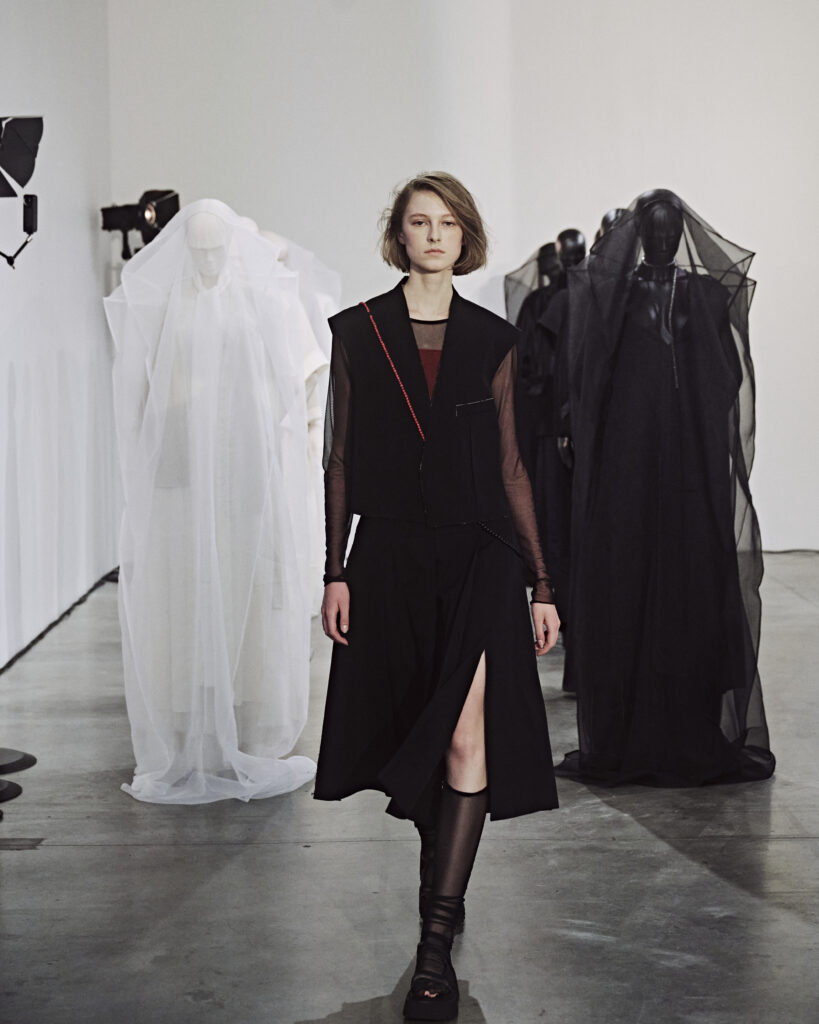
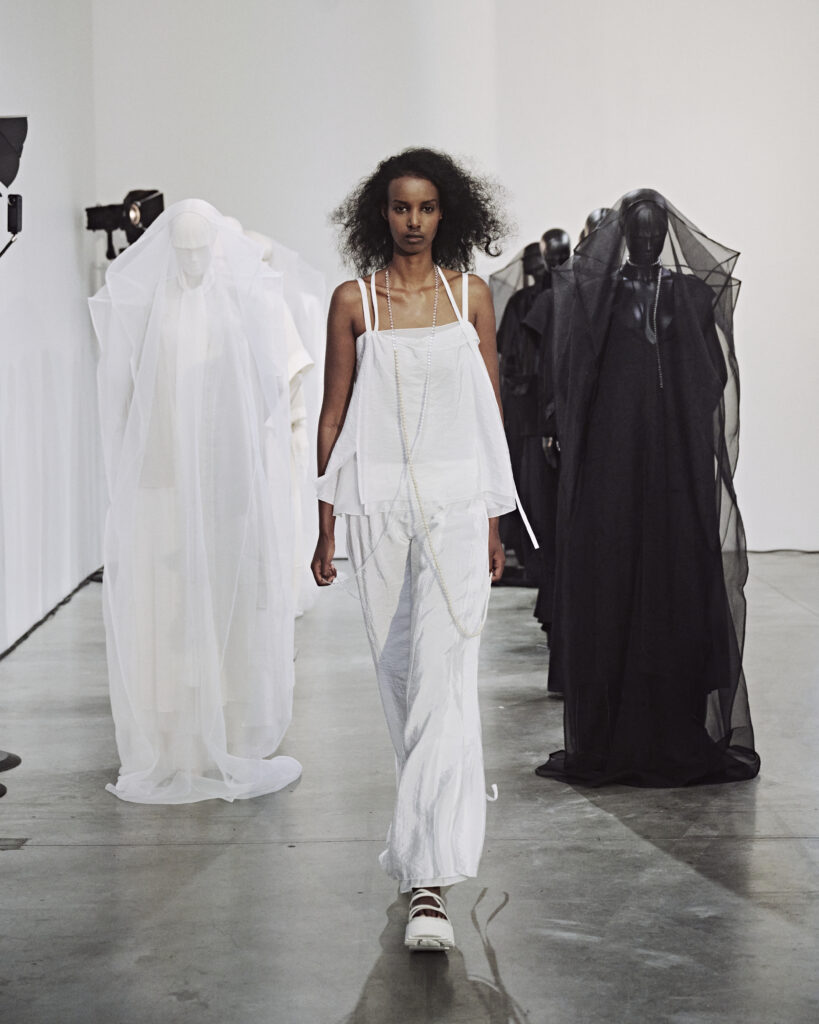
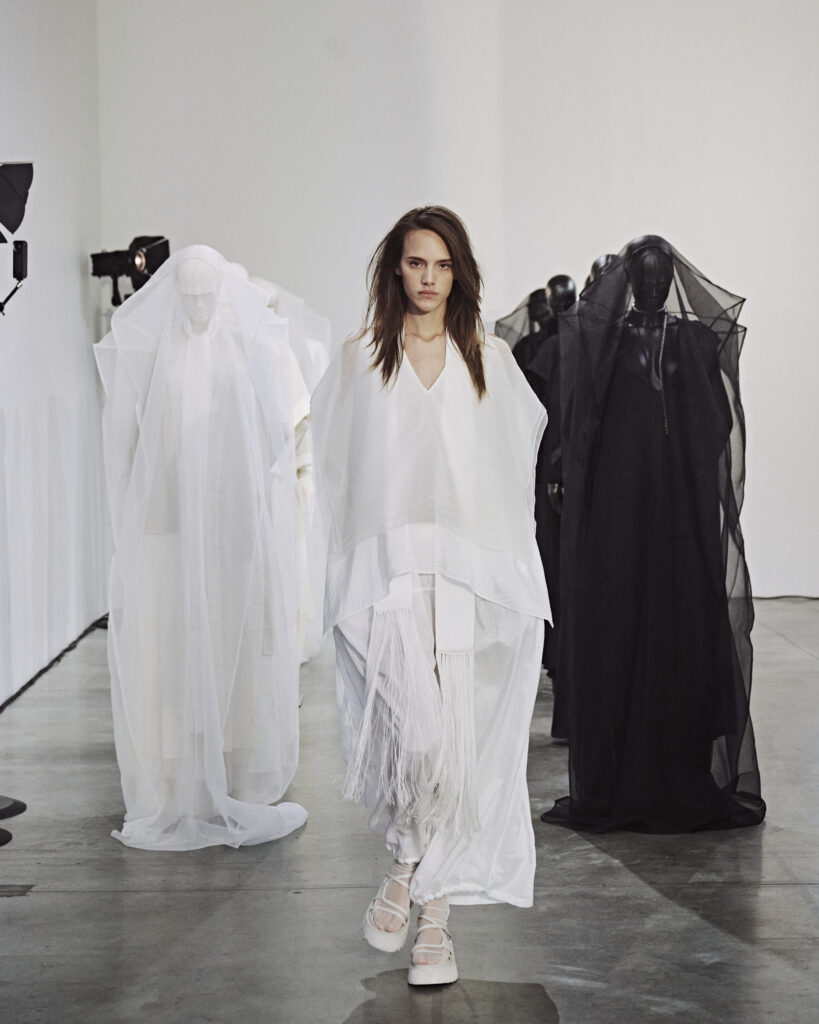
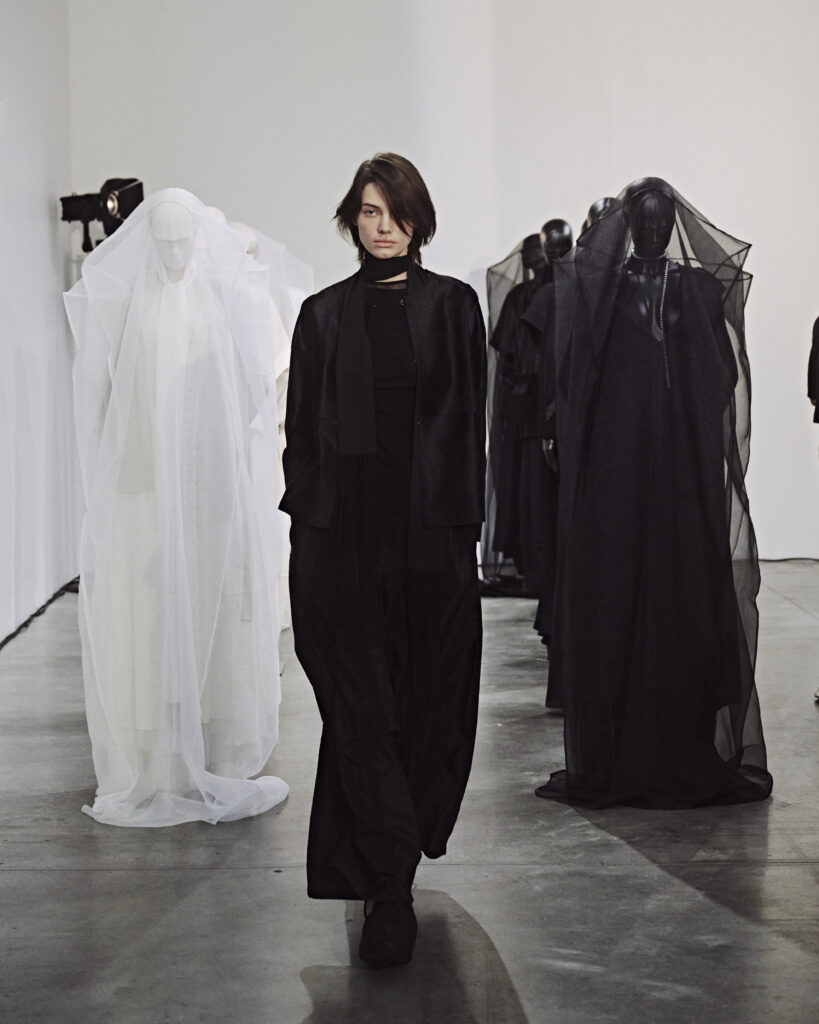
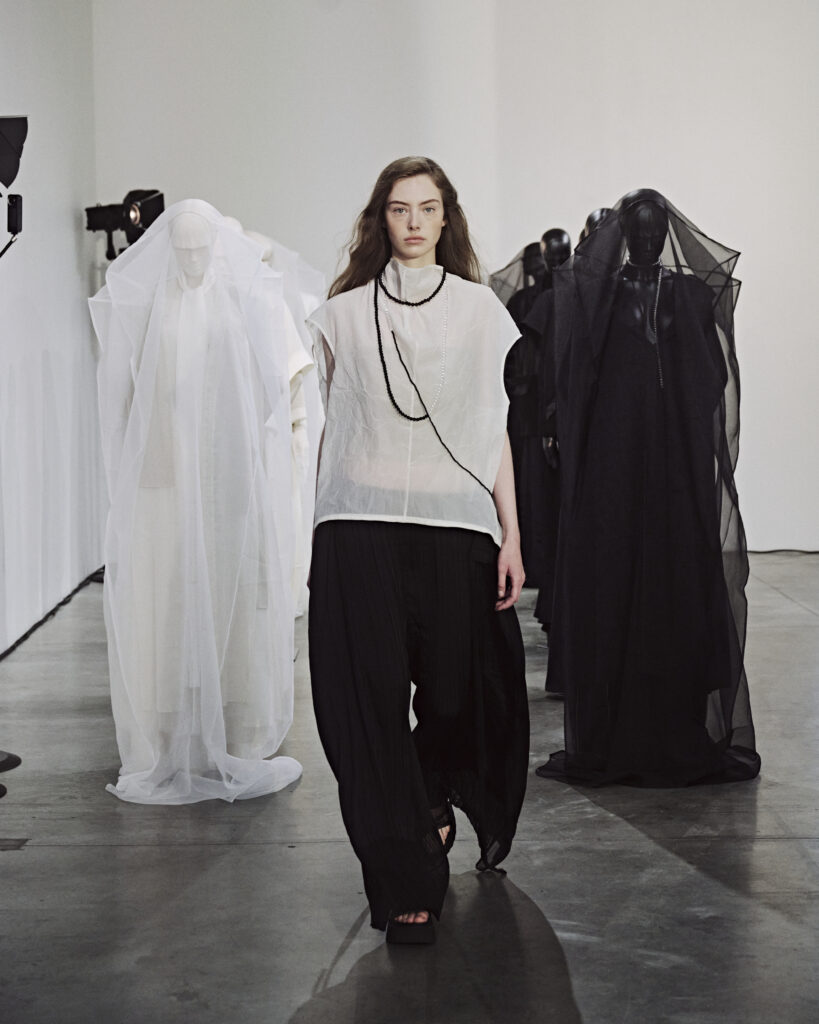
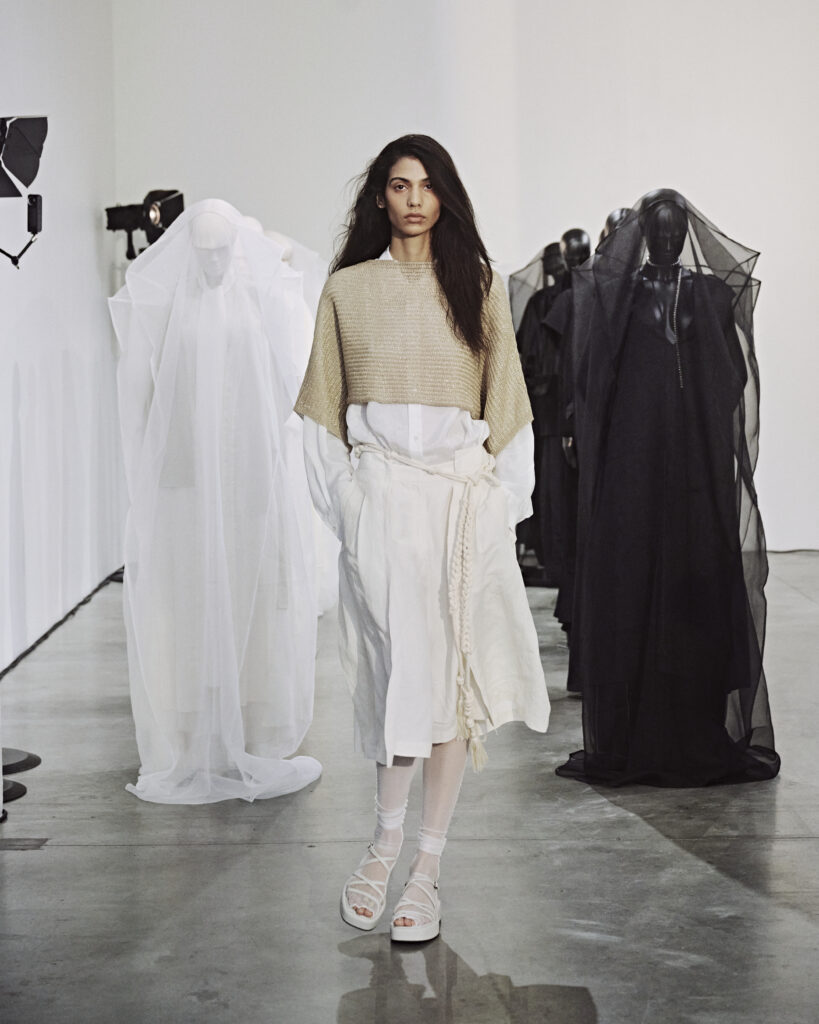
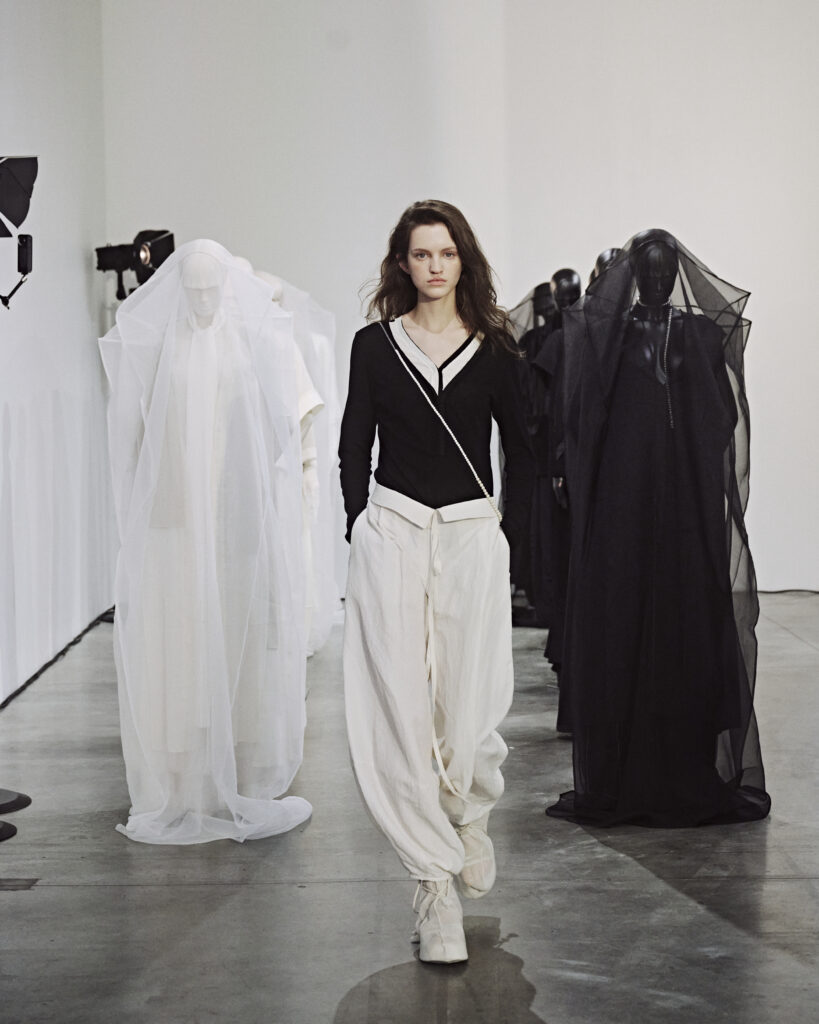
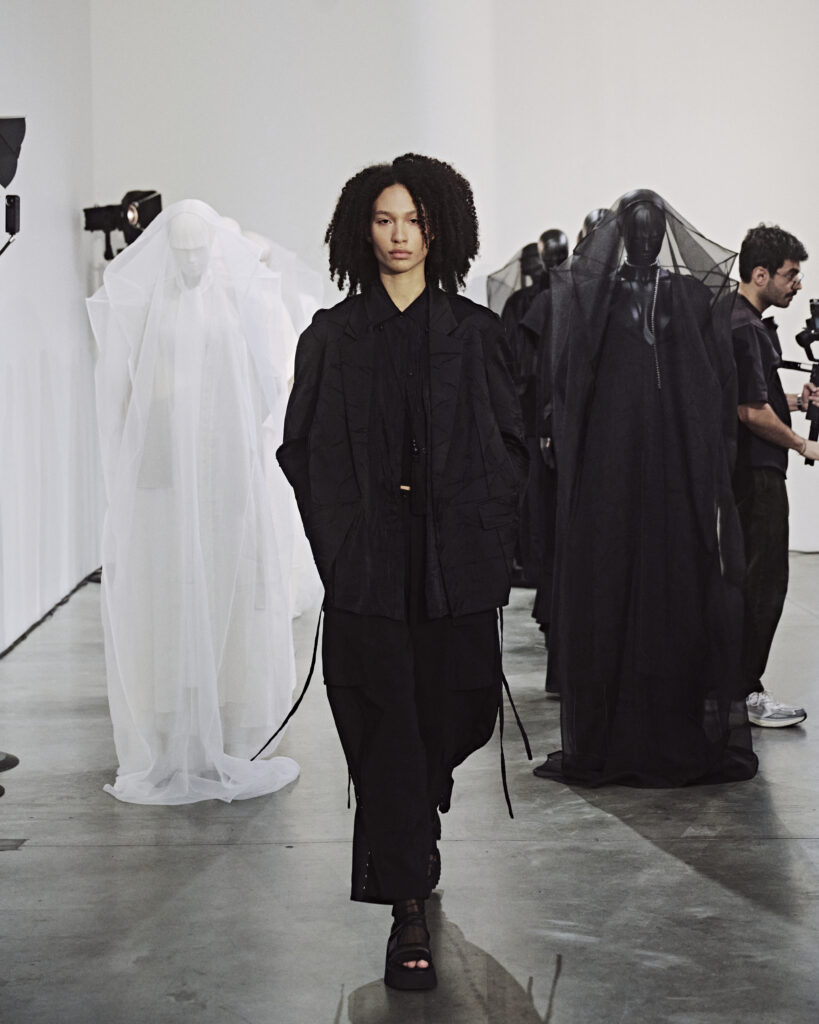
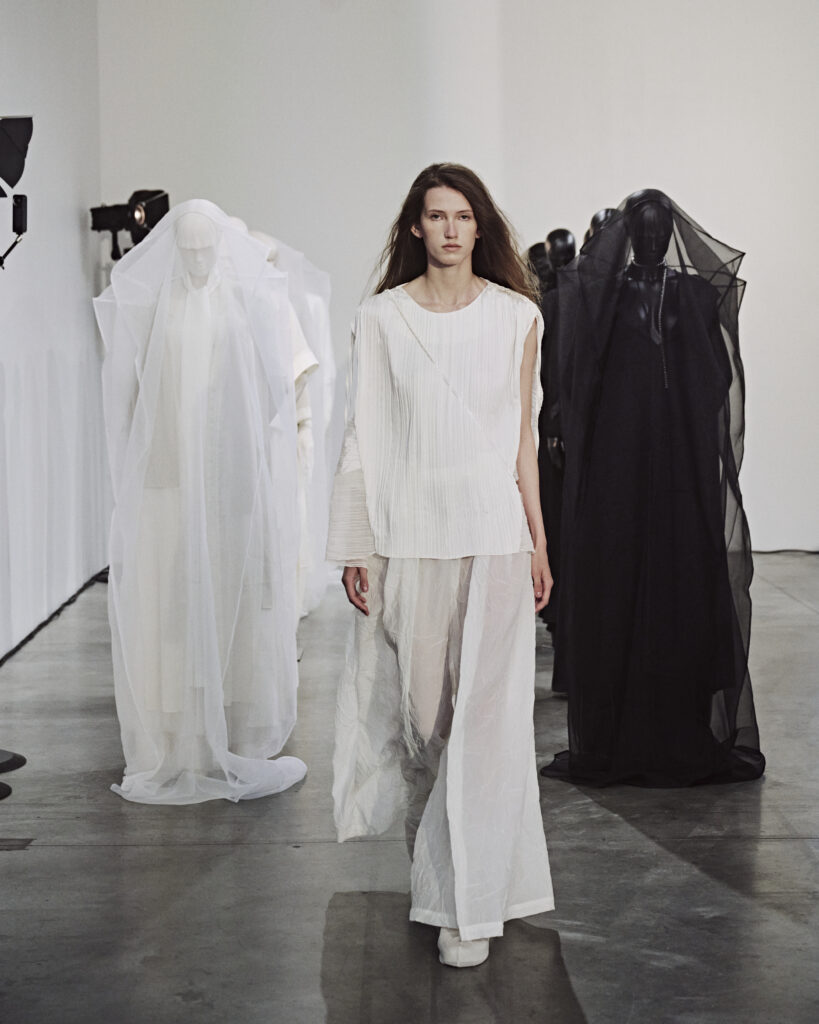
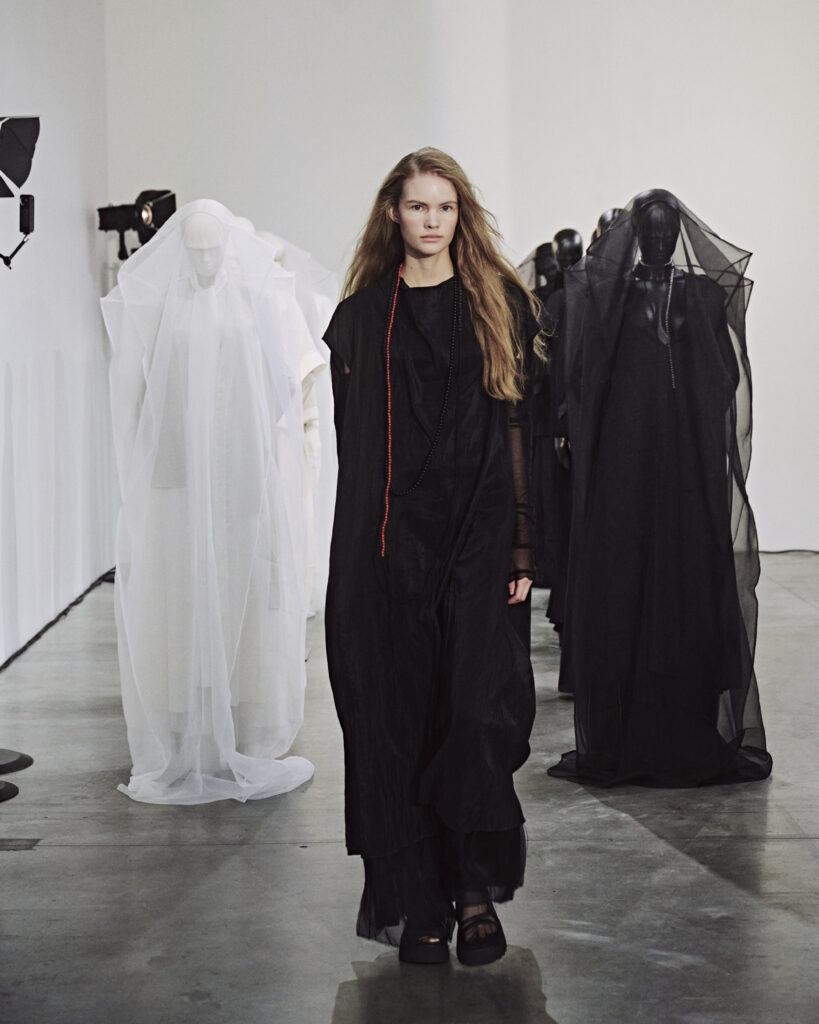
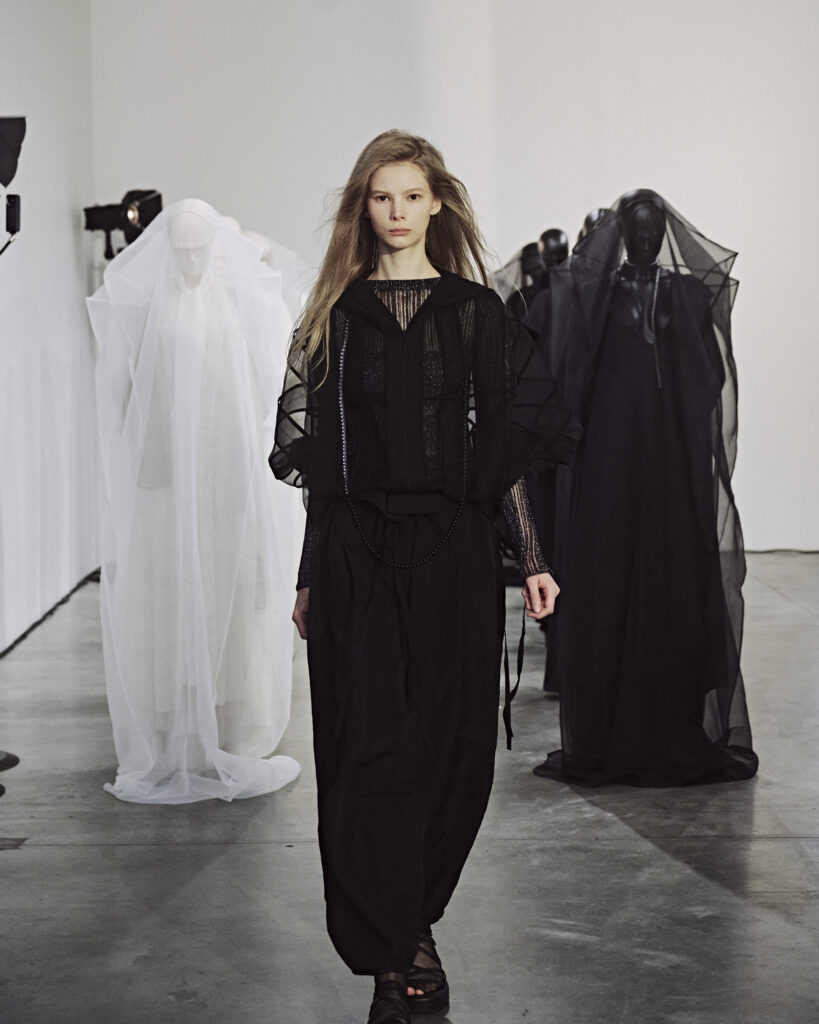
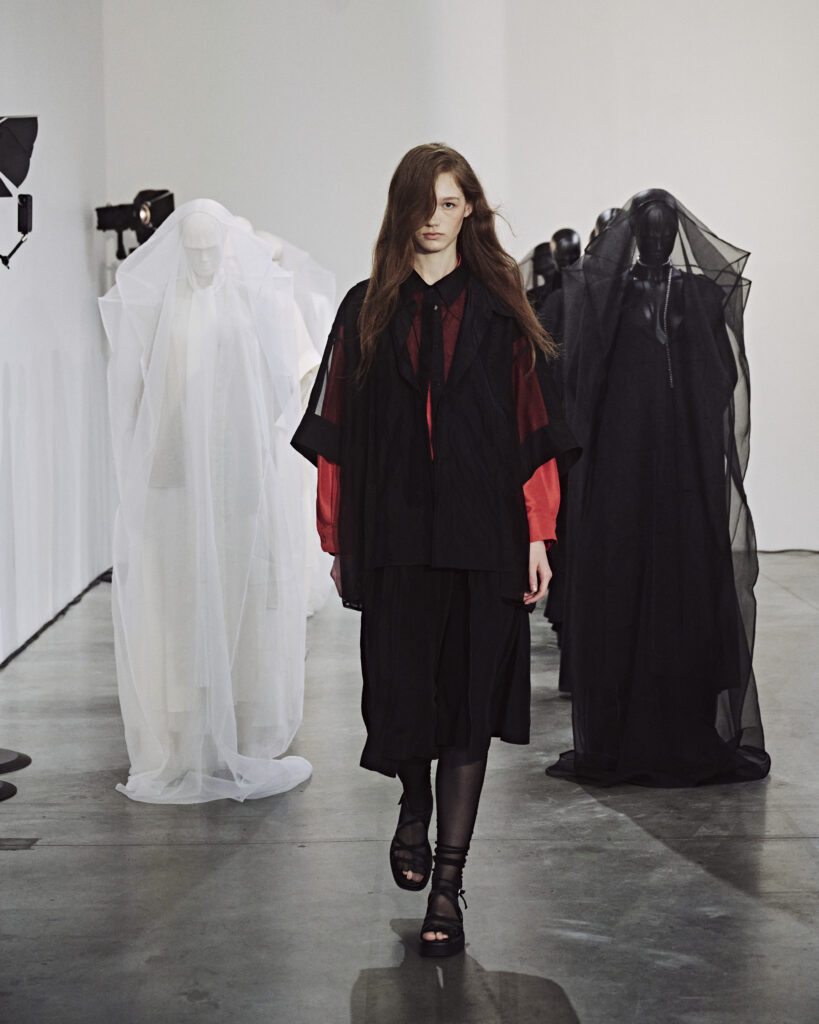
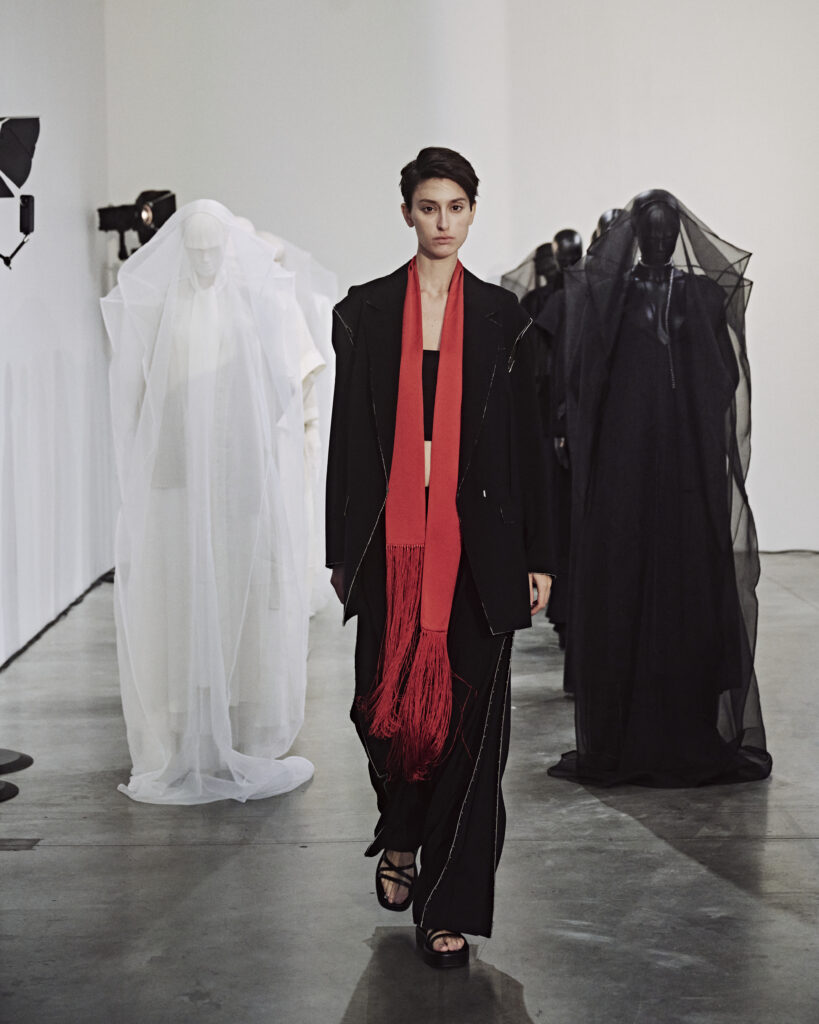
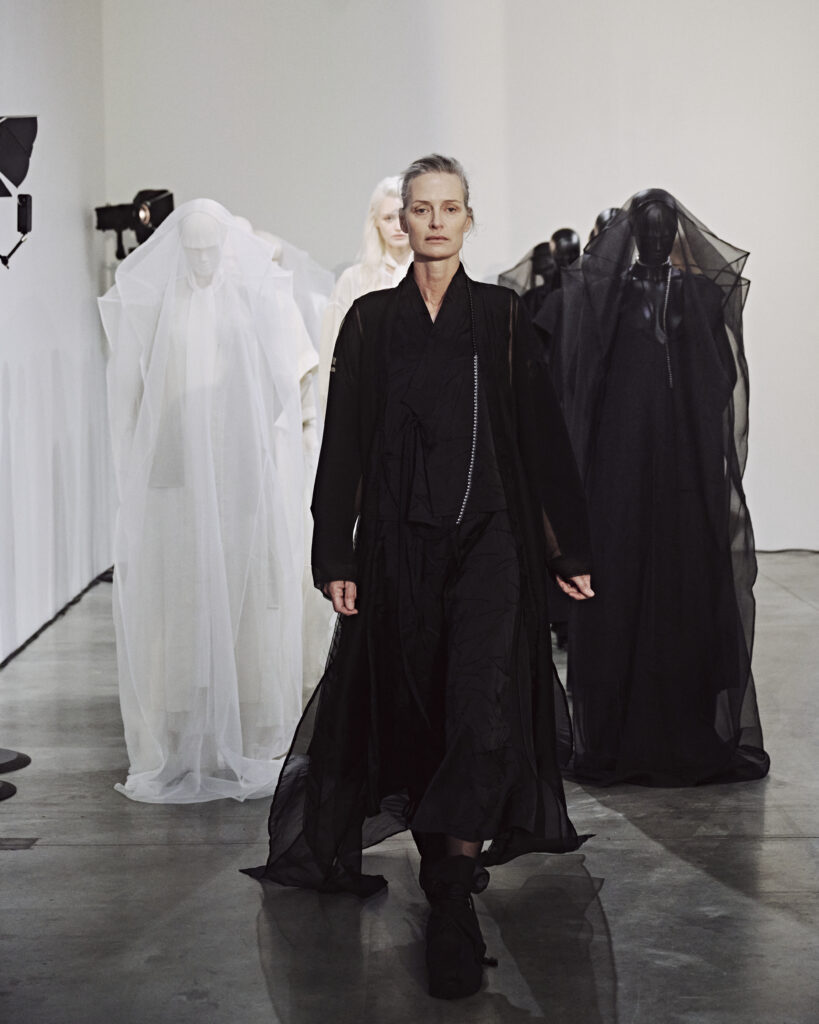
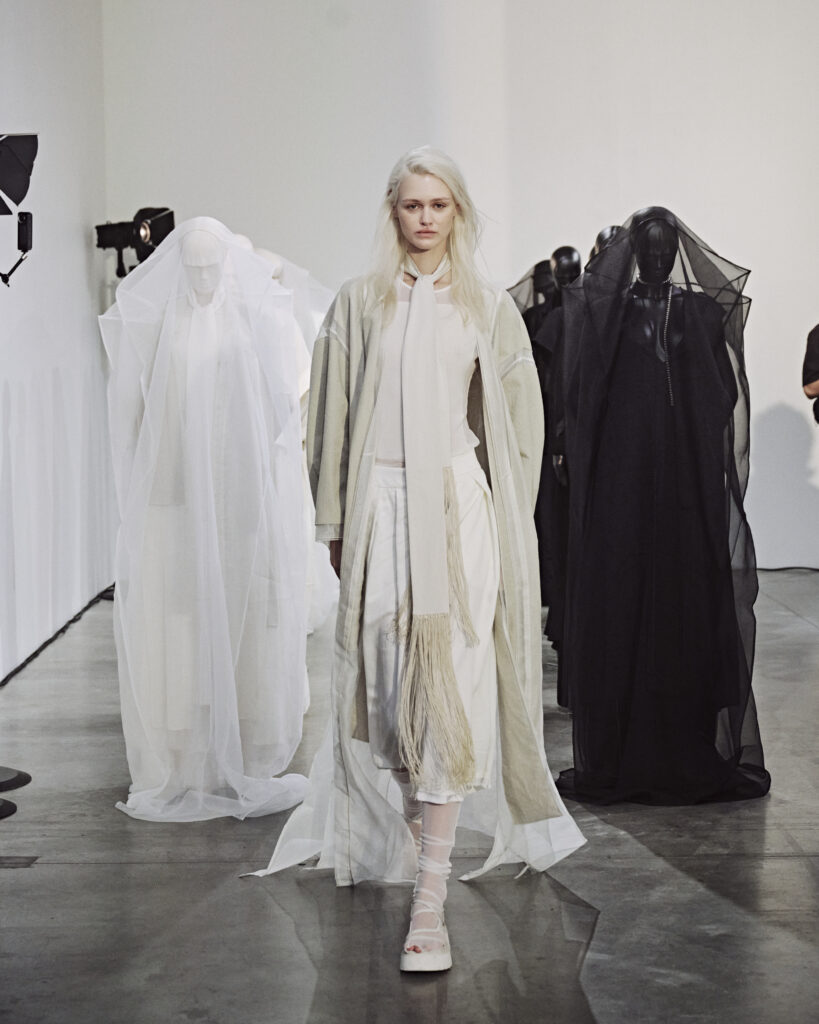
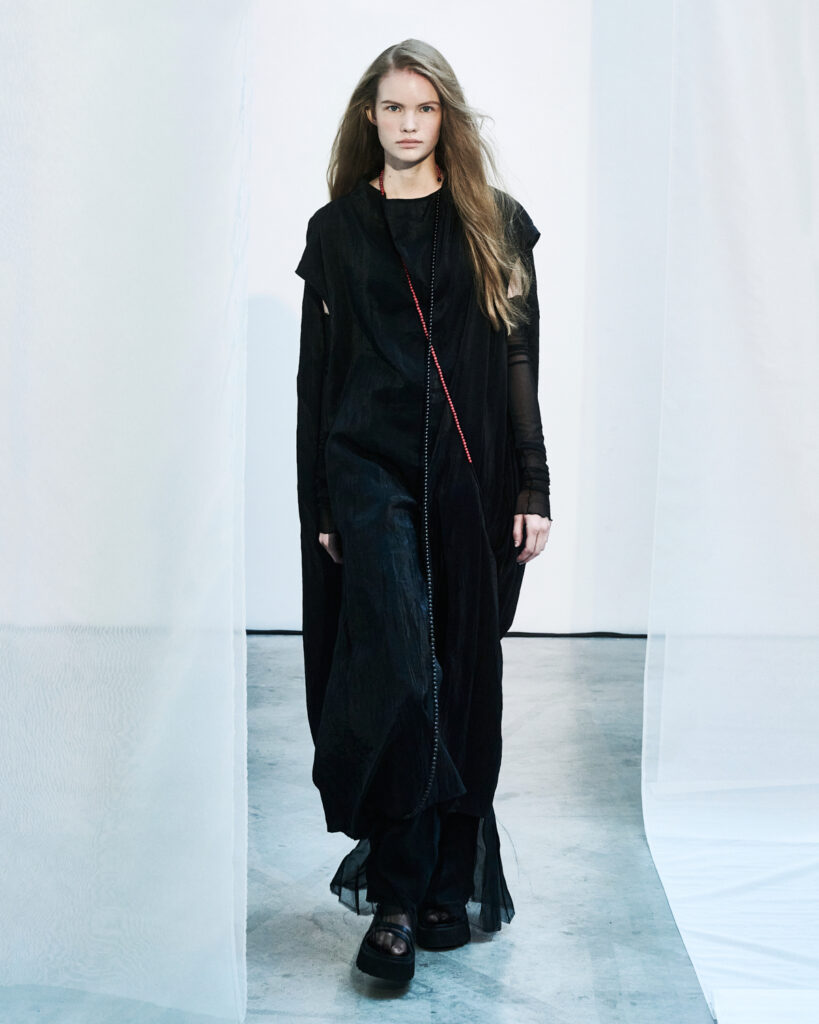
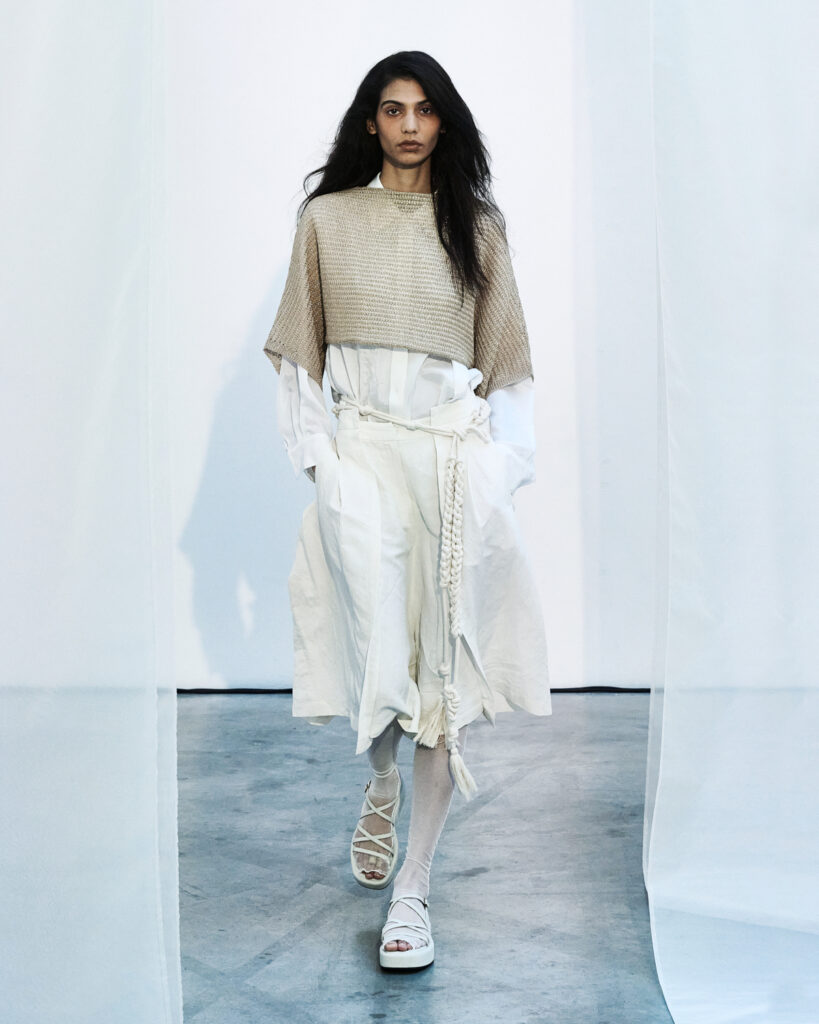
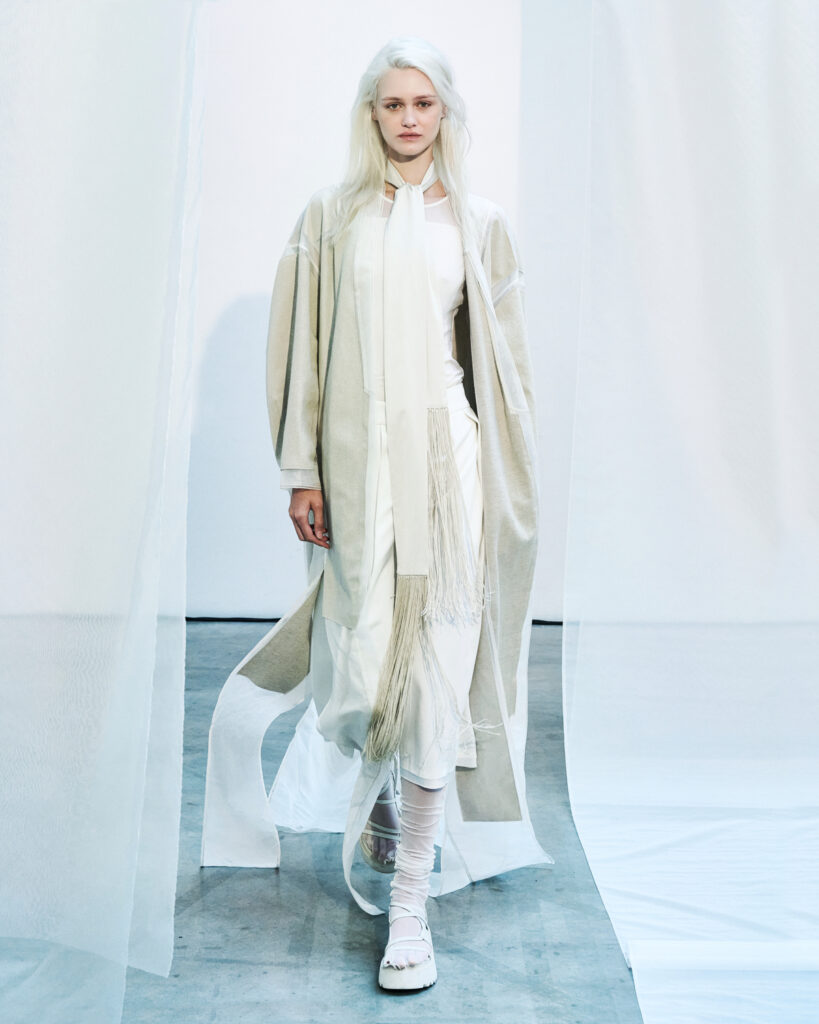
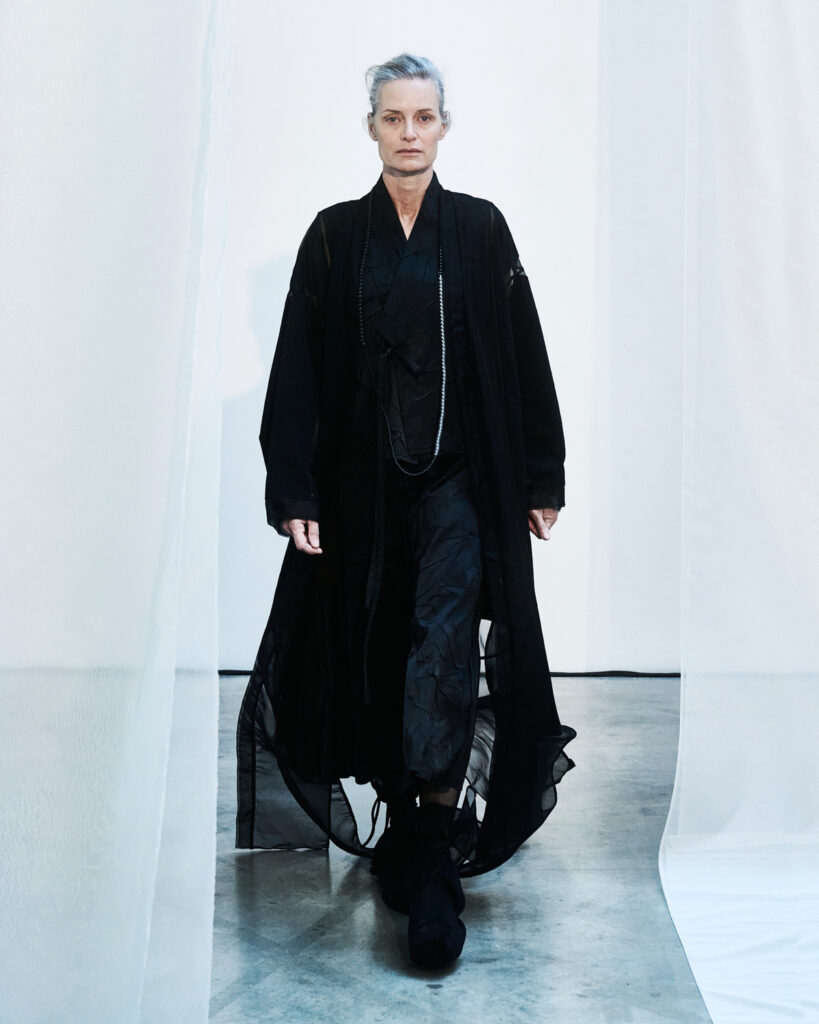
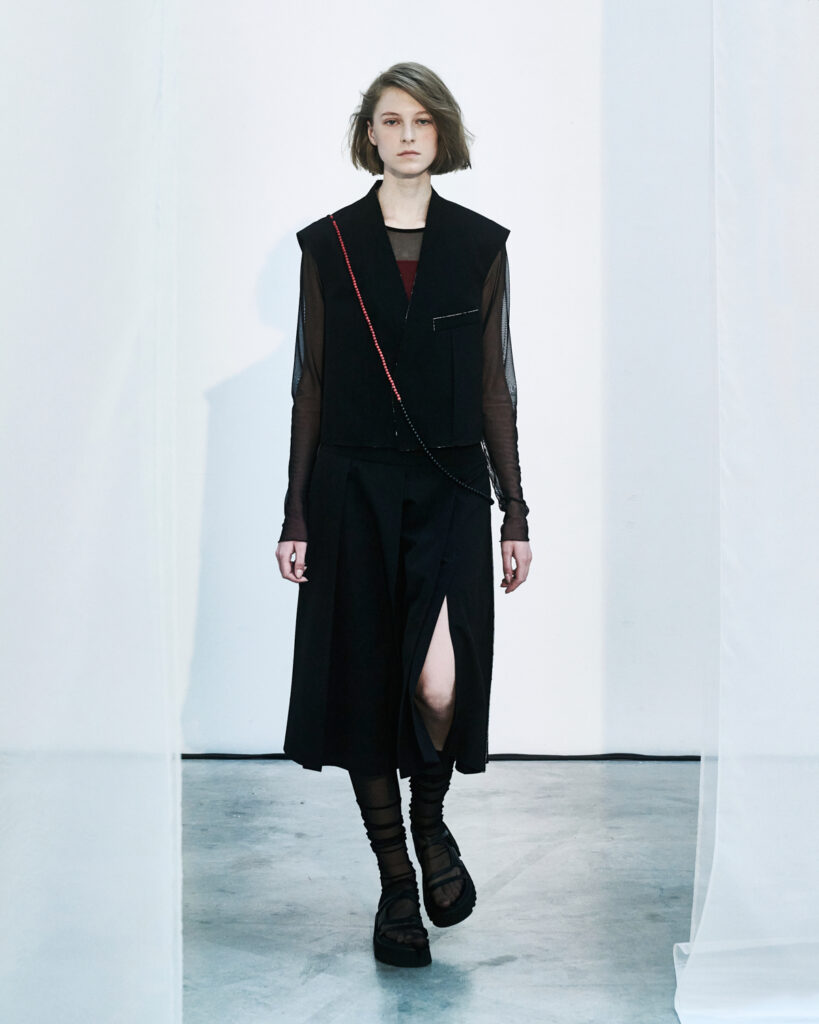
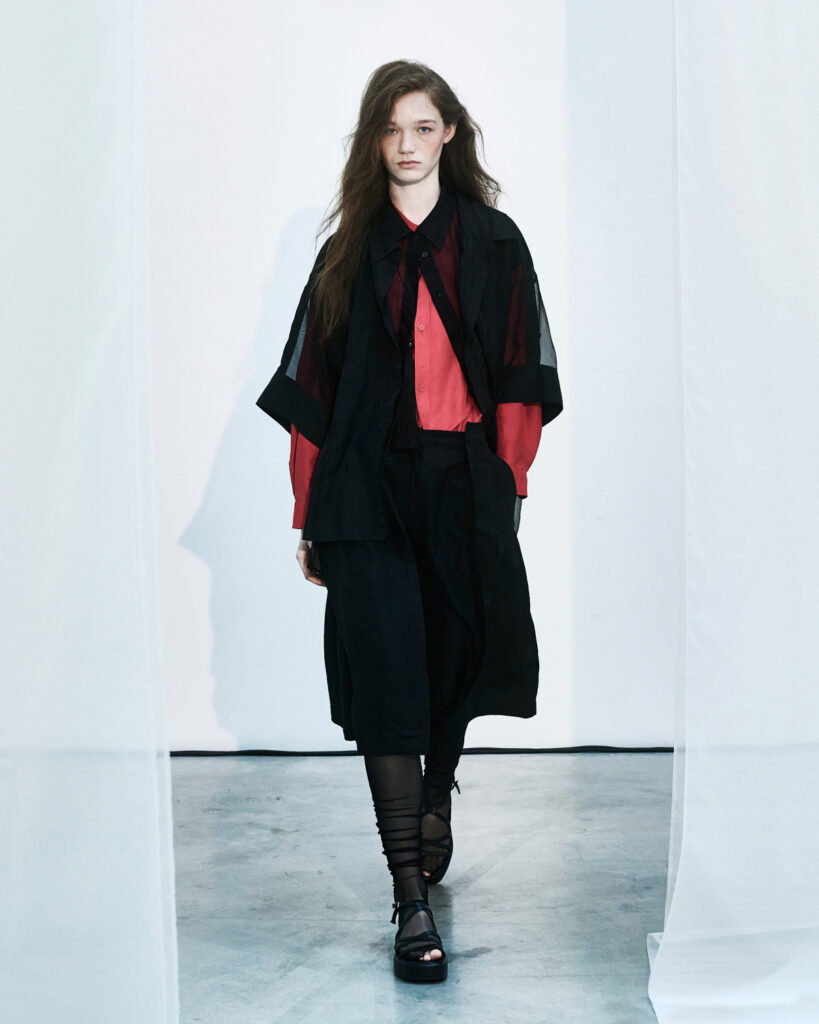
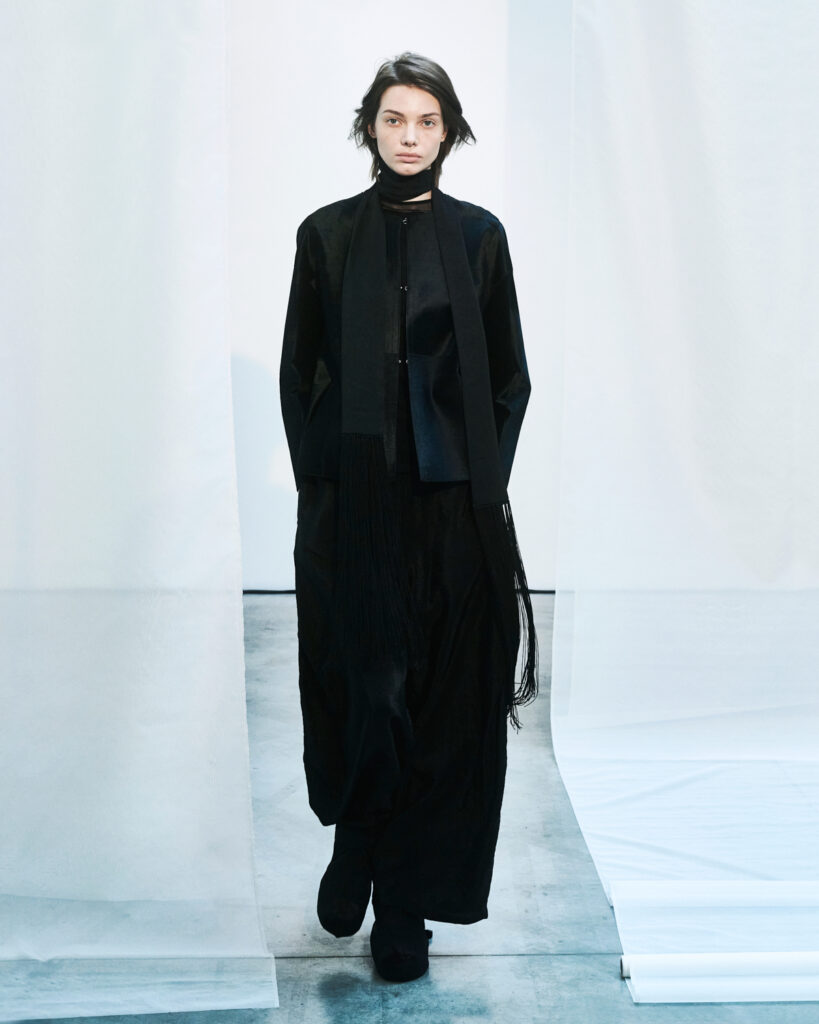
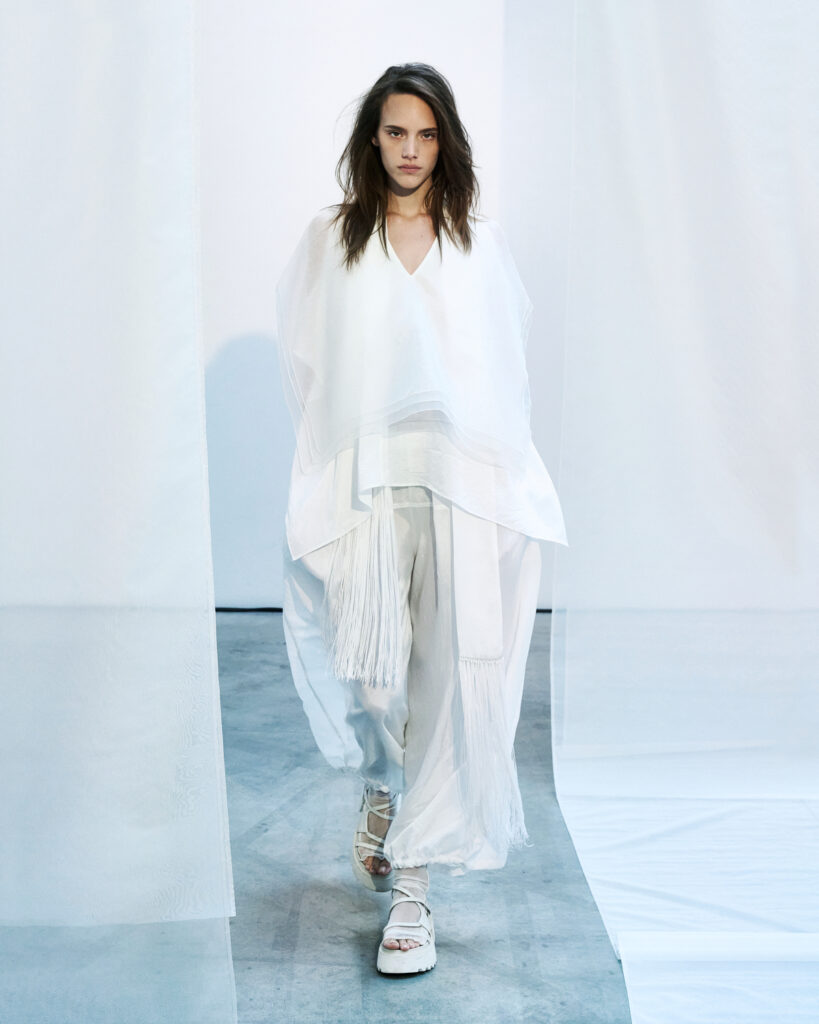
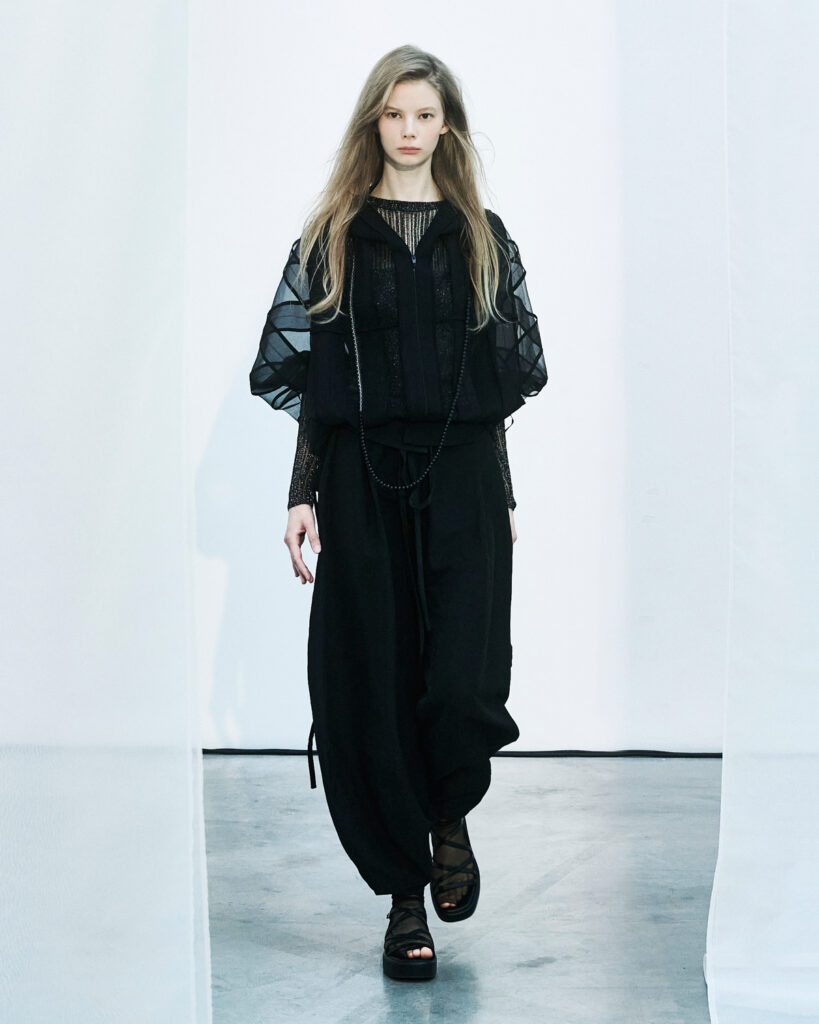
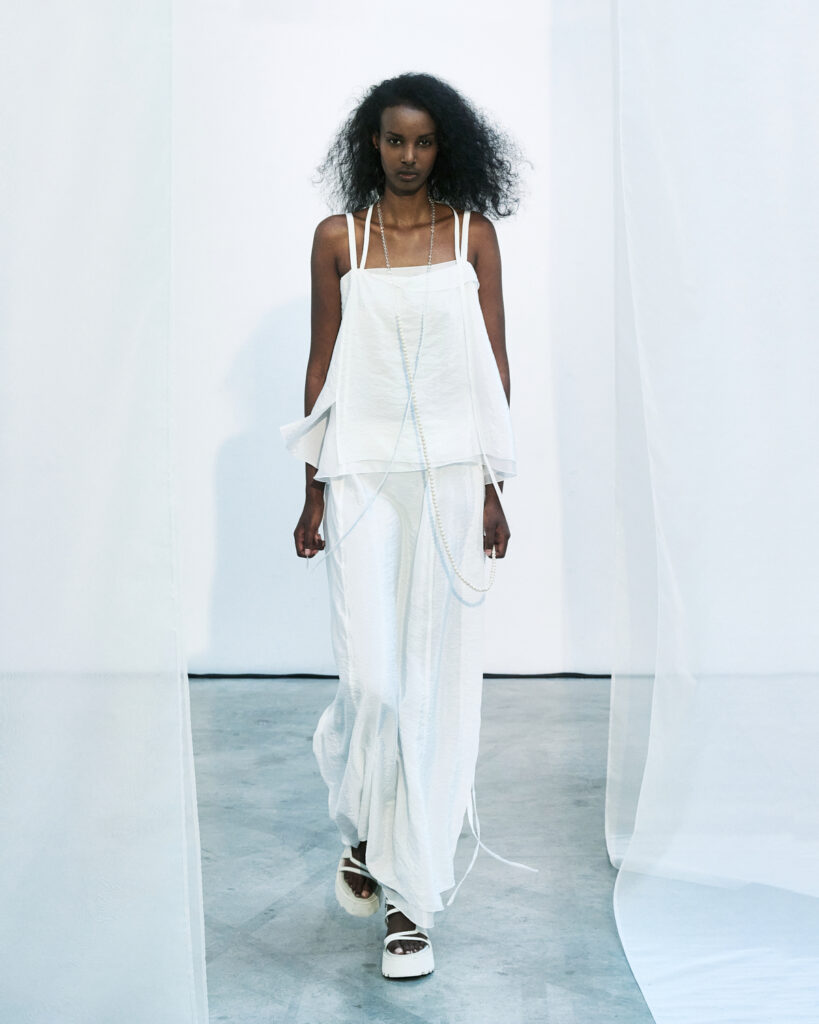
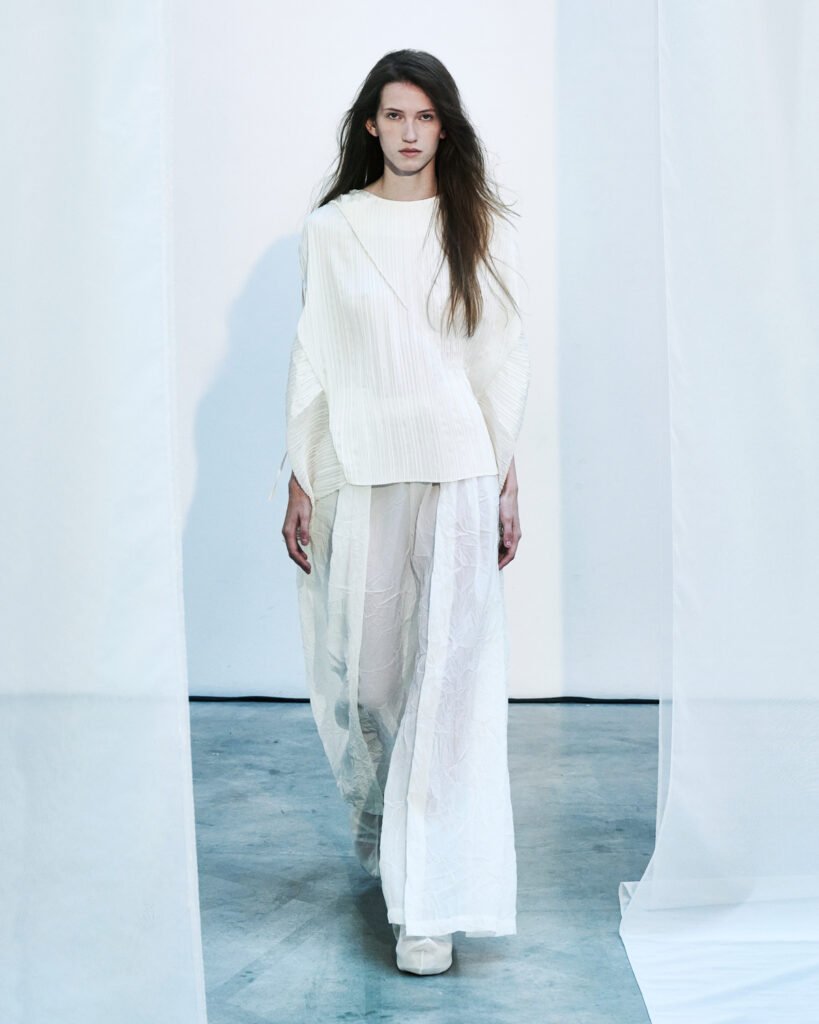
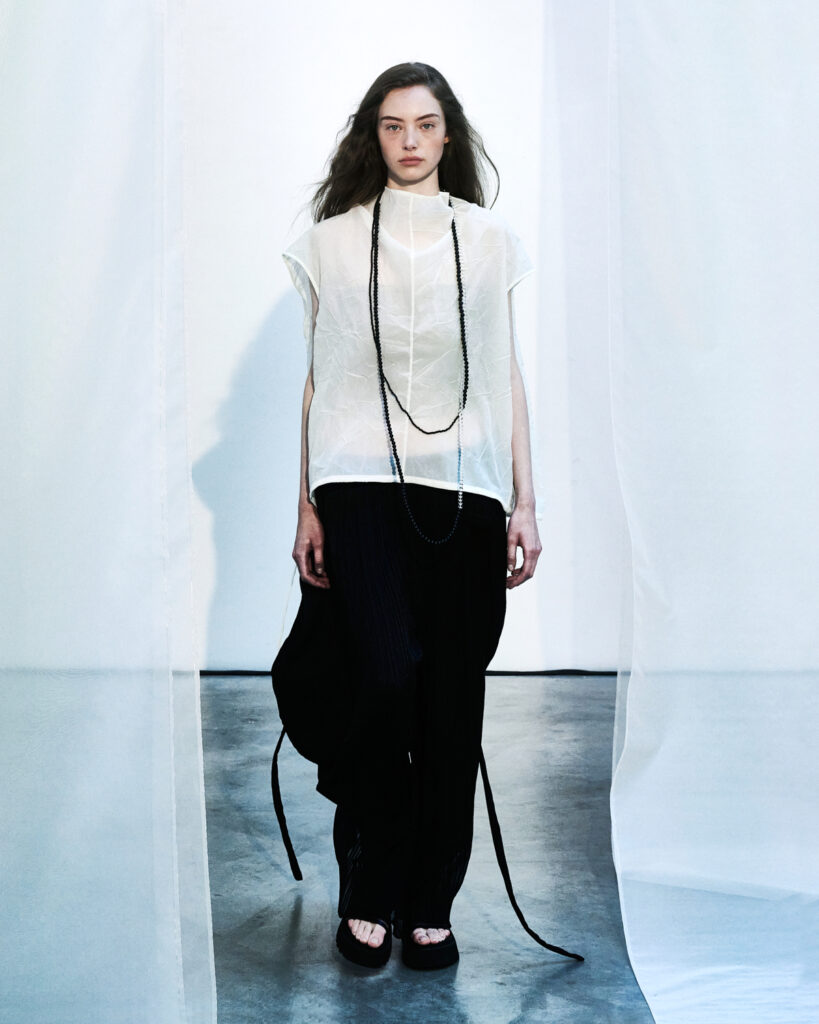
Layering is a signature of the brand, and this season it gains in depth. Organza, cotton, linen, satin silk and knit lie on top of one another, in translucent or contrasting materials, to compose voluminous forms and subtle slippages of transparency. The eye does not meet a wall of fabric: it passes through, hesitates, guesses what lies beneath the first layer.
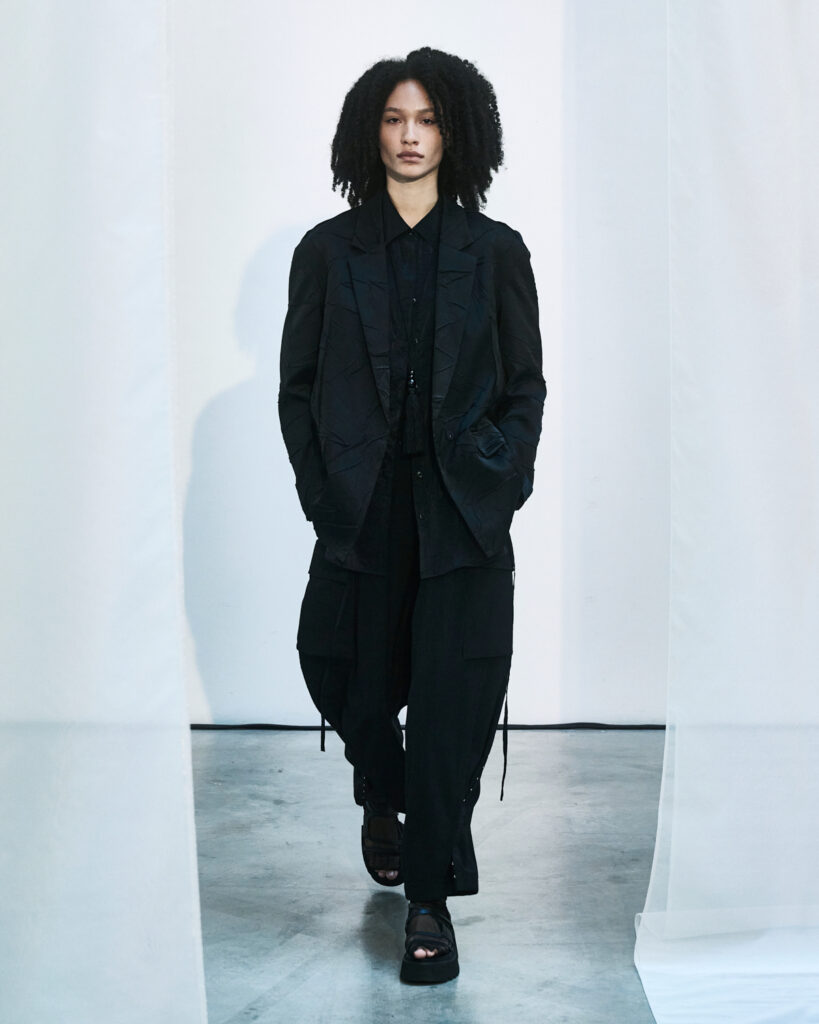
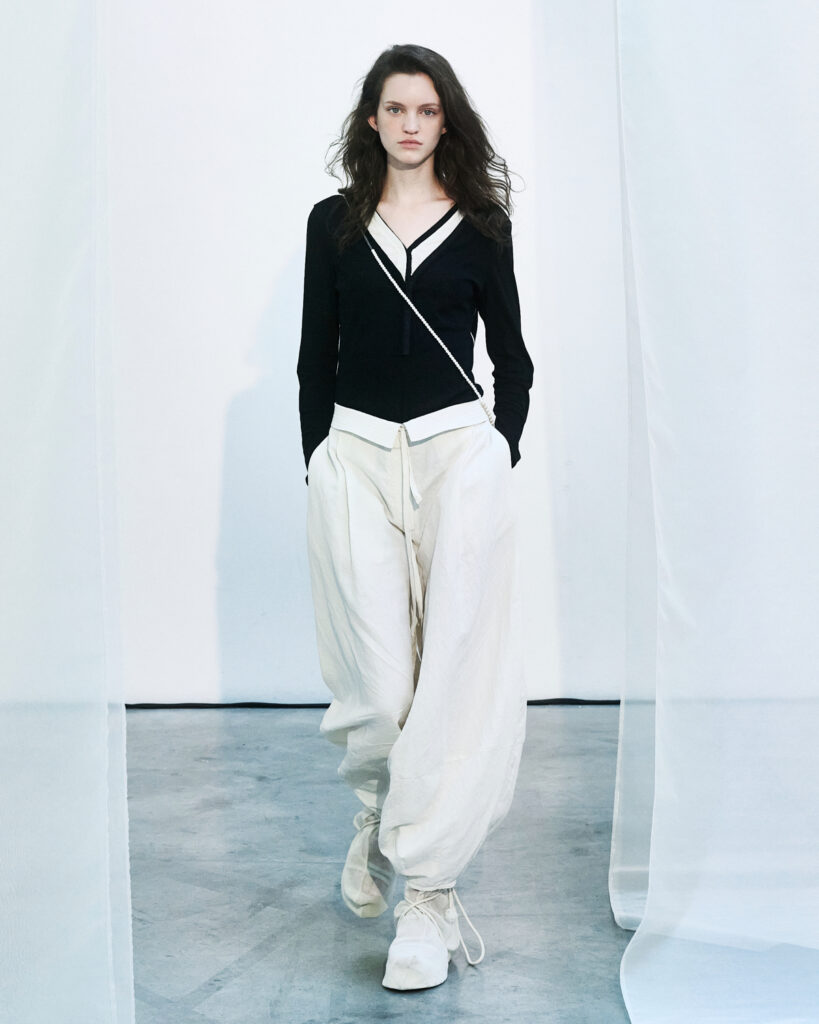
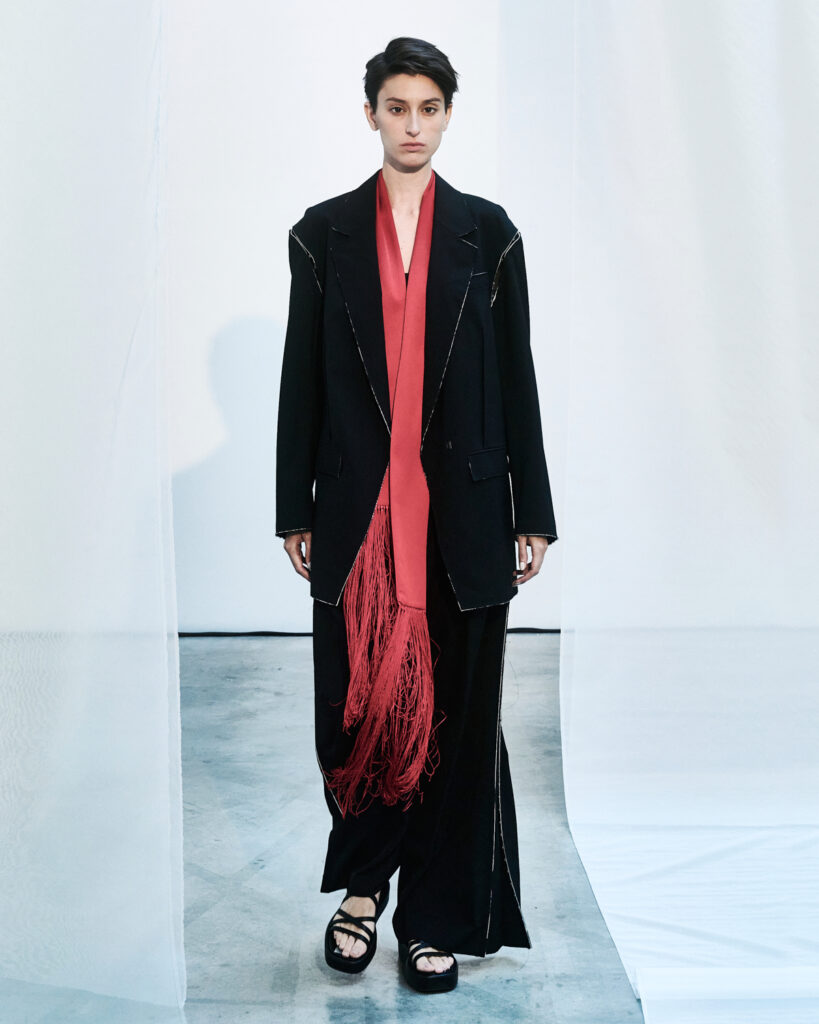
The palette is deliberately narrow, black, ivory and white, pierced by a note of red, a sharp contrast in a calmed range. Topstitching, patchwork, pompoms, quilting, pleats and buckle details then articulate the whole. And the construction allows itself a reversal: the garment is assembled inside out, seams exposed, the elements usually hidden put on view. Raw, unfinished expressions mingle with elaborate textures and precise construction. The result is a deliberate tension between restraint and complexity, a deconstructed sensibility that sacrifices nothing of the rigour of making.
Subtracting to say more
What remains when the superfluous is removed? The question runs through the whole collection, which approaches the state of “無” through form, material and space. The layered transparencies, the sculptural silhouettes and the reimagined Korean details together compose what the press release describes as a constant language of creation: minimal but expressive, restrained but powerful.
What one retains, ultimately, is a well-conducted paradox. The void, in fashion, is usually the business of white, of stripping back, of less. Park Choon Moo treats it on the contrary as a thickness: one piles it up, sews it, turns it inside out. She shows the undersides, the junctions, everything that is usually hidden, and makes of this baring a form of modesty.
It remains to be seen what one wears, exactly, when one wears the void. Perhaps a space for oneself, between two layers of fabric, where the gaze no longer quite knows whether it is invited or kept at a distance.
Cette publication est également disponible en :


