
For spring-summer 2027, the house of Leonard Paris takes Rio de Janeiro as its starting point and entrusts its floral prints with the role of narrative. Samba and Selva carry the collection from day to night.
The house of Leonard Paris, born in 1958, makes Rio de Janeiro the starting point of its spring-summer 2027 collection. It retains from it less views than sensations, the heat, the movement of bodies, an invasive vegetation, and states that the tropical landscape is not reproduced identically but becomes rhythm, material and silhouette.
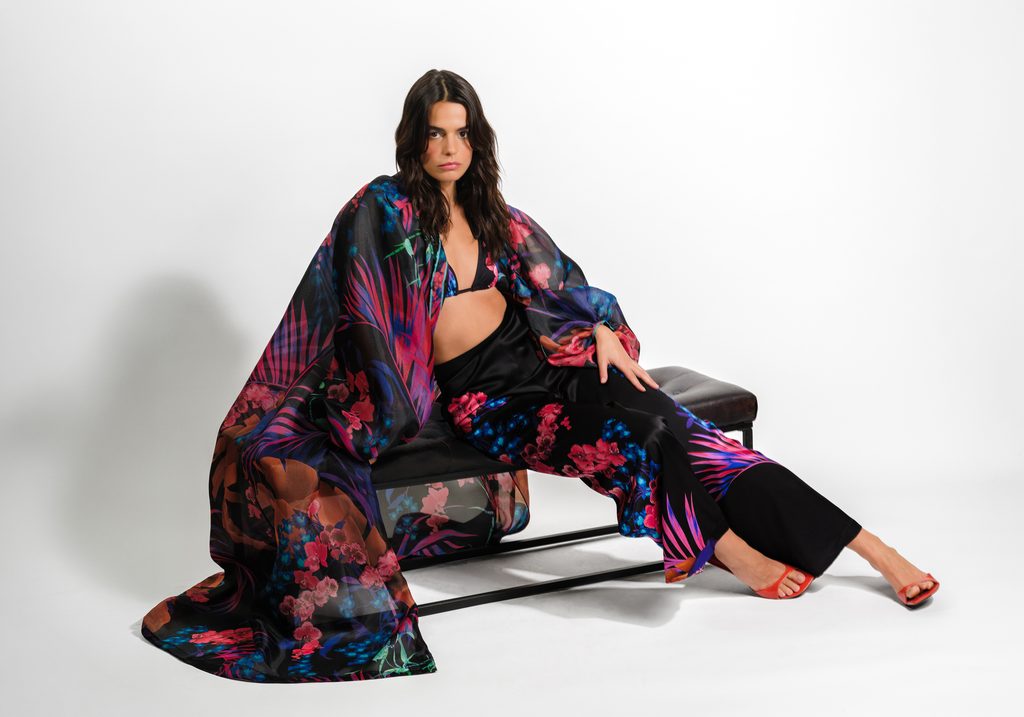
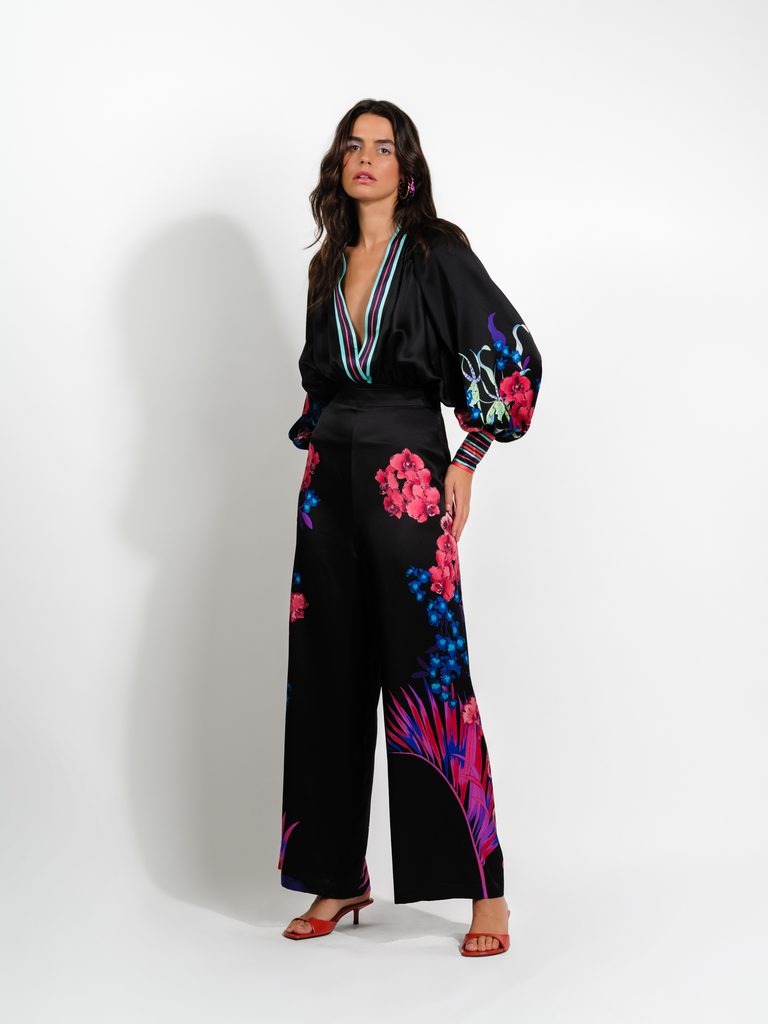
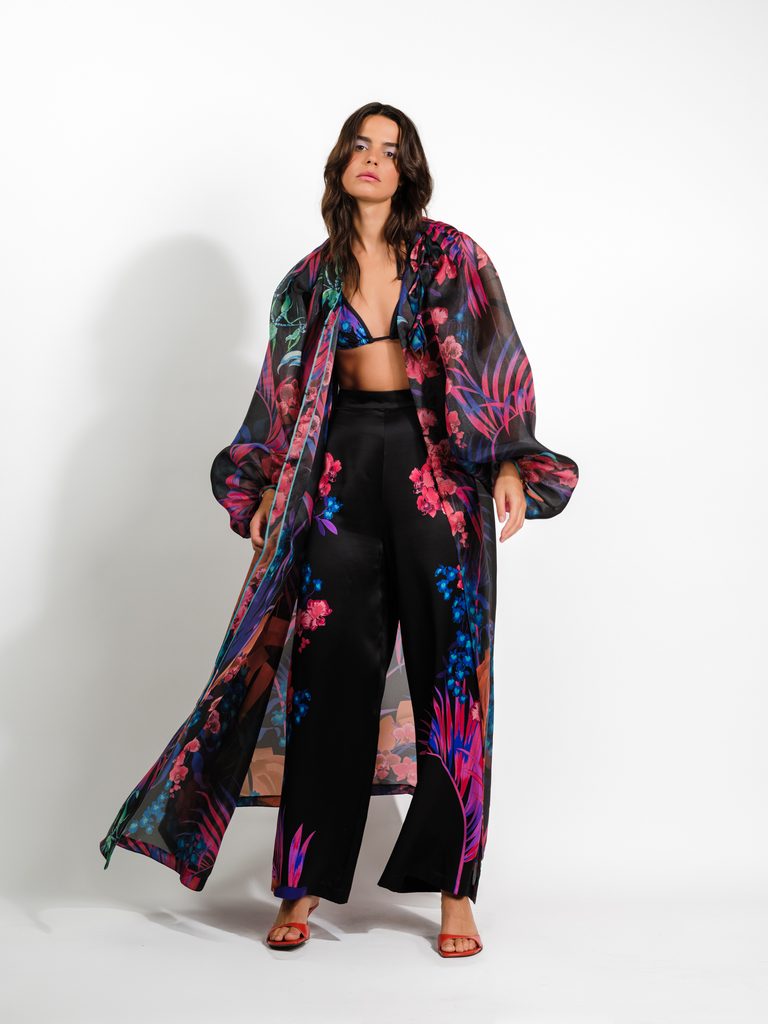
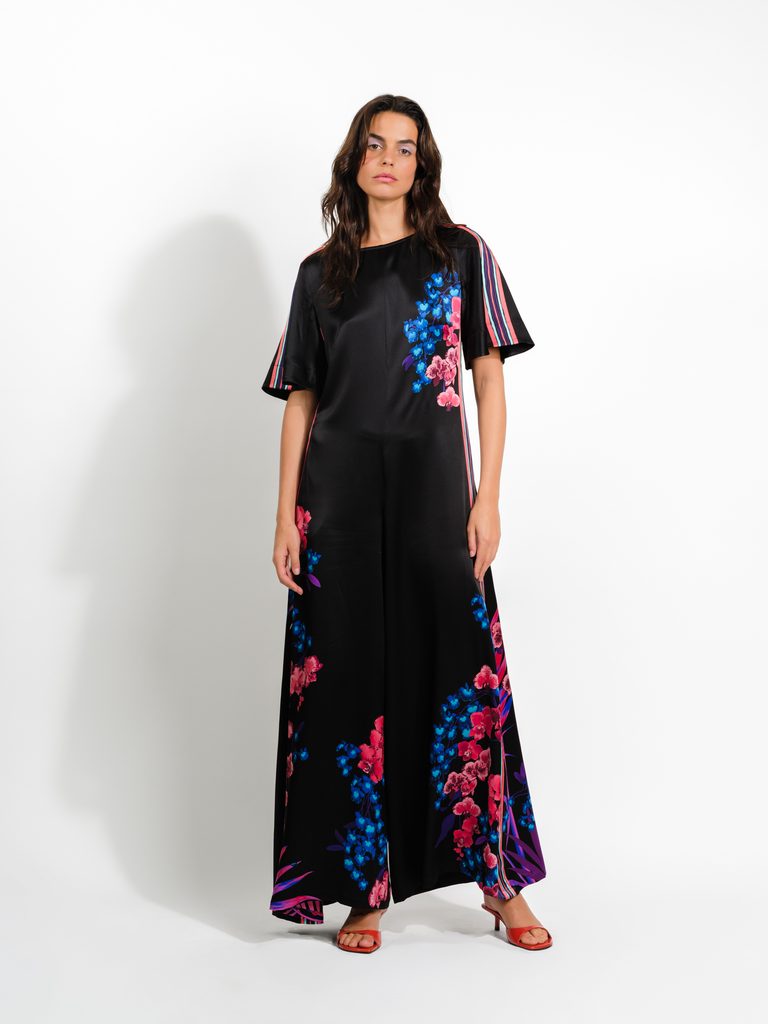
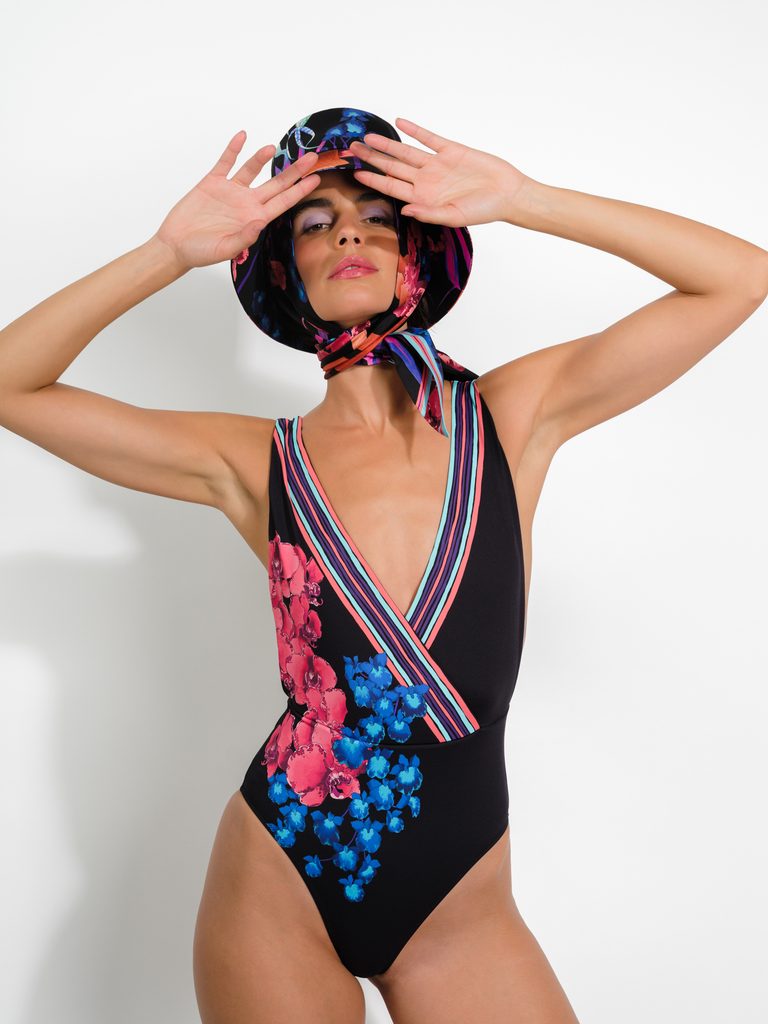
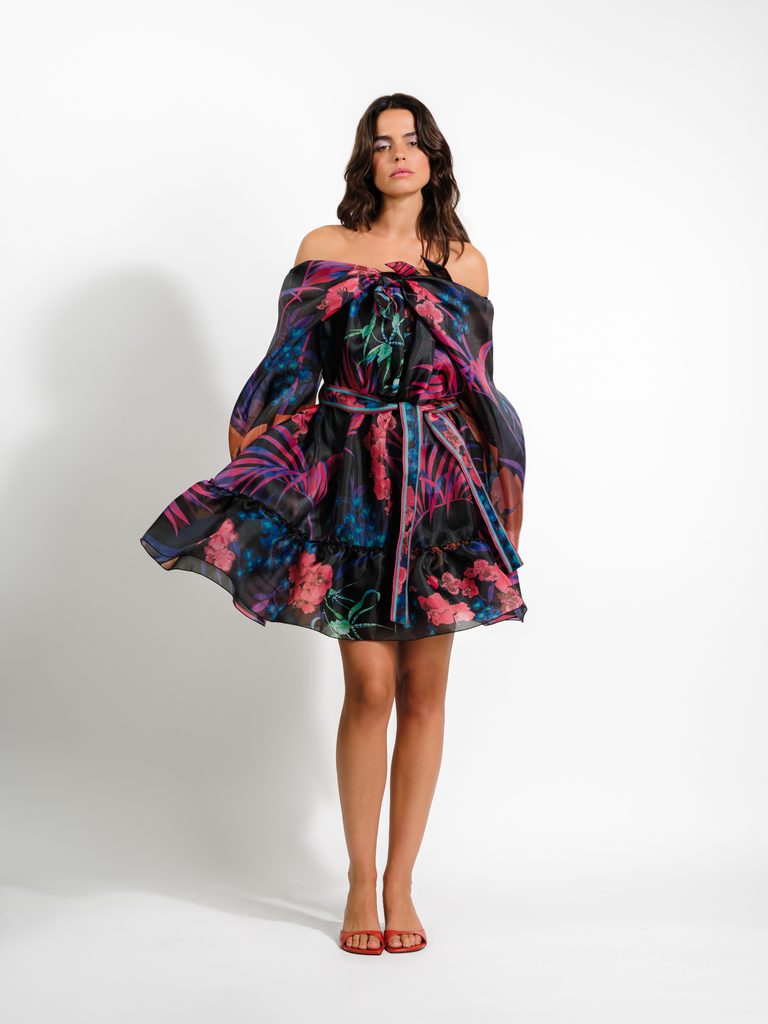
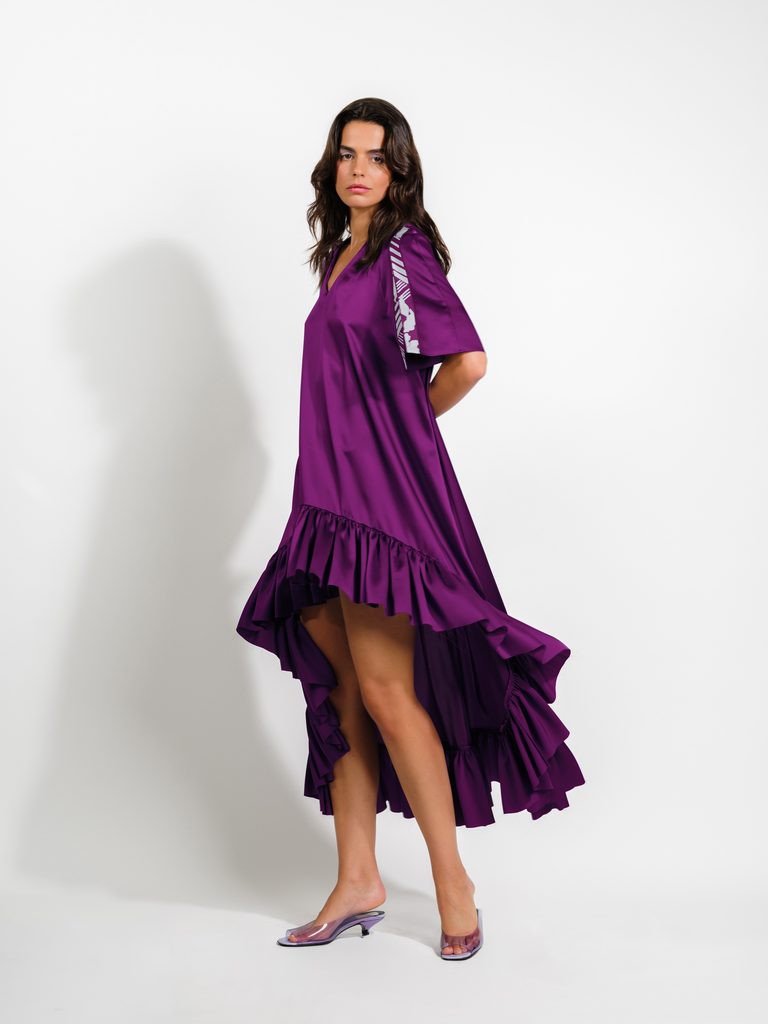
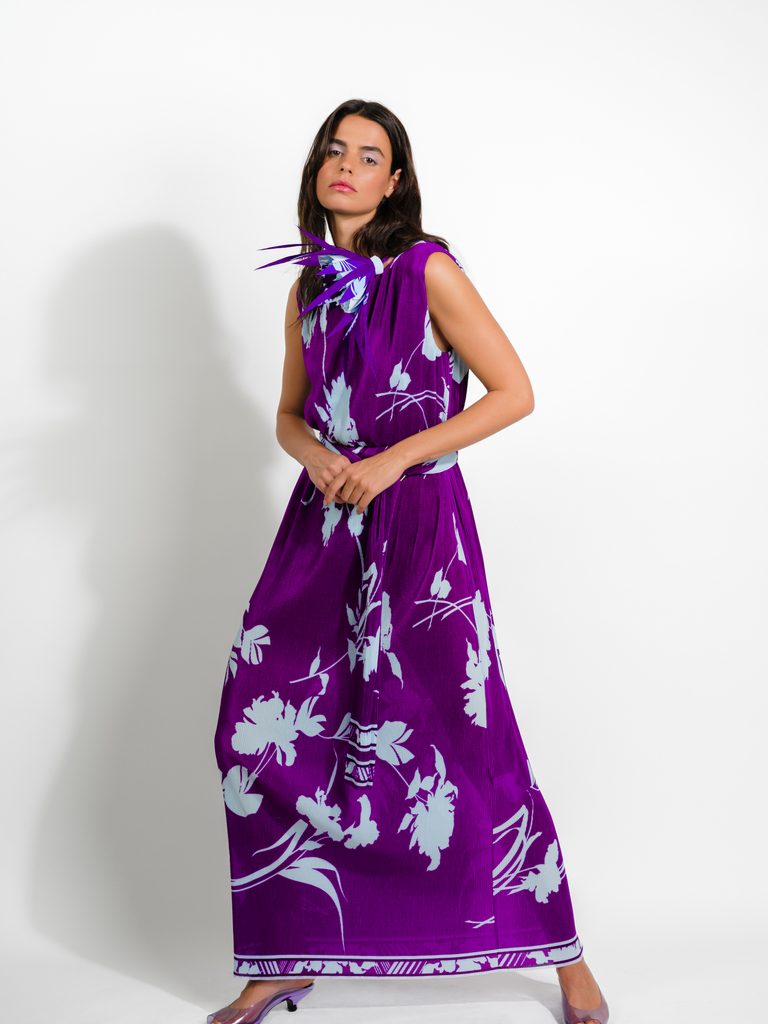
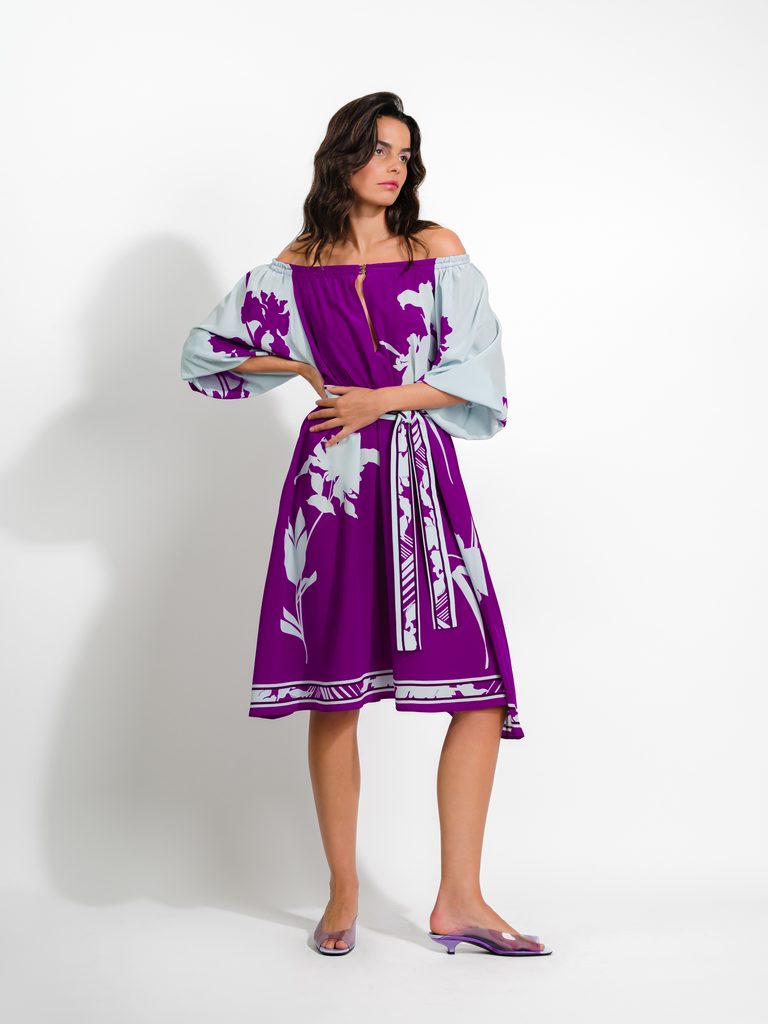
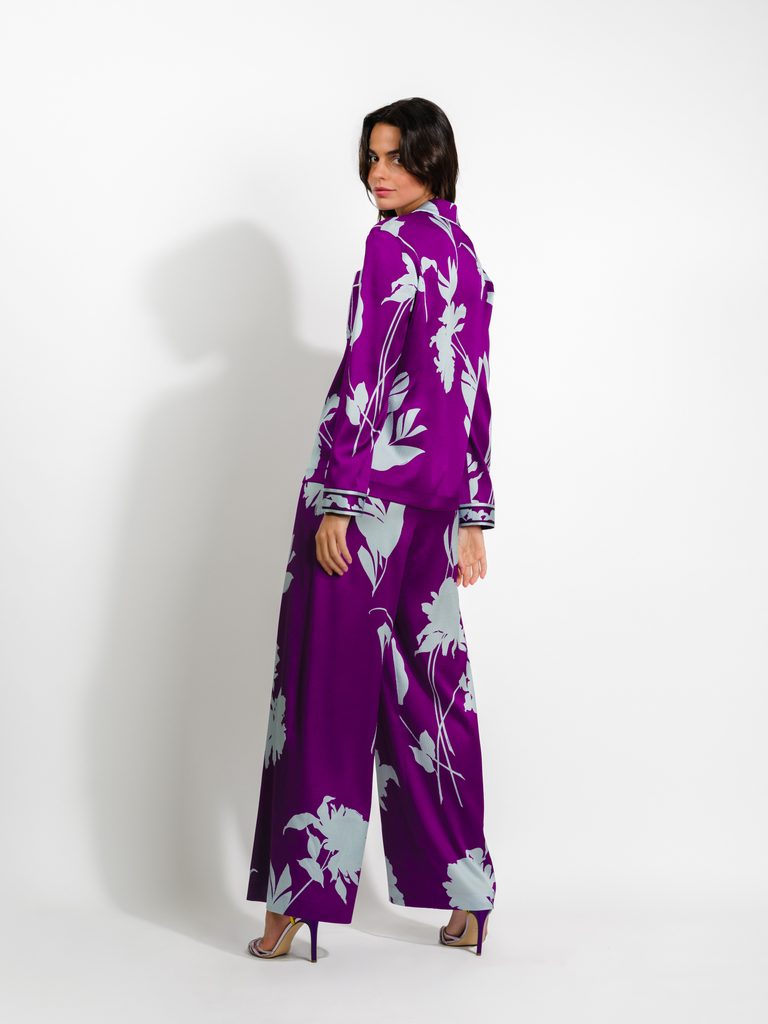
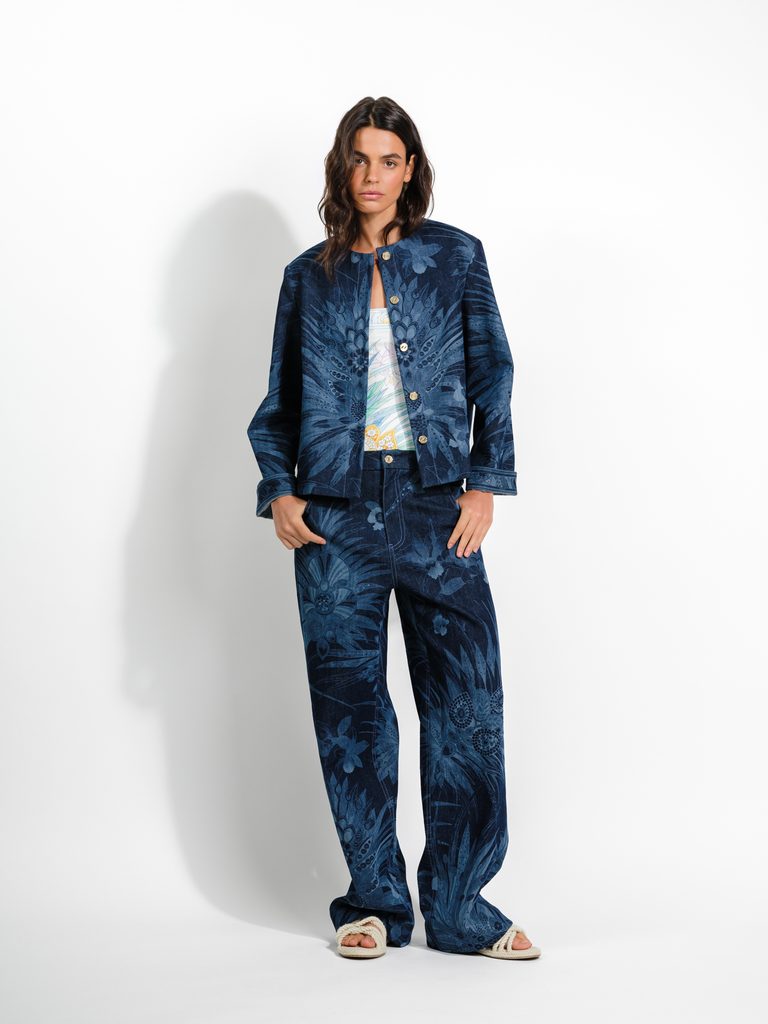
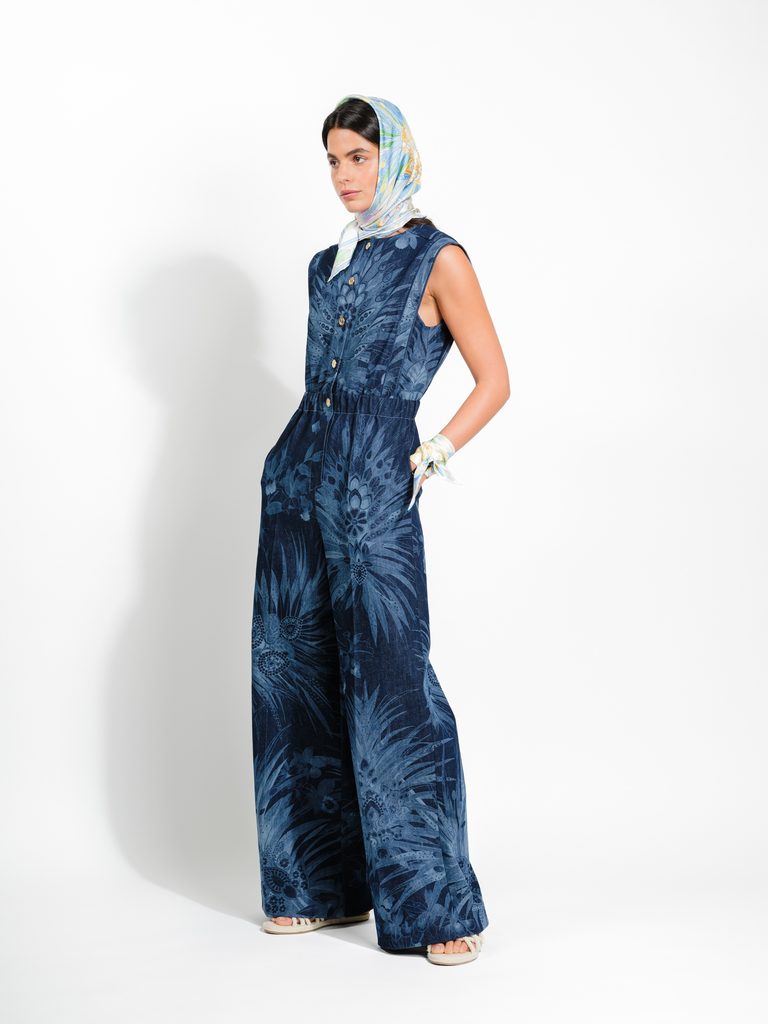
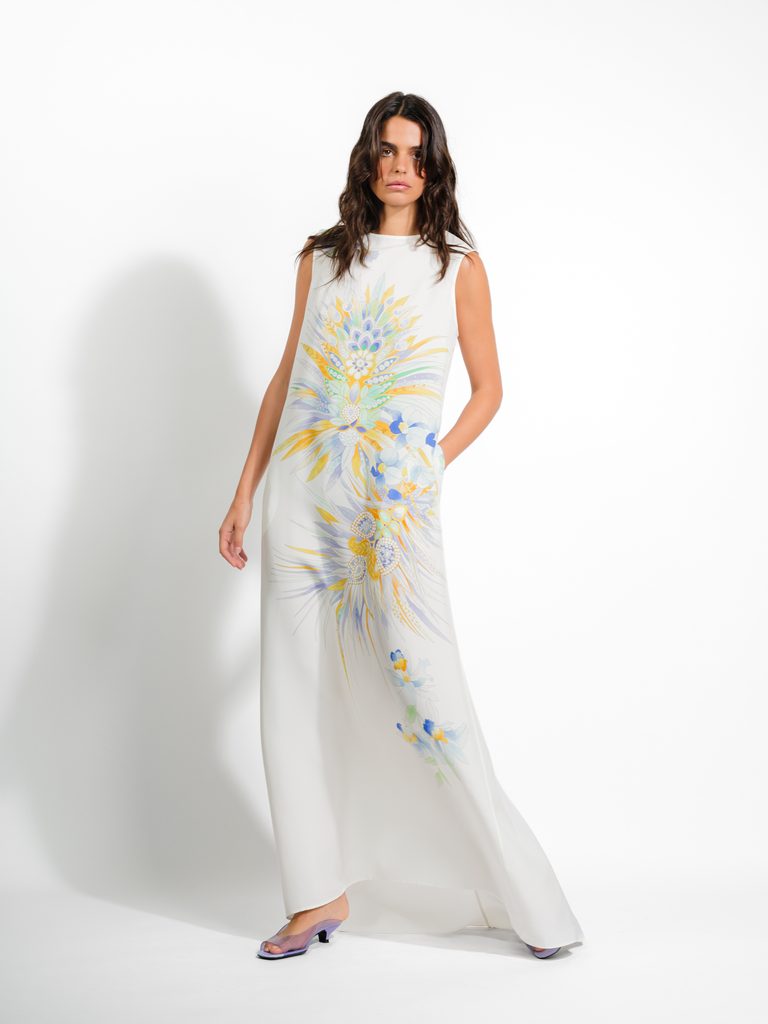
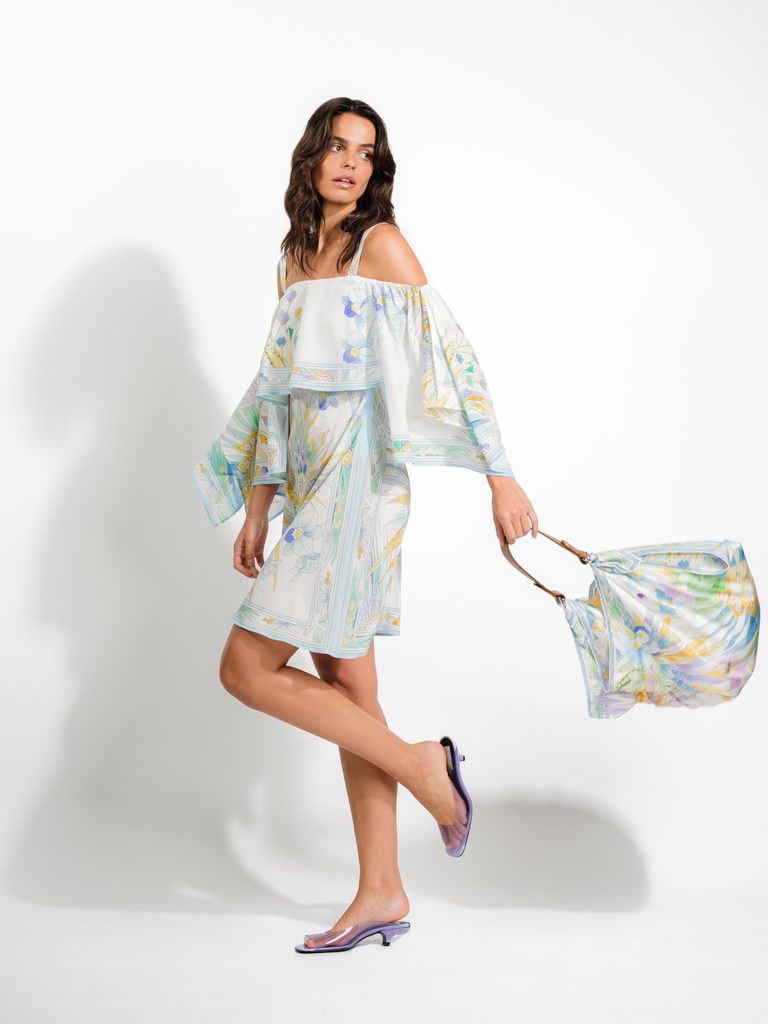
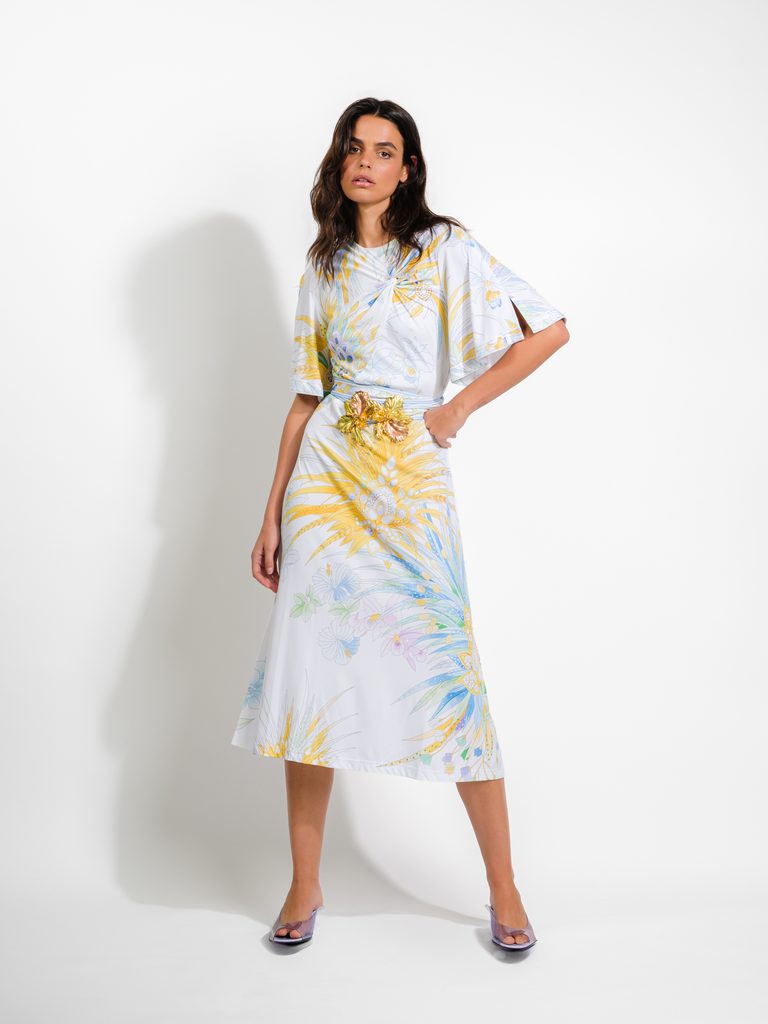
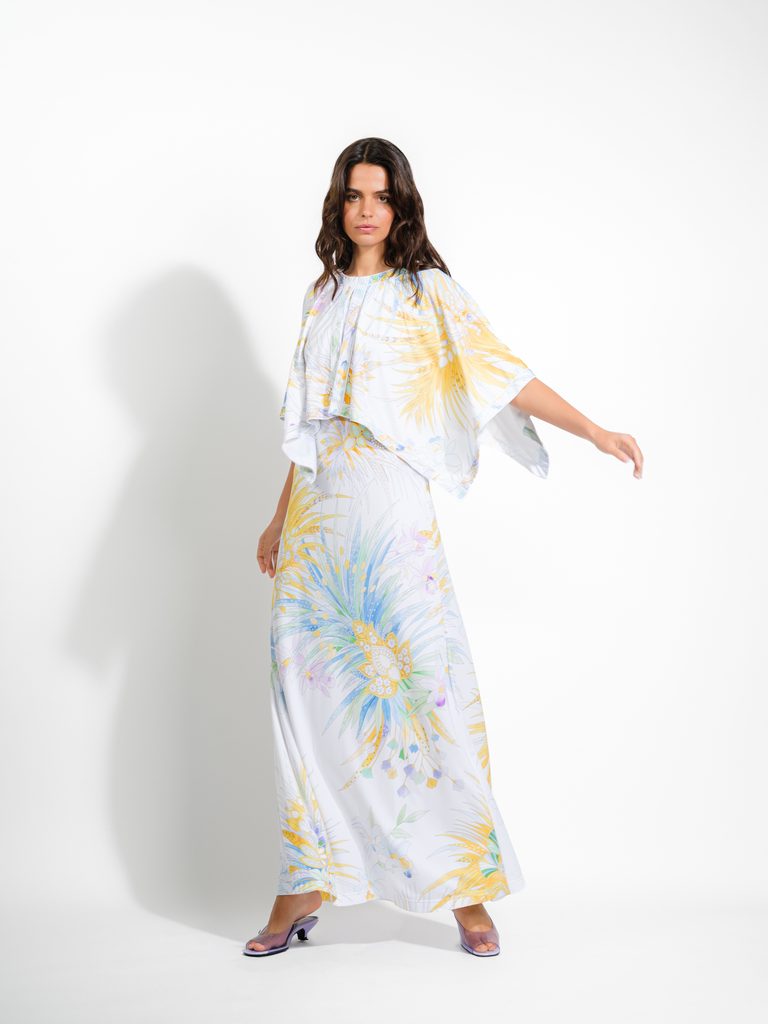
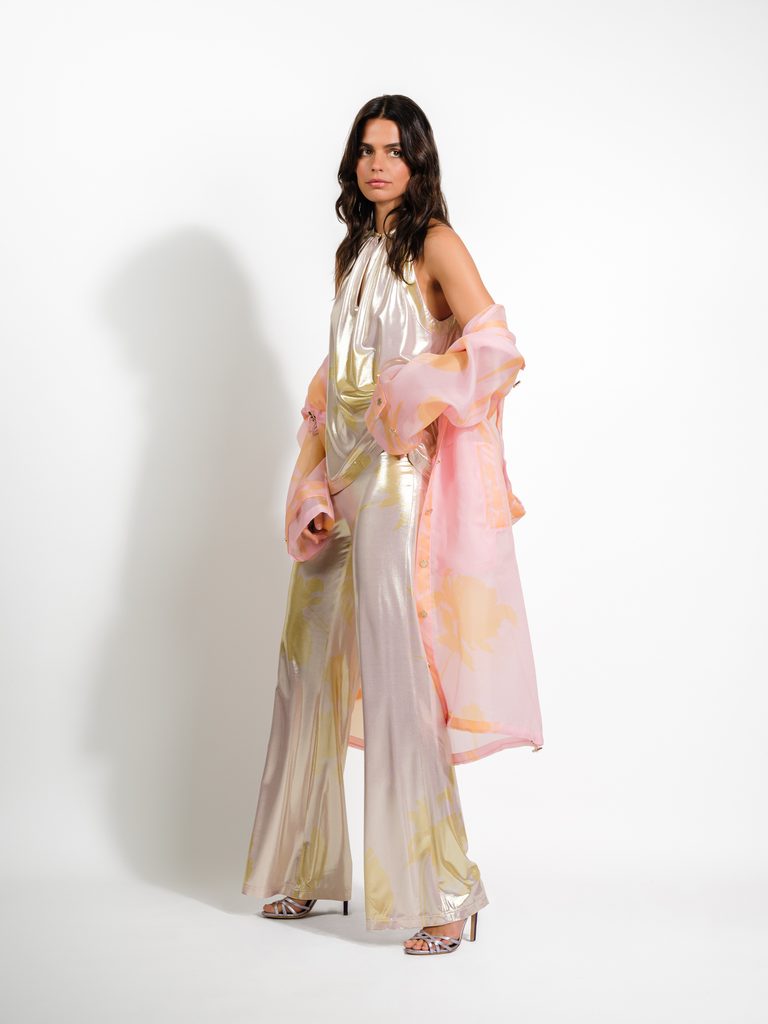
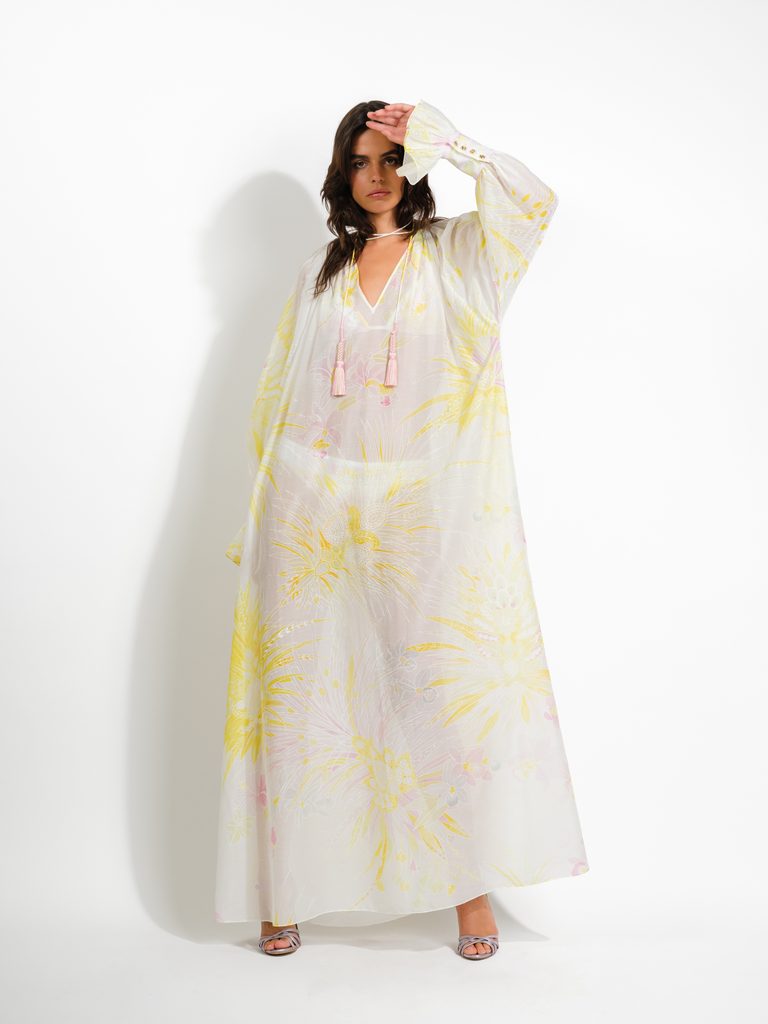
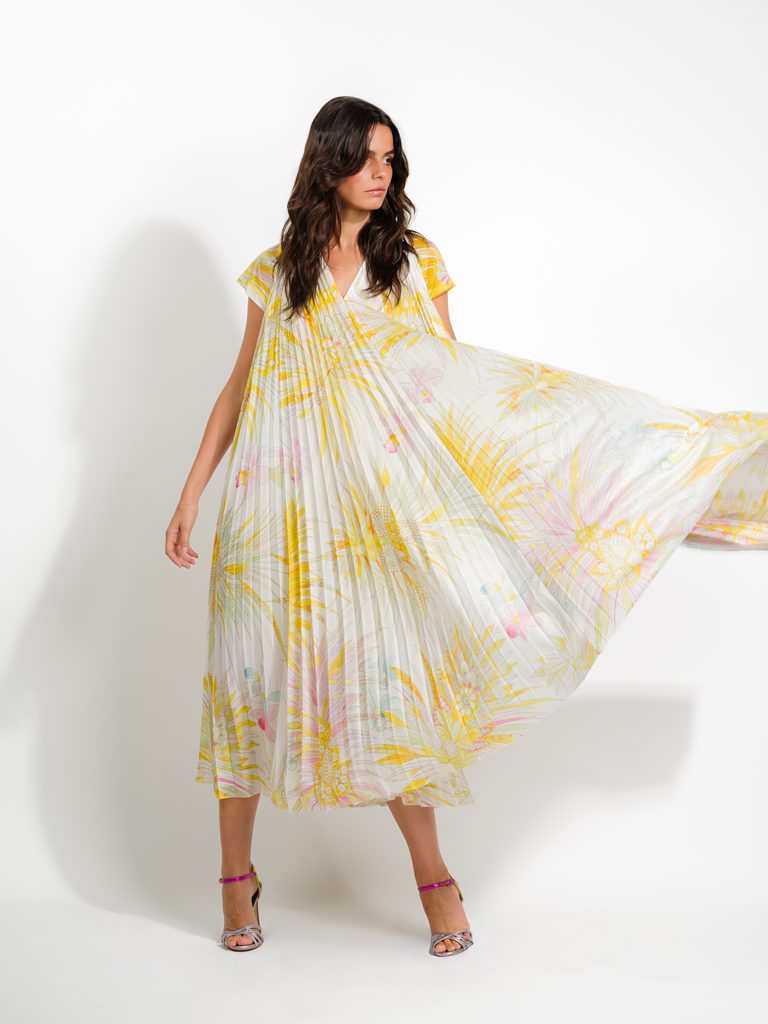
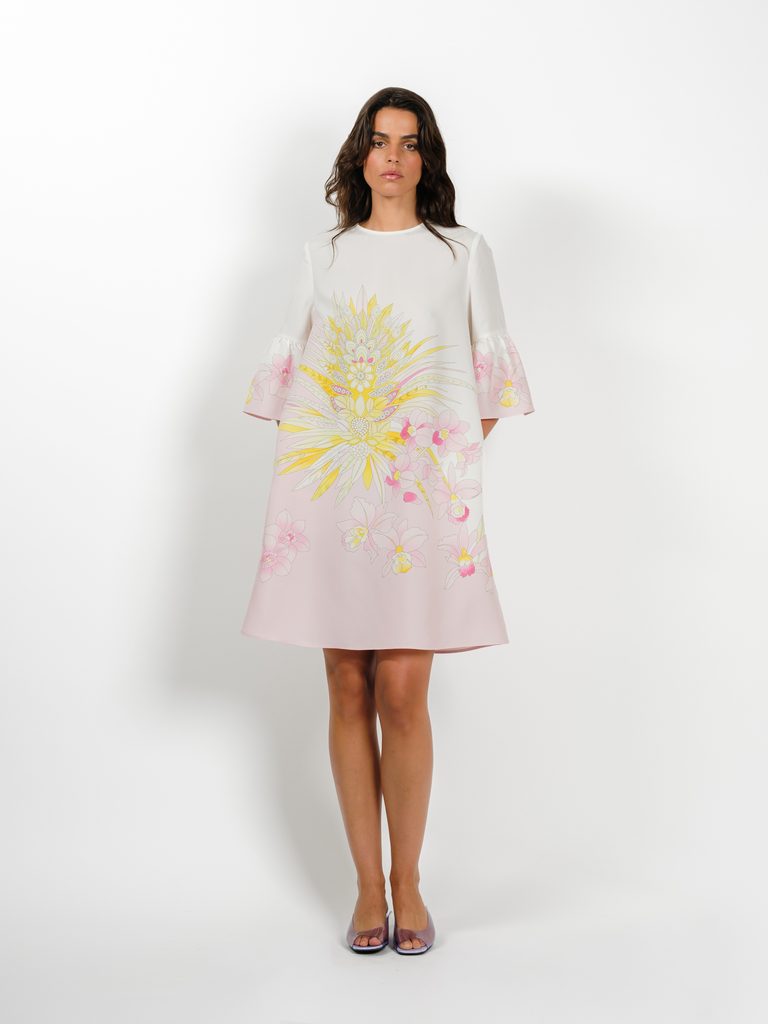
The proposition rests on the print, which is consistent for a house whose flower has been its official emblem since 1968 and which keeps, by its own figures, five thousand exclusive designs at rue Jean Giraudoux. The collection opens on a deep violet crossed by tropical flowers, repeated on denim thanks to laser techniques that the house says are more responsible. Then come rosy tones: light organzas, oversized parkas, fluid jerseys and gold-laminated surfaces. Samba, the signature print, is drawn around dance; the motifs overlap and answer one another like bodies. Selva, a floral in dark tones, depicts the Rio night.
The printed bands, emblematic elements of the house, are displaced by unexpected placements: they interrupt lines, frame the body and redraw proportions. The collection is ordered by the hours, the beach then the after-beach by day, the cocktail then the party in the evening, Selva at night, in a wardrobe of organza, printed jersey, duchess satin, fluid crêpe, micro-pleat and sunray pleat.
The interest lies in the economy of the project: a print conceived as a device of movement, which crosses the day by changing palette rather than subject. The limits are those of a descriptive file. The qualifier “more responsible” is not quantified; the exoticism “less contemplative, more physical” claimed by the house is an intention, not a demonstration; and nothing indicates how the archive designs were mobilised for Samba and Selva. The house’s historical markers, 1958, 1968 and five thousand designs, are stated.
Cette publication est également disponible en :


