
A Knight Frank France study shows that location alone is no longer enough to create property value: scarcity, service, image and experience are now redrawing prime markets, from residential to hospitality.
Five criteria replace location alone
“What this study shows is a deep transformation of real estate markets. Luxury no longer merely supports certain segments: it redefines the very criteria of what creates value,” sums up Magali Marton, Head of Research & Studies at Knight Frank France. The study identifies five pillars of this new value equation: scarcity, service, use, image and experience — a shift that reflects the transformation of luxury itself, from a logic of possession towards a logic of overall experience.
In concrete terms, the best-performing assets are no longer only the best located, but those able to offer a complete user experience and a recognisable identity, whether a Parisian apartment, an office or a hotel address.

Great fortunes, a structural driver of demand
The continued growth in the number of Ultra High Net Worth Individuals (UHNWI, net worth above 30 million dollars) worldwide, expected to accelerate by 2031 according to Knight Frank, directly supports the high-end markets. Real estate plays a dual role there: a residential outlet supported by stronger international demand, and a preferred investment asset class for its tangible dimension. With more than 76 billion euros in exports in 2025, the French luxury sector, led by LVMH, Hermès, L’Oréal and Kering, acts as a complete territorial ecosystem that feeds production, distribution and property valuation well beyond Paris.
A premiumisation affecting all asset classes
Prime residential shows price and volume growth above the conventional market in Paris, the Alps and the French Riviera, driven by the rise of branded residences and “turnkey” properties. Offices are seeing an ultra-premium segment emerge that integrates services, flexibility and private clubs, turning the workplace into a place of experience and belonging. Retail and hospitality, for their part, are concentrating on iconic streets and developing experiential concepts, with a rapid move upmarket in 5-star hotels.
A polarisation visible at every scale
The study highlights a growing fragmentation of markets, structured around assets able to embody the codes of luxury, which concentrate value, as against more ordinary assets under increased pressure. This logic of polarisation is found at every scale: between territories (Paris versus lifestyle destinations such as the Alps or the Côte d’Azur), between neighbourhoods of the same city, and down to the level of the buildings themselves, where two nearby addresses may now follow radically different value trajectories depending on their ability to embody these new criteria.
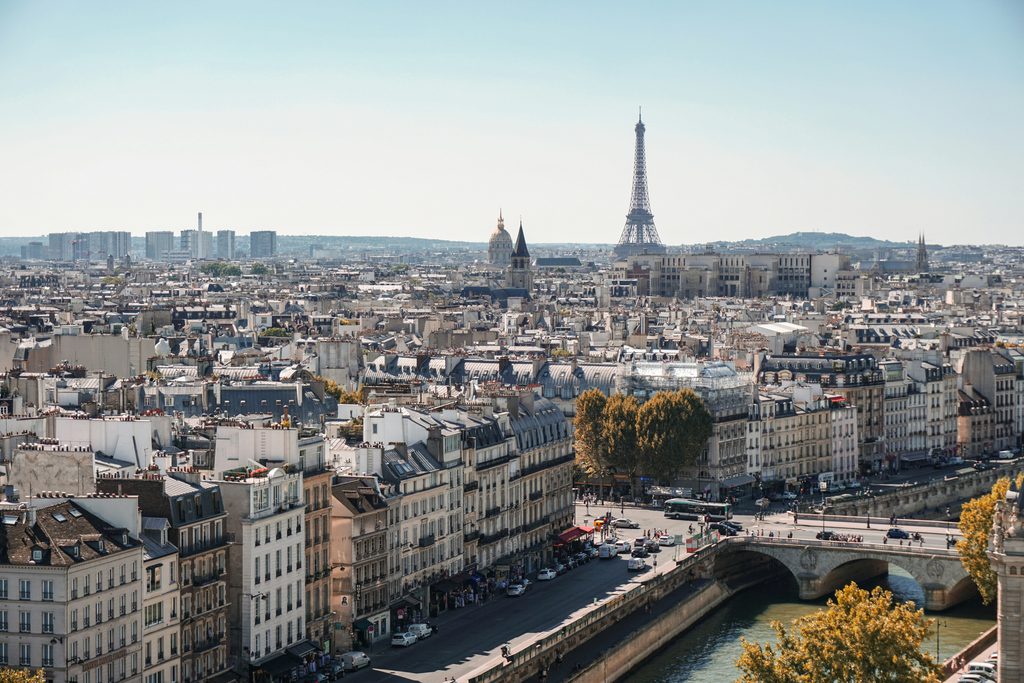
Knight Frank France study, July 2026: five pillars of value (scarcity, service, use, image, experience). More than 76 billion euros in French luxury exports in 2025. Continued growth in UHNWI (net worth above 30 million dollars) expected until 2031.
By asserting that luxury now redefines the very criteria of property value, Knight Frank invites a rereading of the whole French market through this prism — it remains to be seen whether assets that have failed to integrate these five pillars can still catch up, or whether the polarisation described by the study is already irreversible.
Cette publication est également disponible en :


