
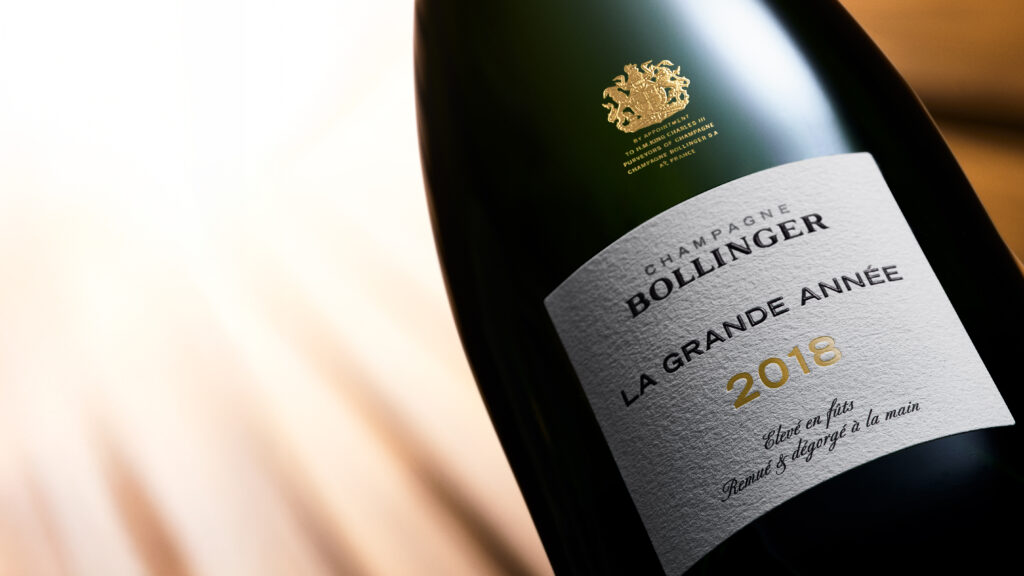
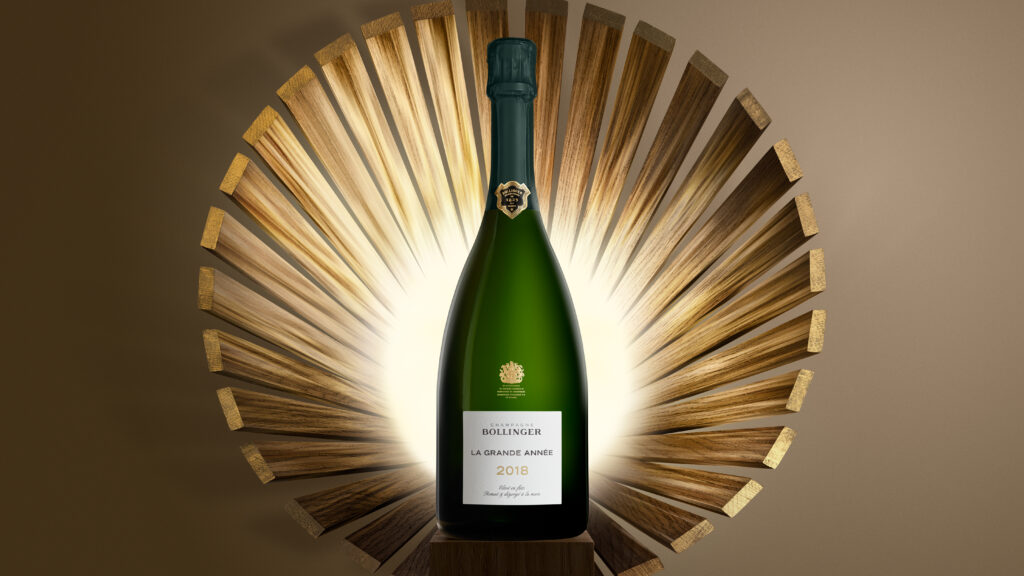
Some champagnes evoke celebration. Others evoke time. At Bollinger, La Grande Année has always belonged to the latter category: that of wines that seek not only immediate brilliance, but also depth, precision, and the memory of a vintage. With La Grande Année 2018 and La Grande Année Rosé 2018, the House of Aÿ presents two cuvées where the bounty of a sun-drenched year meets the meticulous, artisanal standards of a craft that has become rare.
The 2018 vintage showed great promise. After a very wet winter and a rather late budbreak, the mild spring accelerated the growing cycle, with flowering occurring about ten days earlier than average. Starting in mid-June, hot, dry weather set in, allowing the grapes to reach optimal ripeness and remarkable health. At Bollinger, the harvest began on August 23 in Aÿ and Verzenay, amid an early and abundant harvest. The Pinot Noirs from the Montagne de Reims stood out for their generosity, concentration, and harmonious ripeness.
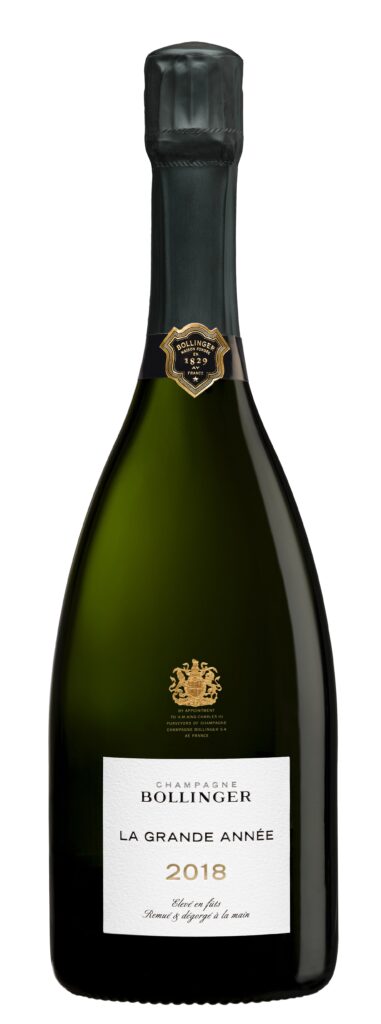
From this radiant vintage come two Champagne wines crafted like architectural masterpieces. The Grande Année 2018 is a blend of 66% Pinot Noir and 34% Chardonnay, sourced from 19 crus, with Verzenay and Aÿ forming the backbone, Mareuil-sur-Aÿ for the Pinot Noir, and Avize, Chouilly, and Cuis for the Chardonnay. The cuvée features a selection composed exclusively of Grands Crus and Premiers Crus, using only the cuvée—the first pressing, considered the most noble.
The Grande Année Rosé 2018, meanwhile, follows a similar style but is slightly more full-bodied: 67% Pinot Noir, 33% Chardonnay, still drawn from 19 crus, with the addition of 5% red wine from La Côte aux Enfants. This iconic plot in Aÿ, a monopole of the House, is vinified as red wine only when the grapes are deemed to have reached optimal ripeness. The rosé is therefore not presented here as a mere decorative variation, but as a more vibrant interpretation of La Grande Année, enhanced by the depth of a rare Champagne red.
What sets these two cuvées apart, beyond the vintage, is Bollinger’s commitment to an almost stubbornly traditional approach. The winemaking process takes place entirely in old oak barrels, averaging about twenty years of age. This choice, now rare in Champagne, complements the wine without masking it: it refines the aromas, promotes natural micro-oxygenation, and contributes to the wine’s aging potential. The House also notes that it is the last to employ a full-time cooper, with an in-house cooperage dedicated to maintaining its barrel inventory.
Time then plays its part. Both cuvées are aged under cork for more than twice as long as required by the Appellation’s regulations—approximately seven years in the cellar for La Grande Année 2018. Riddling and disgorging are performed by hand. These techniques, which one might think belong to the folklore of winemaking, are at the heart of the Bollinger signature: not mere embellishments, but precise choices made to enhance texture, complexity, and longevity.
In the glass, La Grande Année 2018 presents itself as an invigorating and generous champagne. Its golden-yellow hue reflects both the wine’s maturity and the House’s winemaking methods. The nose opens with the freshness of citrus and Granny Smith apples, enhanced by orchard fruits—white peach, apricot, and mirabelle plum. As it breathes, fresh almond, bread crumb, acacia honey, and a hint of white peony weave an elegant tapestry, with minerality providing the wine’s backbone. On the palate, the structure is balanced, carried by notes of stewed fruit and quince, followed by a creamy effervescence that unfolds with restraint.
The Grande Année Rosé 2018 is more immediately appealing, yet no less well-structured. Its color, with pink and salmon-colored highlights, heralds a complex nose where strawberry, red currant, citrus, and vine peach interplay. A hint of mint adds a lively touch, almost a fresh, zesty edge. On the palate, the red berries first offer their crispness, then the wine evolves toward a juicier sensation, leading to an expressive finish marked by citrus zest and blood orange. This is a gourmet rosé, better suited for the dinner table than for a casual aperitif.
Because it is at the table that these two vintages truly come into their own. The Grande Année 2018 pairs just as well with a tuna carpaccio topped with daikon pickles, white carrots, and lemongrass-infused fennel as it does with a pan-seared veal medallion seasoned with fresh garlic and sage. It also pairs beautifully with a herb-infused mountain tomme or a Comice pear poached in a black tea-hibiscus syrup, served with a lemon grass-verbena sorbet. The rosé, with its earthier and fuller-bodied character, calls for bolder pairings: beef tenderloin carpaccio, grilled lobster tail flambéed with Cognac, duck breast with blood orange, Époisses stuffed with truffles, or roasted figs with honey and pink pepper.
Bollinger recommends serving both cuvées between 10 and 12 °C to bring out their style, bouquet, and aromas. They can be enjoyed right now, but their structure also suggests they will continue to evolve with cellaring. Perhaps this is where the special charm of the 2018 vintage lies: a luminous, almost solar accessibility, underpinned by a structure that promises more than just the moment.
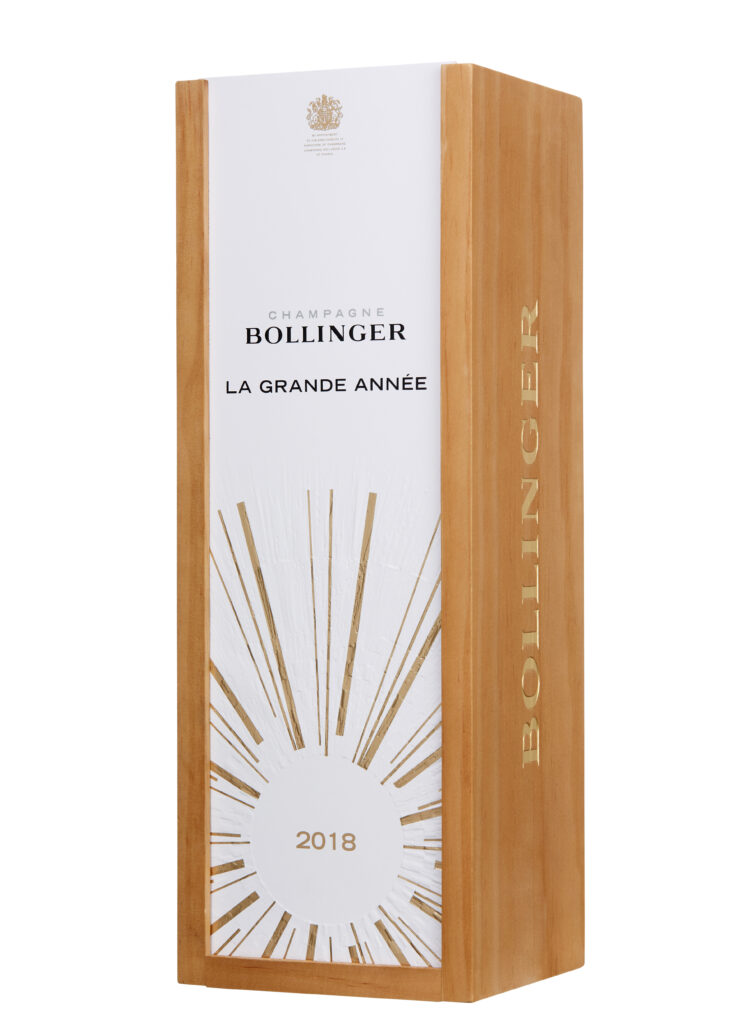
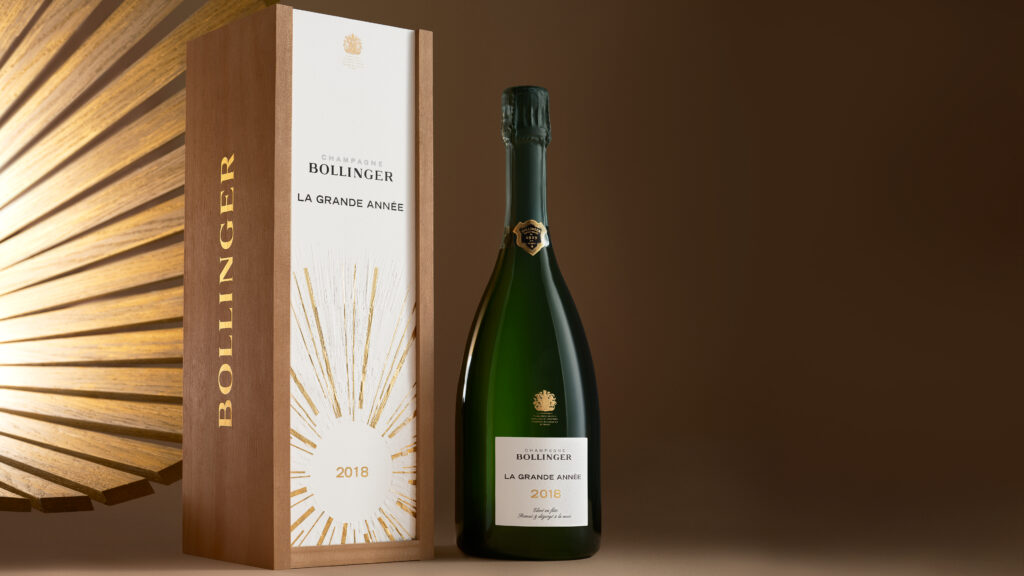
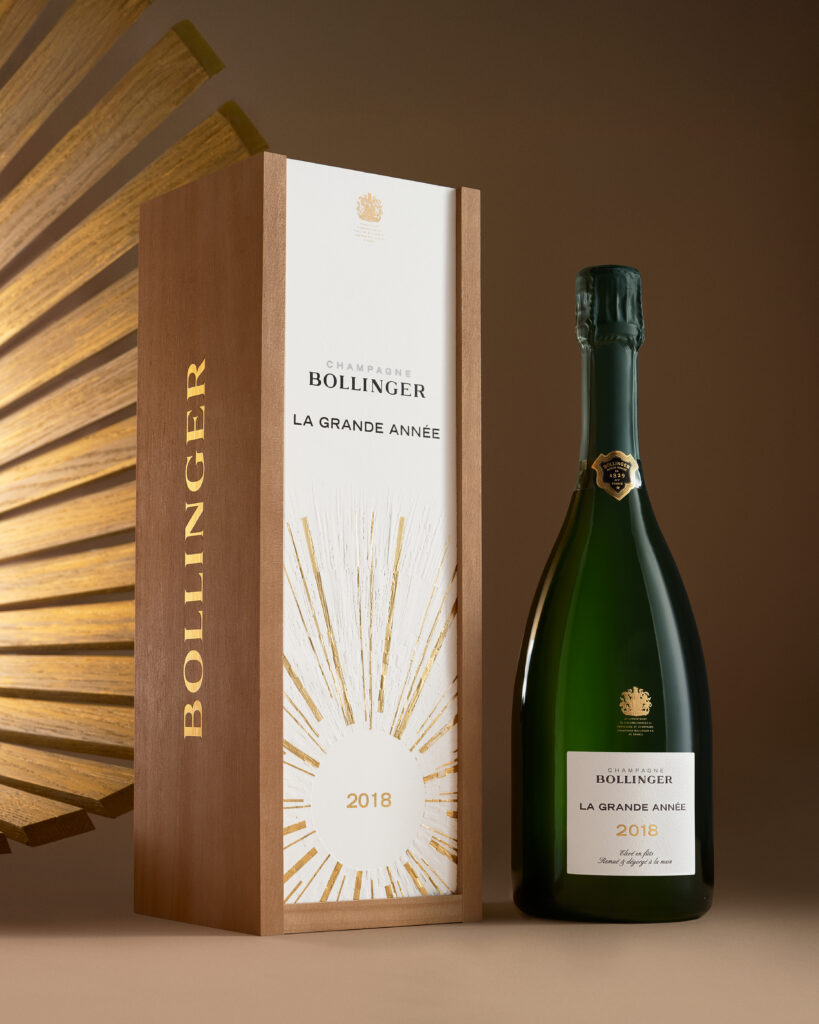
Available in gift sets at the finest wine shops, La Grande Année 2018 is offered at a suggested retail price of 215 euros (including tax), while La Grande Année Rosé 2018 is priced at 275 euros (including tax). These prices place these cuvées among the ranks of the great gastronomic champagnes, as well as in the realm of artisanal luxury, where every detail—from the grapes to the oak, from the cork to the craftsmanship—reflects a commitment to the long term.
Alcohol abuse is harmful to your health; please drink in moderation.
Cette publication est également disponible en :

