
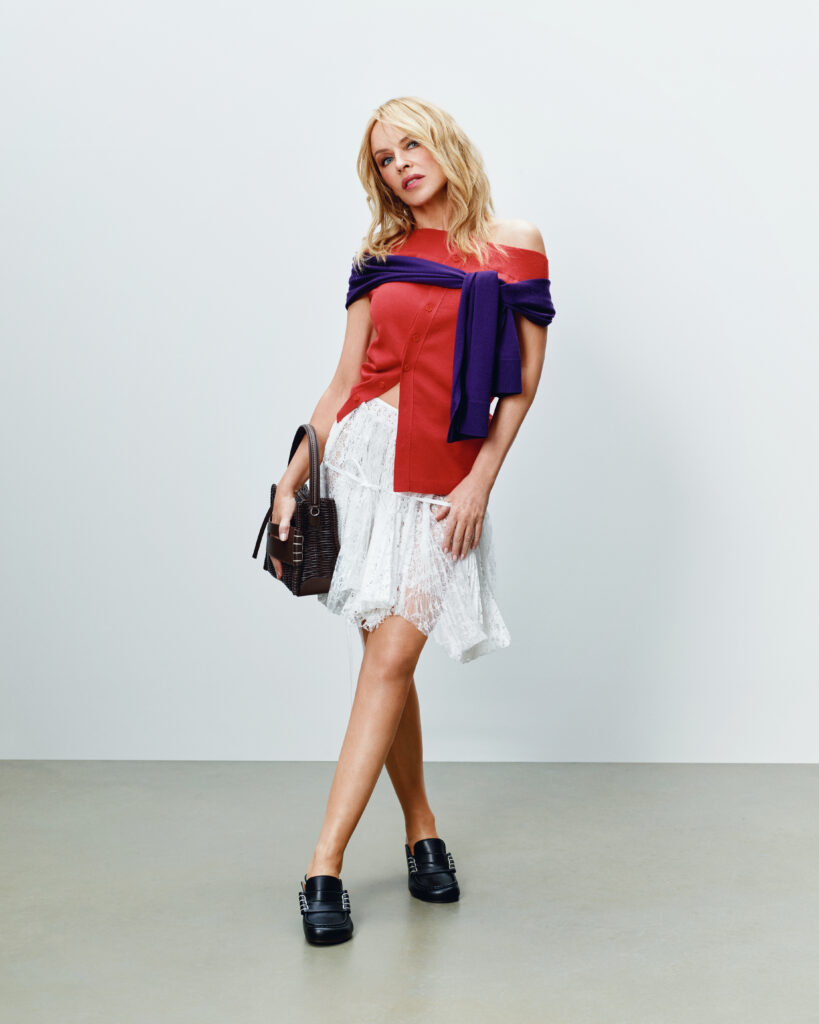
JW Anderson’s new Fall/Winter 2026 campaign is about more than just clothes worn by a celebrity. Here, Jonathan Anderson pursues a compositional approach that is closer to an exhibition than to traditional marketing. Kylie Minogue appears less as a brand ambassador and more as a cultural figure capable of bringing to life a specific visual and emotional world.
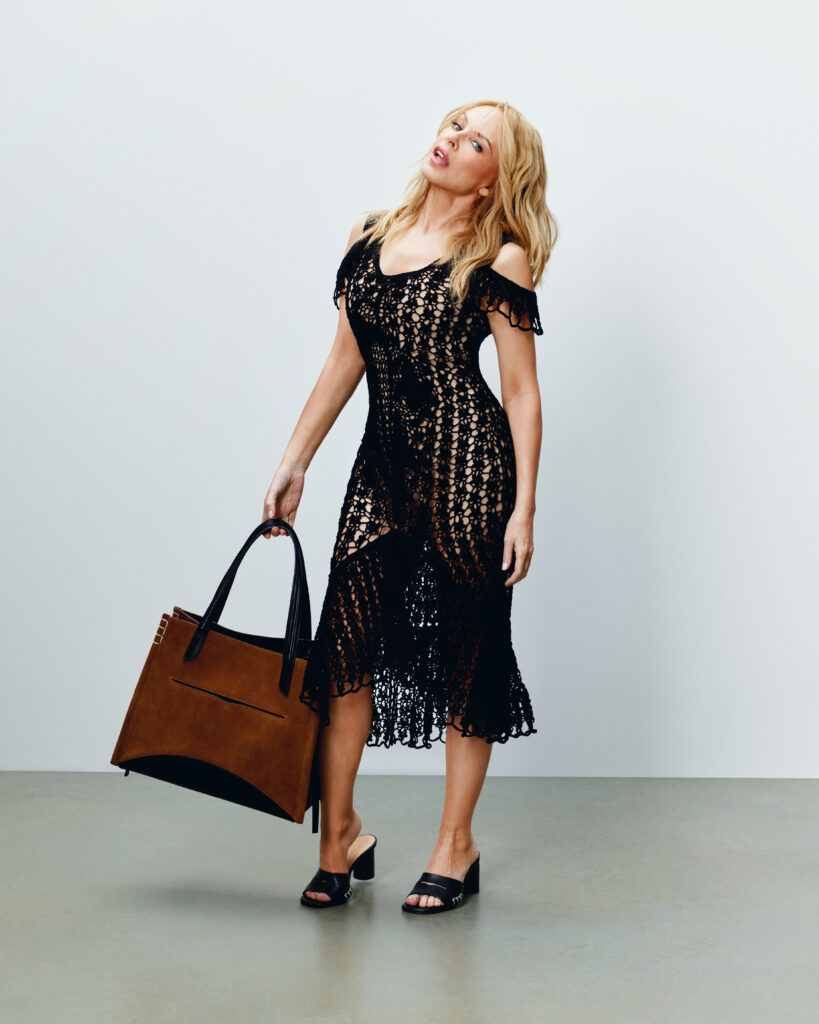
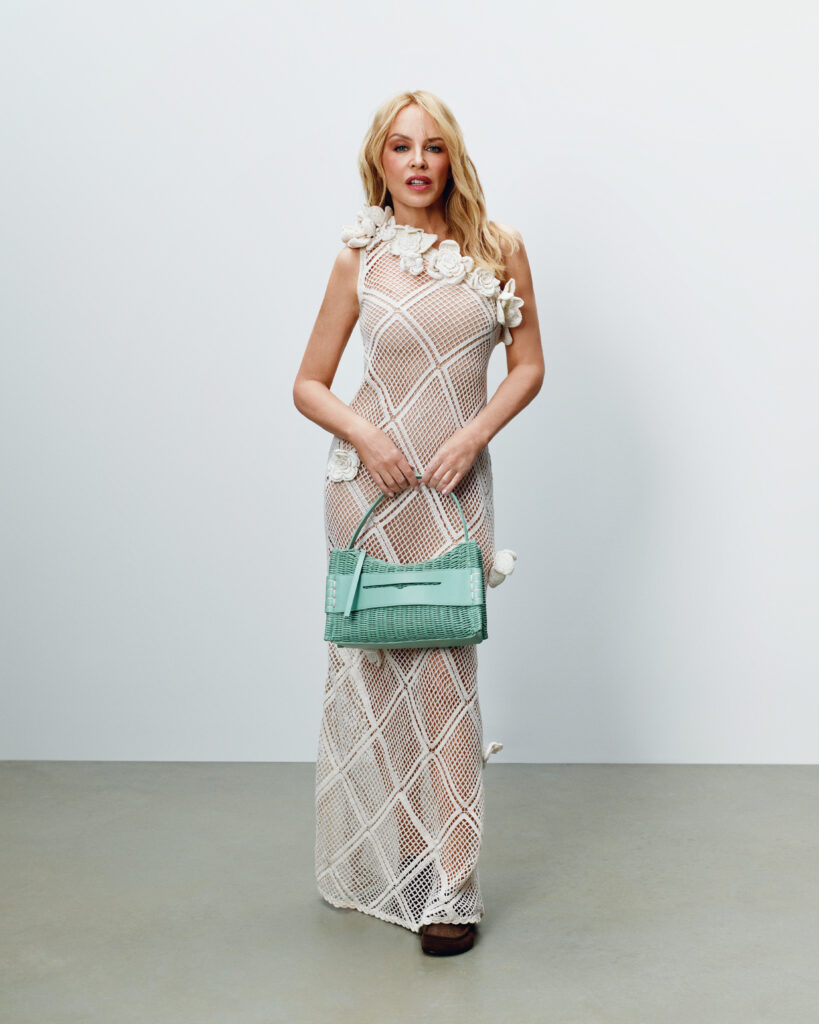
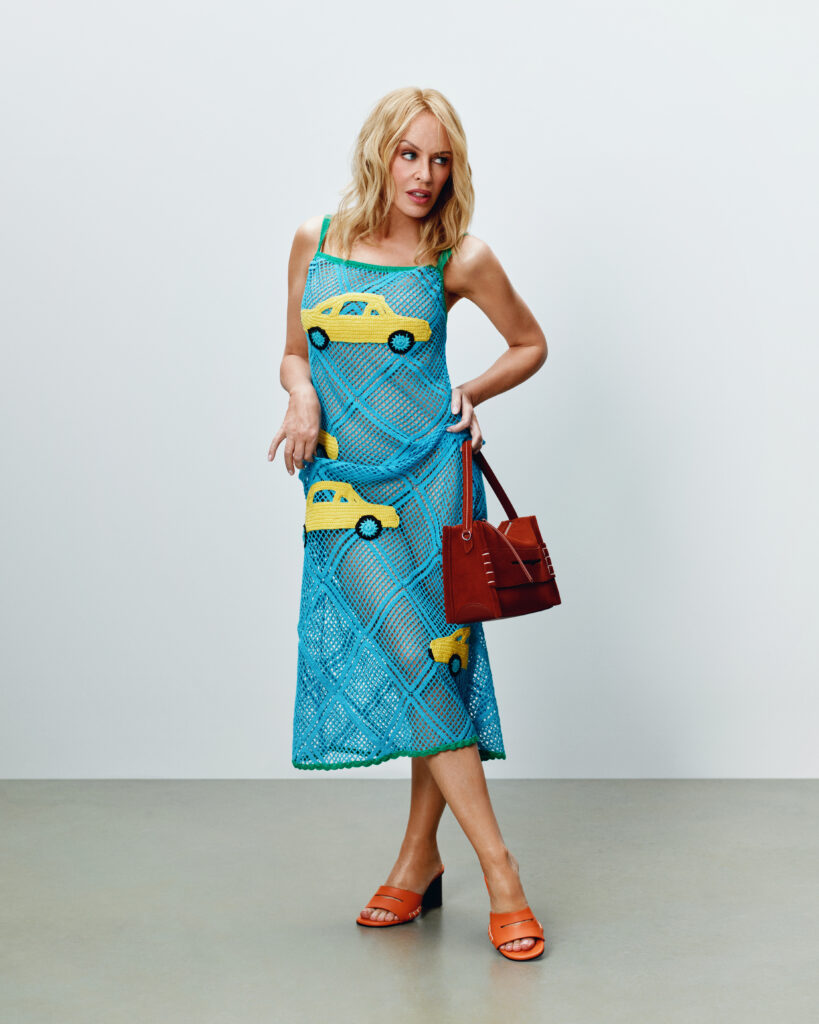
The campaign is based on a delicate balance between textile craftsmanship and home design. Kylie Minogue wears crocheted dresses with openwork diamond-shaped structures, built around an open argyle pattern that evokes certain British textile experiments from the 1970s, when clothing became as much an experimental surface as a utilitarian object. Crochet, long relegated to the domestic or folkloric realm, has been reclaiming a central place in contemporary collections for several seasons now. At JW Anderson, it retains this interesting ambiguity: something meticulous, almost fragile, but never nostalgic.
The Loafer bag, now established as one of the brand’s signature pieces, serves here as a more stable counterpoint. Its presence gives structure to the silhouettes without making them seem rigid. Anderson has often explored this tension between British humor, craftsmanship, and functional design. What sets this campaign apart, however, may lie elsewhere: in the confident incorporation of elements from the new Home & Garden line.
The debut of the Iklwa chair by British designer Mac Collins is no trivial matter. For several years, Collins has been developing a formal vocabulary drawing on diasporic history and ceremonial design. The Iklwa Chair, with its taut vertical lines and almost sculptural quality, introduces a subtle sense of gravity to the image. The campaign thus ceases to be a mere fashion exercise and becomes a reflection on the objects that coexist within the same cultural space: clothing, furniture, folk figures, and textile crafts.
Jonathan Anderson himself sums up this approach to design by referring to a curatorial practice: “It’s about weaving together references, people, and emotions that resonate with me.” This statement is worth noting because it quite accurately describes the current evolution of contemporary fashion houses. Collections no longer seek merely to produce silhouettes but rather complete intellectual environments capable of bridging fashion, art, furniture, and visual culture.
The choice of Kylie Minogue is part of this cultural dynamic. At fifty-seven, the Australian artist occupies a unique place in contemporary pop: established enough to be part of the collective memory, yet versatile enough to remain relevant to a younger generation. Where other campaigns use nostalgia as an emotional shortcut, JW Anderson prefers to focus on continuity. Kylie isn’t invoked as a relic of the 2000s; she becomes a point of balance between several cultural timeframes.
The campaign also says something about a current British fashion trend that is less obsessed with spectacular displays than with building a coherent visual language. In Anderson’s work, craftsmanship is never presented as a static, heritage-based concept. Crochet, furniture, household objects, and pop culture references coexist without any hierarchy. It’s a way of reminding us that today, cultural luxury rests less on the accumulation of status symbols than on the ability to organize references with precision.
Cette publication est également disponible en :

