
The best champagne for a wedding isn’t necessarily the most well-known one on the menu. It’s the one that holds its own at every moment of the day—the reception, the meal, and dessert—without ever becoming overpowering or fading into the background. A successful selection is planned in stages, not as a single bottle.
Think of wedding champagne as a collection, not as a single choice
Choosing the best champagnes for a wedding means, first and foremost, accepting that no single cuvée can do it all. A full-bodied, complex wine that pairs well with poultry in sauce doesn’t work the same way as an aperitif served to a hundred standing guests. A very taut extra-brut cuvée might be just right with seafood appetizers, but too austere with a strawberry dessert.
The standard sequence of a wedding includes three distinct parts: the reception—often two to three hours of continuous service—the dinner with its wine pairings, and dessert, sometimes accompanied by a different cuvée. Some weddings include a brunch the following morning, where a light and fresh cuvée naturally takes center stage. The official website of the Comité Champagne provides detailed information on the types of cuvées and regions—a useful resource for understanding the diversity of styles before making your selections.
The question isn’t “which champagne?” but “which champagne, at what time, and for how many glasses?”
Reception: Clarity Above All
A reception comes with certain challenges that are often underestimated. Guests arrive hungry, sometimes tired, and often parched from the sun. The champagne should be approachable without being ordinary, and refined without being pretentious.
A well-structured non-vintage brut remains the safest bet. It offers the expected freshness, a crisp mousse, and a dosage carefully calibrated so as not to overwhelm the palate at the end of the glass. The major houses offer cuvées of this type that hold up very well at a wedding—Billecart-Salmon Brut Réserve, Gosset Grande Réserve, and Pol Roger Brut Réserve are reliable and serviceable choices.
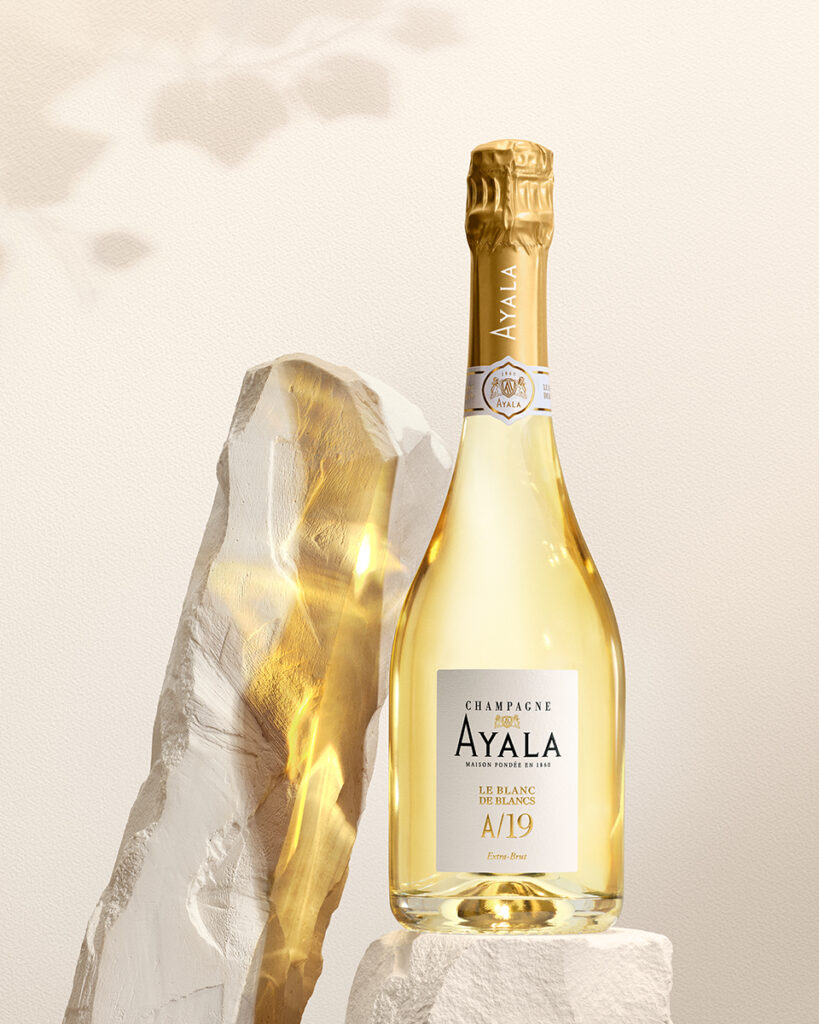
A blanc de blancs can also work well if the cocktail menu features seafood or fresh vegetables. Its mineral intensity pairs well with cold appetizers. However, it requires precise serving: this type of cuvée loses its finesse as soon as it warms up.
On this point, the Champagne Committee’s guidelines are clear: the ideal serving temperature is between 8 and 10 °C. For a wedding, this information becomes practical. Champagne served at 14 °C on a terrace in July is no longer the same wine. Ice buckets aren’t enough—the logistics of maintaining the right temperature must be planned with the caterer from the very start of preparation.
How many bottles should you plan for a wedding?
This is the question every couple asks, and the answer depends on the format of the day. For a reception alone, you generally allow half a bottle per guest, or three to four glasses. For a dinner with wine served by the glass, one bottle for every two guests over three hours remains the standard estimate. A wedding with 100 guests therefore requires between 50 and 70 bottles for the seated dinner alone—not counting the cocktail hour or the staff tables.
It is prudent to allow for a 15% buffer beyond the initial order. Unopened bottles can generally be returned if the agreement with the supplier allows for it—a point to negotiate when placing the order.
Dinner and dessert: complement, don’t overpower
At dinner, the wine should complement the menu—not the other way around. A full-bodied rosé can pair well with a heartier dish, white meat, or firm-fleshed fish. For example, Barons de Rothschild Rosé Champagne exemplifies this kind of balance: a blend where freshness and body coexist without one overpowering the other, making it a clear choice for a well-curated meal.
For weddings featuring a more elaborate menu—cold truffle appetizers, poultry in a creamy sauce, fine fish—a vintage Champagne can be a perfect choice for the table. The vintage introduces a different logic: that of time, of maturity, of a cuvée that has been patiently aged. The Champagne Delamotte Blanc de Blancs 2008 embodies this approach—a table-ready blanc de blancs whose depth calls for a precise pairing rather than mass-market serving.
For dessert, there are two options. A demi-sec champagne can be paired with a fruit-based dessert or a tiered cake without creating a clash between sweetness and acidity. A very expressive rosé can also serve this purpose if the dessert is not very sweet. In both cases, avoid serving a prestigious cuvée with a cream-based tiered cake: the champagne’s character will be lost.
Rosé Champagne for Weddings: What It Does and What It Doesn’t Do
Rosé champagne for weddings is genuinely popular for aesthetic reasons—the color is beautiful, guests love it, and it photographs well. But its use warrants some clarification.
A light blended rosé, predominantly Chardonnay with a touch of Pinot Noir, makes for a great aperitif. It is approachable, fruity, and light on the palate. A saignée rosé, more structured and deeply colored, calls for a food pairing—it can overpower light appetizers.
Serving only rosé throughout an entire wedding day, from the reception to dessert, is a common mistake. The color is appealing, but the wine can become tiresome in large quantities if it hasn’t been chosen for its versatility. It’s better to reserve the rosé for a specific moment—dinner or dessert—and pair it with a classic brut for the reception.
Understated elegance: don’t overdo it during the day
An elegant wedding doesn’t need a prestigious bottle for every course. It needs a cohesive selection: an approachable, well-defined wine to welcome guests, a more expressive or vintage bottle for the meal, and a rosé or off-dry option if the dessert calls for it.
A prestigious bottle— Dom Pérignon, Cristal, Belle Époque —is best suited for an intimate wedding, at a table for twelve, where every glass counts and the silence between bites allows time to savor the wine. At a cocktail party for two hundred people, that budget would be better spent on a wider selection of mid-range vintages served perfectly.
Champagne should set the tone for the day. It should never sum it up.
Cette publication est également disponible en :

