
In the vibrant world of luxury, true wealth lies not only in the sparkling weight of a diamond. It is hidden in the intangible—in buried stories, ancestral craftsmanship, and the bond between generations. At Grygorian Gallery, each piece of jewelry becomes a fragment of a bygone era. Each creation embodies a story, a legacy, and a craft passed down through the ages. Each piece tells a story far beyond its brilliance: it whispers the secrets of a legacy, shaped by the patina of time and the meticulous touch of the artisan. As Sonia Rachline wrote in *Vogue* about Aude Lechère’s creations, “touch clearly reveals a value invisible to the naked eye,” giving the jewelry “the weight of truth and authenticity.” This “invisible value” lies at the very heart of Grygorian Gallery’s commitment.
The Grygorian Gallery was born from this vision: to bring together in a single collection “vintage masterpieces,” the result of “precious stones, fine jewelry, and fine watchmaking.” True to its mission as a guardian of time, the gallery showcases rare pieces where every detail is steeped in history. Rather than focusing solely on immediate brilliance, Grygorian highlights the hidden stories: these designer or antique pieces that have stood the test of time while preserving their unique character. Thus, every collectible watch or designer piece of jewelry embodies a living legacy, destined to be passed down through the generations.
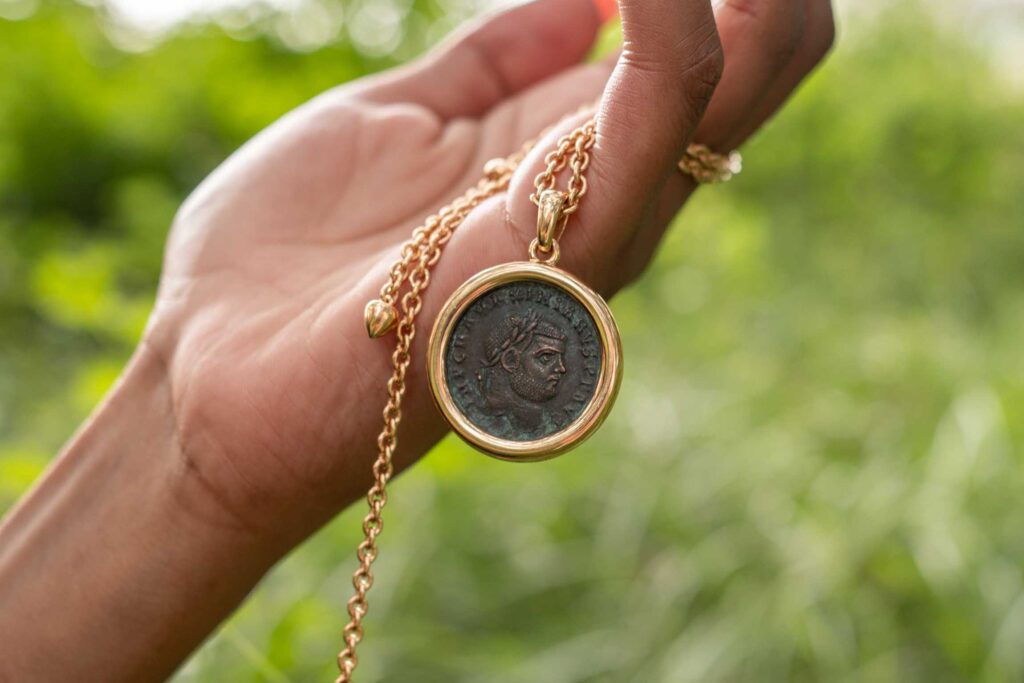
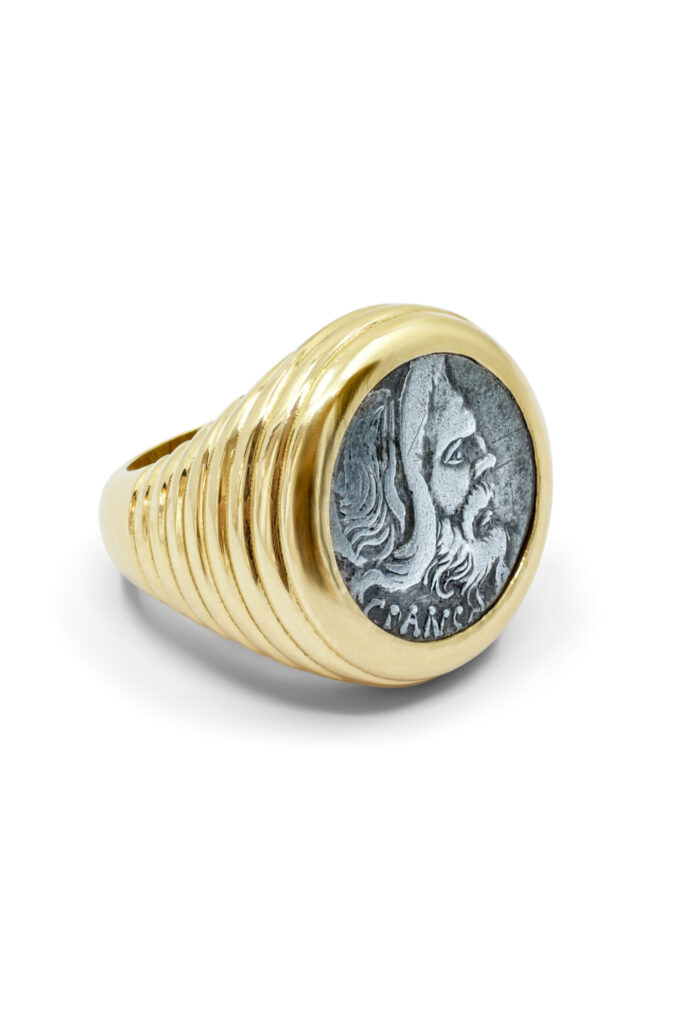
This heritage-focused approach is clearly reflected in iconic creations such as Bulgari’s Monete collection. Since the 1960s, when Nicola Bulgari launched the Monete collection, the Italian house has placed historical coins at the heart of this iconic line. The selected coins span an extraordinary period, from the 5th century BCE to the 20th century, bringing together coins from Greek, Roman, Byzantine, Persian, American, and other great civilizations. Each coin is set in a precious gold case without ever being altered, in order to preserve its historical integrity. As Grygorian Gallery itself explains, these “signs of the times” are not flaws, but tangible evidence of another era. It is this refusal to artificially enhance the pieces—allowing the patina and wear to speak for themselves—that transforms each Monete into a historical artifact, rather than a mere decorative imitation.
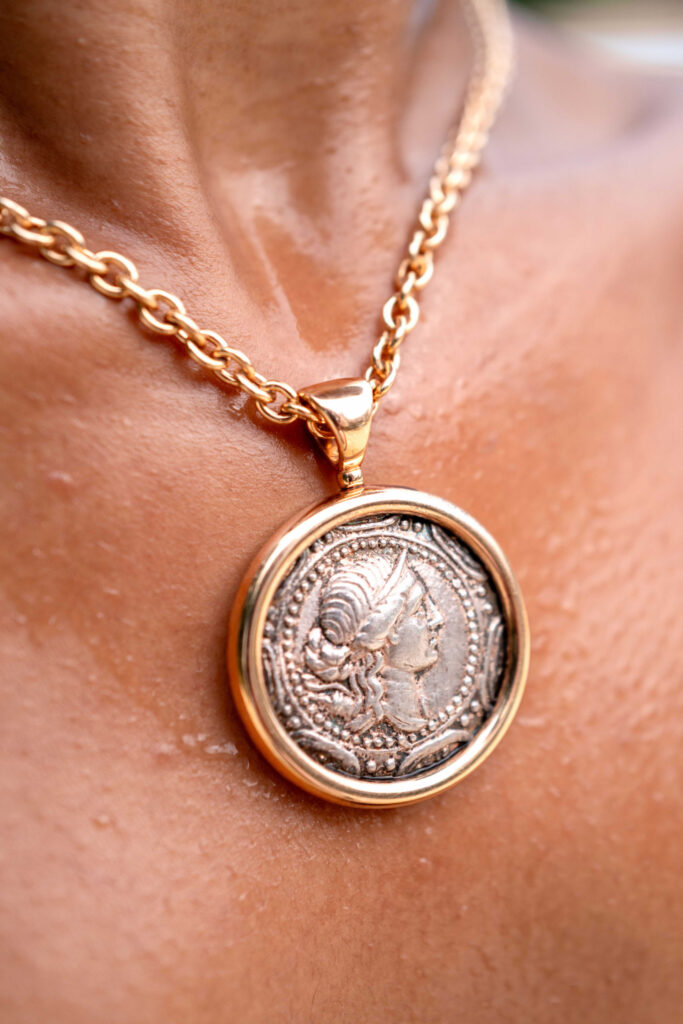
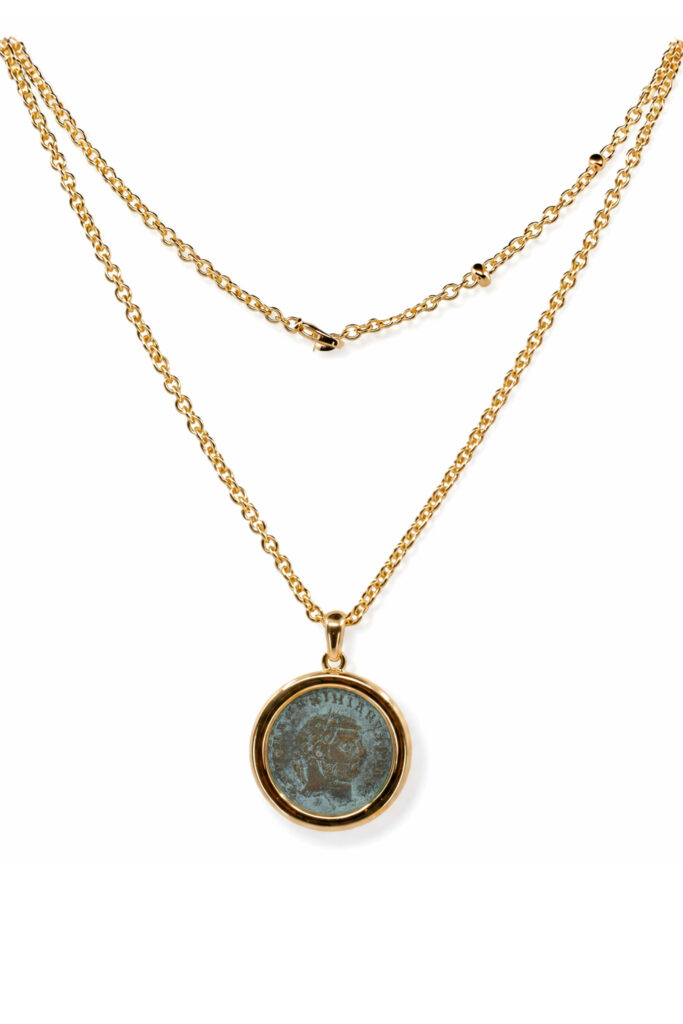
Recently, the Grygorian Gallery added two exceptional Bulgari Monete necklaces to its collection: one in 18-karat yellow gold set with an antique Roman bronze coin, and the other in 18-karat rose gold featuring a silver coin from Macedonia under Roman rule, dating from approximately 158–150 B.C. The contrast is striking: the deep brown-green patina of the ancient bronze warms the gleaming yellow metal, while the patinated silver of the Macedonian coin harmonizes with the subtle sheen of the rose gold. In these pieces, the materiality is both raw and precious. The first necklace exudes a tangible presence, a true “historical weight” that affirms the significance of the fragment preserved through the centuries. The second reveals a more delicate approach to composition, where the apparent finesse underscores the complexity of the work involved in integrating an ancient coin into a minimalist jewelry design. In both cases, the creation transcends mere ornamentation: it becomes a dialogue between material, memory, and artisanal craftsmanship.
Beyond their material value, these pieces tell a story above all else. Each piece of jewelry in the Grygorian Gallery’s collection bears witness to an era, a level of craftsmanship, and a unique conception of beauty. Vintage jewelry is not merely a collector’s item: it bears the traces of those who created, chose, and passed it down over time. The rarity of a piece like a Bulgari Monete necklace therefore lies not only in its precious materials, but in what it preserves of its past. The ancient coin incorporated into the jewelry bears the marks of its existence: its origin, its era, and its patina. It creates a unique connection between the person wearing it today and the centuries that came before.
It is precisely this aspect that appeals to collectors. Touching a piece of antique jewelry, observing a weathered surface, or admiring a detail crafted by the hand of an artisan allows one to connect with a history that contemporary design cannot replicate. In a world where everything seems to be quickly replaced, these traces of time become a rare form of value.
It is this connection between memory, craftsmanship, and emotion that the Grygorian Gallery seeks to preserve through every piece in its collection. As Édouard Grygorian notes: “In a world where time passes, we offer a touch of timelessness.” Antique jewelry thus becomes more than just precious objects: it becomes a testament to an era, destined to carry its story forward to new generations.
Cette publication est également disponible en :

