
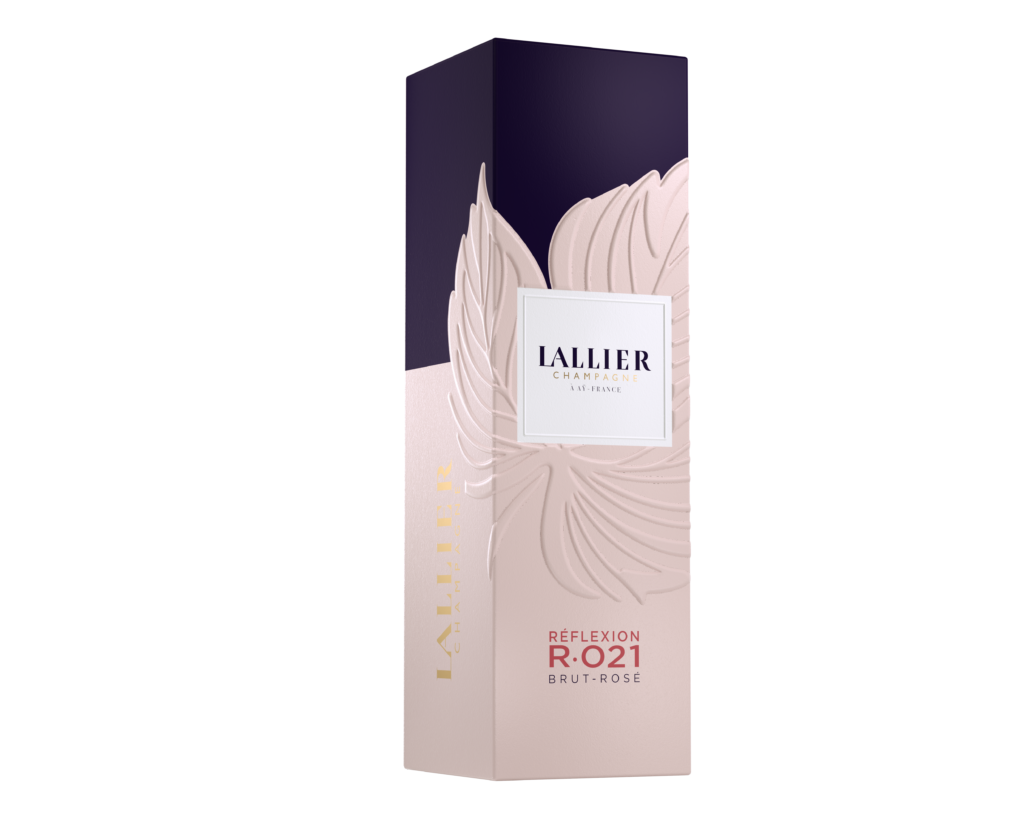
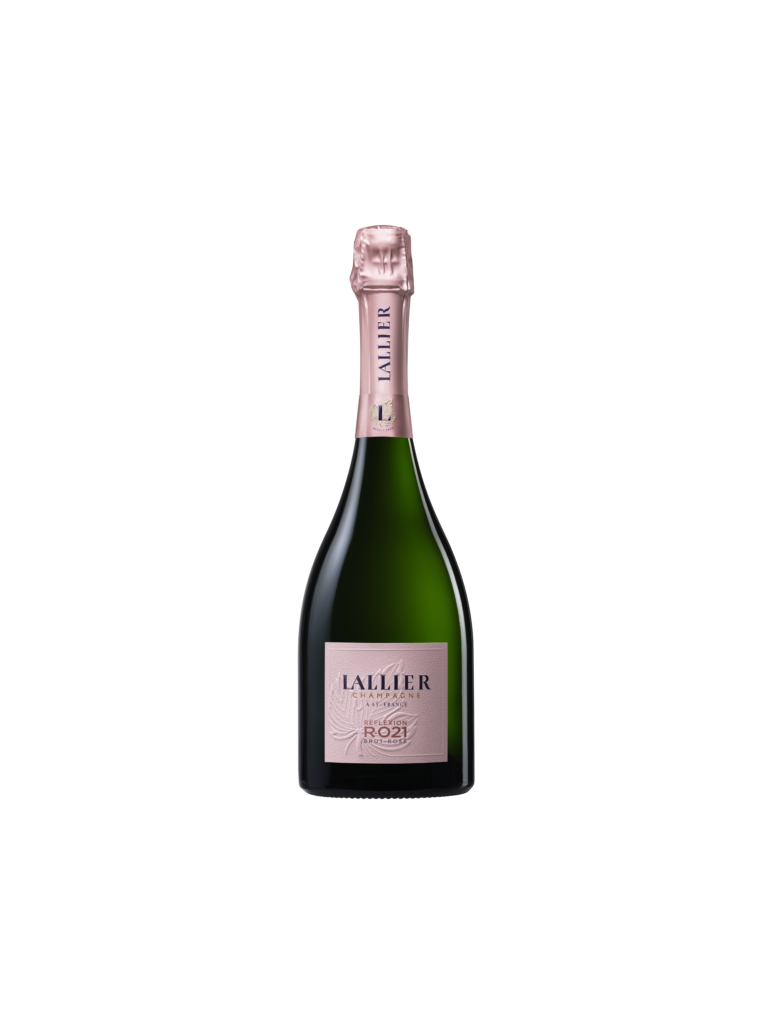
Rosé champagne has long held an ambiguous place among historic houses. Too often viewed as a festive or seasonal variation, it served the brand’s image more than the wine’s character. With Réflexion R.021 Brut Rosé, Maison Lallier has chosen a different path: that of a rosé conceived not as a side project, but as a coherent extension of its winemaking philosophy. This decision comes at a time when the great Champagne houses are reevaluating their relationship to terroir, blending, and stylistic clarity.
Founded in Aÿ in 1906—one of the few communes classified as Grand Cru—Maison Lallier has been pursuing a simple idea for several years: to make champagne a wine before making it a symbol. This philosophy now underpins the Réflexion collection, in which each release is based primarily on a single vintage to preserve its climatic and organoleptic variations. R.021 Rosé continues this tradition. The cuvée is a blend of 70% wines from the 2021 harvest and 30% reserve wines sourced exclusively from 2020.
The wine’s appeal lies less in its color than in its structure. The blend consists of 53% Pinot Noir—including 7% red wines from Bouzy—supplemented by 41% Chardonnay and 6% Meunier. Bouzy plays a central role here. In Champagne terminology, its Pinot Noir traditionally contributes tannic density and aromatic depth. At Lallier, these red wines do more than simply add color to the cuvée; they introduce an additional structural tension—almost vinous in character—that prevents the rosé from being purely fruity.
The year 2021 also goes a long way toward explaining the wine’s profile. Spring frosts, persistent humidity, and high risk of fungal disease reduced yields throughout the Champagne region. Then, starting in mid-August, drier weather allowed for more stable ripening of the grapes. Dominique Demarville notes “the exceptional finesse and freshness of the grapes” observed at the end of the growing season. In the glass, this translates to a style that is more ethereal than assertive: blood-red citrus, kumquat, and red berries, followed by a more pastry-like development driven by the fine lees and reserve wines partially aged in 228-liter oak barrels.
The technical aspects deserve more attention here than the tasting notes themselves. Ninety-three percent of the base wines are vinified in temperature-controlled stainless steel tanks at 18°C to preserve the fruit’s vibrancy, while the remaining 7% continue aging in oak on fine lees. Malolactic fermentation is carried out only partially—in 80 to 90 percent of the wines—which maintains a noticeable acidity despite 36 months of aging in the cellar.
This quest for balance between freshness and depth also reflects a broader evolution in contemporary Champagne. Over the past decade or so, several houses have sought to produce wines that are less standardized and more clearly expressive of their vintage and terroir. The concept of “iteration” used by Lallier in his Réflexion collection is part of this trend: accepting that a Champagne may vary slightly from one year to the next rather than masking climatic variations behind a notion of absolute consistency.
R.021 Rosé thus comes across less as a marketing-driven cuvée and more as an exercise in precision. A rosé designed for the aperitif, certainly, but crafted with the tools of a structured wine: differentiated aging, vintage reserve, targeted use of oak, and careful work on the tannins of the Pinot Noir from Bouzy. It serves as a reminder that in Champagne, color is sometimes merely a secondary detail. What truly matters is how the wine evolves over time.
Cette publication est également disponible en :

