
In the cosy dining room of the Bellefeuille restaurant at Saint James Paris, dessert is not a conclusion. Rather, it acts as a reprise, a final movement in which the material, the season and the memory of the meal are condensed. This is the context for the work of Coline Doussin, recently awarded the Prix Passion Dessert by the Michelin Guide 2026 .
Created in 2019, this prize spotlights restaurant pastry chefs whose sweet offerings are as structured as their savory counterparts. It recognizes an approach that rejects effect in favor of balance, an understanding of the product and a form of technical restraint.
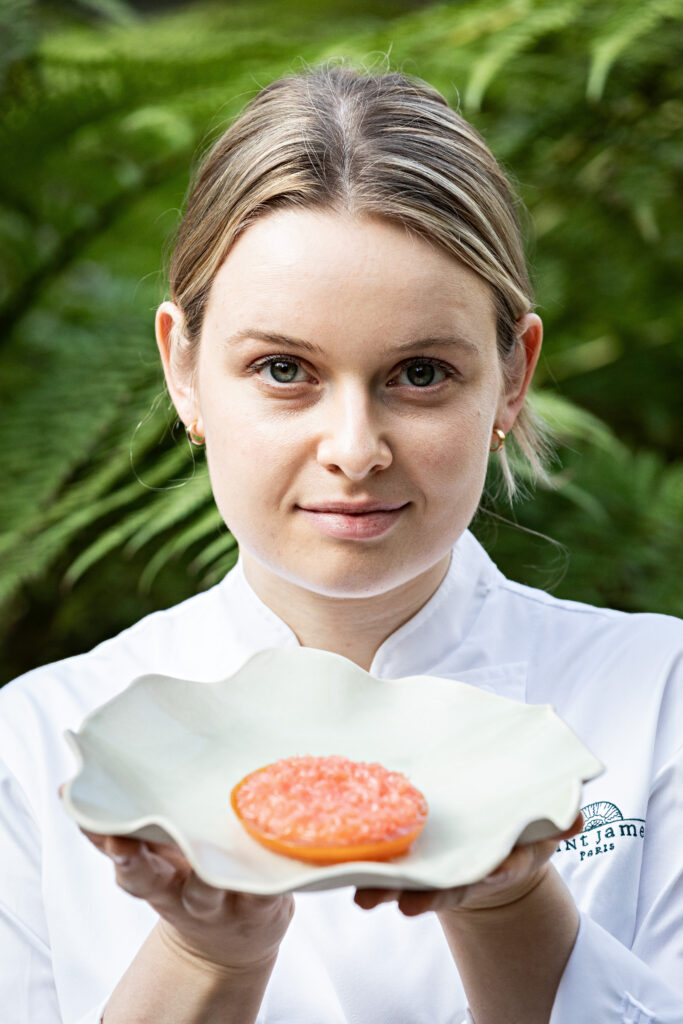
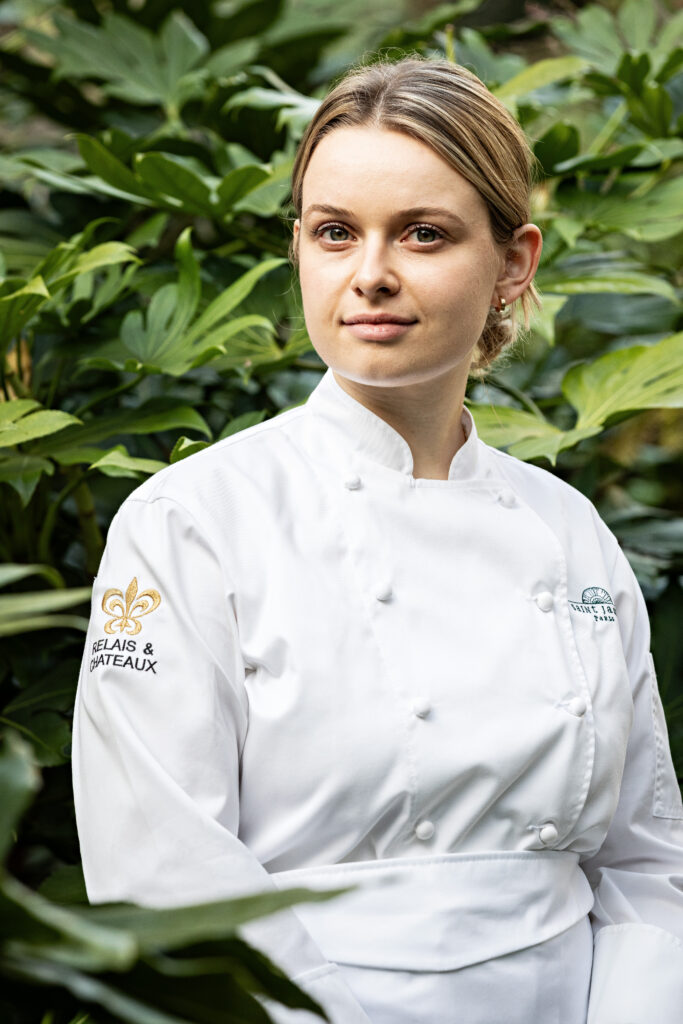
Having arrived at Saint James Paris in March 2024, Coline Doussin is developing a style that moves away from spectacular constructions and returns to legible compositions. At the age of twenty-seven, her work is organized around the raw product, the season and precise aromatic variations. Fruits, herbs, spices and peppers become structural elements rather than mere decoration.
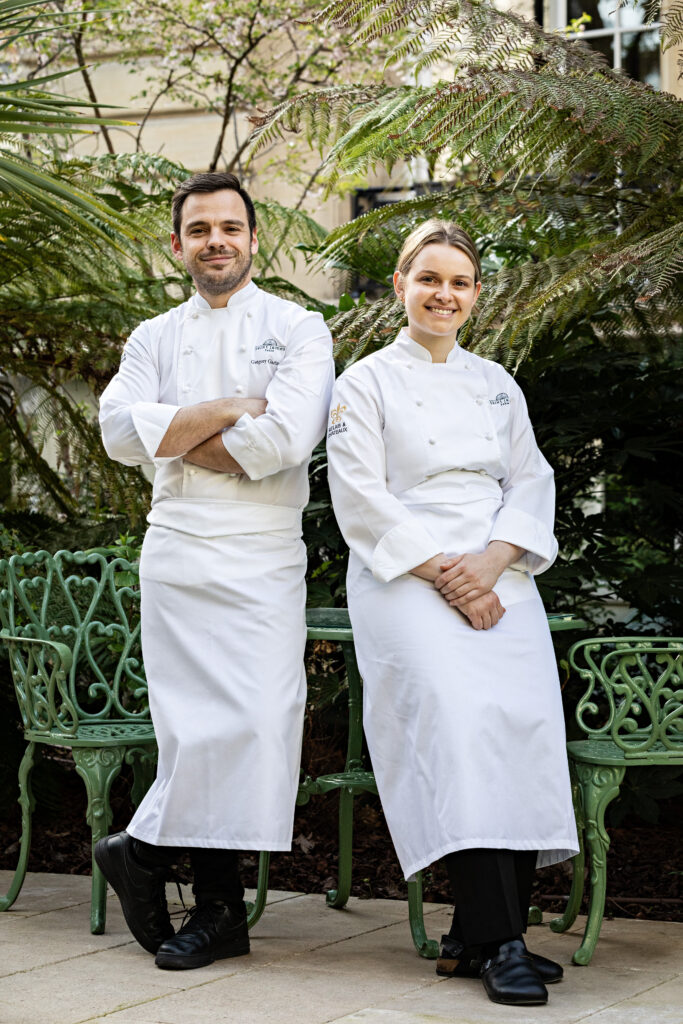
Her background sheds light on this position. A native of Lambesc, near Aix-en-Provence, she discovered pastry-making at the age of fifteen during an internship with Patrick Nice. She then trained at Ferrandi Paris, before moving on to several establishments where technical rigor remains central: Park Hyatt Paris Vendôme, Maison Pic***, Restaurant Edem*. She continued at Cheval Blanc Paris before joining the Auberge Nicolas Flamel, alongside Grégory Garimbay, with whom she now works at Saint James Paris.
This continuity explains the coherence between cuisine and patisserie at Bellefeuille. Dessert is part of an overall logic, where aromatic intensity is conceived in dialogue with the meal.
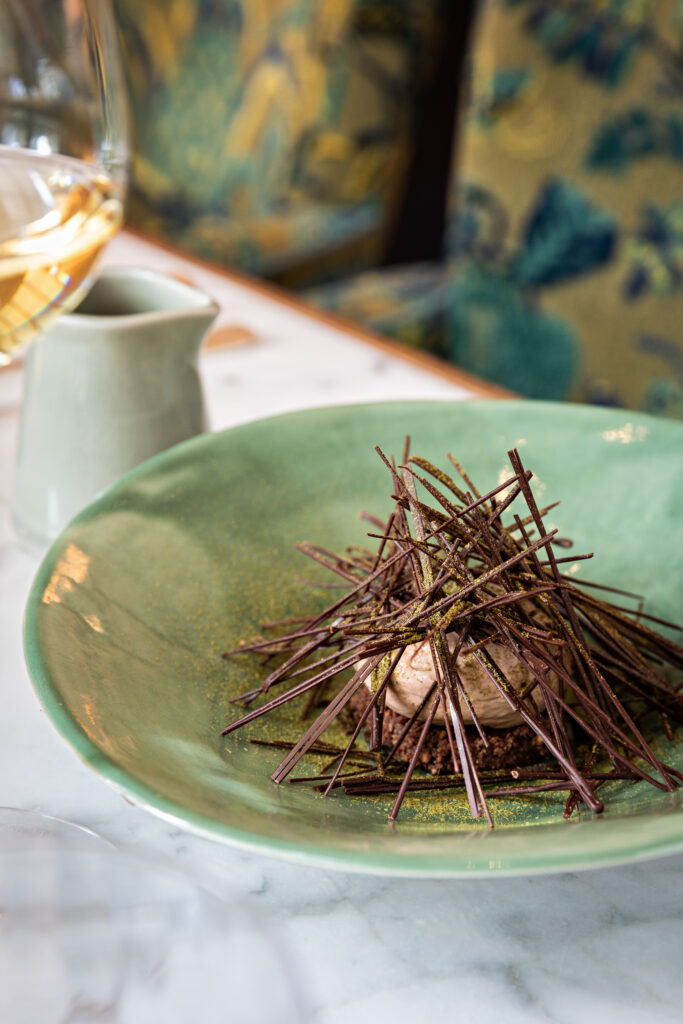
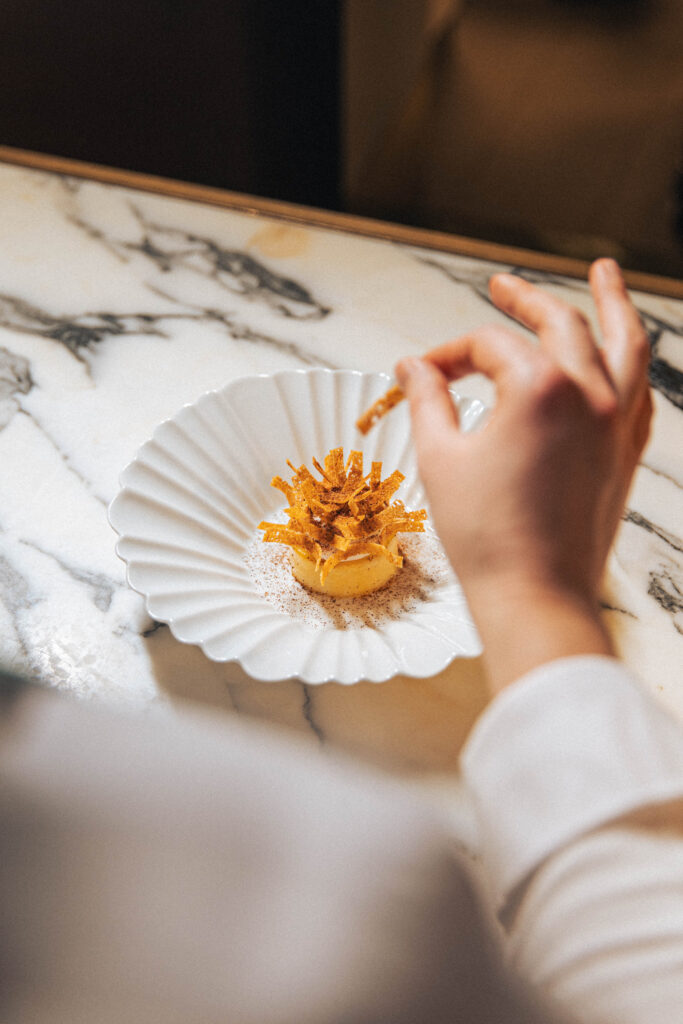
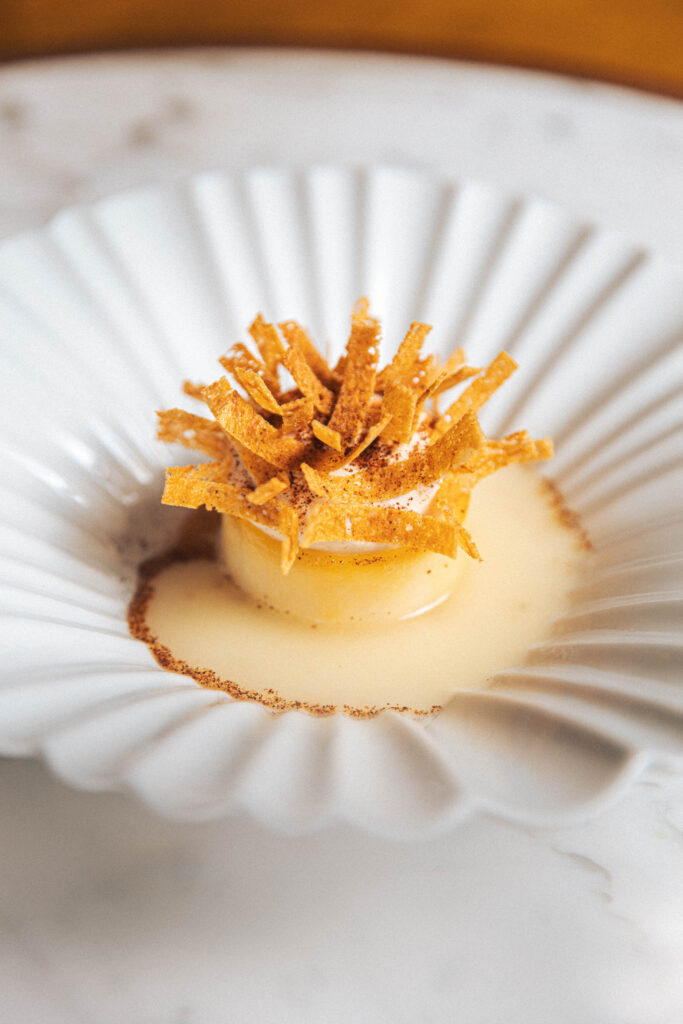
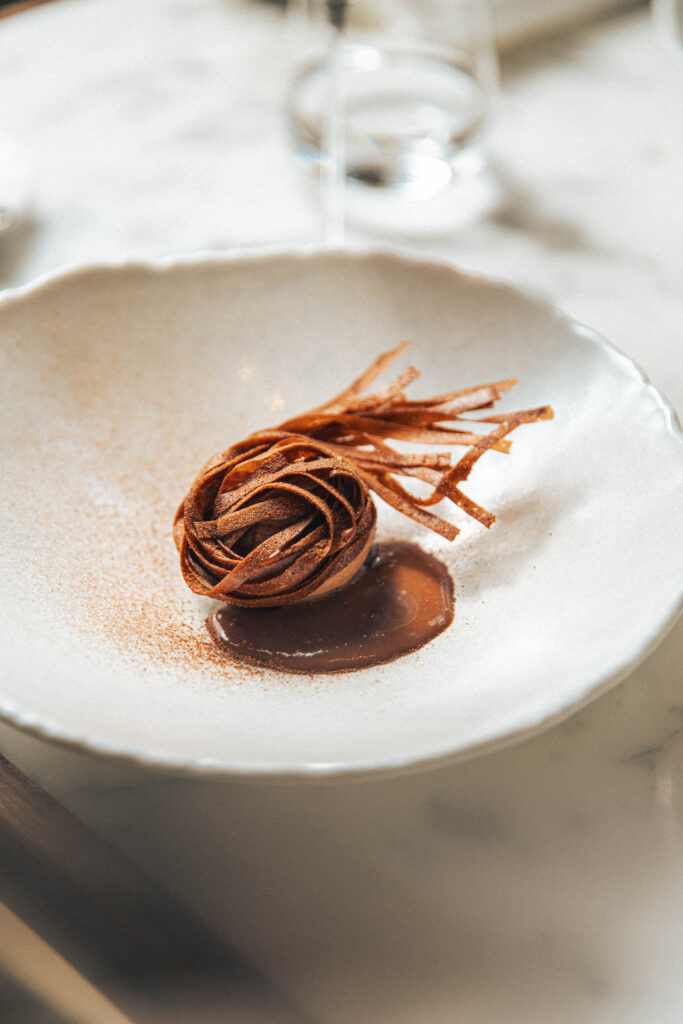
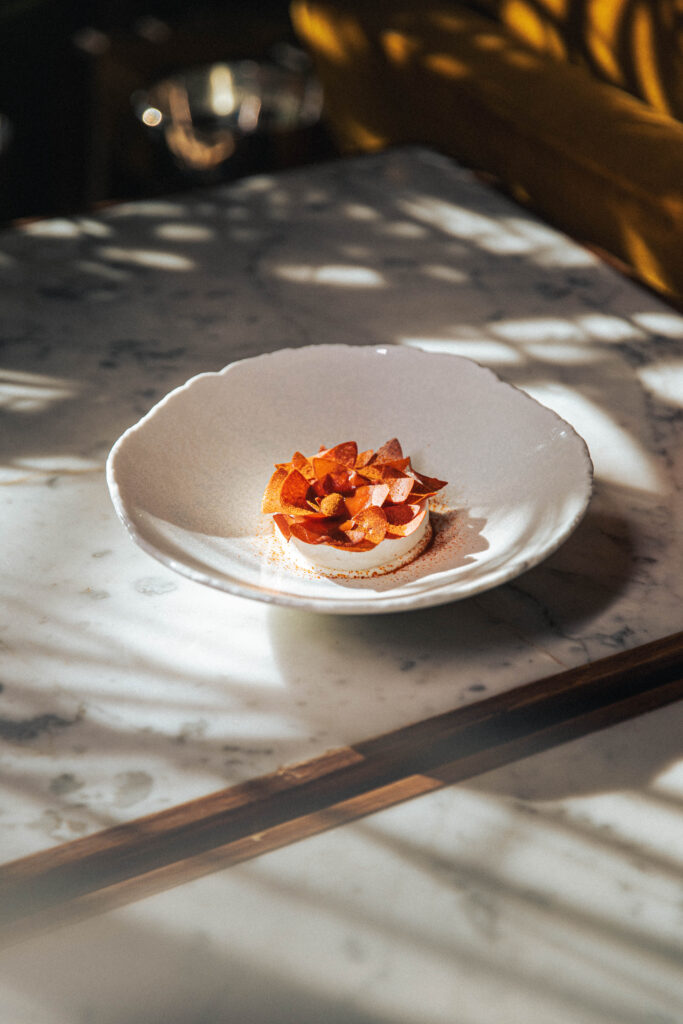
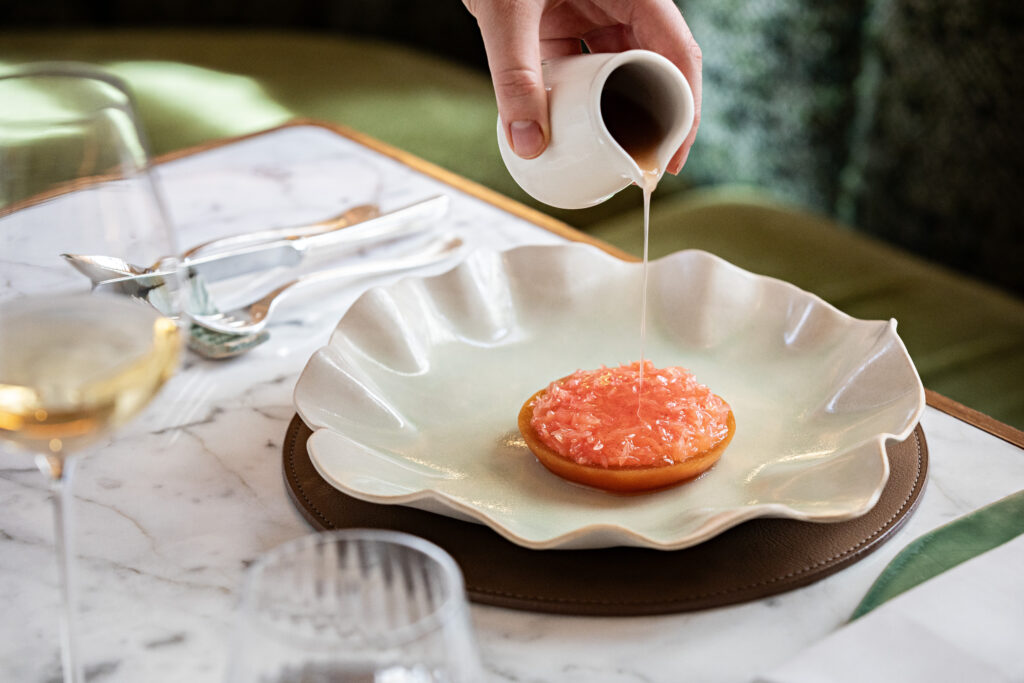
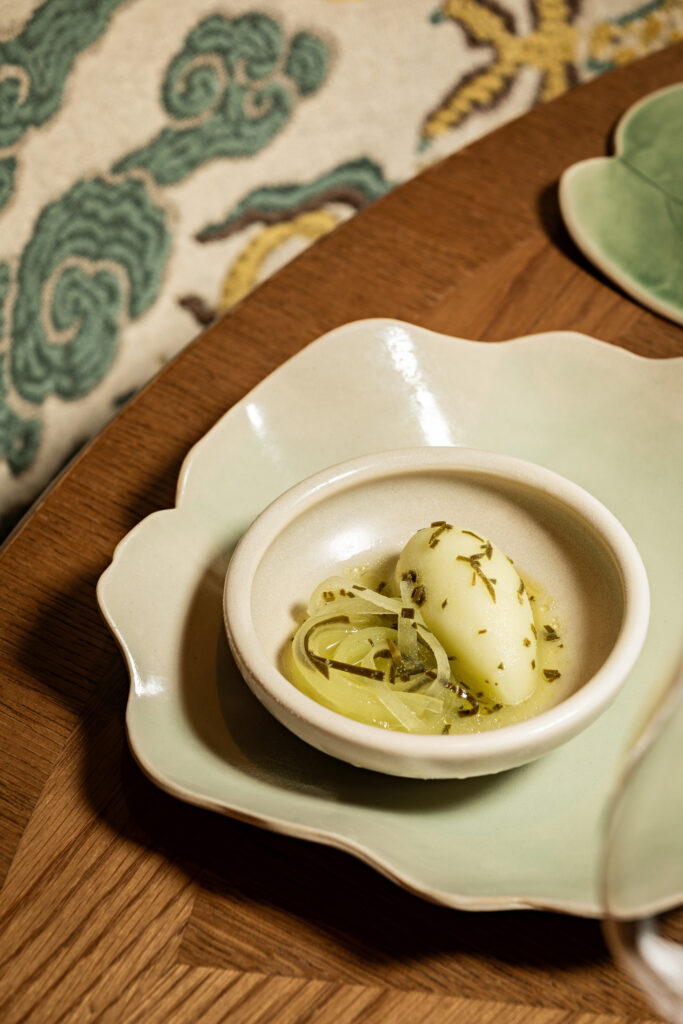
A specific example illustrates this method: the comice pear, worked in several textures. The fruit is combined with cascara – the dried husk of the coffee cherry – which introduces a light bitterness and a tannic dimension. A brioche treated like French toast brings density and warmth, while a pear sorbet acts as a counterpoint, bringing back freshness and cleanliness. The whole is not based on accumulation, but on a tension between sweetness and structure.
Sugar, in this approach, is never dominant. It is contained in the product itself, extracted from the fruit rather than added. This economy transforms the perception of dessert: it doesn’t saturate, it prolongs.
The Michelin Guide’s recognition underlines a broader evolution. For several years now, restaurant patisserie has been moving away from a demonstrative register towards a culinary language in its own right. Coline Doussin’s work is part of this movement, where technical precision serves a form of clarity.
At Saint James Paris, this position finds a special setting. Housed in a former 19th-century foundation, the venue combines classic architecture with contemporary use. Doussin’s patisserie acts as a discreet point of tension: it doesn’t seek to impose itself, but to be part of a continuity.
It’s a way of reminding us that dessert, far from being an exercise in style, is first and foremost an act of reading – of the product, the time and the taste.
Cette publication est également disponible en :

