
In 1973, in the salons of the Gstaad Palace, a watch changed its status. It no longer sought to tell the time with precision, but to occupy a social space – that of the evening, between six and nine o’clock, when jewelry becomes language. The Limelight Gala was born in this context, at the crossroads of watchmaking already mastered and jewelry in full formal expansion.
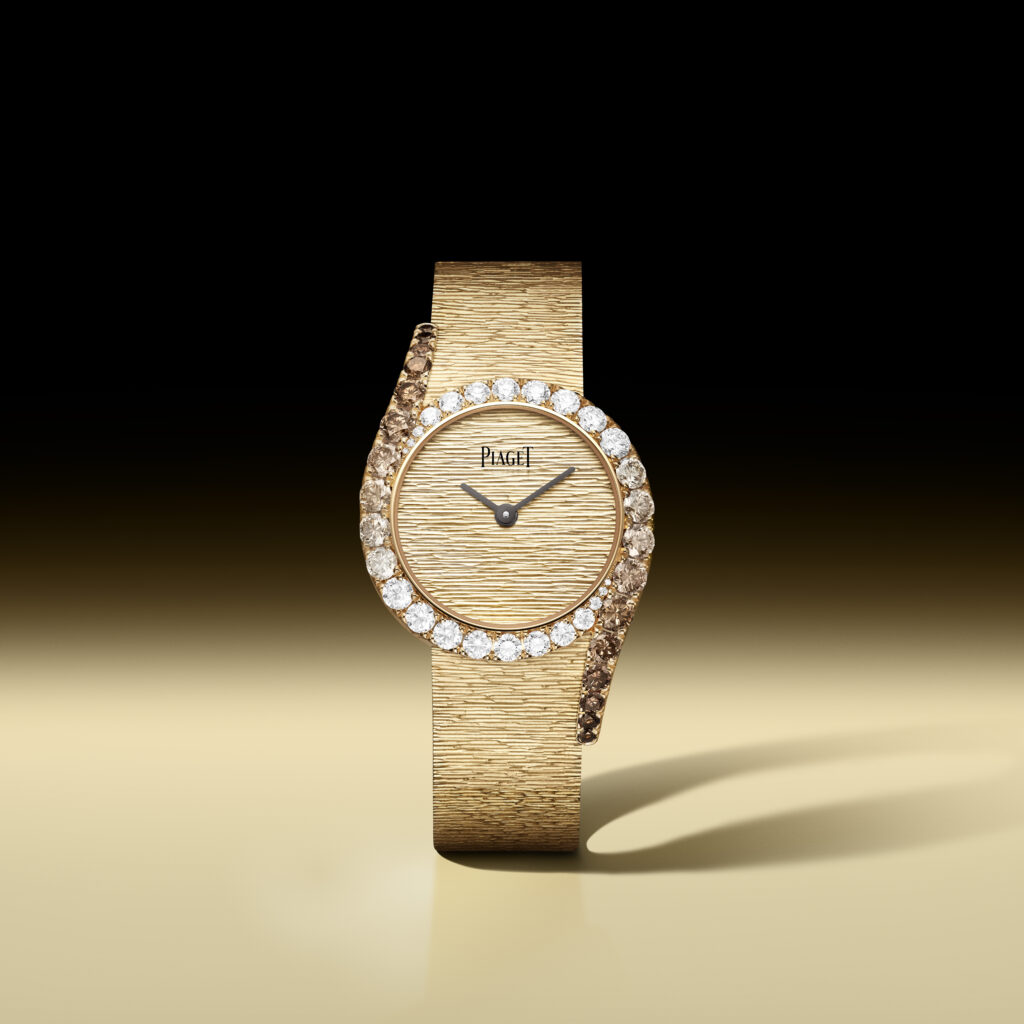
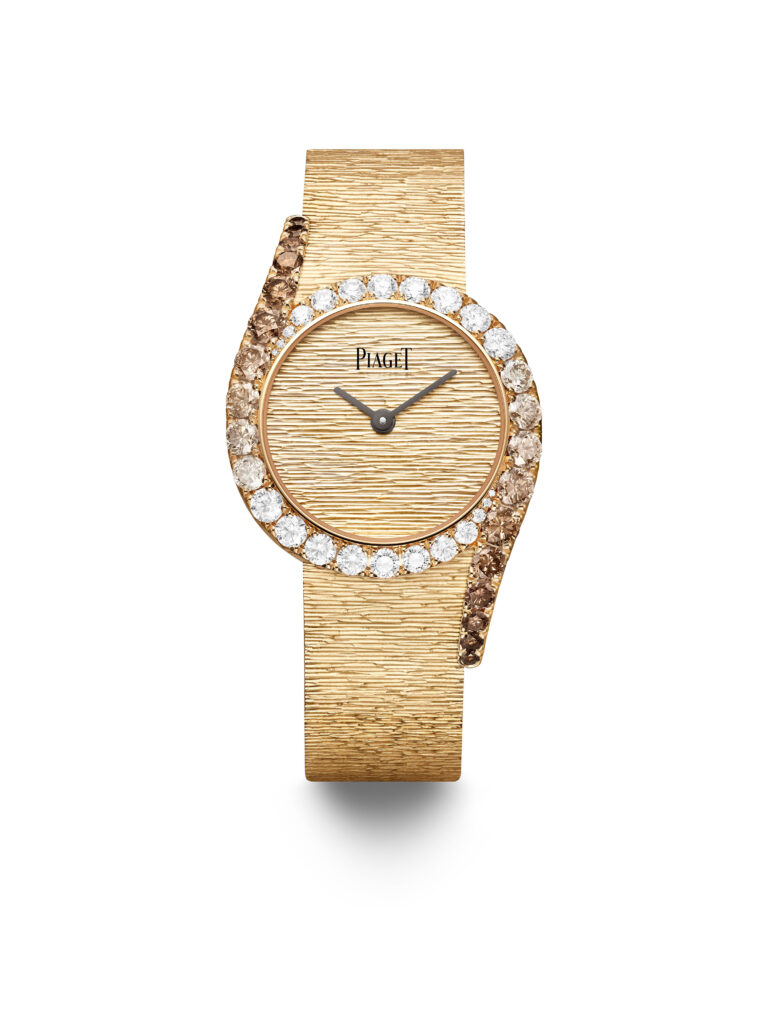
Created by Jean-Claude Gueit, the timepiece is a continuation of the Collection du 21e Siècle launched a few years earlier, in which Piaget explored the fusion between watch and jewel. From the outset, the design is based on a paradox: a case with relatively simple lines, extended by asymmetrical lugs set with diamonds that go beyond their structural function to become a motif. This asymmetry, unusual in classical watchmaking, introduces a visual movement. The stones seem to escape, as if stretched by the light.
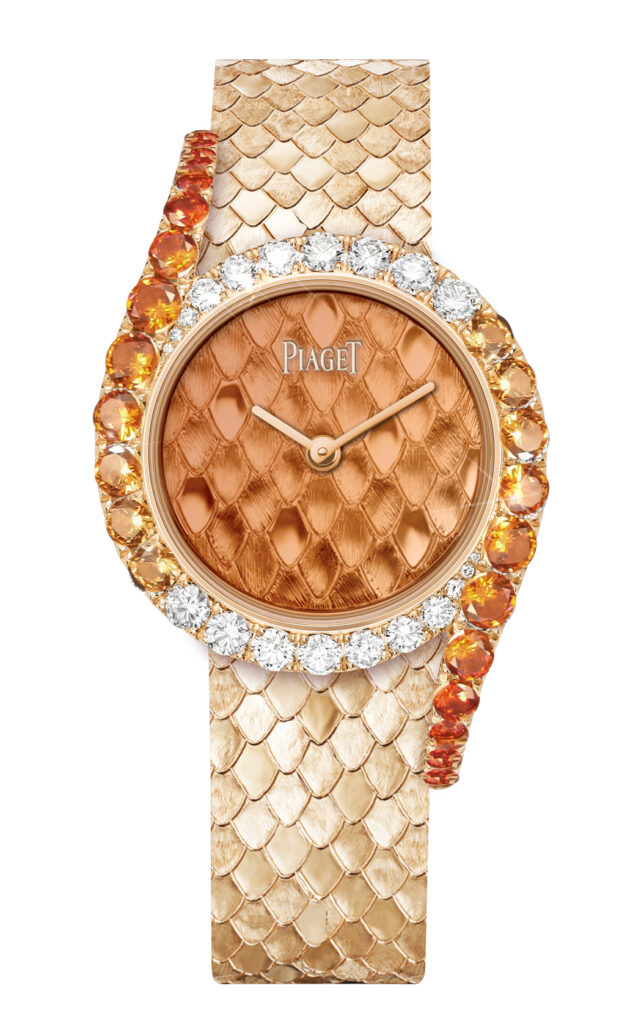
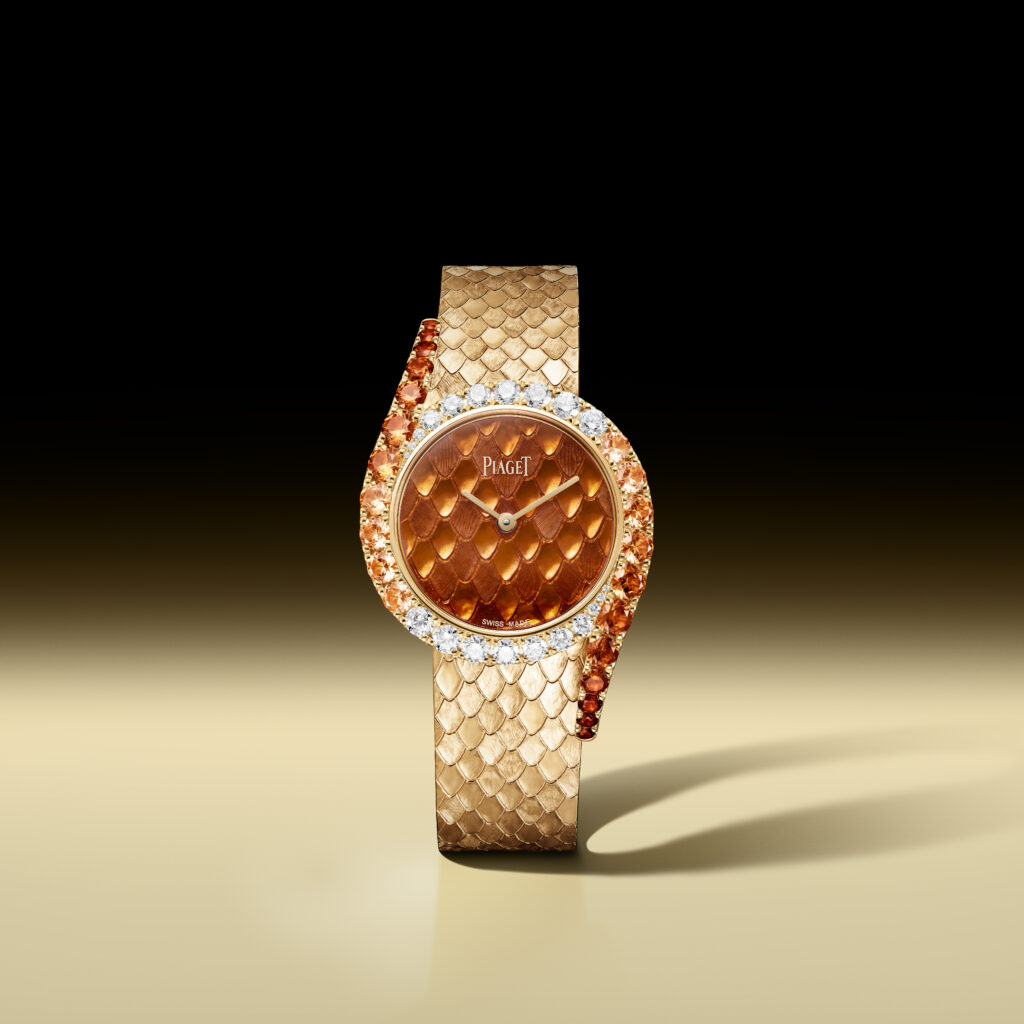
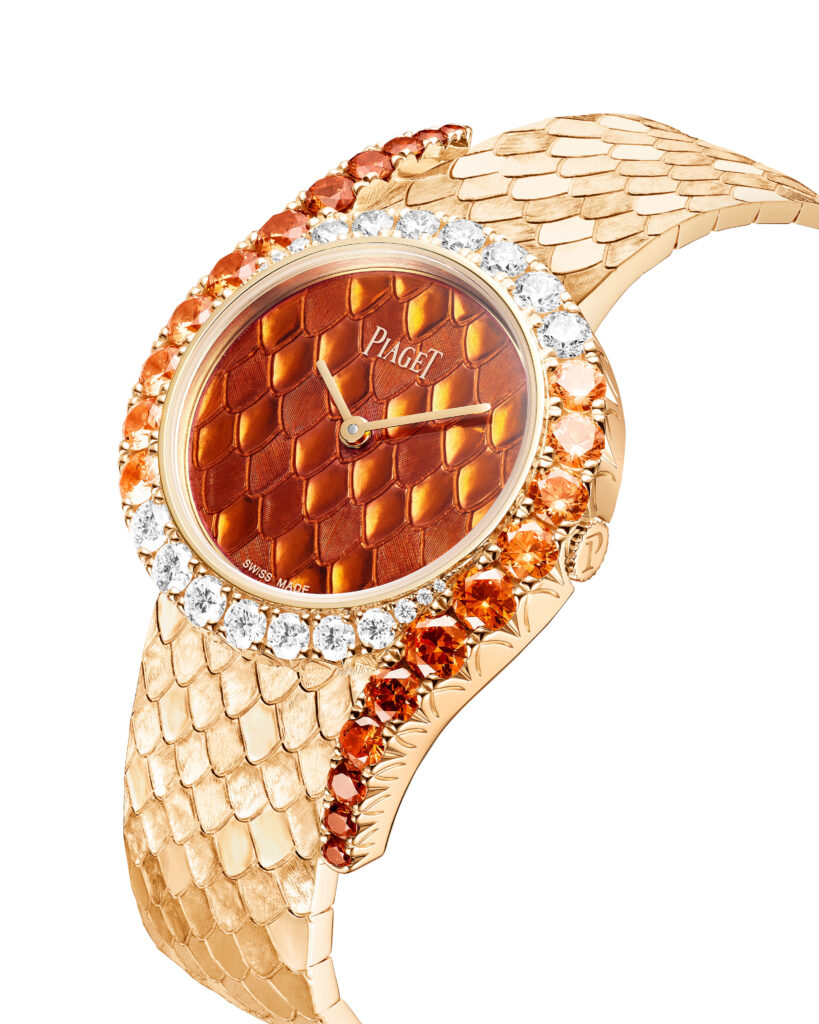
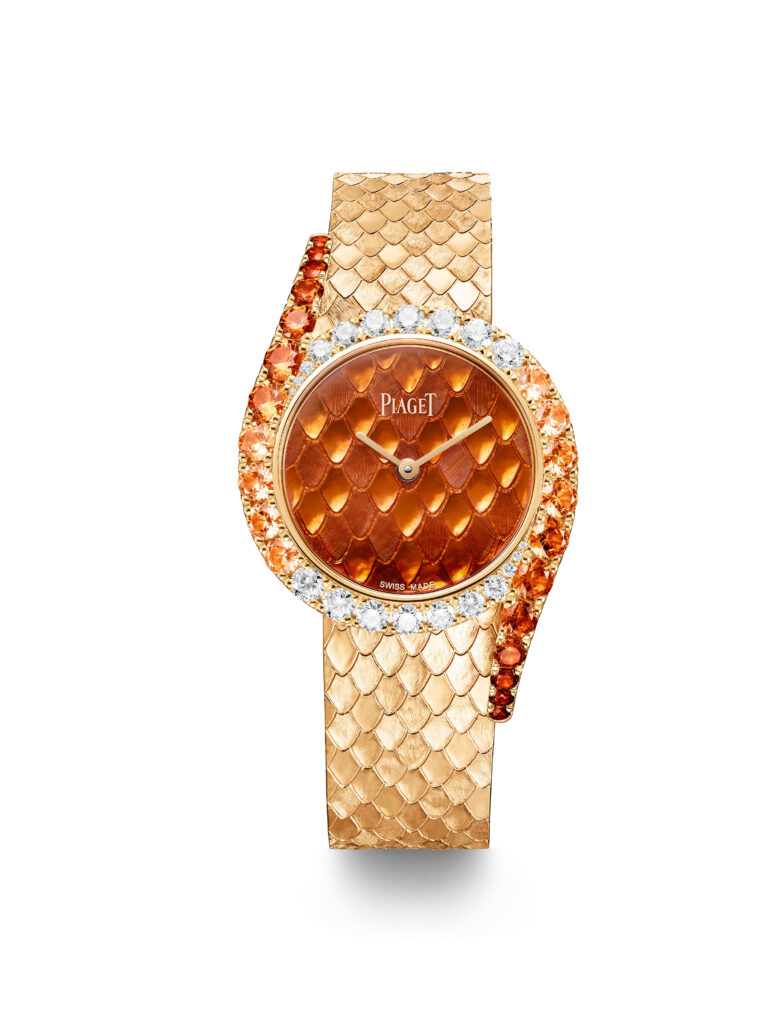
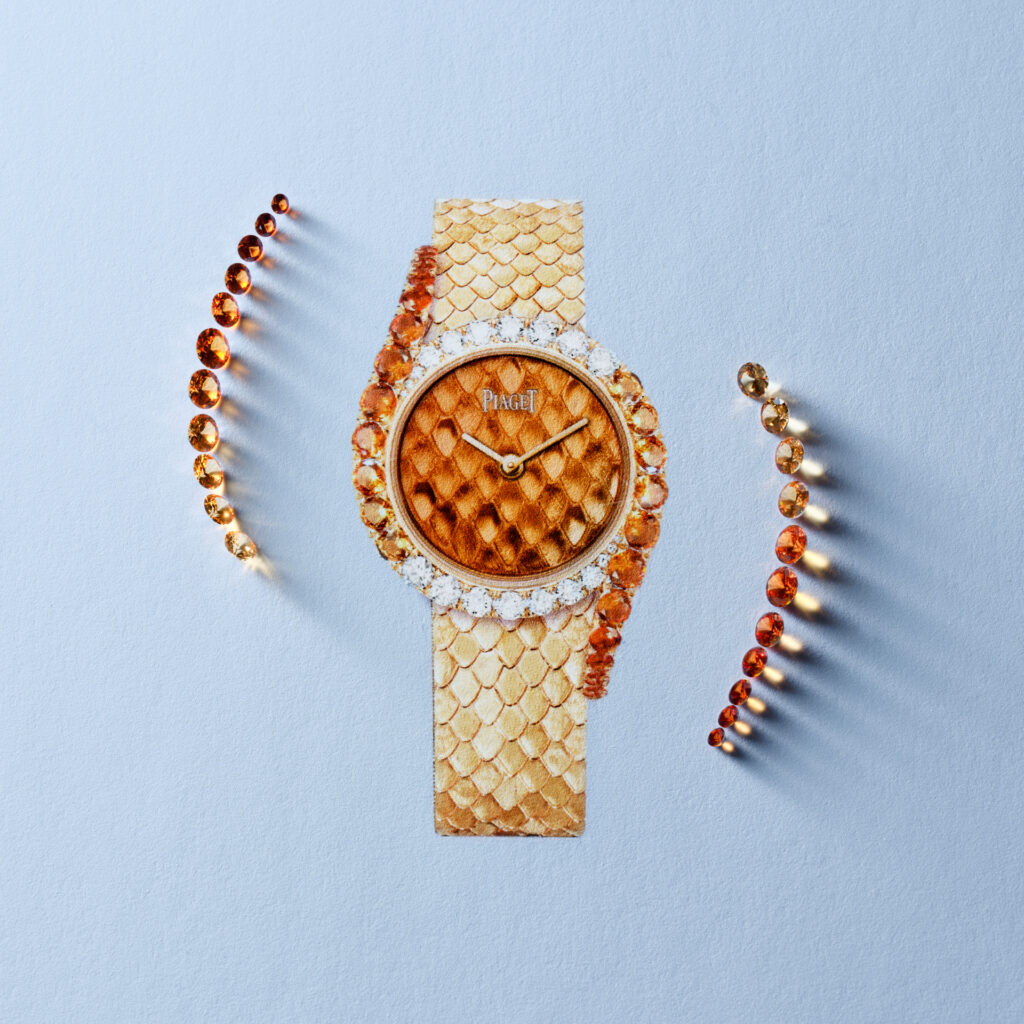
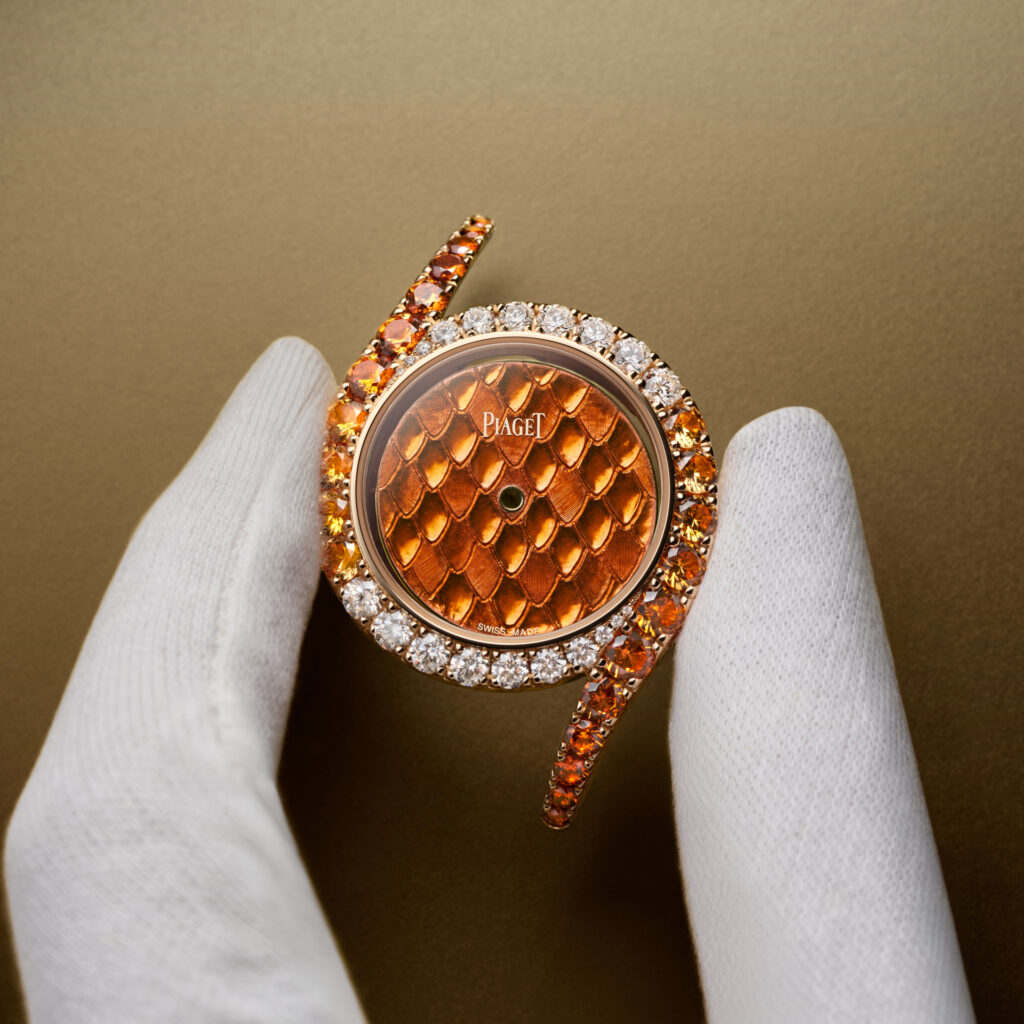
The version presented for 2026 extends this logic by shifting attention to the surface. The orange Grand Feu enamel dial rests on a gold base engraved with a scale pattern. The enamel, applied at high temperature, fixes the color in the material rather than on the surface. Under this vitrified layer, the engraving remains, creating optical depth. The decoration is not added: it is constructed by superimposing gestures.
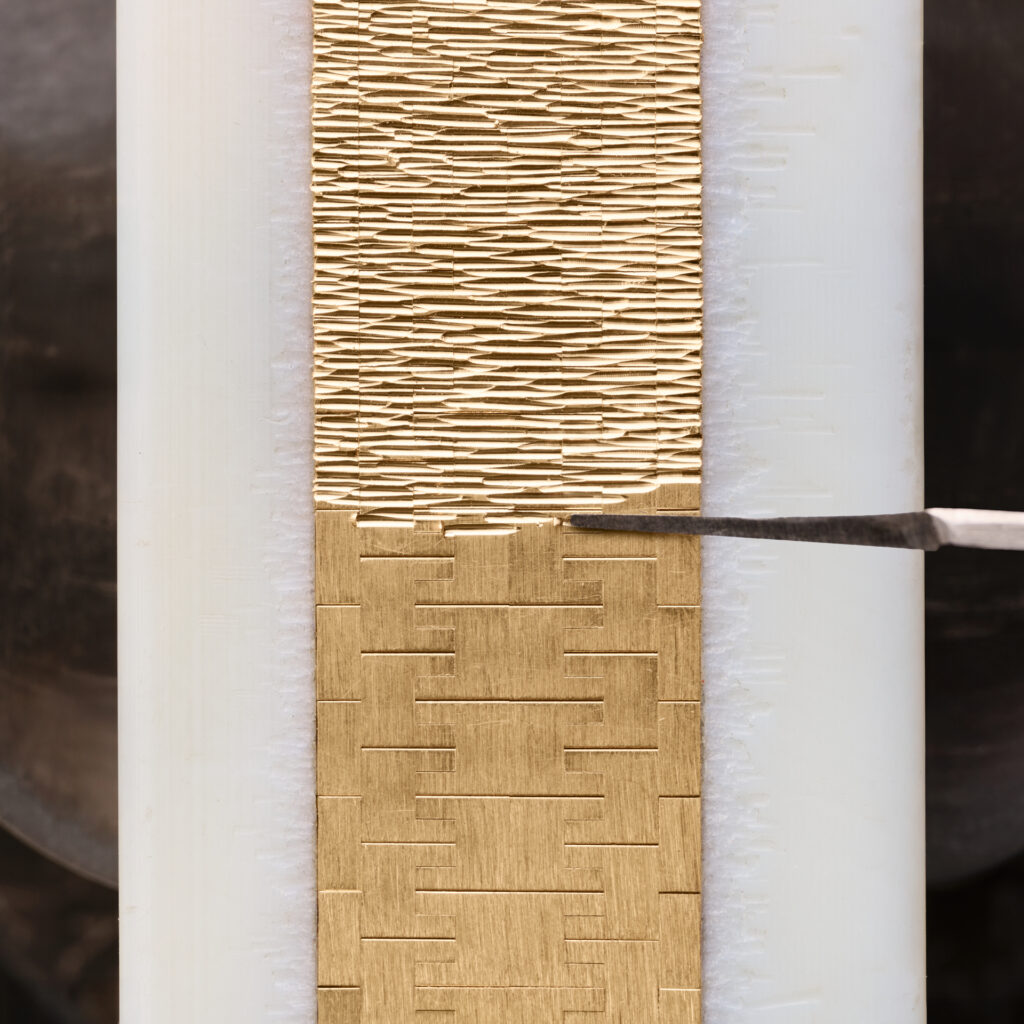
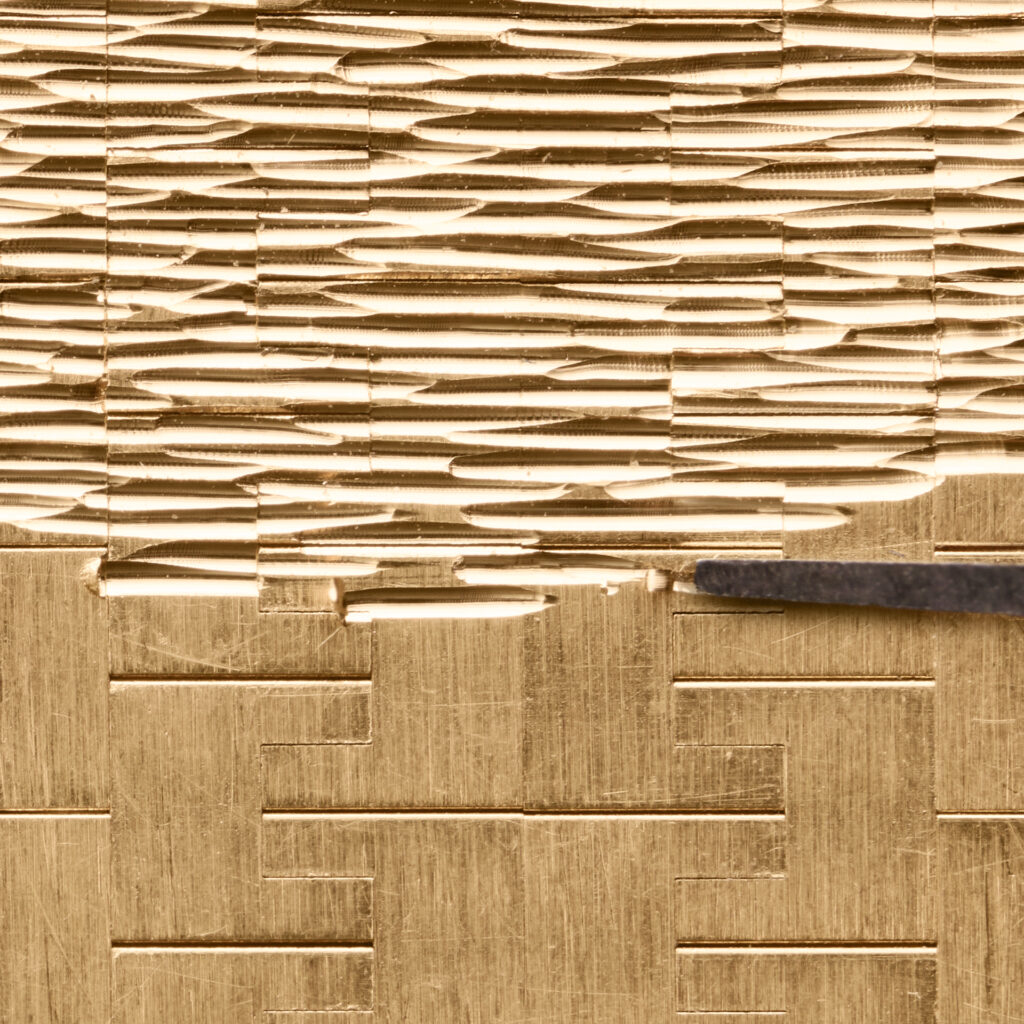
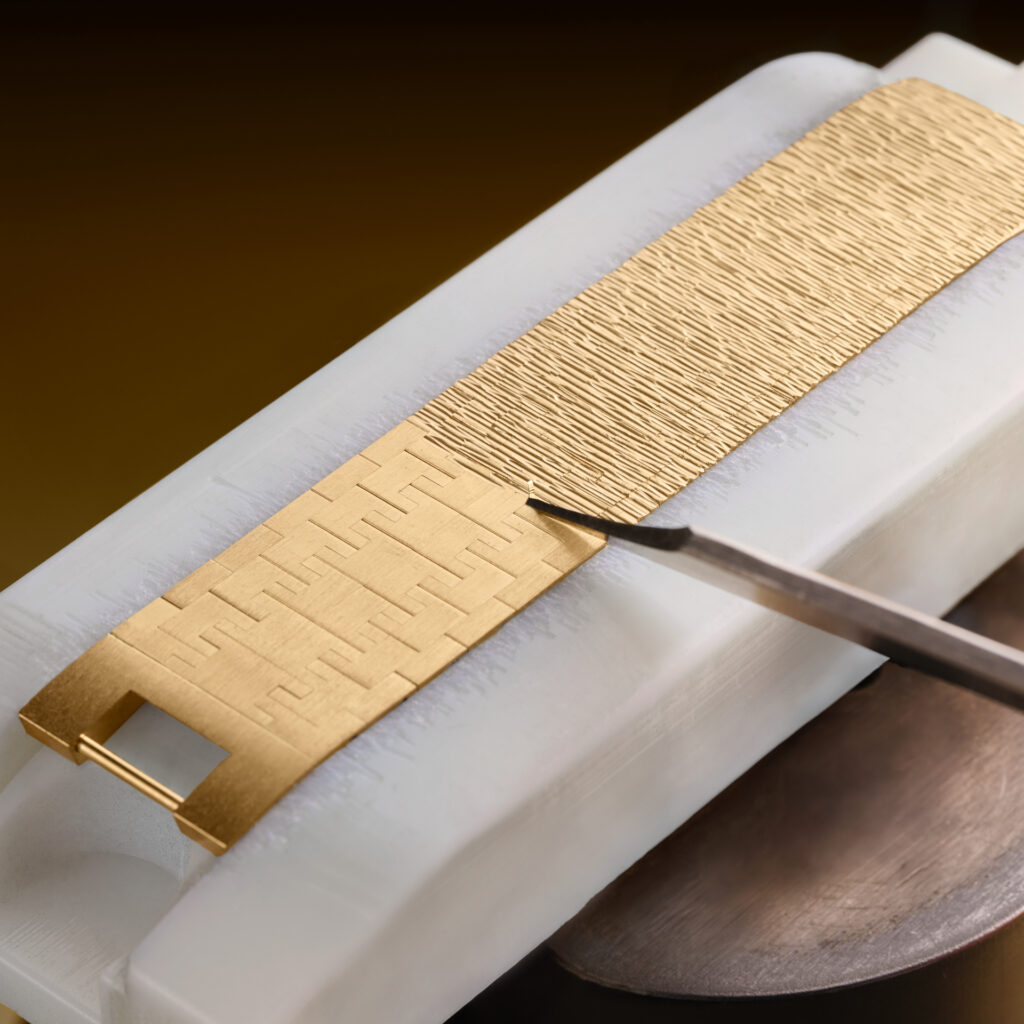
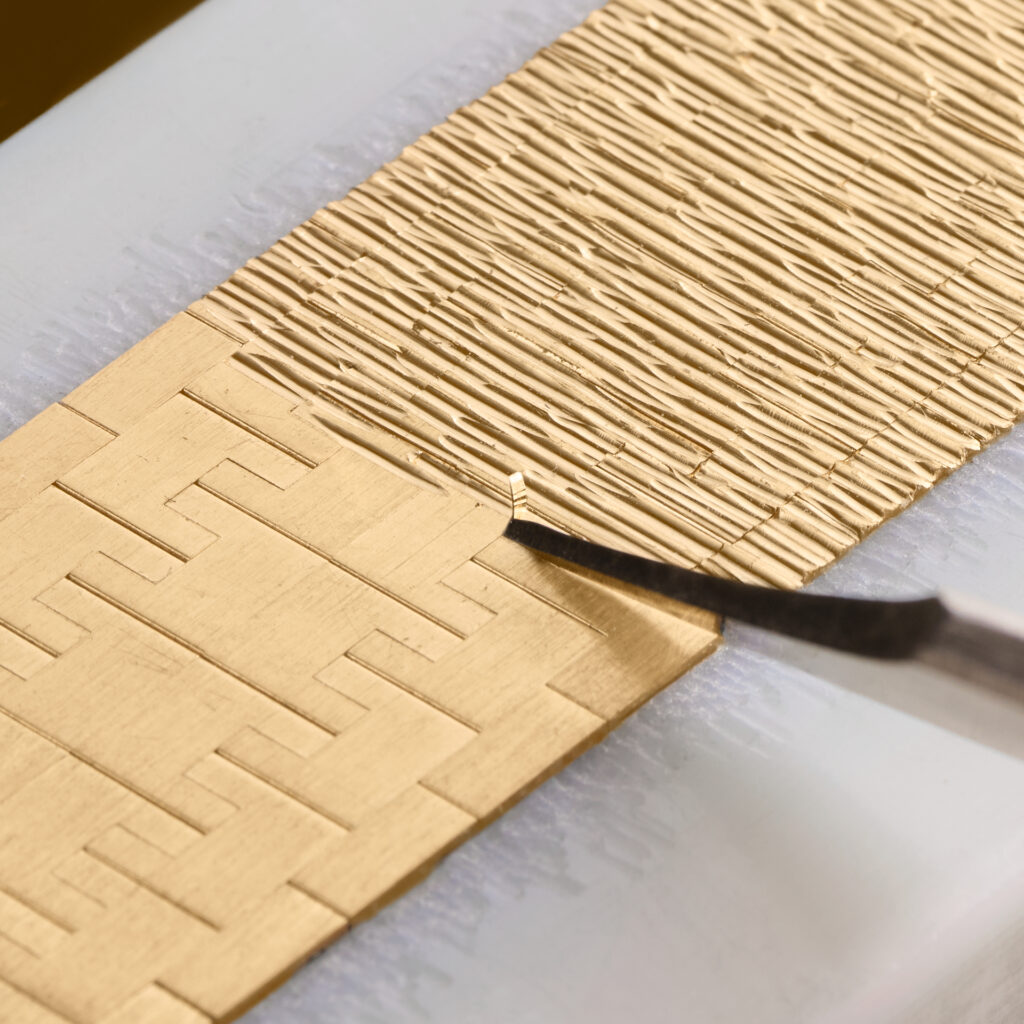
The bracelet takes up this principle with an engraving evoking the snake’s skin, already explored by the Maison in 2019. Each scale is incised by hand, one by one, according to the craftsman’s own rhythm. This work is part of an older tradition, that of Décor Palace, introduced in 1961. Inspired by guilloché but executed with a chisel, this technique transforms gold into a vibrant surface. The grooves, carved to varying depths, diffract the light and shift the way metal is perceived: from a structural support, it becomes an expressive material.
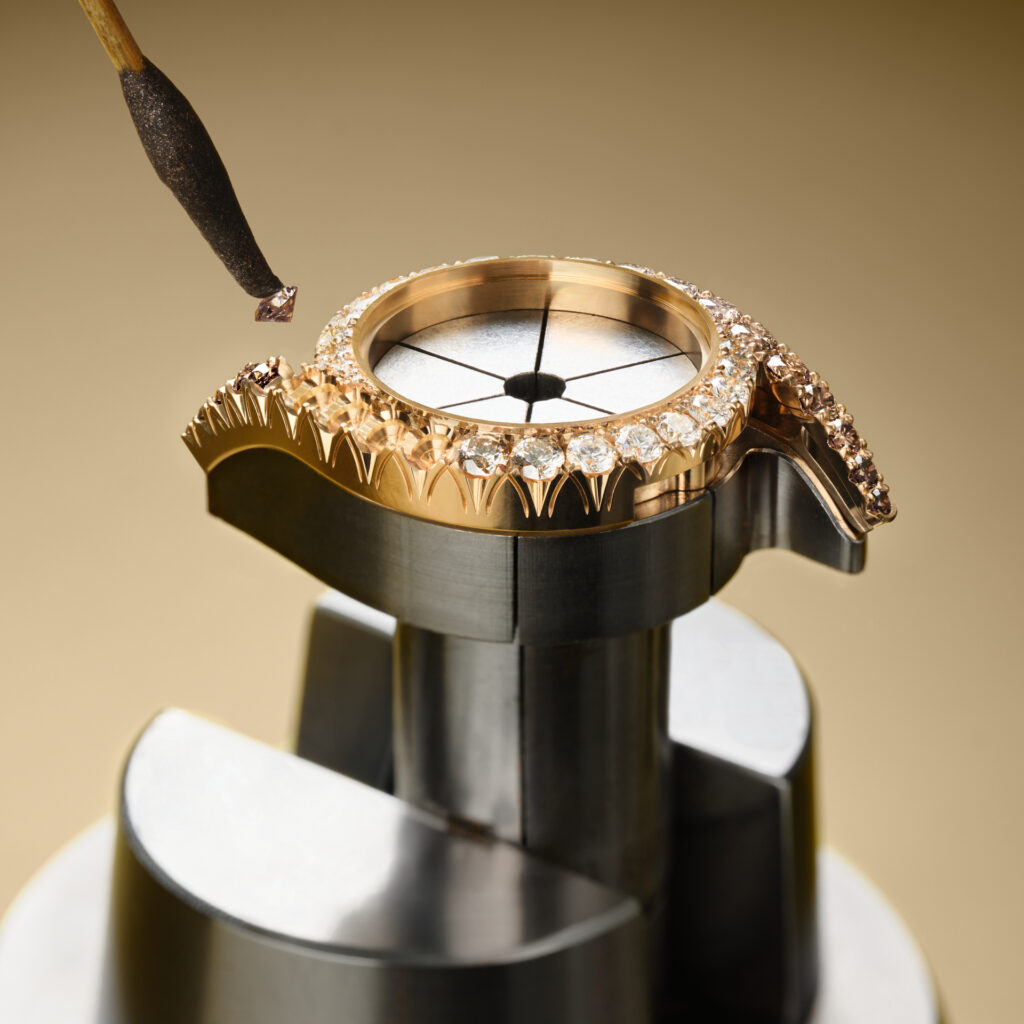
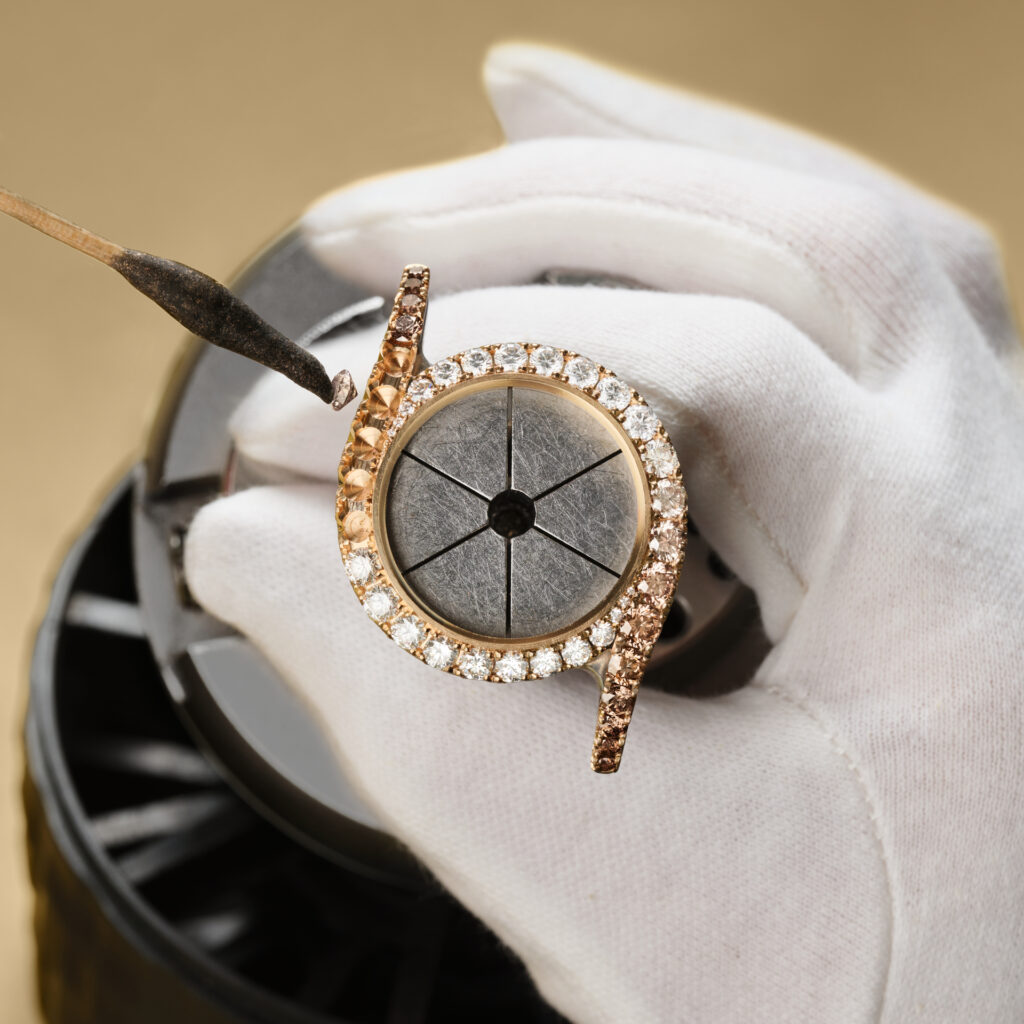
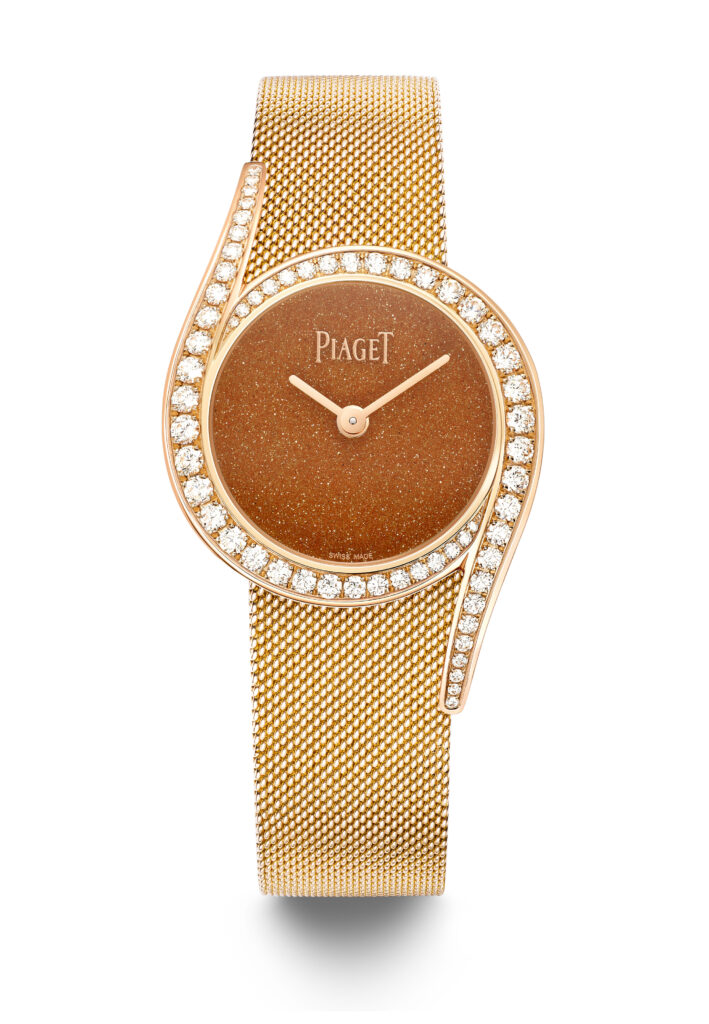
The second interpretation, in rose gold, returns to this historic signature. The bracelet is entirely structured by the Décor Palace, with no added figurative texture. The horns, set with cognac-tinted diamonds, continue the line of the case without any visual break. Here, the watch reads less as a spectacular object than as a continuity of surface.
In both cases, the setting work plays a decisive role. The gradation between white diamonds and spessartite garnets is not a simple chromatic choice. It requires a precise selection of stones, then a progressive composition, stone by stone, to achieve a seamless transition. This long, sequential process involves both the hand and the eye.
The Limelight Gala thus remains true to its original intention: to move the watch into hybrid territory. Neither strictly watchmaking nor entirely jewellery, it functions as a surface in motion, where light almost replaces the indication of time. This shift, which began in the 1970s, now finds a new reading through the material itself – gold, worked, engraved, incised, becomes the real dial.
Cette publication est également disponible en :

