
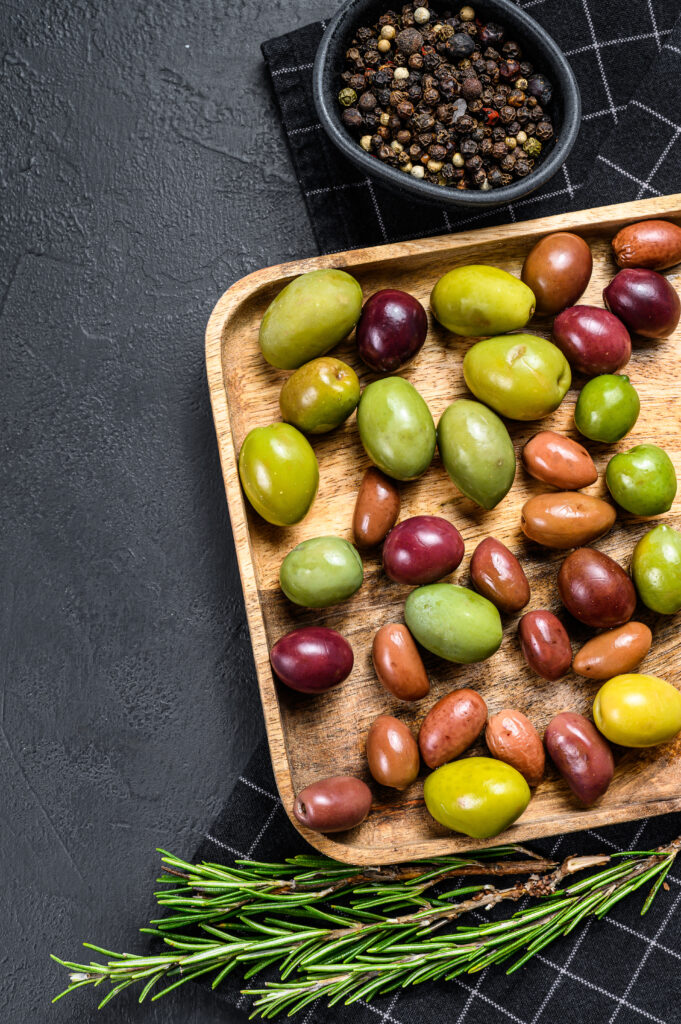
French gastronomy has a strange relationship with olives. It respects them enough to make tapenade, but not enough to distinguish between varieties. A chef who selects his tomatoes by terroir, his butter by dairy, his salt by marsh will serve, at the same aperitif, olives bought from the most available variety. This is not negligence. It’s ignorance – the ignorance of a market that has never really explained why a Kalamata is not a Chalkidiki.
The difference is not one of degree. It’s one of nature.
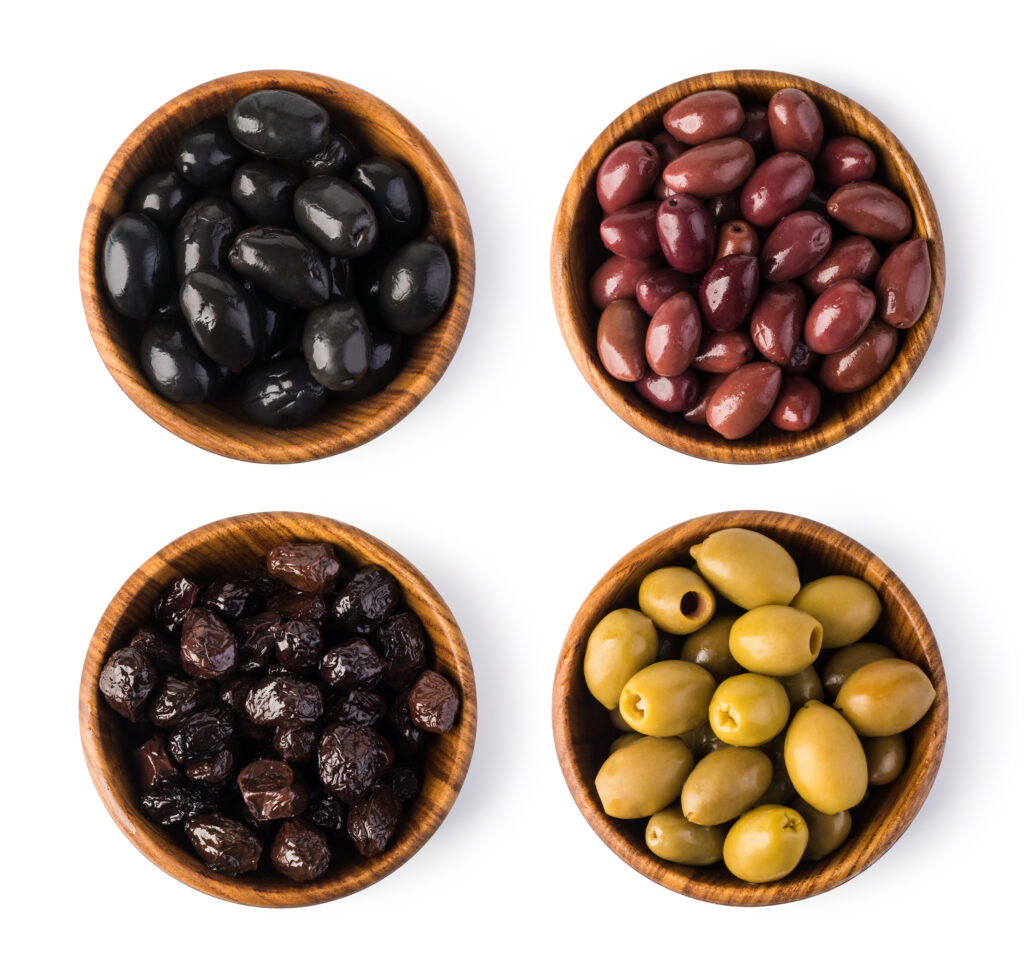
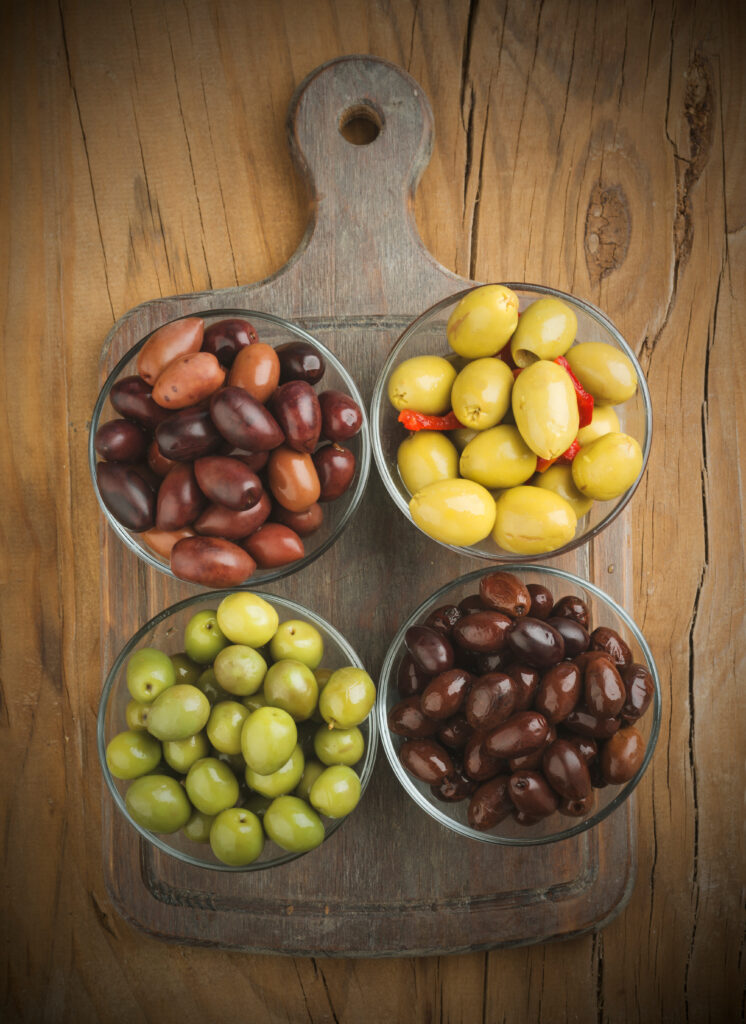
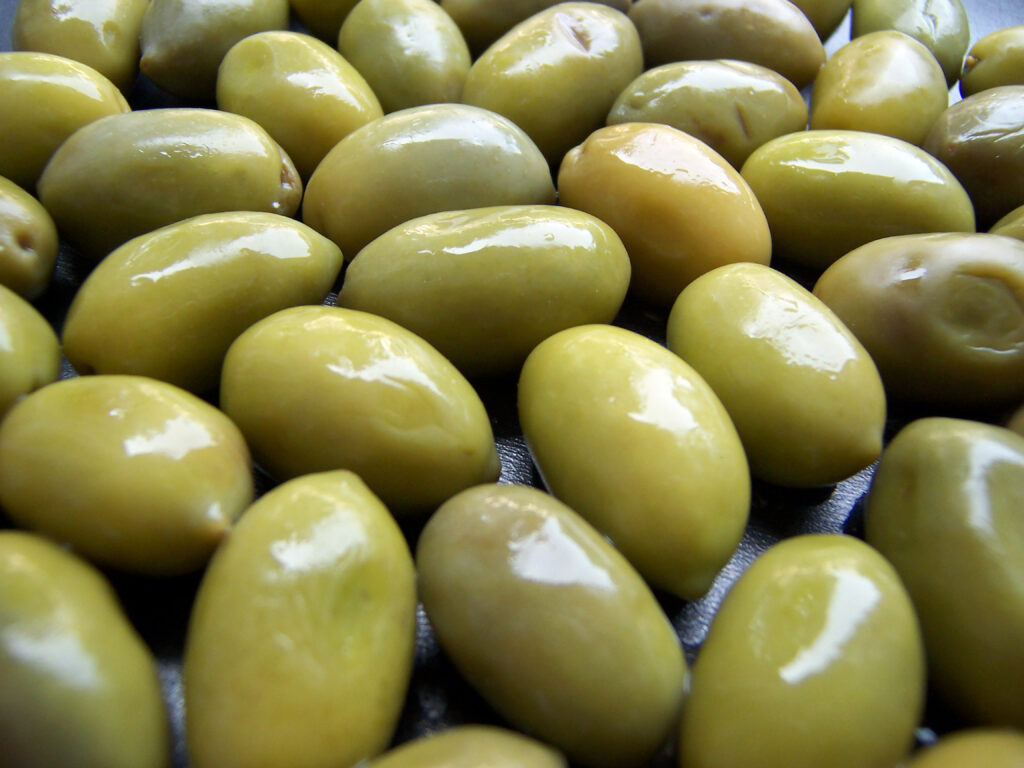
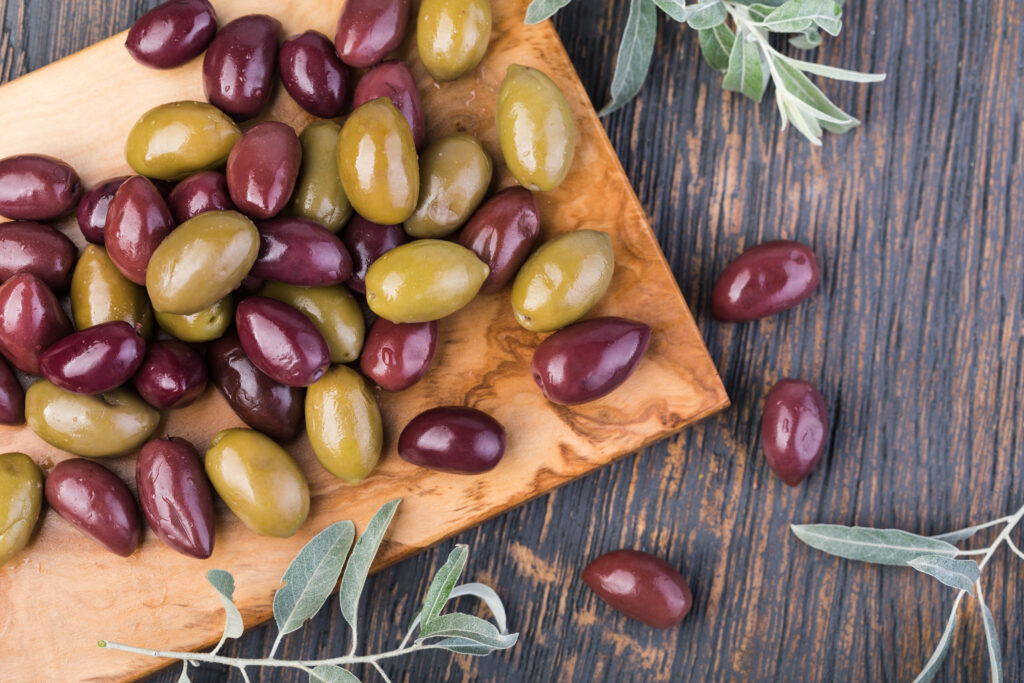
Kalamata, purple-black and almond-shaped, is harvested when fully ripe from the tree. This choice of late harvesting concentrates polyphenols and builds a dense flesh, capable of withstanding cooking – it’s the only one of the four Greek varieties that can be incorporated into a long garnish without shrinking. The voluminous, green Chalkidiki follows the opposite protocol: harvested before maturity, it undergoes a mechanical incision – “cracking” – which opens the flesh to allow the brine to diffuse and dissolve the oleuropein responsible for the bitterness. Processing time: between three and twenty days, depending on the density of the fruit. Its firm texture and low polyphenol content make it a workhorse olive, suited to preparations where chewiness counts as much as taste.
TheAmfissis, also vine-ripened, has a milder profile and high nutritional value, which European certification documents report without specifying its exact lipid composition – a notable omission for those seeking to work with the variety in precision cooking. The Throumba, the fourth variety, is the most radical in its protocol: a small, wrinkled black olive that de-bitterates during its own ripening on the tree, without any post-harvest intervention. It arrives at the table in the state the tree left it – something few ingredients can claim.
These four trajectories are framed by EU Regulation 848/2018, which bans all synthetic pesticides and imposes a period of plot conversion before certification. This regulatory framework is not a guarantee of taste – no regulation is. It does, however, guarantee the absence of chemical correction: what Throumba expresses is its terroir and its time, without any net.
For several seasons now, contemporary gourmet cuisine has been working to enhance the value of Mediterranean ingredients through precision – monovarietal oils, vinegars made from identified grape varieties, citrus fruits treated as crus. Organic Greek table olives have their place in this movement. Not for its nutritional virtues, which marketers overestimate, but for what it reveals when you take the trouble to choose the right variety for the right technique.
Four olives. Four protocols. A single department in most French delicatessens.
Transformation detail
Debitterization of Chalkidiki by cracking reduces bitterness in three to twenty days, depending on the thickness of the flesh. Throumba is the only one of the four certified organic Greek varieties to require no post-harvest intervention to achieve its final sensory profile. This natural process of debittering on the vine is impossible to produce industrially.
Cette publication est également disponible en :

