
It turns in sixty seconds. It carries with it the balance wheel, the escapement and everything that regulates the watch’s movement. It weighs less than a third of a gram. And it doesn’t necessarily improve the precision of a wristwatch.
Breguet’s invention: a problem of gravity
Abraham-Louis Breguet patented the tourbillon on 26 Messidor, Year IX of the Republican calendar – July 7, 1801. Its precise aim was to correct the effects of terrestrial gravity on the balance wheel of a pocket watch. When a watch remains vertical in the pocket, the balance always works in the same plane. Gravity creates a directional force that skews the rate. By rotating the entire escapement at 360 degrees per minute, Breguet averages out these gravitational errors.
The reasoning is sound for a pocket watch worn vertically. It is less so for a wristwatch, which constantly changes position on the wrist. Studies carried out by the Geneva Observatory in the 2000s confirmed that the tourbillon does not significantly improve the precision of a wristwatch compared to careful adjustment of the balance wheel. This has not slowed its proliferation.
Making a tourbillon cage
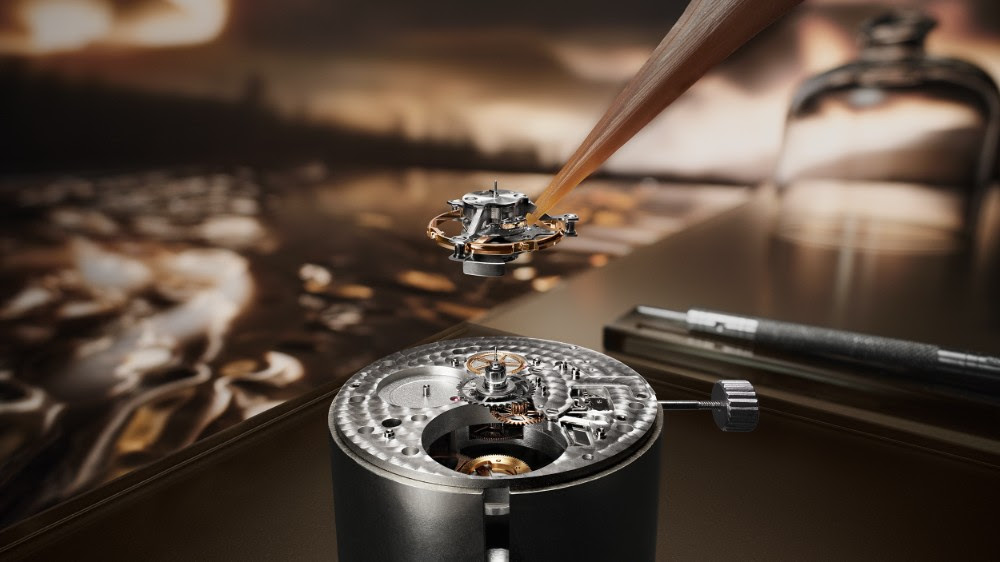
A tourbillon cage contains an average of 70 parts for standard calibres, and up to 110 for high-complication versions. Manufacture Vacheron Constantin’s flying tourbillon cage – a version without an upper bridge, giving the impression that the mechanism is floating – weighs 0.29 grams. Assembly requires precision pliers to the scale of a tenth of a millimeter, and is carried out under a binocular magnifying glass.
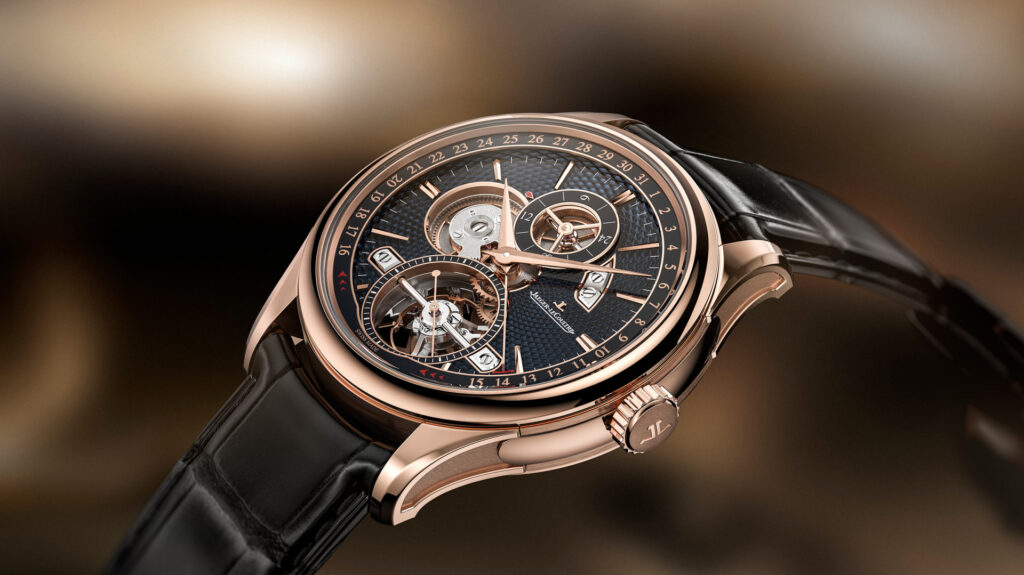
The cost of manufacturing a tourbillon watch starts, for the established Manufactures, at around ten to fifteen thousand euros ex works. The retail price of an entry-level tourbillon watch in the current collections of Breguet, Vacheron Constantin or Jaeger-LeCoultre is between thirty-five and seventy thousand euros. Double or triple complications (flying tourbillon, minute repeater, perpetual calendar) regularly break the two-hundred-thousand-euro barrier.
The swirl as a statement
The persistence of the tourbillon in contemporary haute horlogerie is not irrational. It is the recognition of a simple fact: in an industry where absolute precision is now accessible via GPS signal or magnetic regulation movement, the technical feat of craftsmanship has taken on an autonomous symbolic value. The tourbillon doesn’t say “I’m more precise than your smartphone”. It says “someone has devoted weeks of work to assembling by hand seventy parts weighing together less than a confetti”.
It’s a value proposition different from performance. It is consistent with the logic of the applied arts: a piece of furniture by Jean-Henri Riesener is no more comfortable than an IKEA sofa – it documents a level of craftsmanship whose rarity constitutes its value. In this respect, the tourbillon is less a watchmaking complication than a civilization statement.
Detail – Lightweight record
The world’s lightest tourbillon ever marketed was the Piaget caliber 600P (2002), whose cage weighed just 0.2 grams for 75 components. The Manufacture Piaget in La Côte-aux-Fées had designed it for its thinnest watch, with a total thickness of 3.5 mm. This record illustrates that the miniaturization of the tourbillon is, in itself, a performance independent of its original function.
In conclusion
The tourbillon has survived its own functional obsolescence because it has found another reason to exist. It’s not the first time in the history of crafts that a technique developed to solve a practical problem becomes, once the problem has been solved in another way, living proof of irreplaceable skill.
Cette publication est également disponible en :

