
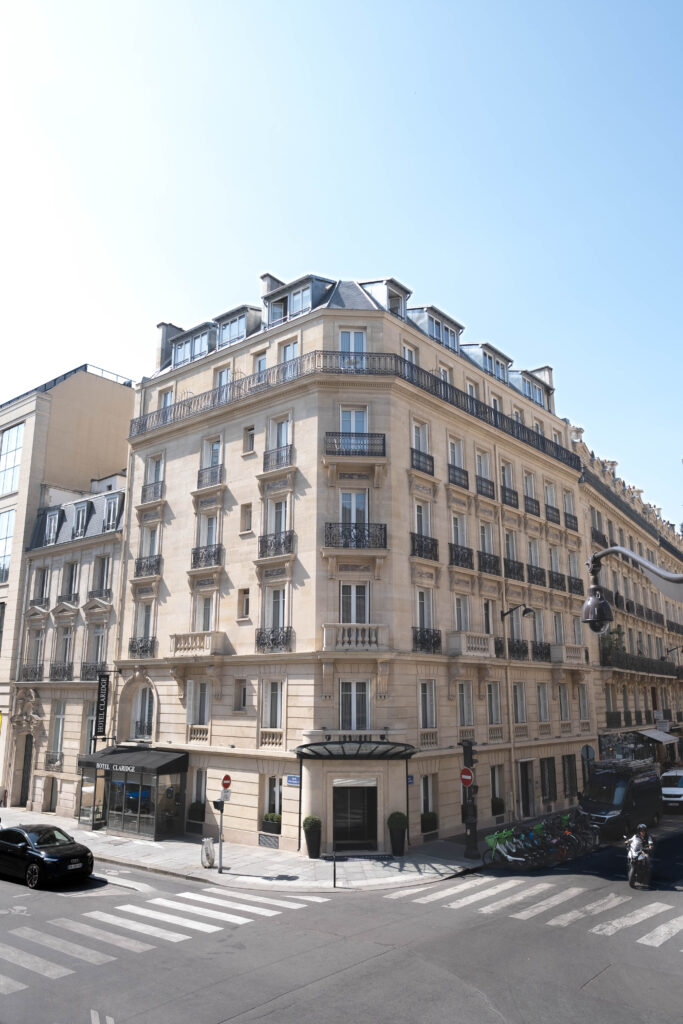
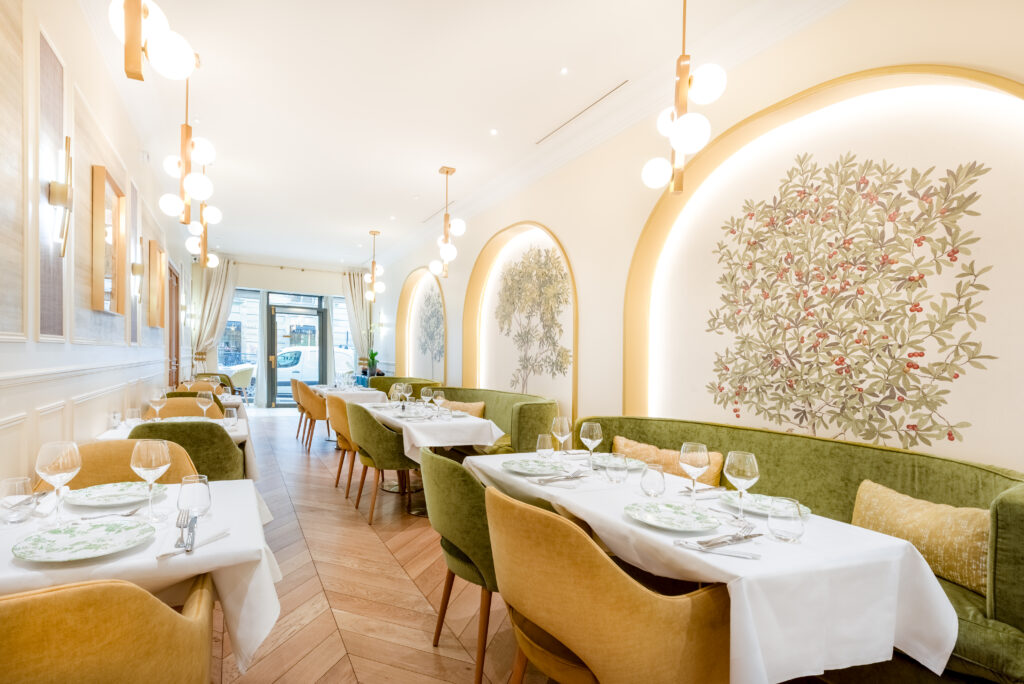
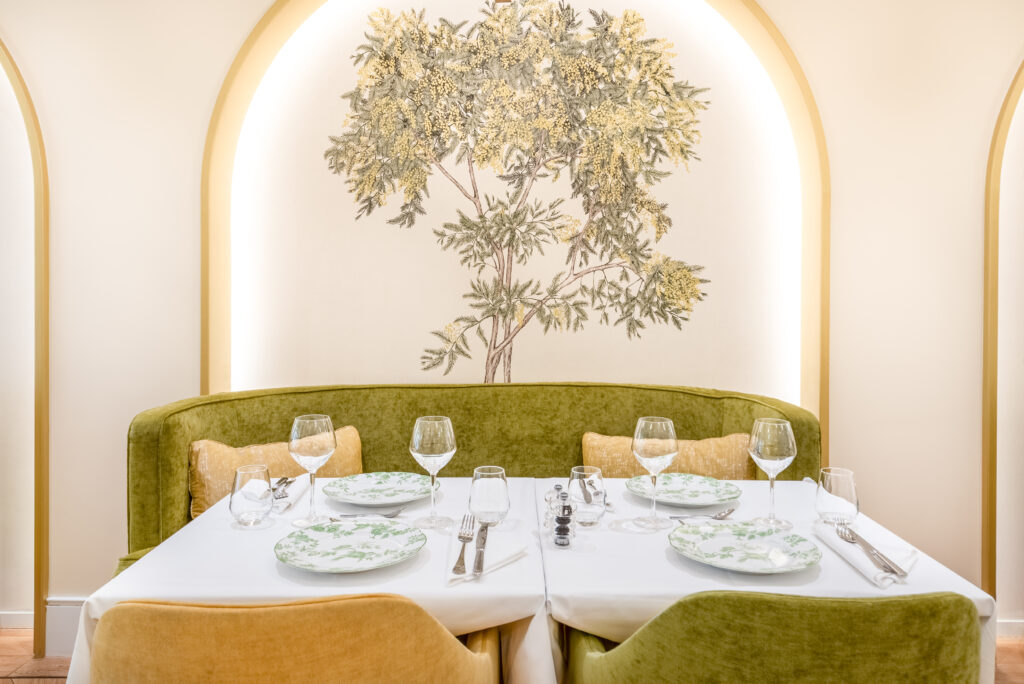
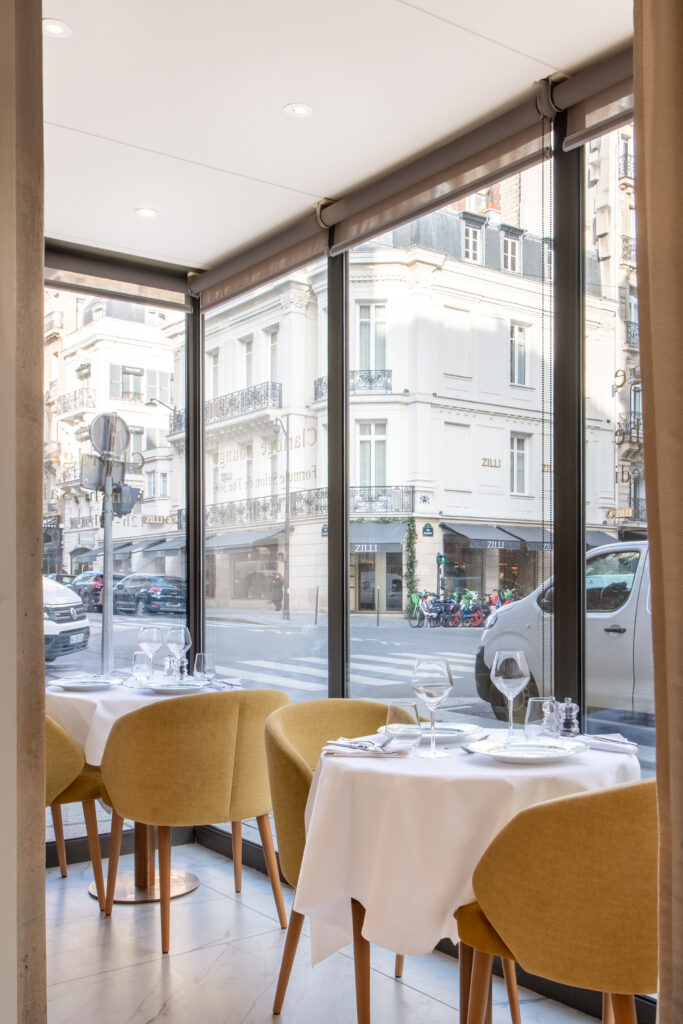
Light enters without a bang. It glides over the white tablecloths, pauses for a moment on the green of the banquettes, catches the milky globes of the hanging lights, then disappears in the fold of a curtain. On Rue François-Ier, Paris has a very particular way of pretending not to look at itself. All around, the Golden Triangle unfurls its self-assured facades, its shop windows, its silent cars, its hurried footsteps between the Champs-Élysées, Avenue Montaigne and the Seine. Behind a façade that’s more restrained than demonstrative, Hôtel Claridge chooses a different cadence.
Some addresses seek out the stage. This one prefers the threshold.
Le Claridge belongs to that family of Parisian hotels that don’t claim to reinvent the city, but rather to inhabit it with moderation. The hotel is located at 37 rue François-Ier, in the heart of a district where the capital has long concentrated a large part of its worldly, commercial and diplomatic representation. Yet nothing here seems to compete with the hustle and bustle of the surrounding area. The hotel almost claims a form of spatial politeness: a presence, not a proclamation.
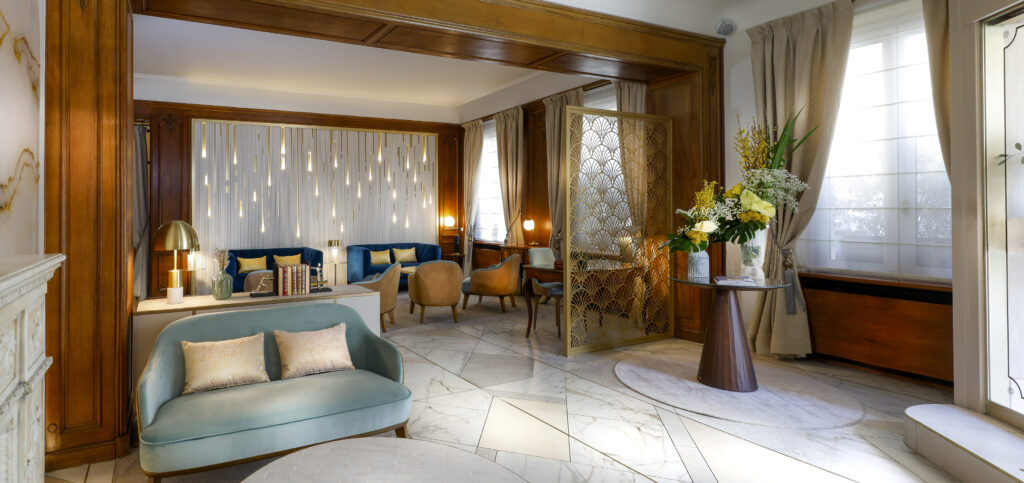
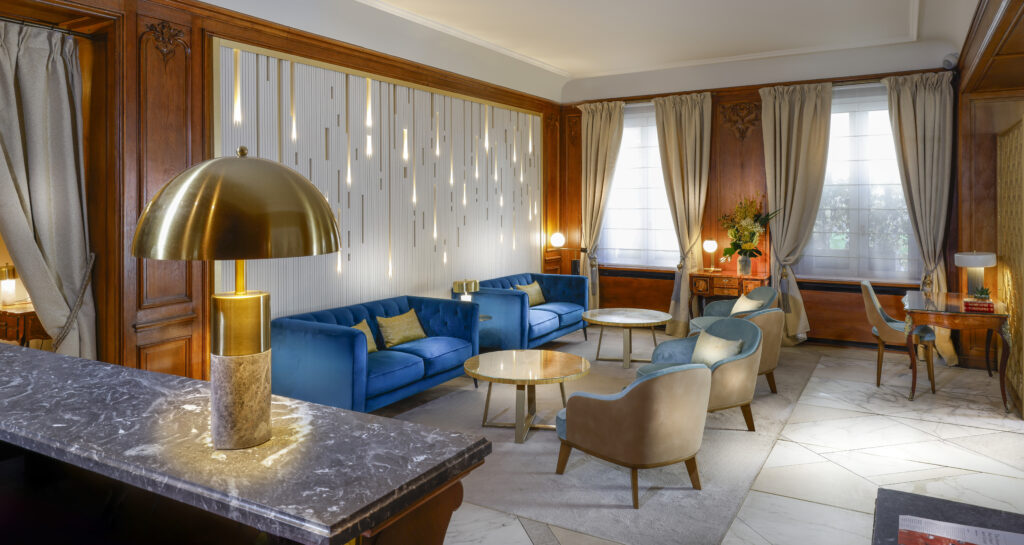
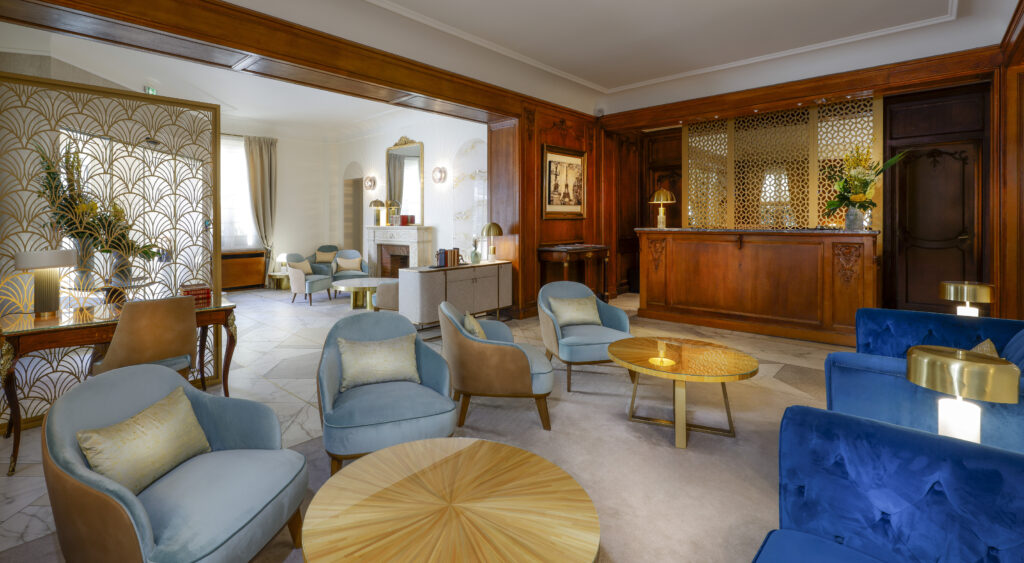
Entirely renovated, it has chosen a bright, contemporary atmosphere, without breaking with the idea of sober Parisian elegance. Lines have been refined. Materials have been softened. Circulation seems more fluid, as if the aim was less to decorate than to soothe. It’s in this nuance that urban hospitality is often played out: not adding spectacle to the journey, but removing that which tires.
The Claridge has 42 rooms and suites, giving it that singular scale where service can still have a face. Classic rooms, overlooking the street or inner courtyard, range in size from 16 to 18 square meters. Deluxe rooms range from 25 to 28 square meters, some with balconies. Junior Suites, including several corner suites, are around 30 square meters in size, offering light as well as comfort. Some rooms are interconnected, a simple but revealing detail: the hotel also thinks of families, business stays and lives that never quite fit into a single category.
In the bedrooms, the decor keeps the demonstration effect at bay. Soft tones, comfortable furniture, heavy curtains, light beds, familiar volumes. You don’t come here to be surprised at every step. Perhaps you’ve come to rediscover an idea of Paris that doesn’t need to be overplayed: a crystal ceiling, a high window, an armchair by a table, rest after a day in the city. Sometimes luxury is just a room where you can finally hear less.
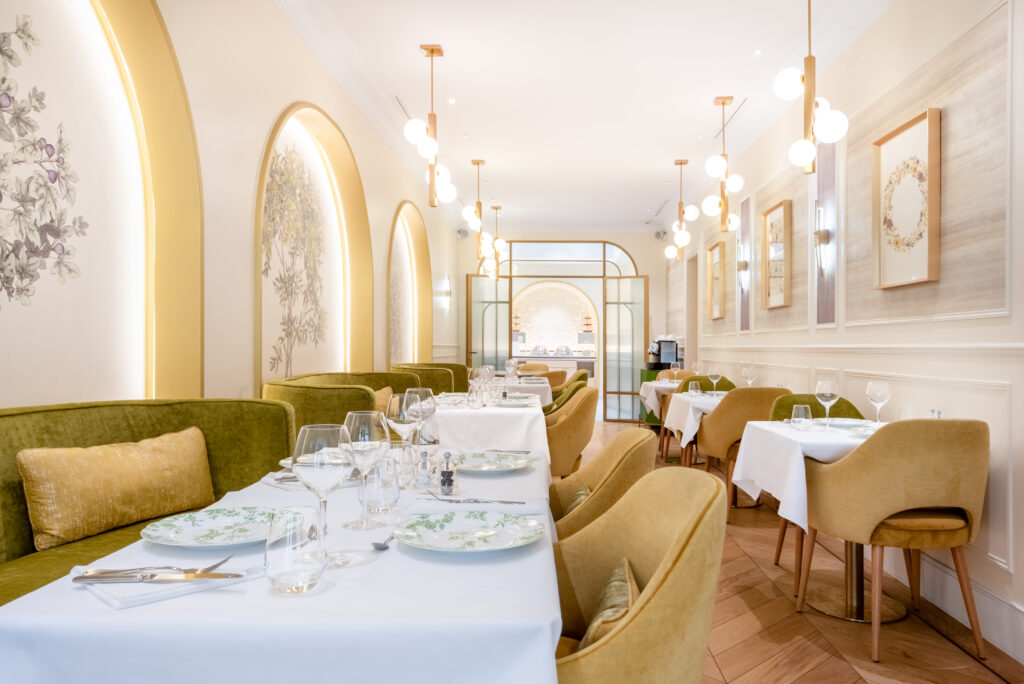
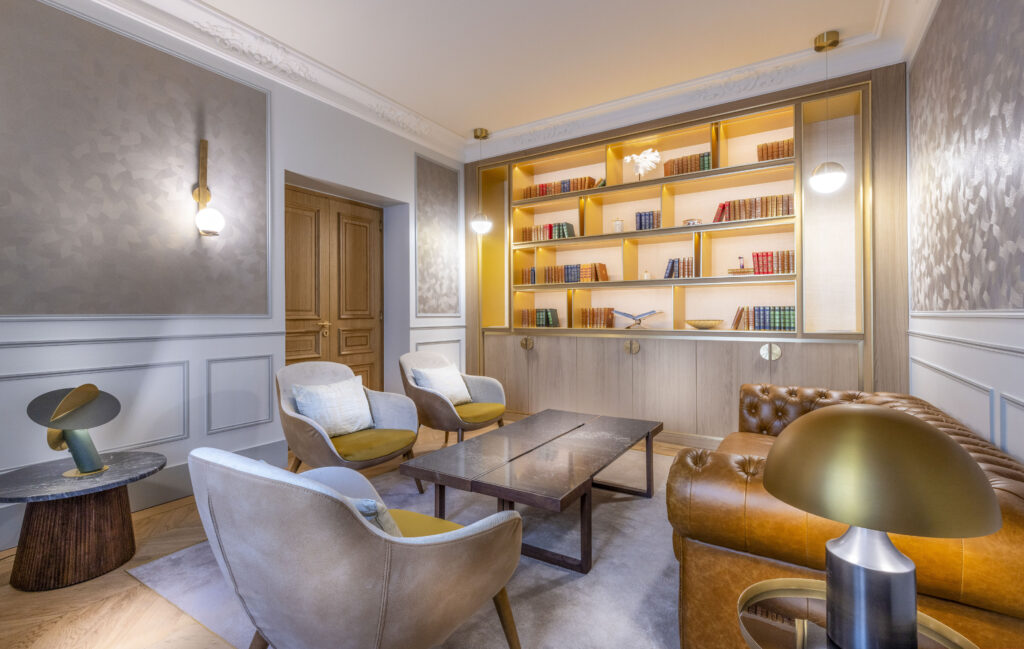
In the morning, the buffet breakfast provides an initial breath of fresh air. Later, the communal areas invite you to read, wait, have a drink and let the day recompose itself. At the center of this interior life, the Claridge Lounge functions as a room open to multiple uses. From Monday to Saturday, from midday to 7 p.m., it welcomes both passing guests and outside customers: local Parisians, nearby professionals and visitors who still appreciate quiet addresses.
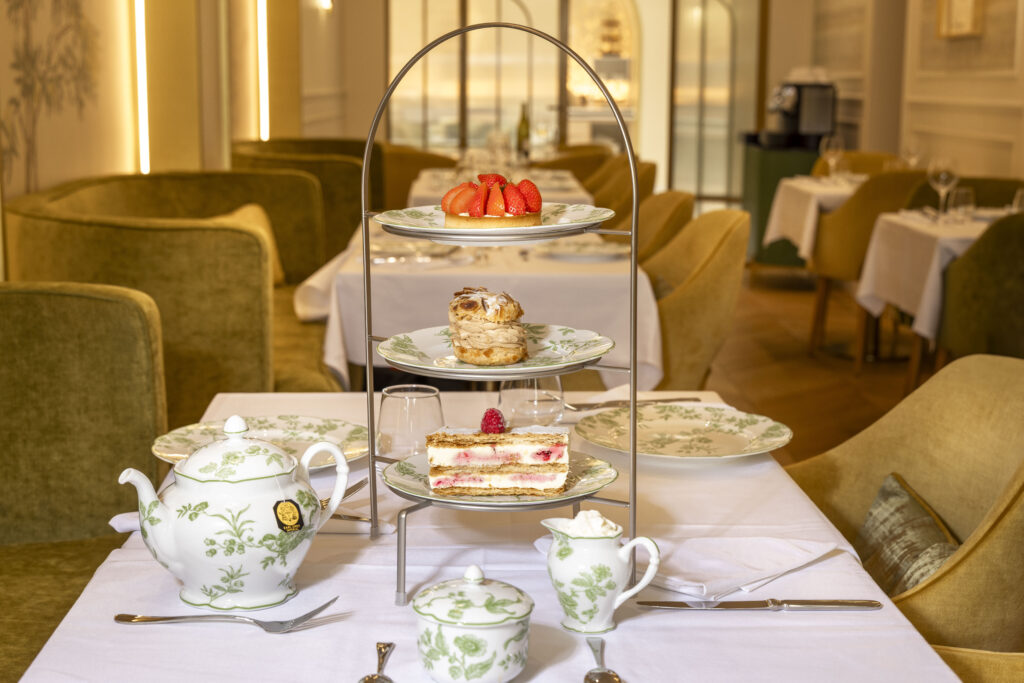
The menu doesn’t seek conceptual escape. It returns to traditional French cuisine, simple and generous: croque-monsieur, quiche Lorraine, boeuf bourguignon, blanquette de veau, poulet basquaise. Dishes that need no explanation when served well. Added to this are pastries, desserts, Mariage Frères teas and Angelina hot chocolate. In a neighborhood where sophistication can sometimes be mistaken for distance, this familiarity has almost manifesto value.
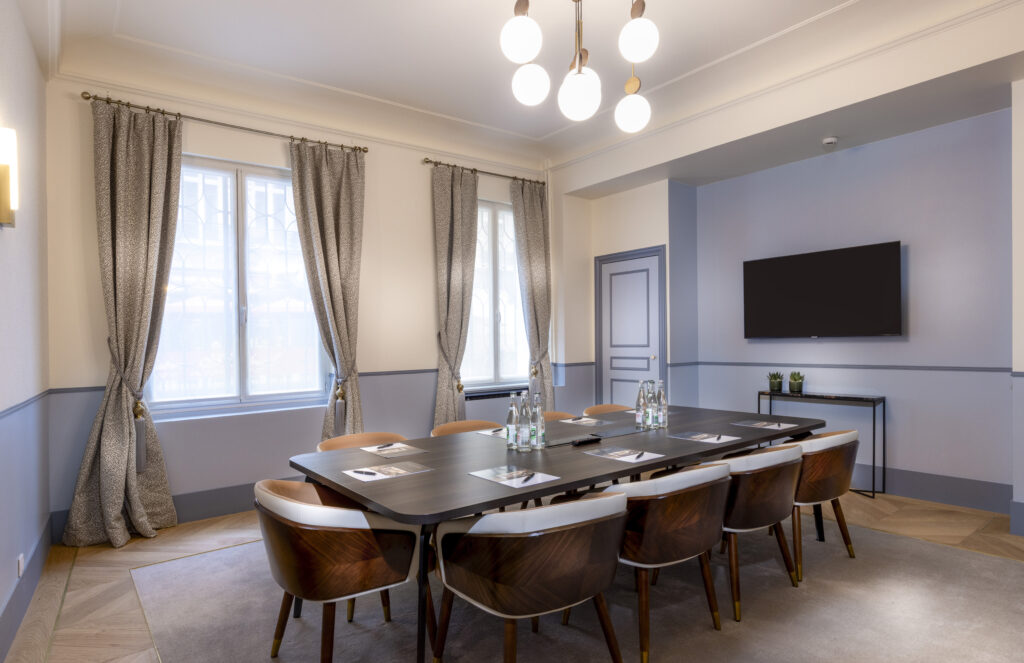
There’s also a meeting room, bathed in natural light, designed to accommodate up to ten people. Screen, HDMI connectivity, flipchart, supplies, Wifi, half-day or full-day availability, coffee breaks or lunches organized with the Lounge. Every detail seems functional. But it says something about the times: the need for more confidential, less impersonal spaces, where work can take place away from the big hotel machines. A board meeting, a sensitive conversation, a decision taken without imaginary microphones.
The Claridge lacks the monumentality of its neighboring palaces and their overwhelming mythology. That’s precisely what makes it so interesting. In the Golden Triangle, where people often come to find an address that impresses, it offers one that accompanies them. A hotel on a human scale, attentive, centrally located without adopting the hustle and bustle. Its discretion is not an absence; it’s a way of remaining available.
At the end of the afternoon, the Rue François-Ier starts moving again. Silhouettes pass by, shop windows light up, cars drop off and then disappear. Inside, the light becomes more golden on the pale walls. A mug slowly cools on a table. Silence here is not empty. It holds the door.
Cette publication est également disponible en :

