
With its first collection of fragrance mists, the London house is not launching a new perfume: it is inventing a new way of using one.
Founded in 1870 and a royal warrant holder to the British court, Penhaligon’s was built on the idea that a perfume is chosen once, with gravity, as one chooses a signature. Today the house inaugurates the opposite gesture with its first collection of fragrance mists, a version of three of its most recognisable fragrances — Halfeti, Luna and Empressa — in a 150 ml format at 70 euros, available in boutique and online. The exercise is not new in itself: the body mist has for several seasons held a growing place on beauty shelves, driven by a generation raised on the layering championed on social networks. What is newer is the house’s decision not to simplify its compositions to make them lighter, but to transpose them as they are into a format designed for freer use — layered, reapplied, readjusted to the mood of the moment rather than worn as a definitive decision.
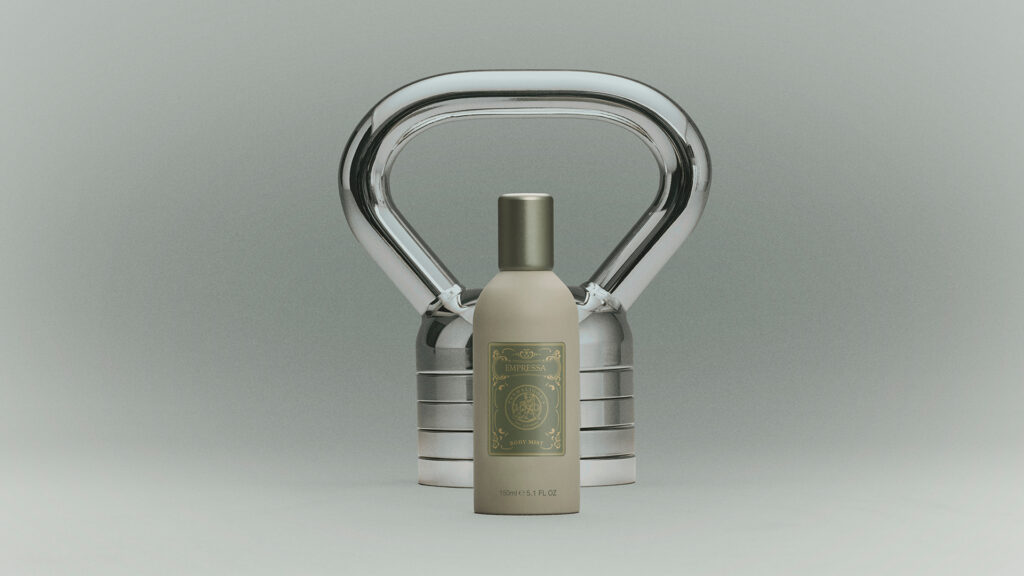
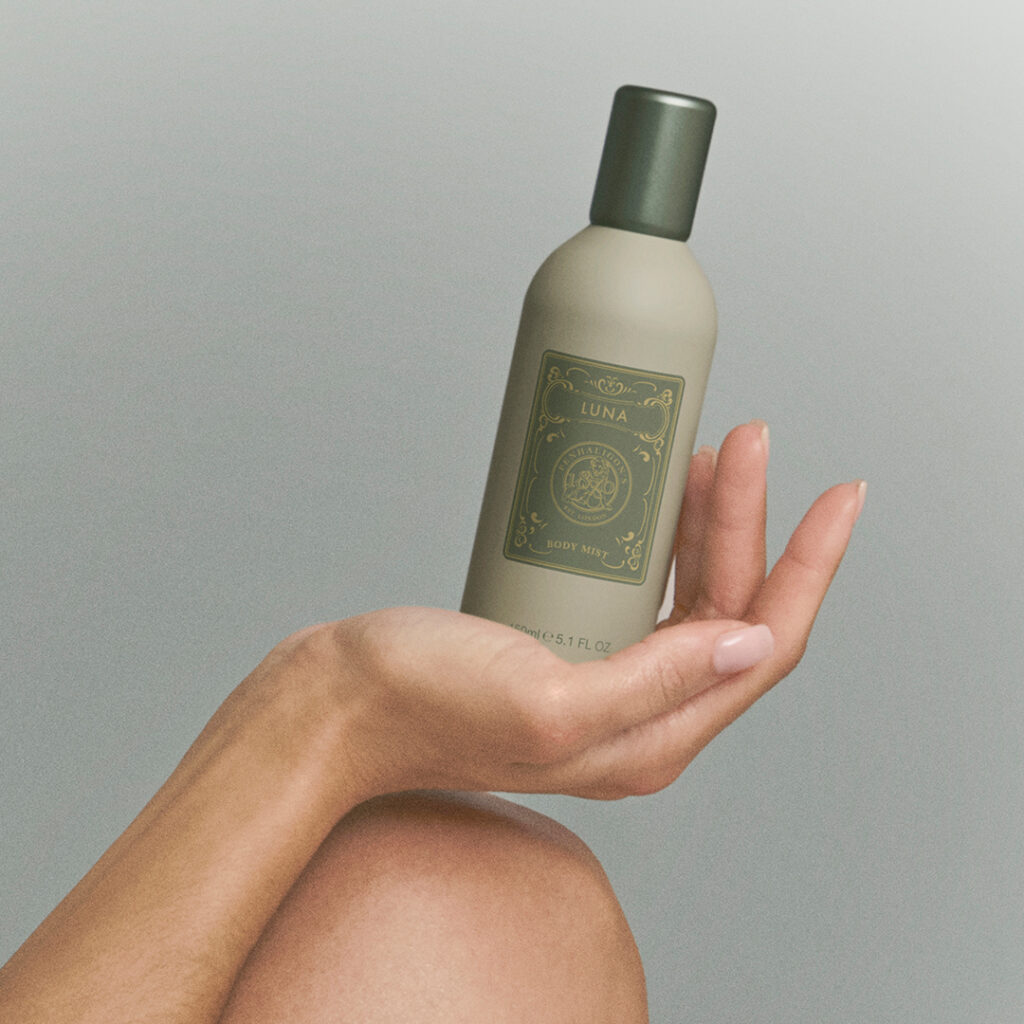
The aesthetic stance confirms this wish not to dilute the house’s codes in order to appeal to a younger audience. The bottles adopt William’s Green, Penhaligon’s signature Pantone shade, in a travel format designed to accompany a handbag rather than a dressing table. The collection belongs to the brand’s Bain & Corps universe, which it enriches without redefining it — a prudent extension, the opposite of the launches of simplified, interchangeable fragrances that have characterised part of the mist market in recent years.
Each of the three compositions keeps its narrative character, inherited from the original perfumes from which they derive. Halfeti opens with oud and grapefruit before revealing a moonlit rose, in a trail the house readily describes as mysterious — one of the house’s great classics, made available in a format designed for everyday rather than ceremonial use. Luna summons jasmine, balsam fir and bergamot in a more enveloping, almost suave register, in the image of the lunar goddess whose name it borrows. Empressa closes the trilogy on a sunnier note: patchouli, bergamot and peach compose a trail that the house associates with dawn, warm without excess sweetness.
For a heritage house such as Penhaligon’s, the wager is never without risk: to win over a generation that discovers perfume through gesture rather than ritual, without giving the impression of selling off a heritage a hundred and fifty years old. The mist collection does not settle this tension head-on — it sidesteps it, relying on the familiarity of the three fragrances rather than on olfactory novelty. It remains to be seen whether this wager on continuity, rather than rupture, will be enough to convince a clientele accustomed to changing perfume as often as it changes story.
The approach is part of a broader movement in British and French niche perfumery, where several heritage houses — from Jo Malone to Byredo — have already explored the mist format in recent years, with uneven results: some created new, lighter compositions, even at the cost of moving away from their signature perfumes; others simply diluted their existing juices in a spray bottle. Penhaligon’s chooses a third path, more demanding but also more faithful to its positioning: to keep the complete olfactory architecture of its three most recognisable fragrances, and to wager that complexity itself will become, for a new generation, an argument of desirability rather than an obstacle to purchase.
Available now in boutique and on Penhaligons.com, the collection replaces no existing format: it joins the eau de parfum range as an additional entry point rather than as a substitute.

Cette publication est également disponible en :


