
On June 24th in Cusco, an ancient ritual is re-enacted in the open air. Not as an intact survival, but as a codified staging, reconstructed in the 20th century, that questions both memory and representation. The Inti Raymi, as it is performed today, is not just a festival: it is a cultural device where archaeology, identity politics and the tourist economy intersect.
The origins of the ritual date back to the 15th century, during the reign of the Inca Pachacútec, a founding figure of imperial expansion. The ceremony honored Inti, the solar deity at the heart of the Andean cosmological system. Banned after the Spanish conquest, it disappeared as a living practice before being revived in 1944. This gesture of reactivation is not insignificant: it comes at a time when Peru is seeking to formalize cultural continuity with its pre-Columbian past, transforming a religious ritual into a national heritage.
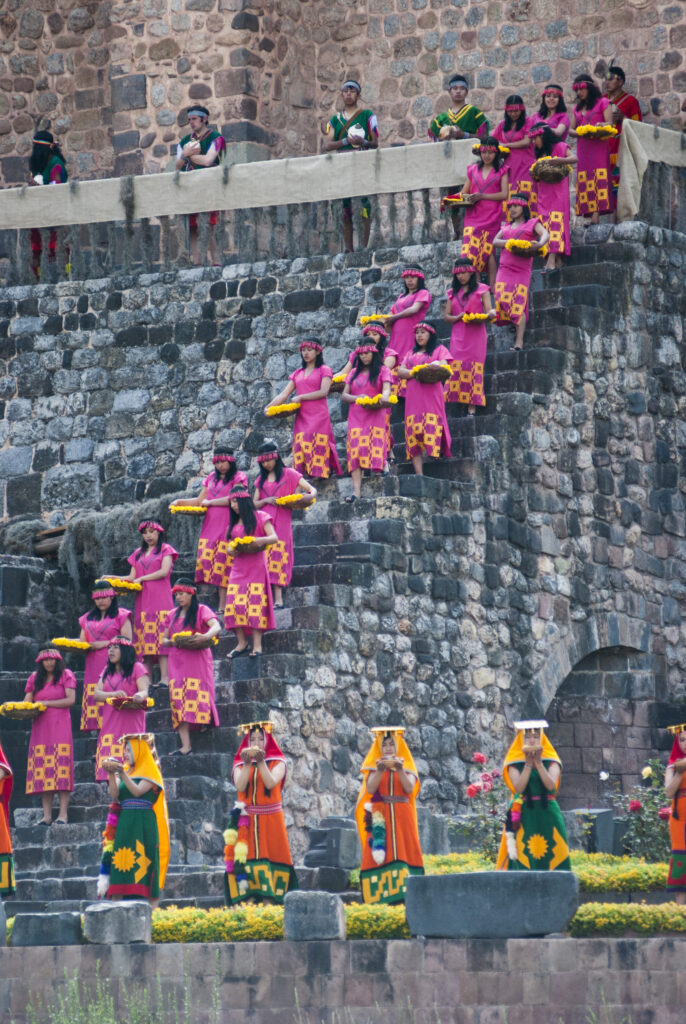
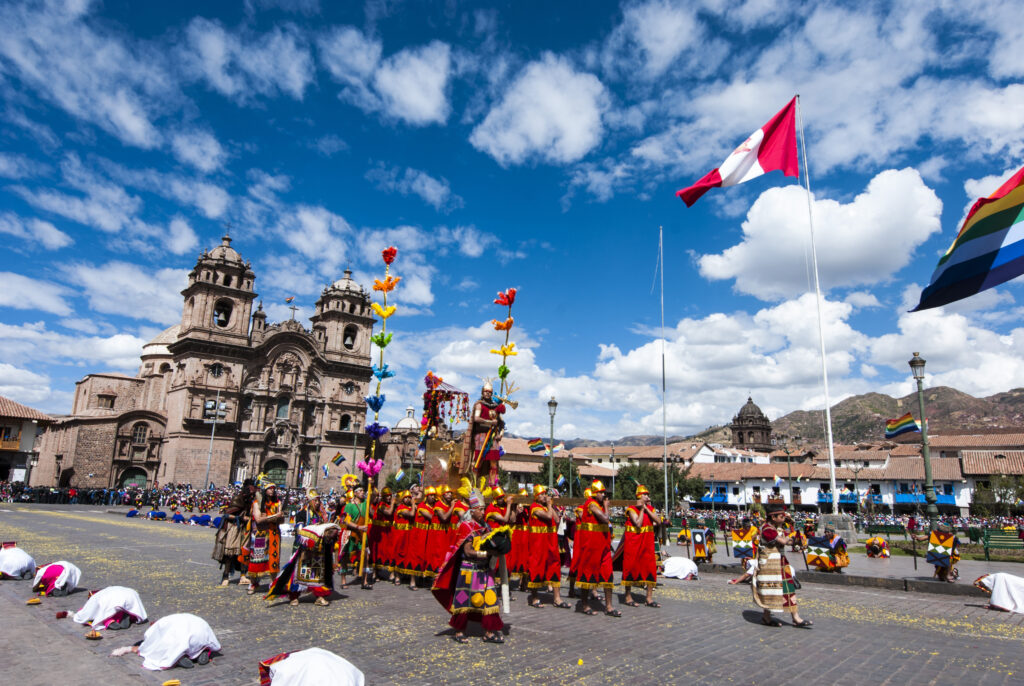
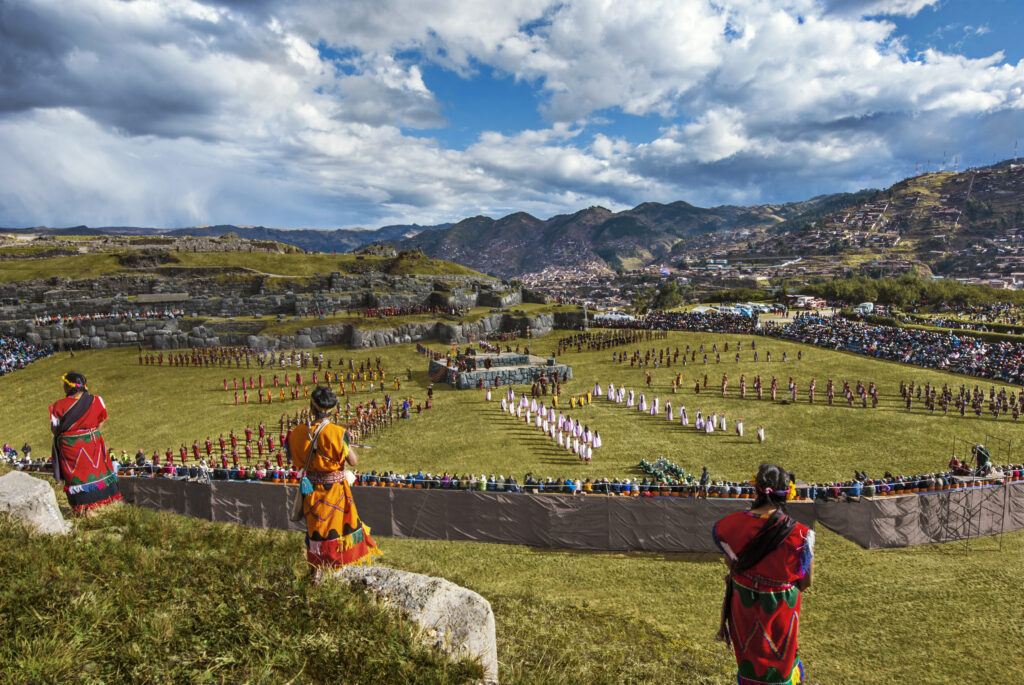
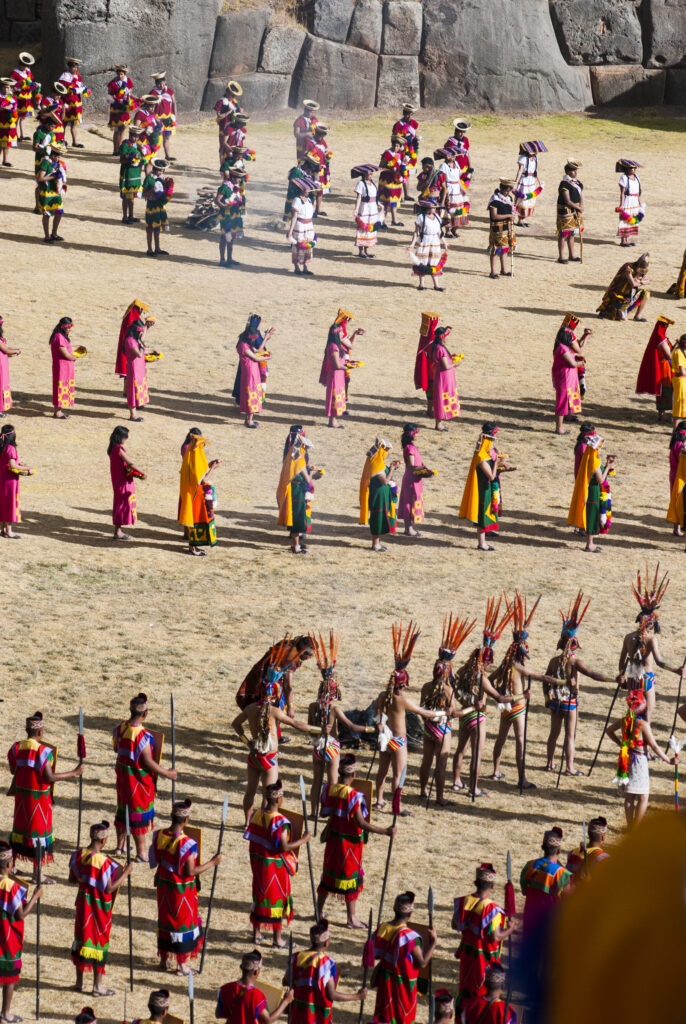
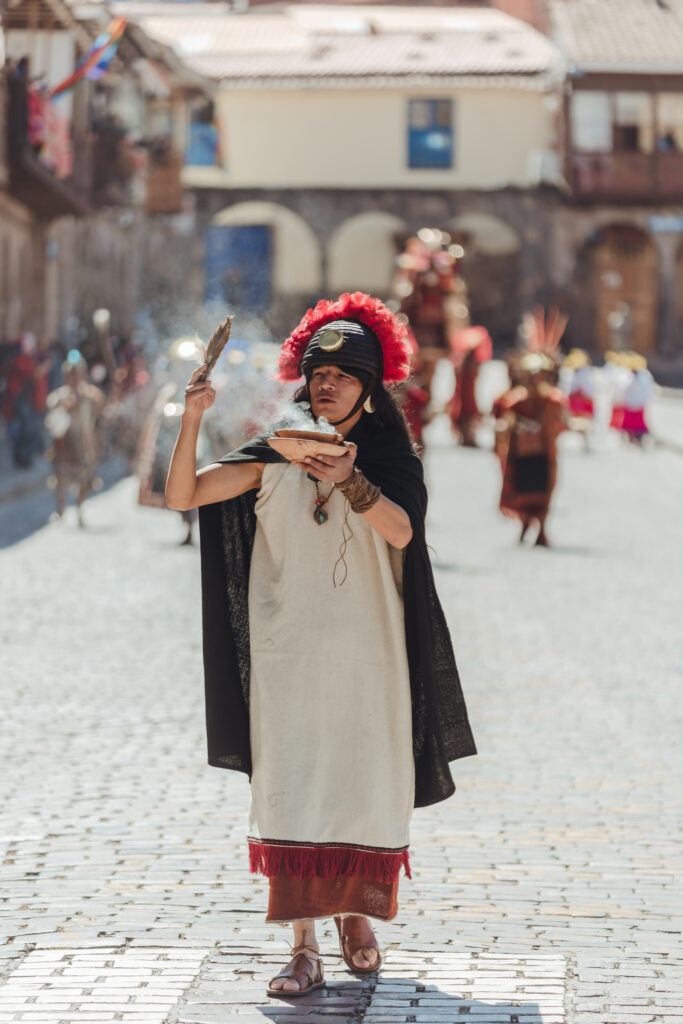
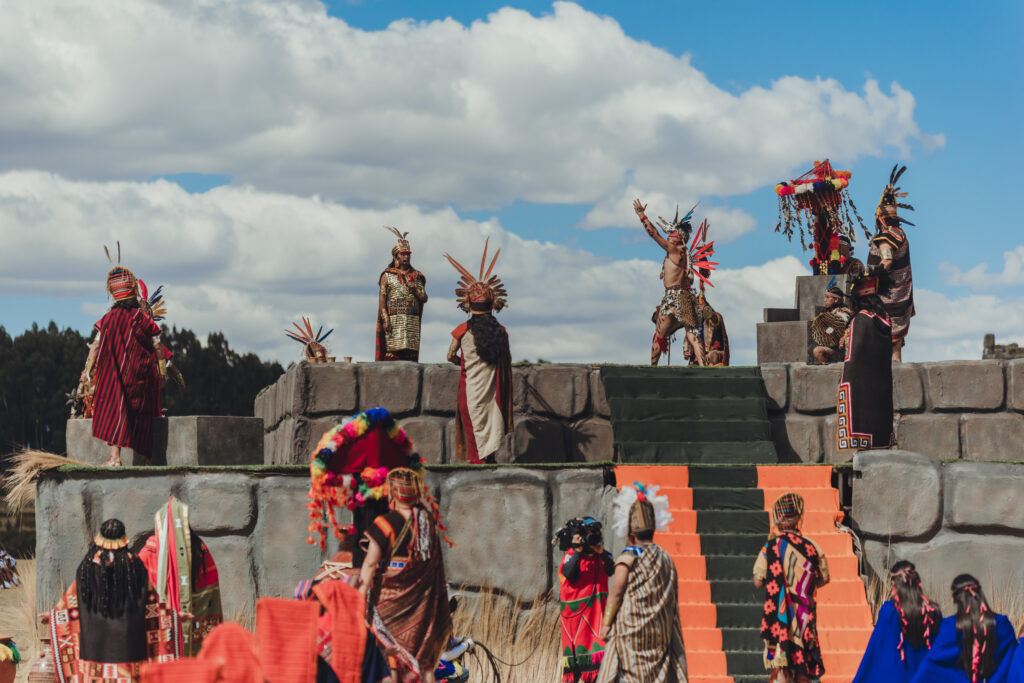
Today, over eight hundred participants take part in this re-enactment, spread over three separate sites in Cusco. The Qorikancha, the ancient Temple of the Sun, is the opening venue. The presence of the Inca – in his embodied role – symbolically re-establishes the link between political power and cosmic order. The Plaza de Armas, a colonial center built on Inca foundations, then hosts the “Encounter of Times”, a pivotal moment where pre-Hispanic heritage and colonial history overlap. Finally, the Saqsaywaman fortress, a vast stone esplanade, becomes the main stage for the ritual.
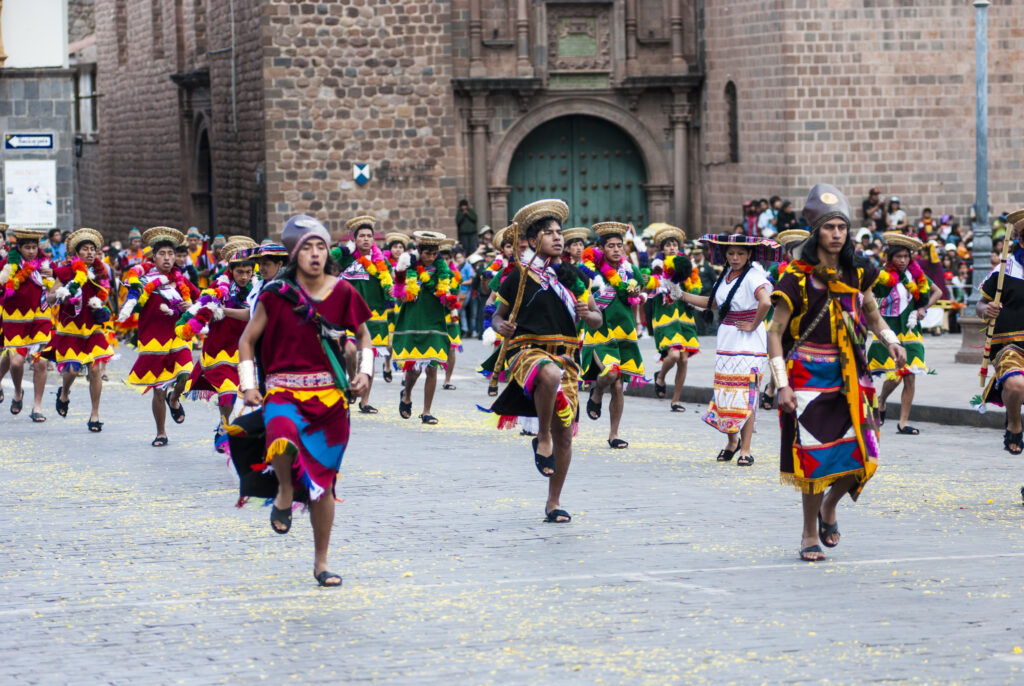
This is where the ceremonial mechanics unfold in all their precision: choreographed sequences, songs in Quechua, lighting of the sacred fire, evocation of a llama sacrifice. Every gesture is codified, rehearsed and calibrated to be readable by a contemporary audience. Original rituality gives way to a masterful dramaturgy, where historical fidelity coexists with the demands of performance.
This shift from ritual to stage raises a central question: what remains of a sacred gesture when it becomes an annual spectacle? Inti Raymi does not claim to restore an intact authenticity. Rather, it proposes a collective interpretation, where transmission is achieved through repetition and visibility. Quechua, the language of song, acts as a vector of continuity, while the costumes and choreography create an immediately recognizable iconography.
Today, the event attracts several thousand visitors, putting Cusco on the global tourism map. This attendance transforms the ceremony into an economic lever, without erasing its symbolic function. In this way, the Inti Raymi becomes a tool of cultural soft power, helping to build a national image based on Inca heritage.
A tension remains, perceptible but rarely formulated: that between transmission and staging. Between what is played out in order to be seen, and what is re-enacted in order to be transmitted. In Cusco, on June 24th, this tension becomes visible. Perhaps more than the ritual itself, it constitutes the real substance of the contemporary Inti Raymi.
Cette publication est également disponible en :

