
The Michelin star has become one of the most powerful symbols of world gastronomy. It can transform a table into an international destination, accelerate a chef’s career or profoundly alter the economics of a restaurant. Yet its real meaning is often misunderstood.
A star doesn’t reward the luxury of a décor, the price of a menu or the social prestige of an address. In the logic of the Michelin Guide, it distinguishes first and foremost the cuisine: the quality of the product, technical mastery, consistency, culinary personality and regularity.
The system may seem simple – one, two or three stars – but each level corresponds to a very precise interpretation of the gastronomic experience.
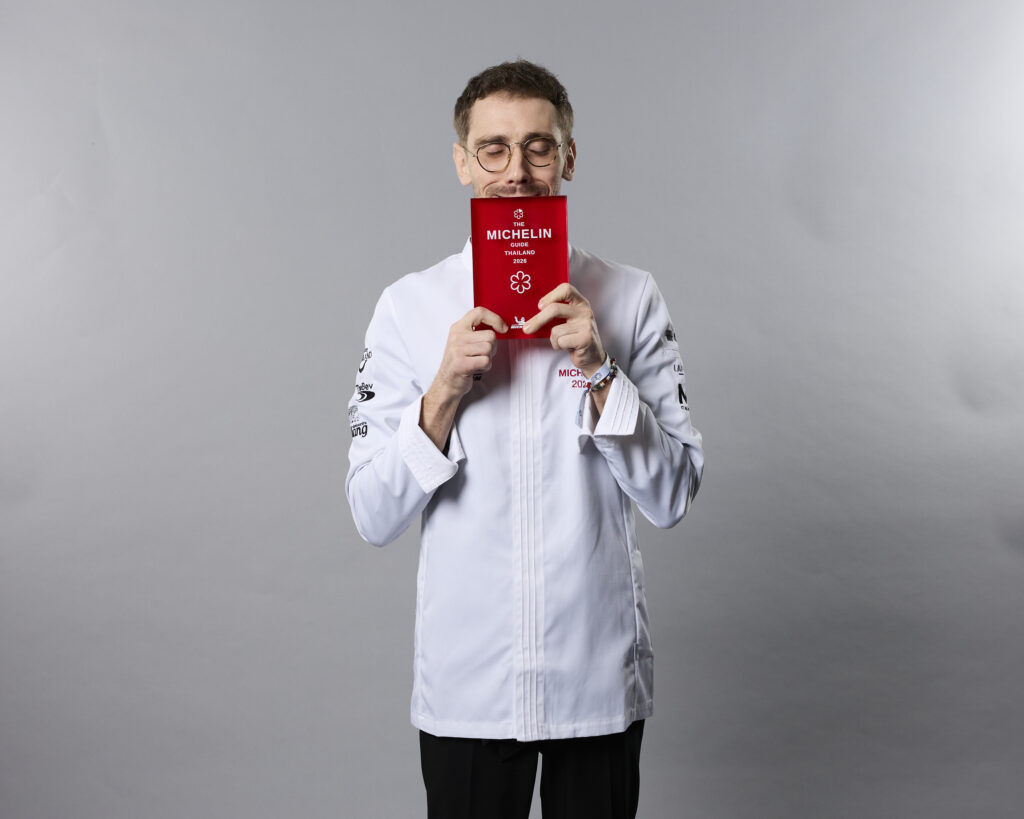
One star: a table worth stopping for
In Michelin terminology, a star means:
“A very good table in its category.”
The formula may seem modest, but it is already a major recognition.
At this level, the guide rewards above all :
- precision cooking ;
- product quality;
- the right seasonings ;
- menu consistency ;
- an identifiable culinary personality.
A first star does not necessarily guarantee the spectacular. Some starred restaurants are almost silent in their staging. Their strength lies in the clarity of the gesture: a perfectly reduced sauce, the right reading of a product, an ability to produce emotion without excessive demonstration.
At L’Oursin, Ilane Tinchant’s cuisine illustrates this approach, where technical precision serves above all a personal vision of the product. Ilane Tinchant and L’Oursin

Two stars: a detour
Two stars mean:
“Excellent food, worth a detour.”
The restaurant ceases to be just another good address on a route. It becomes a reason to change your itinerary.
At this level, the chef’s personality must come through more clearly. The cuisine becomes more structured, more identifiable, sometimes more daring in its structure or language.
The great two-star restaurants are often among the most exciting on the gastronomic scene. They still possess a kind of élan, an energy of research, a freedom that is sometimes less rigid than certain establishments that have settled into the symbolic weight of three stars.
This intermediate phase is also one of tension:
- asserting a singularity;
- maintain absolute regularity;
- without losing its legibility.
At Le Liziec, Olivier Samson’s cuisine works precisely this balance between local roots and contemporary sophistication. Olivier Samson at Liziec
Three stars: the journey
Three stars mean:
“A unique cuisine worth the trip.”
It’s the symbolic pinnacle of the Michelin system.
At this level, the table becomes a destination in itself. The restaurant must offer an exceptional culinary experience driven by :
- a vision ;
- a memory for dishes ;
- extreme regularity;
- total technical mastery;
- an instantly recognizable identity.
But today’s three stars no longer necessarily correspond to the classic model of 20th-century French opulence.
Gastronomic vocabulary has evolved:
- vegetarian cooking ;
- fermentation ;
- FIRE BAKING ;
- minimalism ;
- territoriality ;
- cross-influences ;
- visual sobriety.
A table can achieve three stars without spectacular silverware or displays of wealth. Contemporary gastronomic luxury is often more about precision than abundance.
What the stars don’t say
Michelin stars are not a universal mark of pleasure.
They don’t measure:
- the intimate emotion of a dinner party;
- emotional atmosphere ;
- the perceived warmth of the service ;
- value for money;
- the political audacity of a kitchen;
- the decor ;
- conviviality.
So it’s perfectly possible to prefer a non starred restaurant to a three star.
This does not contradict the Michelin system. It simply reminds us that gastronomy operates according to two parallel regimes:
- expert assessment ;
- personal experience.
Some of the freer, more accessible or more spontaneous addresses sometimes produce an emotion that filing systems can’t fully capture.
The inspector and anonymity
Michelin’s power rests largely on the anonymity of its inspectors and the regularity of its visits.
This culture of secrecy fuels both fascination and criticism. Chefs sometimes talk about the opacity of the system. Customers, on the other hand, continue to use the stars as an international language of identification.
The guide officially details its criteria along five main lines:
- product quality ;
- mastering techniques ;
- harmony of flavors ;
- personality of the chef ;
- regularity.
These principles are presented on the official Michelin Guide website.
The star as responsibility
Winning a star can fill a restaurant overnight. Losing it can weaken an entire establishment.
For a chef, the star therefore becomes as much recognition as structural pressure:
- recruitment ;
- material cost ;
- customer expectations ;
- team stability ;
- consistent technical level.
The finest restaurants manage to overcome this pressure. They use the star as a rigorous framework rather than an aesthetic cage.
At Anona, the experience imagined around the Petit Étoilé format at Anona shows how contemporary gastronomy is also seeking to reinvent its modes of transmission and accessibility.
Even more playful creations like the Michalak teddy bear at Printemps Haussmann are a reminder that French gastronomic prestige continues to interact with the popular imagination.
Luxsure reading
The Michelin star functions less as a medal than as a signal.
She says:
“here, a kitchen deserves to be looked at with attention.”
Gastronomic luxury is not just about price, rarity or ceremony. It often appears in elements that are much harder to measure:
- the sharpness of a gesture;
- clarity of intent;
- menu consistency ;
- the memory left after the meal.
Perhaps this is where the Michelin still retains its symbolic power: in its ability to transform a dinner into a cultural destination.
Cette publication est également disponible en :

