
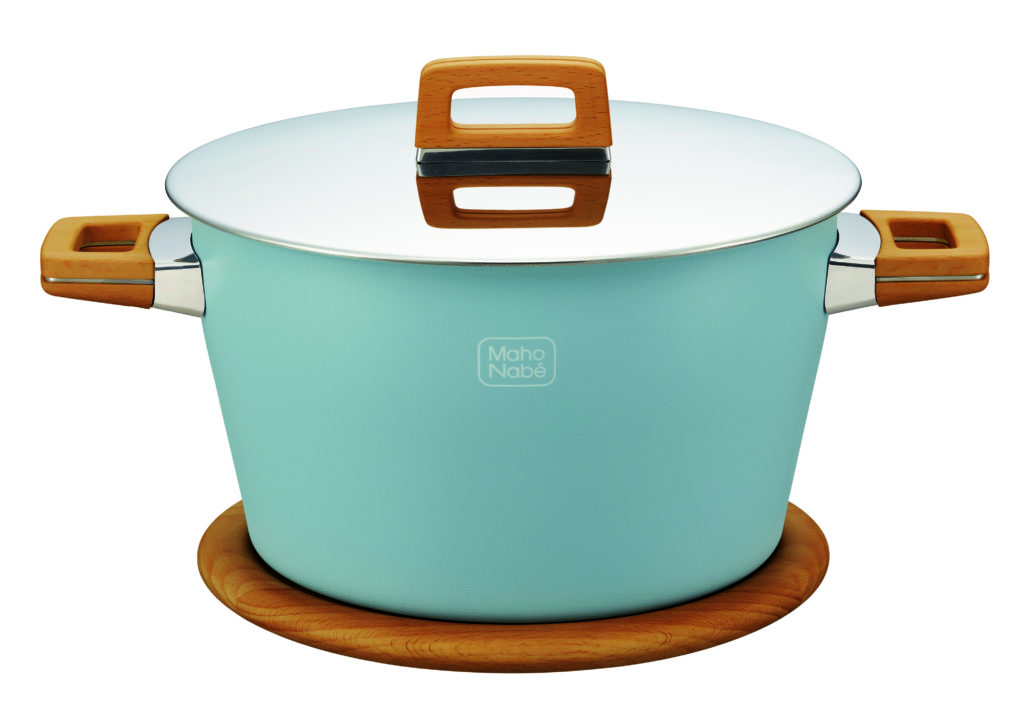
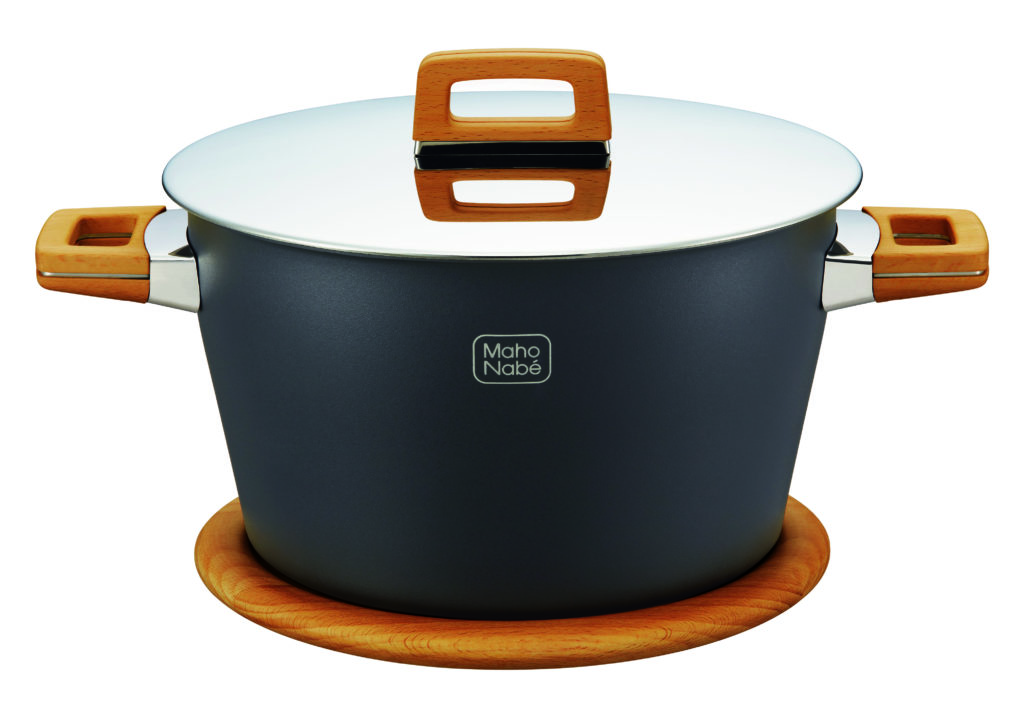
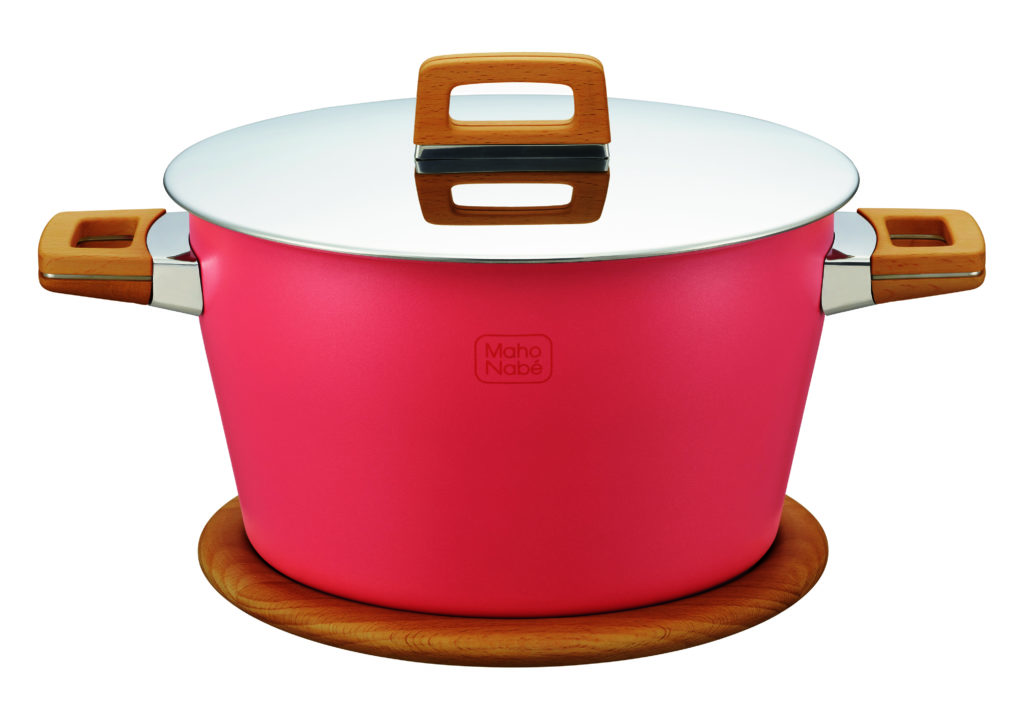
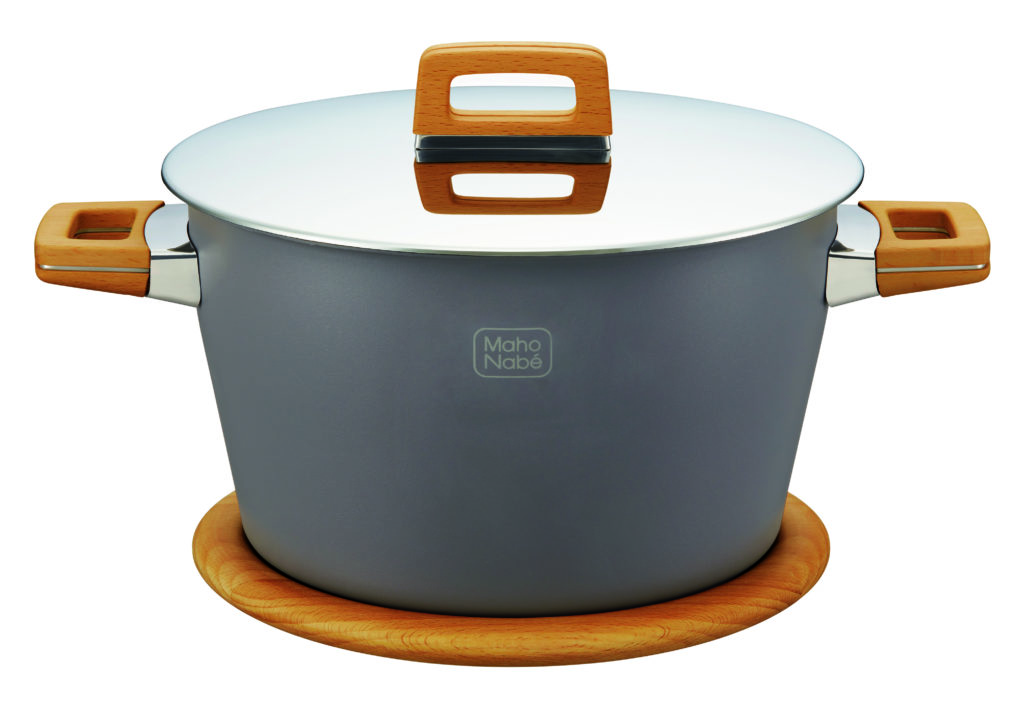
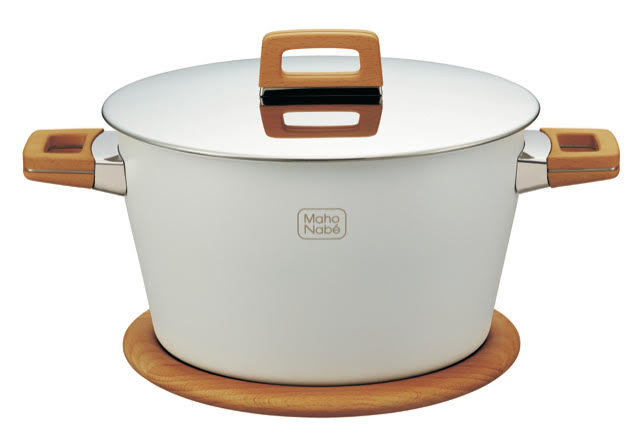
A few weeks ago, we had a magical encounter with Alain Passard in his kitchen garden, around the Maho Nabé cocottes, the rolls royce of cocottes. Alain Passard explained the subtleties of this unique tool to us.


JAPANESE PERFECTION IN A TODAY COOKING
A world first, Tiger has chosen France to unveil
Maho Nabé. A total innovation in the culinary world, the Maho Nabé is
an unparalleled flavor enhancer. It combines subtle design with top-level technical innovation in heat control.
When you lift the lid on this steel-curved 3.0 casserole, you discover a whole new world of possibilities.
SIMPLE BUT NOT BASIC
What does a casserole dish do? To cook to perfection. The Maho Nabé
goes even further, thanks to the mastery of an age-old technology developed by
the flagship of Japanese industry, Tiger.
In Japanese, “Maho” means magic, and “Nabe” means casserole. The magic is
hidden in the double wall of the cocotte. The vacuum between these two layers
of steel provides the ideal insulation to maintain a constant temperature inside the cocotte. The bottom of the cocotte is a triple layer of steel-aluminium-steel, an optimal conductor.
While providing unique thermal insulation, these double walls enable intense (and high-temperature) cooking, bringing out the best in vegetables, spices, meat, fish and shellfish. Without further artifice, each food item expresses the naturalness of its intrinsic flavor.
MAHO NABÉ OR THE PRAISE OF COOKING
In Japan, it’s said that you need to reach “Niebana”, or cooking Nirvana, i.e. the ideal temperature – between 96°C and 100°C – to allow each ingredient to reveal its intimate flavor by softening its cellulose (in the case of vegetables) and tenderizing its flesh (in the case of meat and fish).
Once on the fire, the Maho Nabé gradually reaches “Niebana”, allowing ingredients to cook gently and evenly.
This high temperature is maintained for a long time after boiling and
removing the Maho Nabé from the heat source: it is 98°C for 10
minutes, and 95°C or more for 20 minutes (for a water volume of
3.5 L and an ambient temperature of 23°C).
Of course, the dish can be served as soon as the Maho Nabé has been removed from the fire, but
the time it takes to retain the heat can also be a time
for rest and exchange between the host and his guests.
The food continues to distill its flavors in the Maho Nabé, placed on the table among the guests. The chef has chosen the best ingredients and imagined the most beautiful combinations in the Maho Nabé. Beet reveals its sweet intensity, scallops its hidden iodine, celeriac its powerful aroma, Cévennes lamb its natural taste and thyme its gentle bitterness…
This time of rest also allows guests to reveal the best
of themselves. Warm harmonies are forged around the table, encounters take place, exchanges take place…
AN ECO-RESPONSIBLE CREATION
The first Nabé was born in Japan 14,000 years before Christ, a
time when man was still an integral part of nature. In the
traditional Japanese culture, man has retained this place: he respects his environment because he is part of it.
So, thanks to its technology, the Maho Nabé is part of an
ecological logic of respect for nature. Heat conservation thanks to
the double-wall, and cooking speed (1.2 times faster than
other cocottes) mean substantial energy savings.
ALAIN PASSARD AND THE MAHO NABÉ, THE STORY OF A PASSION
When three-star chef Alain Passard cooked his first dish in the Maho Nabé prototype, his horizons opened up: “I’m making a completely different ratatouille in this magic cocotte,” he told Tiger. In Osaka, the designers of the Maho Nabé welcomed the announcement. Between the chef and the object, it’s a story of creativity. Since 2018, Alain Passard has been multiplying recipes according to the seasons and holidays. He never tires of discovering, cook after cook, how the Maho Nabé reveals the purity of the vegetables from his garden, both on and off the stove.

Cette publication est également disponible en :

