
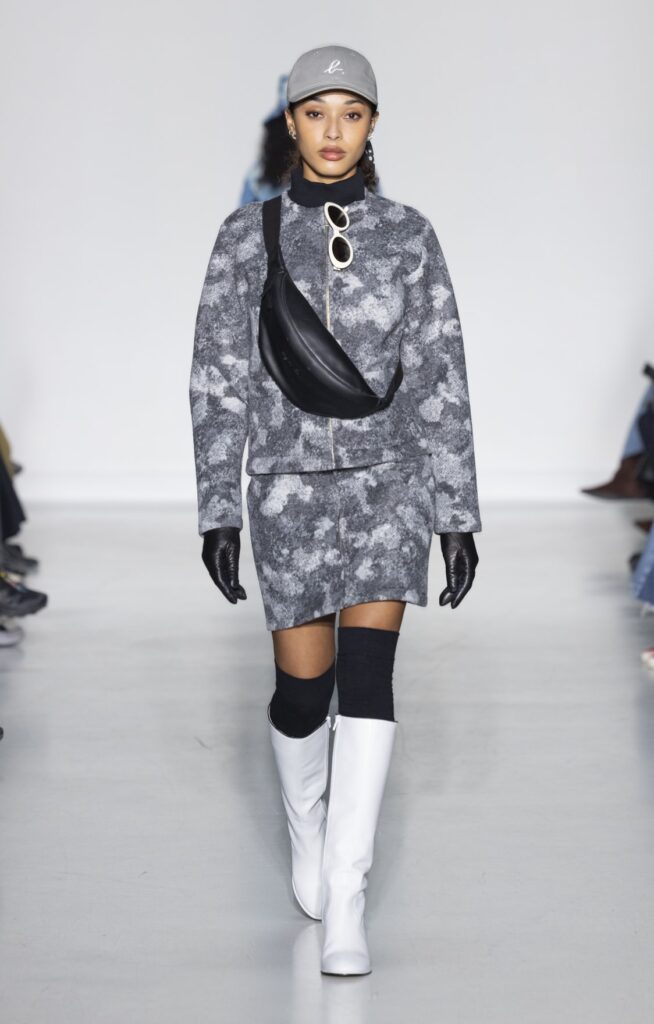
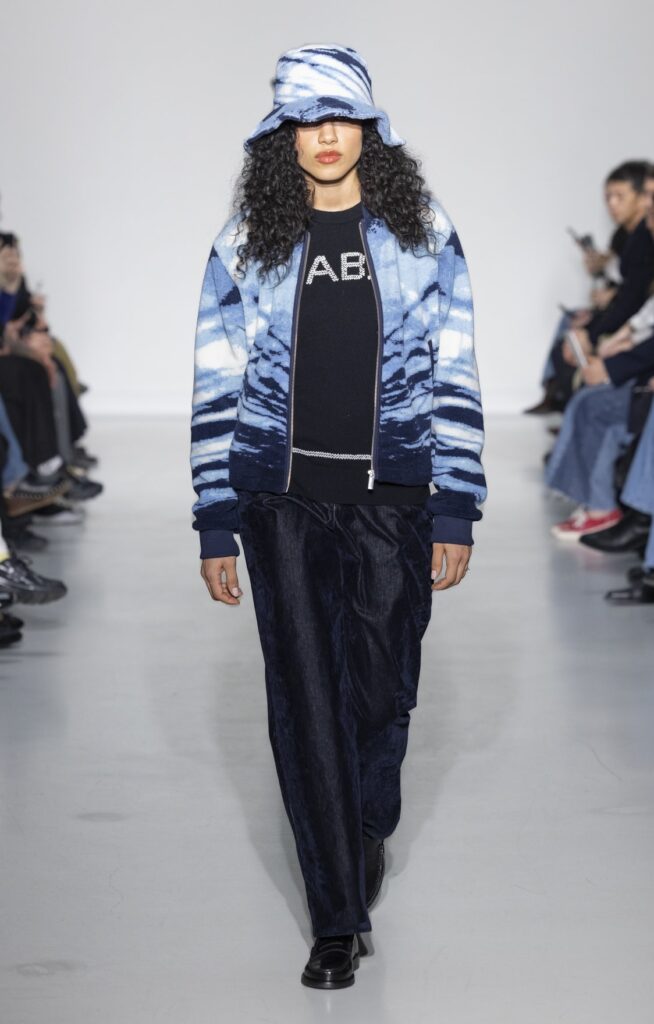
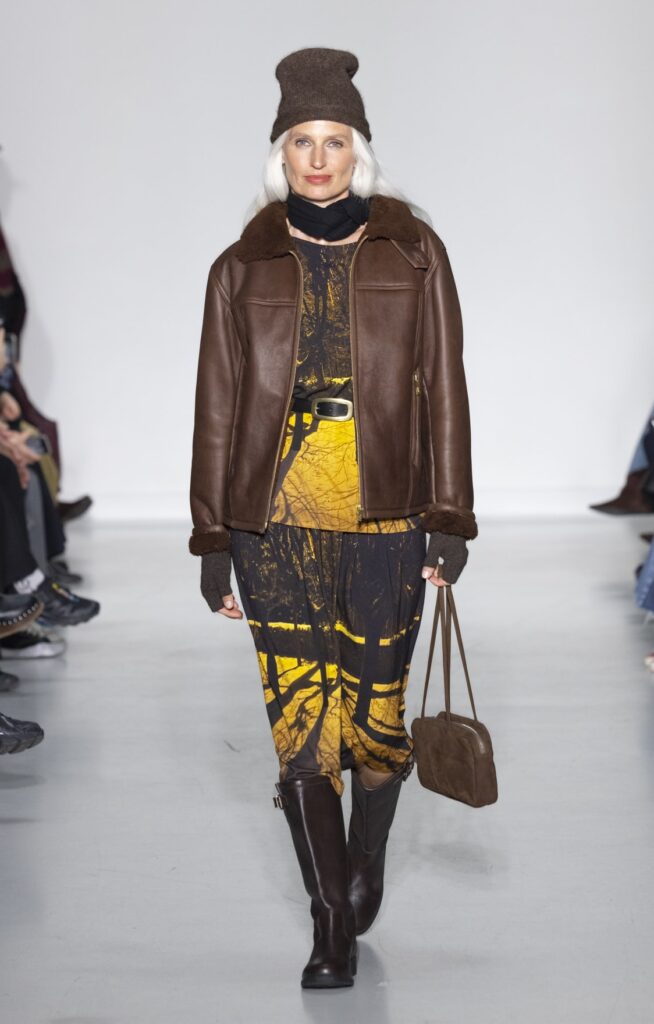
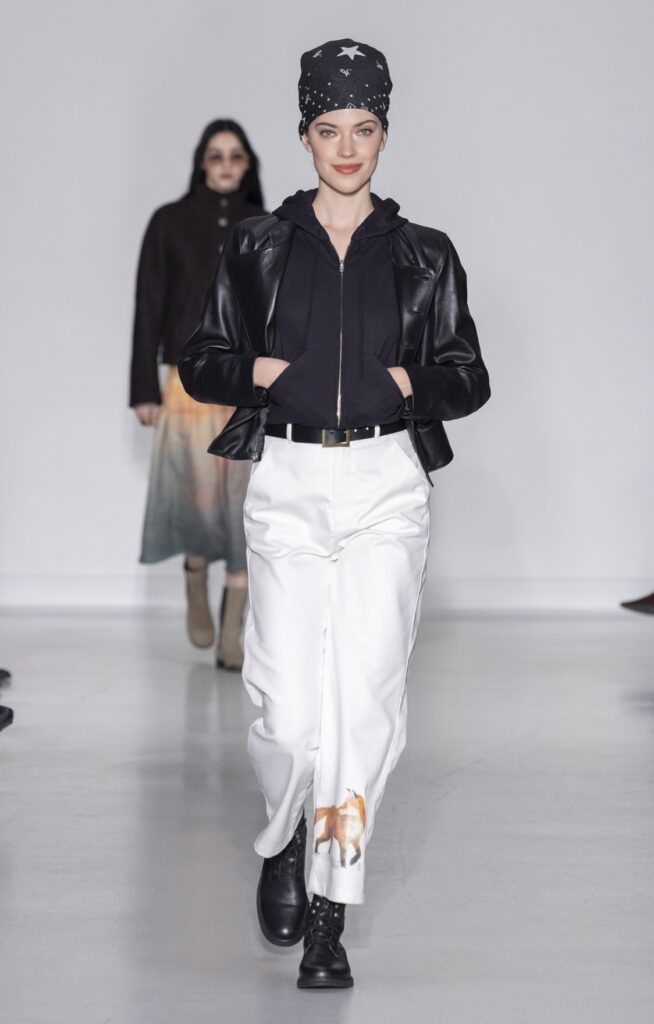
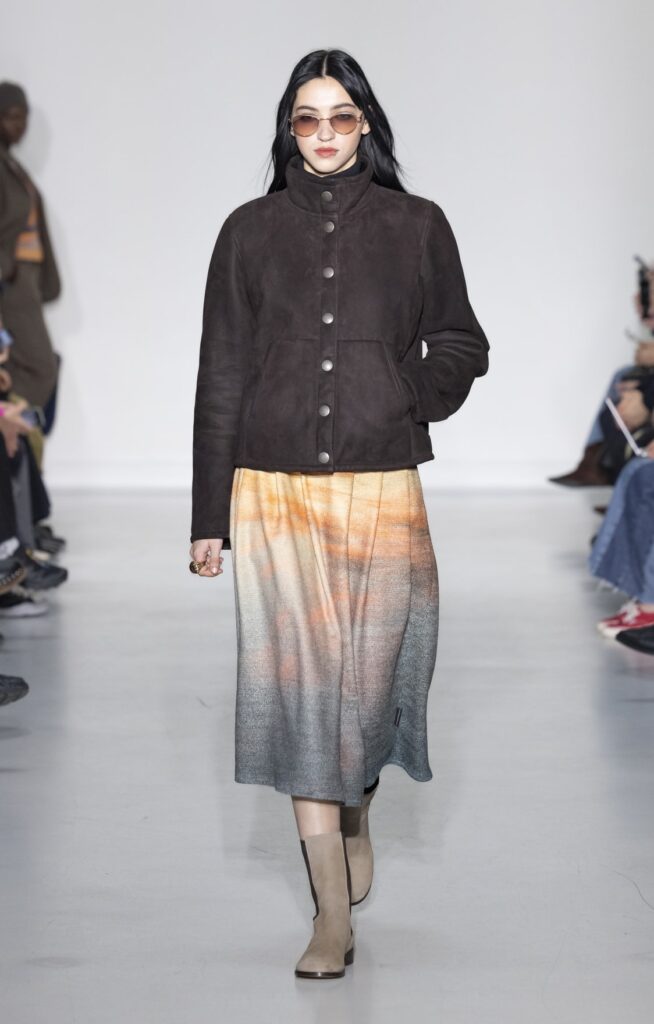
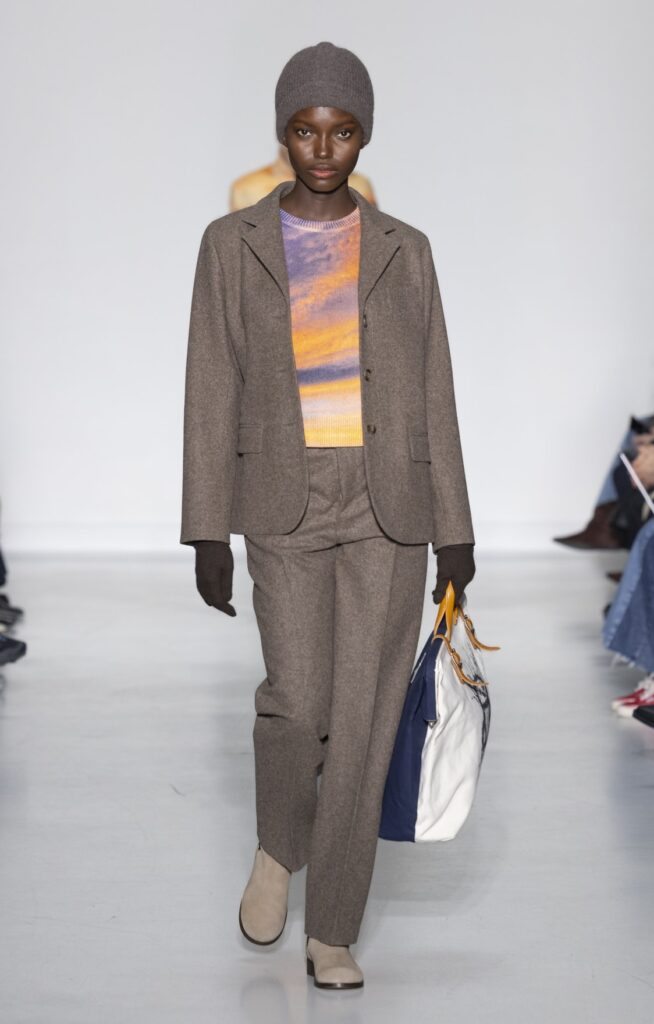
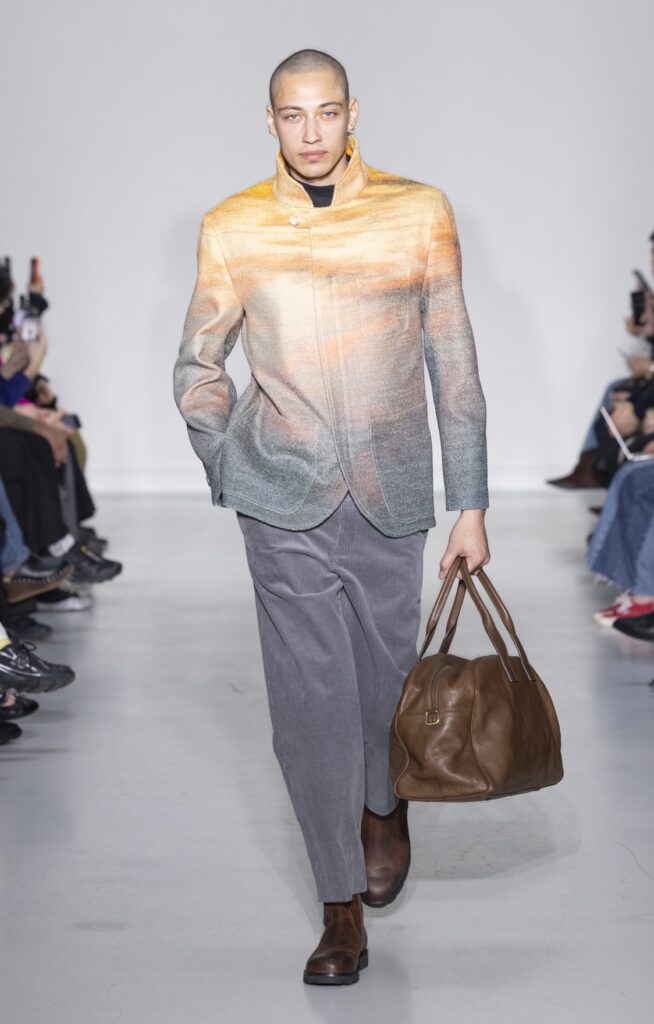
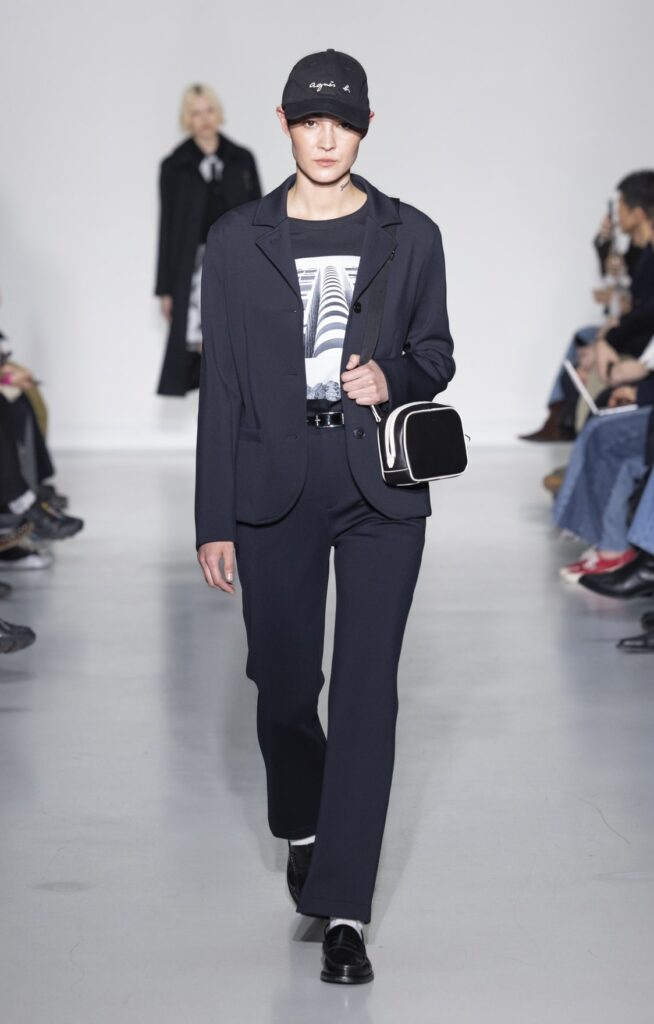
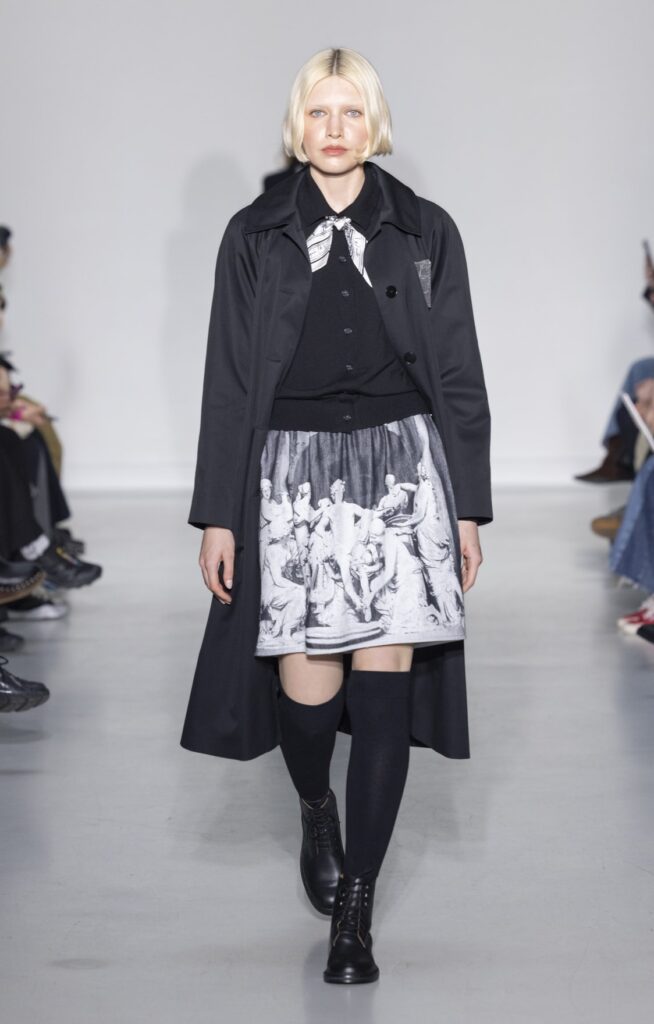
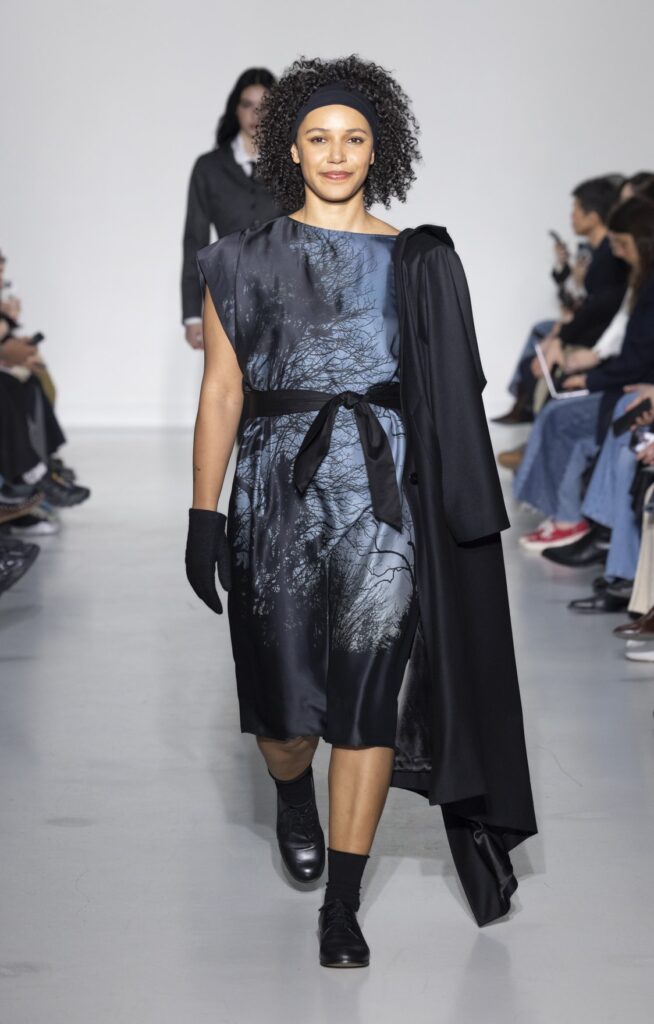
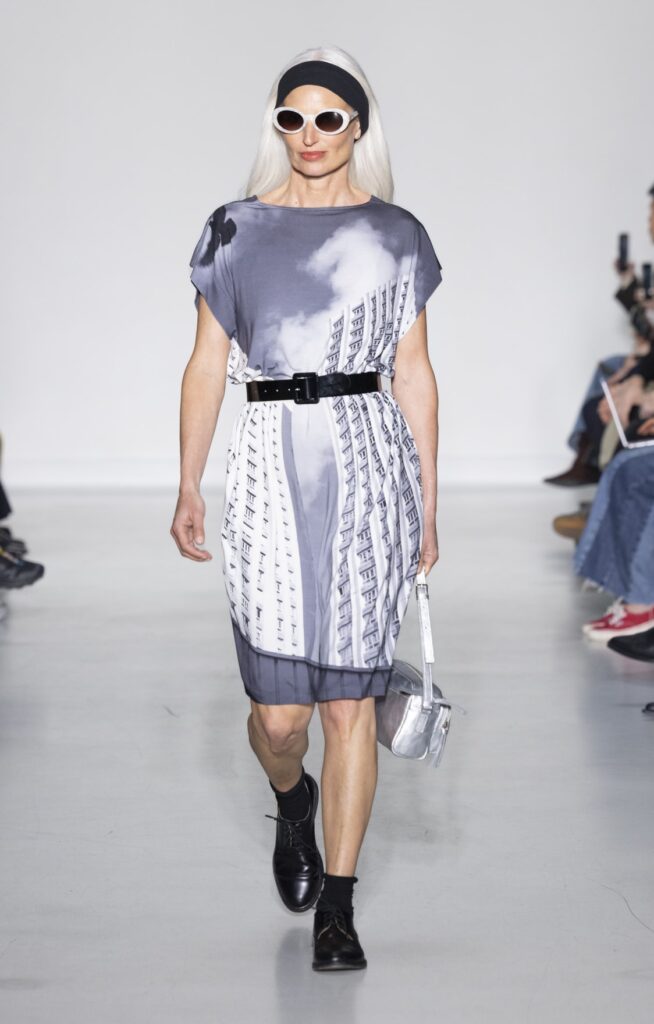
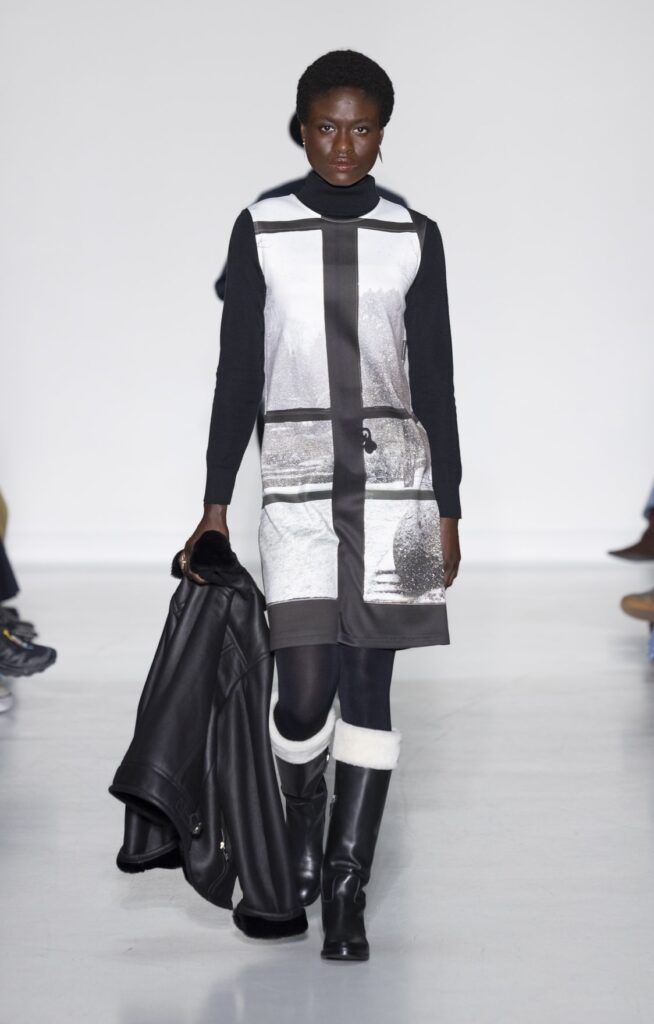
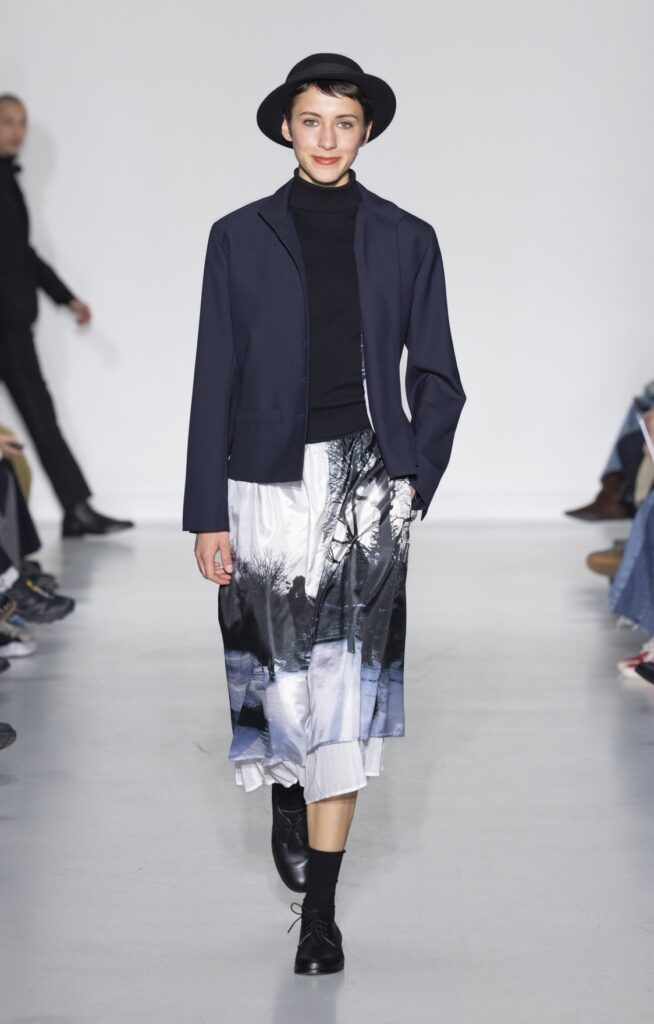
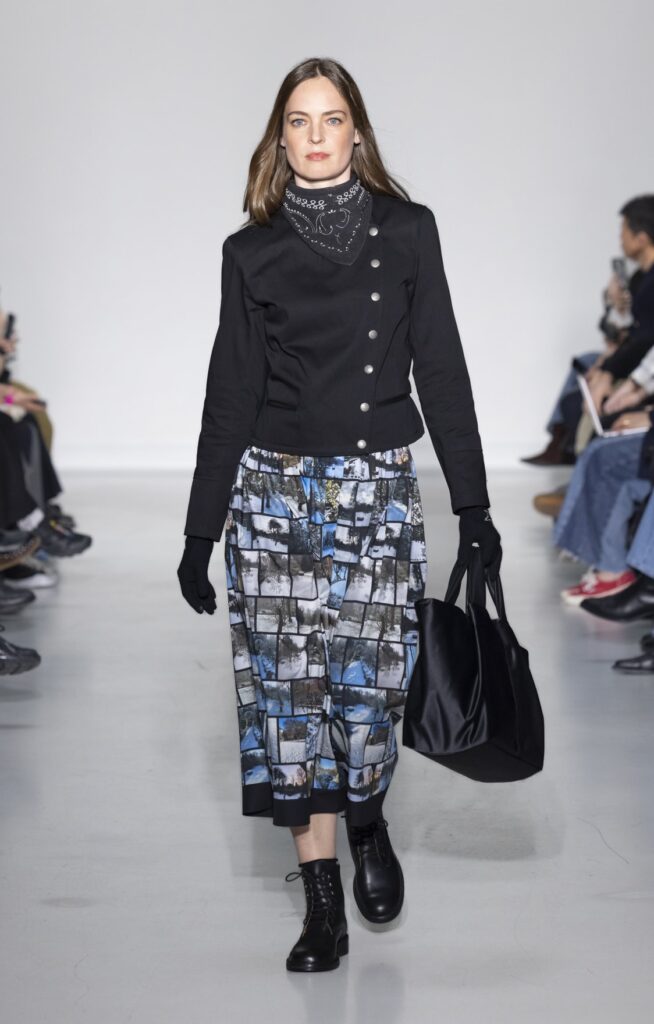
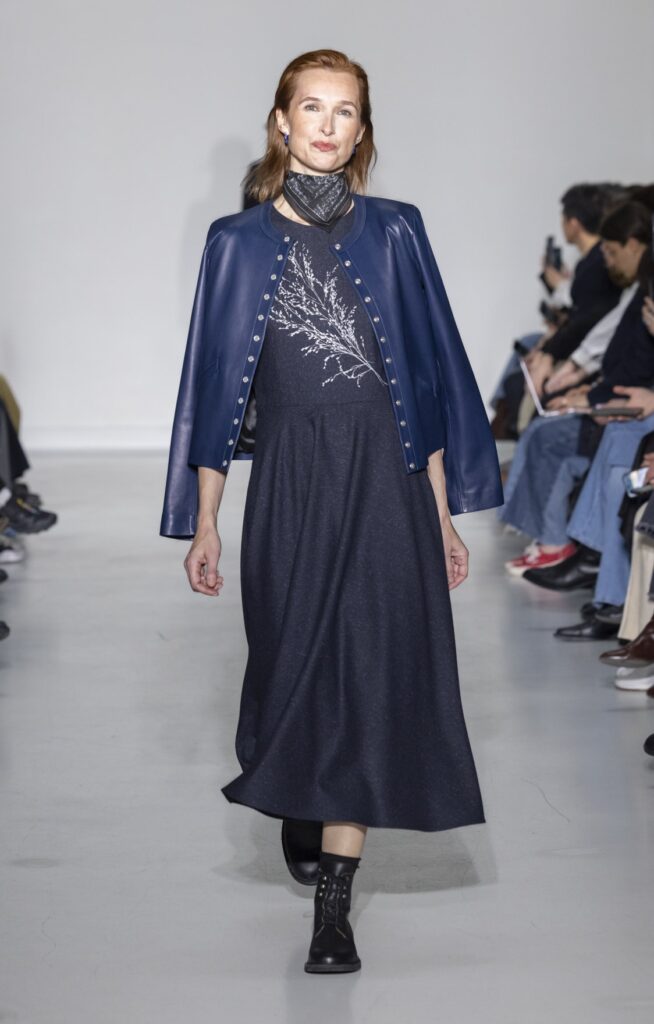
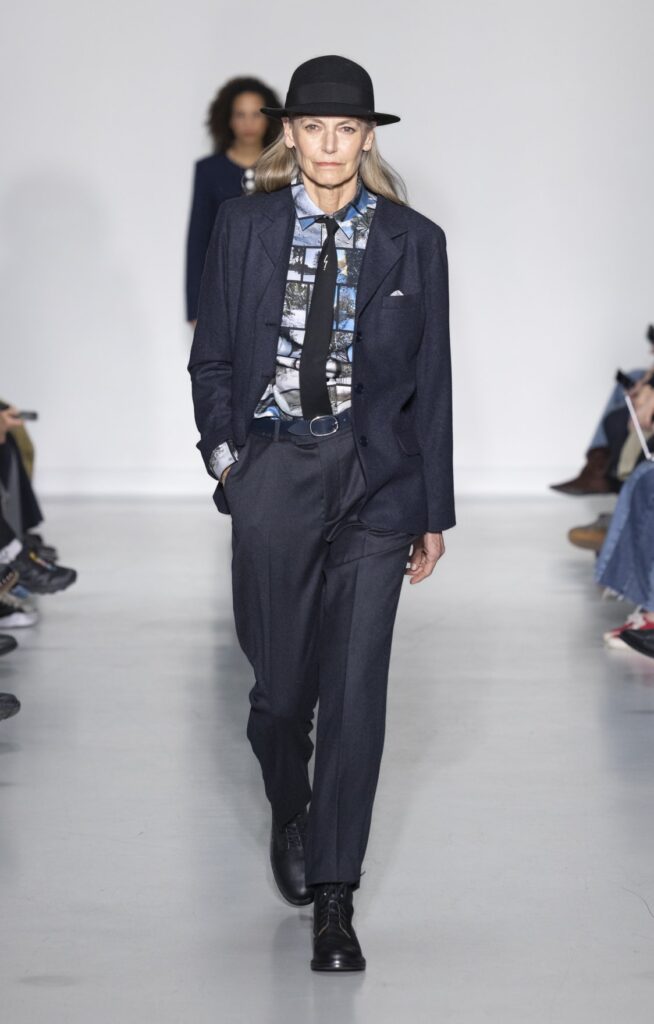
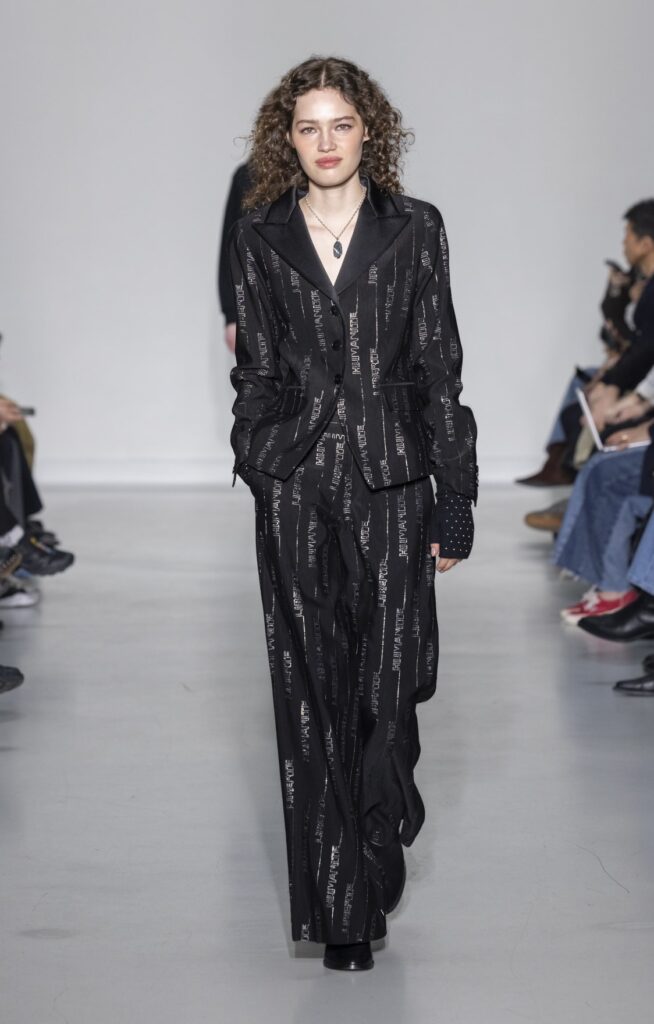
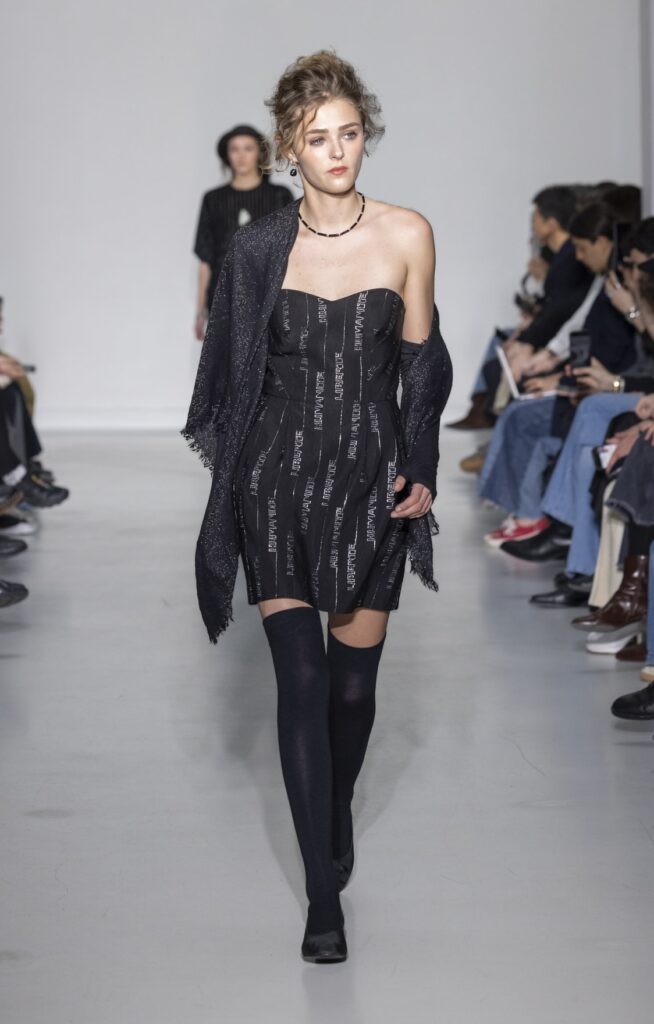
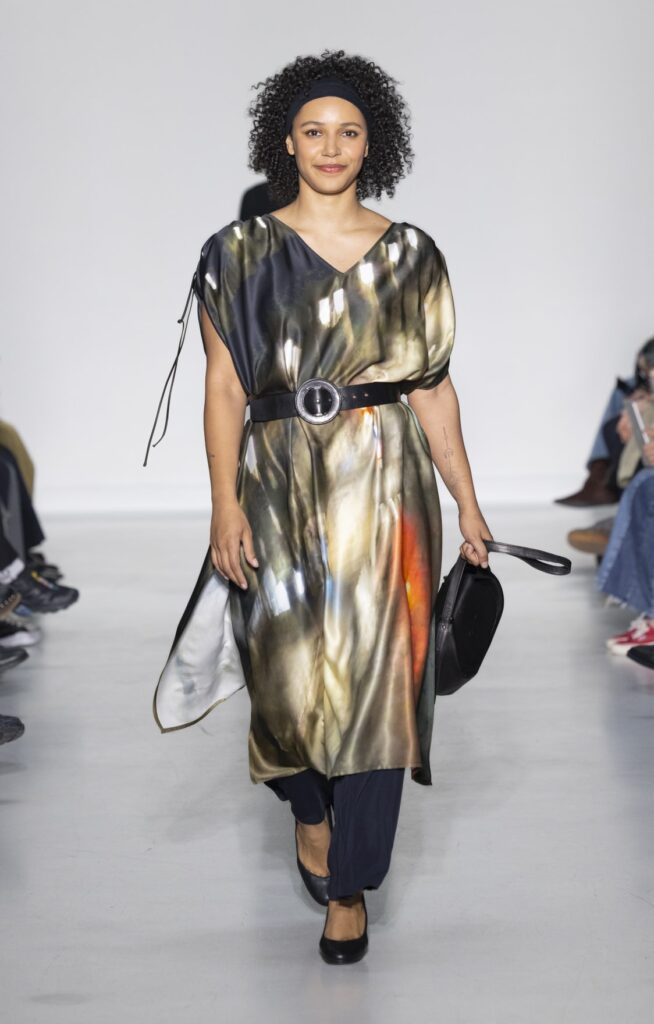
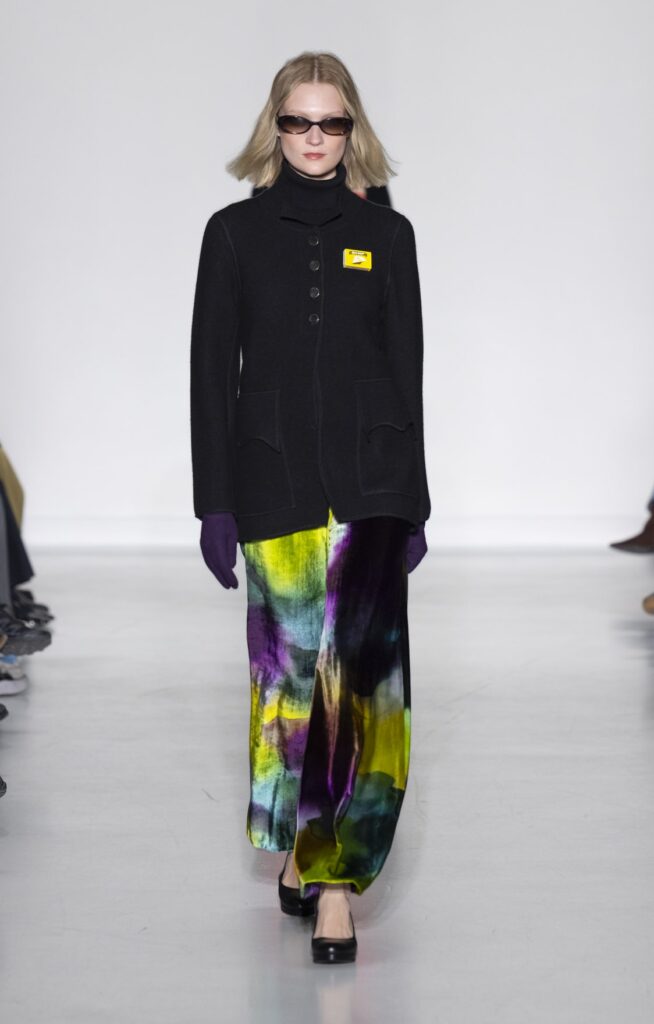
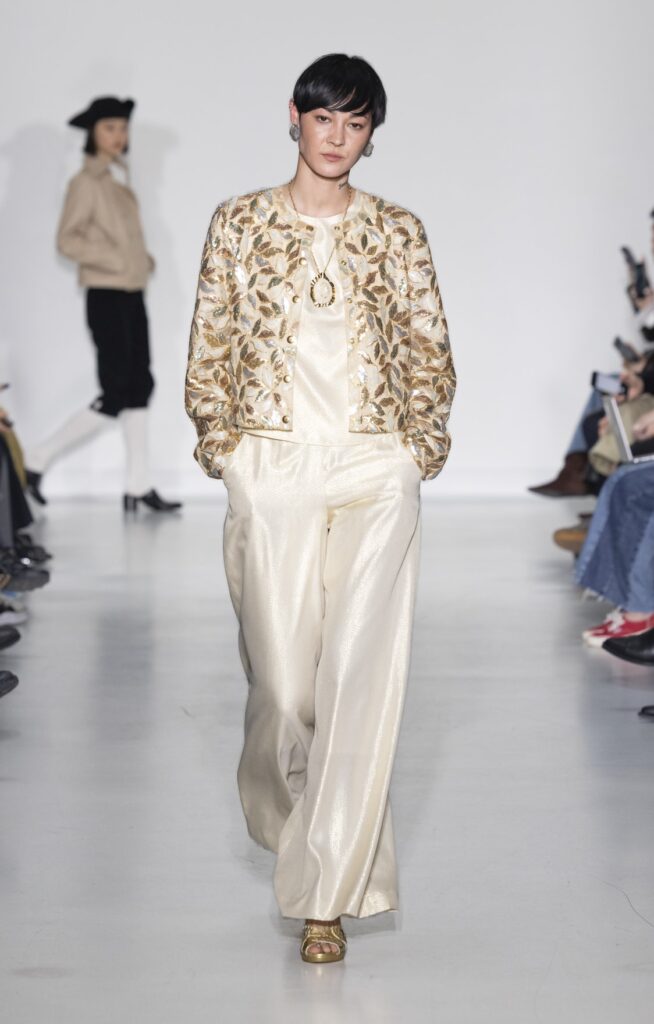
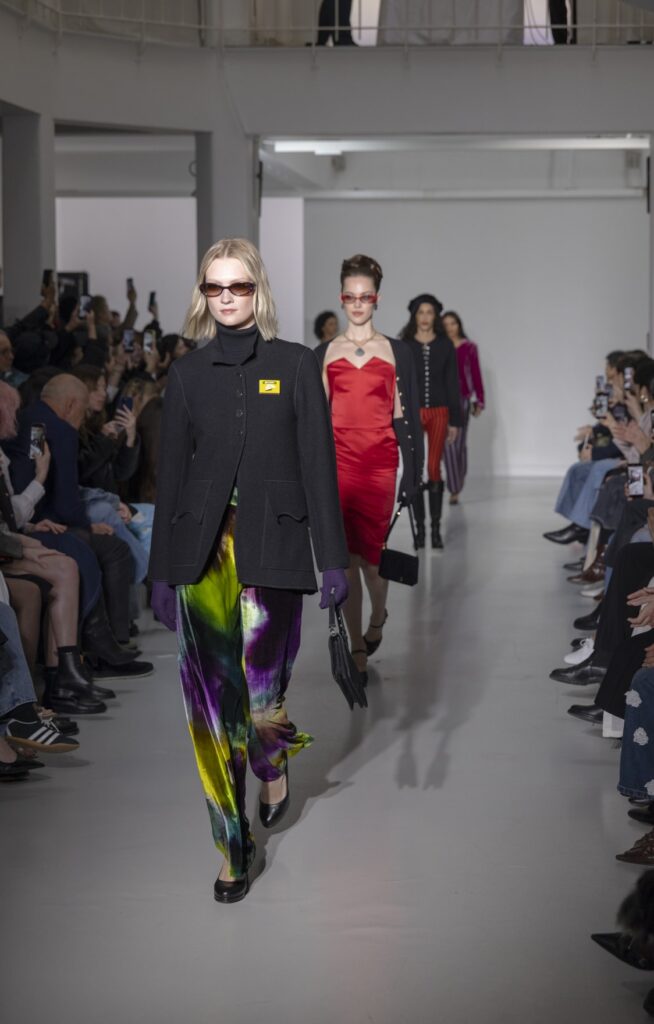
Rue du Jour has a history that few Paris streets can claim: since 1975, it has been home to a house that exhibited photographers before putting them on clothes. This detail is not anecdotal. At agnès b., the transition from gallery to fabric was never a marketing operation – it was a coherent one. The Autumn-Winter 2026-2027 collection presented in Paris on March 9 continues this logic on at least a dozen pieces: winter tree prints on satin, sunsets transferred onto structured jackets, contact sheets transposed onto wide-leg pants, Haussmann grids on straight dresses.
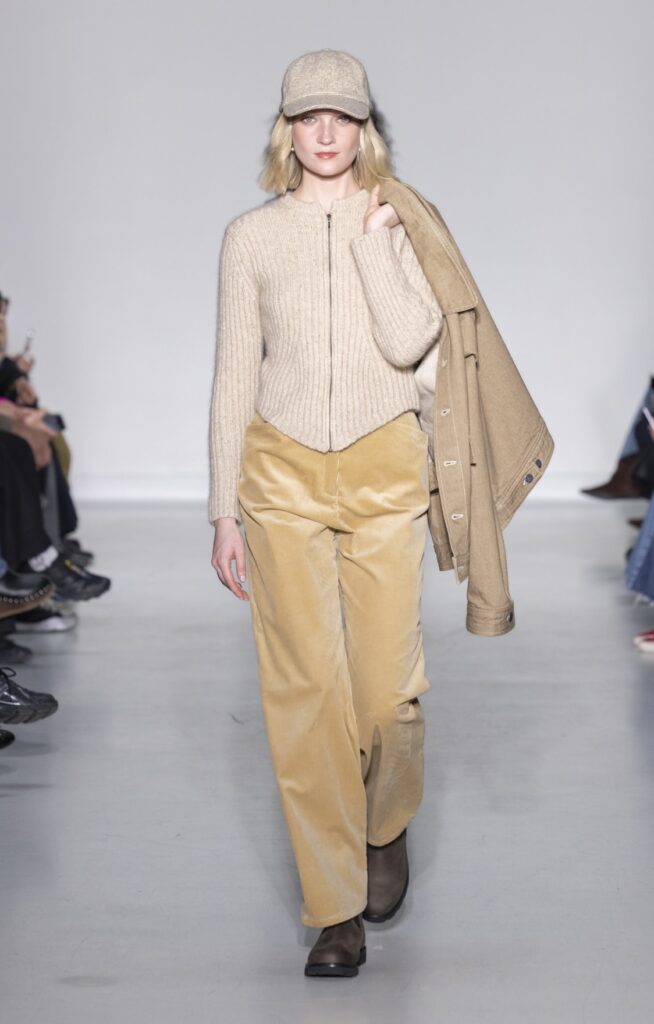
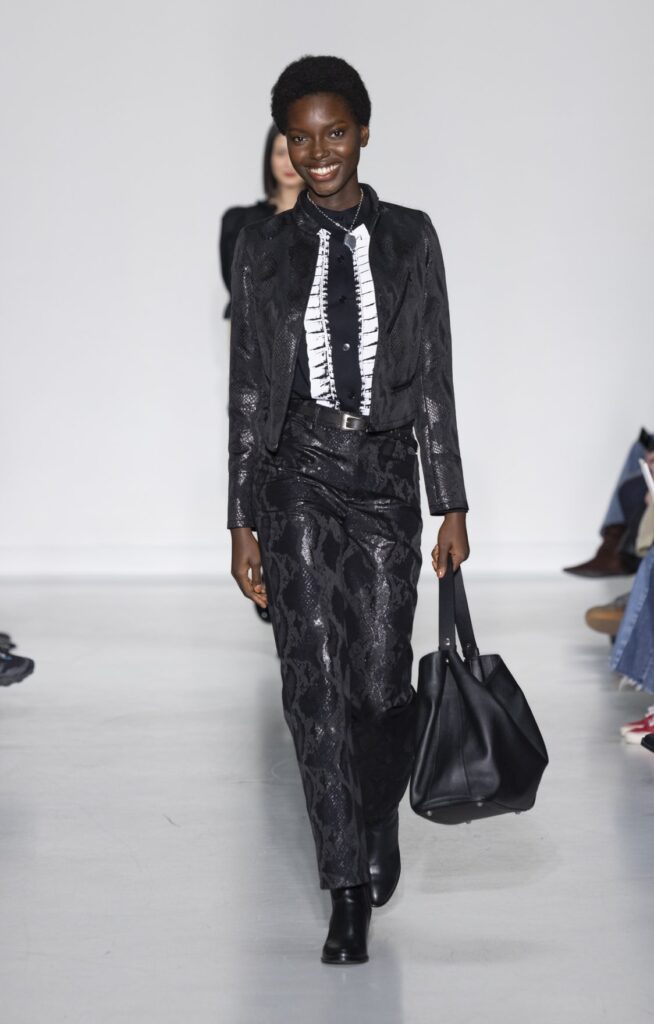
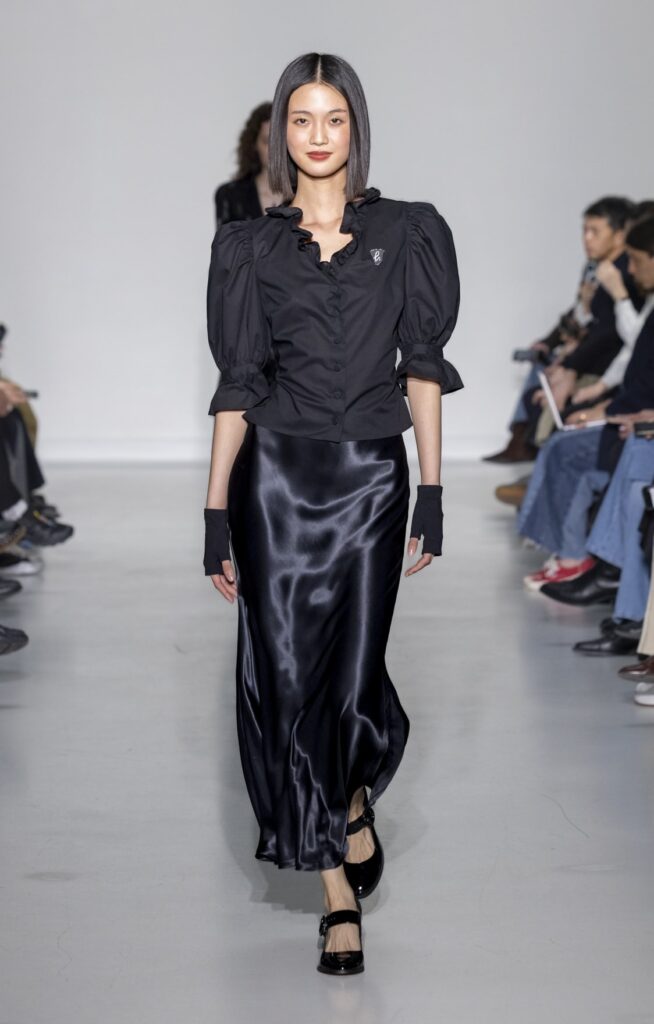
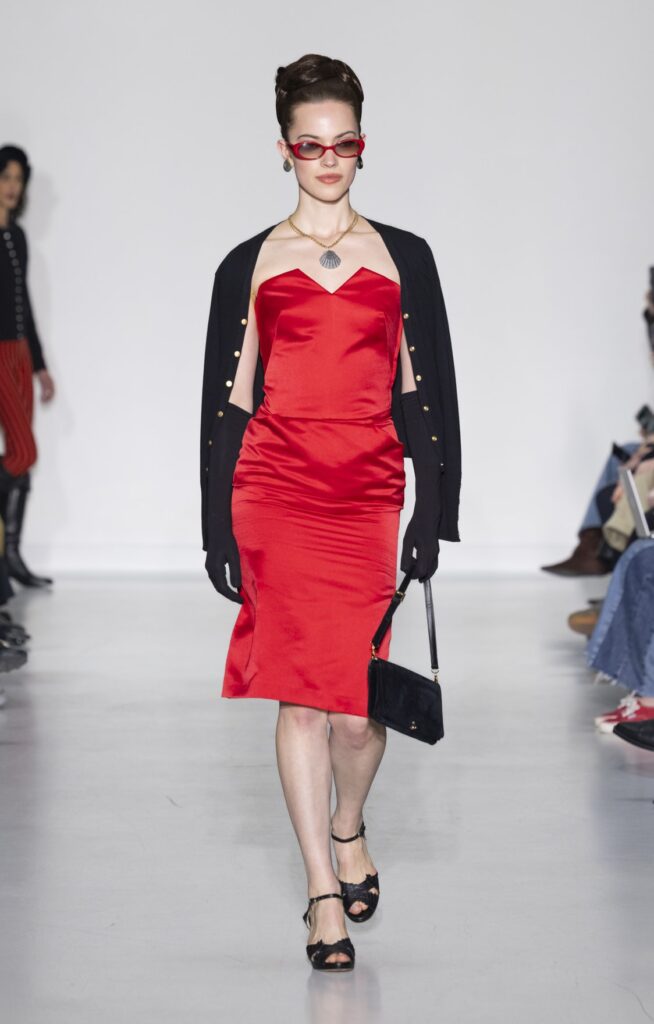
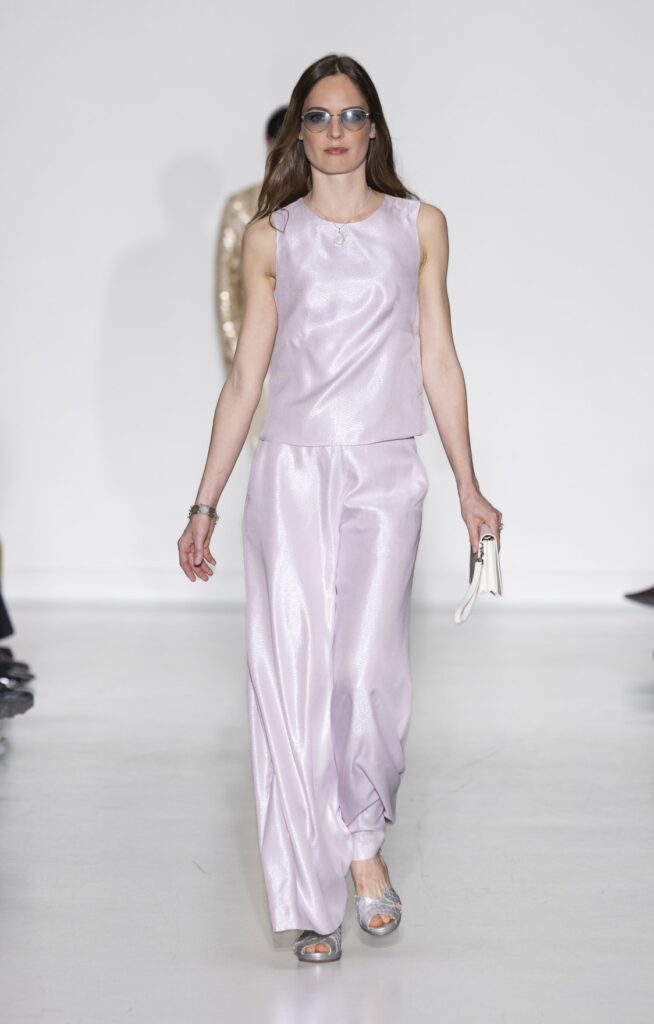
The technique of photographic transfer on fabric poses constraints that standard digital printing does not entirely resolve. The hand of the fabric must accept the ink without losing its fall; the transition zones between the garment background and the printed motif reveal the quality of the surface preparation. On satin looks (notably look 32, look 48), the luminous rendering of the material amplifies the photographic gradations – the image doesn’t cover the fabric, it inhabits it. On cotton velvet pants (look 38), the weft absorbs the ink differently, producing a more matte, print-like effect.
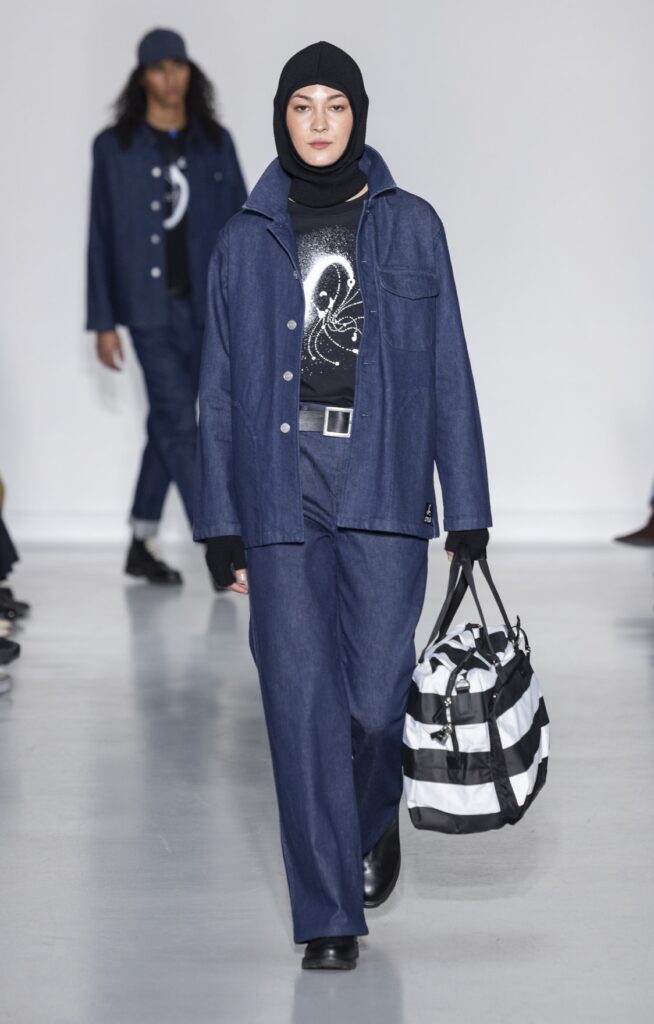
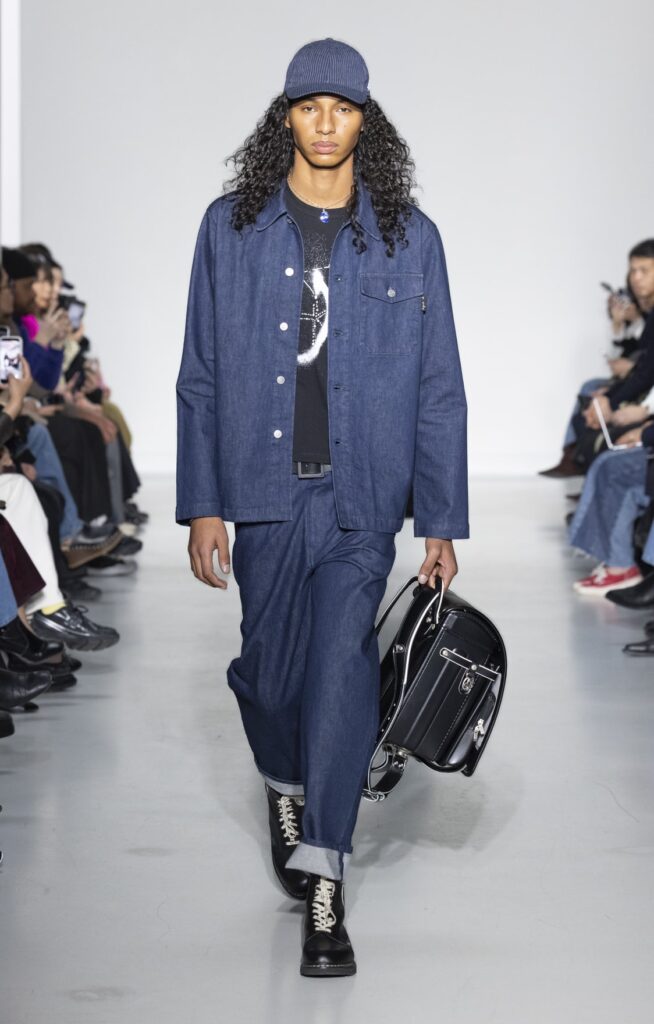
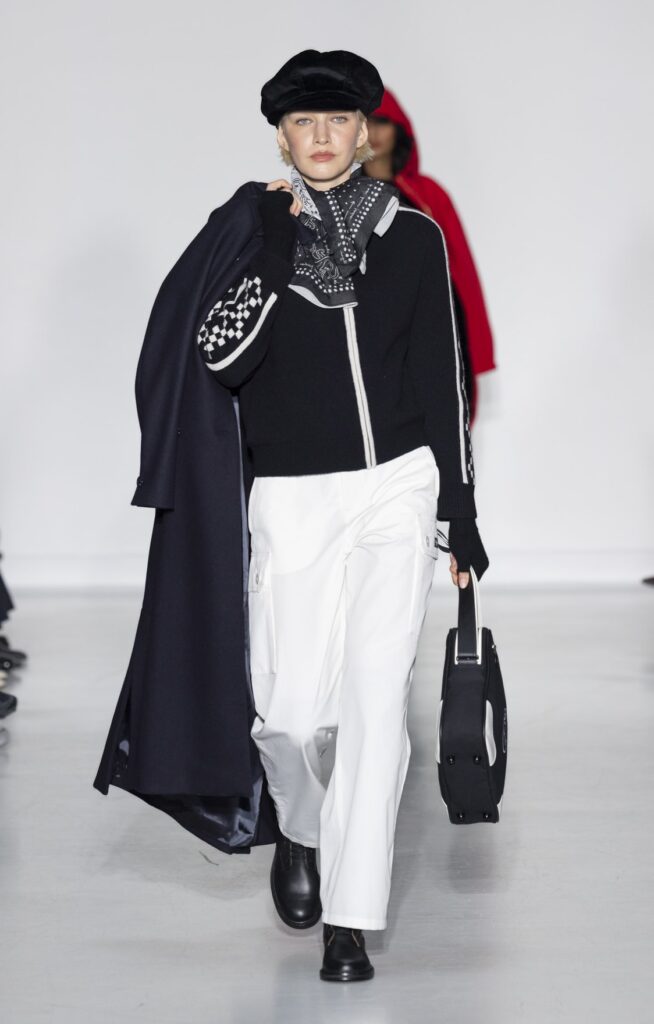
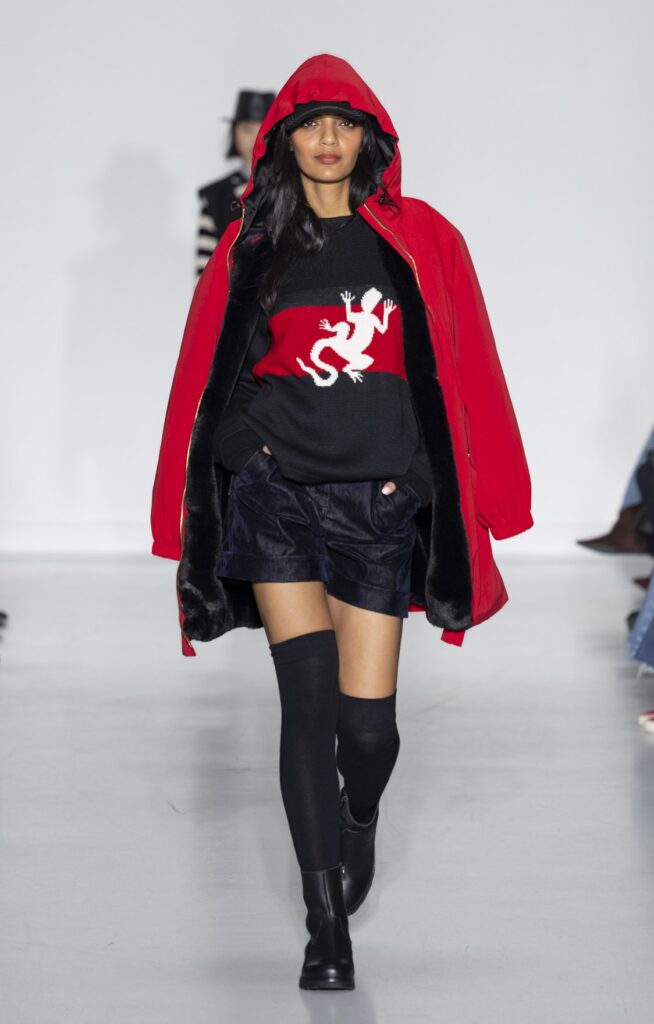
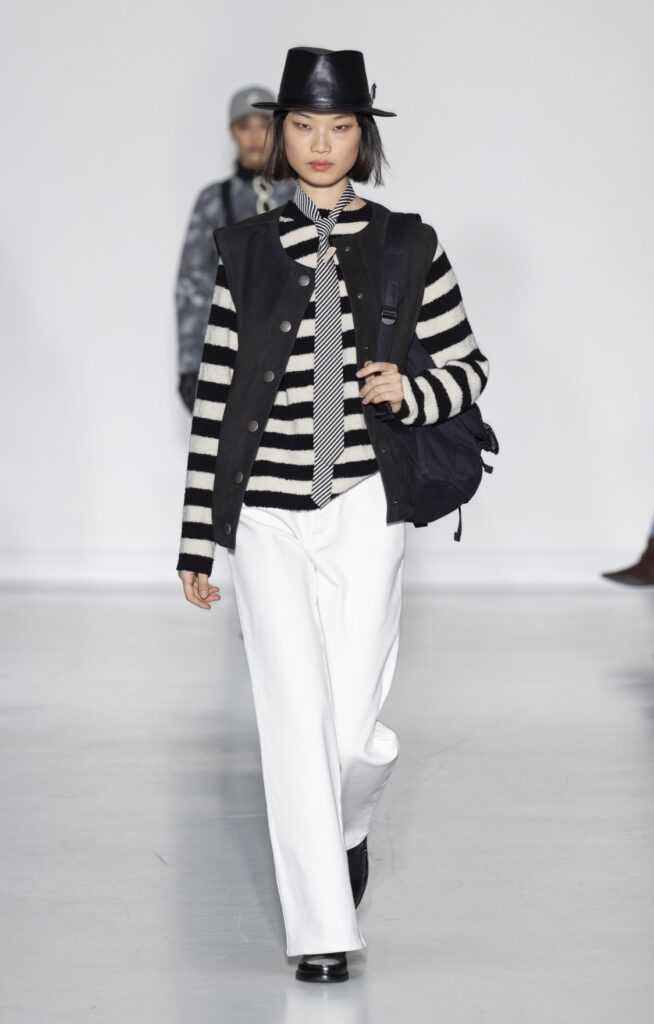
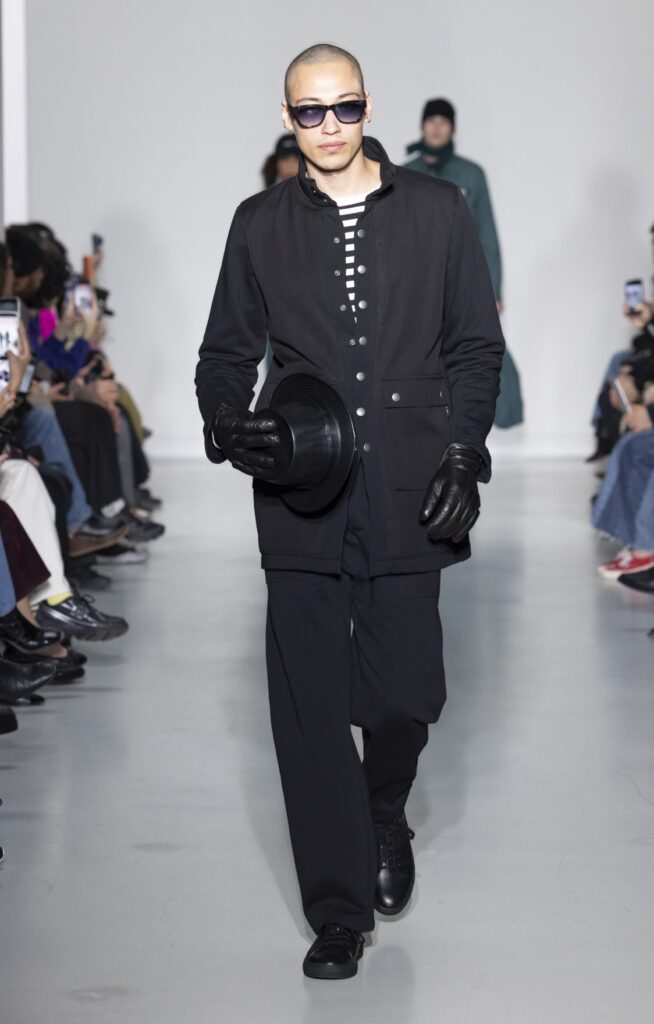
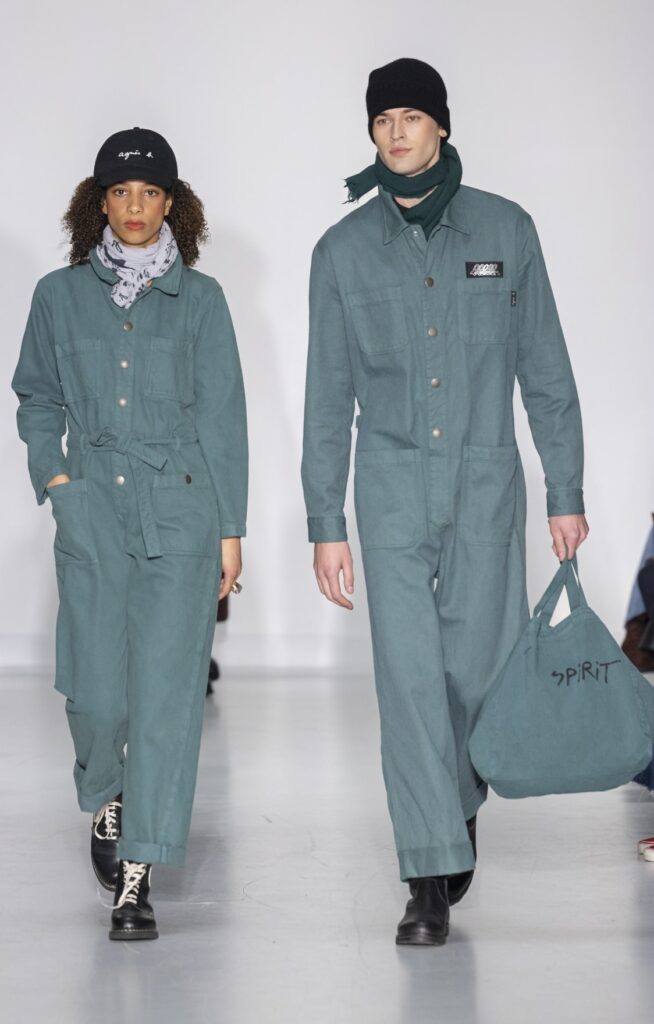
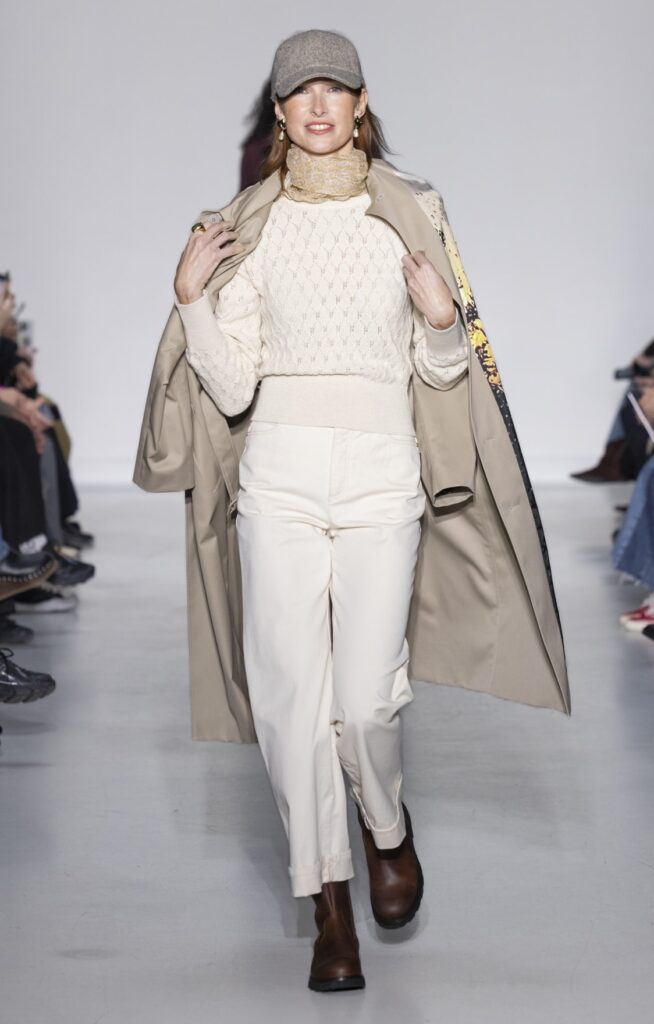
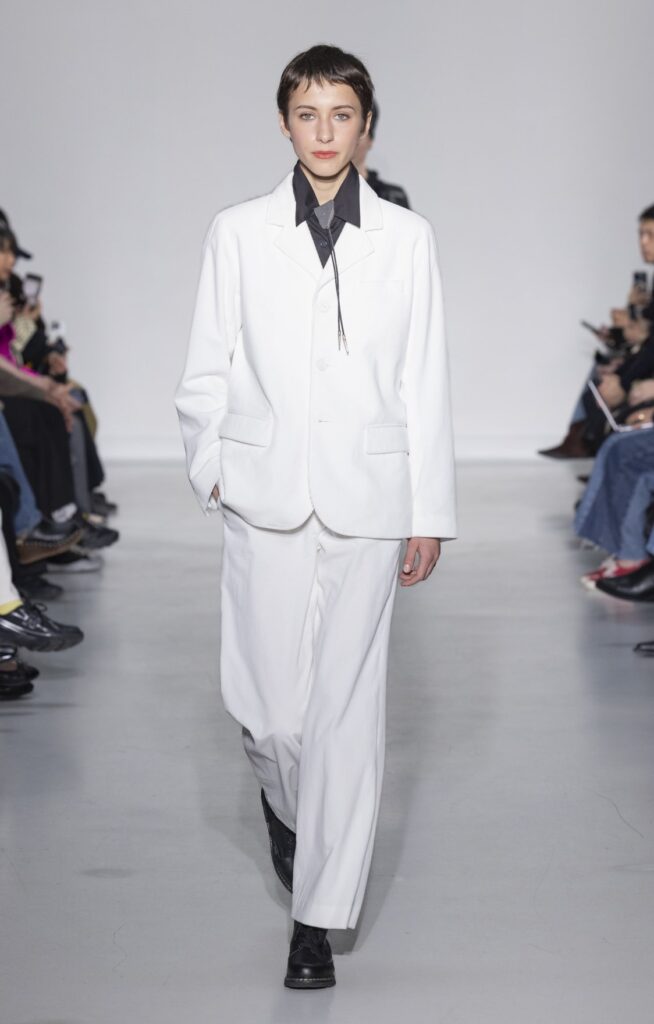
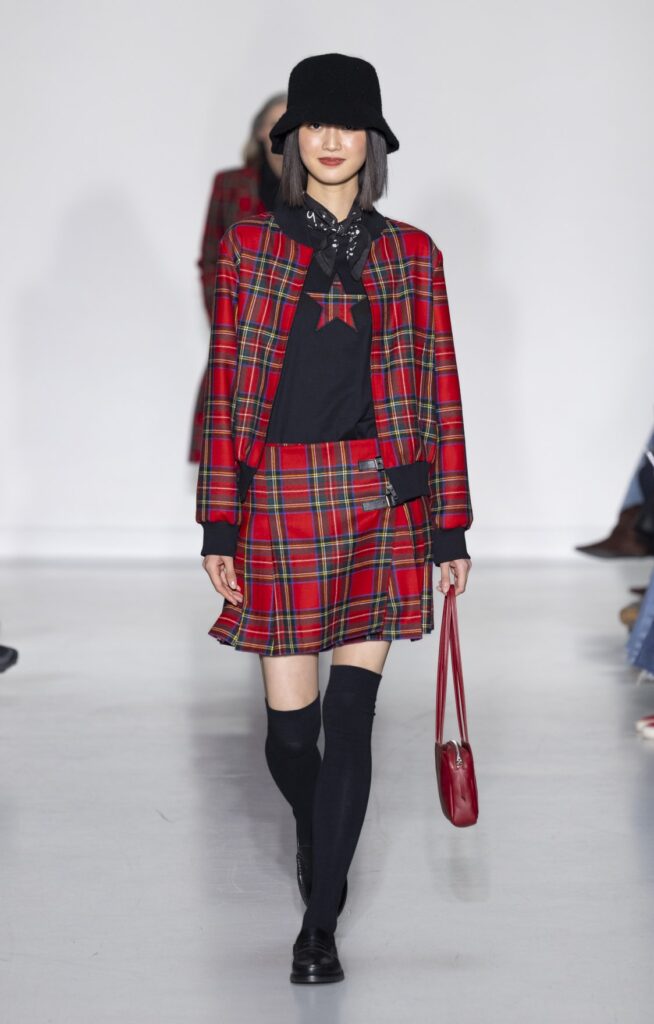
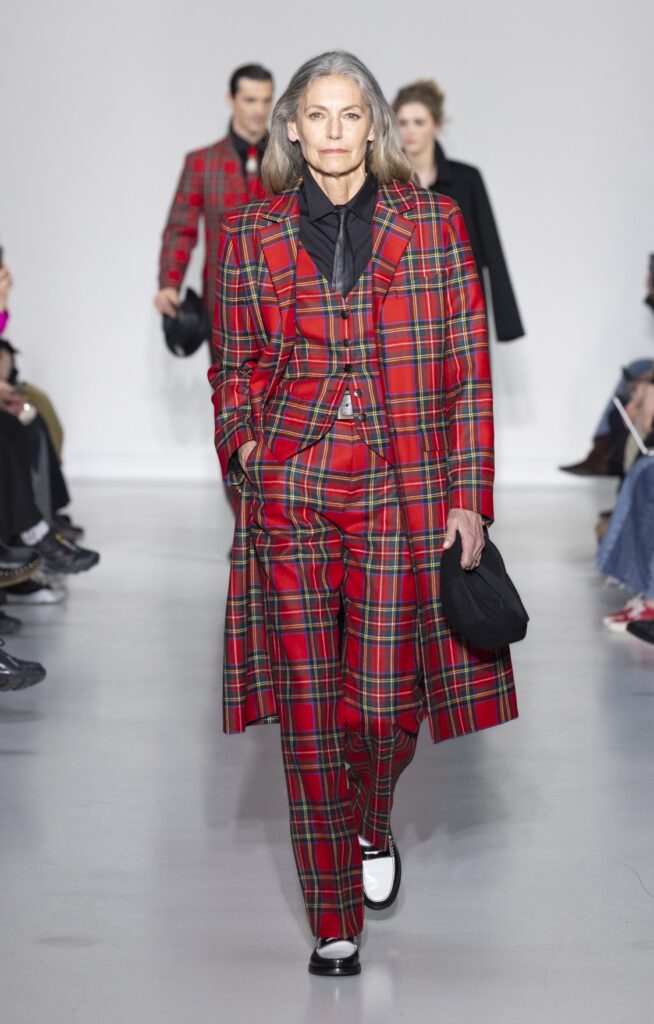
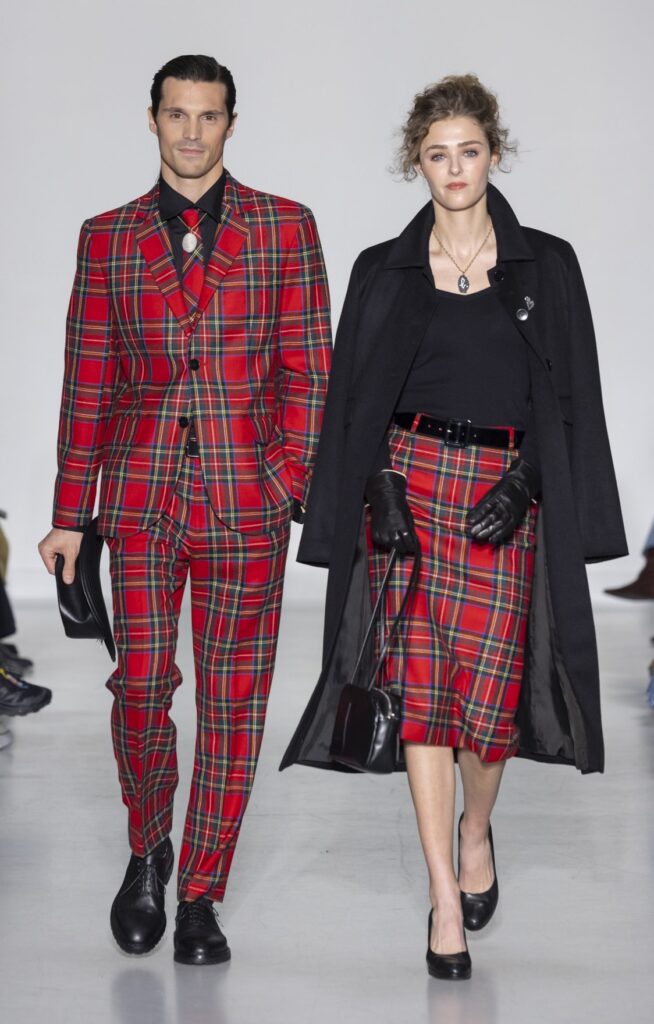
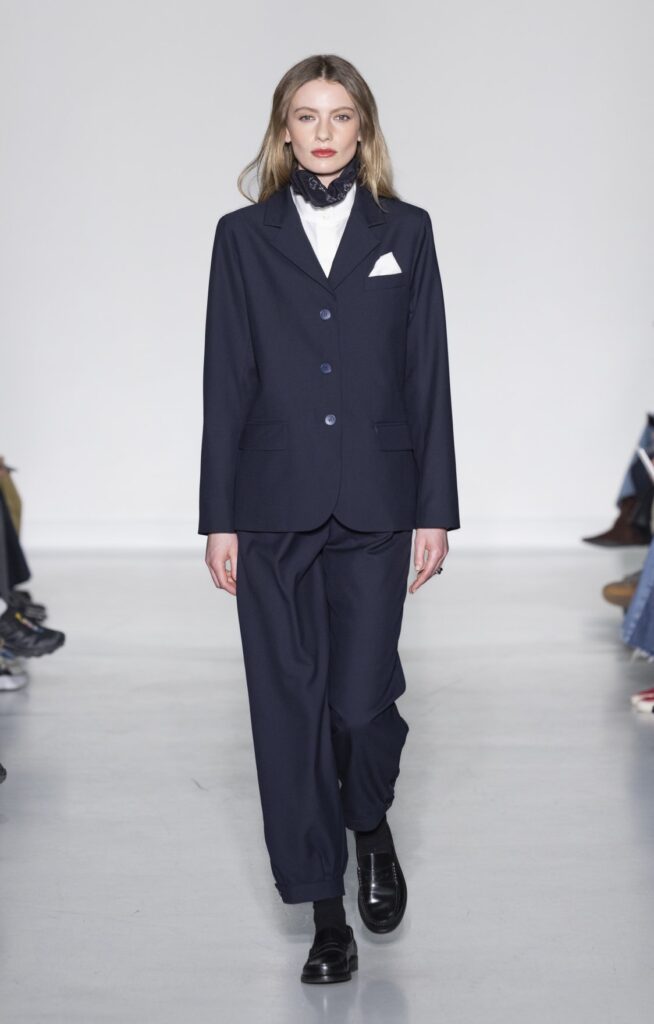
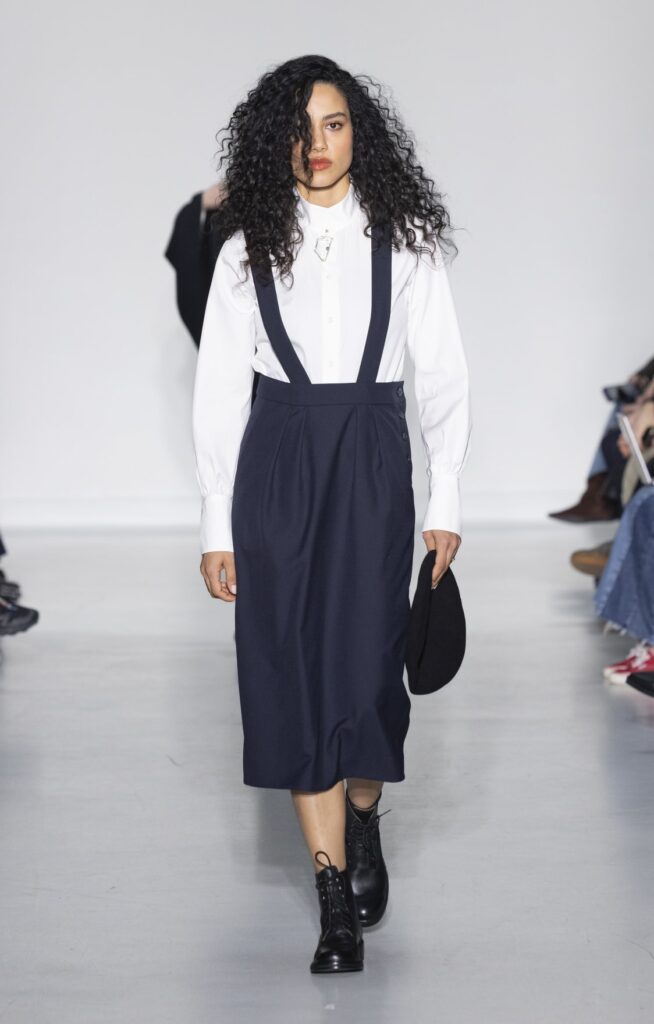
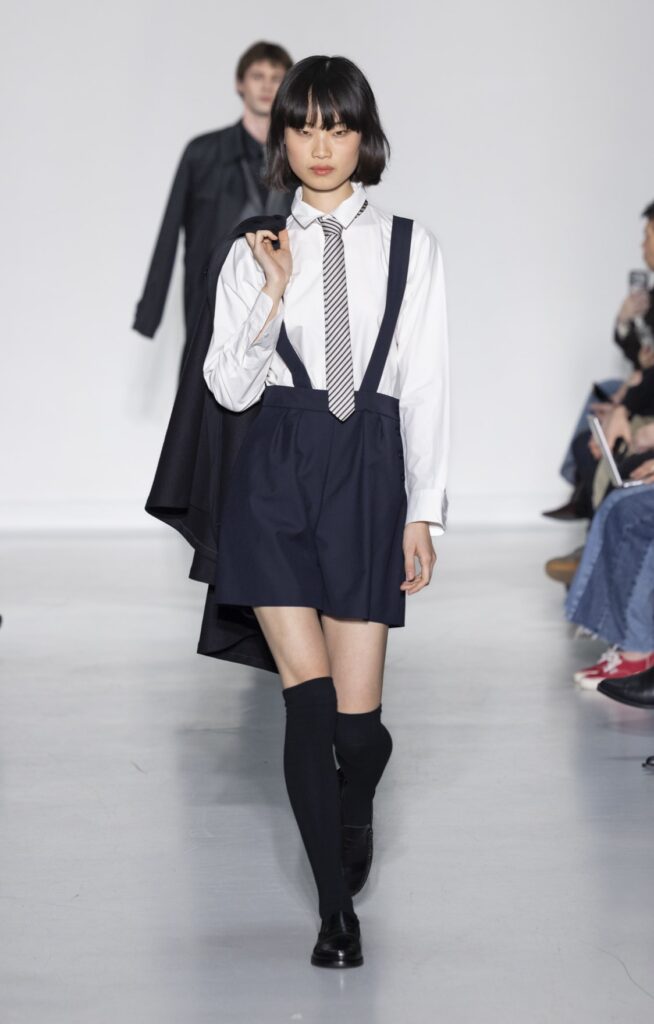
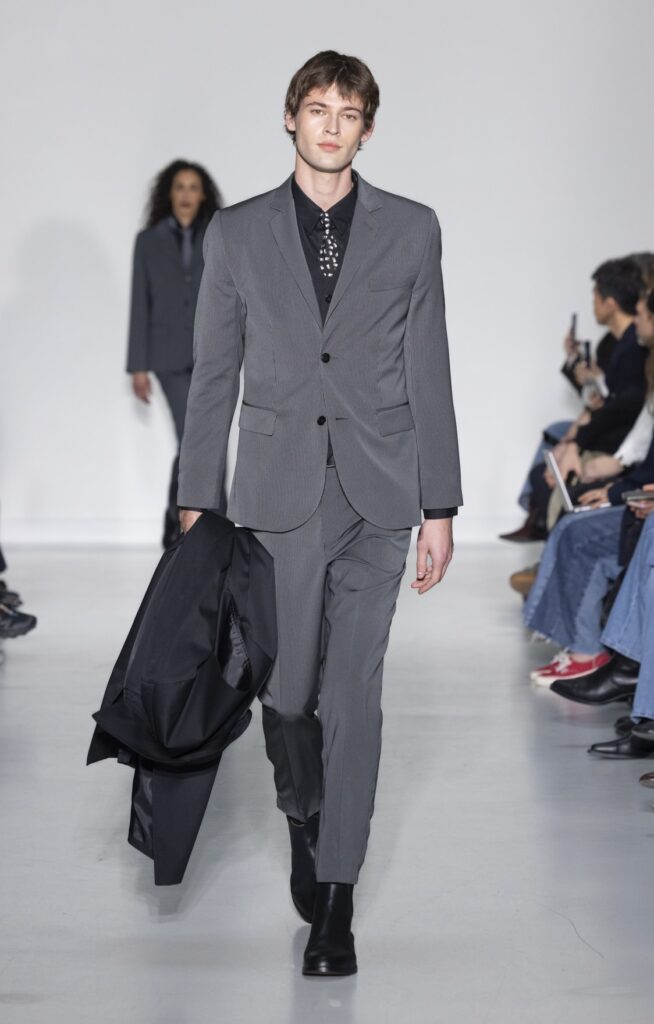
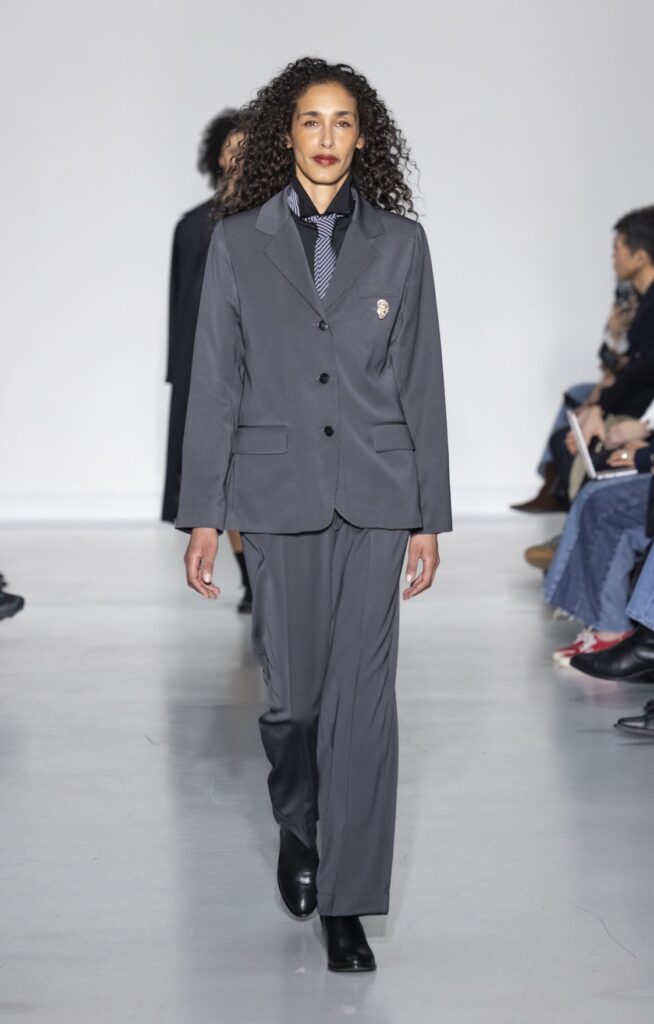
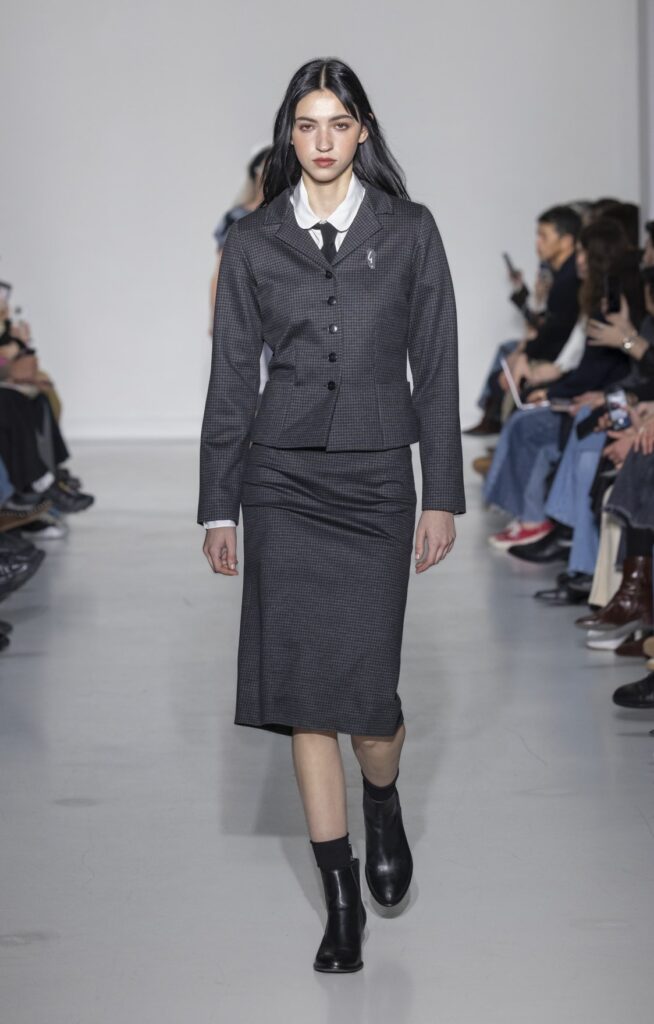
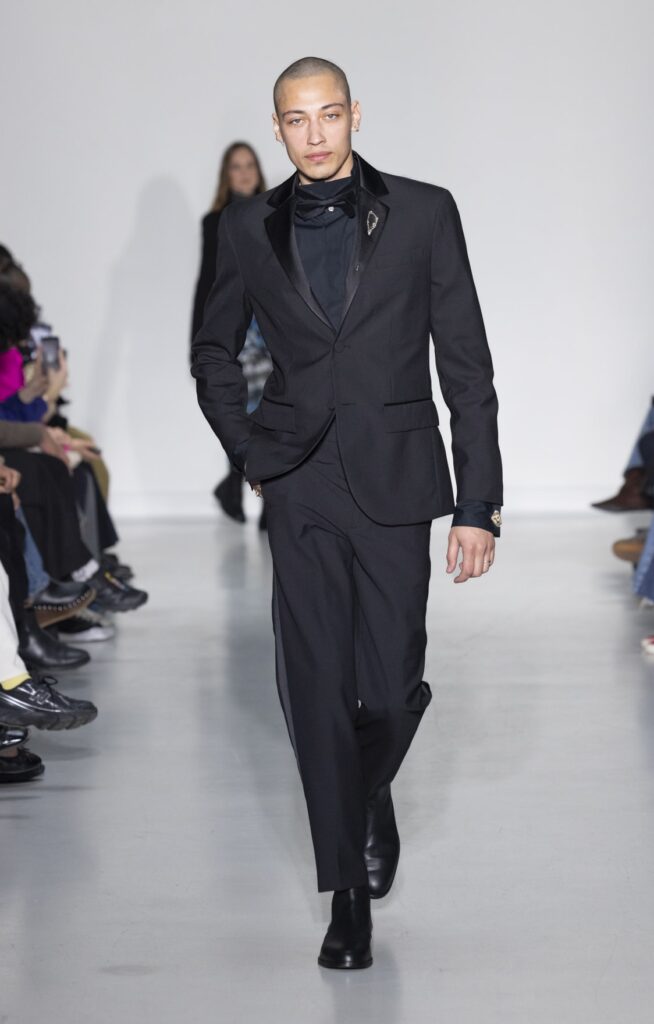
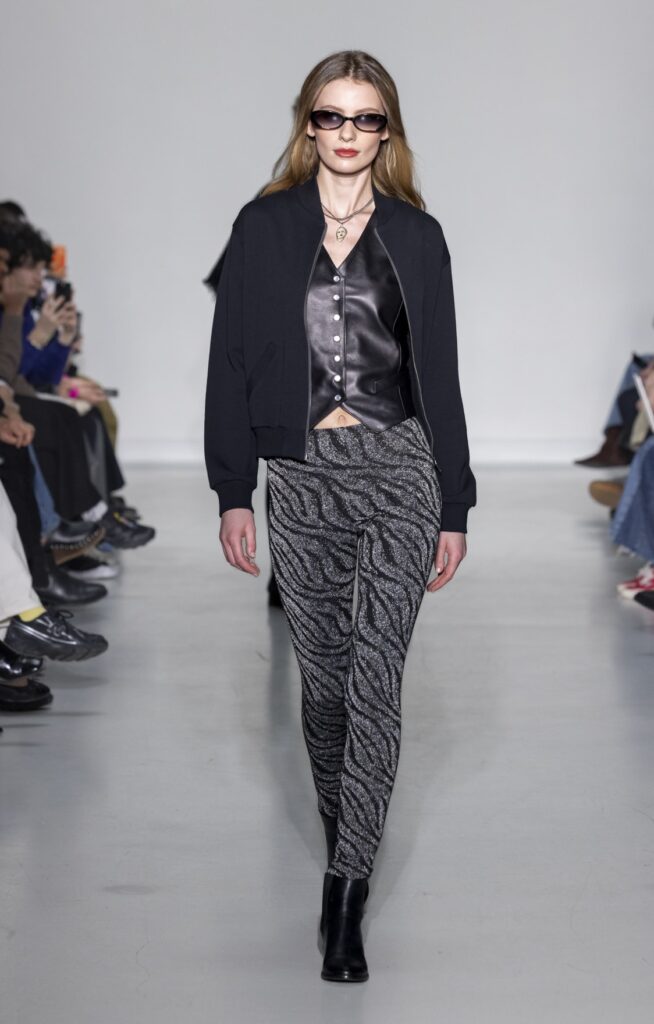
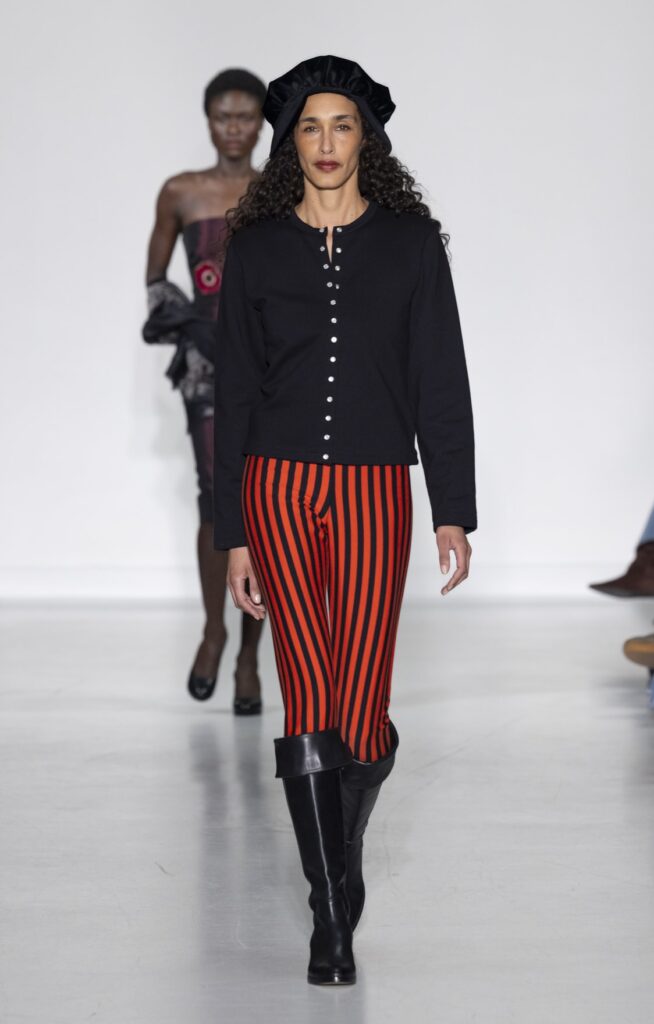
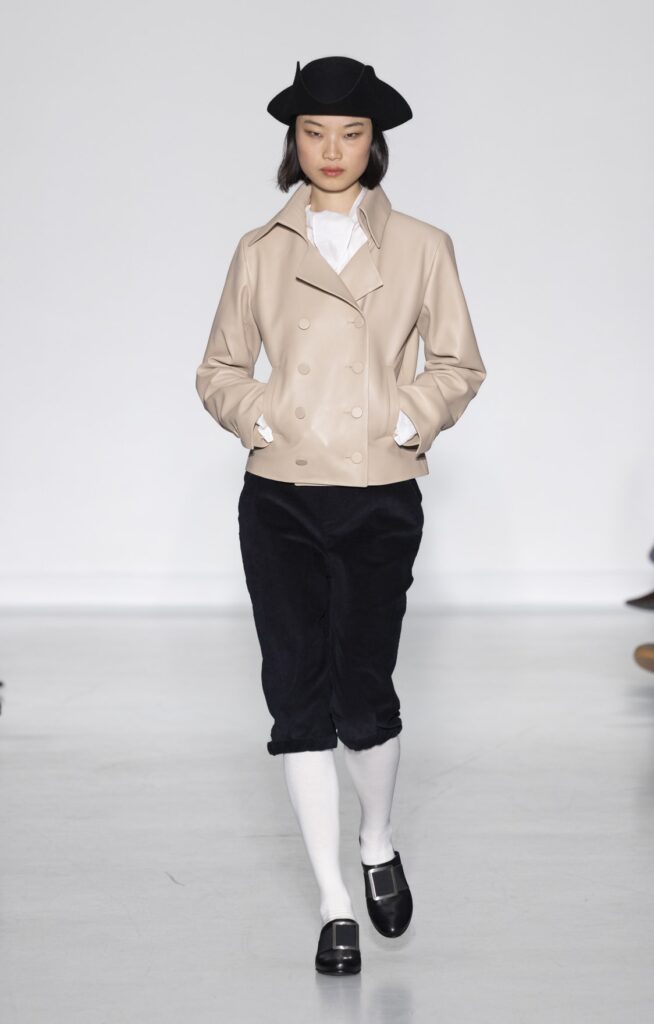
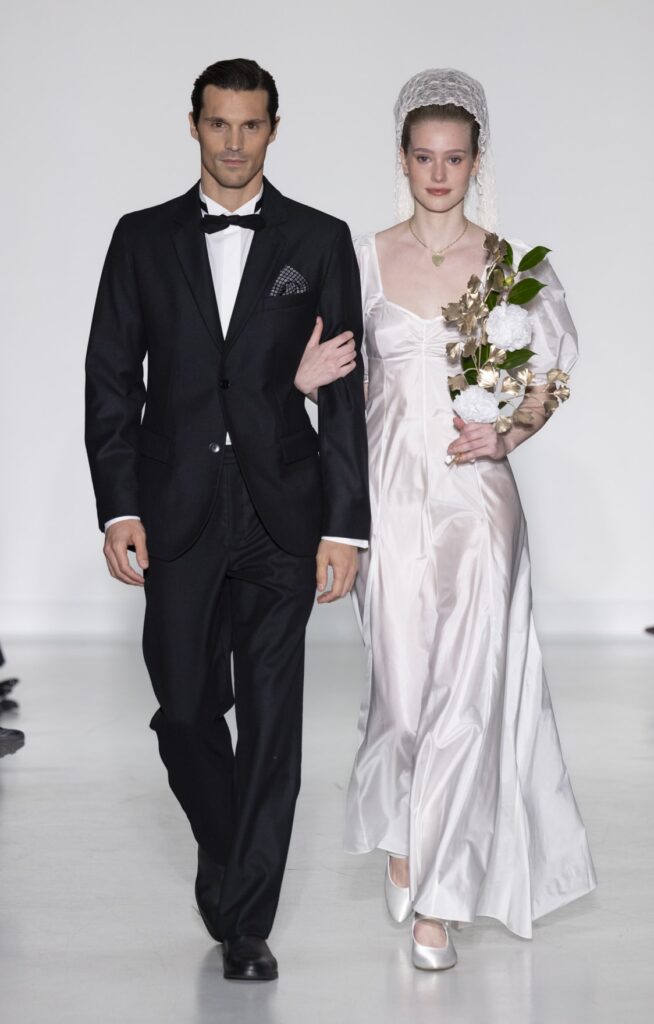
The collection opens with raw denim – a work jacket, wide-leg pants and a loose fit – and closes with a black tuxedo and an ivory satin wedding dress with lace headpiece. Between these two poles, the wardrobe unfolds without gender hierarchy: men and women wear the same tailoring cuts, the same duck-blue utility suits (look 9), the same broad-shouldered coats. The red Royal Stewart tartan appears in a long three-piece suit (look 23), a short skirt (look 22), a strict men’s suit (look 24) – same fabric, three distinct constructions, no concession to gendered use.
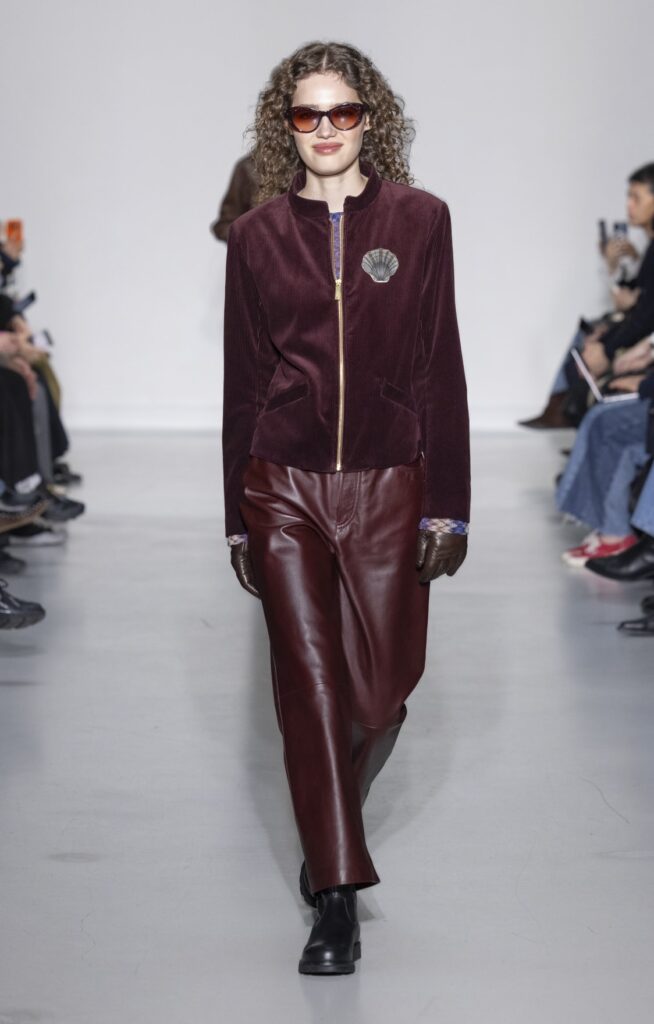
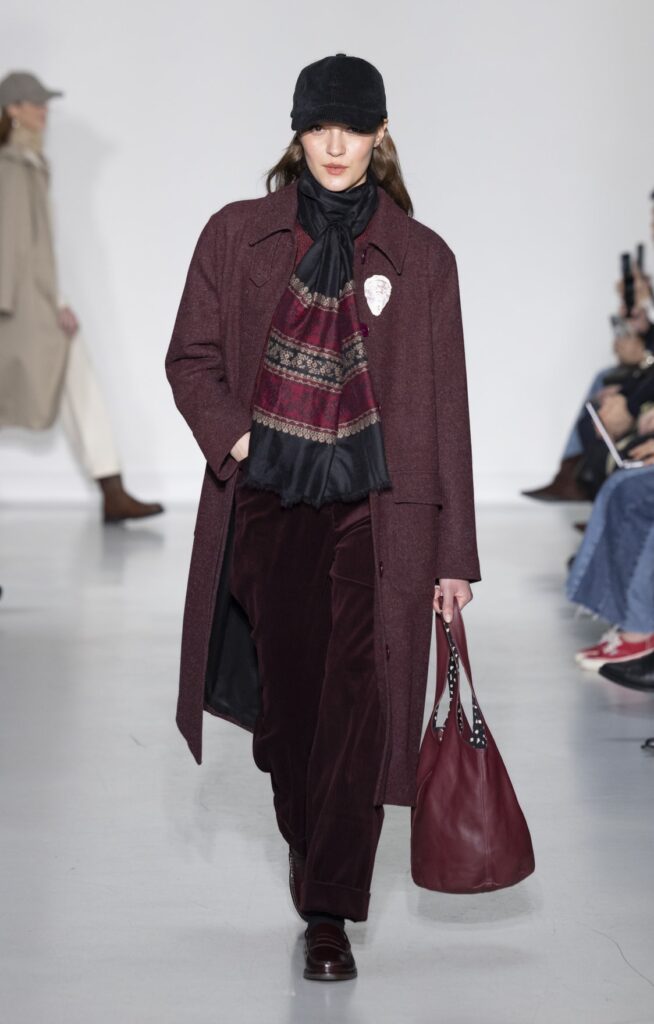
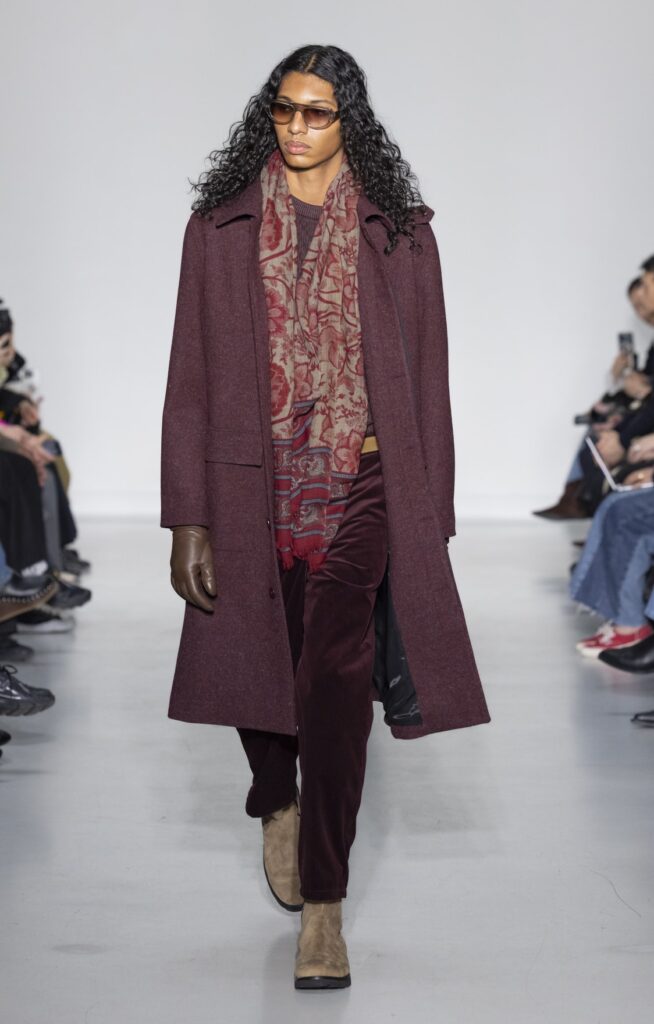
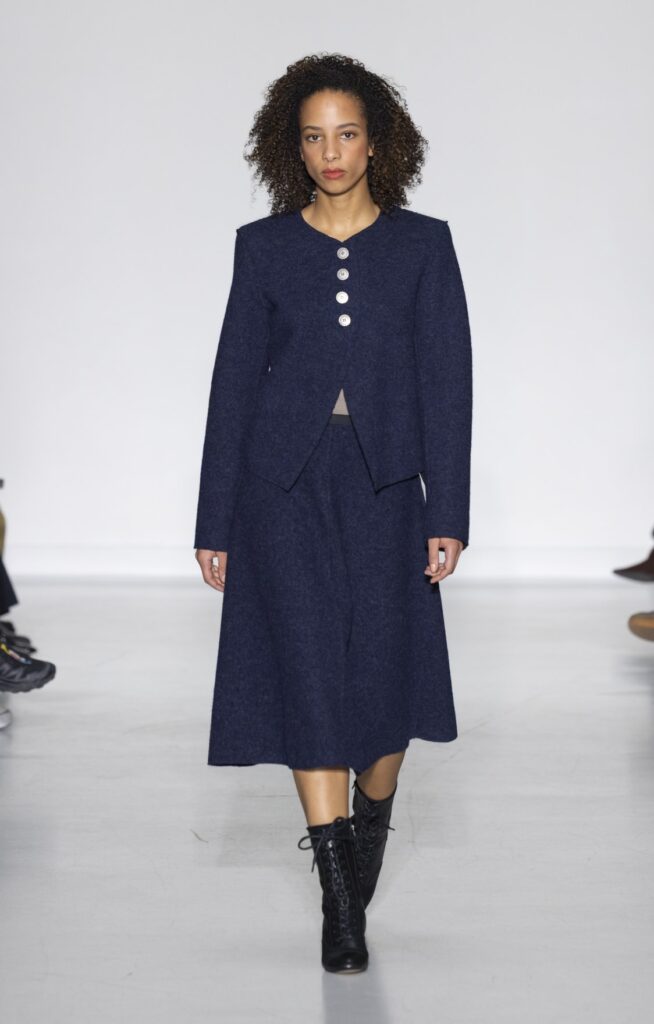
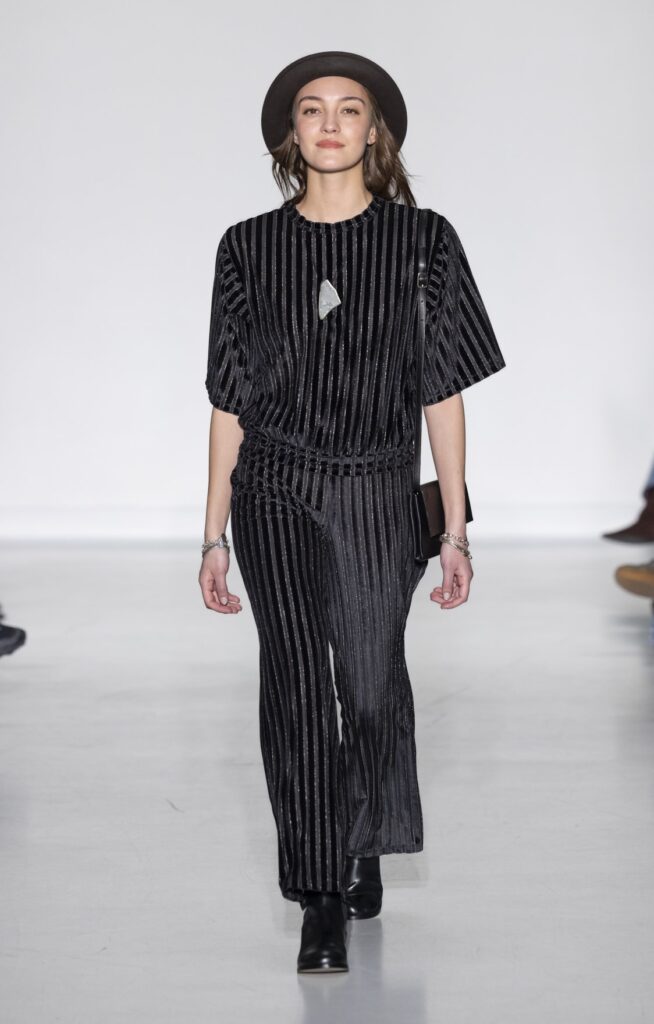
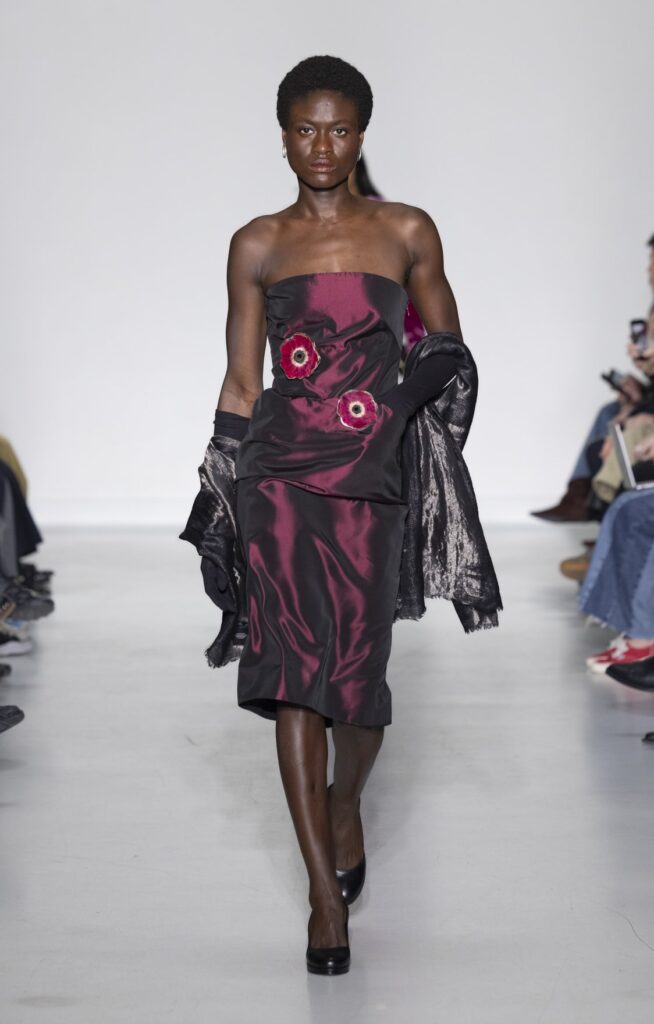
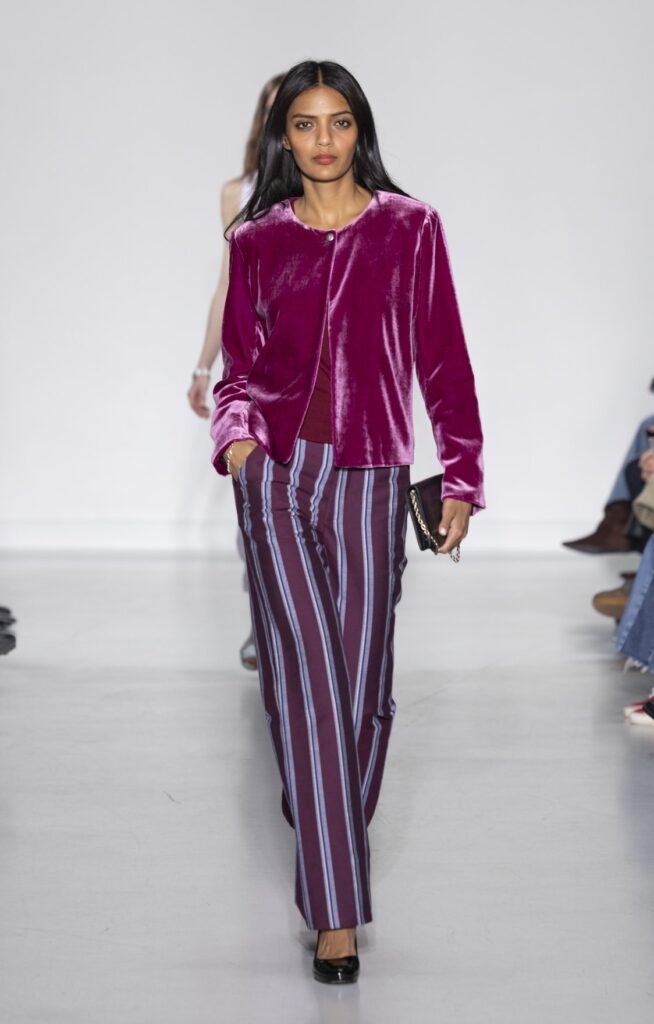
Velvet runs through the collection in several chromatic registers: deep plum (look 10), burgundy (look 53), midnight navy (look 41). On each, the cut remains simple – short blazer, collarless jacket, straight skirt – as if the material were enough to carry the season without the need for a complex silhouette.
agnès b. founded his gallery at the same time as his stores. Forty years later, photography is still part of the collections. This is not loyalty to an aesthetic – it’s proof that a house can build a language and stick to it.
Cette publication est également disponible en :

