
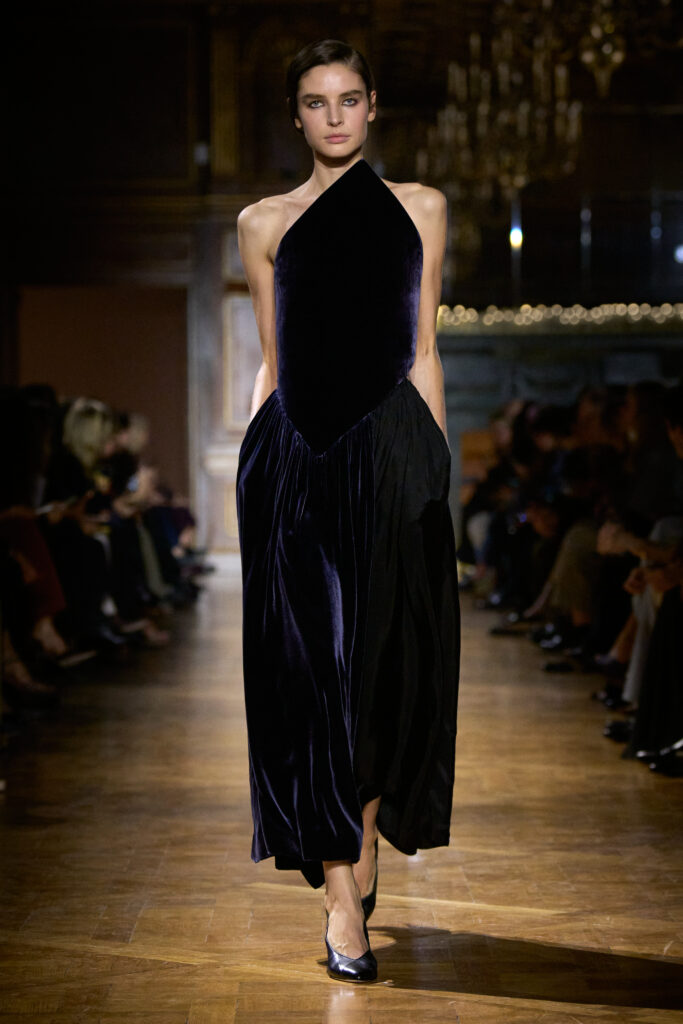
For Fall-Winter 2026, Victoria Beckham has chosen the Cité Internationale Universitaire as her stage – a choice that is not neutral. This interwar campus, built on the geography of nations, resonates with Tamara de Łempicka: a woman without a fixed passport, a Pole in Paris, a cubist in Art Deco salons, a portraitist of emancipation in costume.
The collection doesn’t quote the painter. It uses her as grammar.
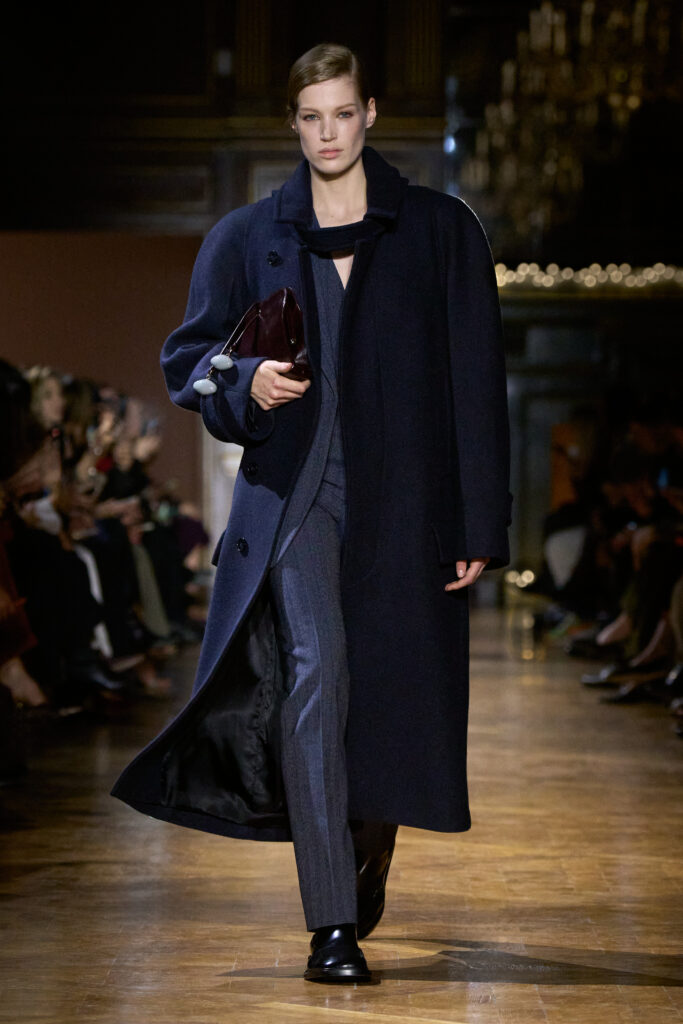
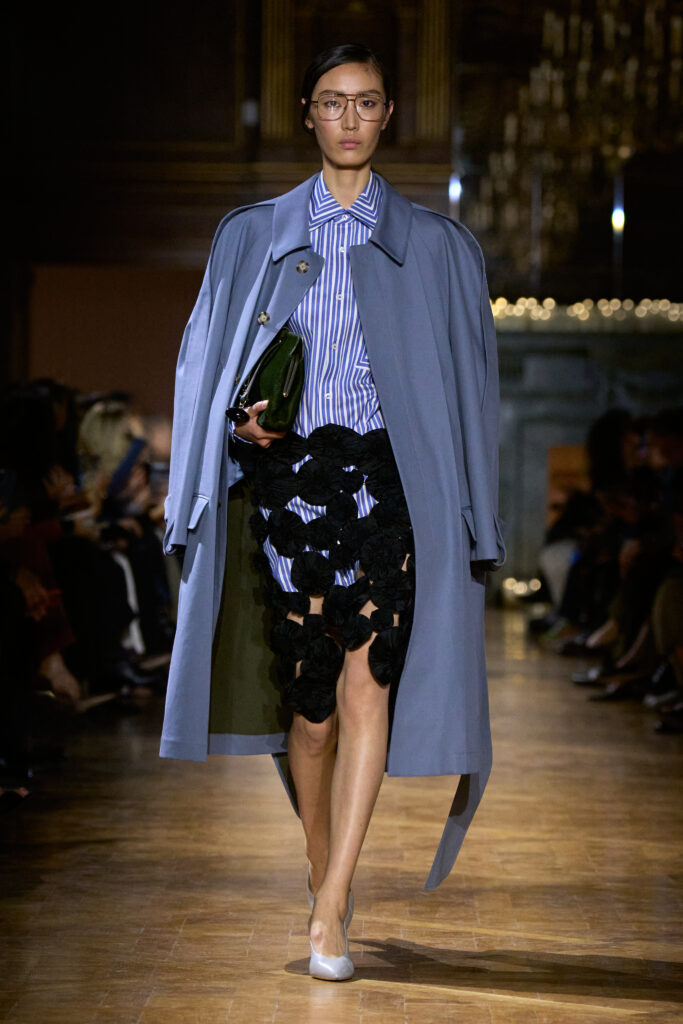
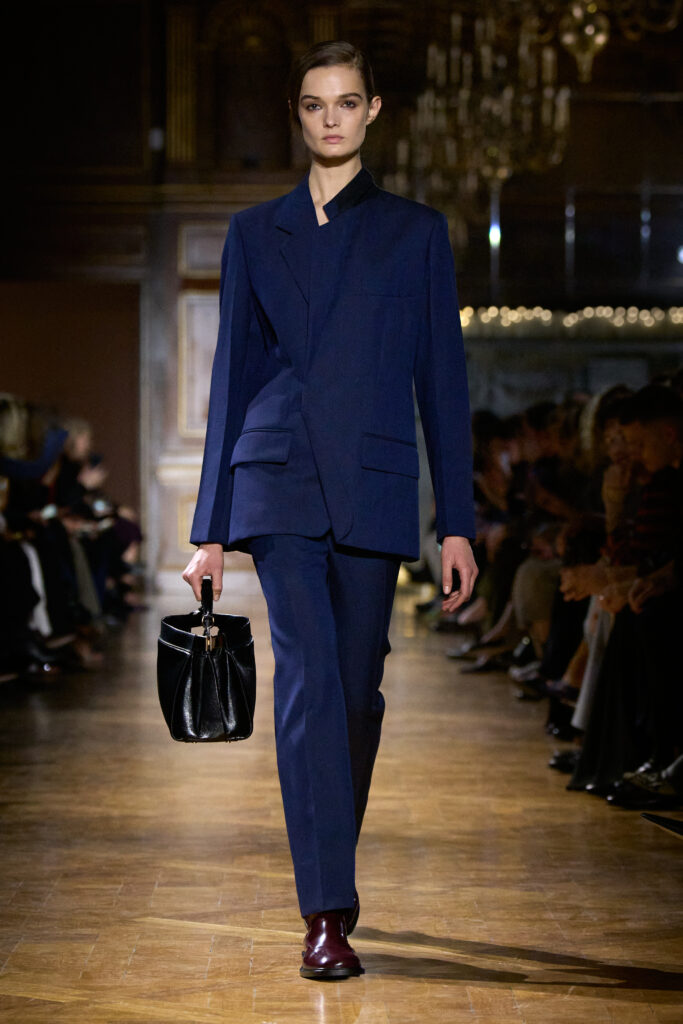
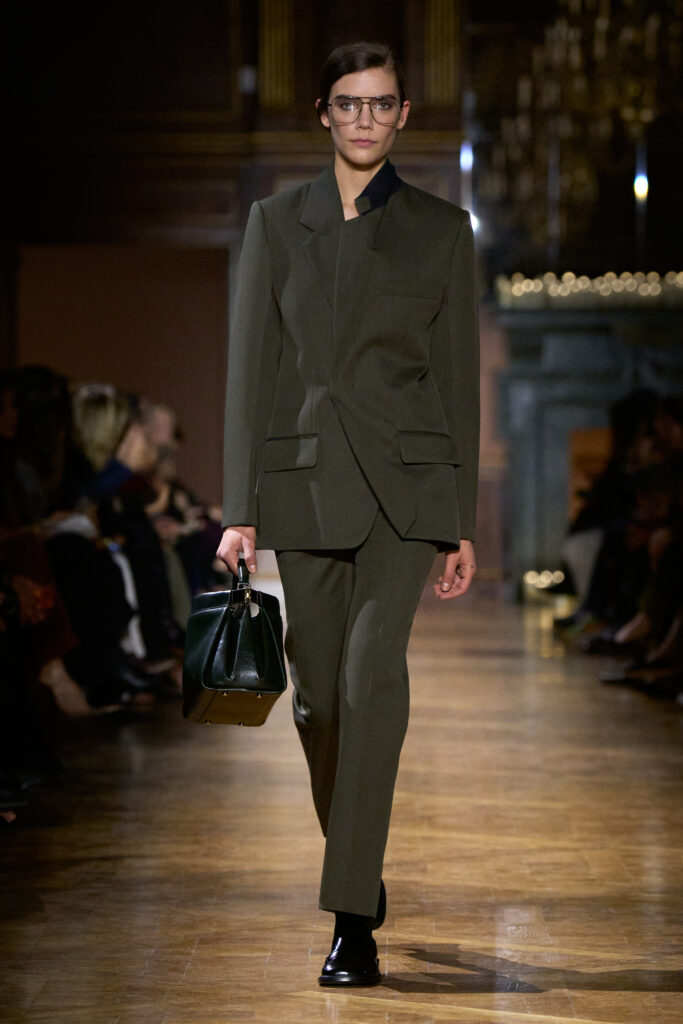
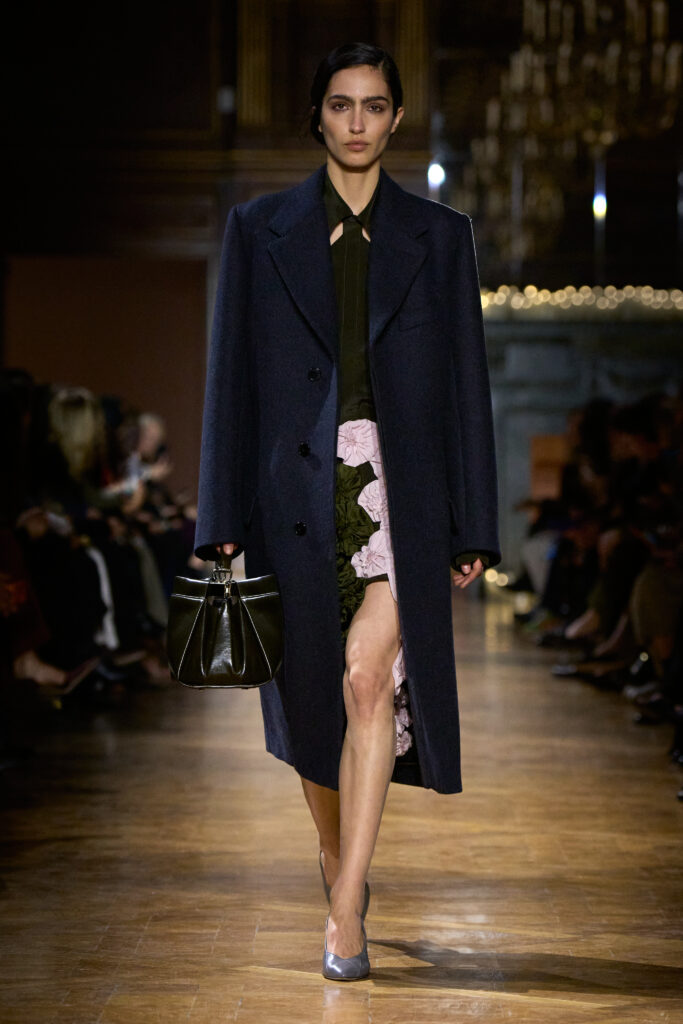
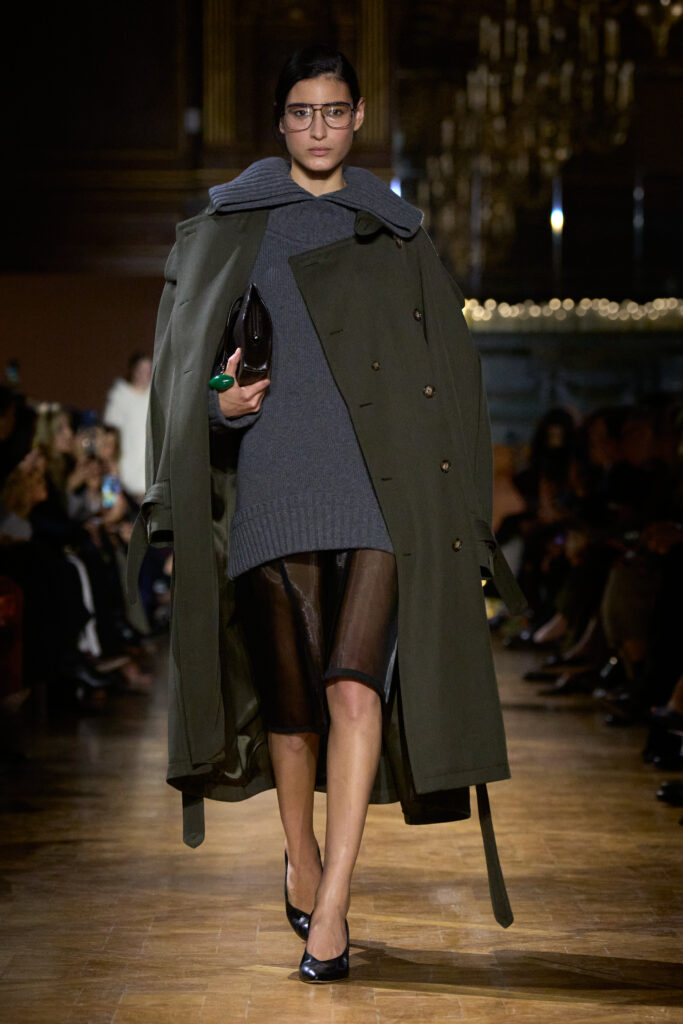
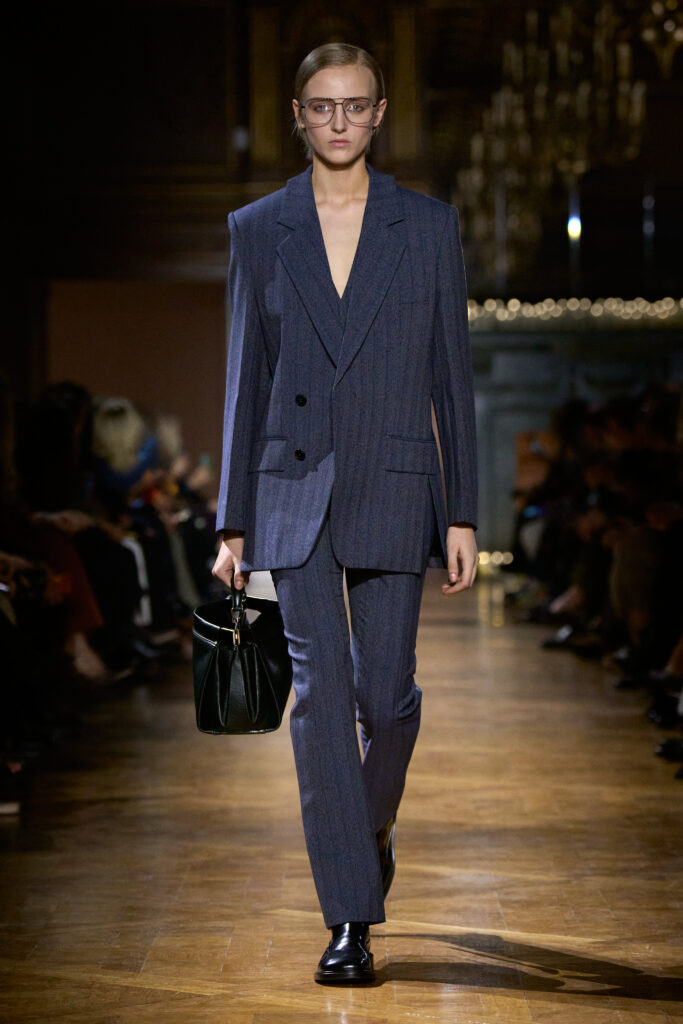
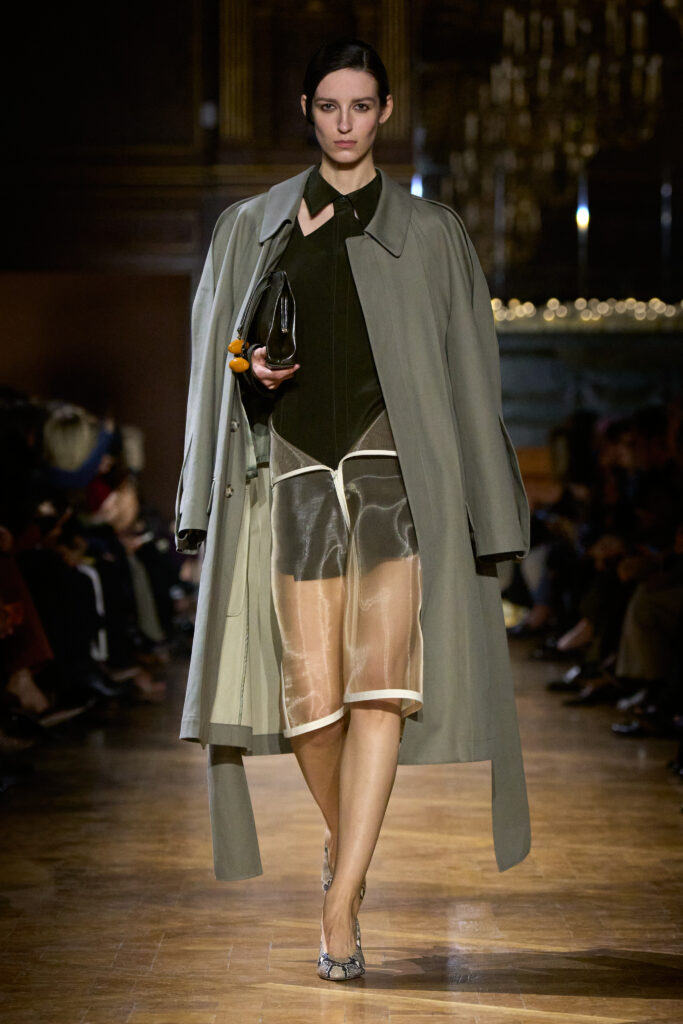
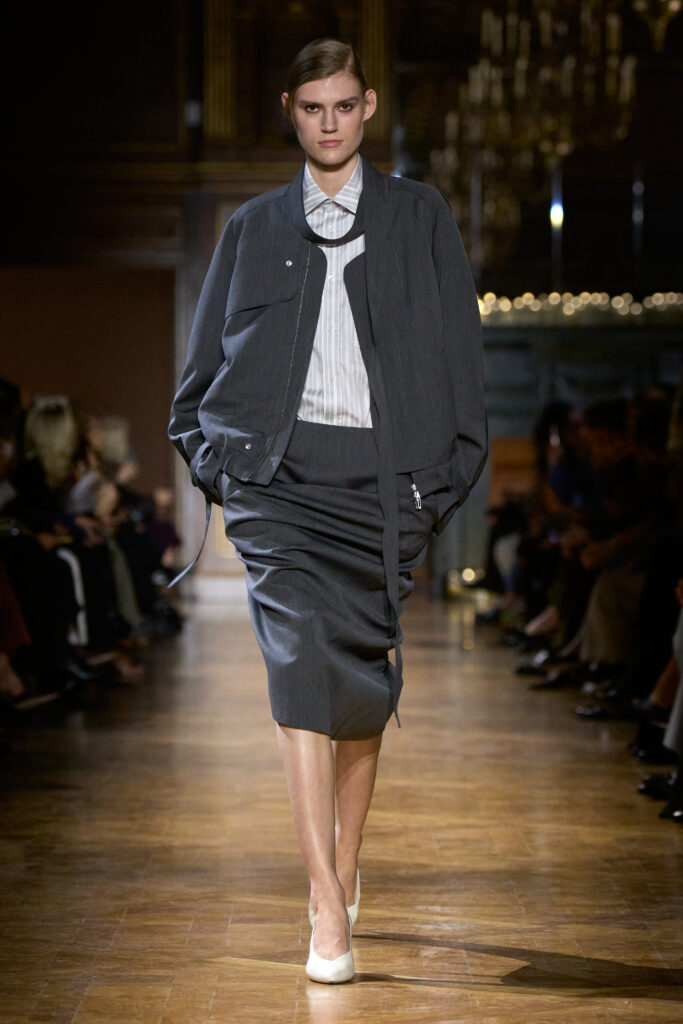
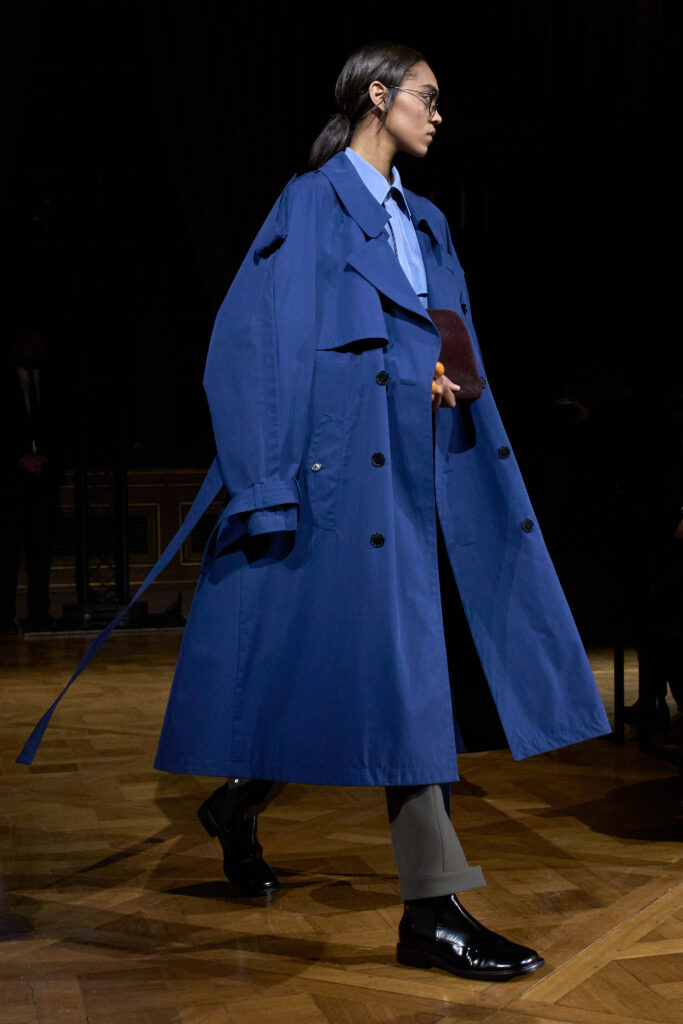
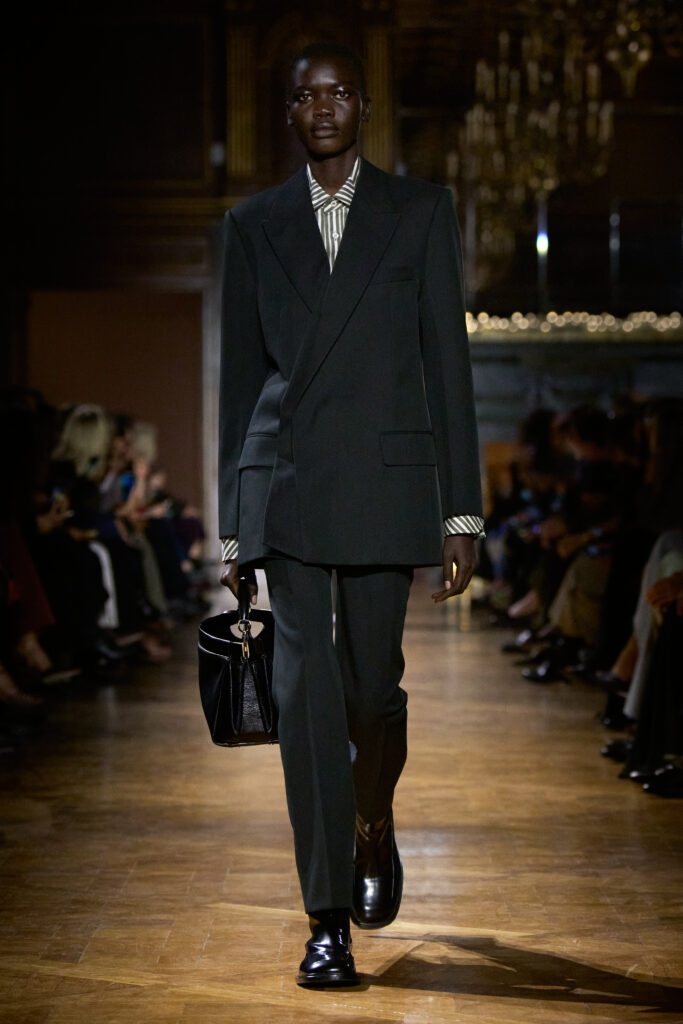
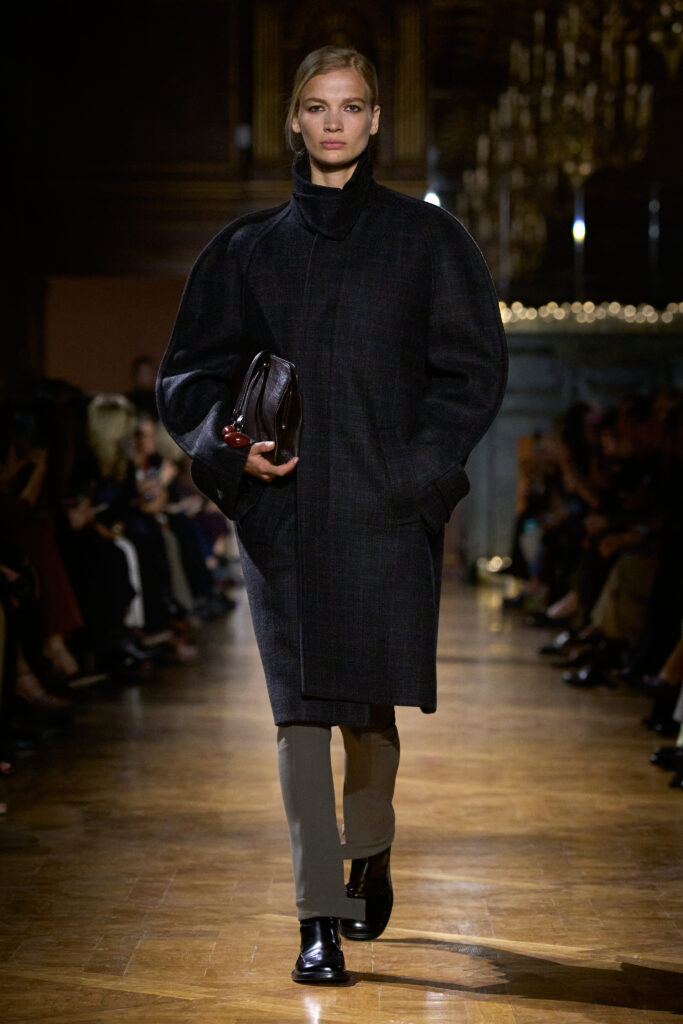
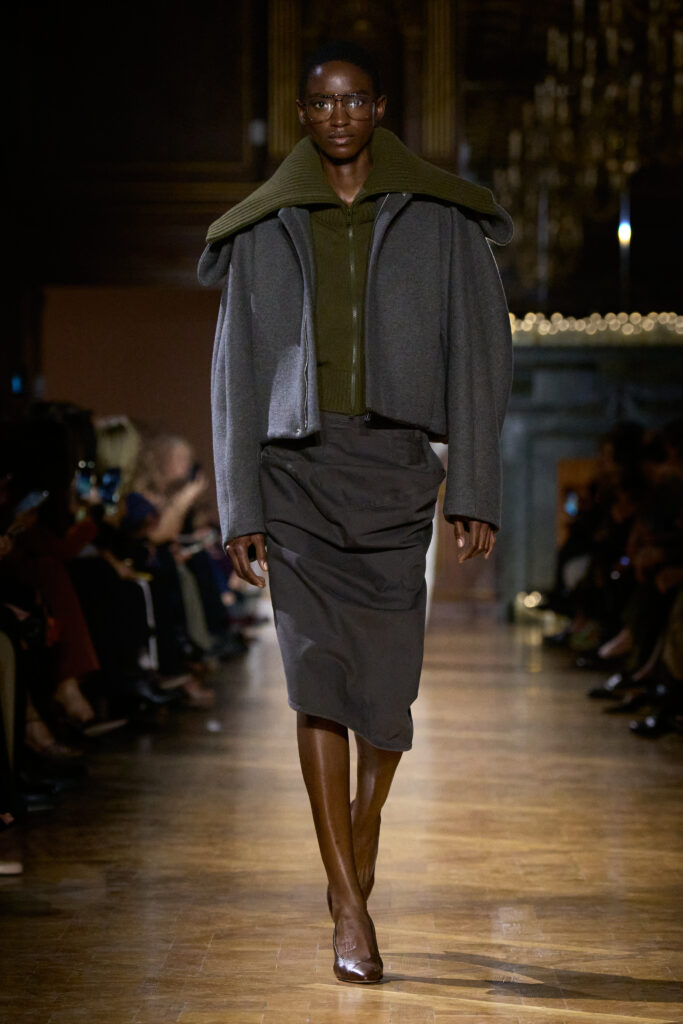
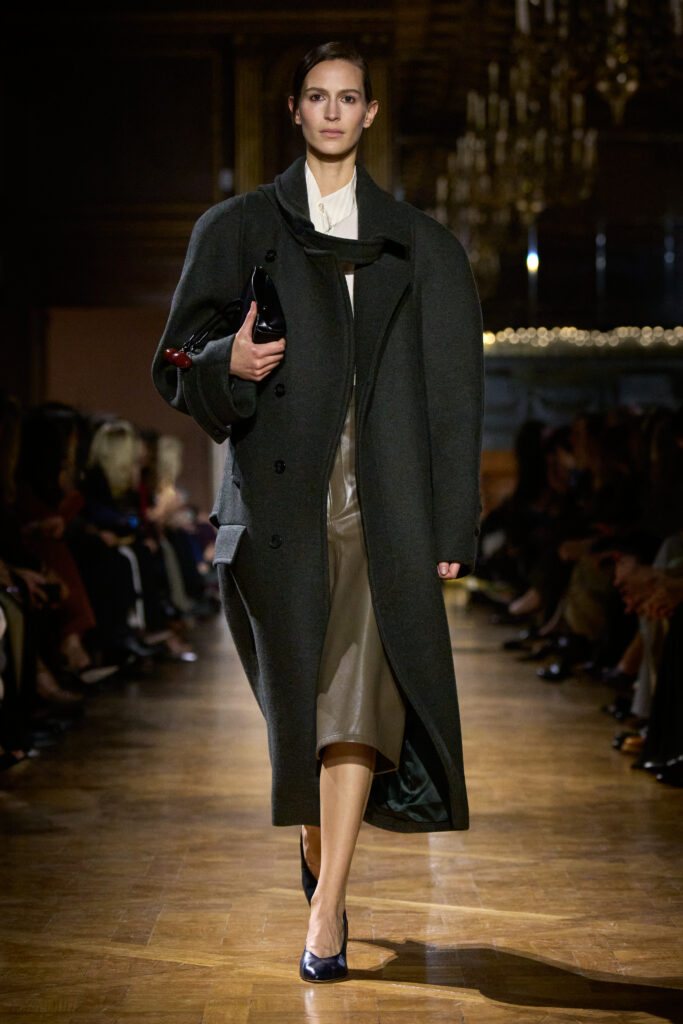
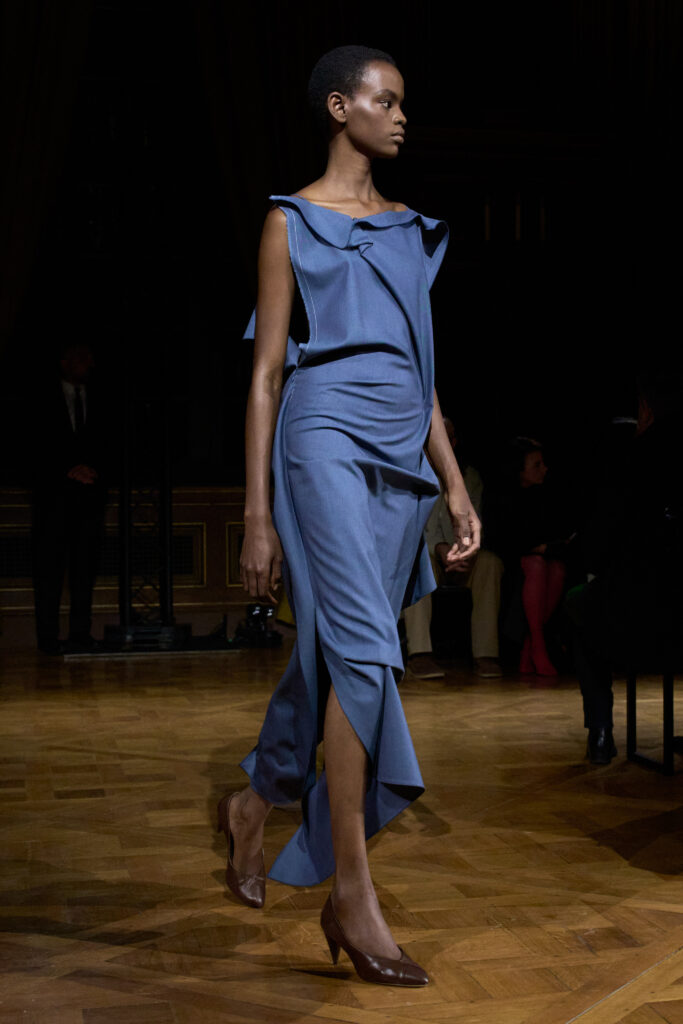
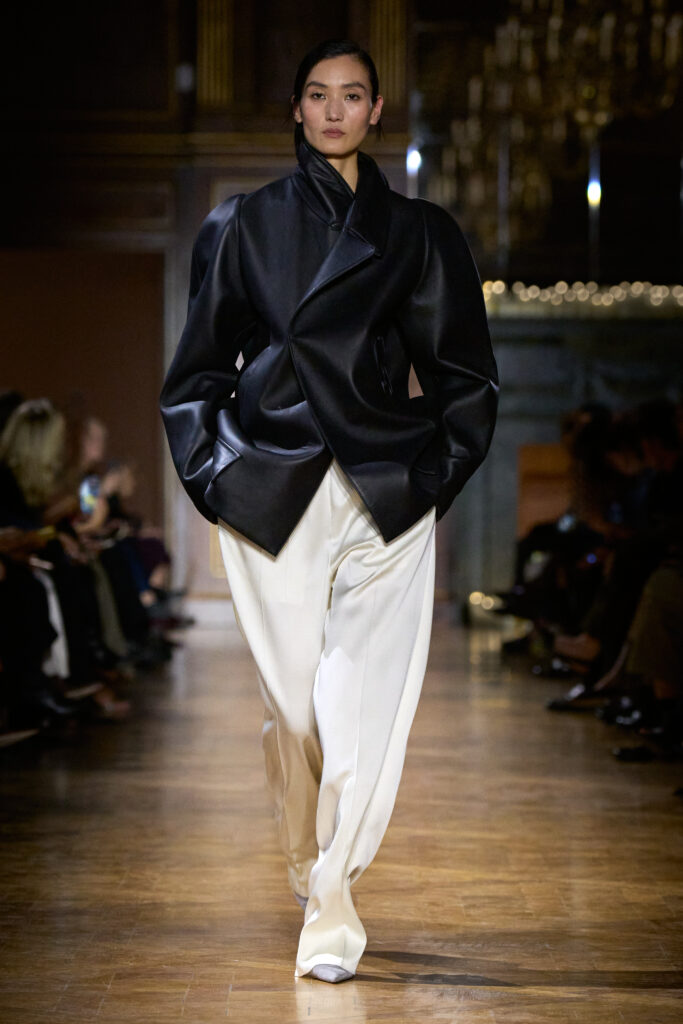
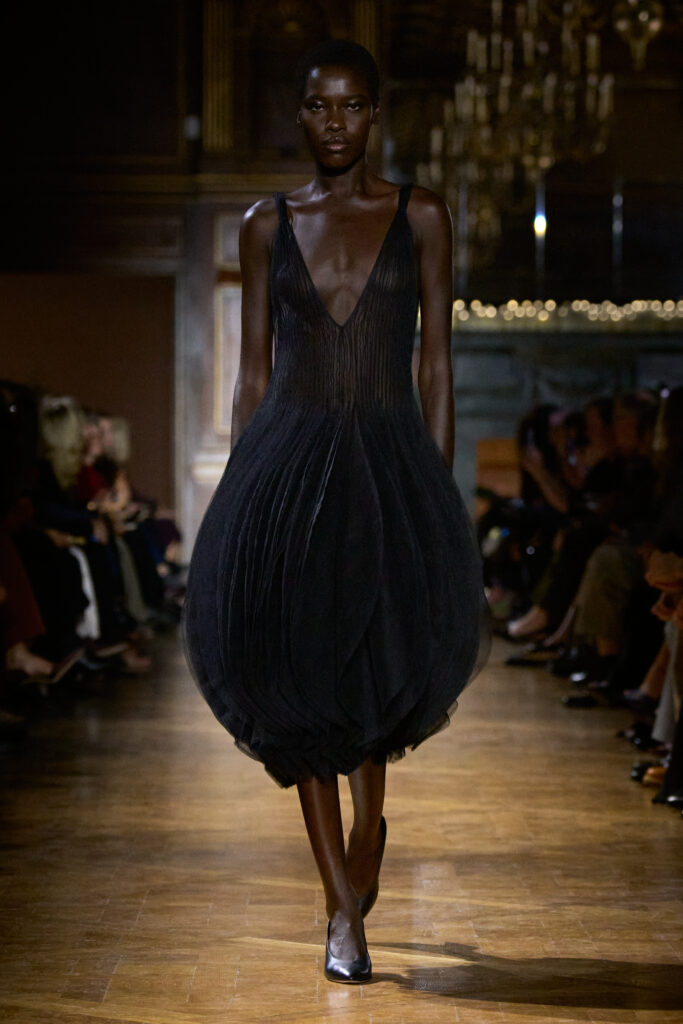
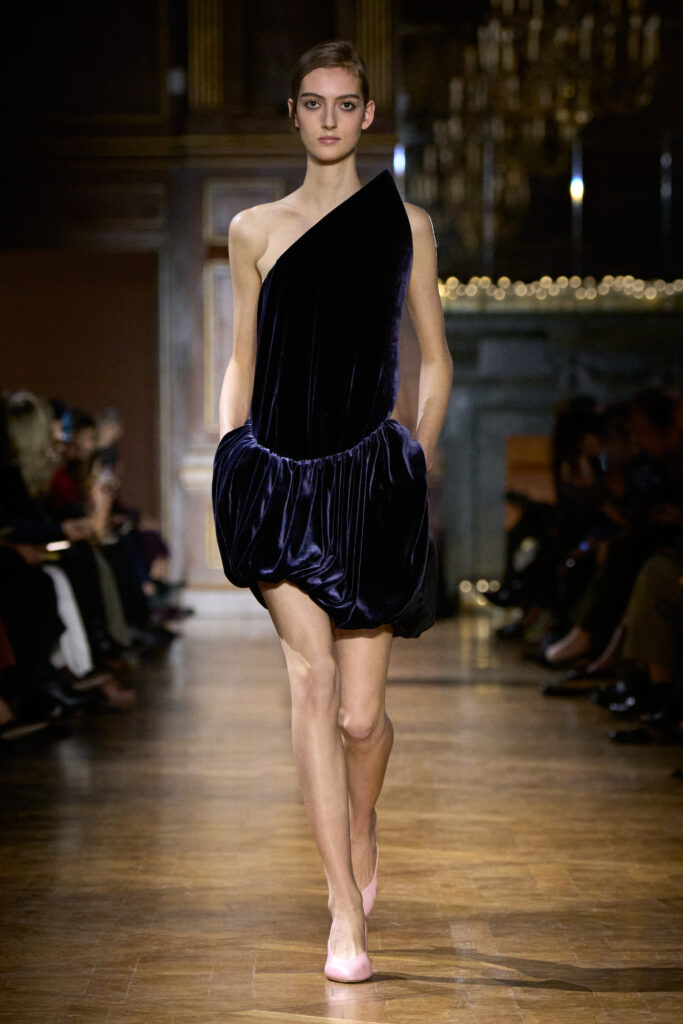
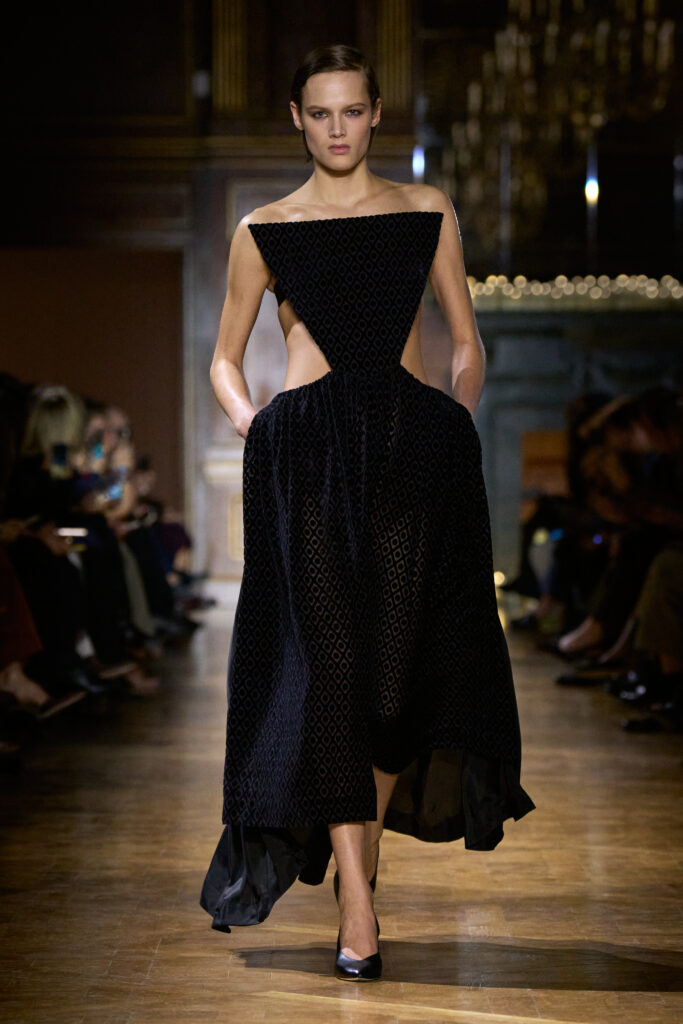
Łempicka treated clothing as the architecture of the body. In his paintings, a coat is not an accessory: it’s a line of force that reorganizes space around a silhouette. Beckham has translated this logic into pattern-making. The car coats in the collection are cut flat-cut – two-dimensional, without curves – to produce, when worn, an effect of depth in contrast with the body. The epaulette disappears into the detail: it runs from wrist to wrist, crossing the entire shoulder, transforming the back into a horizontal plane. This is not a structured shoulder in the manner of the eighties; it’s a geometry borrowed from painted frames.
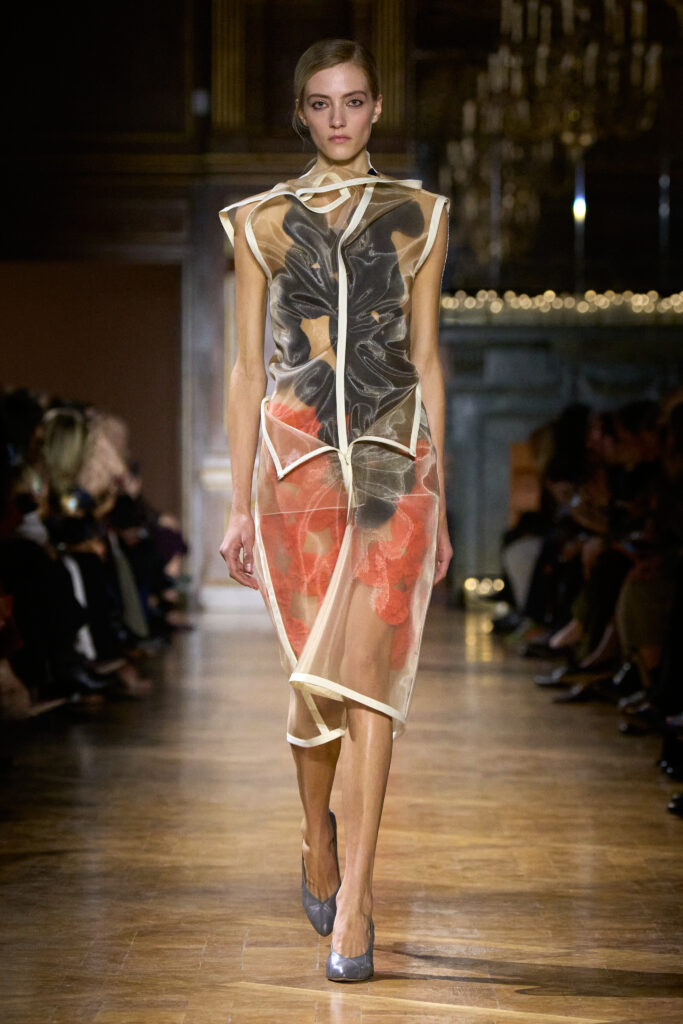
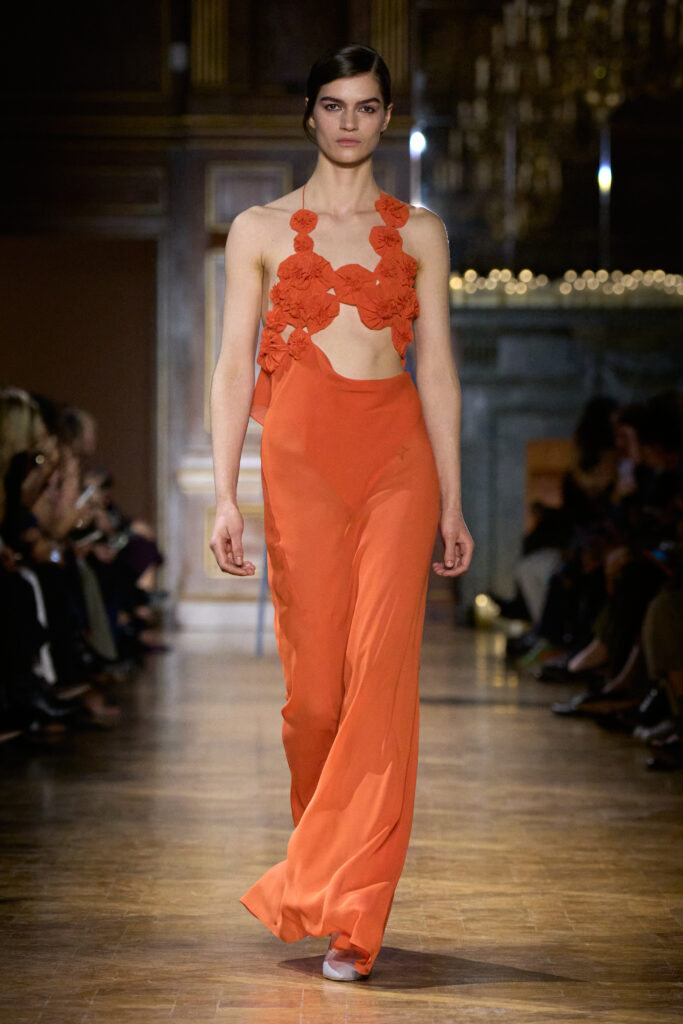
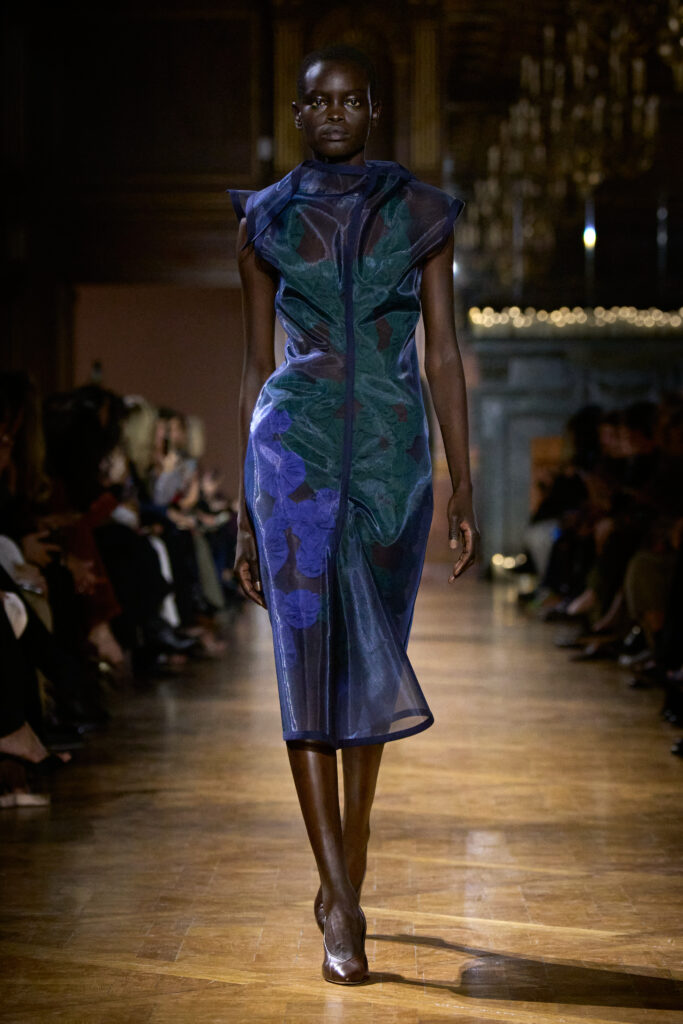
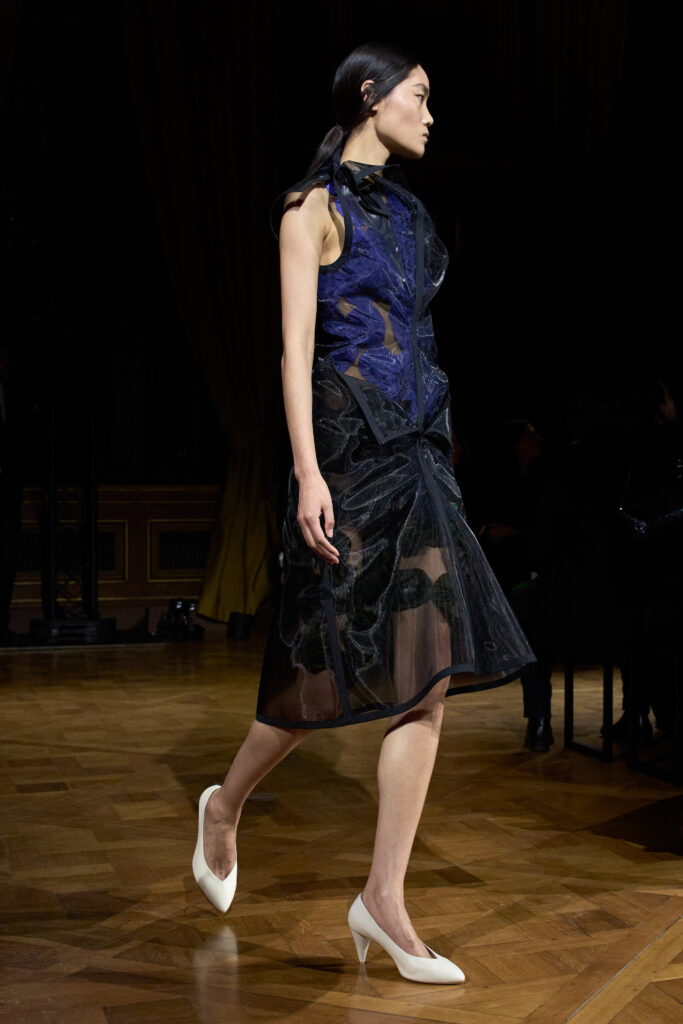
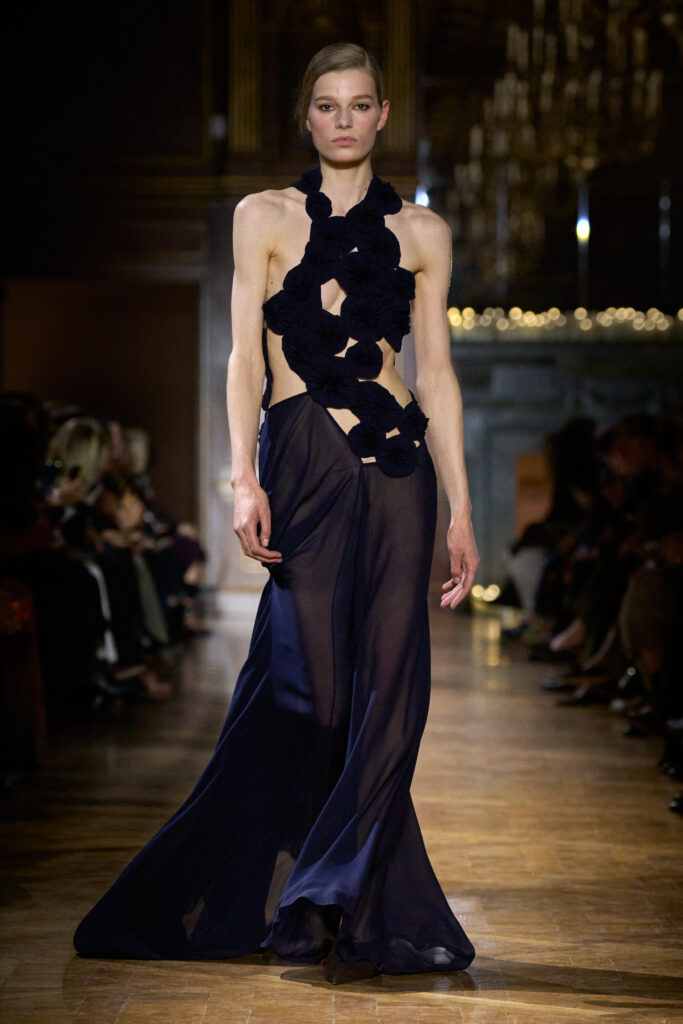
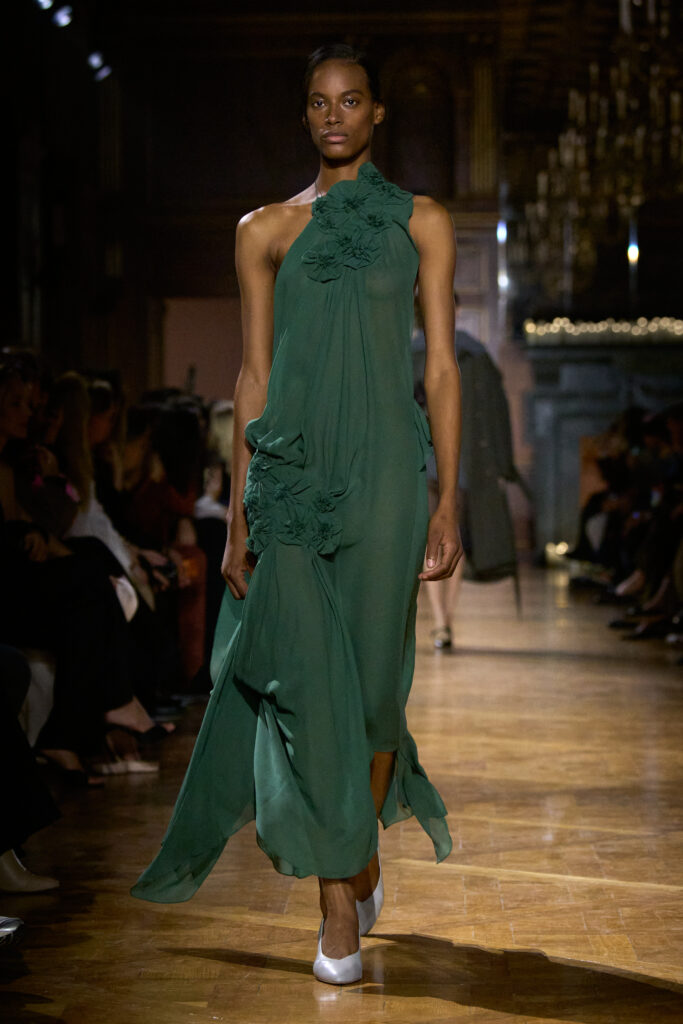
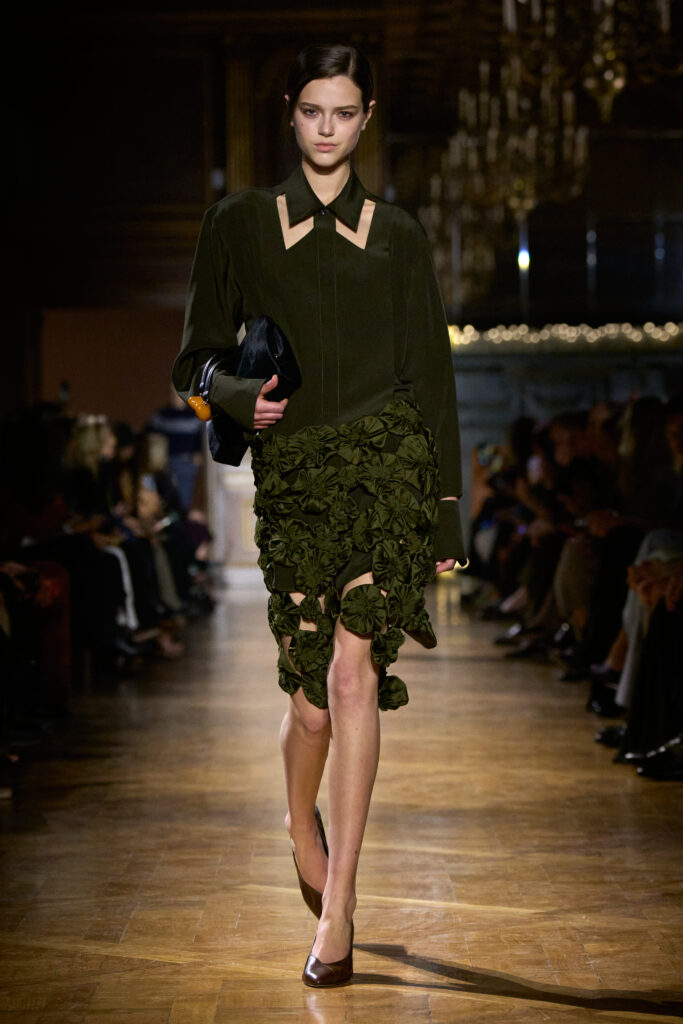
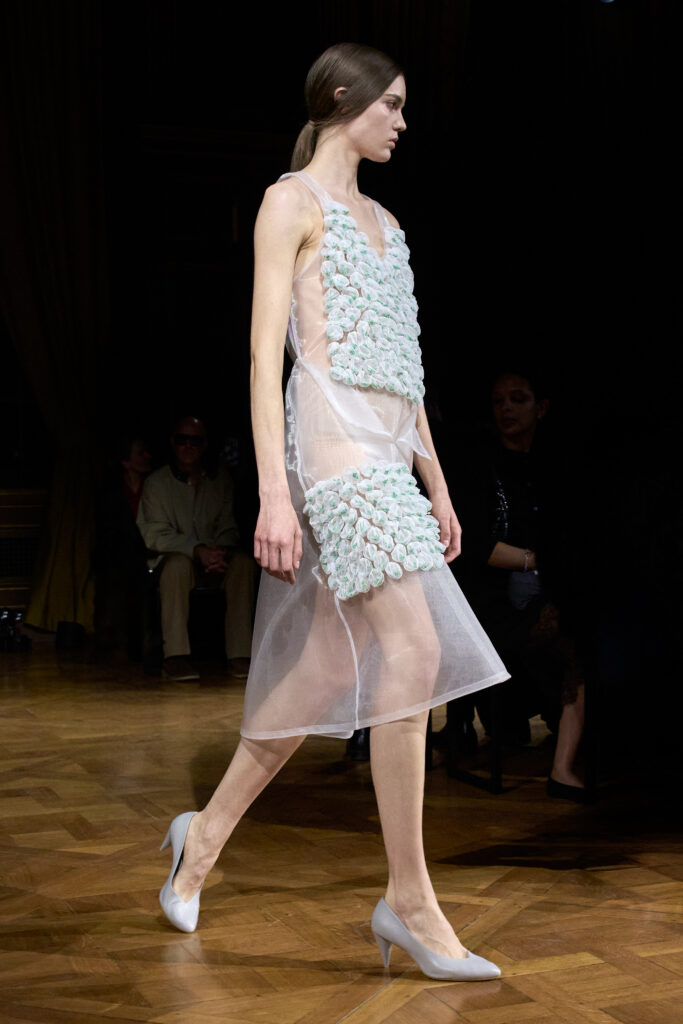
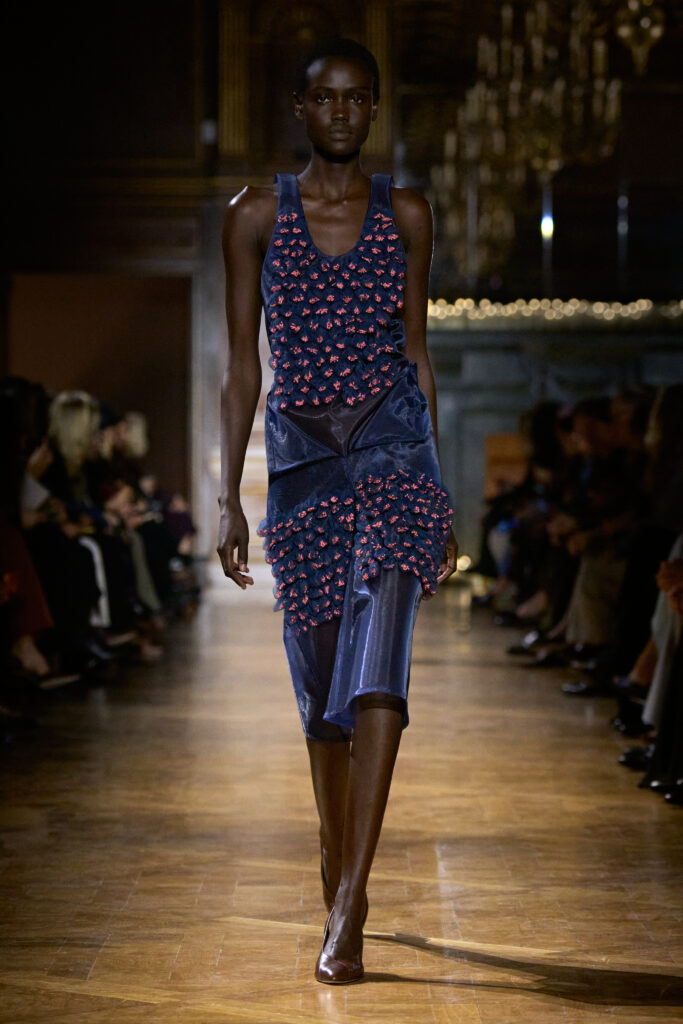
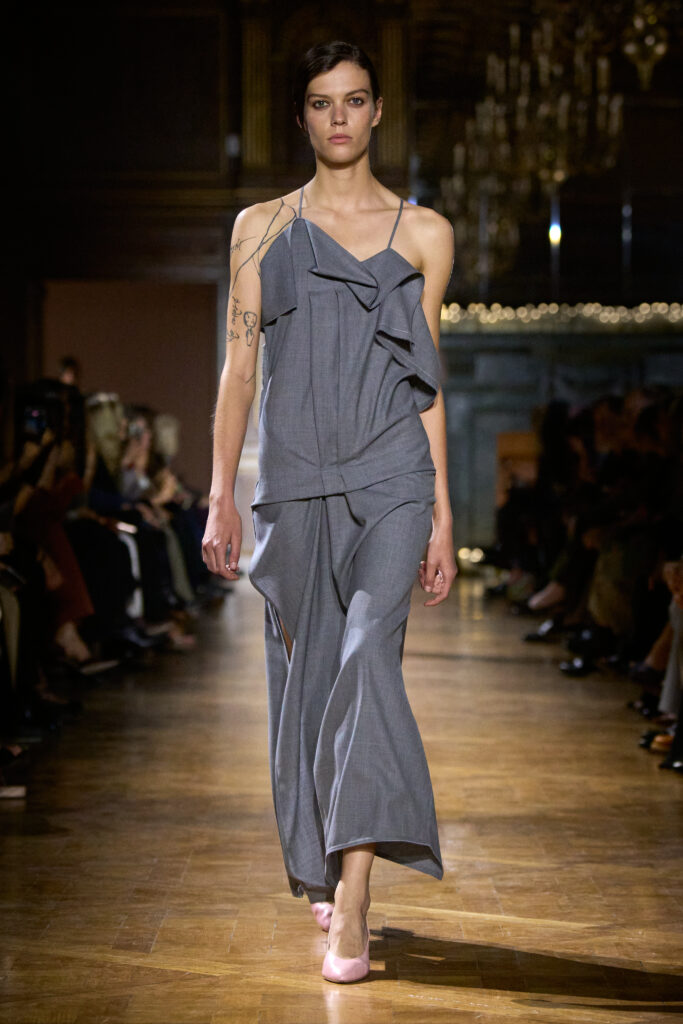
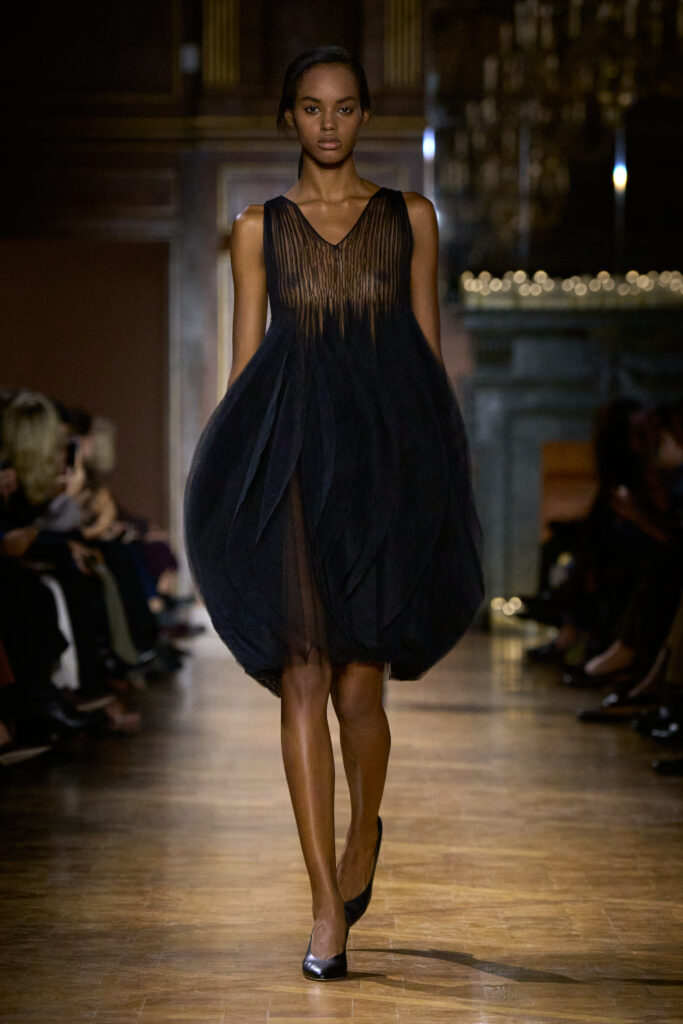
Detail – The three-dimensional rosettes, hand-assembled into tops and bustiers, proceed from the same reasoning: the depth of field that Łempicka obtained through light in painting, the collection constructs by superimposing material. In georgette or satin, floral formations are sometimes covered with a transparent crinoline that adds an extra optical layer – the garment seen through a garment, like a painting under glass.
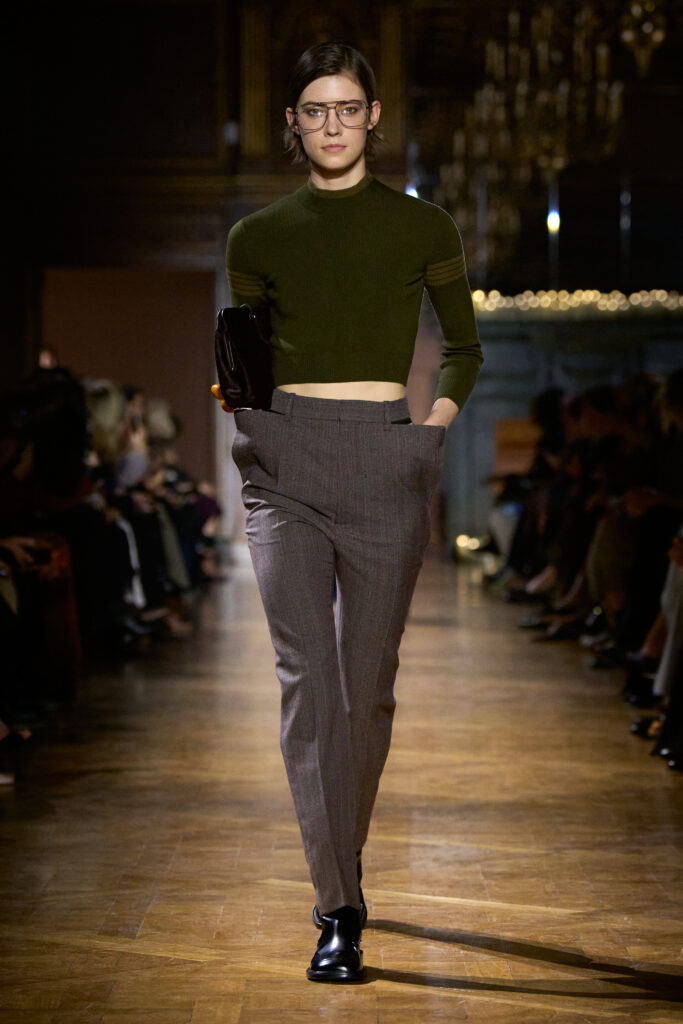
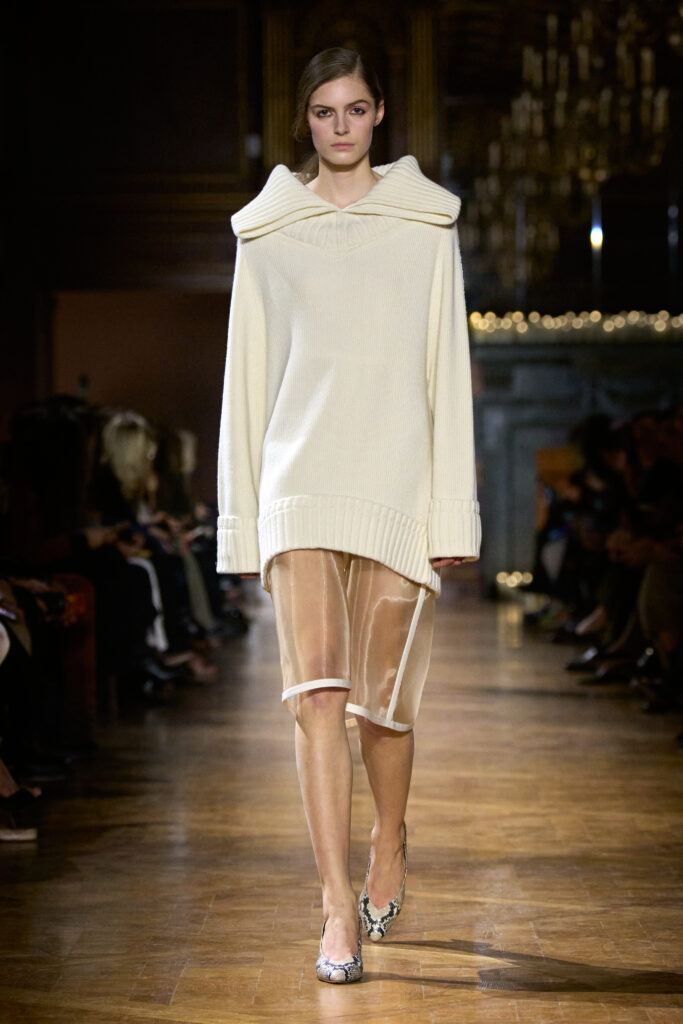
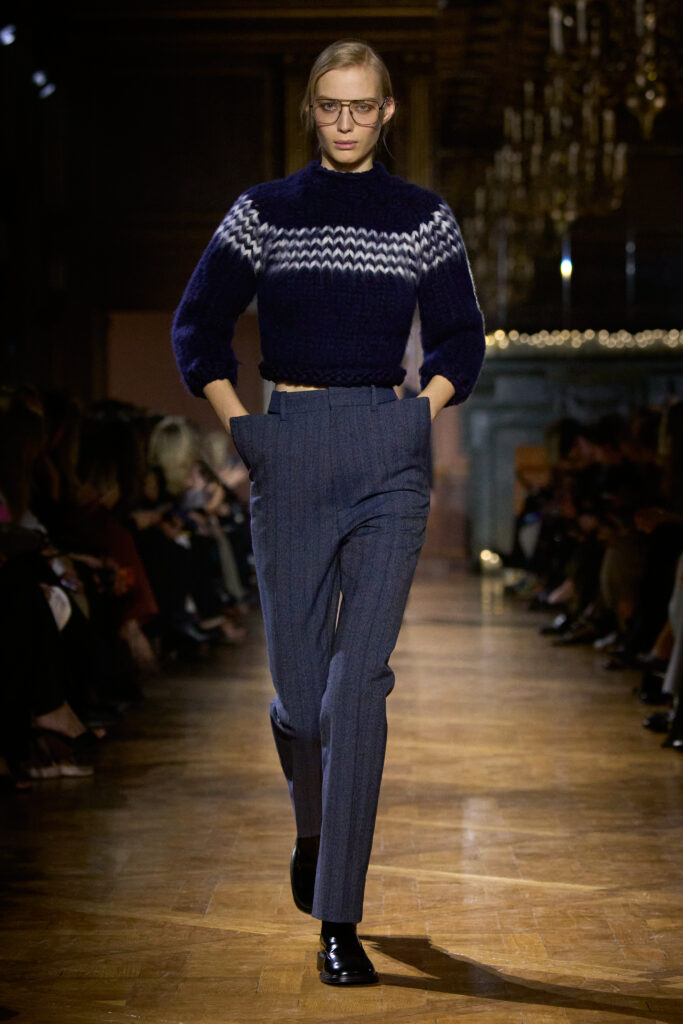
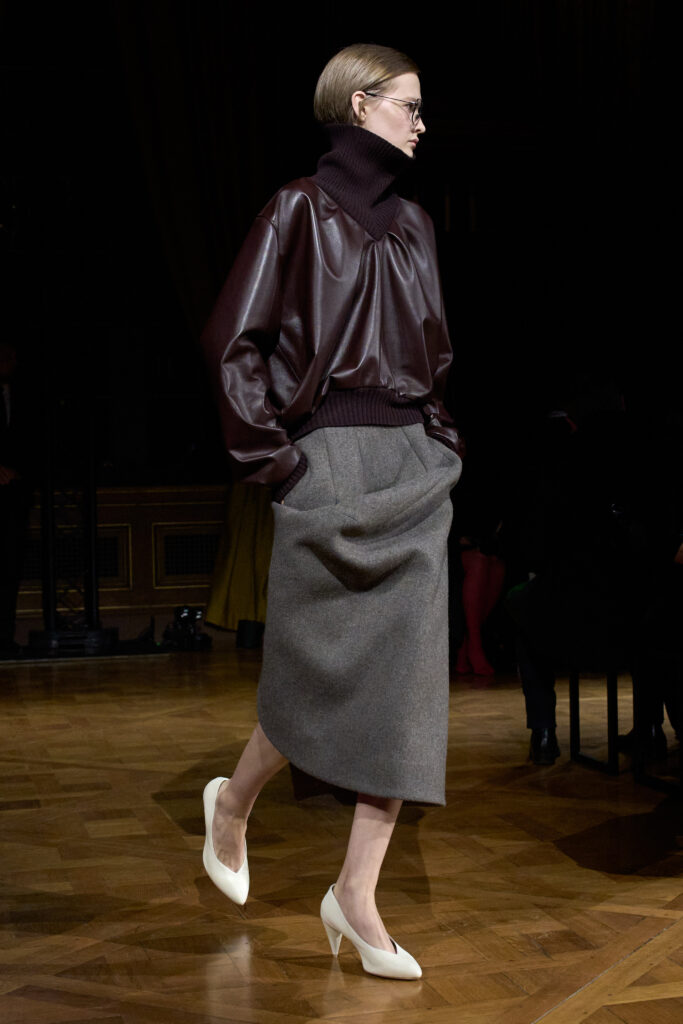
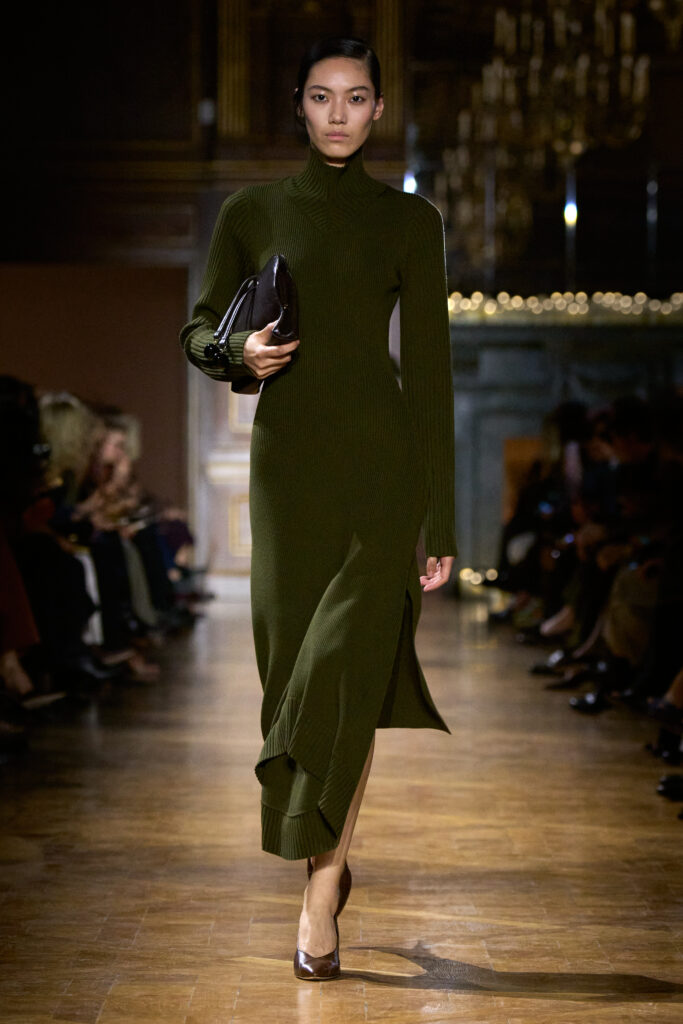
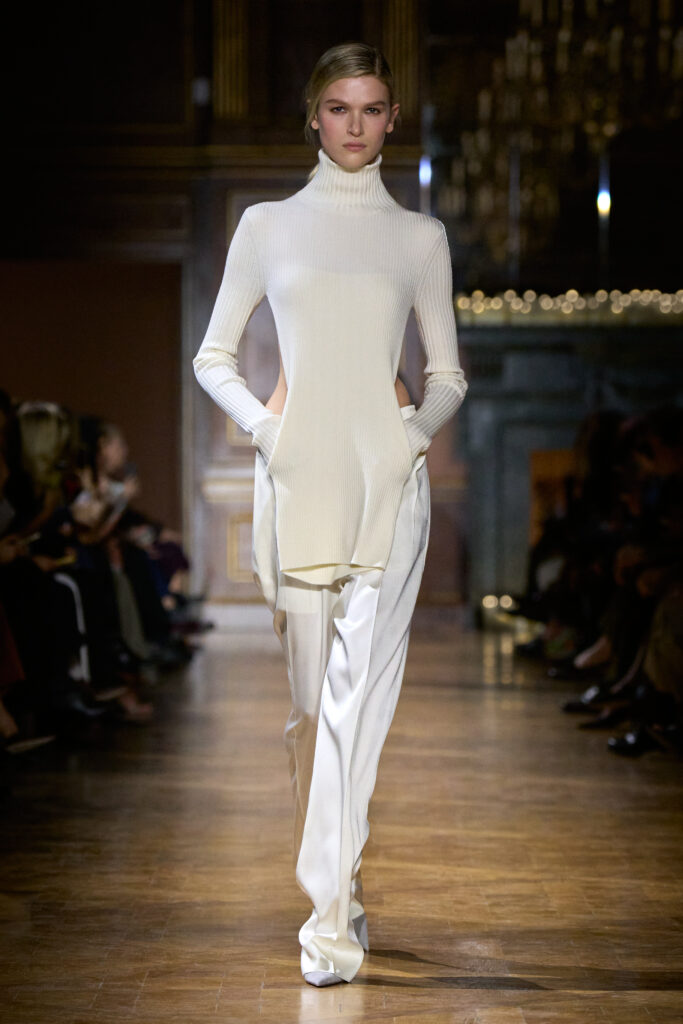
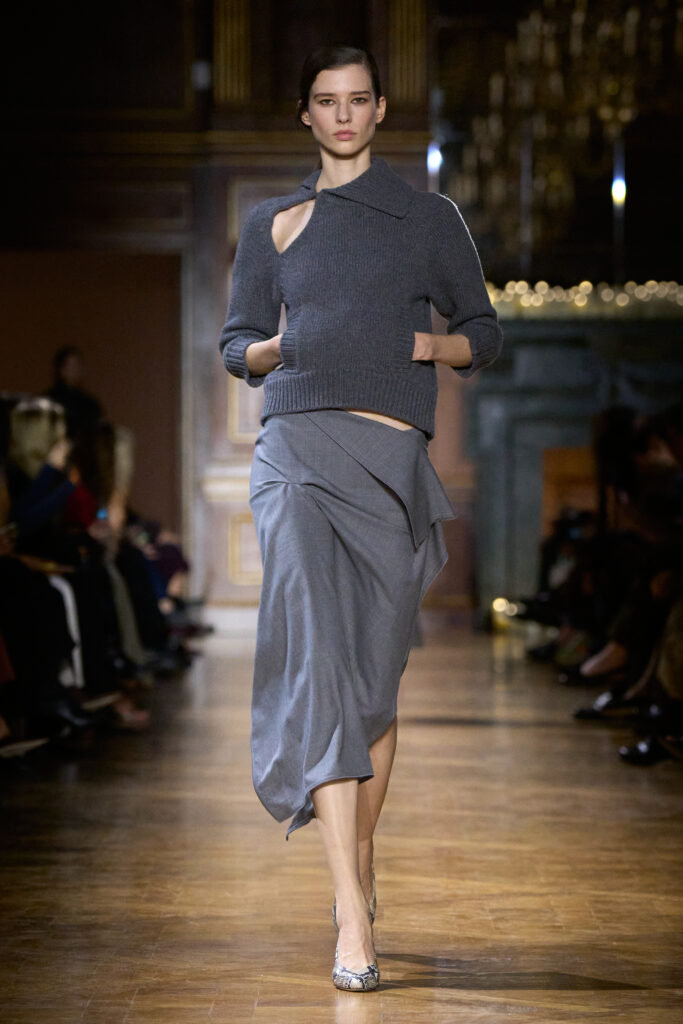
Knitwear is the site of another experiment. A merino sweater, worn through a slit at the back of the shoulder, creates a tubular panel at the front that modifies the reading of the bust without altering the piece itself. The gesture is minimal; the transformation, substantial.
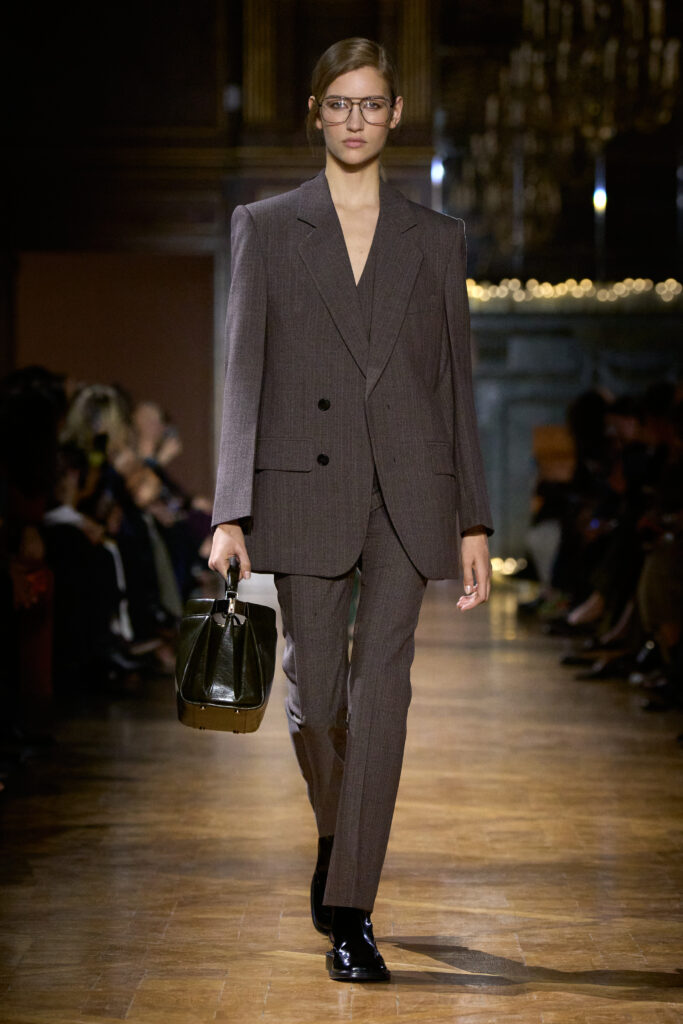
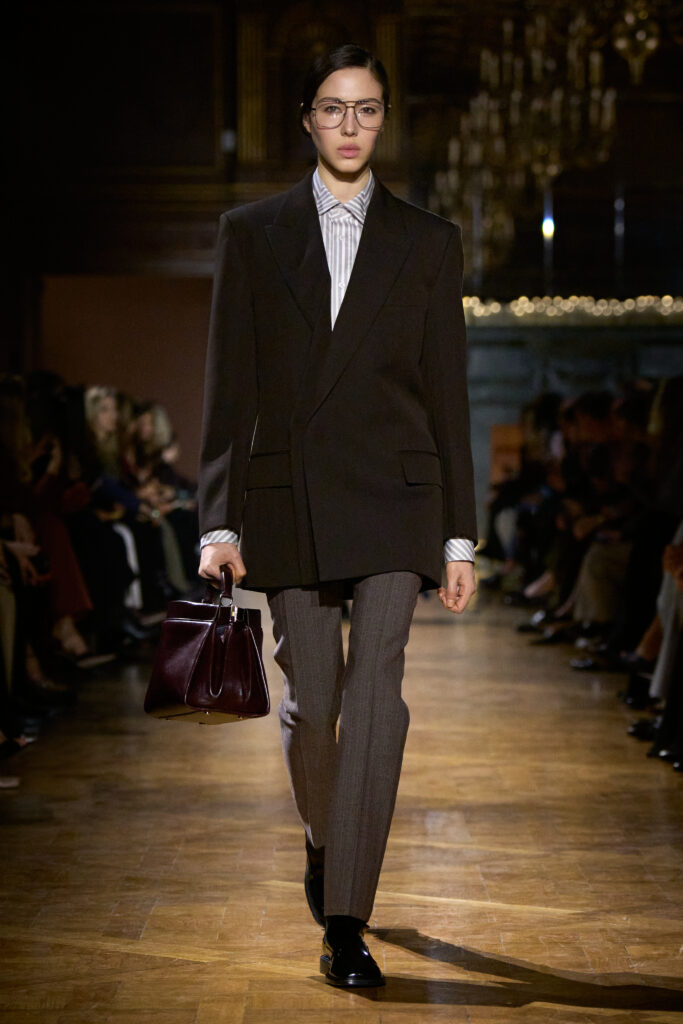
The Sloan bag brings this logic to a close. Top-handle in distressed leather and croc-embossed leather, it takes on the shape of 1930s travel luggage – the kind Łempicka carried from Monte Carlo to Hollywood. Its folded side gussets are cut to reflect light and produce shadows in motion: an object that changes appearance depending on the angle of observation, just as a painting changes depending on the distance from the viewer.
What the collection asks, without articulating, is an age-old question about fashion and painting: can one learn from the other not in terms of image, but in terms of method? Łempicka didn’t think color – she thought construction in color. Beckham, here, doesn’t quote the thirties. She reasons within their formal logic.
The question remains open for subsequent seasons: how far can a fashion house push pictorial reference before it becomes quotation? For the moment, AW26 is on the side of the system.
Cette publication est également disponible en :

