
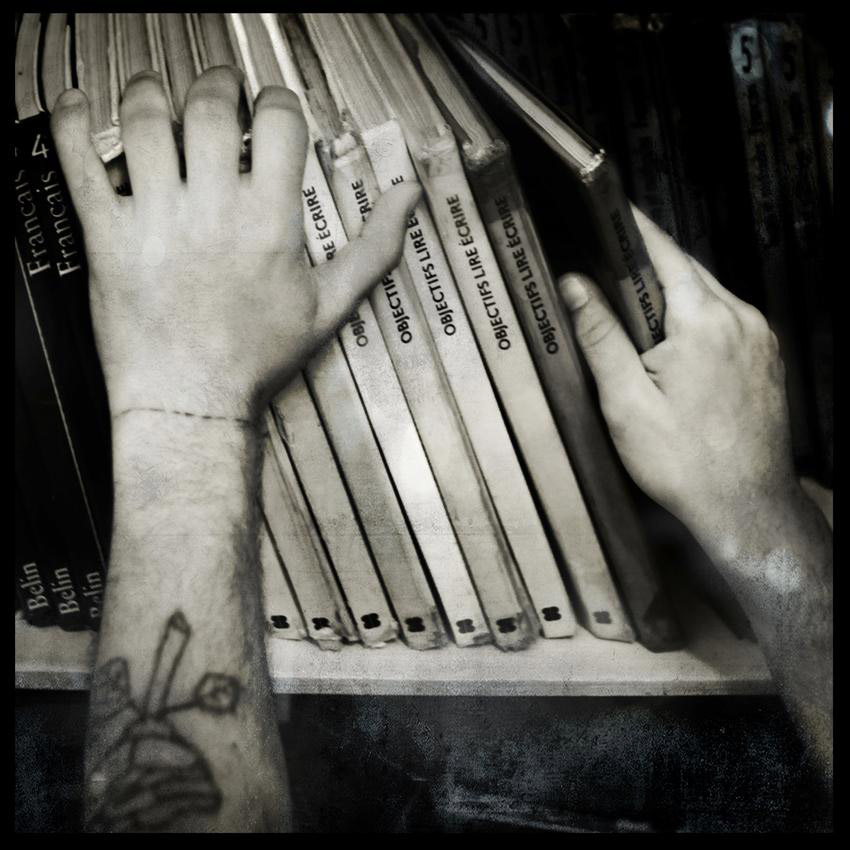
 There are places known as transit areas, such as station waiting rooms, where people wait for their trains, run around, make phone calls, chat and sometimes burst out laughing. Most of the time, travelers don’t know what to do to pass the time, especially during a strike. Stores are set up in the station grounds but the ones that really remain are the newsstands and sometimes the candy stores.
Some stores end up disappearing for lack of customers. The station halls then become places of boredom. From these disappearances of stores and from these daily troubles can be born good ideas. Ideas that bring these dead places back to life. Like this former video game store in the Haussmann Saint-Lazare RER E station that has become an exhibition space, in order to bring culture to those who don’t have time to go to them.
On the occasion of the second edition of their photographic contest Paroles Photographiques, Actuphoto set up a partnership with the SNCF to present the images of the contest to the greatest number of people. This exhibition, which ran from May 7 to June 5, 2010, revealed five different points of view dealing in a remarkable way with engagement in photography. Themes such as the perception of the future for prisoners, the massacre of albinos in Tanzania, androgyny, the Afghan exile or the antonymy of modesty were approached through five powerful but so human looks where black and white predominate.
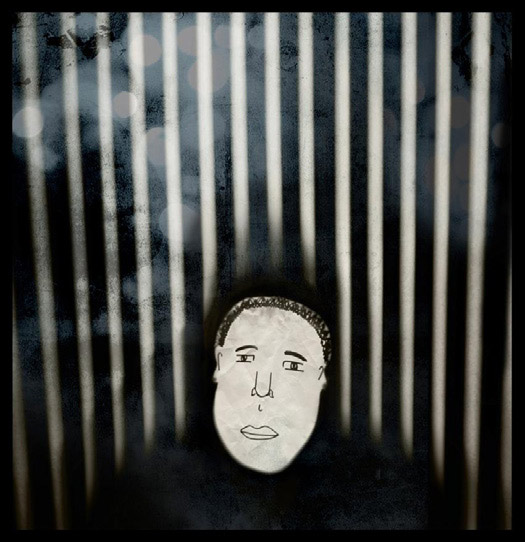 Dorothy Shoes, the winner of the contest, proposes to us via Et demain, Portraits d’Avenir to approach the photographic intimacy in the prison universe. These photographs of self-portraits of the future, masks drawn by the prisoners themselves, allow the prisoners to face their image but also their words. Dorothy teaches photography workshops in prison to juvenile and adult inmates of all nationalities, from all walks of life, regardless of the sentence.
These workshops aim to put the inmate in front of the perspective of his release from prison and imagine his future from an unusual angle. And so consider him and make him consider himself not as a prisoner but rather as a future free person. Like the three Norns, the weavers of life, Dorothy leads them to become aware of the links and bridges between the past, the present and the future. For Dorothy:”… Art connects the intimate-interior to the external world. Prison deprives the man of freedom for a period of time. The art for new and parallel freedom to the one of which it is deprived.”
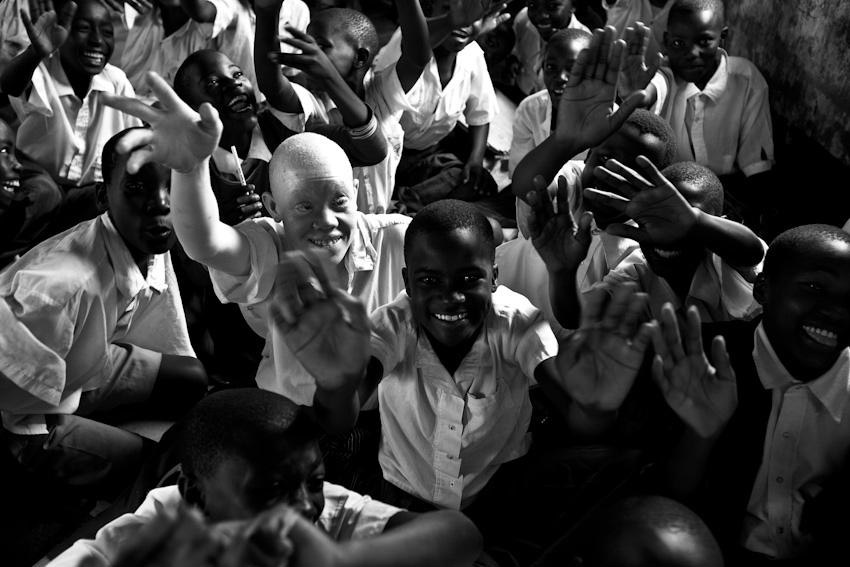
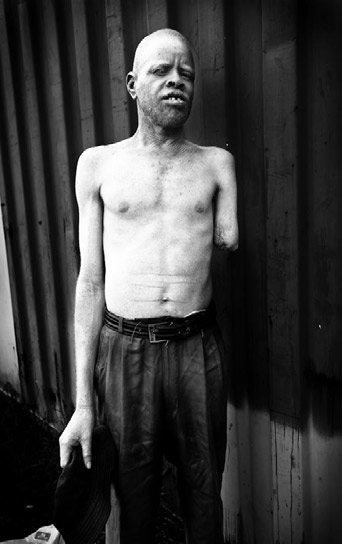 Franck Vogel challenges us through the Albino Massacre in Tanzania. Witch doctors in Tanzania use Albinos to concoct potions that are supposed to bring wealth and prosperity to businessmen who want to get the maximum amount of gold from their mines, or to politicians who want to get elected. Alternating scenes of joy where we can see albinos “integrated” into society and other more intimate and upsetting photos between mutilated bodies and resigned men, the photographer leads us to see these discriminated inhabitants in a different light in the country with the highest rate of albinos in its population.
Since 2007, more than 47 people with albinism have had their legs or arms amputated with machetes. The limbs are then sold to witch doctors, with a whole albino body being worth up to $10,000. Franck Vogel chose black and white to accentuate the contrasts and sometimes reinforce the impression of unease generated by the fate reserved for this minority, often with vision problems, condemned most of the time to unemployment and poverty when they do not die of skin cancer.
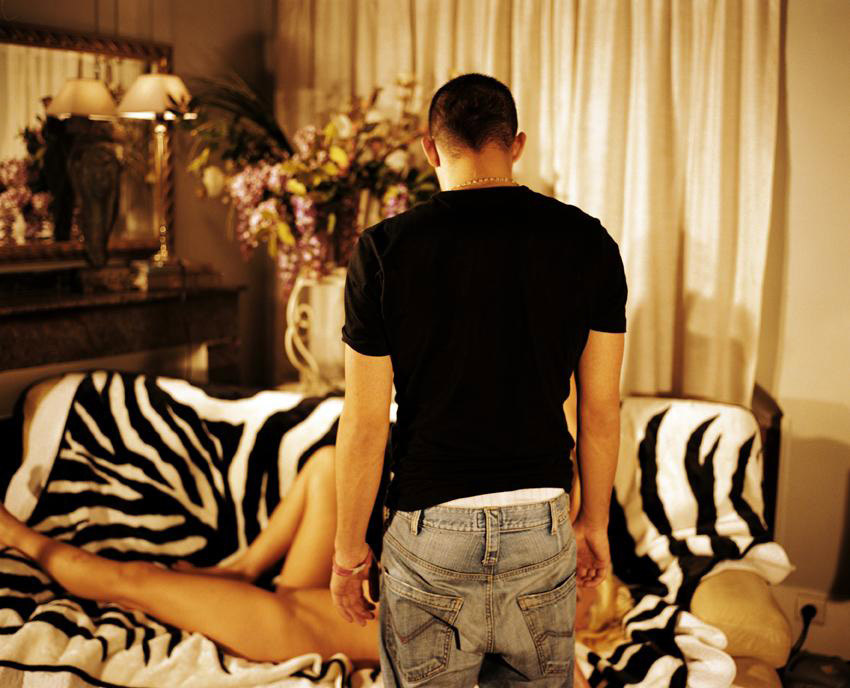
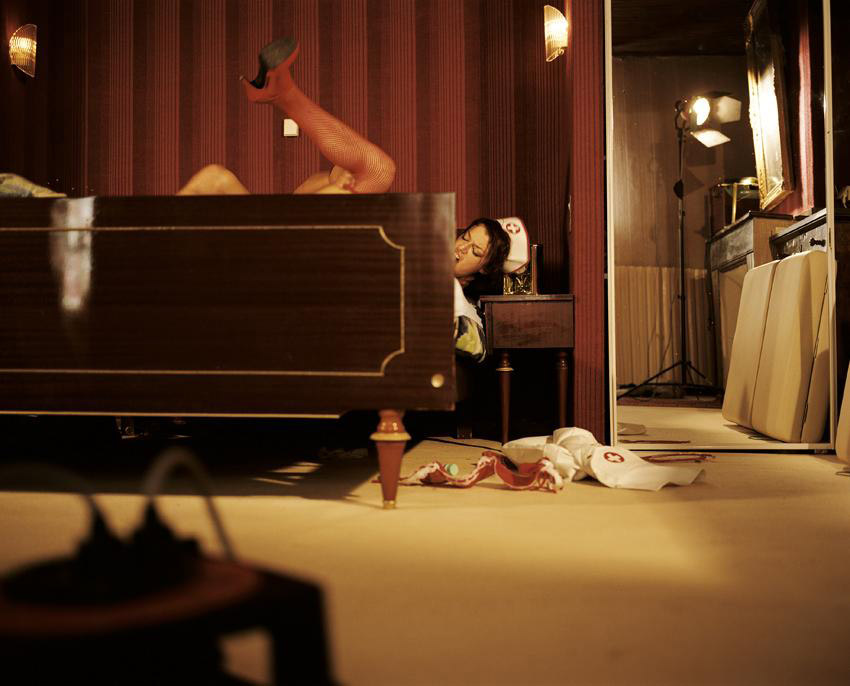 Ulrich Lebeuf / MYOP Agency presented us with theAntonym of modesty, an amazing backstage of pornographic film shootings. The photographer presents us with an aseptic vision of porn, but above all, a very distanced one, nothing explicit is left to the eyes of the spectators. Ulrich remains at a distance or seizes the sides, the bodies are pushed to the margin or left in the shade giving the beautiful part sometimes to the decoration, to the light. Only certain emotions, certain looks are left transparent of truth. The languid women look like inflatable dolls, so disembodied and far from what they are doing.
Humanized puppets, we feel like a despair in their looks and a certain resignation. We see here a camera, as a phallic substitute, trying to catch intimacy in its crudity. One can imagine the rest of a scene cut in two. The photographer has succeeded in his bet, to give intimacy to an environment that does not have any.
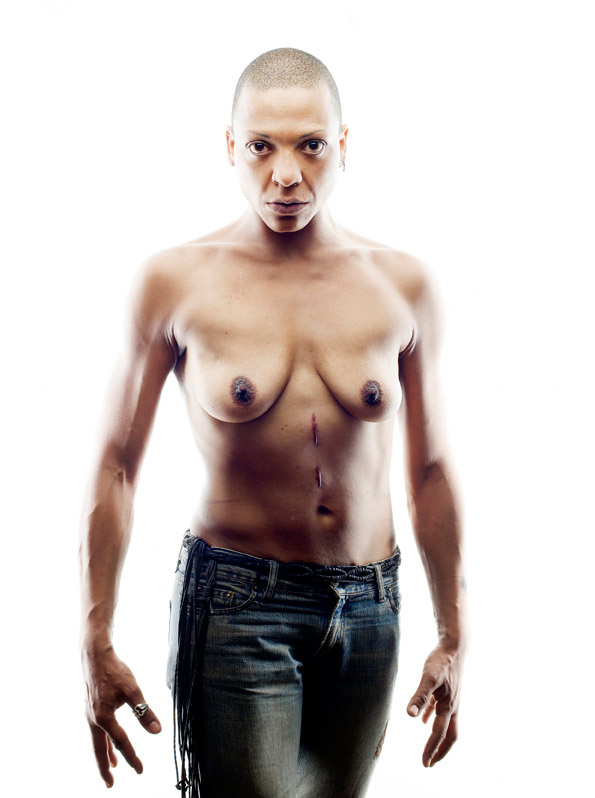
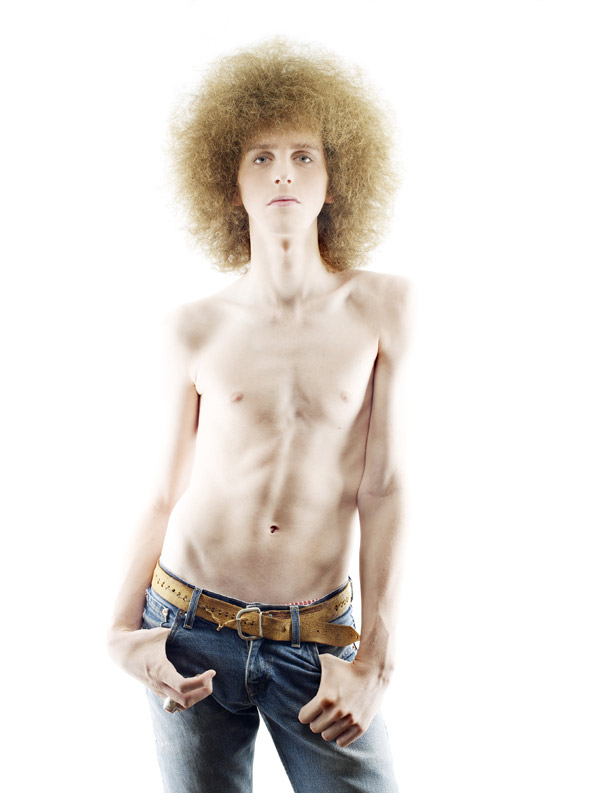 With Androgyne,Thibault Stipal questions the boundary between man and woman. His photos, some of which use very strong lighting, are so disturbing that we sometimes have to think twice before understanding who we’re dealing with. By definition, an androgyne is a human being whose appearance makes it impossible to tell which sex he or she belongs to. The term is also claimed by certain people who have an identity that is neither entirely feminine nor entirely masculine, whatever their physical appearance. “The androgynous is fascinating because it disturbs, it attracts some but repels others. I approached my models in the street, in public places, chance meetings. They disturbed the look. Nothing extraordinary. Almost normal people. A tiny singularity, a slight disruption of the social codes in force. Their faces and bodies opened up the possibility of gender confusion. Attraction or repulsion no one is insensitive to it.“explains the photographer. The androgynous, whose assumed ambiguity becomes a real strength, leaves no one indifferent between attraction and repulsion. Questioning us on our representation of the masculine and the feminine, Thibault Stipal gives us the beginning of an answer with his vision of these angels who trouble him.
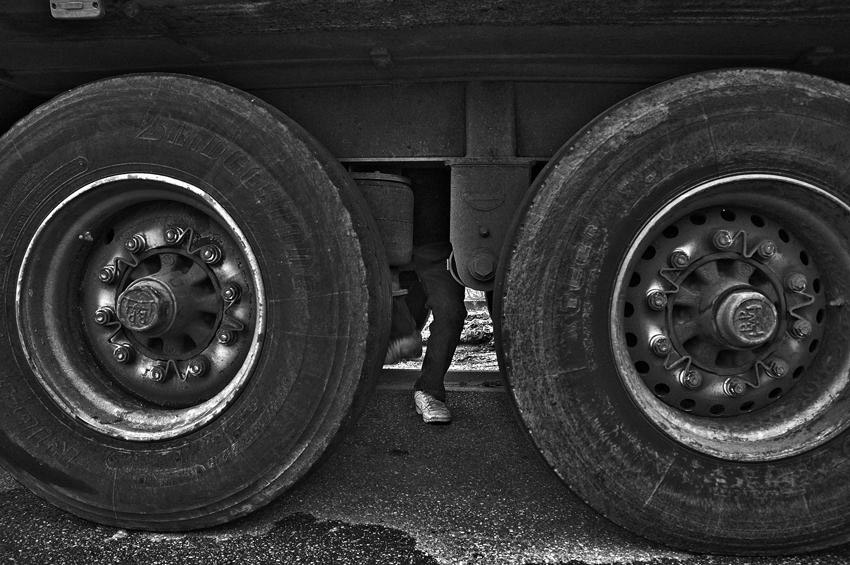
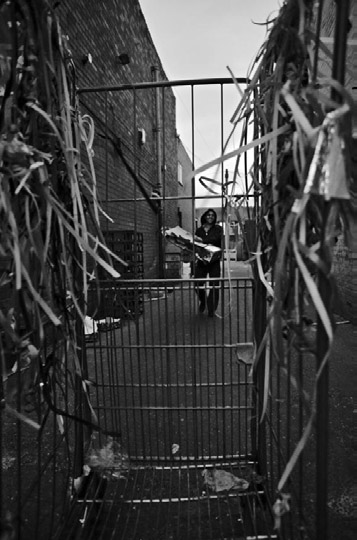 Hervé Lequeux tells us the story of theAfghan Exile: The story of Khallil and Moumin, two 17 year old Afghan youths who cross 6 borders clandestinely from Afghanistan. On the roads of Iran, Turkey and Italy, they face violence, lodge as they can and where they can, work for miserable wages, reach the Greek islands on makeshift rafts and finally end up in Calais, the last stop before the English Eldorado at the end of a journey of more than a year. They will stay 6 months in Calais in deplorable conditions (cold, makeshift camp…) losing little by little the little hope they had left.
The photographer has also favored black and white to make us discover their daily life of clandestine between scenes of daily life and more intimate scenes. We feel the expectation, their expectation and also their disillusionment of a promised freedom but so far away. And then the unexpected finally happens. Here they are finally in England living an almost normal life (work, house…) but with the anguish of seeing their dream shattered by a simple paper check.
Photo credit : © Actuphoto
Marie-Odile Radom
Cette publication est également disponible en :

