
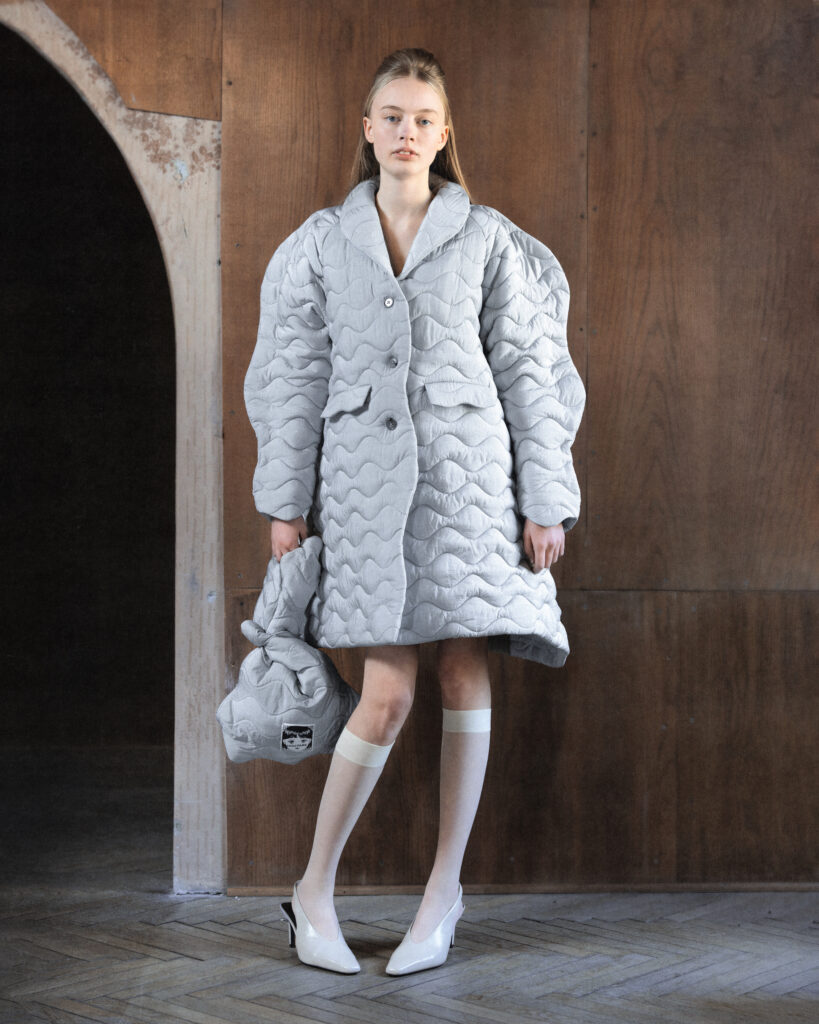
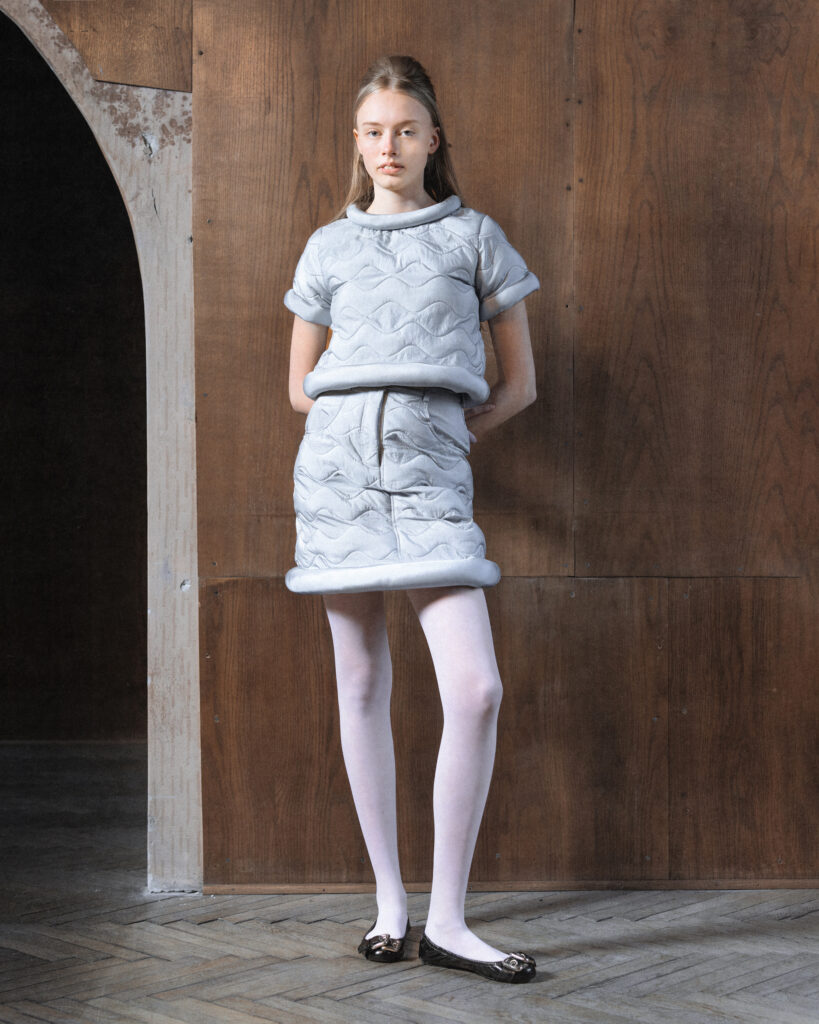
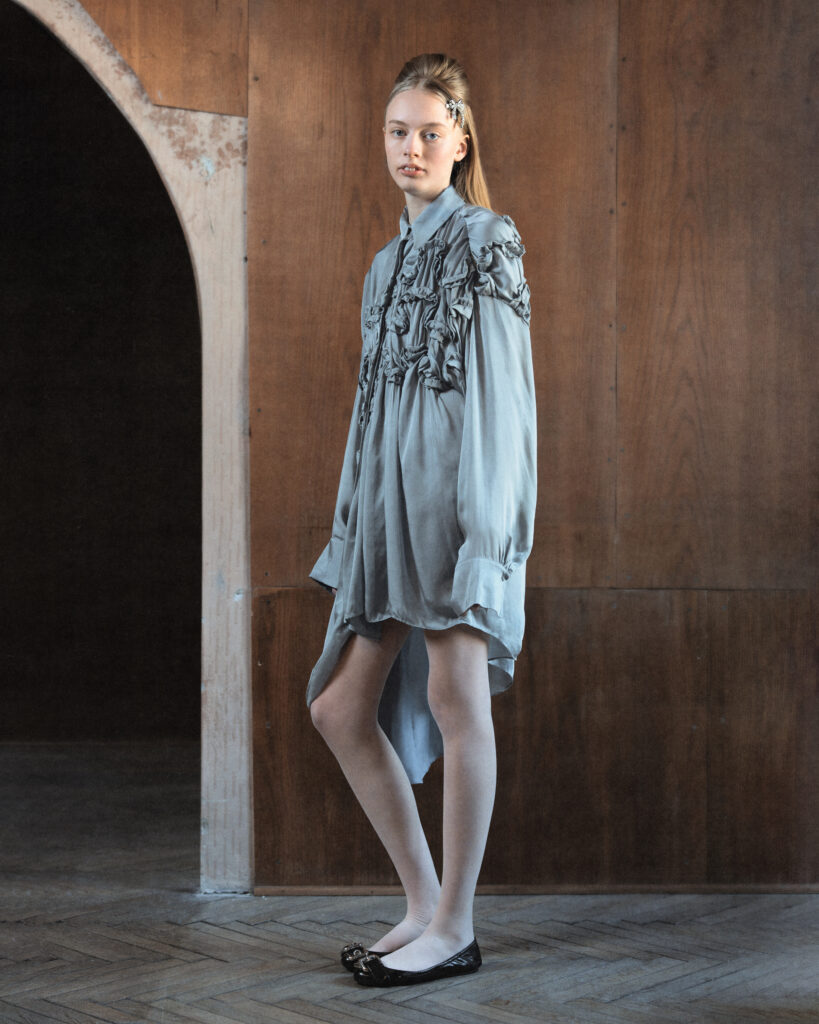
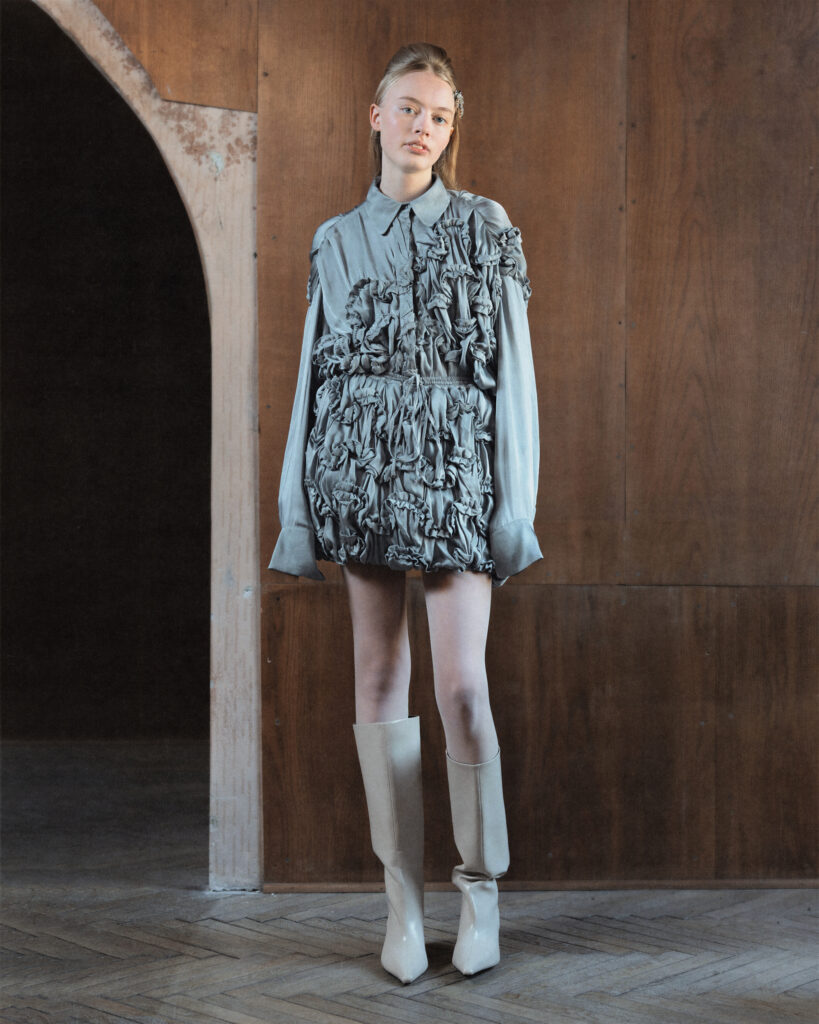
The title of the collection— *Die Welle* in German—does not, at first glance, refer to the sea. It refers to a technical process: the surface of a fabric that is stretched until it bulges.
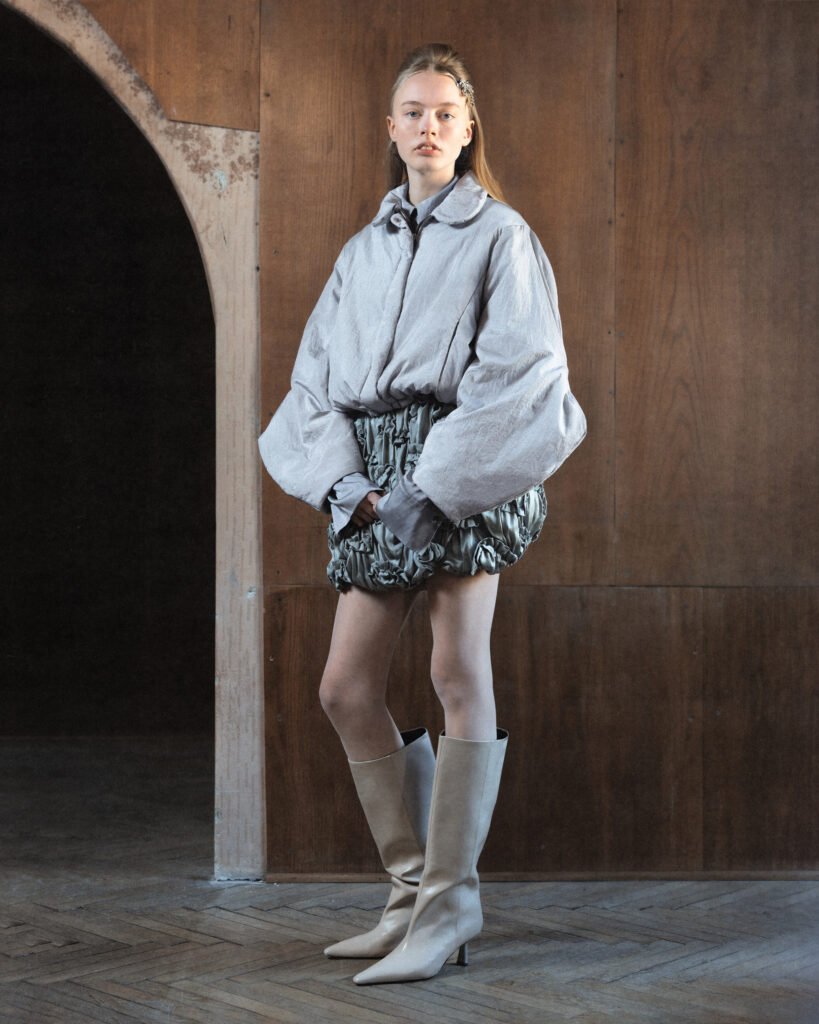
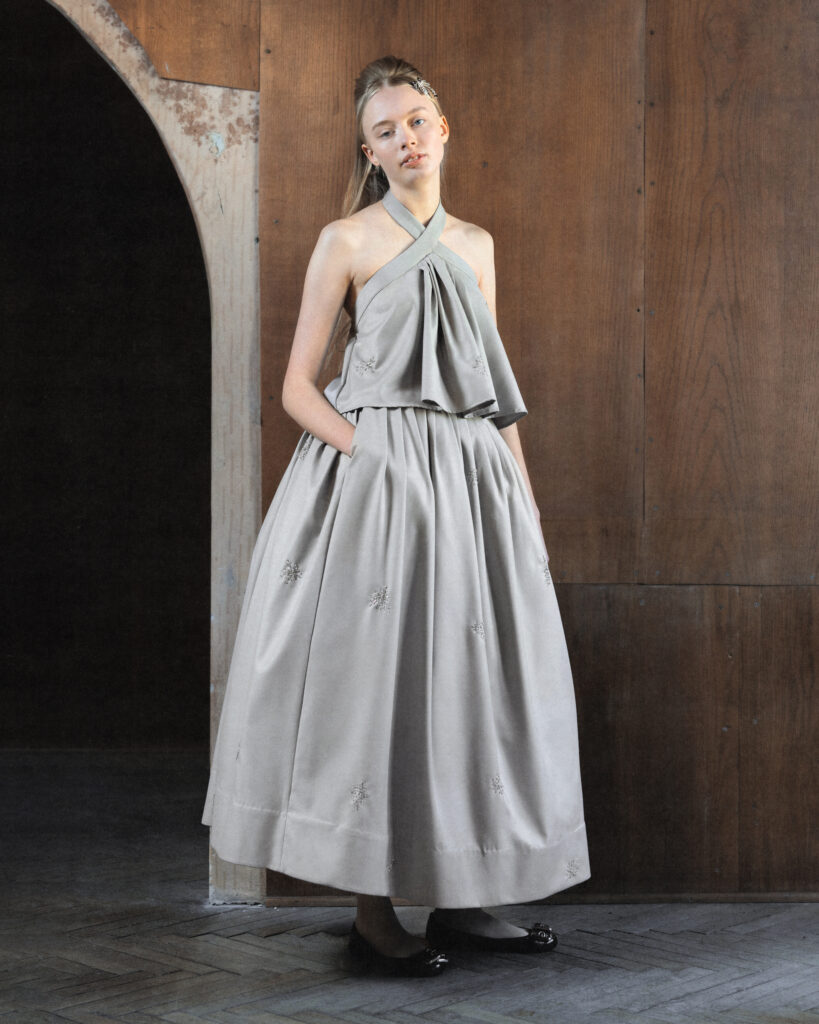
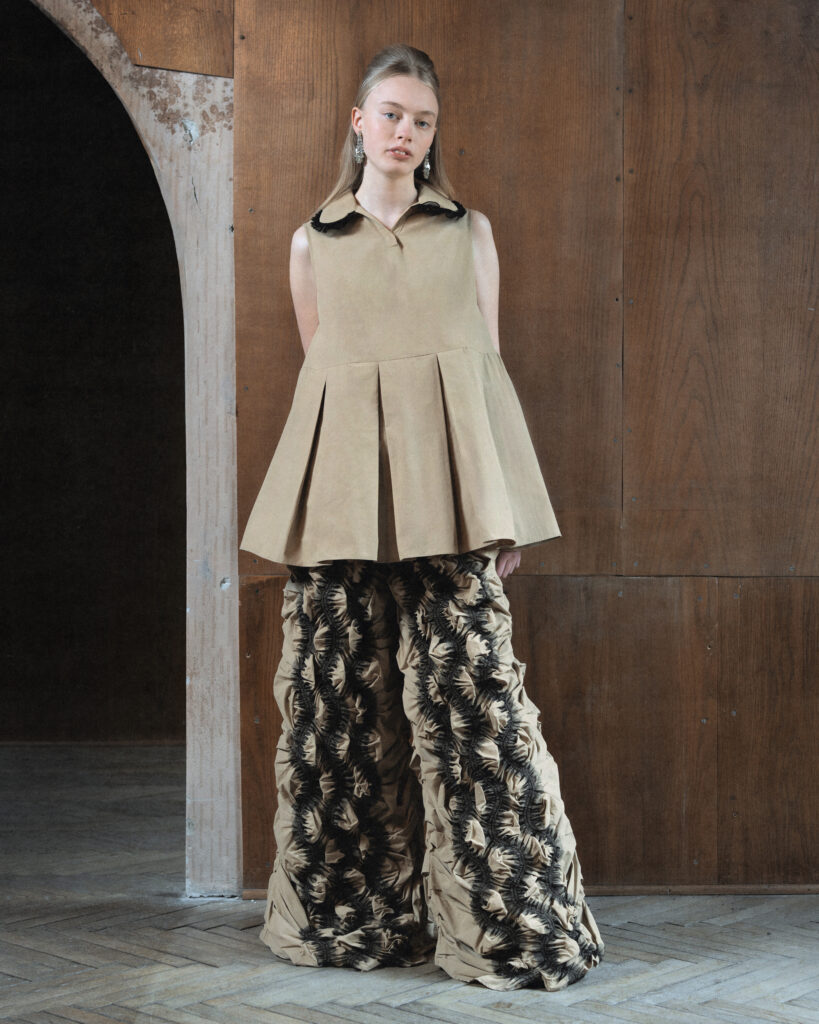
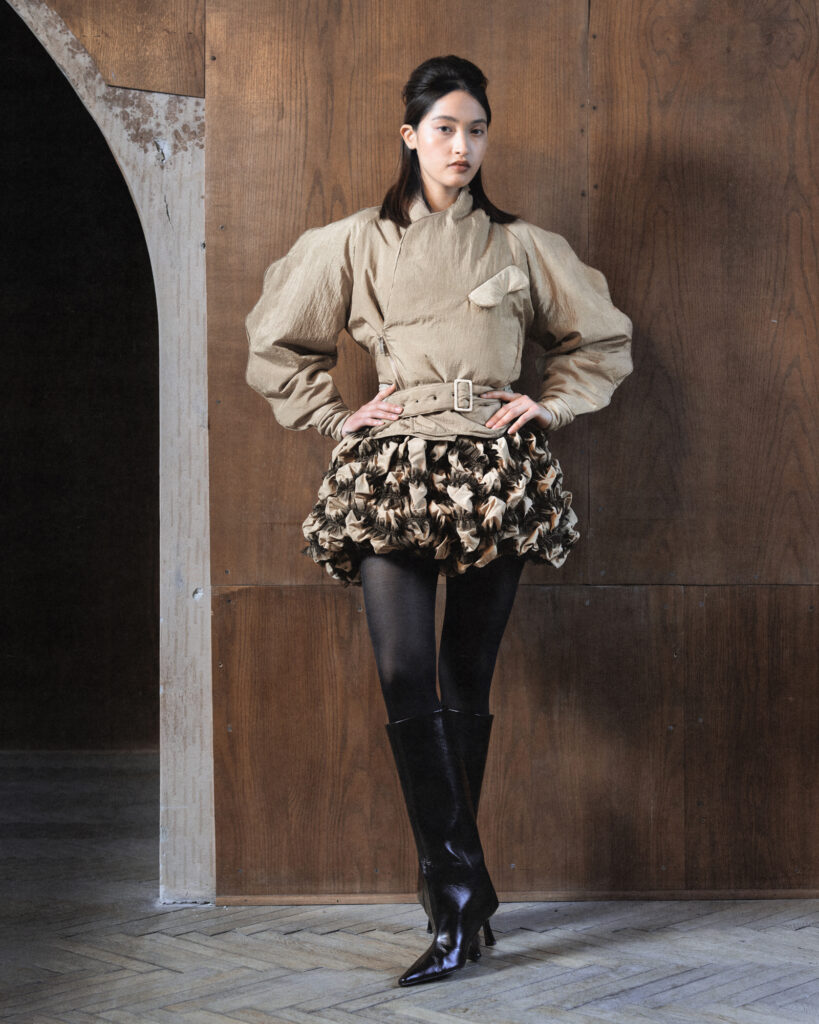
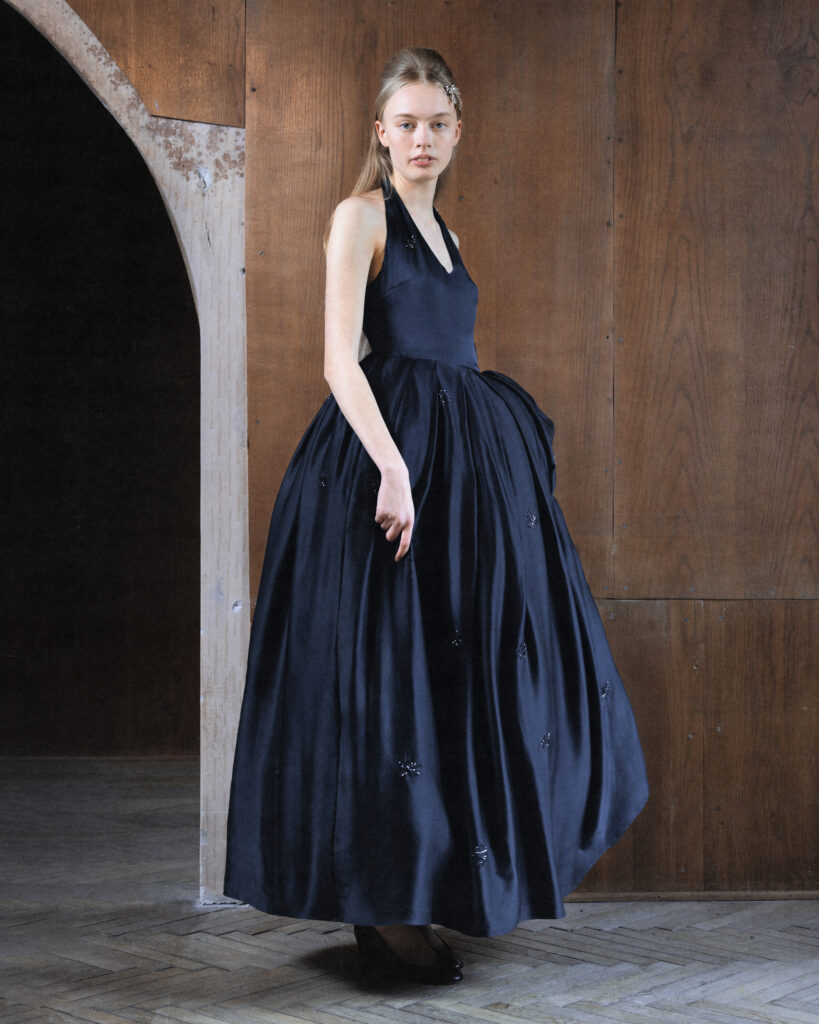
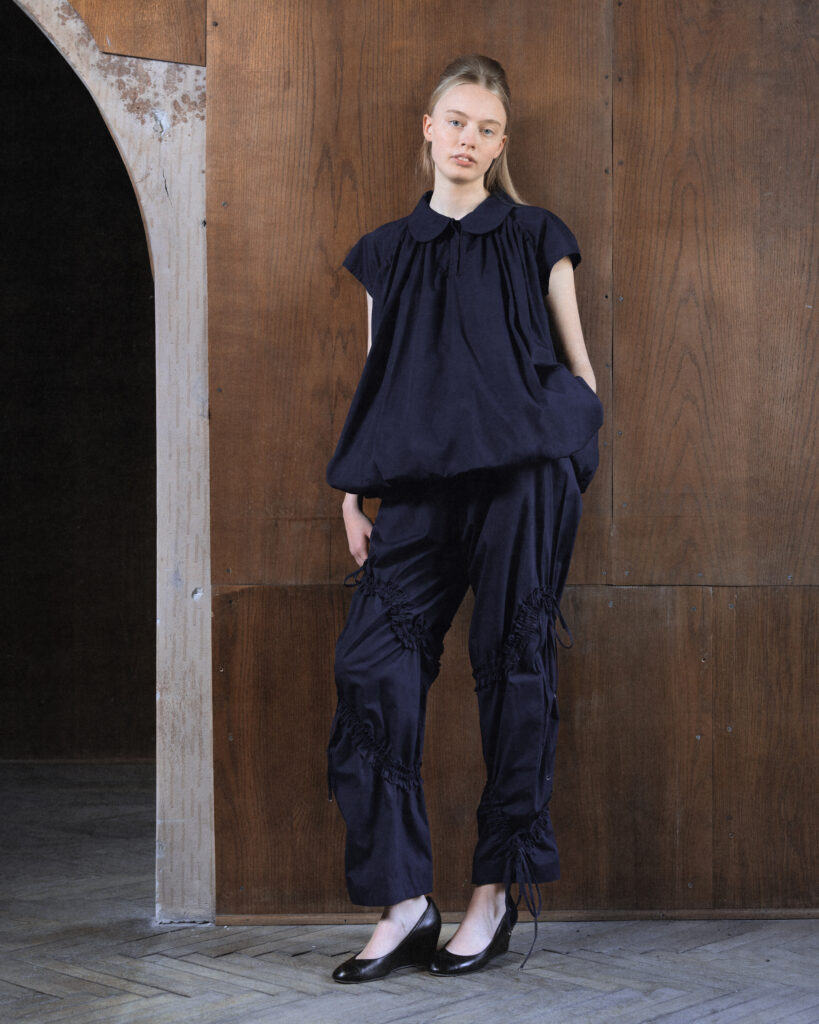
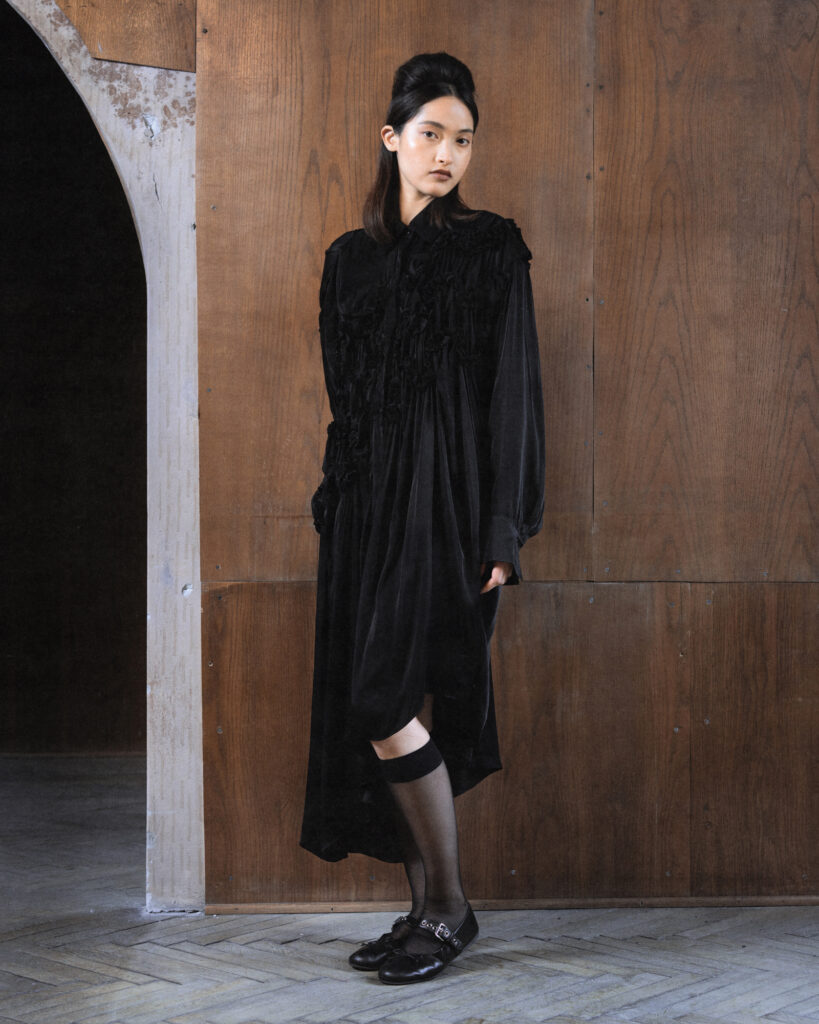
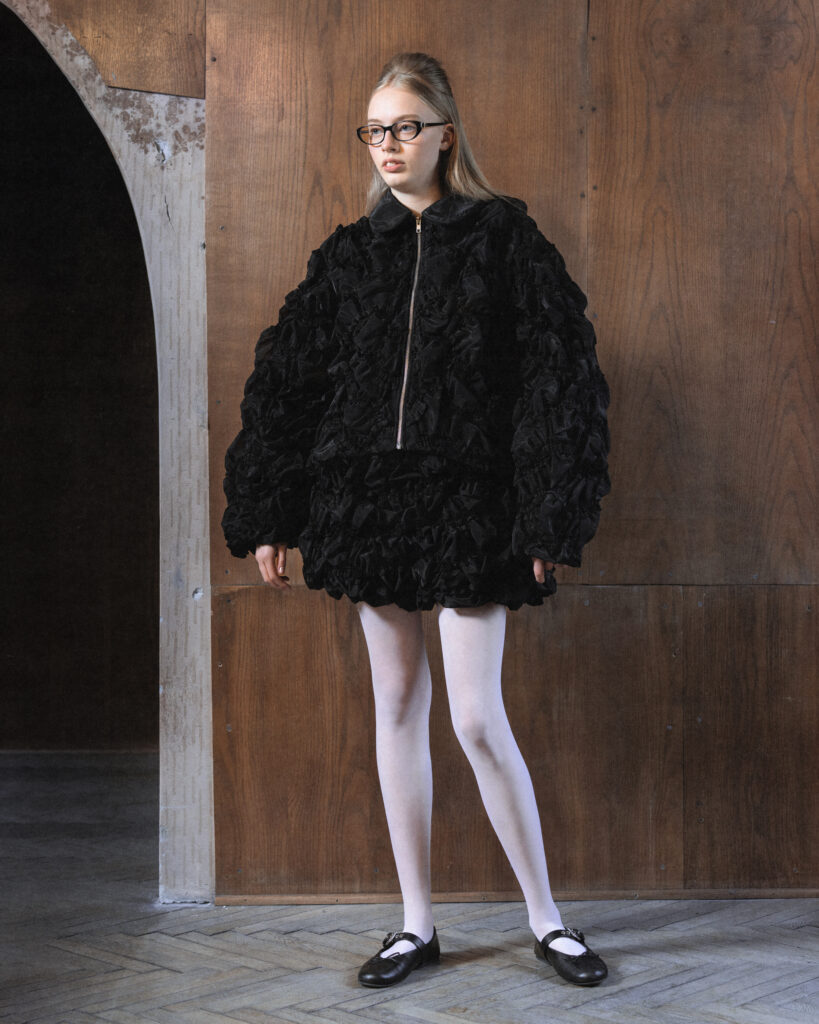
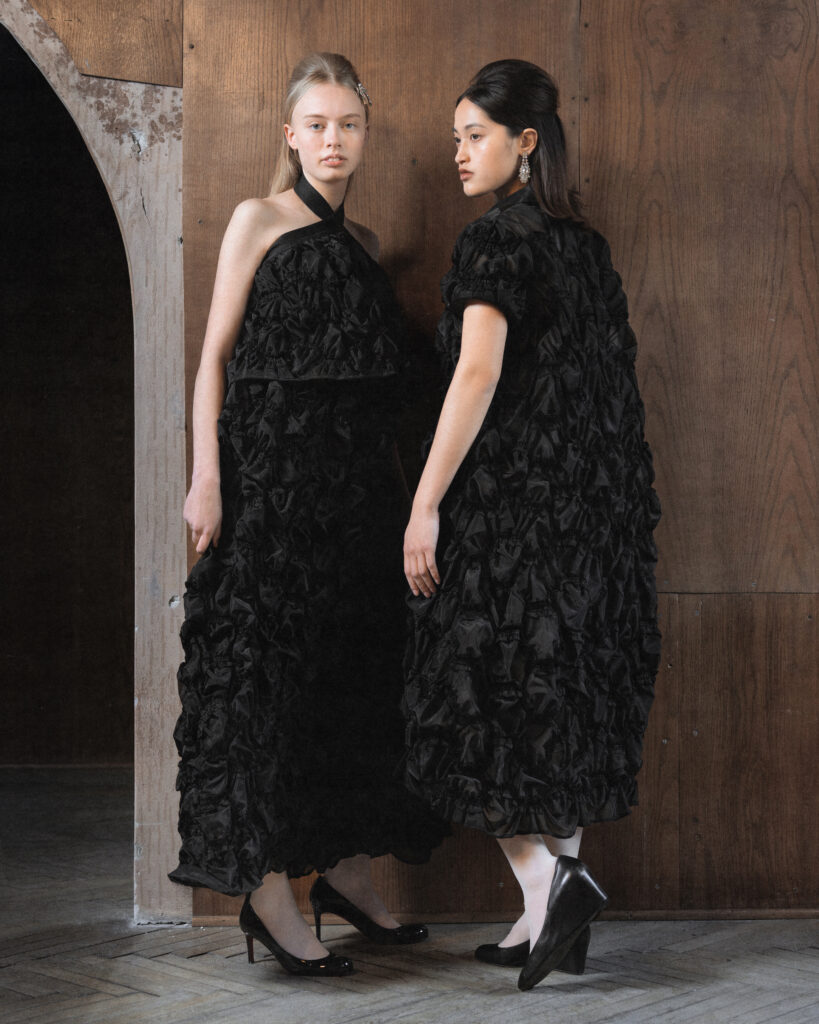
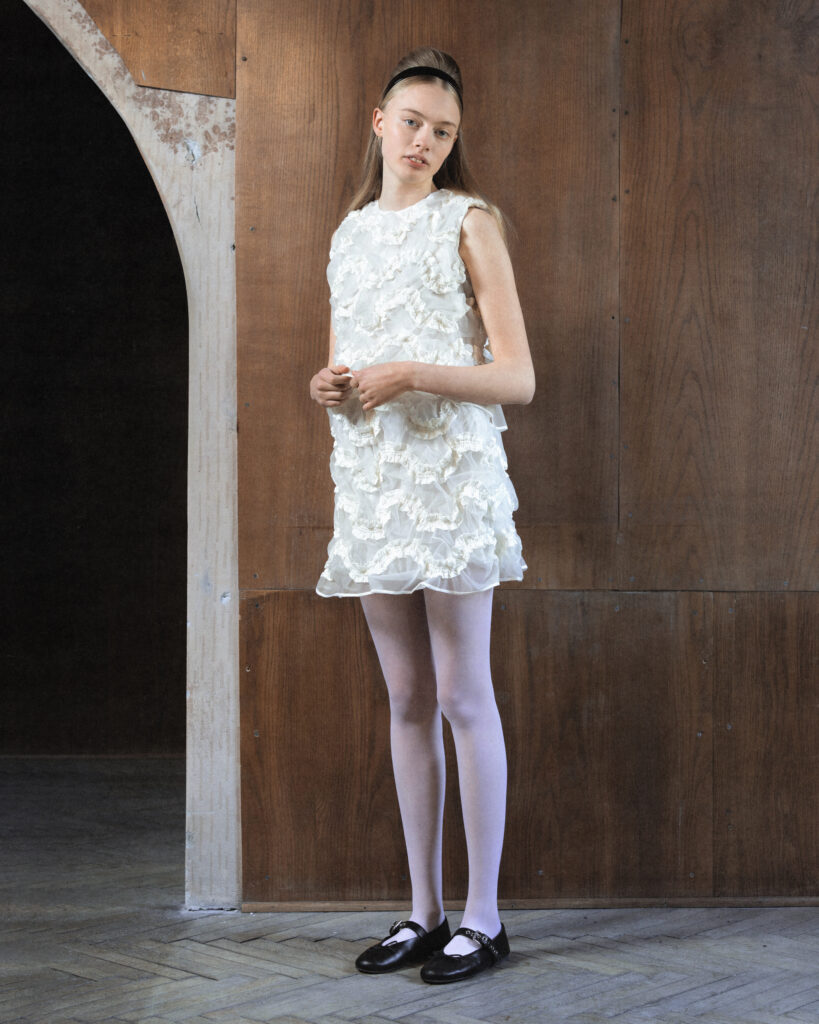
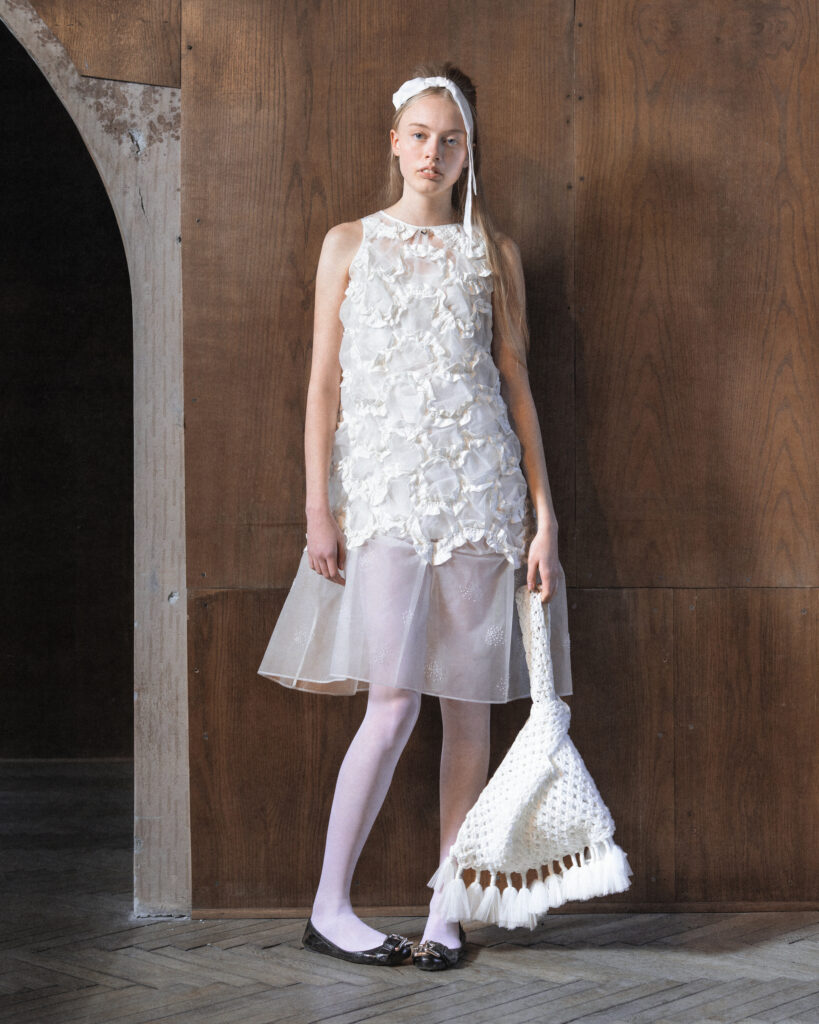
In her Fall/Winter 2026 collection, Hisu Park—who was trained in both Seoul and Vienna—works with three processes simultaneously: textile developments specific to the collection, controlled shrinkage techniques, and manipulations of flat fabric. This combination produces three-dimensional surfaces—textures that the garment would not achieve through cutting alone.
This is not an entirely new concept in the field of contemporary design. Issey Miyake industrialized pleating through heat pressing starting in the 1980s; Rei Kawakubo used the billowing and collapsing of fabric as a central theme of her collections beginning with *Body Meets Dress* in 1997. What sets Park’s approach apart is the use of shrinkage as a tool for local sculpting: rather than pleating the entire garment, specific areas are constrained to create a contrast in movement between taut and raised surfaces.
The choice of a German word as the collection’s title is no accident. Park is based in Vienna, not Paris or New York. This unique geographical context—neither the French atelier tradition nor New York’s commercial pragmatism—creates a space for exploration where the Austrian precision of craftsmanship meets a Korean formal sensibility for texture and the repetition of motifs.
Technical details
The controlled shrinkage technique involves the localized application of heat or chemical tension to pre-treated fabric. By selectively shrinking certain areas, the adjacent fabric lifts, creating a three-dimensional texture without the addition of any internal structure—no boning or interfacing.
The question posed by *Die Welle* is not metaphorical. It is tangible: to what extent can a fabric retain the memory of a force and reproduce it as the shape of the garment? Park’s subsequent collections will reveal whether this exploration of surface becomes a signature or a starting point.


Cette publication est également disponible en :

