
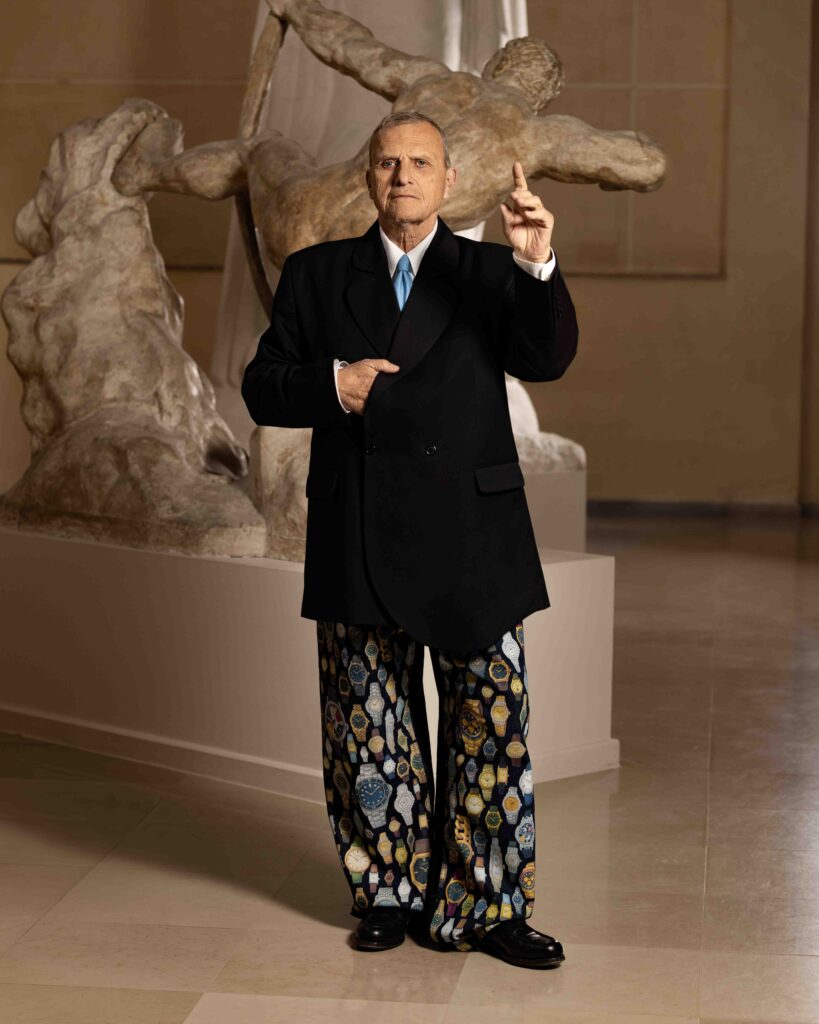
At the Musée Bourdelle, in the 15th arrondissement of Paris, Baptiste Maureau filmed Jean-Charles de Castelbajac drawing. No complex artistic guidelines: one man, one line, one dove. It’s this gesture – primal, slow, irreducible to digital rendering – that 3.PARADIS is placing at the center of its Spring-Summer 2026 campaign.
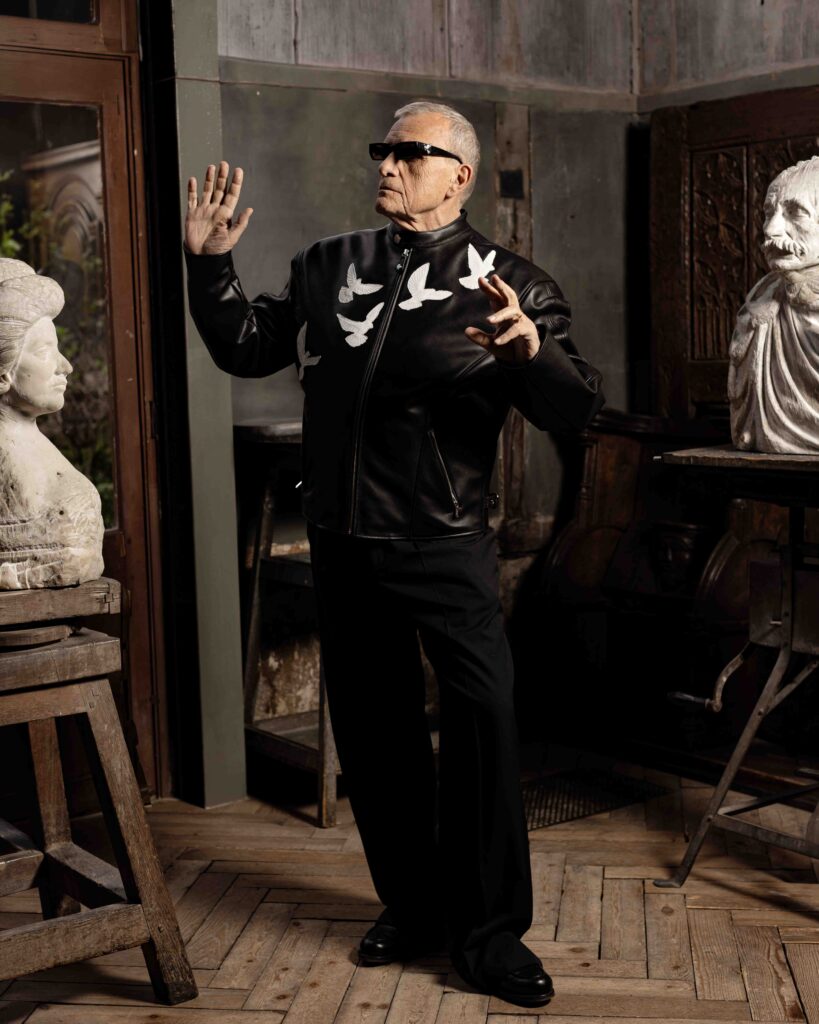
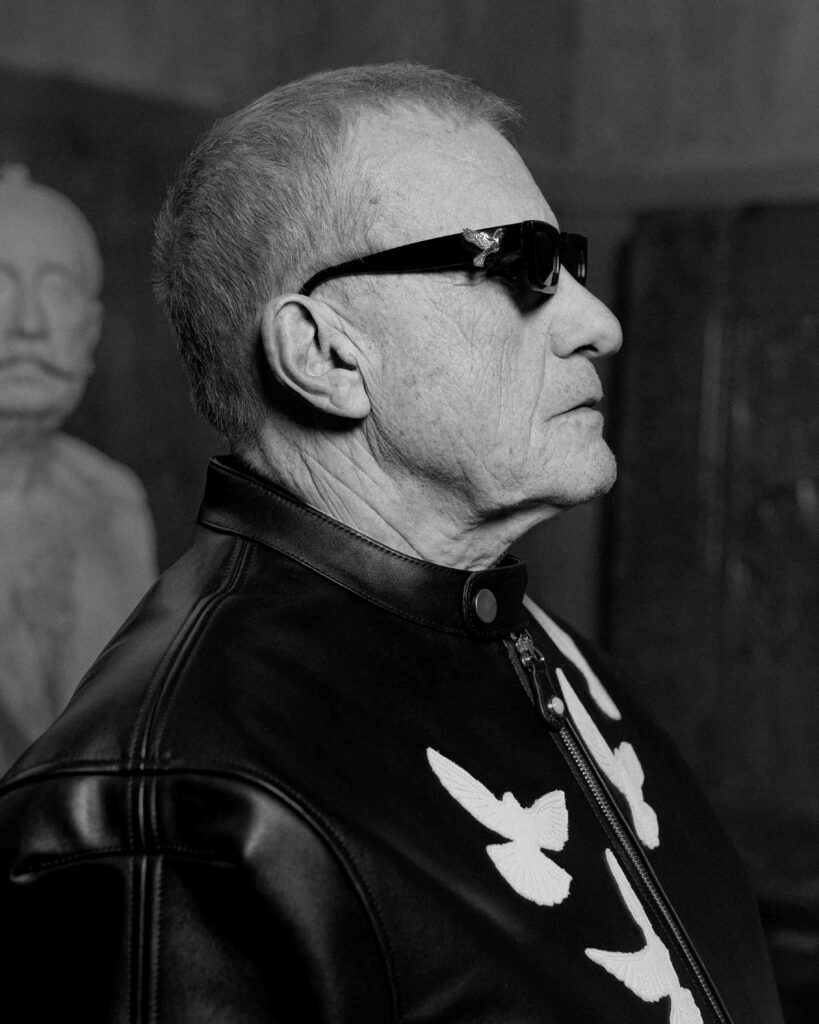
Bourdelle’s choice is not an insignificant one. The museum preserves the sculptor’s studio as it was when he died in 1929: plaster casts suspended, tools abandoned on workbenches, the workspace preserved in the disorder of its manufacture. It is in this setting of frozen gestures that Castelbajac restores a living gesture.
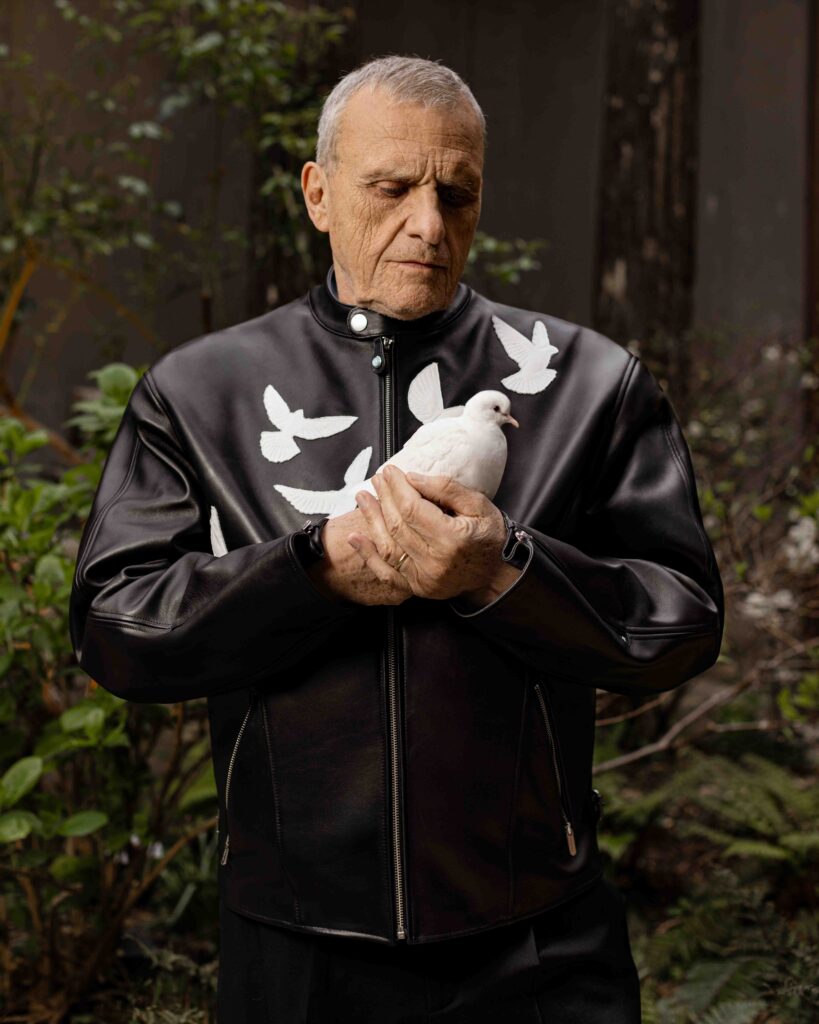
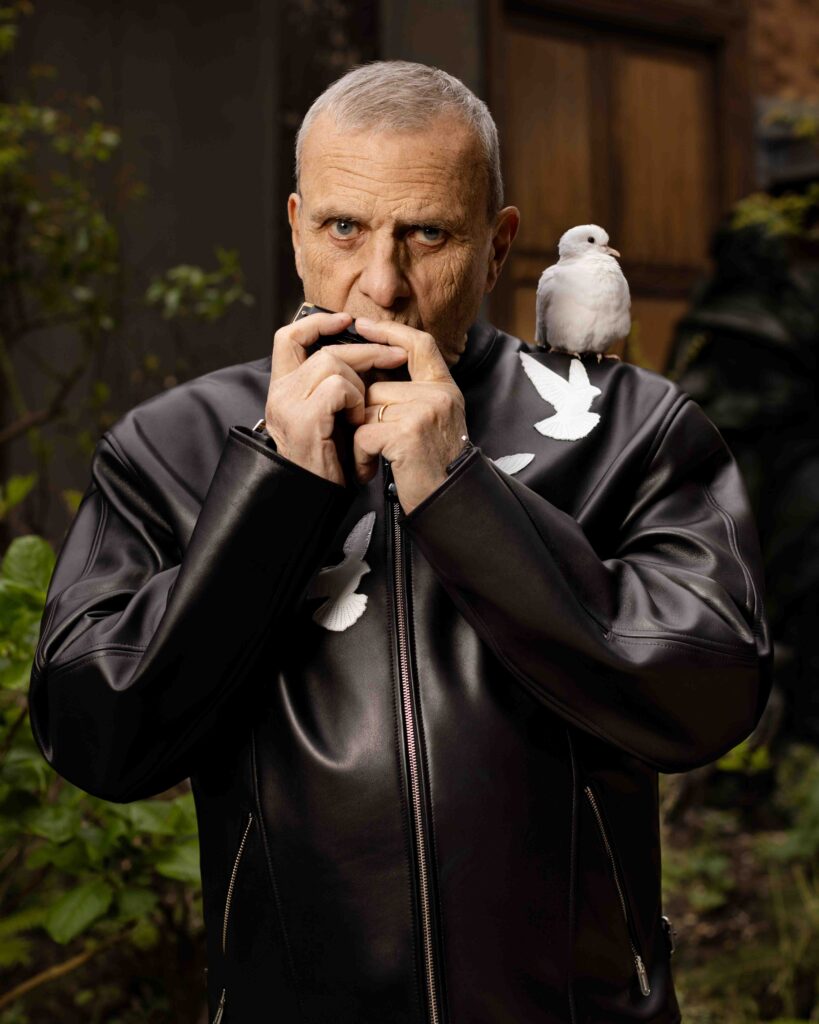
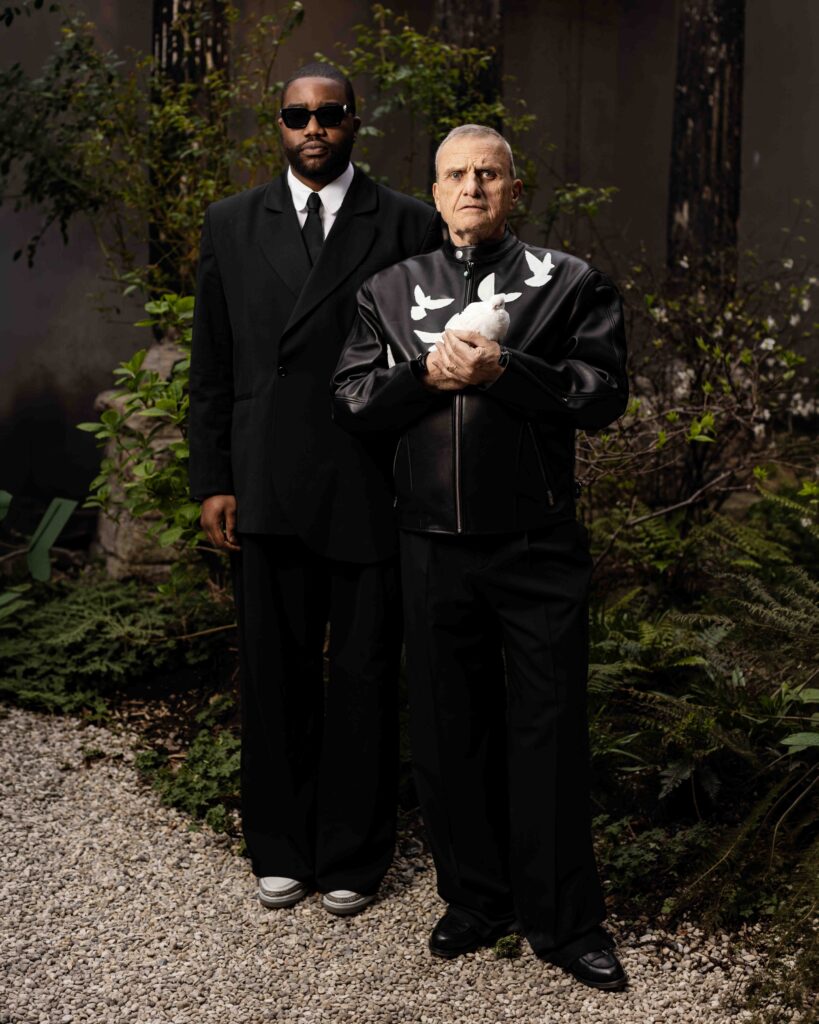
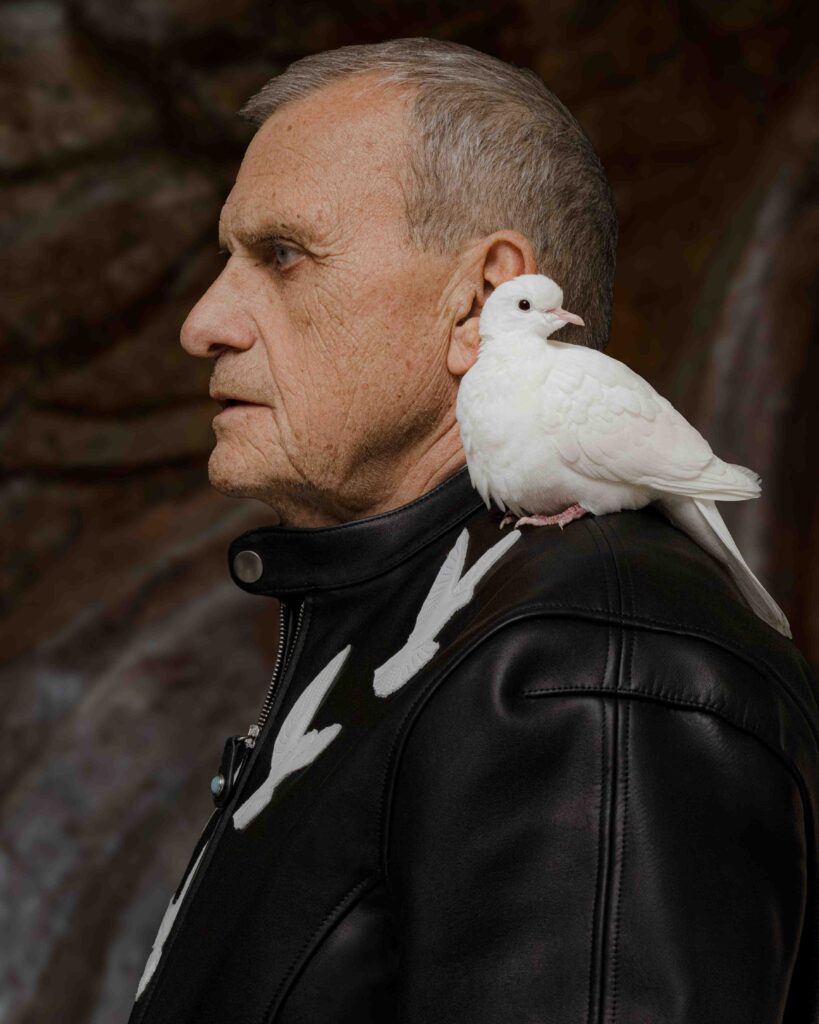
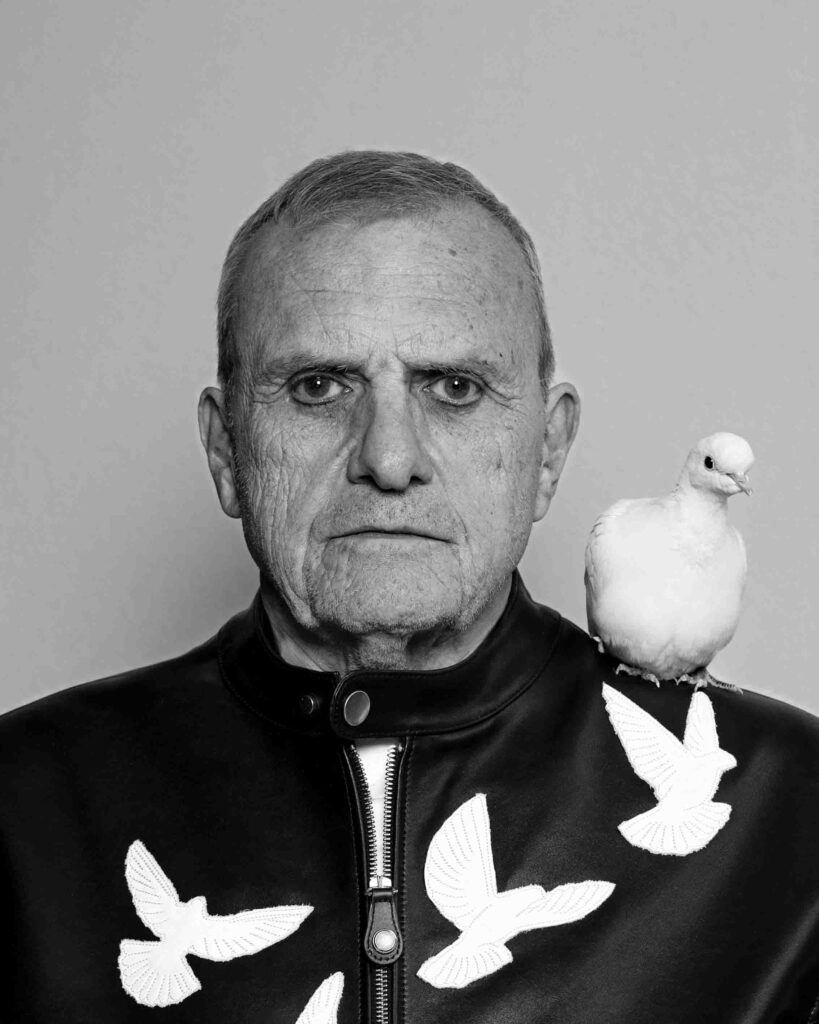
The dove has been the emblem of 3.PARADIS since the company was founded by Emeric Tchatchoua. In previous campaigns, the motif existed as a collection element – embroidered, printed, applied to fabric. Here, it is produced in front of the camera. The hand-drawn design restores the emblem to its original status: an intention before being a motif.
Castelbajac had already walked the catwalk for the house in June 2025. The SS 2026 campaign entrusts him with more than just a physical appearance. Photography by Ismael Nebchi, styling by Éléonore Côté-Savard.
Born in 1949, since the 1970s Castelbajac has been developing a practice in which clothing and graphic images are inseparable. His collaborations with religious institutions (liturgical vestments for John Paul II in 1980), his flat primary colors, his interest in children’s drawings as a formal vocabulary: all these elements make him less a stylist than an artist operating in the field of fashion. Hand-drawing – naive lines, immediate legibility – has been a constant feature of his work for over fifty years.
For 3.PARADIS, which is building its identity in the tense space between Parisian streetwear and cultural ambition, entrusting the campaign to a designer rather than an imager says something about the direction chosen. Tchatchoua puts it this way: “Creativity as a form of resistance allows us to imagine a better world. Like any work, it must first be conceived before it can be created.” The film is produced by Obvious.tv; editing by Théo Rannou.
The question this campaign poses – without answering it – is that of the relationship between a young house and the long timeframe of the reference. Bourdelle, Castelbajac, the hand-drawn dove: all decisions that signal an ambition to last in a fashion calendar that never stops.
Cette publication est également disponible en :

