
In some raw materials, there’s a kind of natural calendar that perfumery can neither accelerate nor correct. The Rose de Mai belongs to this category: a brief, capricious flower, whose harvest involves the hand as much as the climate. With the 2025 edition of its Collection de l’Atelier, Maison Henry Jacques closes a triptych begun with its first harvest in 2023: three years, three readings of the same rose, three ways of considering perfume as a living archive rather than a fixed formula.
The uniqueness of this collection lies first and foremost in its starting point. Henry Jacques says he spent five years creating an ecosystem to grow his Rose de Mai on his estate in the South of France: tilling the soil with organic fabric, returning decomposing plant matter, natural irrigation from a nearby river, ploughing with draught horses and using ladybugs rather than pesticides. Harvesting is carried out entirely by hand, according to the documentation provided by the company. This precision counts: in a sector often tempted by poetic abstraction, the agricultural gesture places perfume in a physical, seasonal, almost peasant reality.
The Rose de Mai, generally associated with Rosa centifolia, is one of the historic flowers of the Grasse region, harvested over a short period in spring, when the concentration of fragrance requires rapid, hand-picking. Condé Nast Traveler points out that since the 18th century, the Grasse region has established itself as a major territory for perfumery, thanks in particular to its microclimate and the cultivation of flowers destined for the perfume houses. This background sheds light on Henry Jacques’ approach: not to use the rose as a decorative motif, but to build a collection around its annual variations, as one might speak of a vintage.
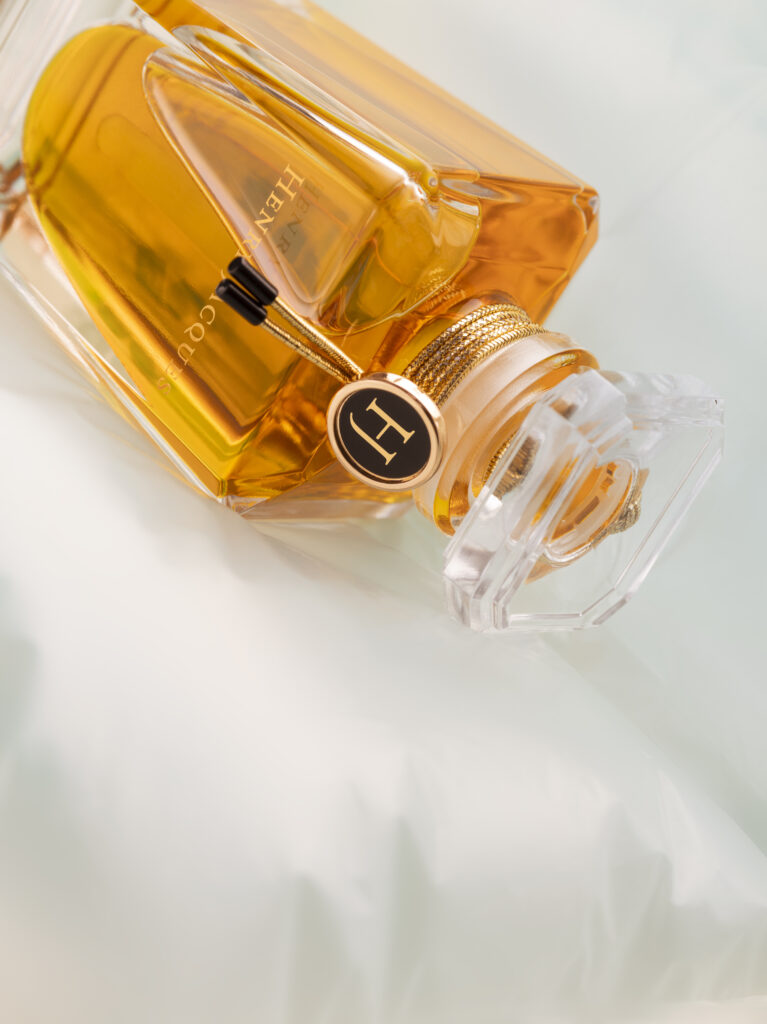
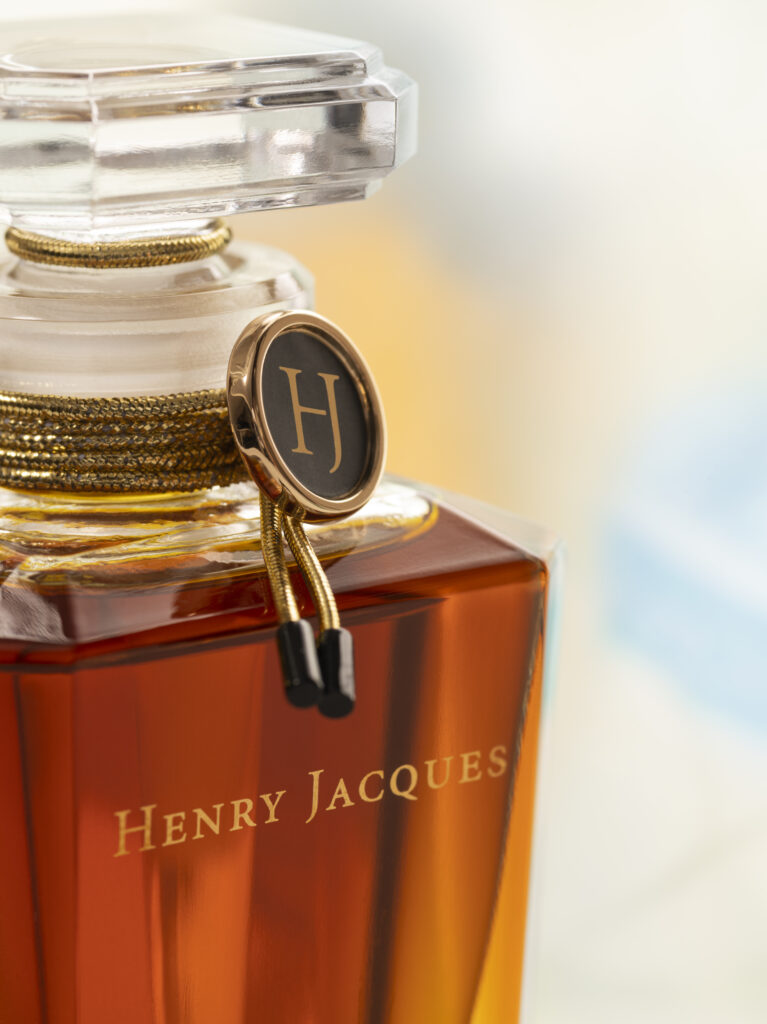
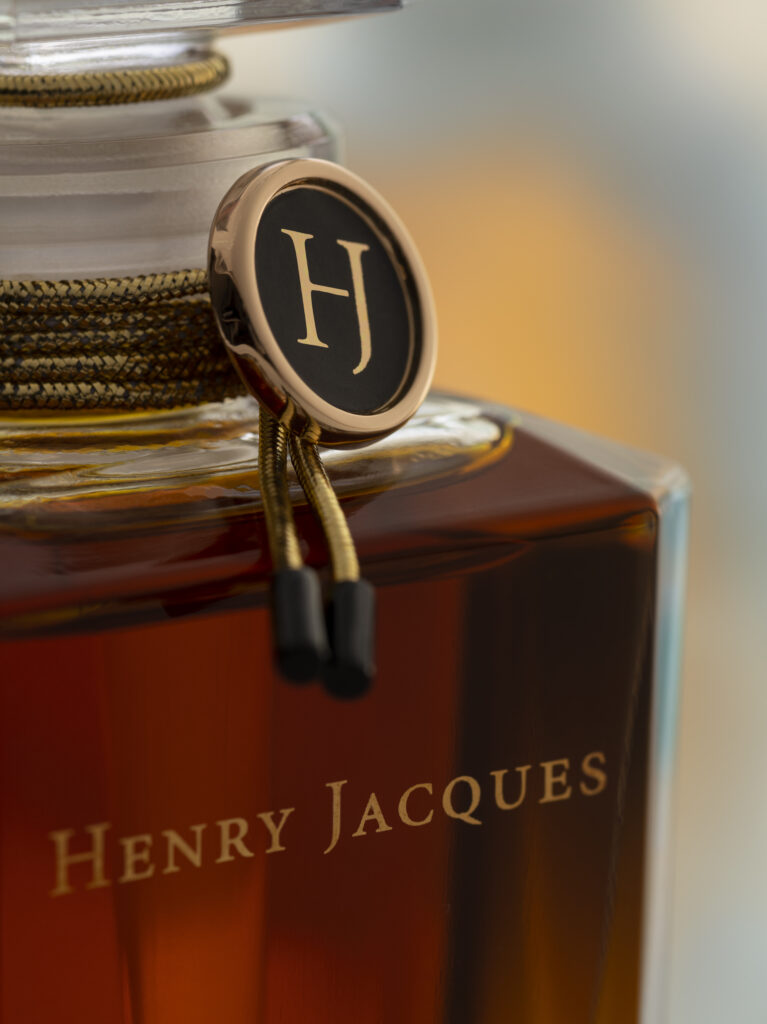
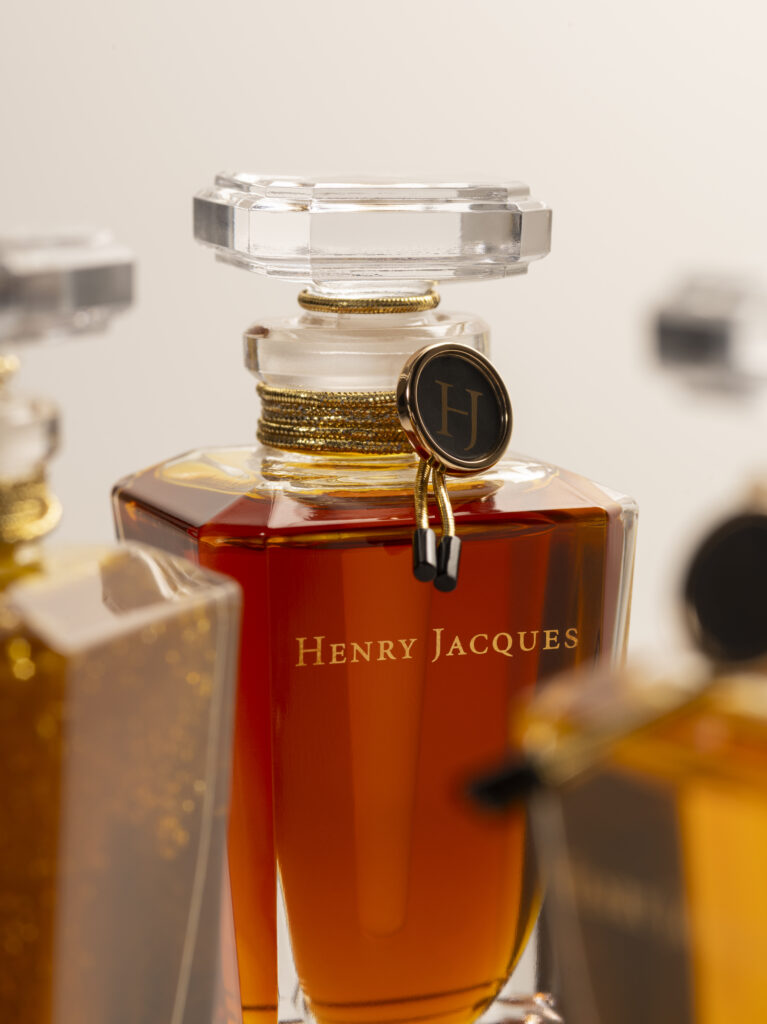
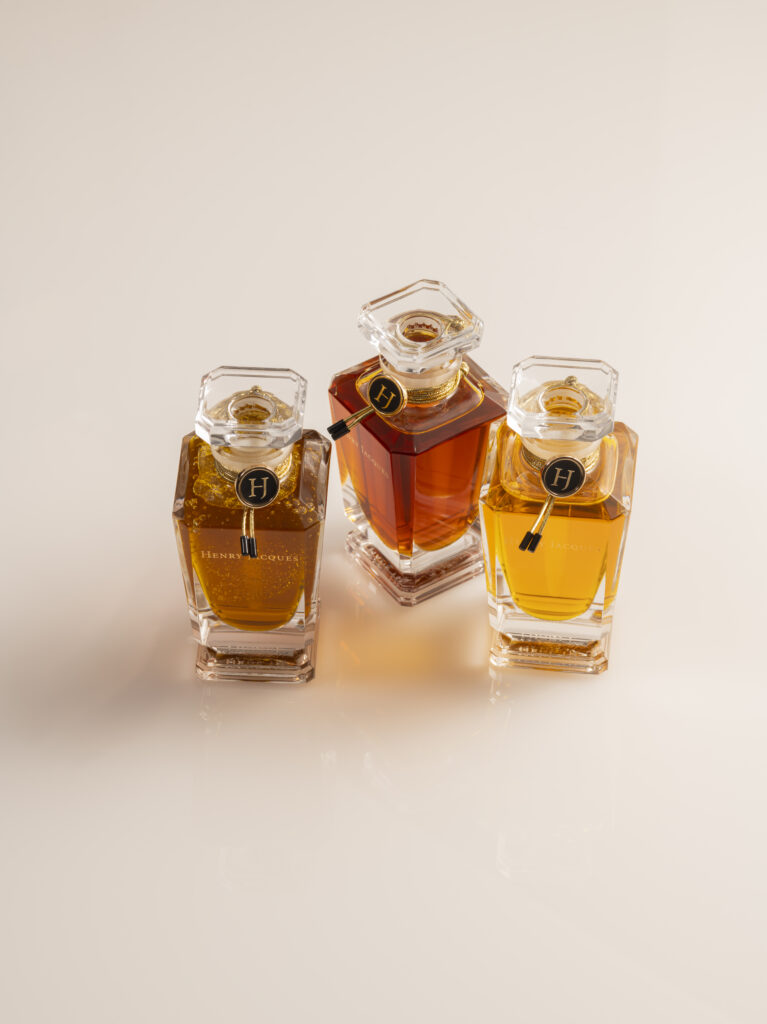
HJ 2025’s Rose de Mai absolute is described by the House as floral, less powdery than its predecessors, rounder, with notes of chestnut honey giving an almost leathery impression, and spicy accents close to cinnamon and saffron. The result is a trio: Rose Azafira, Rose Très Rose 2025 and Rose Alambrah. The edition takes the form of three thirty-milliliter Essences, packaged in a Boîte à Parfums limited to 500 numbered copies.
Rose Azafira combines HJ’s Rose de Mai absolute with saffron. The composition combines Rose Damascena, Rose de Mai, patchouli, pepper, iris, sandalwood and amber. The name is a contraction of Zahra, the flower, and Zafra, saffron. This is not the fresh rose of the morning, but a rose displaced to a more textile, almost pigmentary zone, where the spice acts like a dye.
Rose Très Rose 2025 opts for a more frontal reading of the flower, but without simplification. Rose de Mai, Rose Damascena and jasmine open the composition, followed by violet leaves, iris, patchouli and benzoin. Cuvée Dehen el Oudh extends the honeyed, leathery nuances of Absolute 2025. Here, the rose becomes less bouquet than construction: several roses, several temperatures, several depths.
Rose Alambrah shifts the register to an imaginary Mediterranean architecture. Neroli, mandarin, bergamot, Turkish rose, labdanum, cinnamon leaf, vetiver, sandalwood, vanilla and benzoin make up a sunnier rose, worked by shade, resin and mineral warmth. Here again, the most interesting aspect is not the decorative evocation, but the way Henry Jacques treats the rose as a traversable material: it supports citrus, spice, wood and amber, without disappearing.
This final edition confirms a broader trend in contemporary haute parfumerie: a return to the material as proof. In the face of fast-launch perfumery, where novelty is often measured by the commercial calendar, Henry Jacques has opted for the opposite logic: one harvest, one year, one limited interpretation, then the end. The collection will not be reissued, according to the House. This refusal of commercial permanence gives the perfume a particular tension. It’s no longer just a question of wearing a fragrance, but of preserving the olfactory trace of a season.
Henry Jacques, an independent French house that has gone from confidential bespoke to an international presence, notably with a flagship on avenue Montaigne in Paris, occupies a delicate territory here: that of a perfumery that borrows as much from the codes of the atelier as from those of the art collection. The numbered boxes, the successive trios and the reference to lithographs all reflect the desire to make perfume a collector’s item. But the real strength of the project lies elsewhere: in this rose, cultivated, harvested, transformed and then re-read three times.
The Atelier 2025 Collection will be available from March 21 in Henry Jacques boutiques. The Boîte à Parfums brings together Rose Azafira, Rose Très Rose 2025 and Rose Alambrah in thirty-milliliter Essences. Three additional boxes based on Rose Très Rose 2025, in fifteen and thirty milliliter sizes, have also been announced. Here, the rose doesn’t serve to soften the narrative. It imposes discipline.
Cette publication est également disponible en :

