
A centenary is not celebrated with a speech. At Rolex, it is reflected in the technical constraints that the Manufacture imposes on itself.
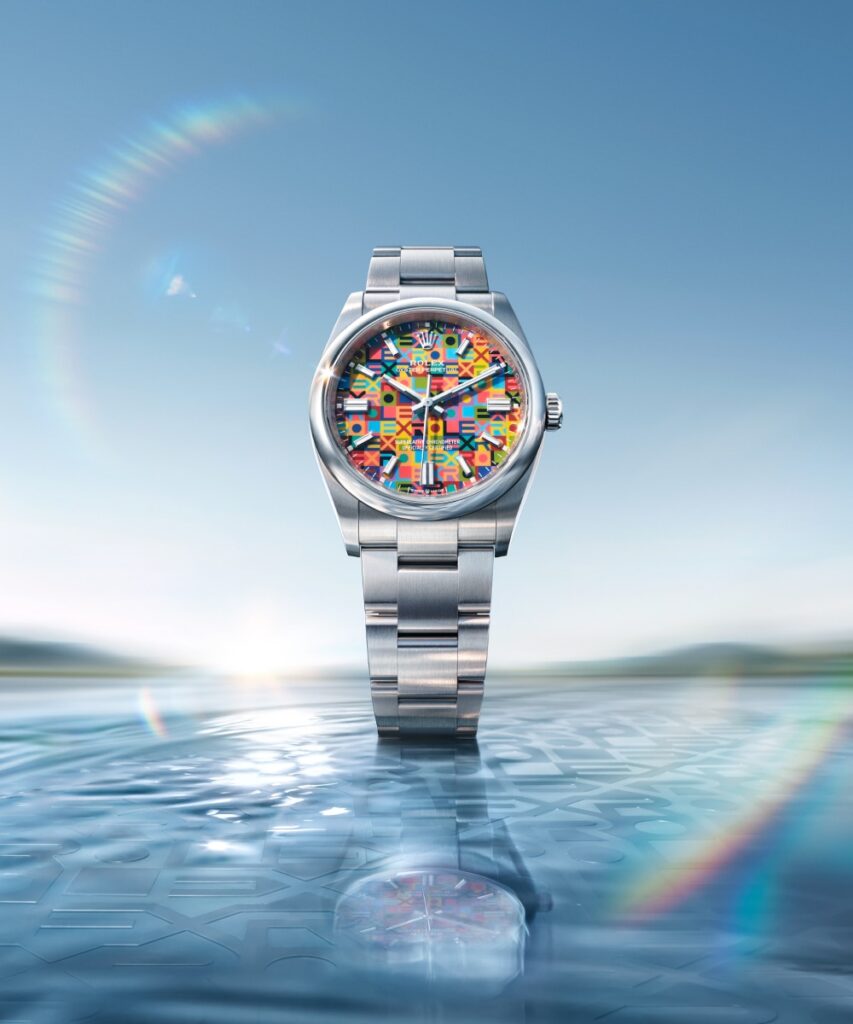
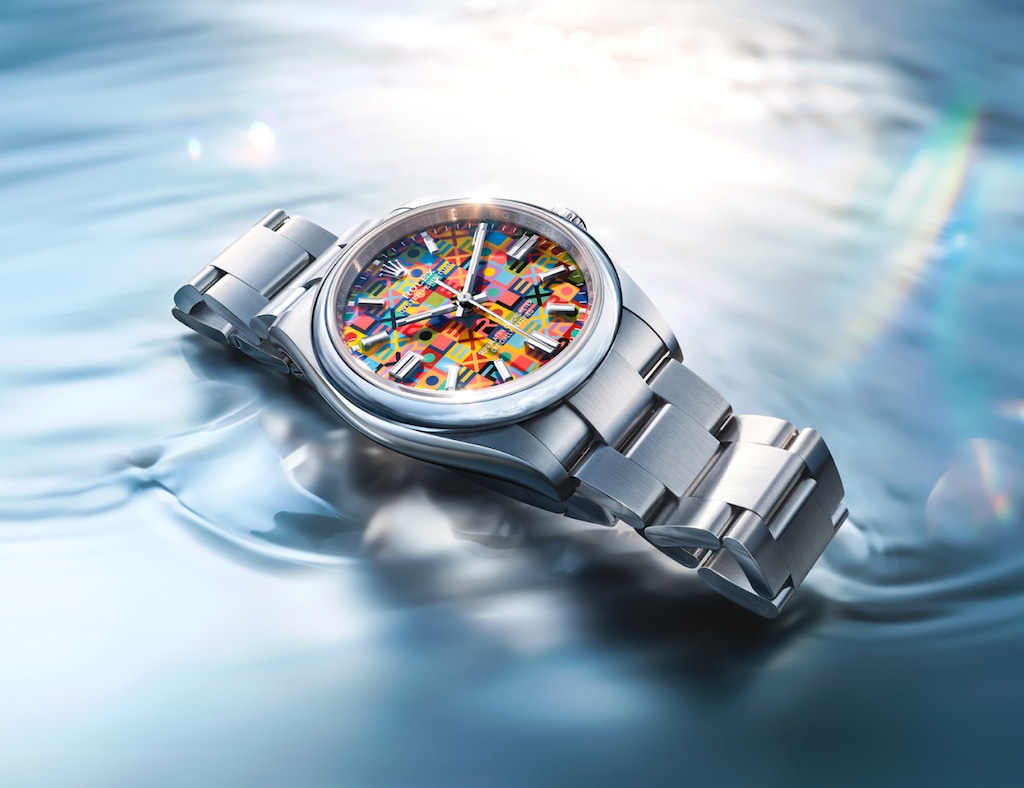
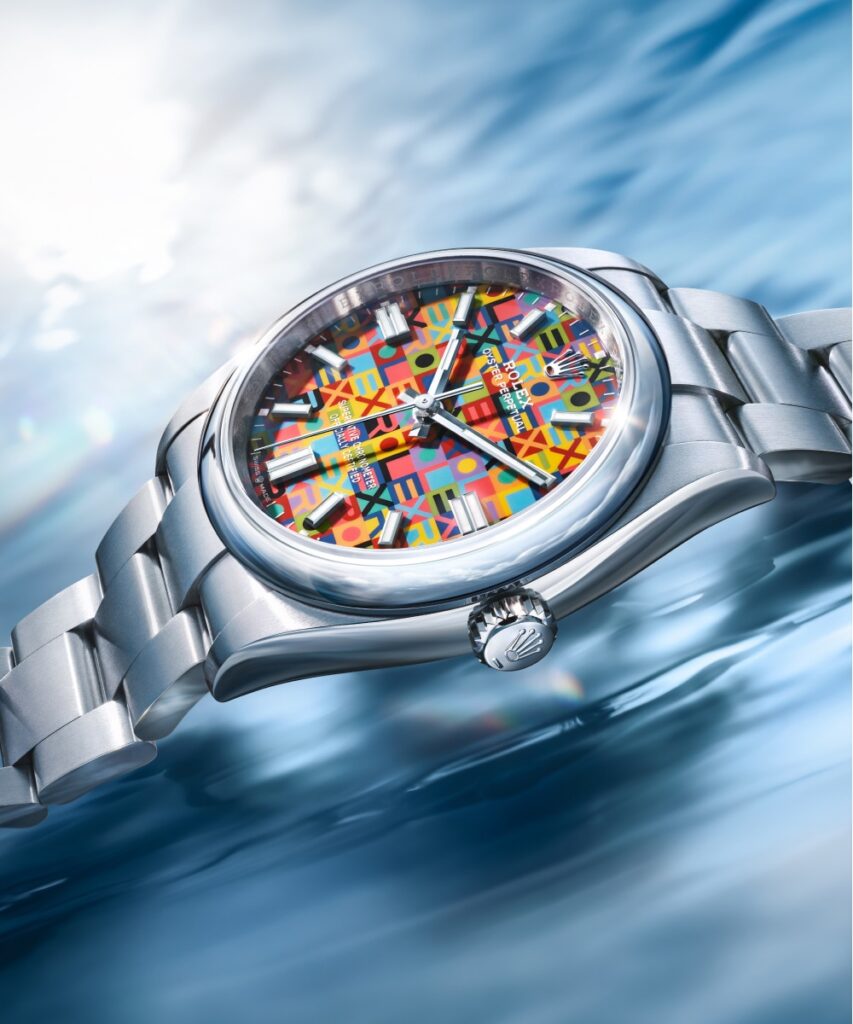
TheOyster Perpetual 36 2026 features a dial more reminiscent of precision screen-printing than classical watchmaking. The Jubilee decoration – a motif that has spanned several decades of Rolex dials since its creation in the late 1970s – is here relaunched in a ten-tone polychrome version. The difficulty lies not in the number of colors, but in their sequence: each is applied separately, after the previous one has dried. No simultaneous superimposition. Each letter, each geometric shape must be positioned with millimetric precision before the next hue is applied. A misalignment of a tenth of a millimetre is enough to disqualify the dial.
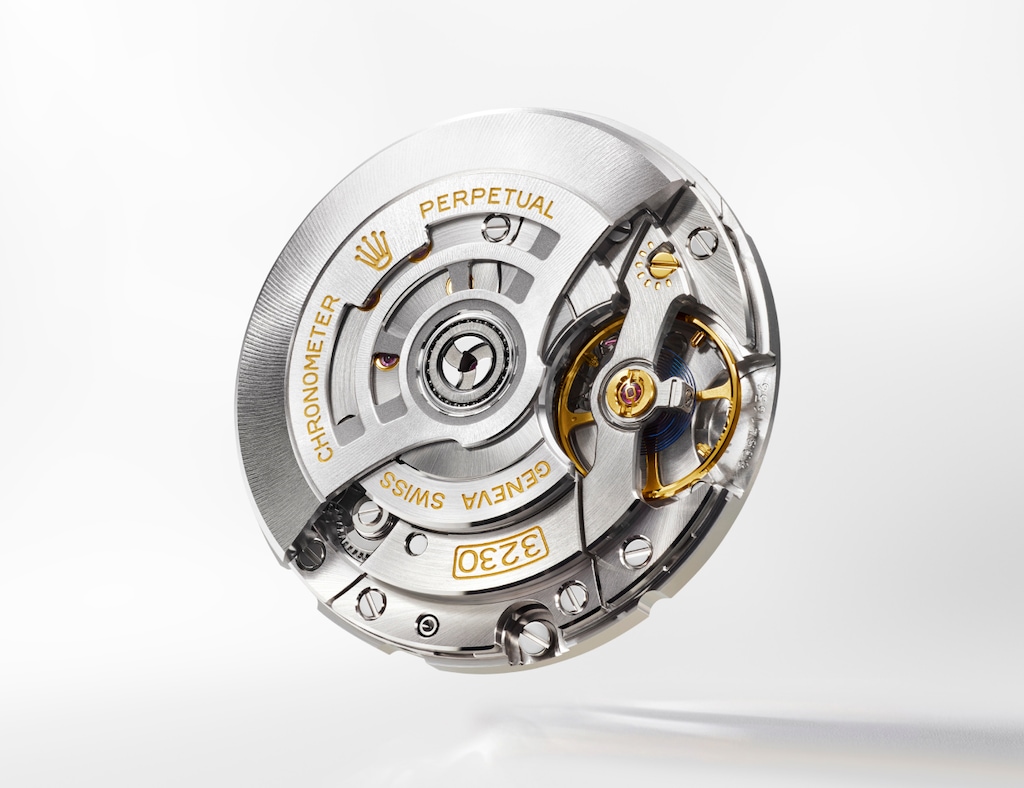
Beneath this surface, the caliber 3230 – entirely developed and manufactured by Rolex – beats at 28,800 vibrations per hour. Its Parachrom balance-spring, produced in paramagnetic alloy, resists high magnetic fields and thermal variations. The Chronergy escapement, made of nickel-phosphorus, optimizes energy efficiency while maintaining operating safety. The result: a power reserve of around 70 hours, and a precision evaluated on a finished watch at between -2 and +2 seconds per day. This last point deserves attention: Superlative Chronometer certification, reinforced in 2026 with three additional criteria (resistance to magnetism, reliability, durability), applies not only to the bare movement but to the assembled watch – case and bracelet included.
The 36 mm Oyster case is machined from a solid block of Oystersteel. The caseback is screwed down using a tool reserved for authorized watchmakers; the Twinlock crown incorporates a double water-resistance system. Water-resistance guaranteed to 100 meters.
Manufacturing details
`The Jubilee décor of the OP 36 features the letters “Rolex” in a play of contrasts in ten hues. The colors are applied one after the other to a lacquered dial in Oystersteel steel. Index and hands in 18 ct white gold, Chromalight treatment (long-lasting luminescence, blue emission). Caliber 3230, 31 jewels.
The question discreetly posed by this piece: as Rolex automates its testing processes (the Superlative Chronometer 2026 protocols are based on fully automated installations), to what extent are manual gestures – here, the sequenced application of colors – becoming the last territory where the hand remains irreplaceable?
Cette publication est également disponible en :

