
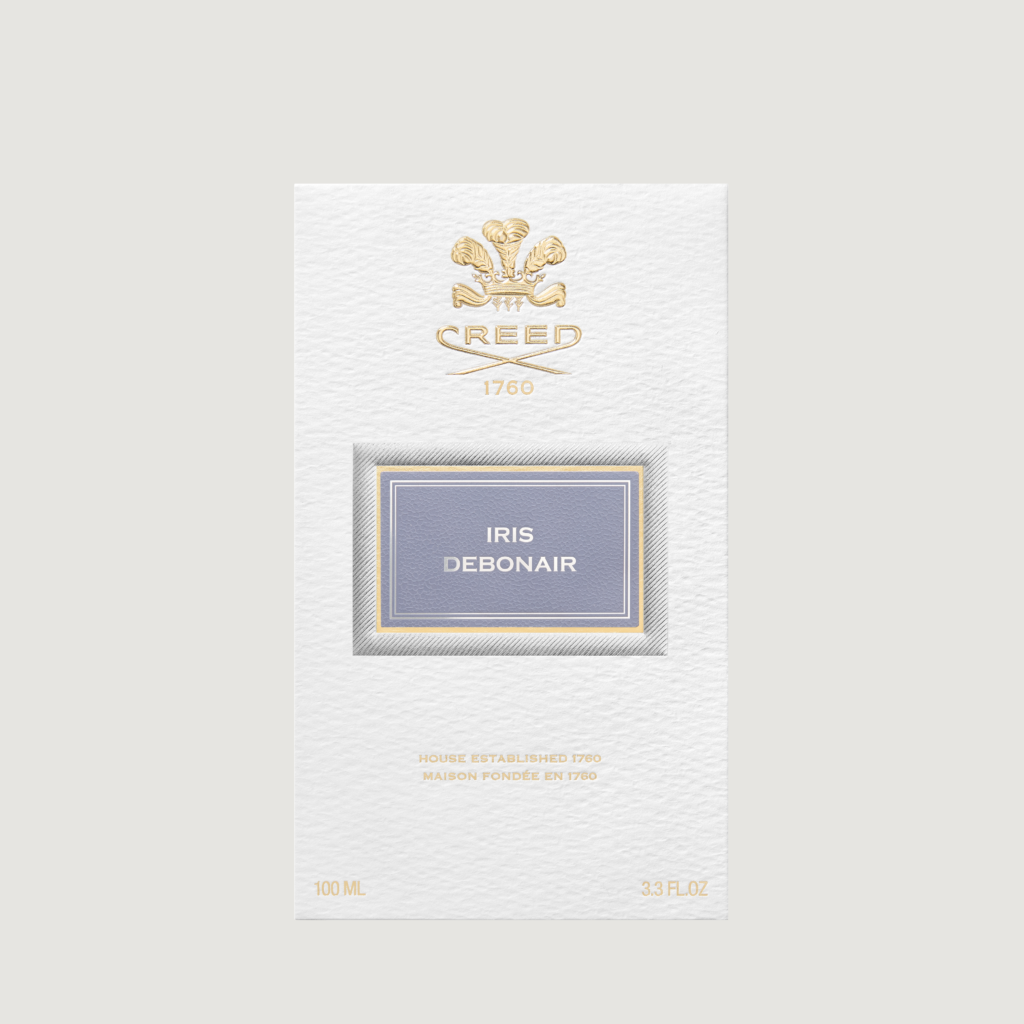
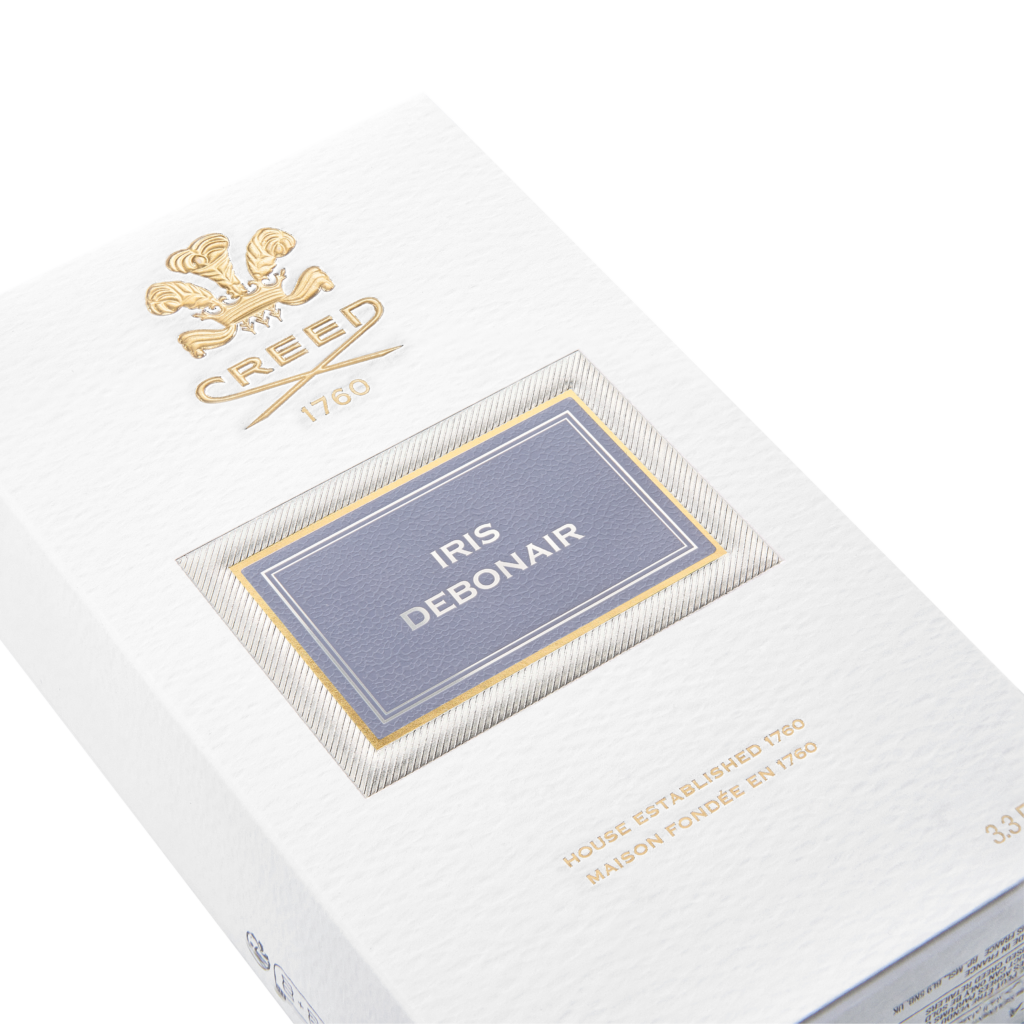
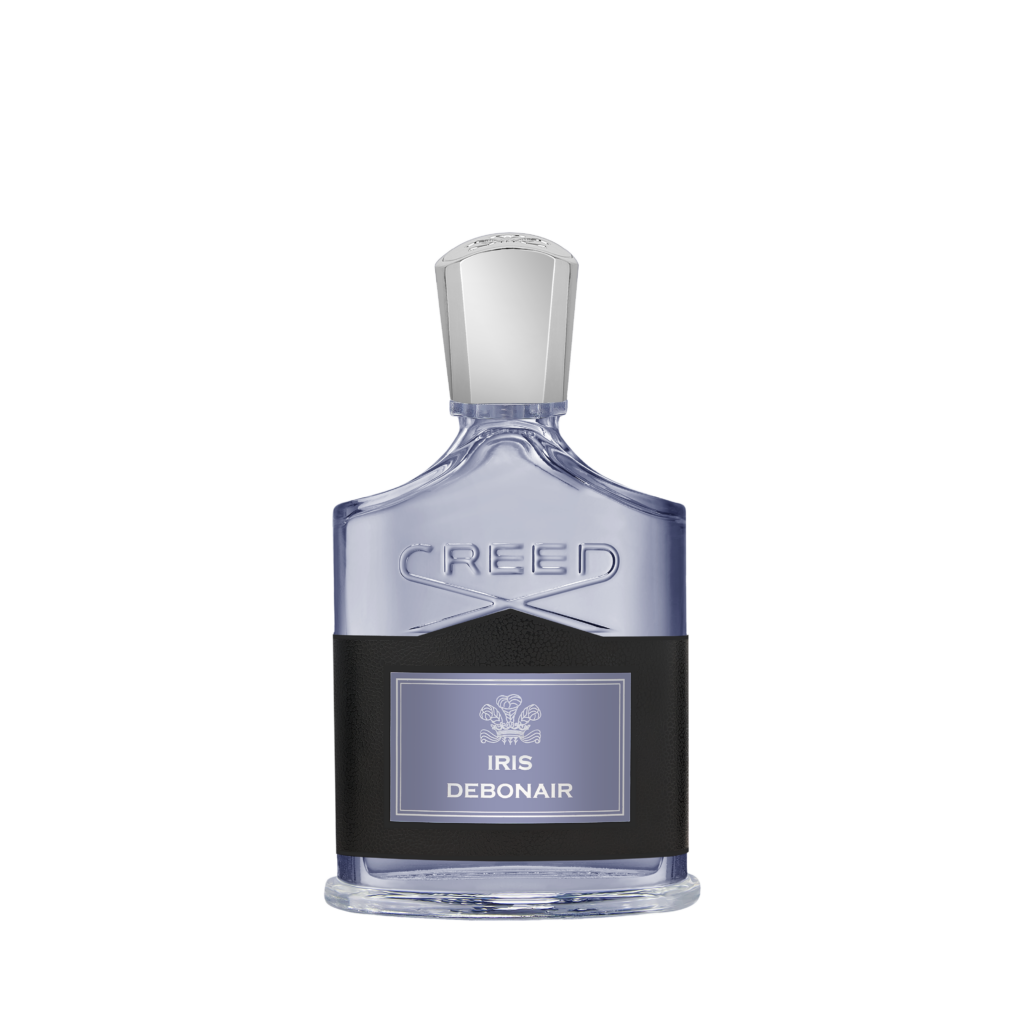
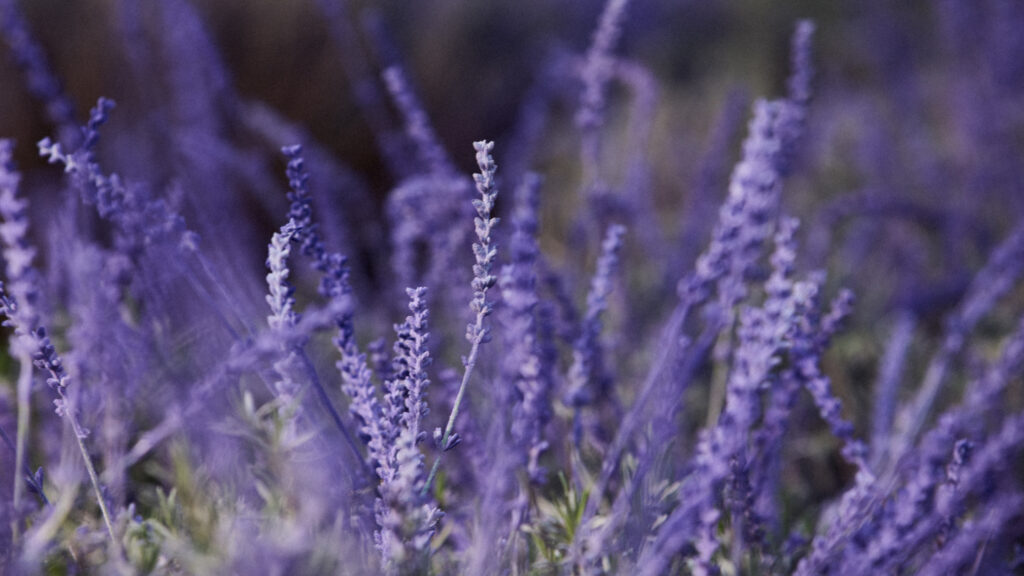
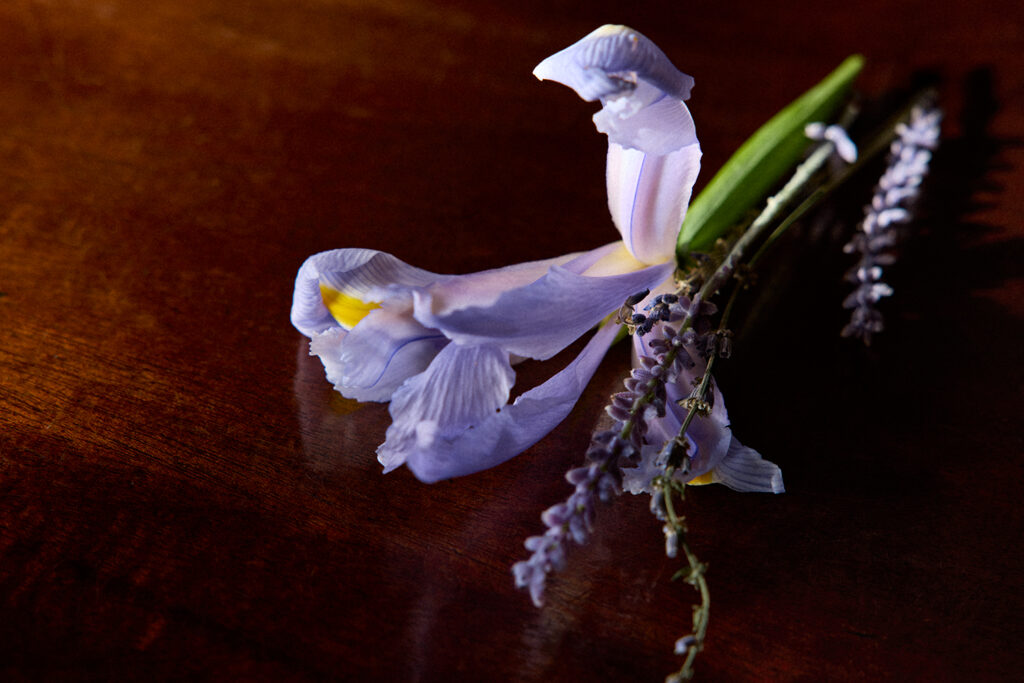
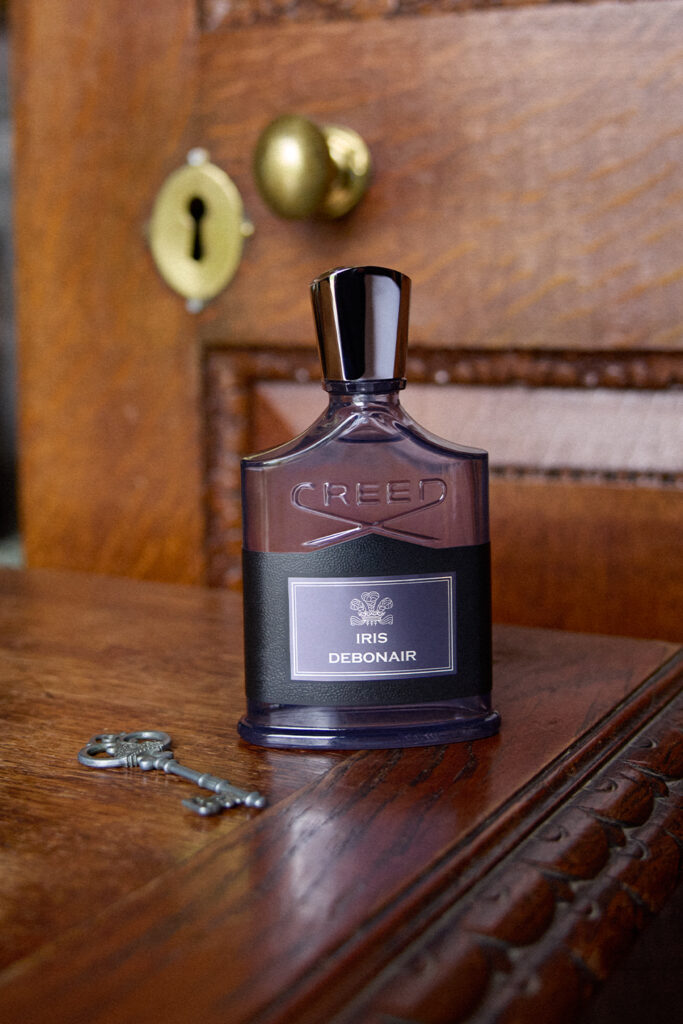
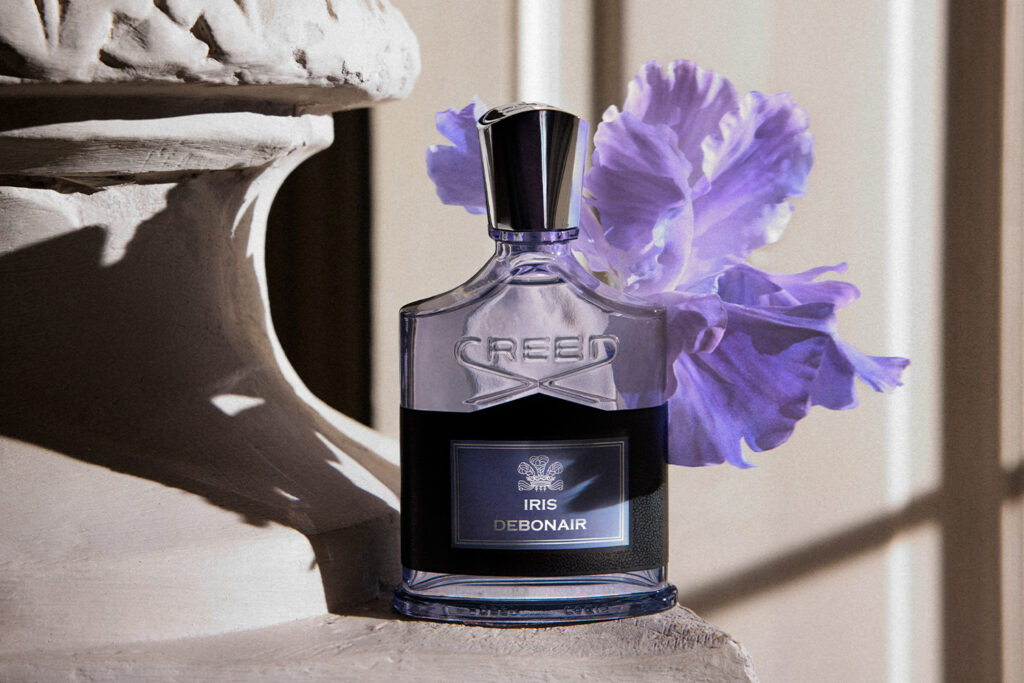
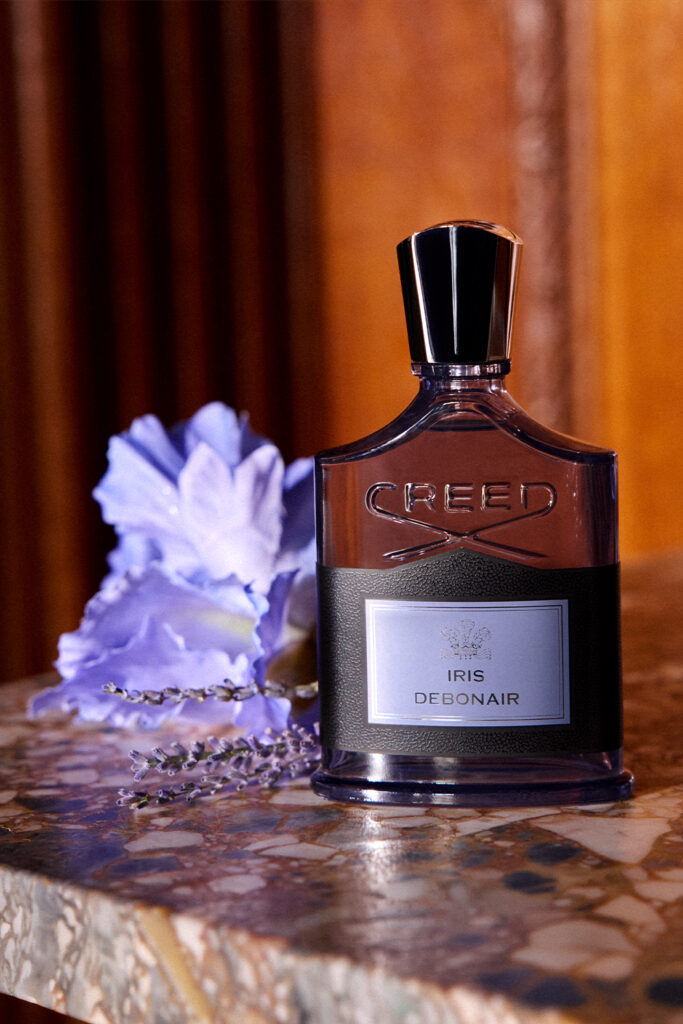
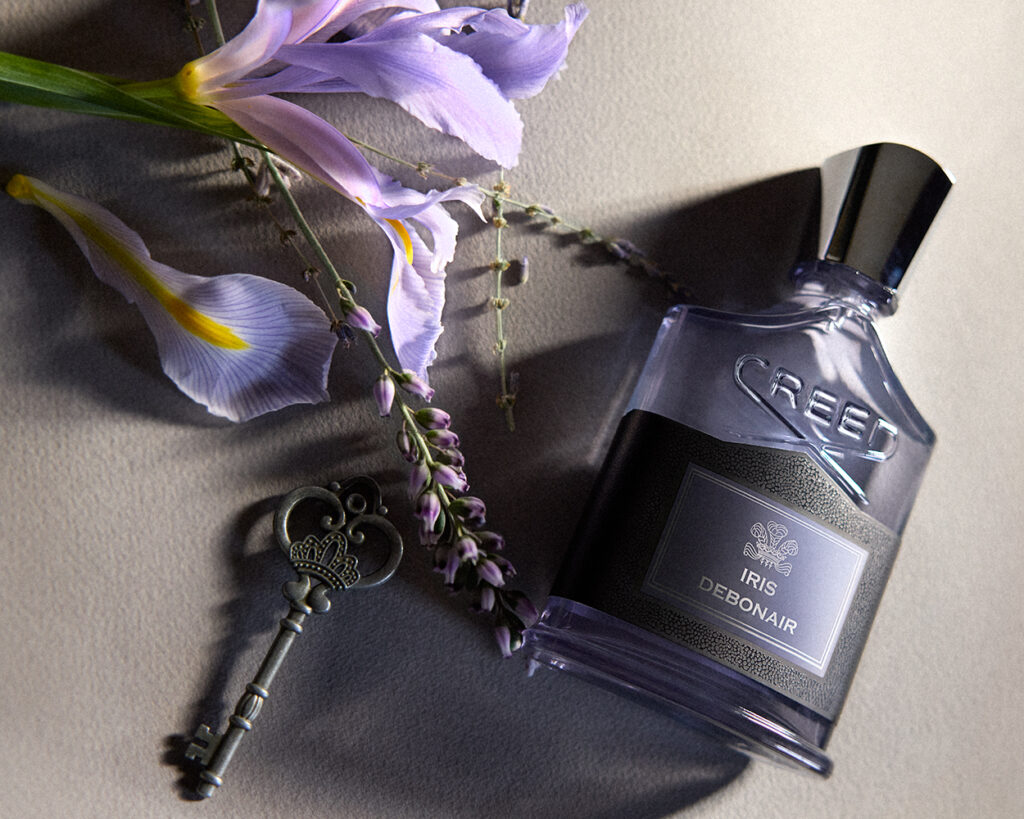
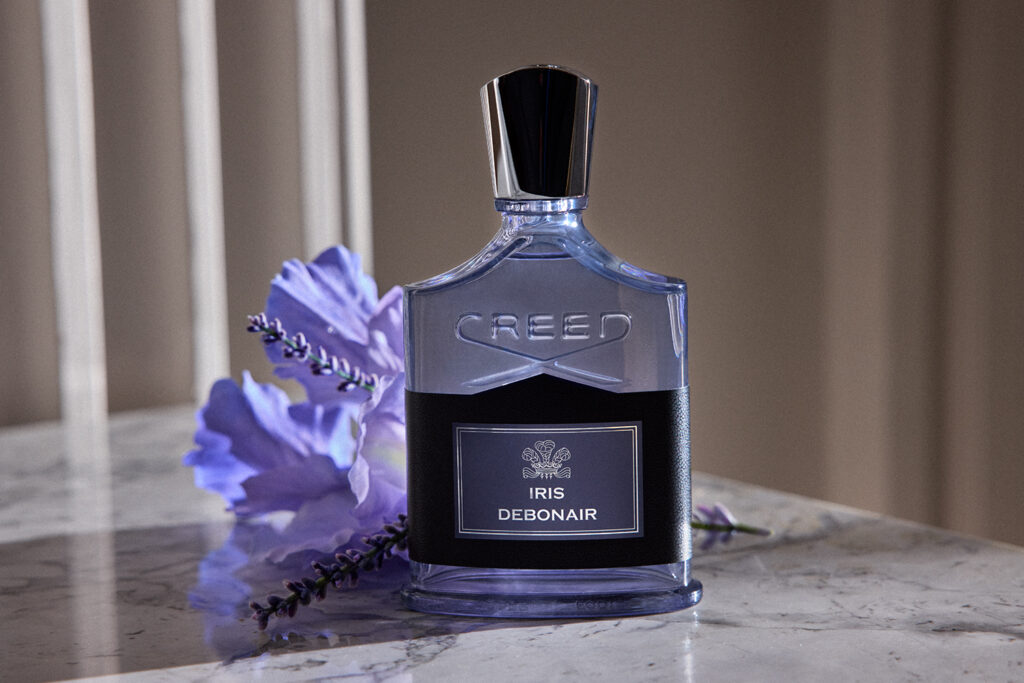
Two regions, two climates, two ways of cultivating the same family of plants: with Iris Debonair, Creed bets on dialogue rather than choice, a floral fougère that pairs English lavender from Kent with iris pallida from the Landes, without either seeking to dominate the other.
The very name of the perfume, Debonair, borrows from an old-fashioned vocabulary of English elegance — that of a polished nonchalance, never ostentatious. It announces fairly faithfully what the composition seeks to convey: an ease that owes nothing to excess, built on the meeting of two materials that everything, in appearance, separates geographically but that their shared belonging to the families of Iridaceae and Lamiaceae brings together in the spirit of this creation.
The fougère, one of the oldest olfactory families in perfumery, traditionally rests on an accord of lavender, coumarin and oakmoss, originally conceived to evoke an almost austere freshness. Iris Debonair belongs to this lineage while reorienting it towards a more floral dimension, in which the iris is not content with a supporting role but asserts itself as a full partner of the lavender, to the point of reshuffling the usual balance of the genre.
The approach begins with the choice of the raw materials themselves: the lavender comes from Kent, a region of south-east England renowned for its fields, while the iris pallida is cultivated in the Landes, in south-west France. Two terroirs, two traditions of cultivation, brought together in a single bottle rather than substituted for one another — a way of composing that implies meticulous work of blending, iris pallida being a raw material known for its demands: the roots must dry for several years before yielding their characteristic essence, at once powdery and slightly woody. Such a choice implies trust in the raw material rather than in its synthetic reinterpretation, an option increasingly rare in an industry where chemical reconstitution nevertheless makes it possible to obtain, at lower cost, similar olfactory effects.
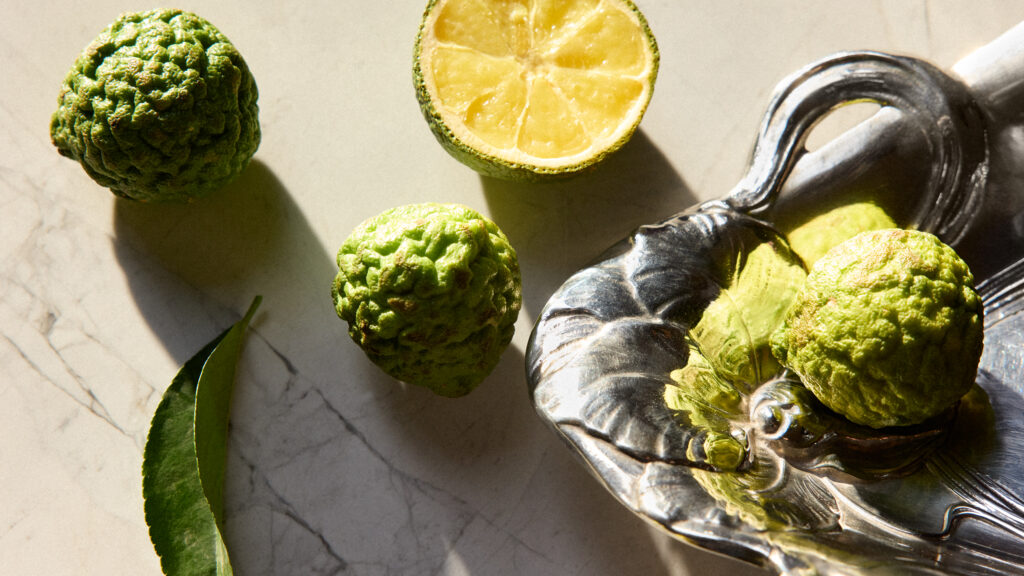
At the top, the perfume opens on an association of bergamot, wormwood leaves, pink pepper and cardamom, a quartet that immediately sets up a slightly spiced freshness before the heart lets lavender, violet leaf and fig pulp appear. This last note, more unexpected in a fougère, introduces a gourmand, fleshy facet that contrasts with the usual rigour of the olfactory family, without ever tipping into easy sweetness. The fig, in particular, plays here an unexpected hinge role: it does not seek to sweeten the composition but to give it an almost tactile thickness, as a discreet reminder that the plant-like freshness of the opening can, without denying itself, slide towards something more enveloping.
The base closes the composition on iris pallida, ambrette and amber wood, three materials that share a form of elegant restraint rather than demonstrative power. This is perhaps where the essence of this new creation is played out: rather than opposing the English freshness of lavender to the French sophistication of iris, Iris Debonair chooses to make them cohabit to the very end, as if the fougère, one of the most codified genres in perfumery, could still welcome a new reading without denying its history.
This choice to assemble two terroirs rather than retain only one also says something about contemporary composition work, in which the precise provenance of a raw material becomes a creative argument in its own right, almost a geographical signature. By explicitly naming Kent and the Landes, Iris Debonair invites us to perceive the perfume not as an olfactory abstraction but as the result of a deliberate agricultural choice, in which each ingredient keeps the trace of the soil that saw it grow.
Also on Luxsure: Uruk, or perfume as imaginary archive · Elizabeth Arden outlines a four-step routine against “Heat Aging” · The Longevity Residence: luxury reinvented as self-care · Fenty Skin adds Amber Bouquet to its body range, at the direct request of the Fenty Fam
Cette publication est également disponible en :


