
Twelve formulas, three declared ingredients, an ambition stated from the collection’s first chapter: to rebalance the traditional proportions of perfume rather than multiply its layers. With six new creations joining Olfactory Series 1, Jil Sander confirms a singular wager in a sector where an abundance of notes often serves as a selling point.
The collection rests on a deliberately restricted architecture: synthetic aldehyde molecules, alcohol derived from upcycled CO2 emissions, and water. That the house chooses to name these three components so explicitly, rather than unfold a classic olfactory pyramid of top, heart and base notes, says a great deal about its intent. The aim is not to recount a sensory journey in several acts, but to build an olfactory object whose simplicity of formula becomes the subject itself.
This vocabulary of reduction is no accident of the collection: it extends the identity the house of Jil Sander has built since its founding in ready-to-wear, where the pure line and the absence of superfluous ornament long served as a signature. That the same demand now appears in the formula of a perfume, down to the choice of naming the molecules rather than suggesting an atmosphere, confirms that the brand conceives its olfactory laboratory as a direct extension of its wardrobe, and not as a mere licence.
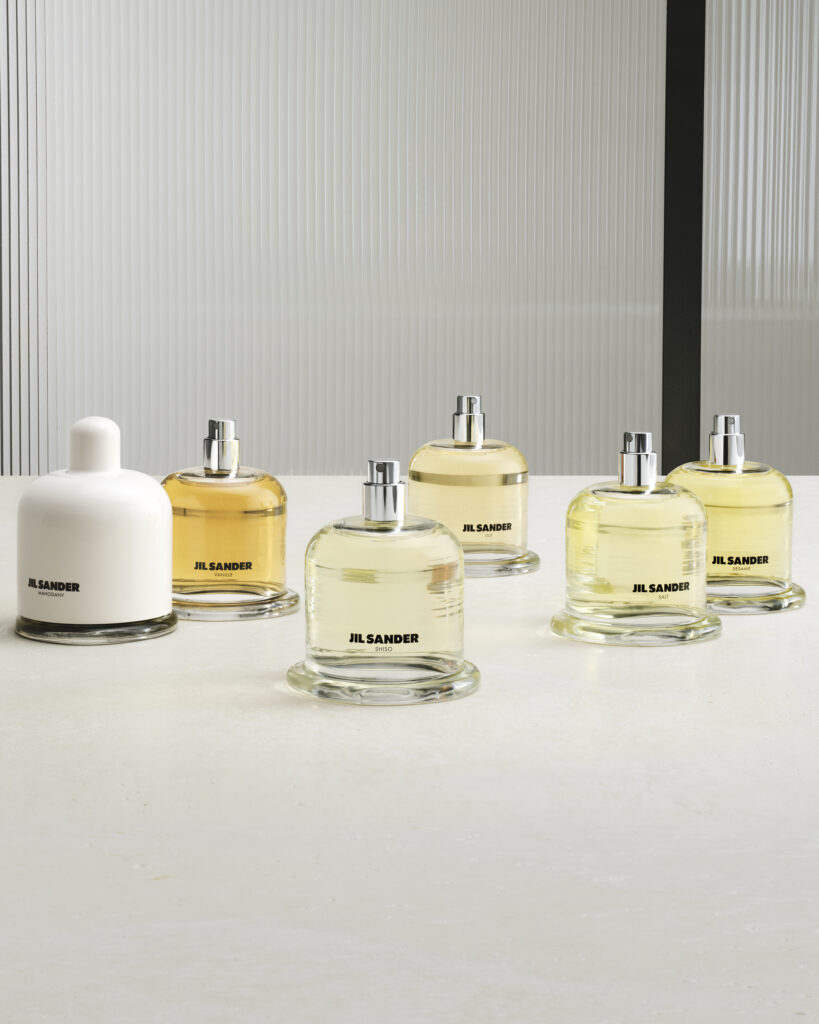
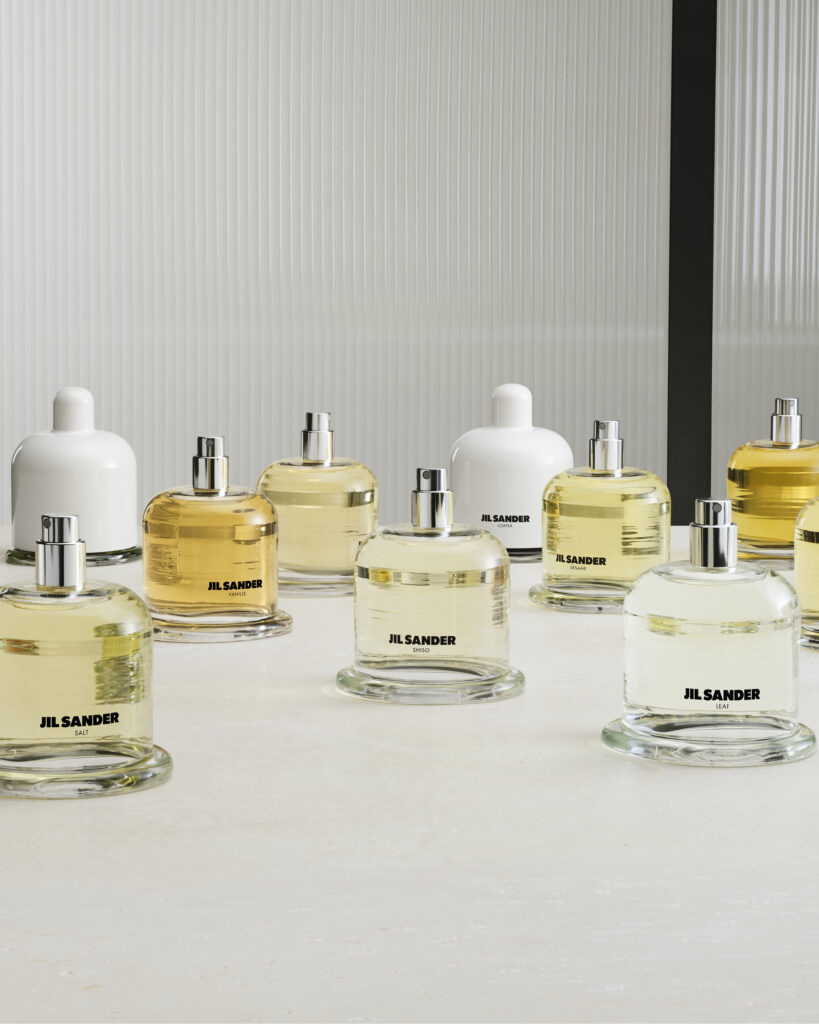
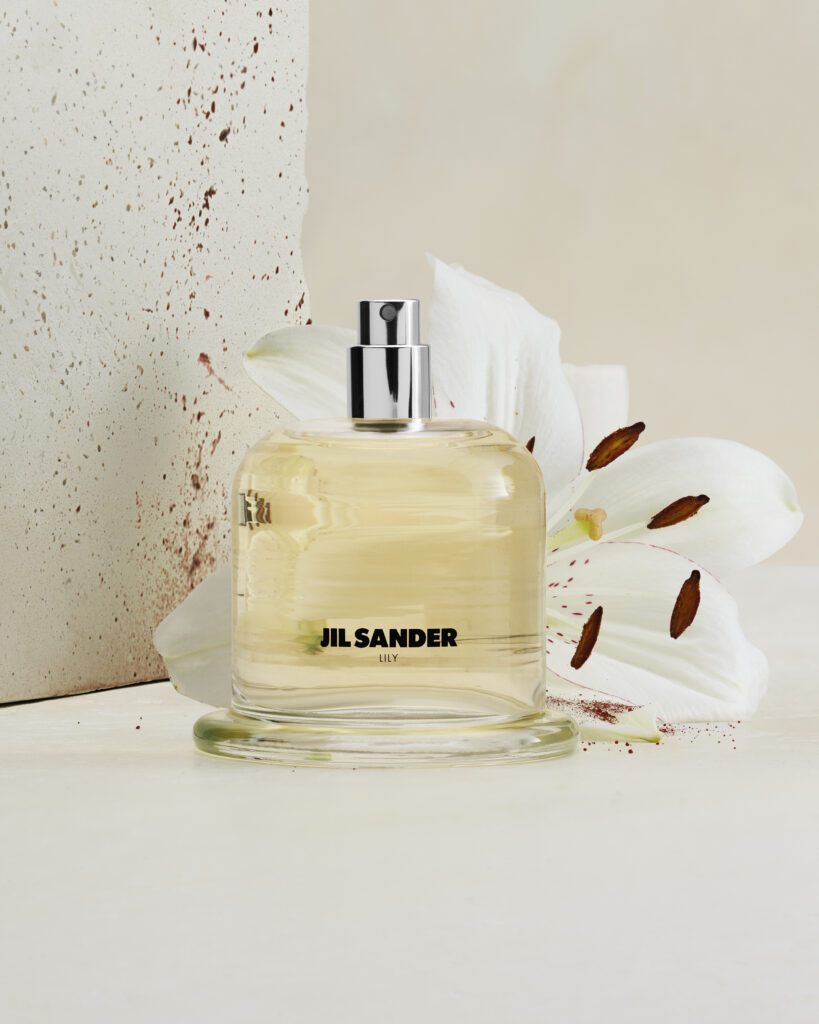
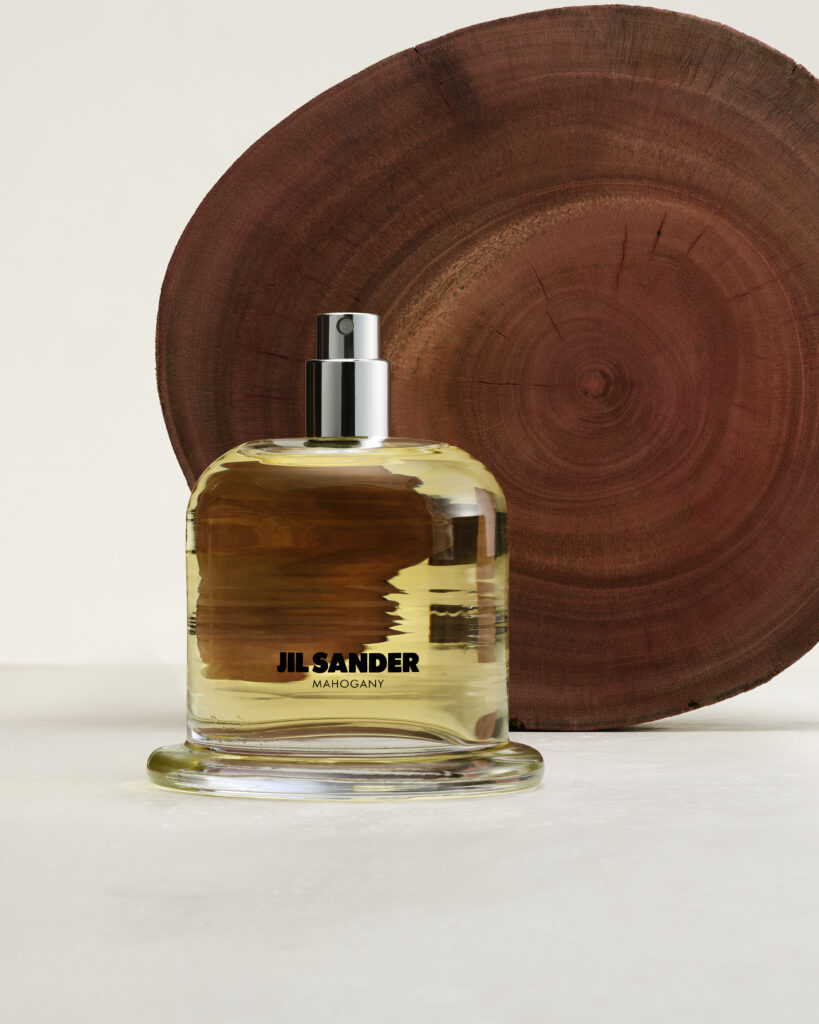
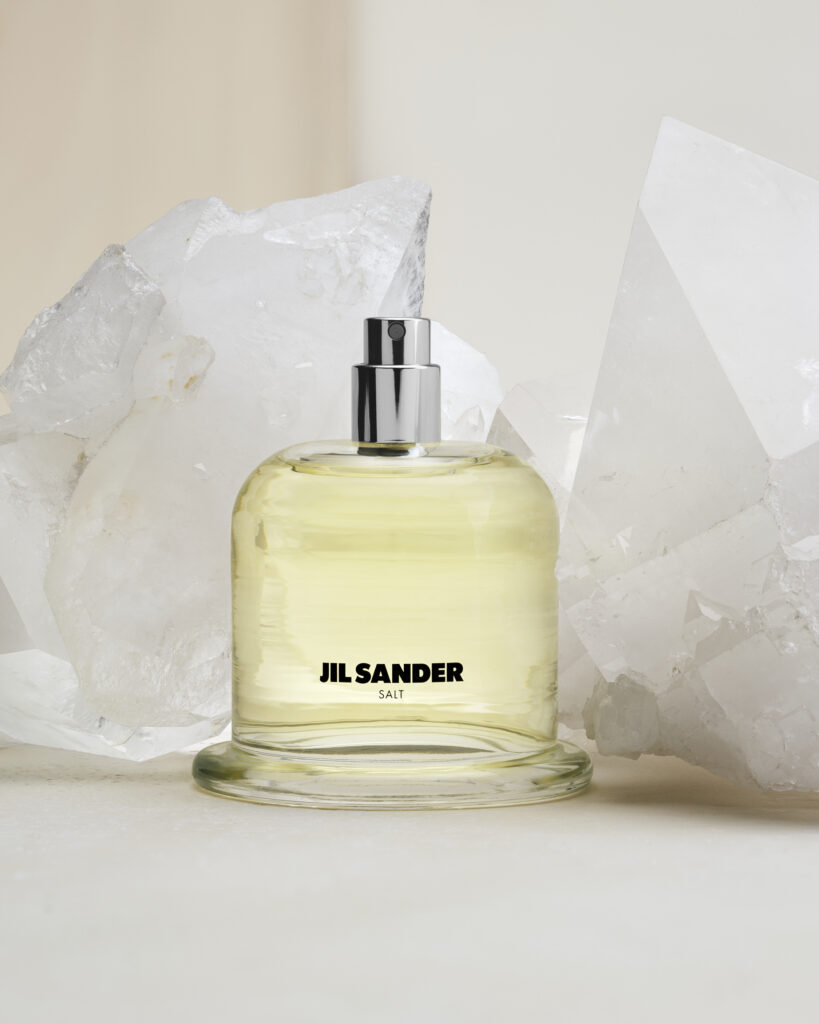
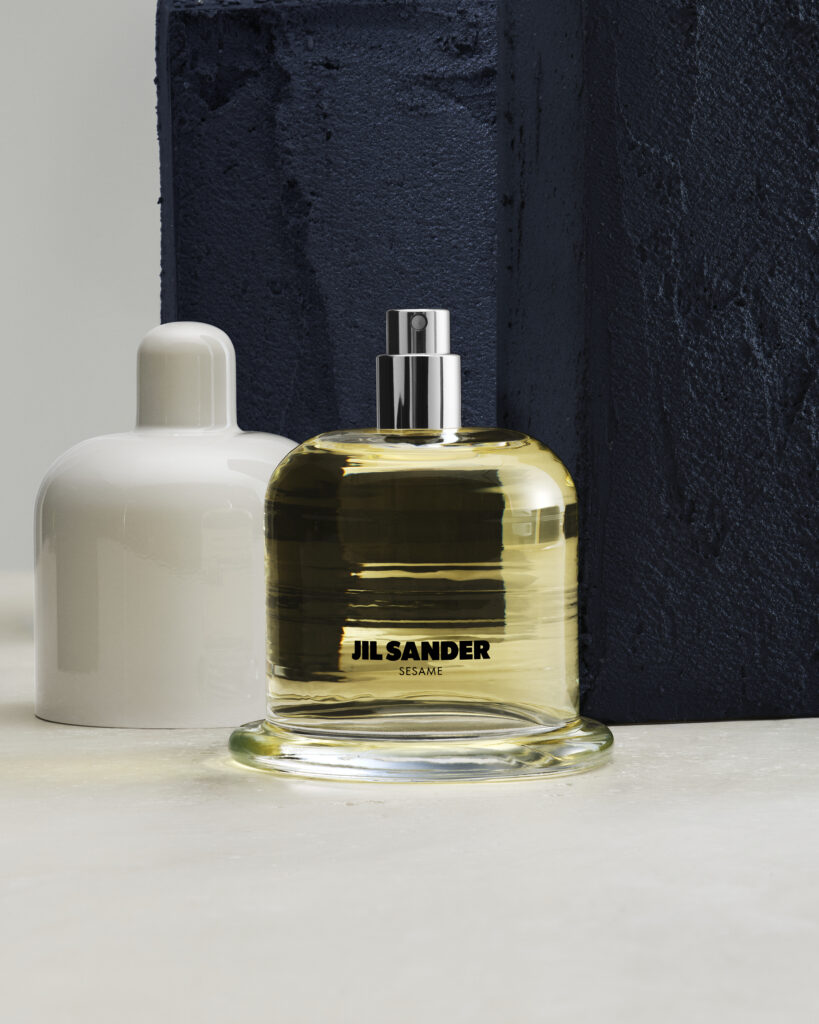
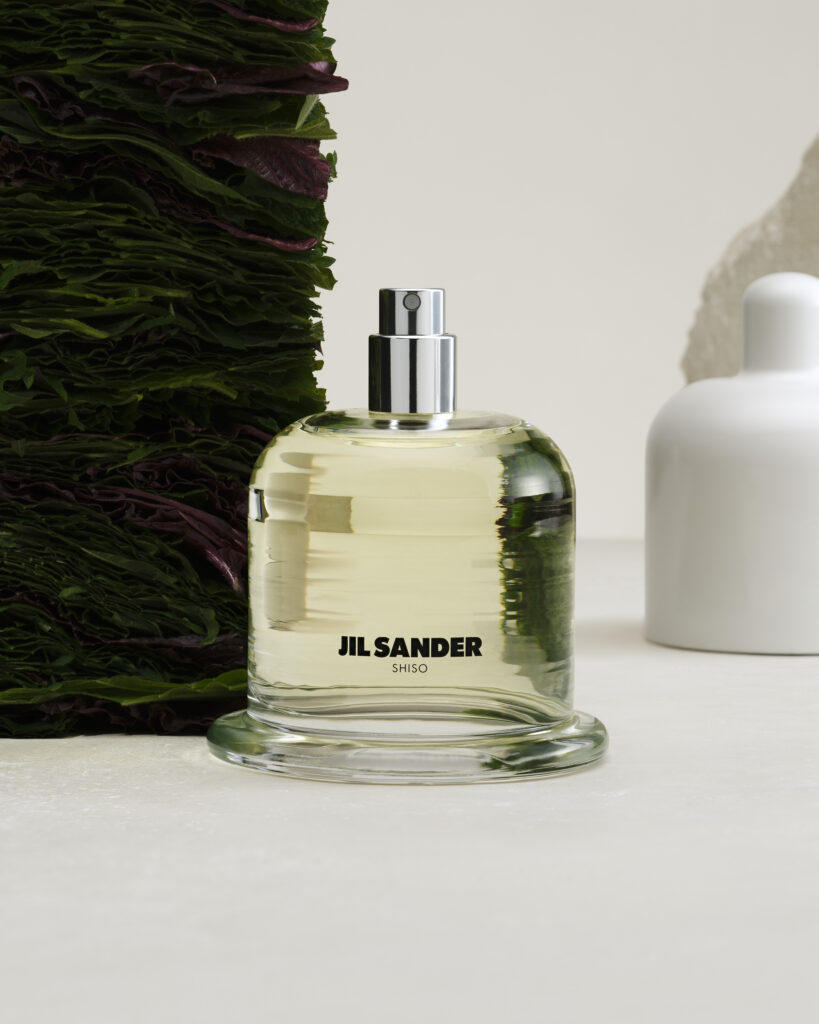
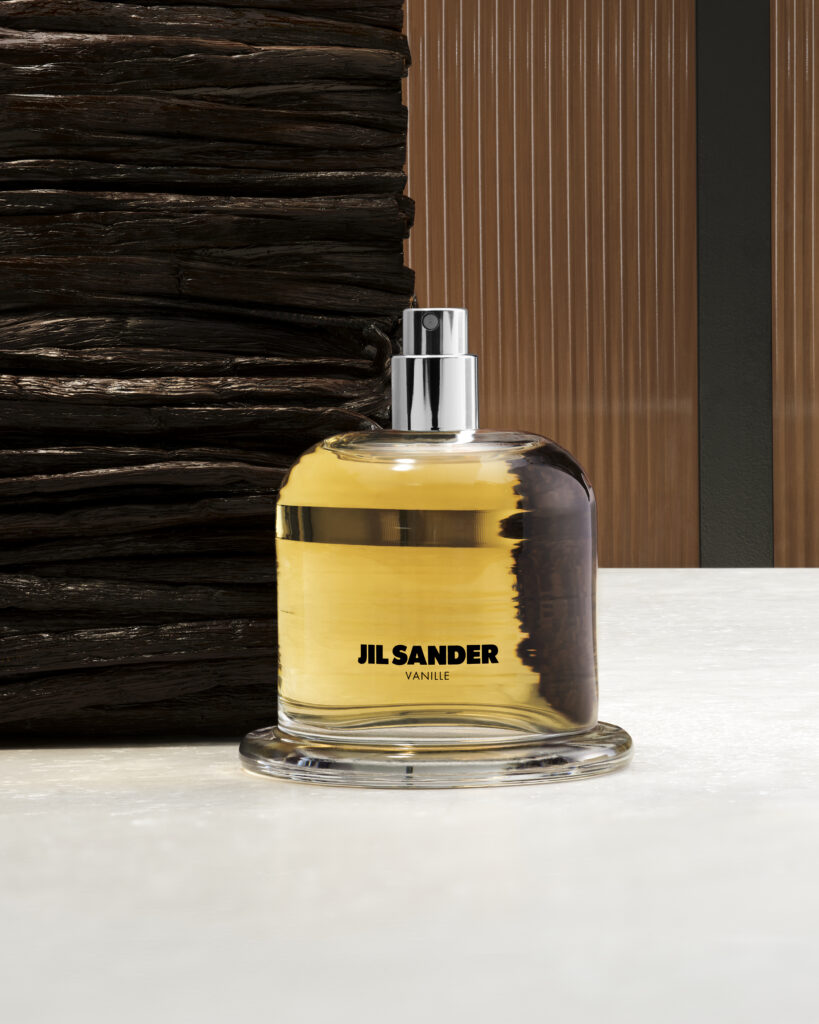
This minimalist stance is accompanied, paradoxically, by a plurality of signatures. The six new fragrances — Shiso, Lily, Mahogany, Salt, Sesame and Vanille — were entrusted to six different perfumers, Julie Massé, Mathilde Bijaoui, Louise Turner, Alexis Grugeon, Meabh Mc Curtin and Coralie Spicher, within a group of nine perfumers engaged across the whole collection. This choice of a plural signature, rather than that of a single nose imposing its hand on the whole, reflects an almost editorial approach to perfume: each fragrance becomes a short text, written by a different voice, but subject to the same constraint of form.
The unisex positioning, claimed since the collection’s launch, takes on its full meaning here: by reducing the formula to deliberately neutral ingredients — a salt, a root, a woody resin rather than gendered floral or musky accords — the house avoids the olfactory codes traditionally associated with the masculine or the feminine, without lapsing into abstraction. Salt and Sesame, for example, draw on culinary and mineral worlds more than on classic fine perfumery, anchoring the collection in a form of the everyday rather than in the purely exceptional.
The bottle, designed with the studio Formafantasma, pursues the same logic of considered reduction. The white aluminium bell-shaped cap protects the perfume from light but, above all, once removed, shapes a precise gesture: that of holding something precious before applying the fragrance. The studio, known for its work on the social and ecological forces running through contemporary design, sought to reintroduce a craft dimension into an industrial glassmaking process — an ambition that echoes the house’s broader one regarding upcycled alcohol.
The launch, set for 8 July 2026 in Jil Sander boutiques, on jilsander.com and in department stores, confirms a deliberately narrow distribution: the brand is not seeking presence everywhere, but an availability that remains selective, consistent with the positioning of the rest of the house.
At €230 for 100 ml, in a refillable bottle, Olfactory Series 1 is not aimed at a mass market, but it raises a question that goes beyond the luxury segment alone: whether the sophistication of a perfume is still measured by the complexity of its formula, or whether it can now lie in the rigour of the gesture that composes it.
Cette publication est également disponible en :


