
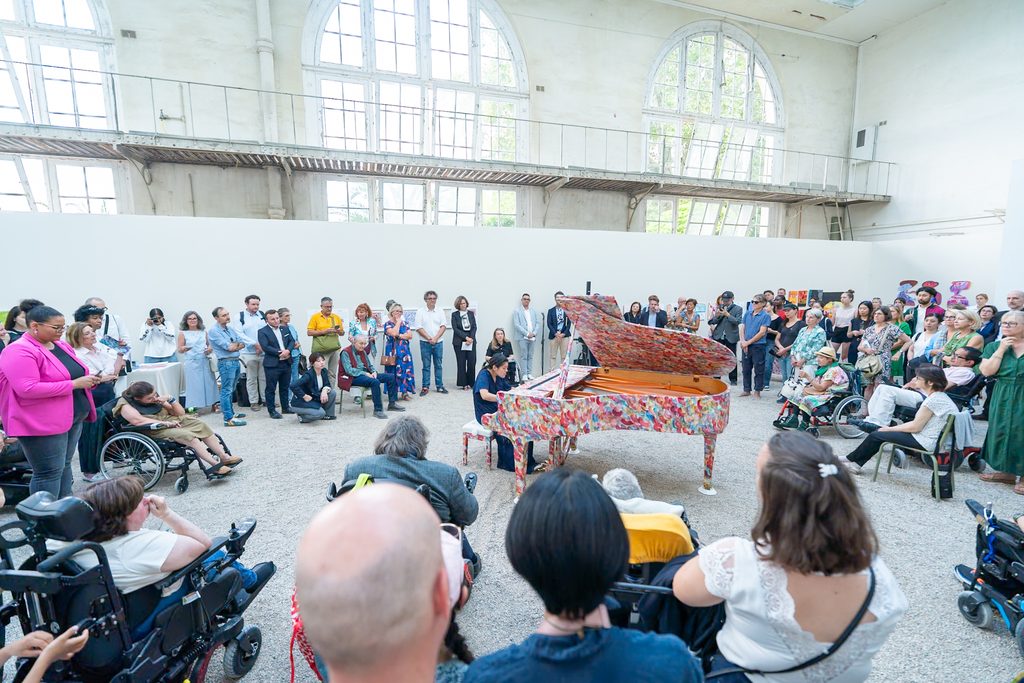
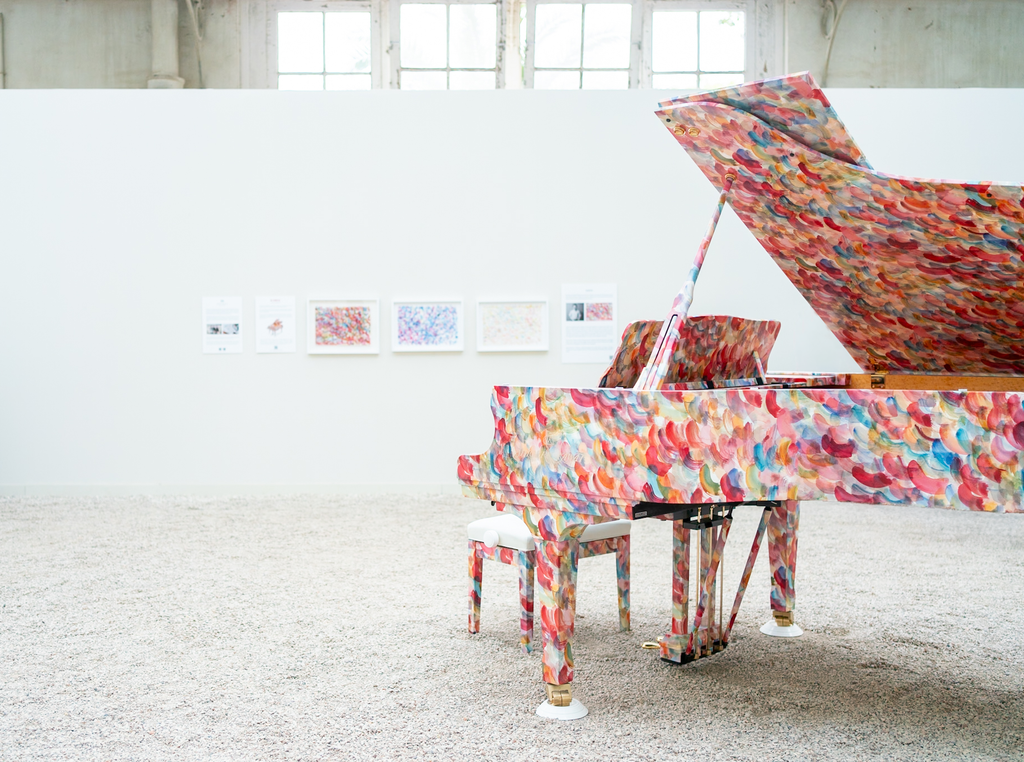
From August 14 to 25, the exhibition ‘L’Art coûte que coûte’ brought together in Paris 80 works by thirteen artists who are members of APF France handicap. At its center, a grand piano covered in a painting. The object draws attention; the contract that made it possible says more.
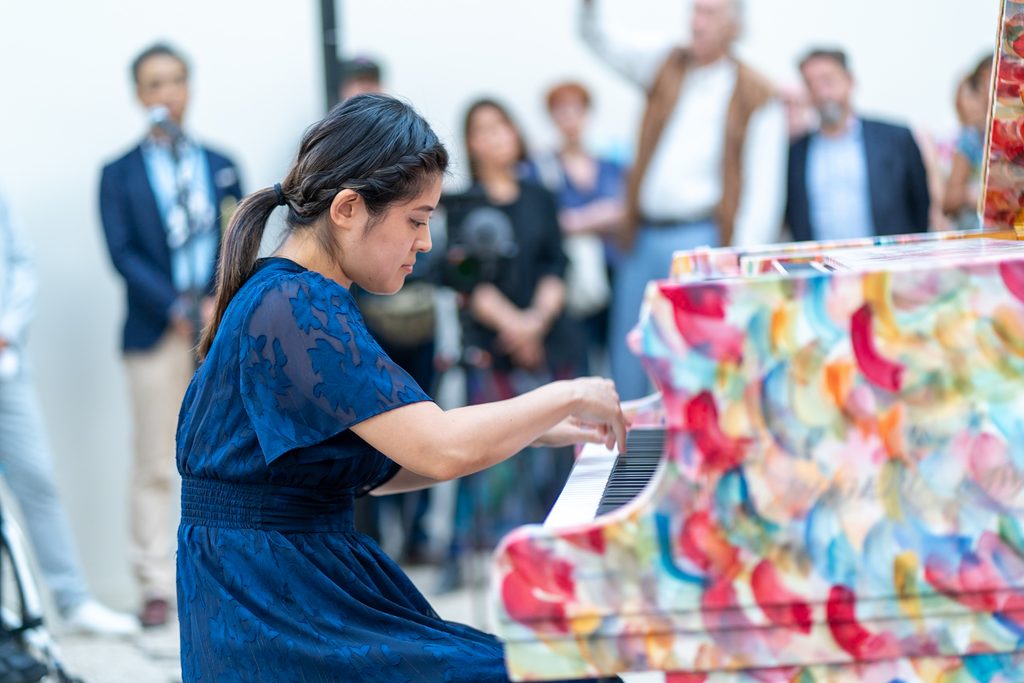
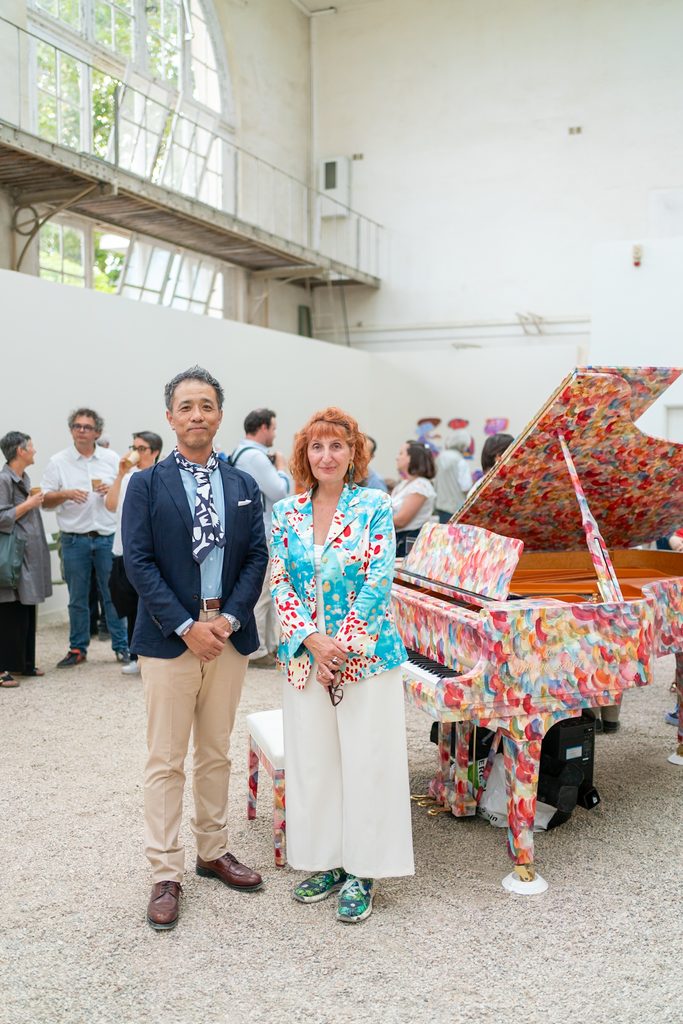
The piano is called KIZASHI. It is a Shigeru Kawai SK-5, dressed in BIG STEP, a work by Japanese artist SATO. The first KAWAI piano to enter this exhibition, held for the third time since 2022 by an association founded in 1933 that today supports more than 35,000 people in France. On August 25, KAWAI gathered around the instrument some 350 guests, including the minister responsible for people with disabilities, and entrusted a recital to pianist Yuki Kinouchi, based in Switzerland.
So much for the stage. The mechanism lies elsewhere.
A signature, not a donation
HERALBONY, which supplies the work, is not an association. It is a Japanese company that manages, under intellectual property license, more than 2,000 works created by artists with disabilities, and pays them royalties. The difference from patronage is not a matter of vocabulary. In a patronage partnership, the company gives and the artist receives. In a licensing contract, the artist grants a limited use in exchange for a percentage and retains ownership of their work. The first arrangement produces recognition. The second produces a right. SATO did not lend BIG STEP to KAWAI: he licensed it.
This is also the reason for HERALBONY EUROPE, opened in Paris in July 2024, the company’s first establishment outside Japan. A model built on licensing needs markets where licenses sell. France offers both sides of that: a structured network of associations and companies that buy images.
Nathalie Caclard, head of the cultural program at APF France handicap, draws the conclusion without detour: ‘For the artists, seeing their works become products, being chosen and then entering someone’s daily life is a way of giving them a new life.’ The word ‘products’ is not a slip. It is the heart of the arrangement.
The chosen model says something
There remains the instrument. KAWAI did not select its concert piano, the SK-EX, but an SK-5, an intermediate model in the Shigeru Kawai series — a living-room size, not a stage size. Toshinori Yasui, of the marketing strategy and design department, states in the company’s press release that ‘a musical instrument is not reserved for experienced musicians; it can also answer the simple desire to try, discover and express oneself.’ The choice of model follows the sentence: a piano one approaches rather than one confronts. It should be noted, however, that the August 25 finale was entrusted to a professional, not to visitors.
The Shigeru Kawai series has a sturdier history than the Parisian operation: the official piano of the International Tchaikovsky Competition since 2002, it is present at major international competitions, including the Chopin Competition. Backing an inclusion project with this range rather than the company’s standard range is not neutral. It places SATO’s work on the high end of the catalog, exactly where KAWAI’s credibility with professionals is at stake.
What is missing from the edifice is what is missing from most operations of this kind: the numbers. HERALBONY communicates the number of works under management, but never the royalty rates, nor the duration of the licenses, nor the share paid back to the artist on a sold item. Without them, it is impossible to say whether the model properly compensates artists or merely shifts the vocabulary of charity toward that of contract. The legal structure is sound; its actual yield remains unverifiable.
KAWAI will turn a hundred in August 2027 and states it wants to devote the following century to music accessible to all. The test will come after the exhibition. If KIZASHI remains a one-off piece circulating from opening to opening, the operation amounts to well-executed corporate communication. If the instrument enters the catalog, with a price, a serial number and a royalty paid to SATO on every unit, then the demonstration will have been made — and it will be worth more than the exhibition that launched it.
Detail — The Shigeru Kawai series is numbered by size, from the SK-2 to the concert SK-EX. The SK-5 occupies the mid-range: enough authority to carry an artist’s signature, enough size to fit into a private home. The choice determines the audience as much as the painting does.
Cette publication est également disponible en :


