
To mark the tenth anniversary of its *Portraits* collection, Penhaligon’s has chosen not to stage a retrospective. Instead, the House has chosen to revisit four existing fragrances and reimagine them as more concentrated, darker, and more complex compositions. This approach is not merely olfactory; it reveals how a fragrance collection can function as a serialized narrative.
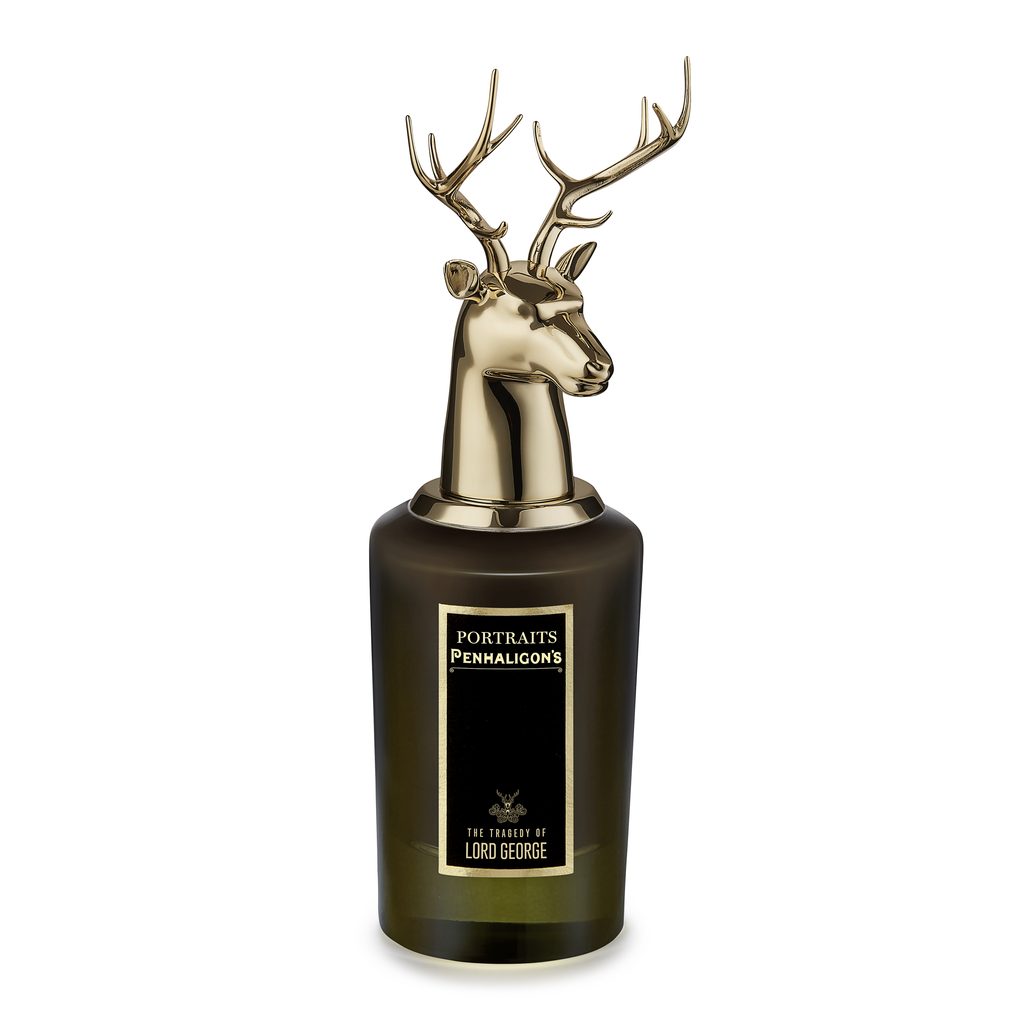
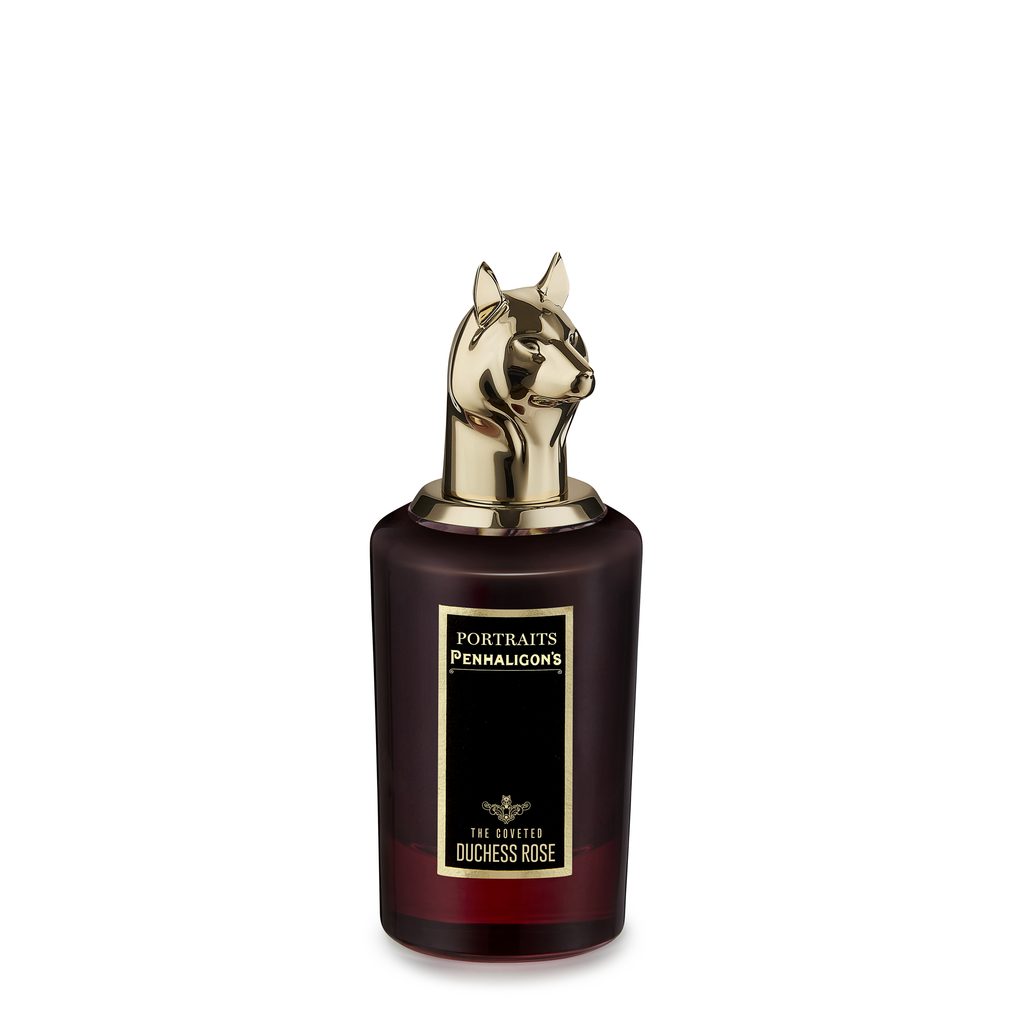
Launched on September 1, 2026, *Portraits Intense* retains the animal-headed bottles and cases illustrated by Kristjana Williams. The glass, however, is now slightly tinted—a subtle hint of the shift in style. This visual continuity allows the House to maintain the characters’ instant recognizability while altering their depth.
*The Tragedy of Lord George Intense*, created by Alberto Morillas, revisits the original fragrance’s blend of shaving soap and rum. It deepens this accord with dark chocolate featuring alcoholic notes and dry vetiver. This version perfectly illustrates the project’s concept: not to create a new character, but to reveal a side that had previously remained off-screen.
With *The Coveted Duchess Rose Intense*, Nathalie Lorson intensifies the rose with a trio of extracts, supported by amber and vanilla. The flower ceases to be merely elegant and takes on a more sensual presence. Here again, the intensity does not rely solely on strength, but on a shift in character.
The same approach is evident in the other compositions. The signature accords are retained and then enriched with elements that shift their interpretation. In *Changing Constance Intense*, Juliette Karagueuzoglou amplifies the spicy and floral notes, while salted caramel blends with leather and saffron. The perfumer emphasizes emotional depth and longevity rather than heaviness.
This collection demonstrates how narrative perfumery can avoid being merely a series of variations. By retaining the original visual elements, names, and structures, Penhaligon’s transforms intensification into a dramatic device. Each composition becomes a new scene, rather than a “stronger” version in the strict sense.
Limiting the selection to just four characters narrows the focus. It avoids a “catalog” effect and allows the House to explore the collection’s legacy without turning it into a museum piece. Ten years after its launch, *Portraits* thus proves that a fragrance franchise can evolve like a narrative, provided that each reformulation offers a new perspective.
It remains to be seen whether this approach will lead to further developments. If Penhaligon’s continues along these lines, the collection could become less of a static gallery and more of a repertoire of concepts that can be reinterpreted over time.
Cette publication est également disponible en :

