
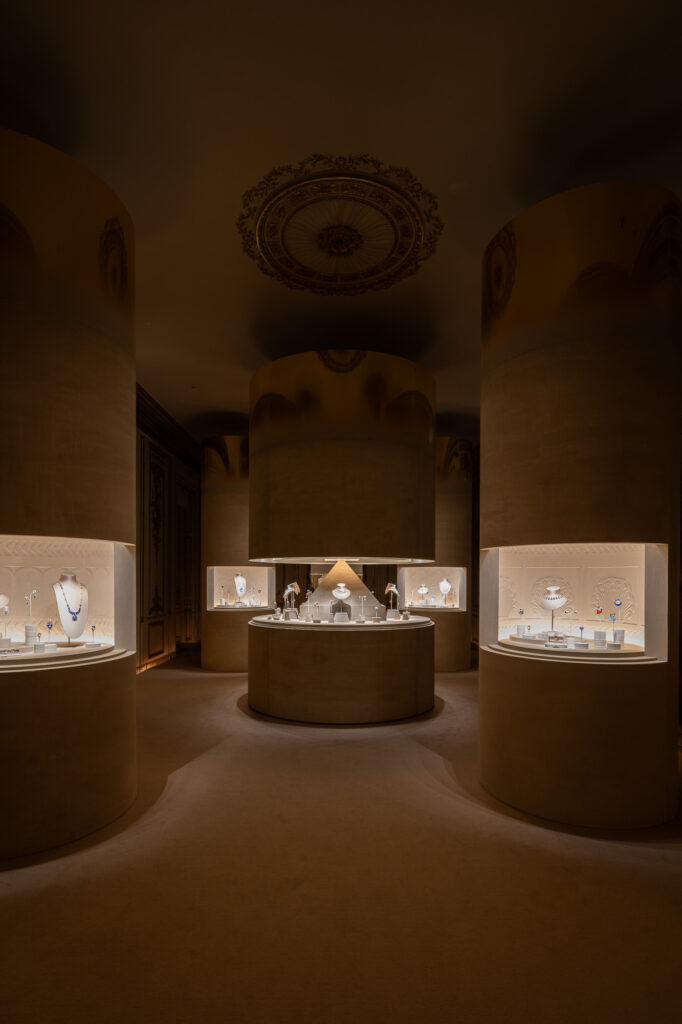
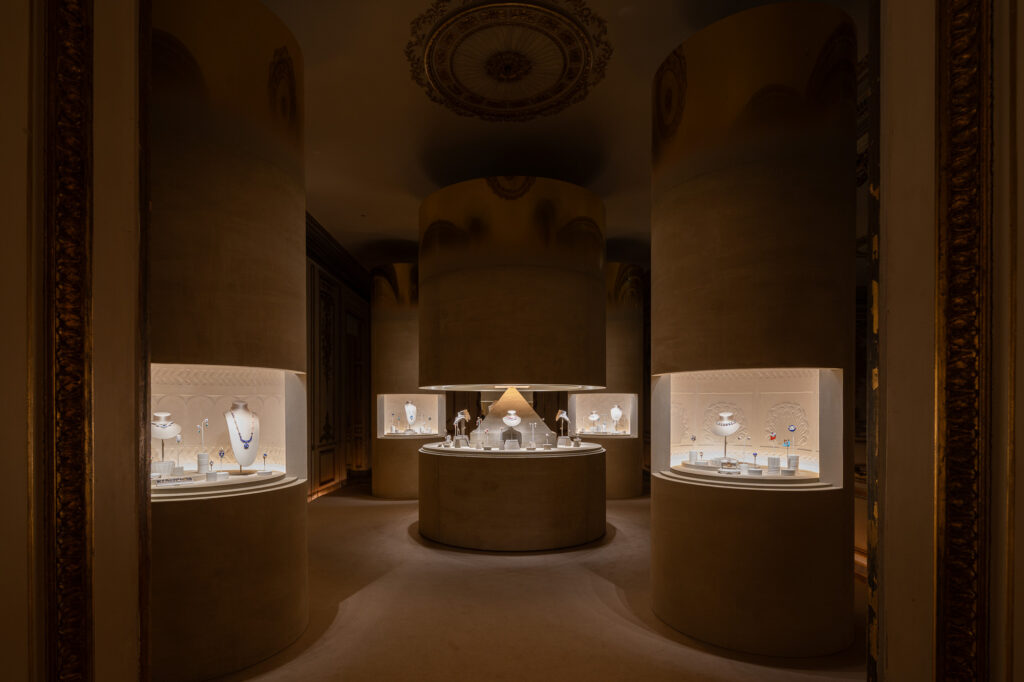
In November 1922, when British archaeologist Howard Carter opened Tutankhamun’s tomb in the Valley of the Kings, the shockwaves extended far beyond the circle of Egyptologists. It spread through the salons of Paris, the display windows of Place Vendôme, and all the way to the workshops of Van Cleef & Arpels, which responded within the year by producing its first pieces featuring Egyptian motifs: cuff bracelets, long necklaces, brooches adorned with hieroglyphs, papyrus flowers, and profile figures drawn from pharaonic bas-reliefs. A century later, the house revisits this chapter with “Fascinating Egypt,” a new high jewelry collection unveiled on July 6, in the midst of Paris Haute Couture Week.
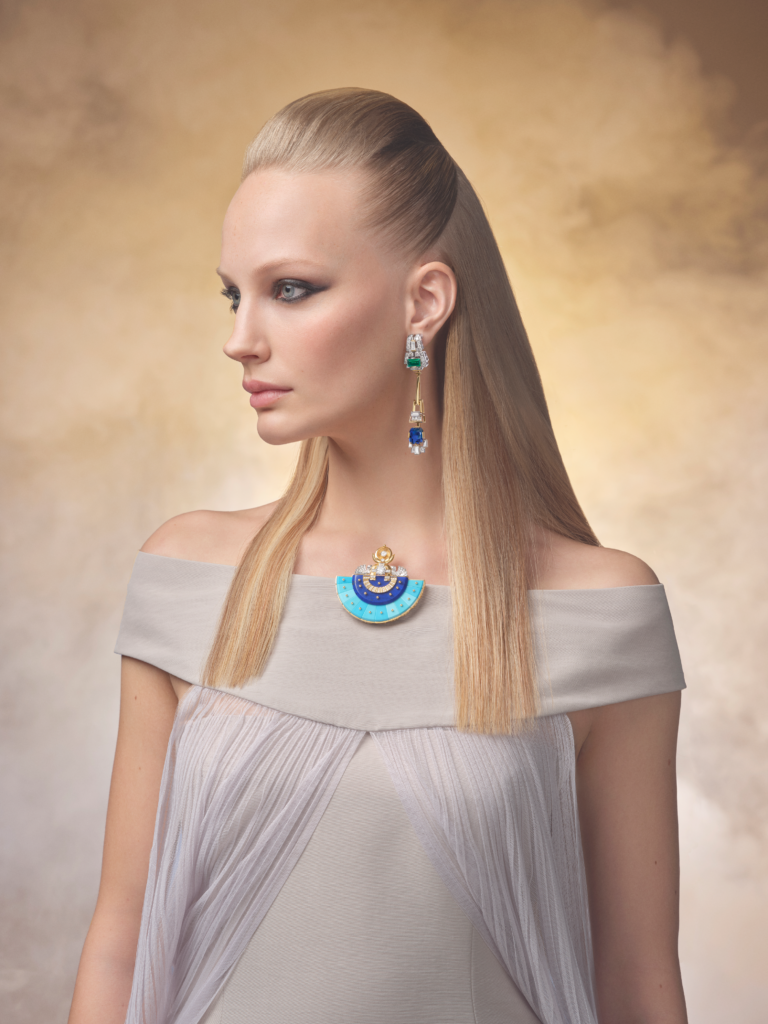
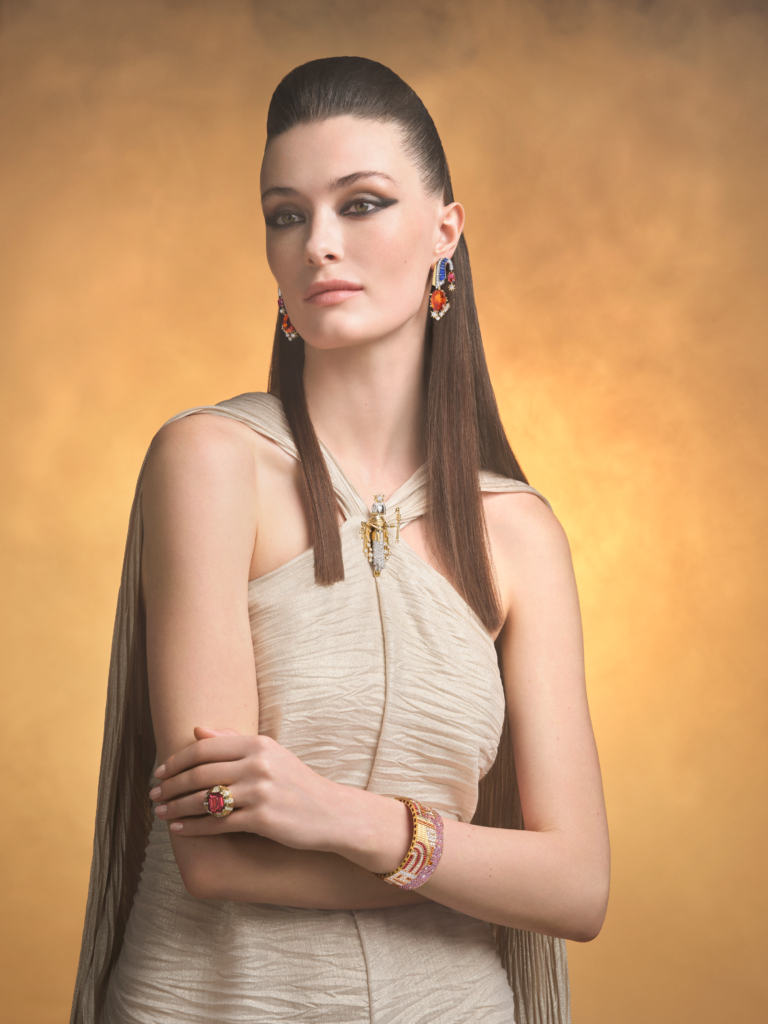
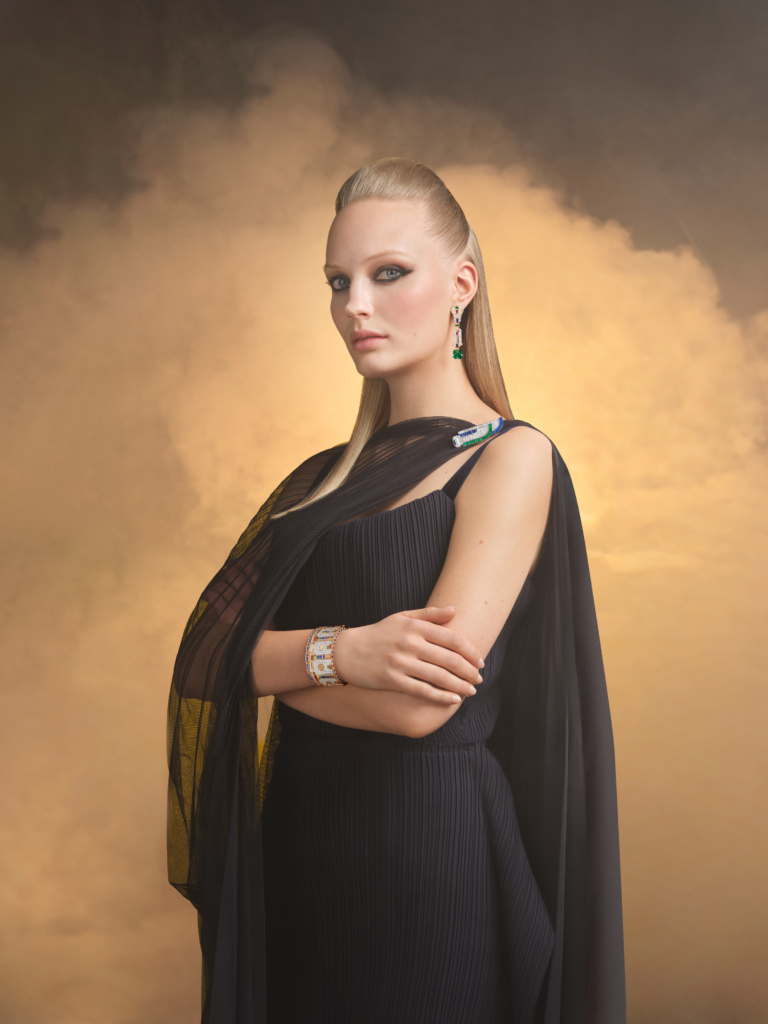
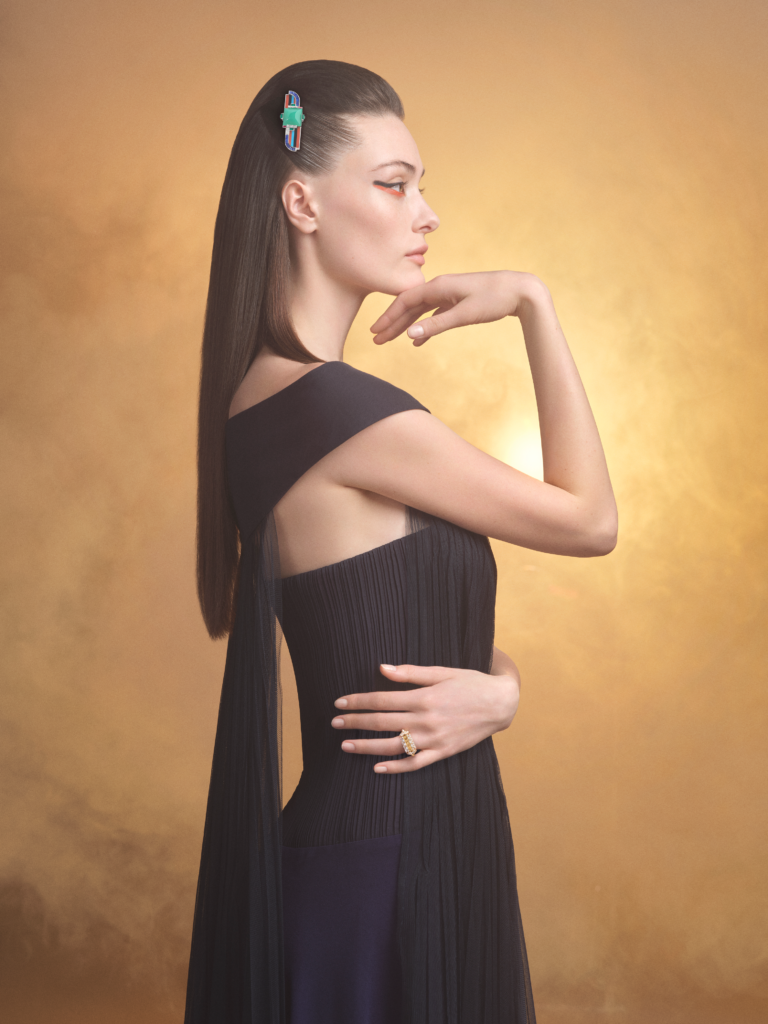
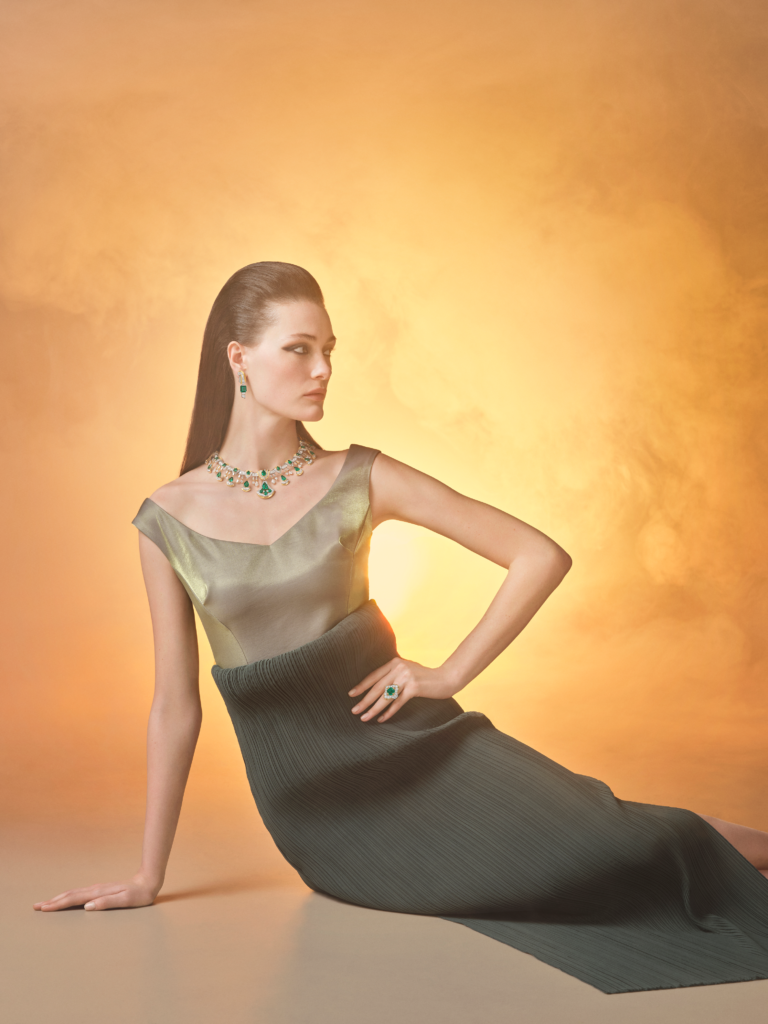
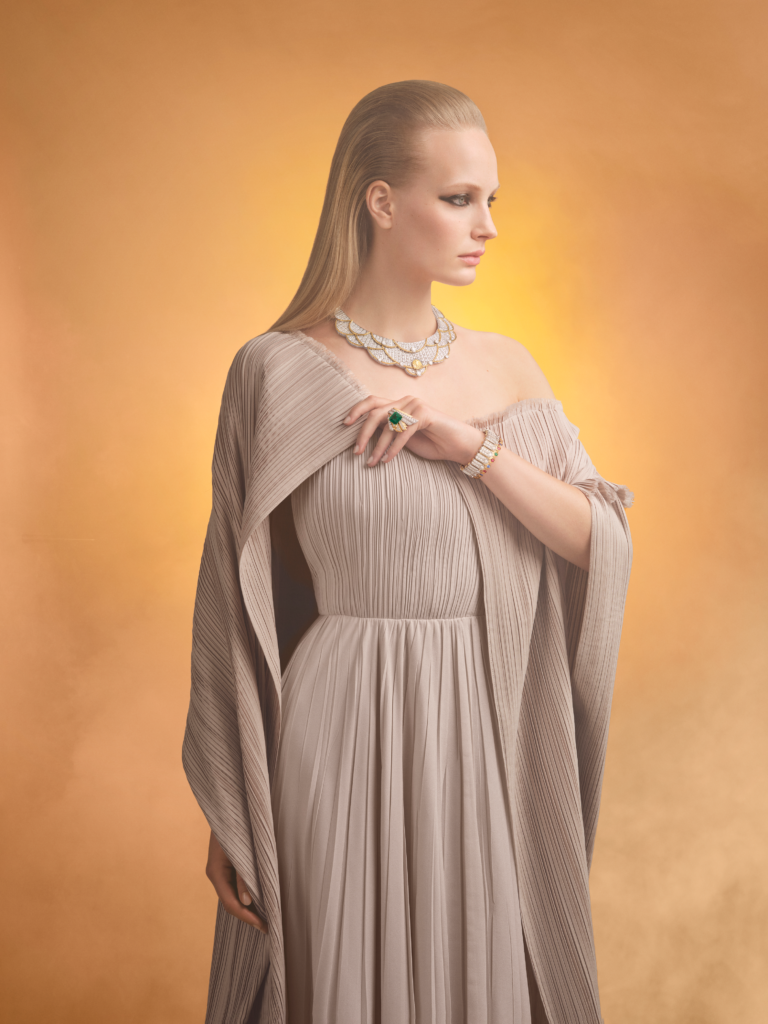
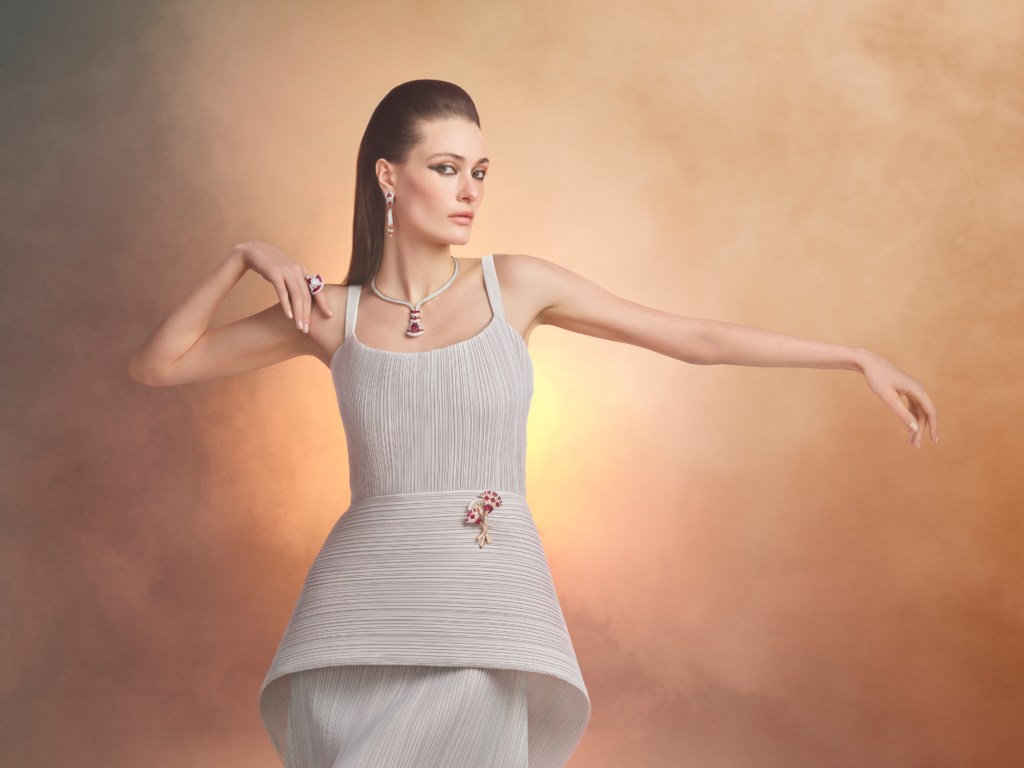
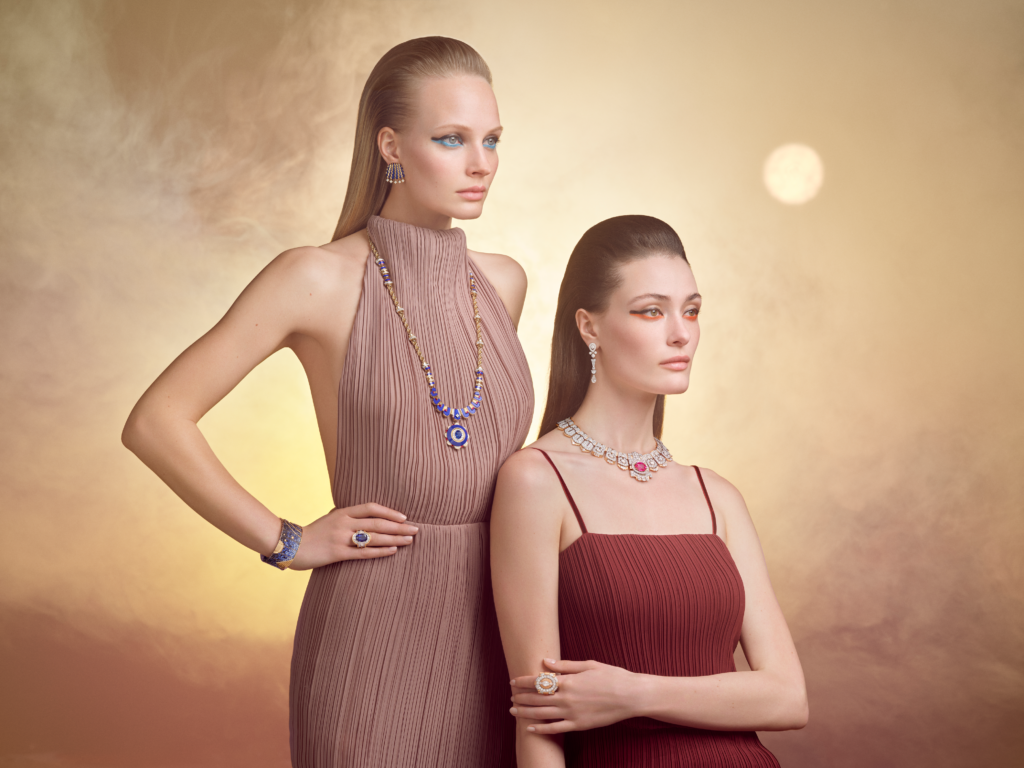
What stands out in this new collection is not so much the reference to ancient Egypt— a theme that has run through the history of Western jewelry since the Napoleonic campaigns and Jean-François Champollion’s decipherment of hieroglyphs—but rather the way Van Cleef & Arpels chooses to interpret it. The house does not seek to reproduce antiquity, but rather to filter it through a resolutely contemporary lens: lotus flowers become graphic clips set with rubies, figures of pharaohs and queens are transformed into figurative brooches studded with gemstones, and mythological creatures are reduced to articulated miniature sculptures, where diamonds, emeralds, lapis lazuli, and turquoise interplay.
The choice of colors and materials is by no means arbitrary. It reflects the symbolic significance that the Egyptians themselves attributed to stones and hues: blue, the color of the sky and the gods; green, the color of reborn vegetation; yellow, associated with the sun and eternal life; red, a symbol of strength; and a deep black, reminiscent of the fertile soil deposited by the Nile’s floods. By drawing on this chromatic grammar rather than settling for a superficial ornamental vocabulary, Van Cleef & Arpels adopts an approach closer to exegesis than to decorative pastiche—a nuance that distinguishes a prestigious house from a mere exercise in thematic style.
This commitment to its own archives is, in fact, the true focus of the collection. Fascinating Egypt draws directly from the “Égyptomanie” collection that the house has built up since 1922—a century of sketches, gouaches, and preserved pieces that document how a single motif—the lotus flower, the scarab, and the vulture with outstretched wings—has evolved over the decades without ever leaving the house’s design vocabulary. Presenting 180 pieces on this theme today is less about launching a new collection than about publishing a new chapter in a book that began a century ago, which profoundly changes the nature of the endeavor: it is no longer a matter of following an “Egyptian-inspired” trend, but of extending it from within.
One question remains that the collection itself does not answer: What remains, in this 21st-century reinterpretation, of the colonial fascination that drove the first wave of European “Egyptomania” in the 1920s? Van Cleef & Arpels chooses to answer through the object rather than through discourse, relying on the virtuosity of the jeweler’s craft to make us forget the ambiguities of the Western gaze on ancient Egypt. A century after Carter, that fascination has not budged an inch.
Cette publication est également disponible en :

