
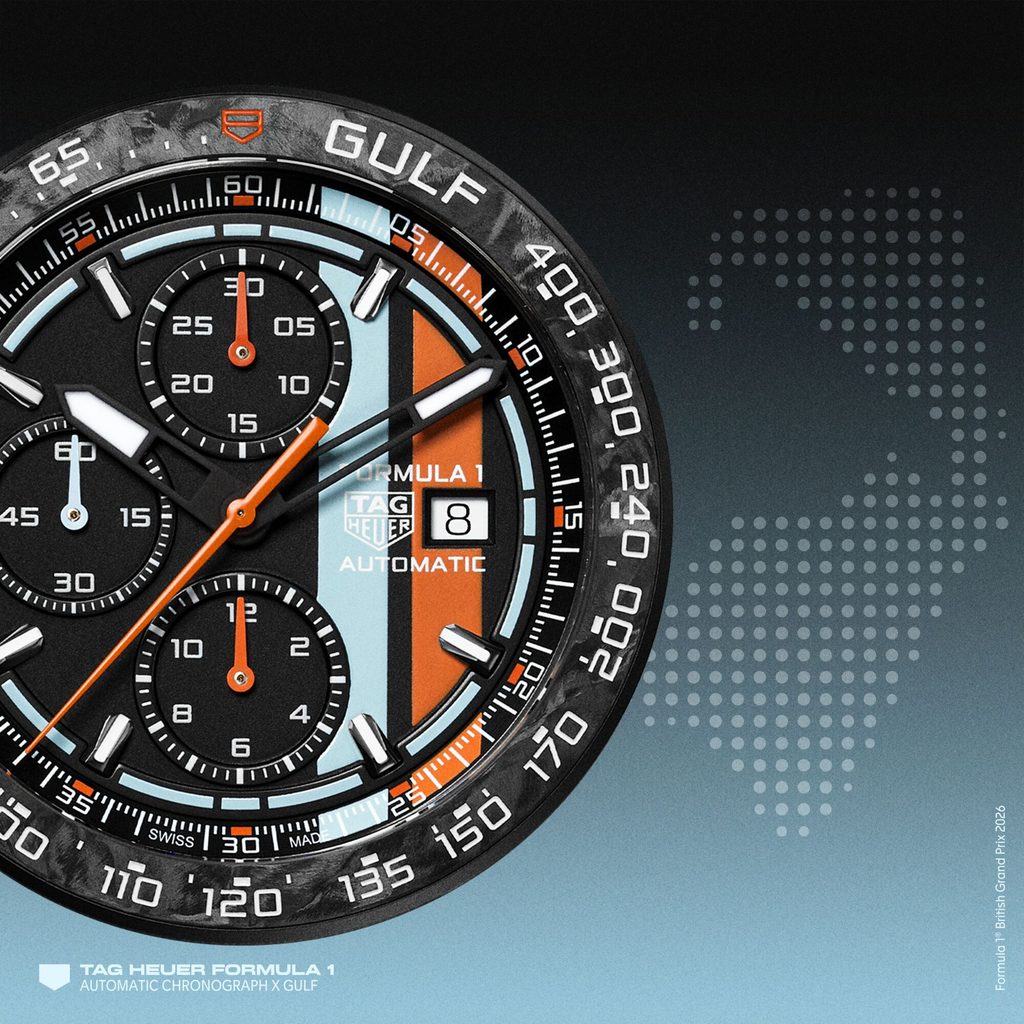
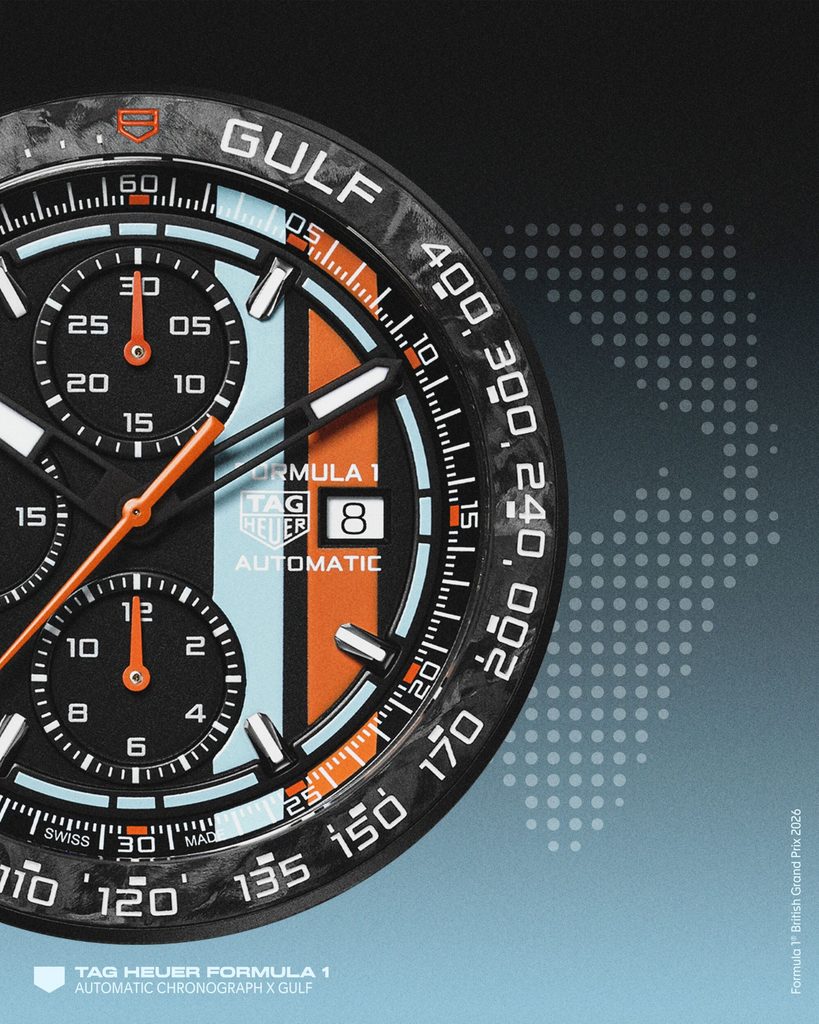
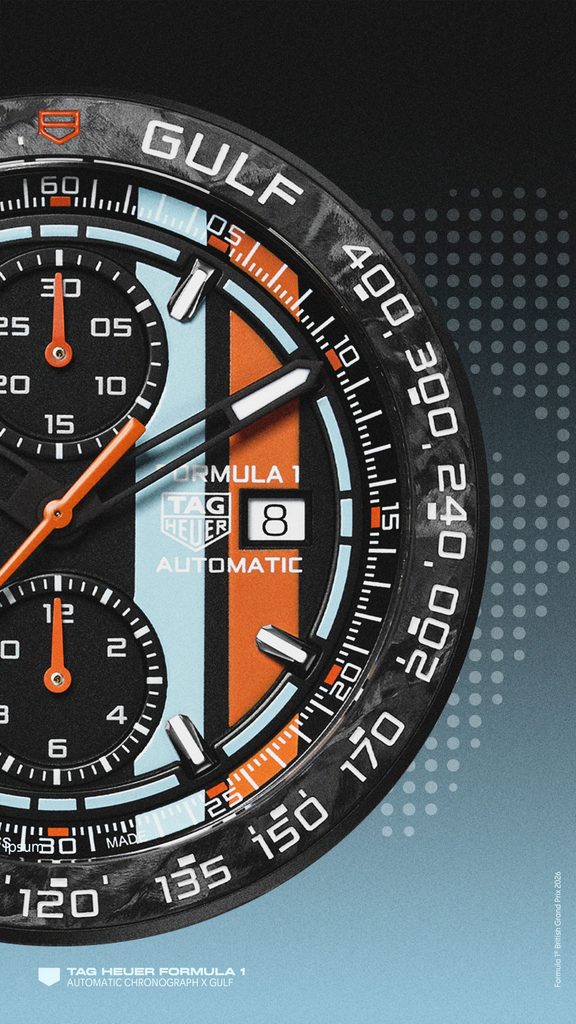
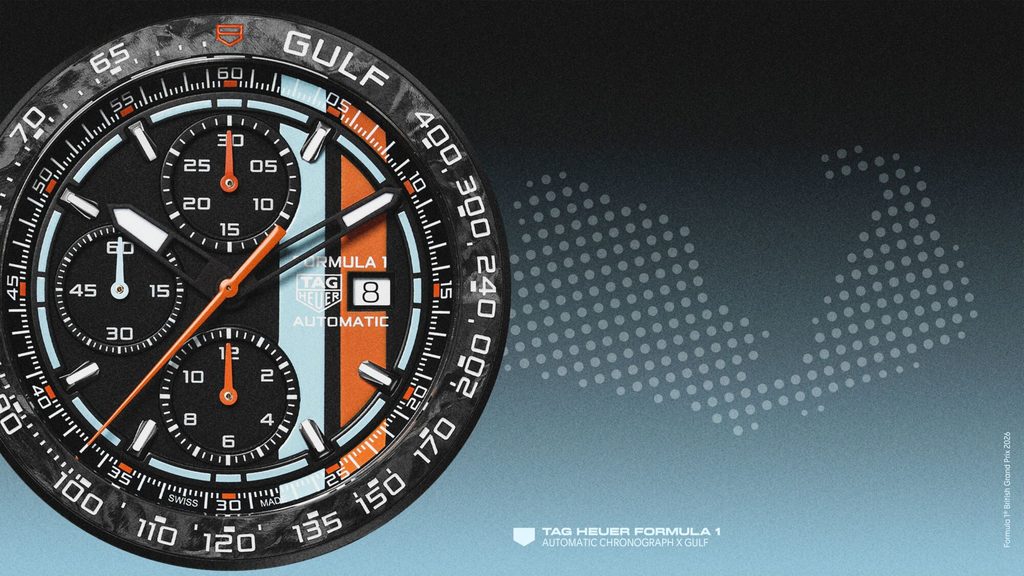
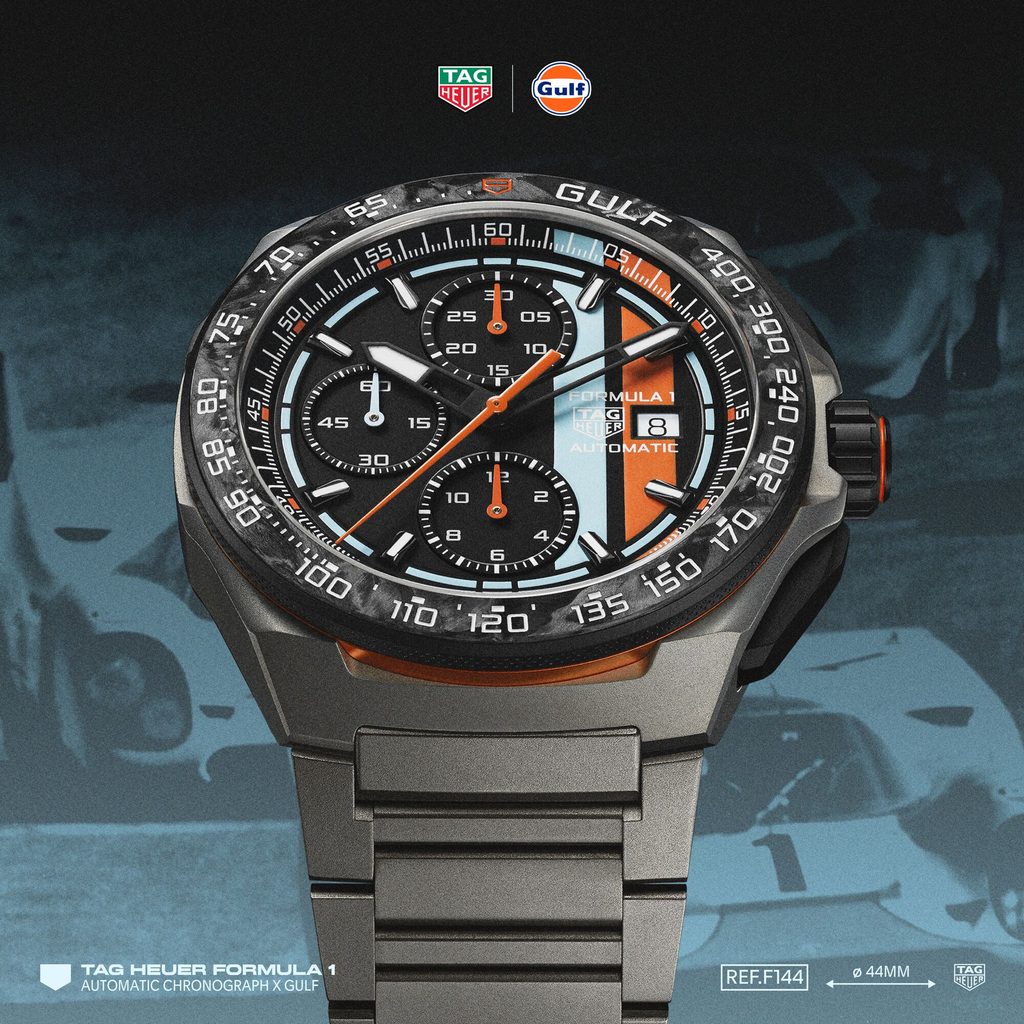
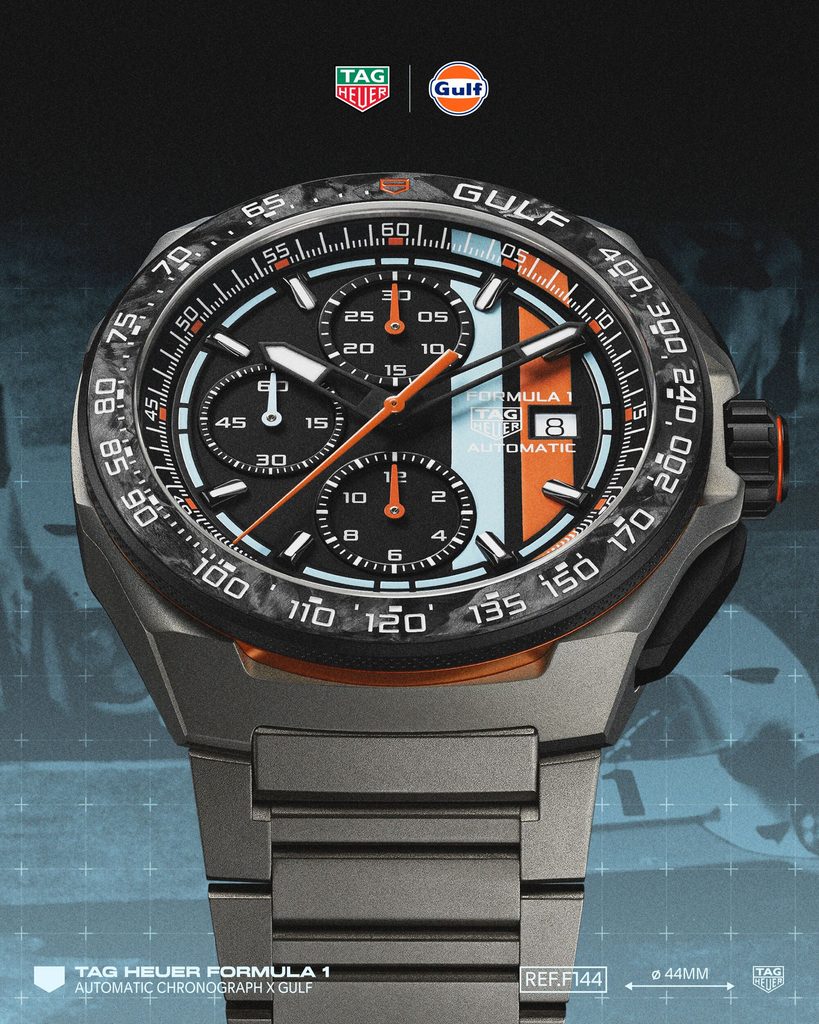
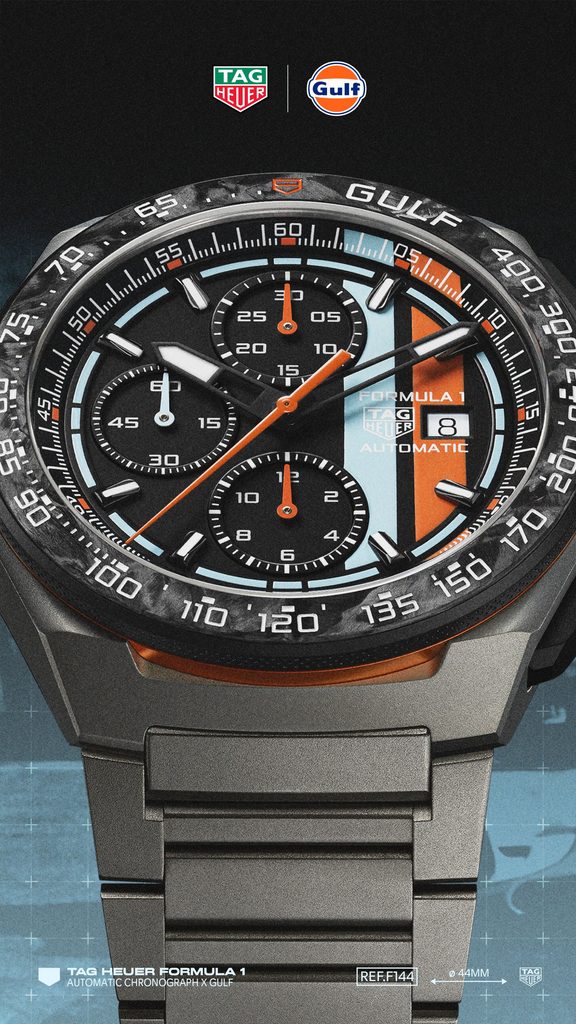
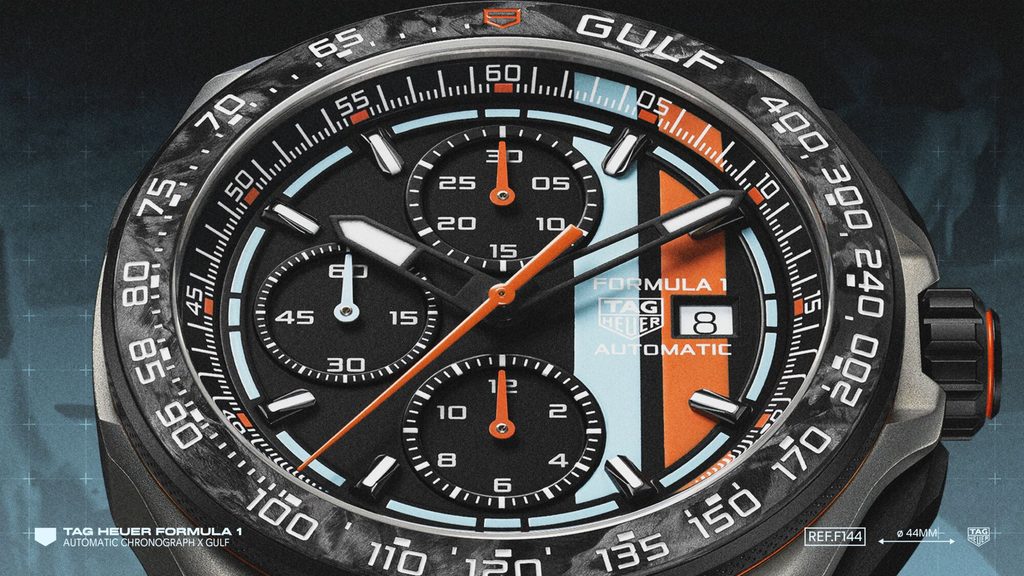
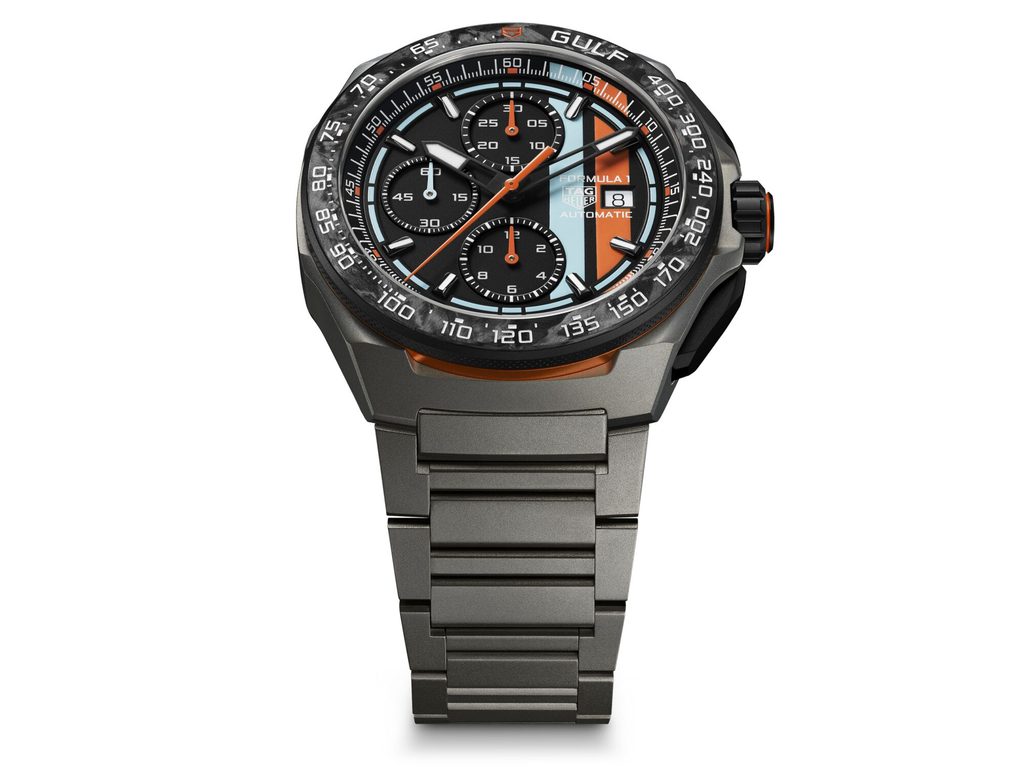
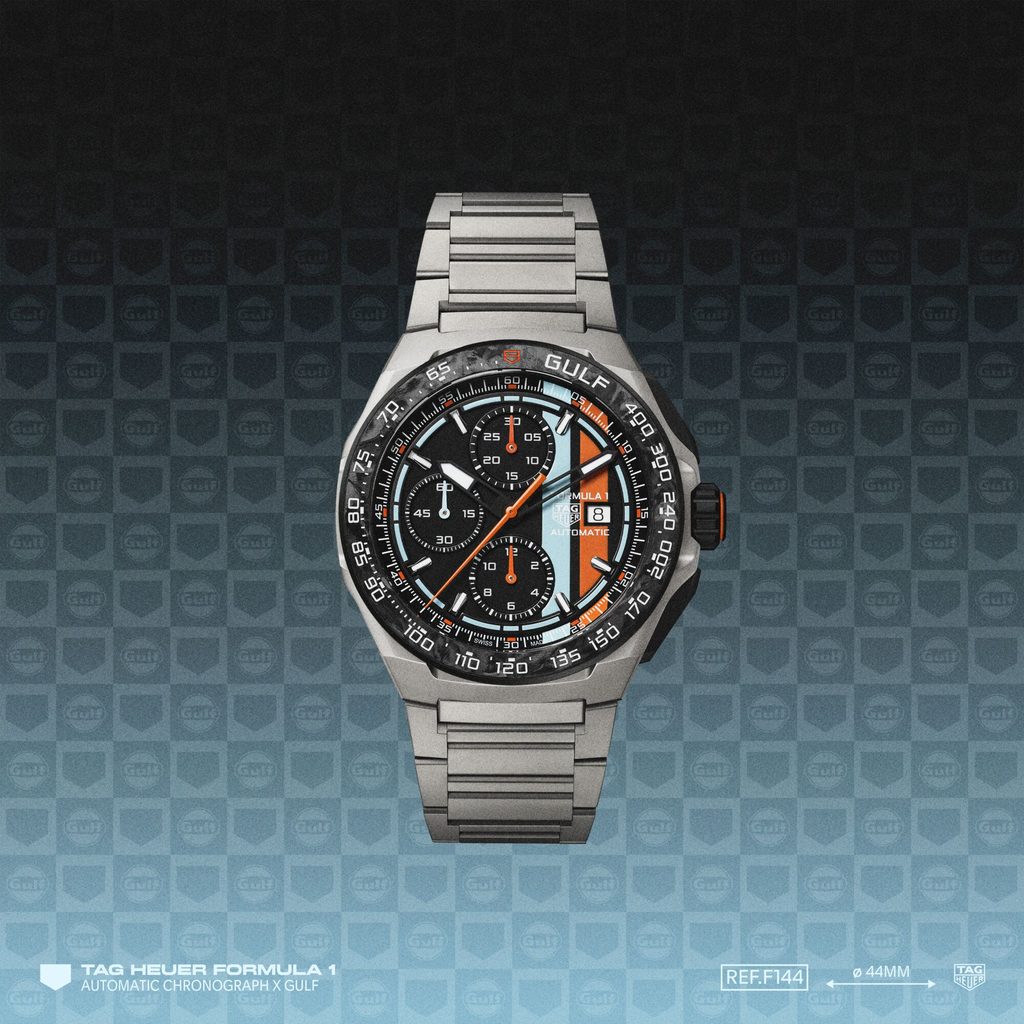
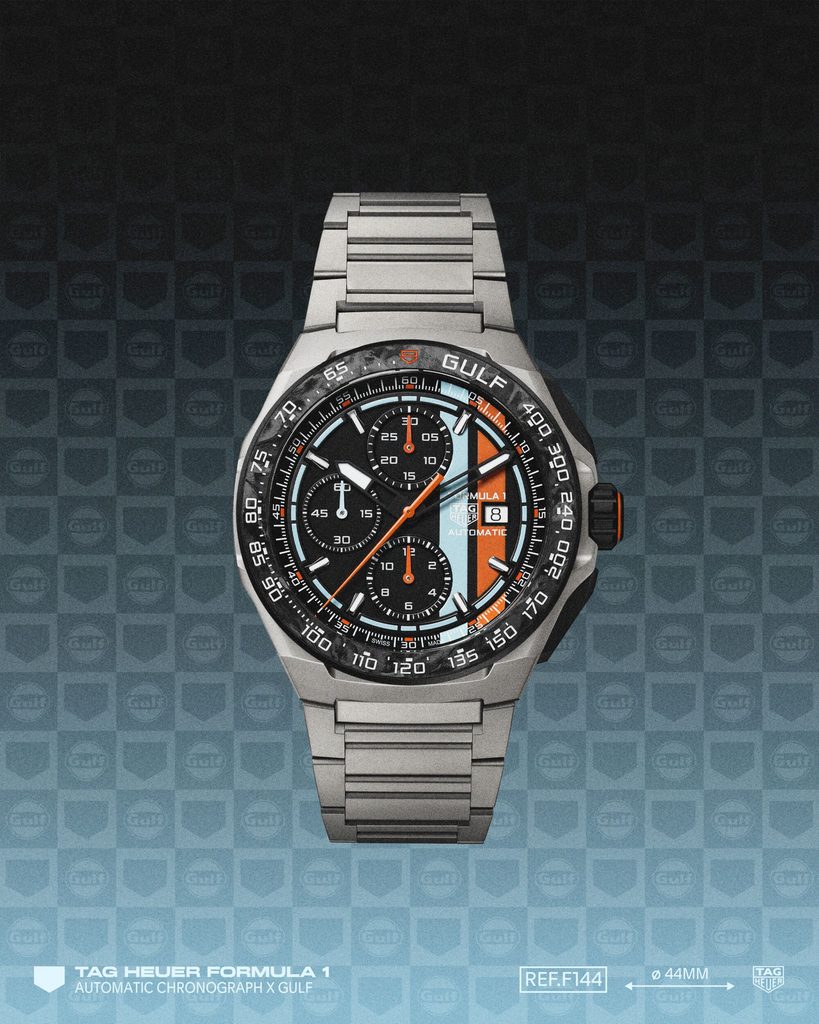
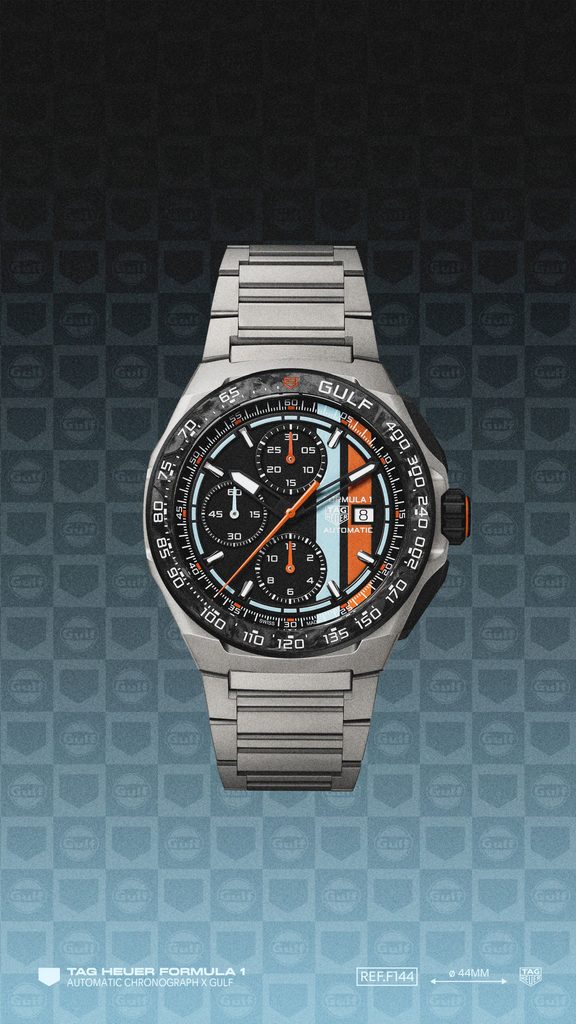
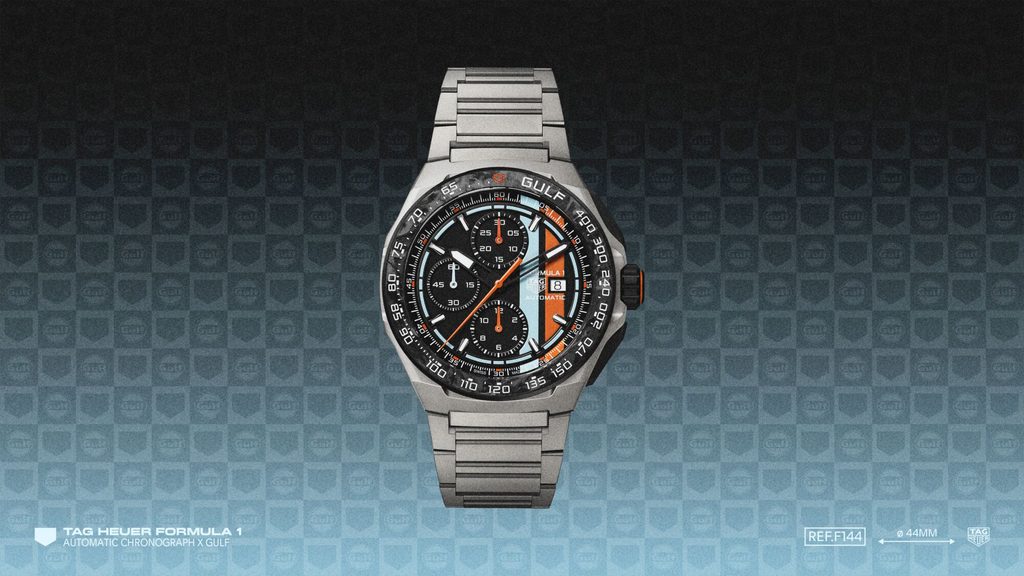
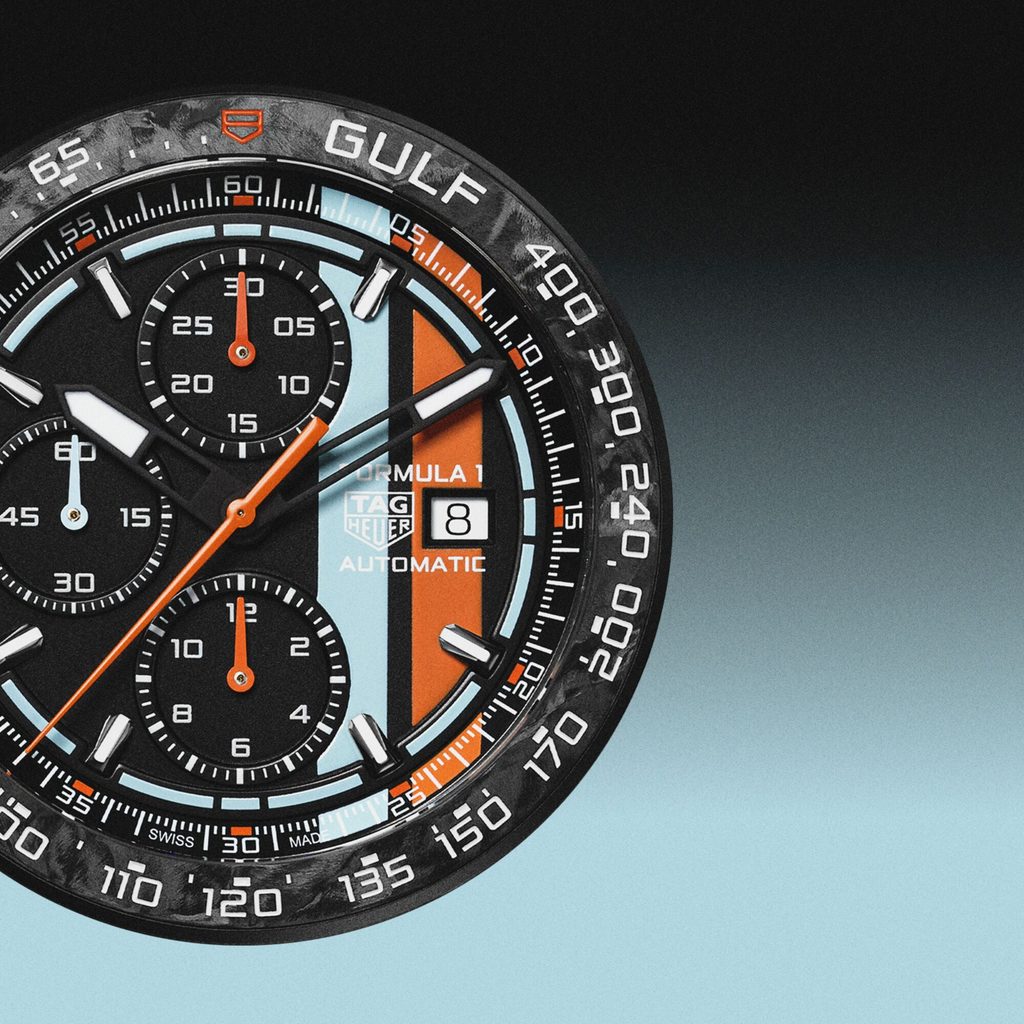
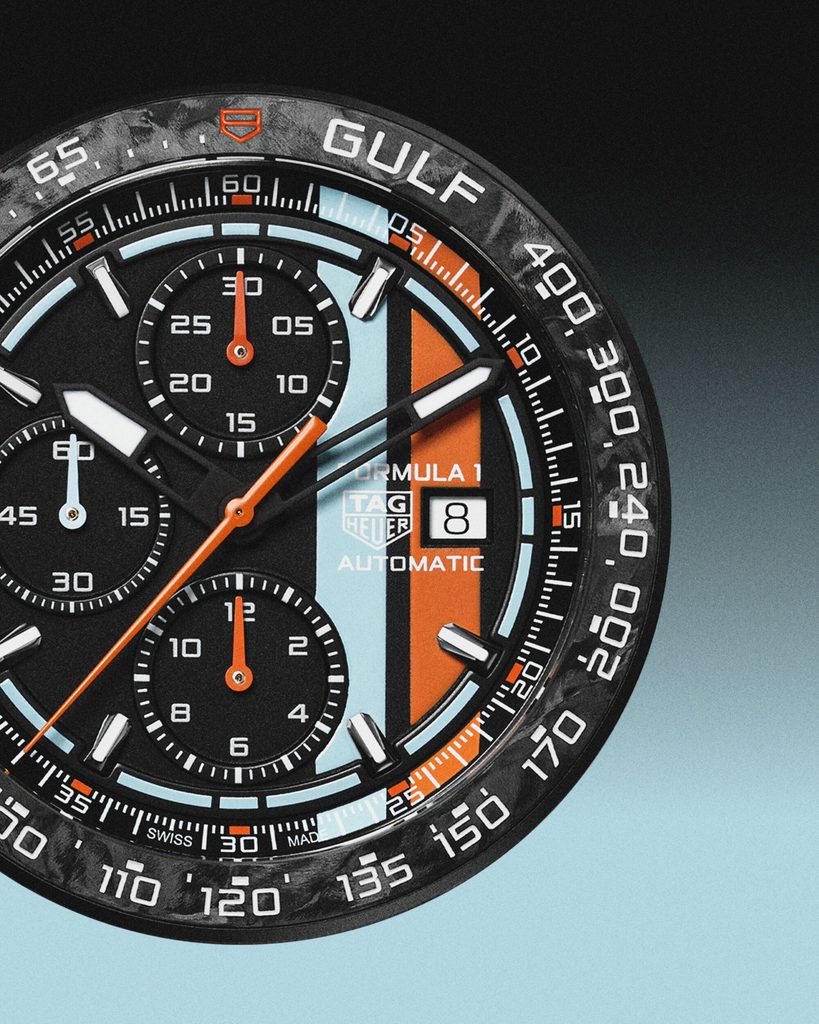
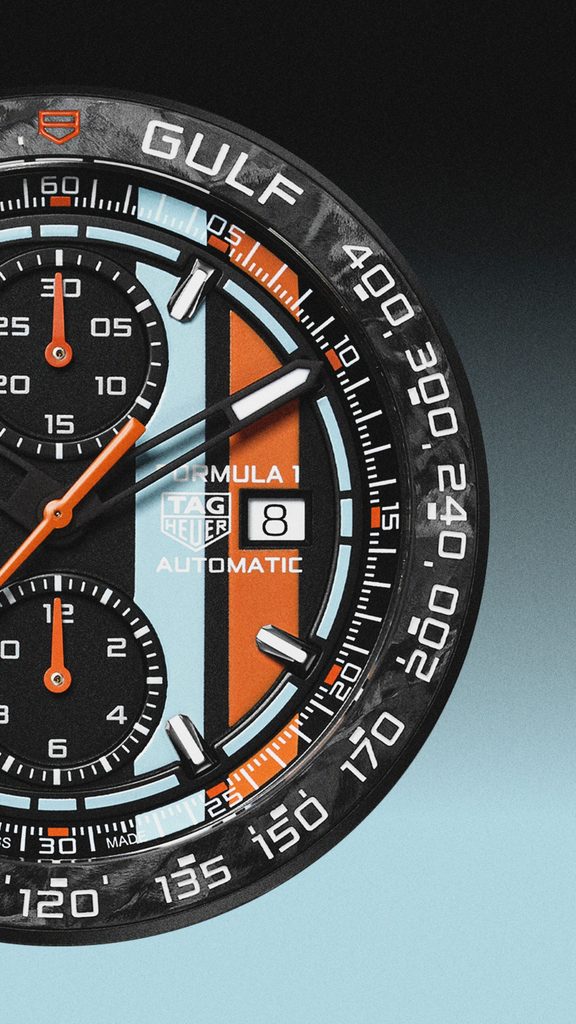
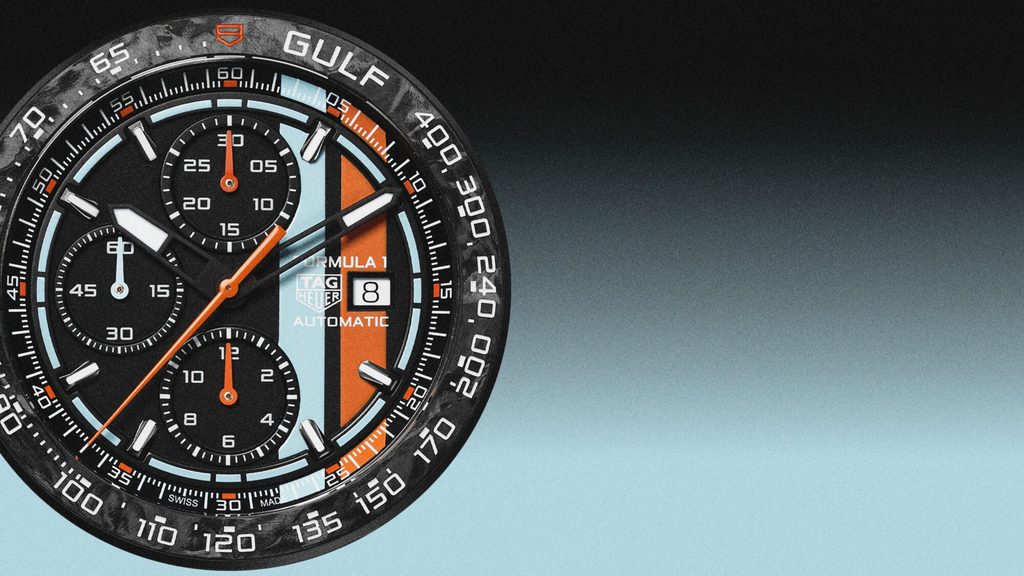
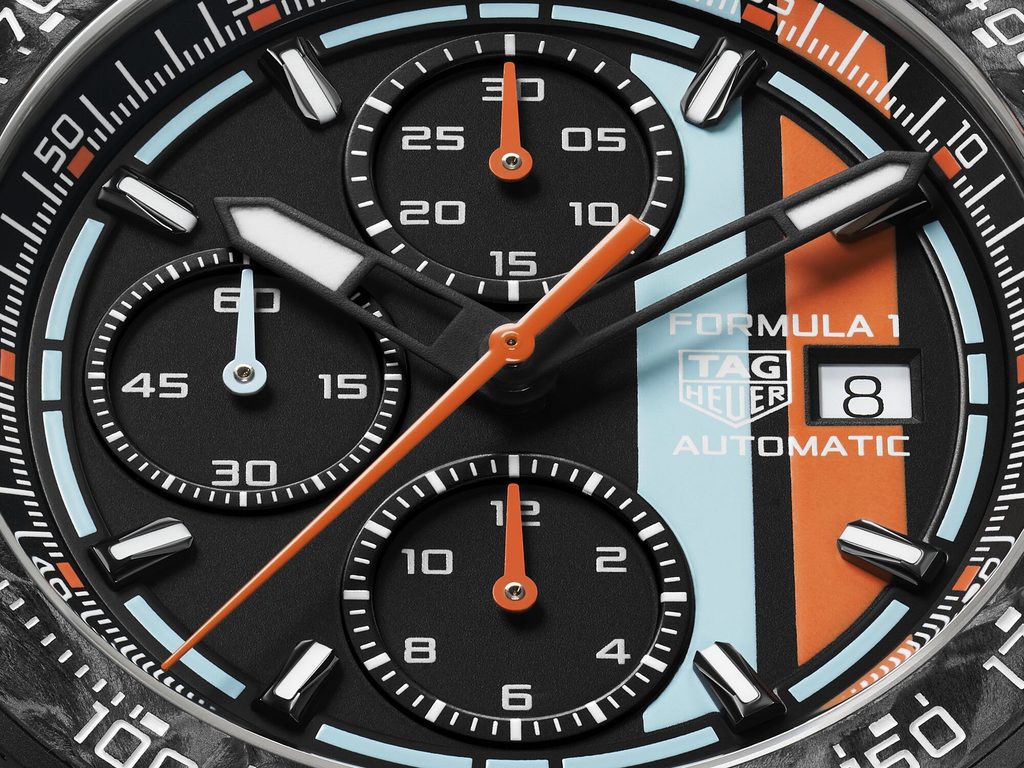
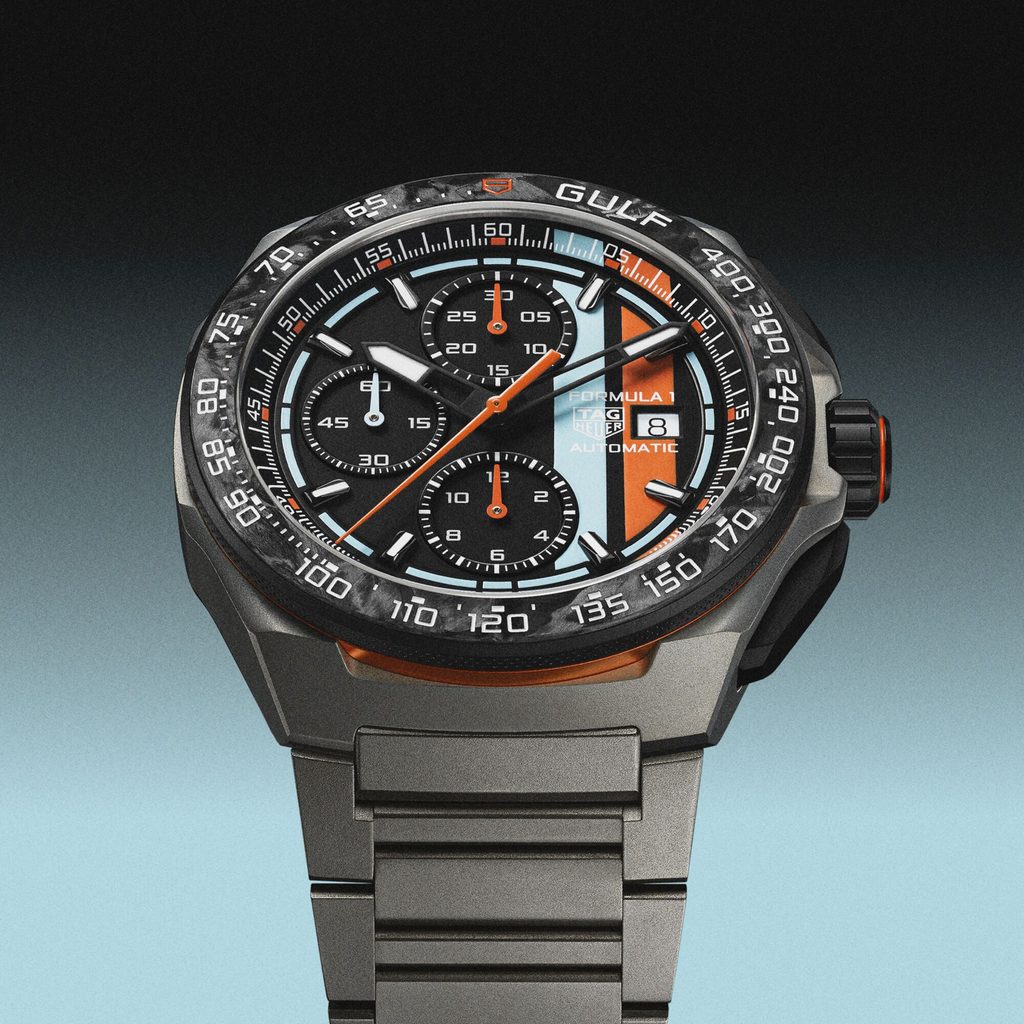
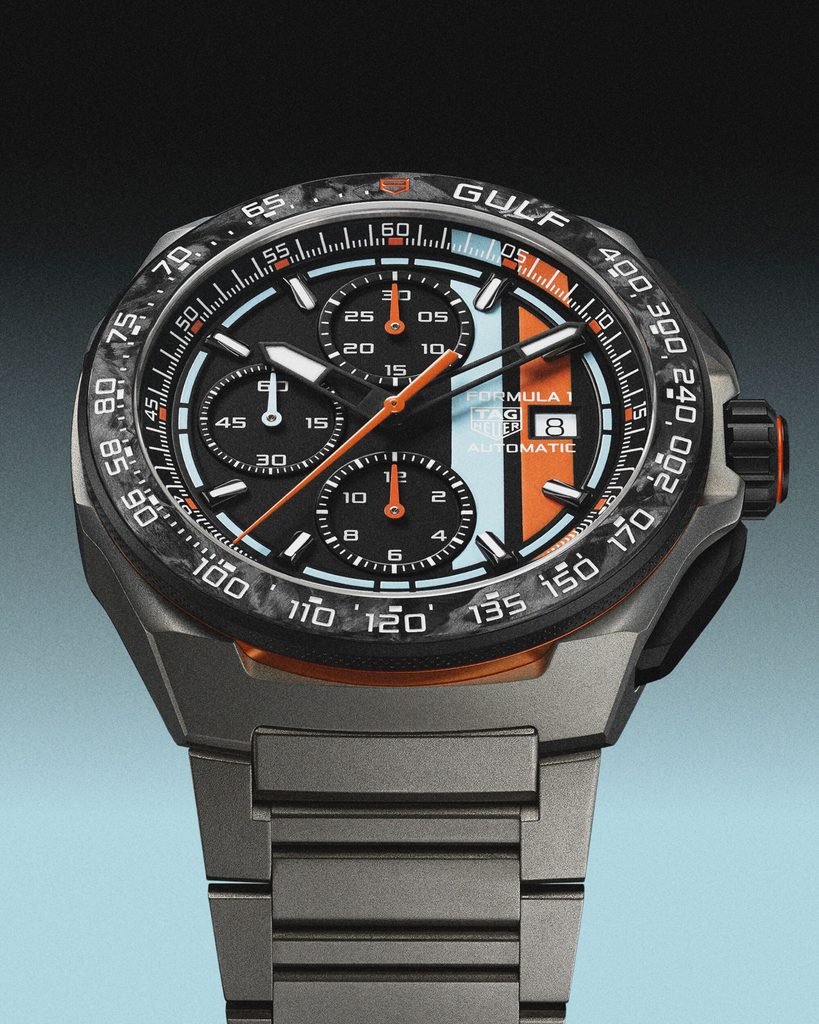
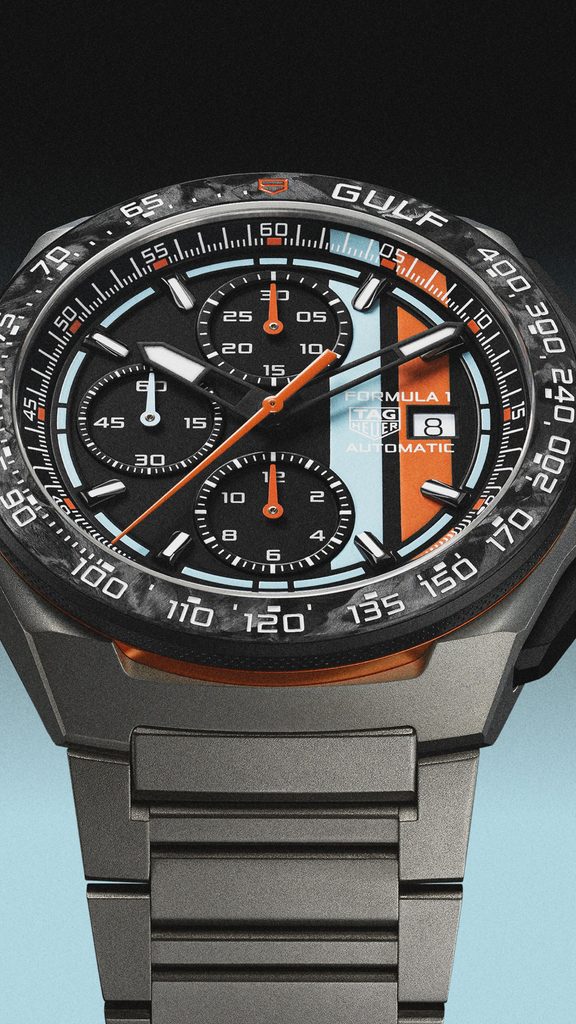
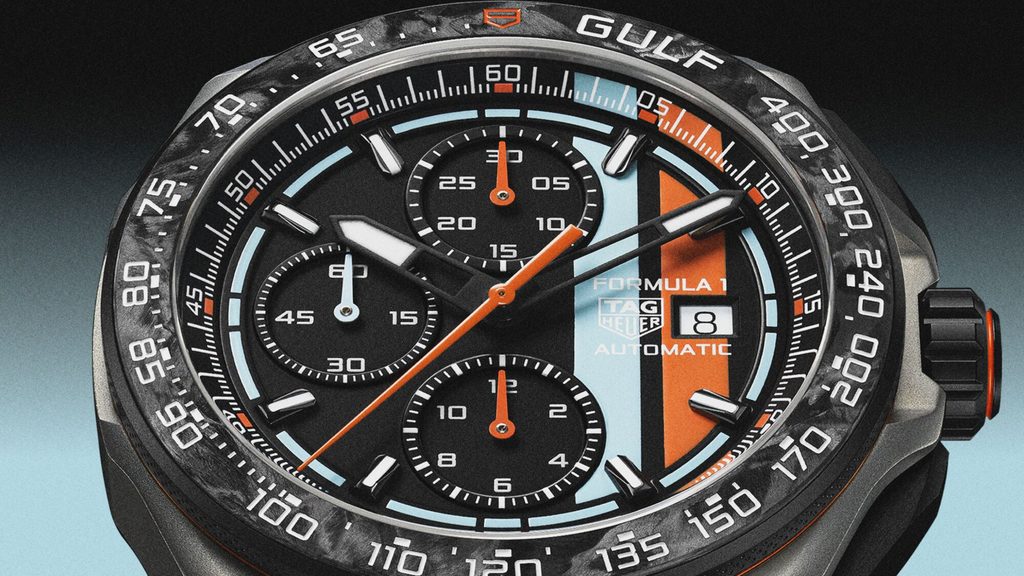
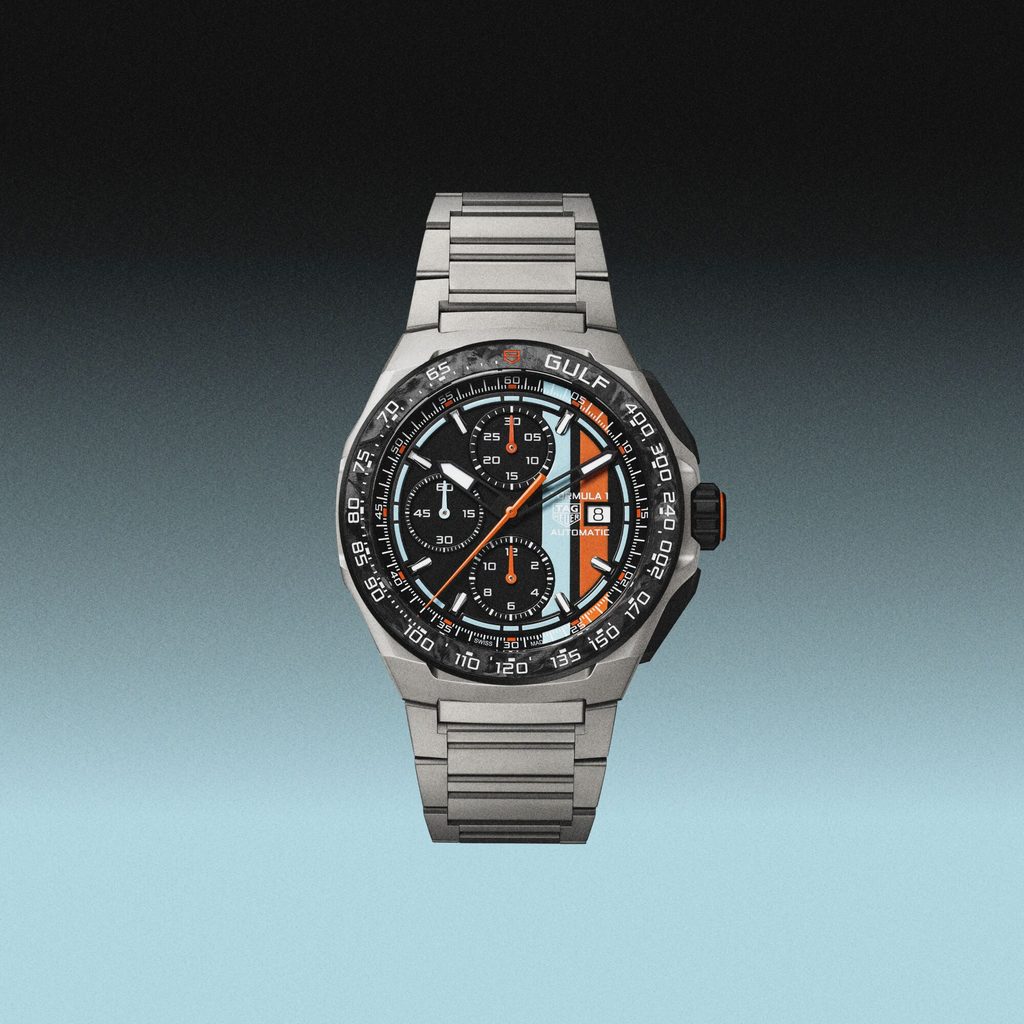
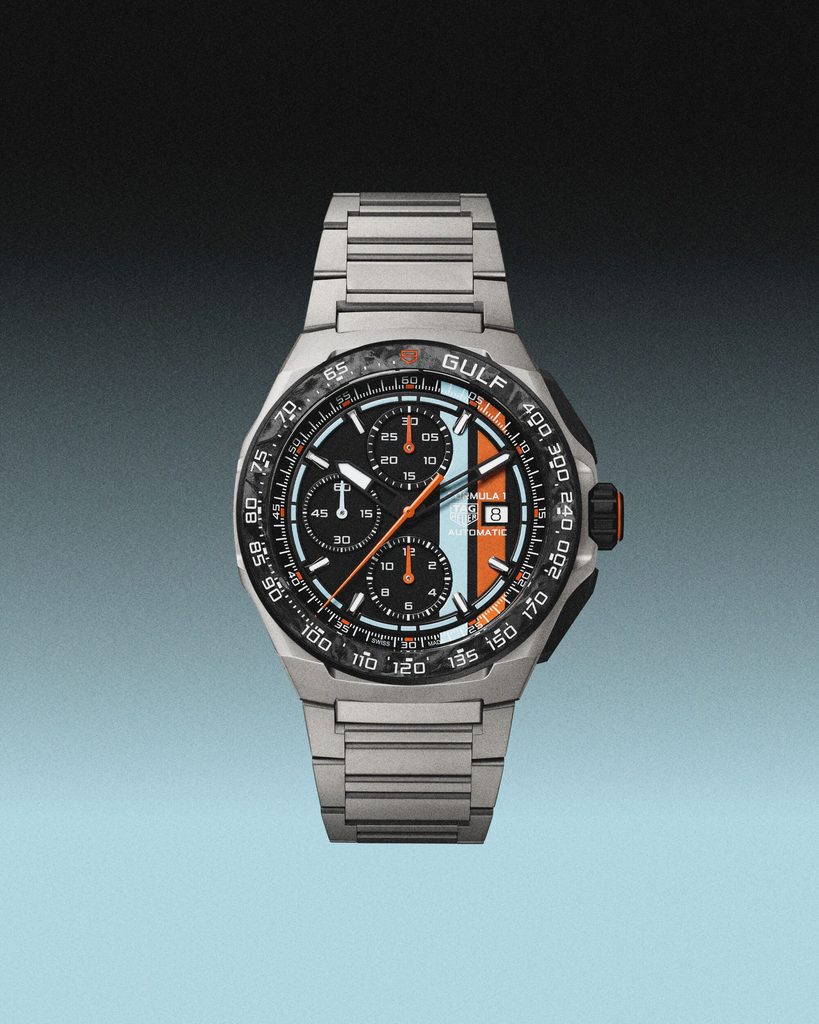
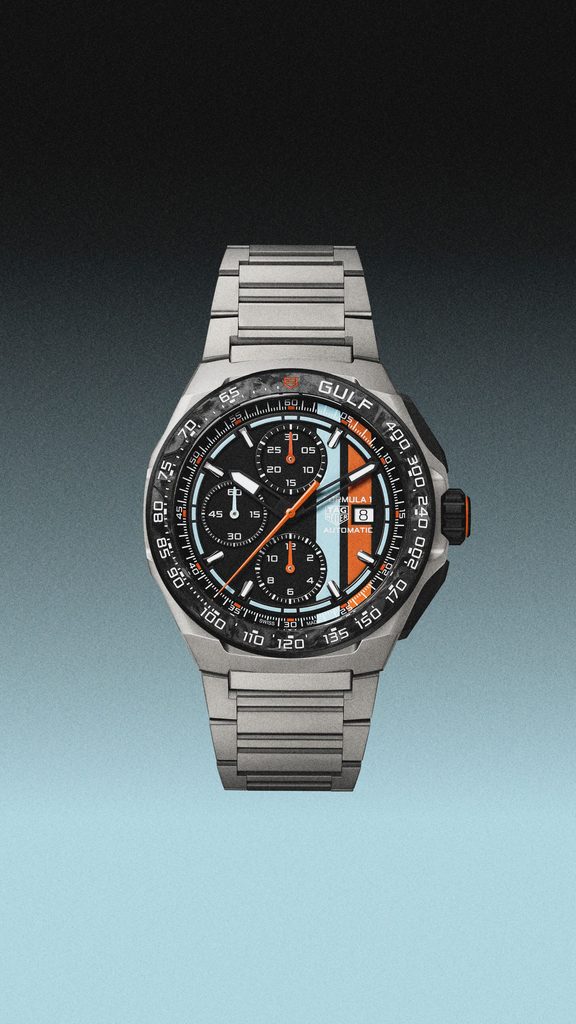
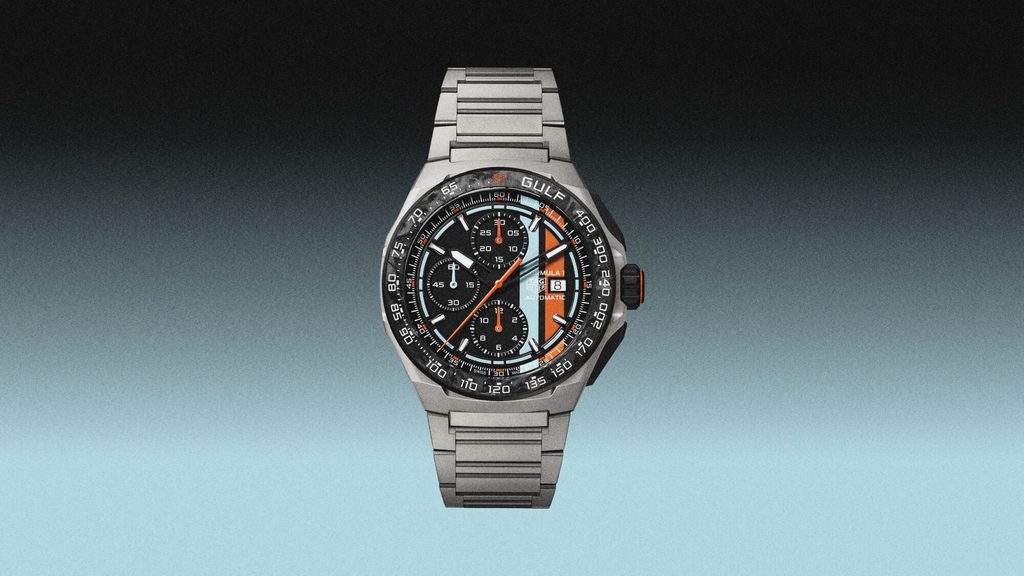
The Swiss watch manufacture and the legend of motorsport oil sign their fourth collaboration: an automatic Formula 1 chronograph in Gulf’s orange and blue, as precise on the wrist as a competition watch on the circuit.
Some pairings of images belong to the universal heritage of motorsport. The sky blue and deep orange of Gulf Oil are among those moments frozen in collective memory — Steve McQueen’s Porsche 917 in Le Mans, Miles and Hulme’s Ford GT40 at Daytona, the McLaren F1s of the 1990s. These colours have a historical density that few logos in the world can claim. TAG Heuer knows this, and that is why this fourth collaboration with Gulf is not a marketing accident: it is a conversation between two heritages.
TAG Heuer and motor racing have shared a common history since the 1960s. Monaco, Carrera, Silverstone: the names of the watches are those of the circuits. The Swiss house has accompanied the great hours of motorsport as official timekeeper, as partner, as witness. When it partners with Gulf, it is not to borrow the symbolic capital of another brand — it is to bring together two players of the same golden age of mechanical sport.
The chronograph as an object of memory
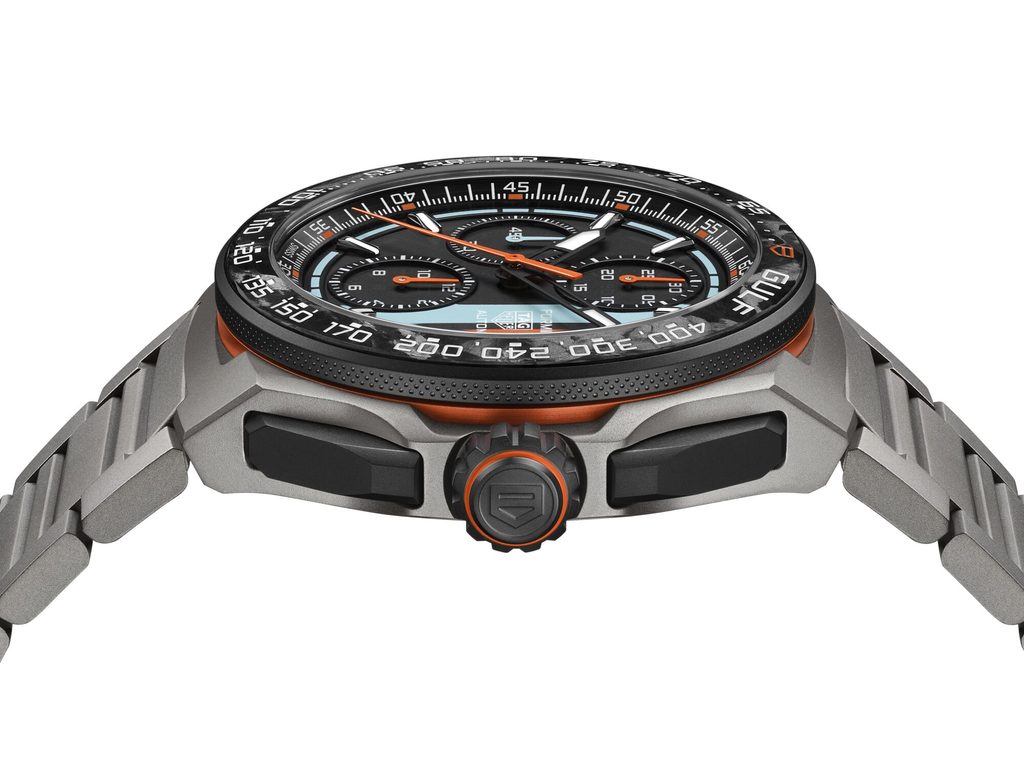
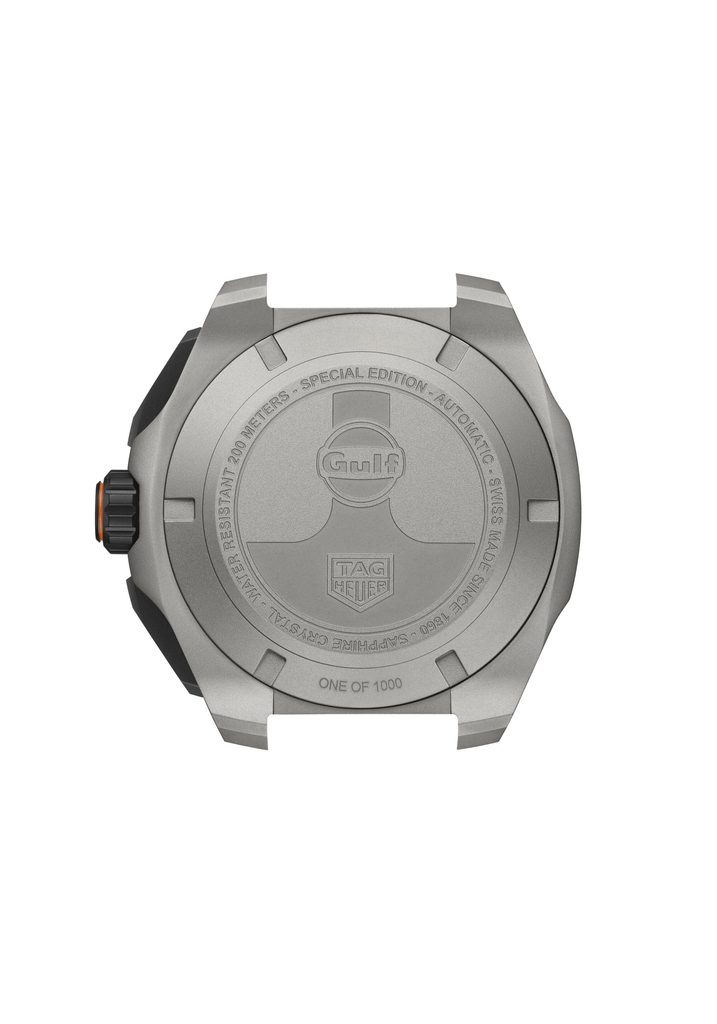
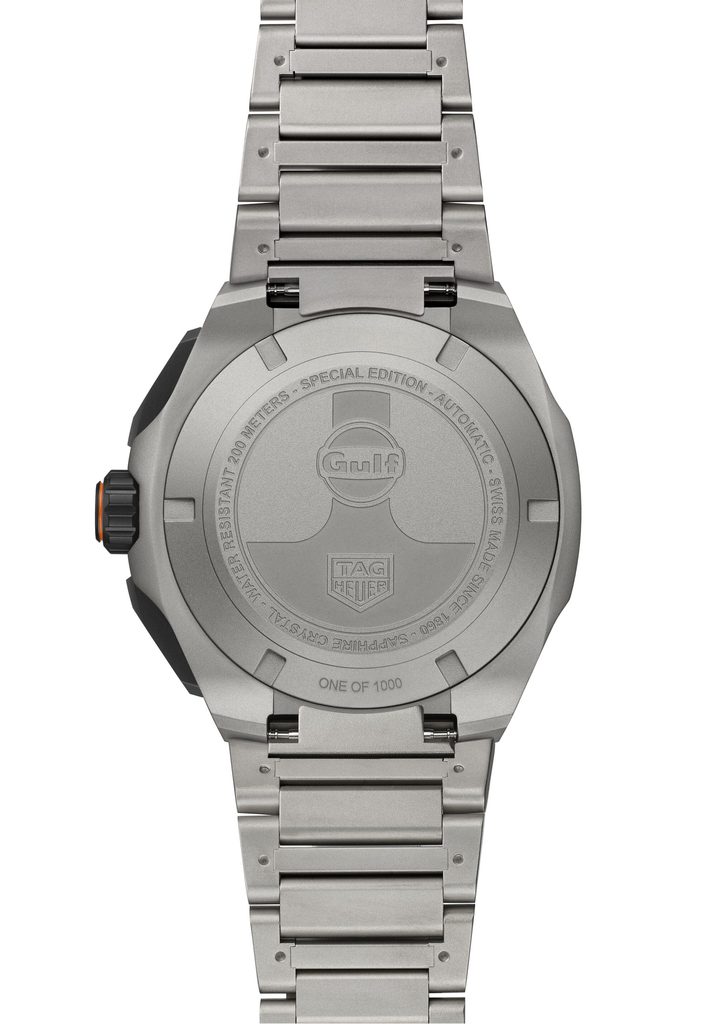
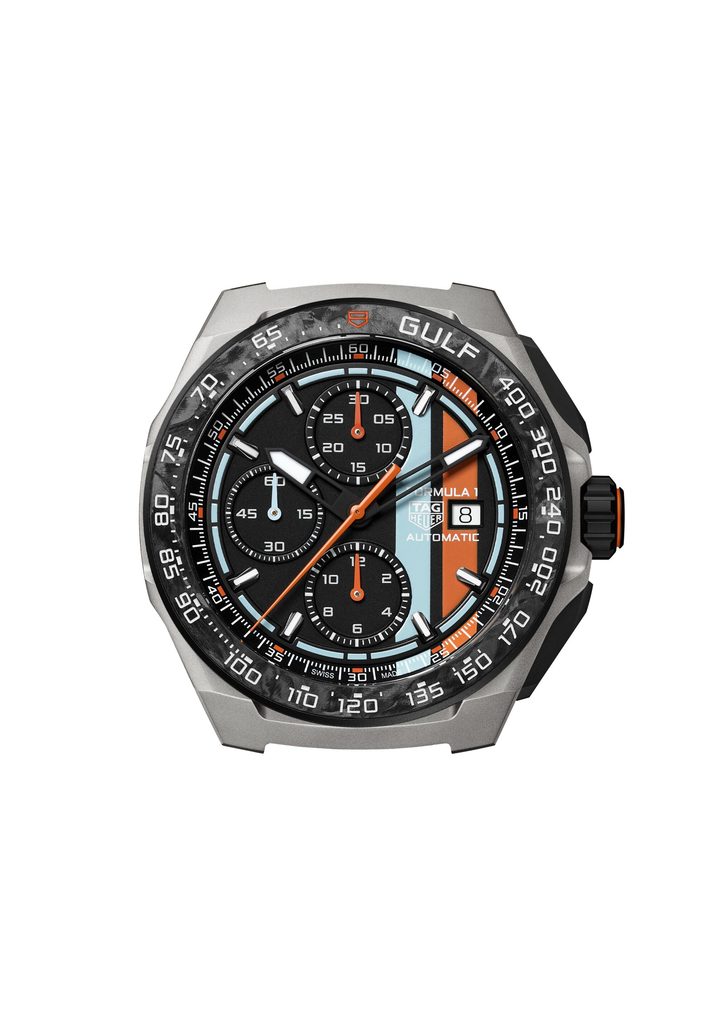
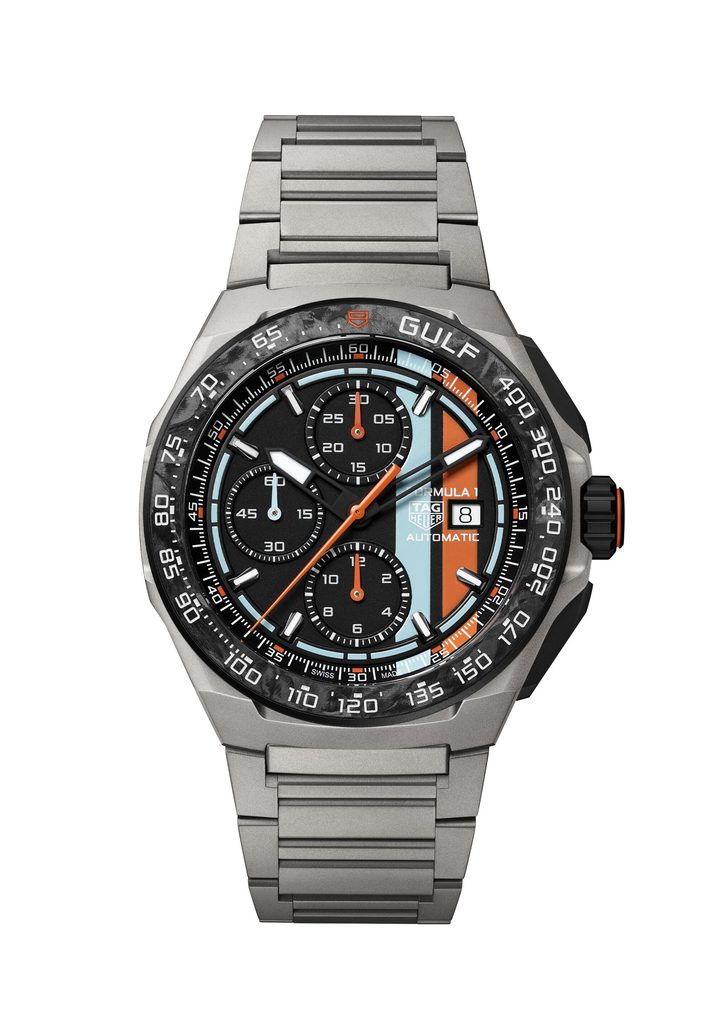
The TAG Heuer Formula 1 Automatic Chronograph × Gulf is the fourth piece born of this collaboration. It takes up the codes established by the previous iterations — the Formula 1 case, the automatic movement, the graphic boldness — pushing them one degree further in chromatic assertion. The result is a watch that does not seek to be discreet. It seeks to be recognisable, immediately, like the nose of a Gulf racing car in a rear-view mirror.
This choice of legibility is not trivial in a watchmaking landscape dominated by the codes of minimalism and discretion. TAG Heuer deliberately chooses colour, visible history, the acknowledged reference. It is a way of saying that luxury can also be popular — popular in the noble sense of the term, that is, shared, recognised, celebrated.
Colour as heritage
What this collaboration reveals, more deeply, is the question of the legitimacy of colour in prestige watchmaking. For decades, the sector favoured satin-finished steel, the black or cream dial, sobriety as a marker of status. Coloured pieces were relegated to entry-level ranges or “young” editions. Gulf overturns this implicit hierarchy by granting TAG Heuer a cultural permission: that of claiming a heritage that is both popular and glorious.
Gulf’s blue and orange are not fashion colours. They do not follow the trends of the Pantone Color Institute. They have a history, a date of birth, faces that wore them. On a 43-millimetre case on the wrist, they tell of an entire era — that of drivers without full-face helmets and cars without wings. A dangerous, romantic, bygone era. An era that will not return, but whose memory deserves to be worn.
Cette publication est également disponible en :


