
At La Bastille, Michel and Patricia Koubbachian have been working with leather for a long time without using it as a pretext for travel. With “Destinations,” the collection takes the opposite approach: the location dictates the color palette, and the palette translates a memory of light into a marquetry of assembled pieces.
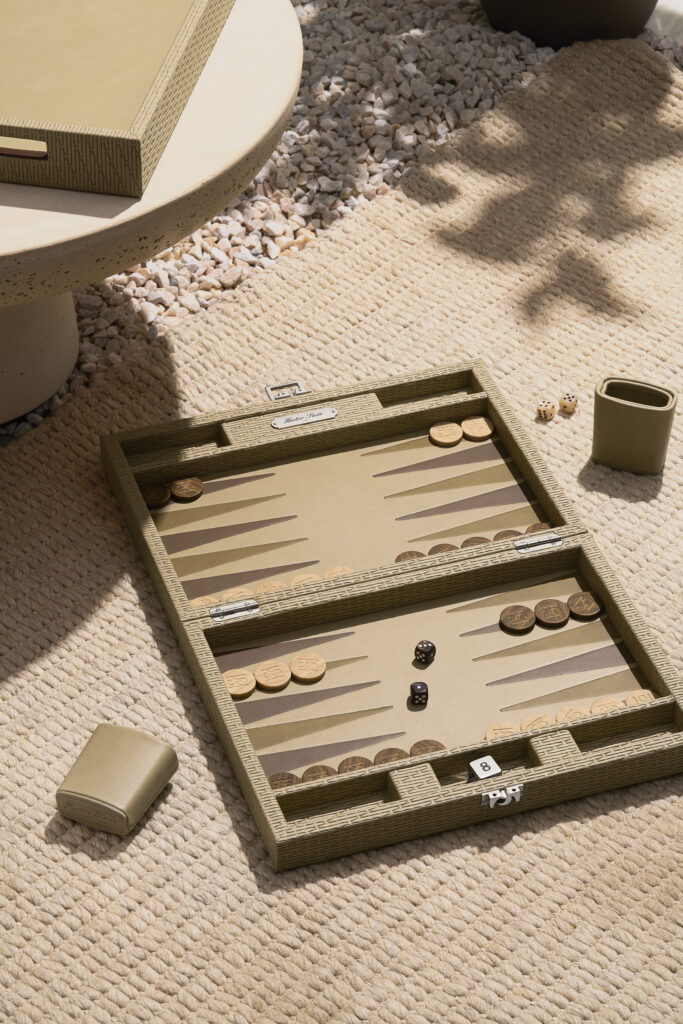
The collection consists of six Medium models. All share the same closed structure—25 × 37 cm—and the same opening dimensions of 50 × 37 cm. What sets them apart is a few square centimeters of leather: the combination of colors applied in sections, reminiscent of tartan or a checkerboard pattern, but in smooth, solid blocks. Miami Beach is crafted from Blush calfskin accented with Rosewood and light Khaki. Saint-Tropez is rendered in a bold Orange, offset by Curry Yellow. Saint-Barth opts for a bold Limoges Blue, tempered by White and Turquoise. Megève features the estate’s white, while Bastille features the workshop’s ivory.
What deserves attention, beyond the geographical context, is the technical decision underlying the collection: Blush, Coral, Rosewood, and Yellow—new shades introduced in this series—are presented as colors destined to become permanent fixtures in Hector Saxe’s collection. A travel collection that also serves as a color laboratory: it’s a rather rare approach in the world of leather goods to treat color as a fundamental element rather than a mere accessory.
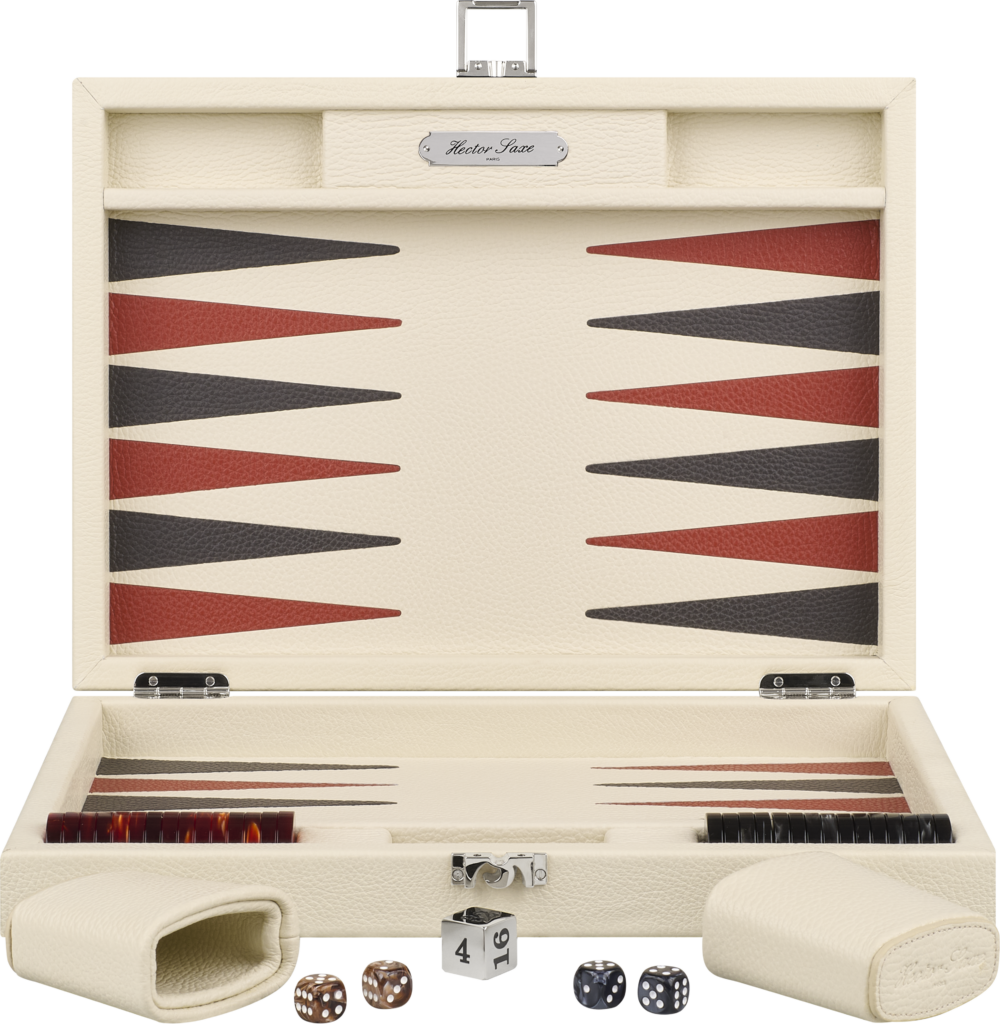
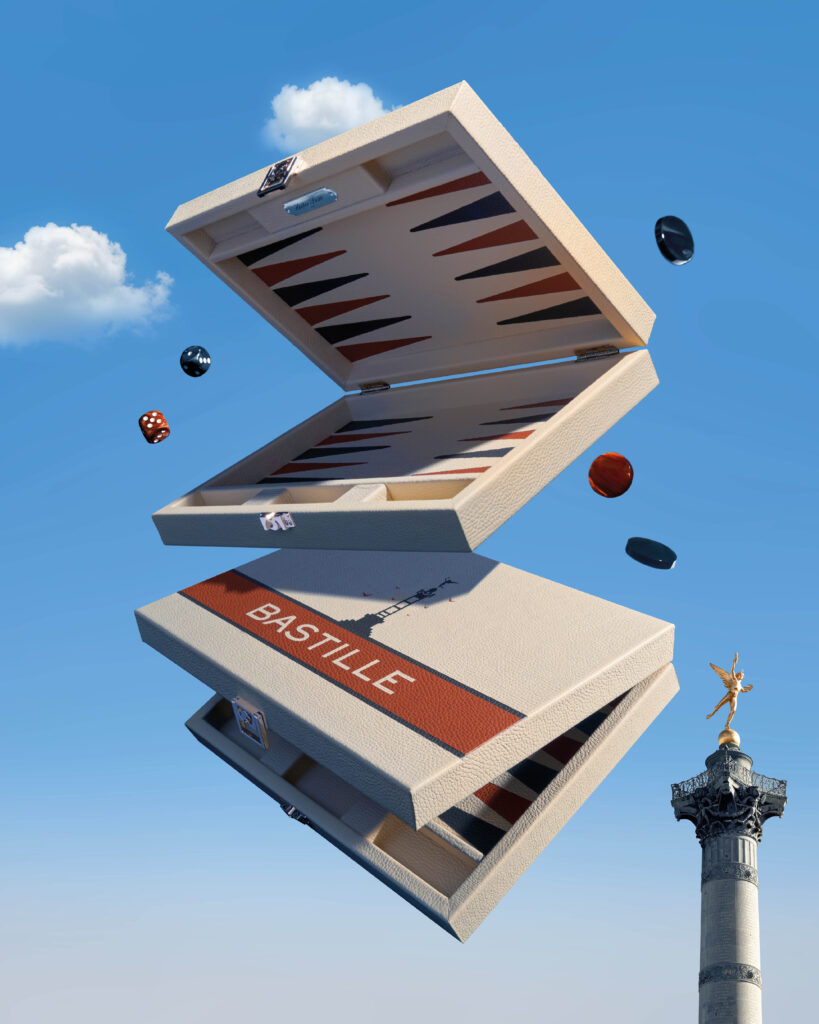
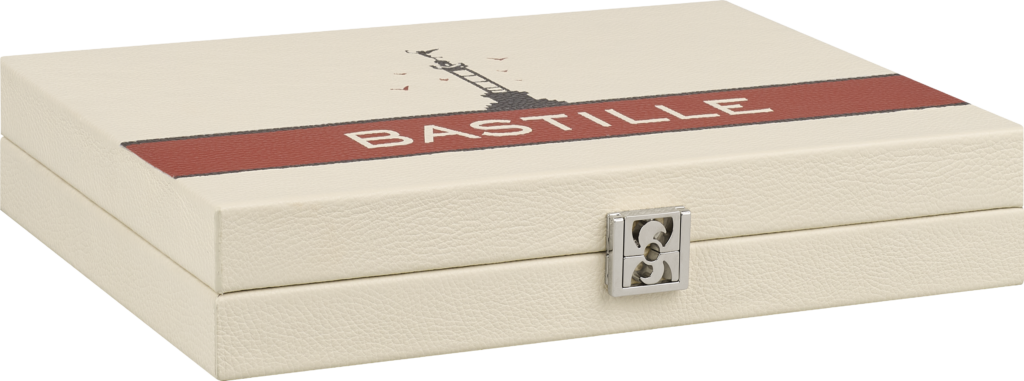
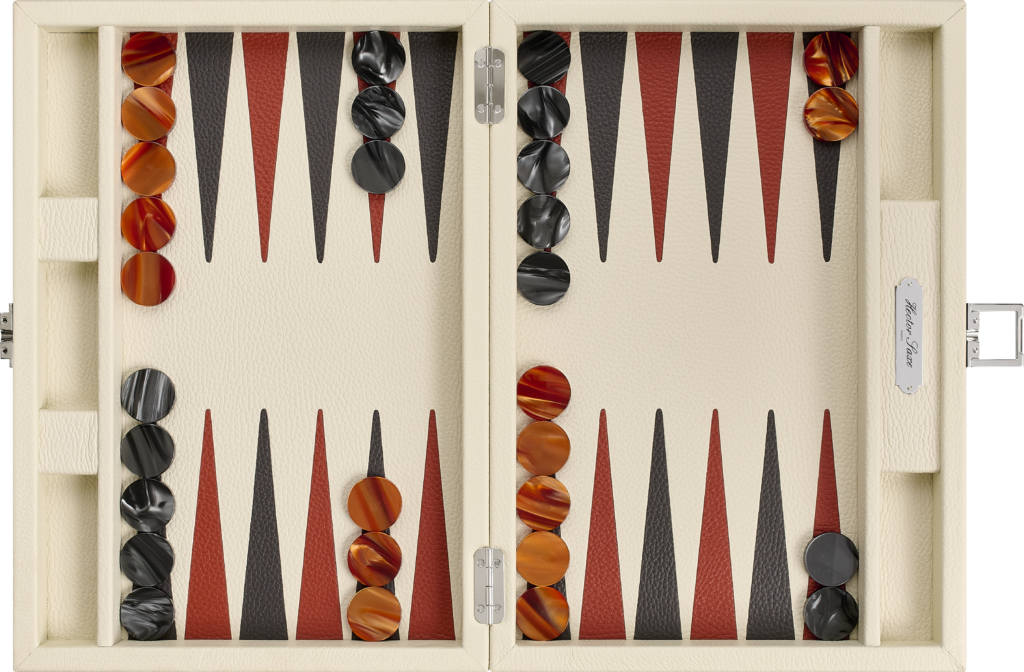
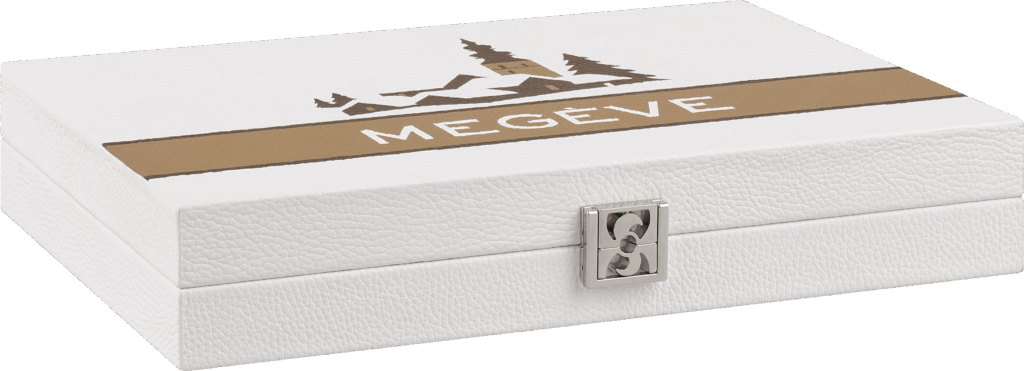
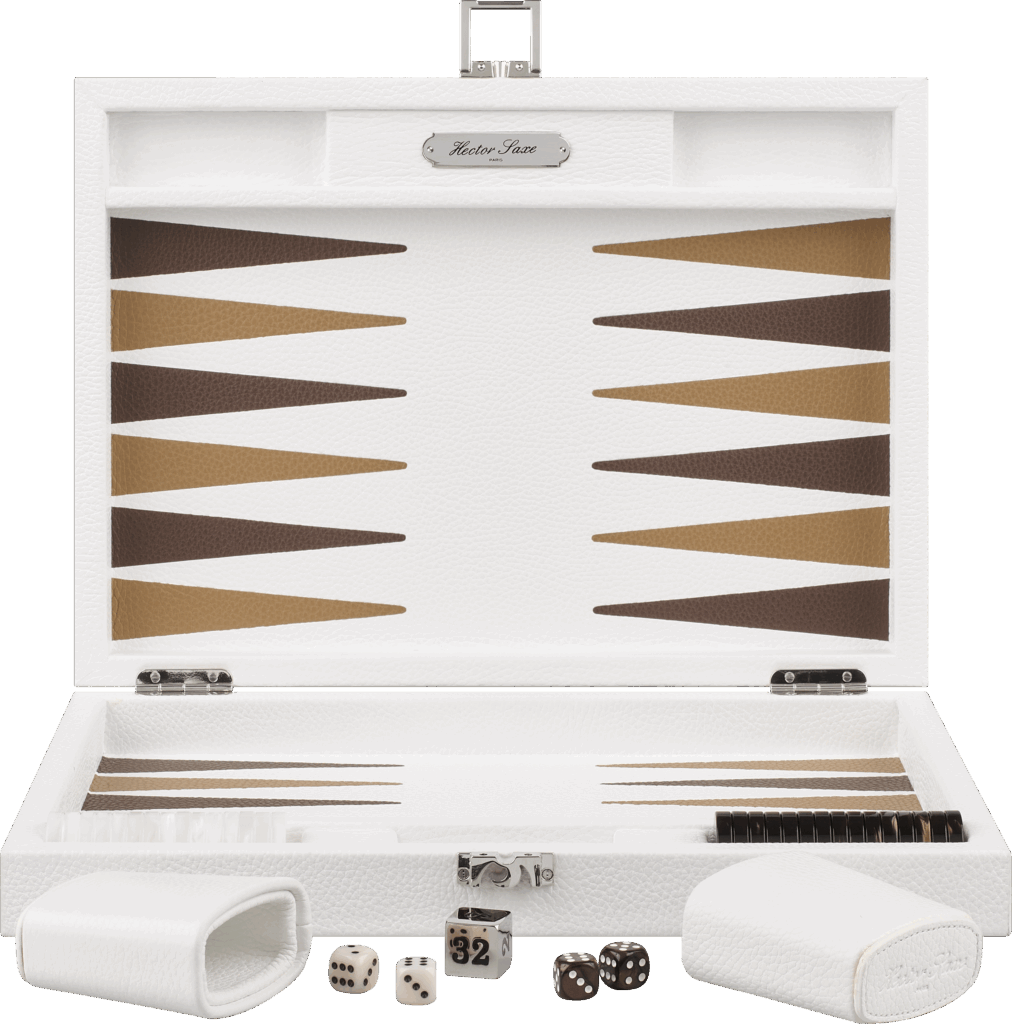
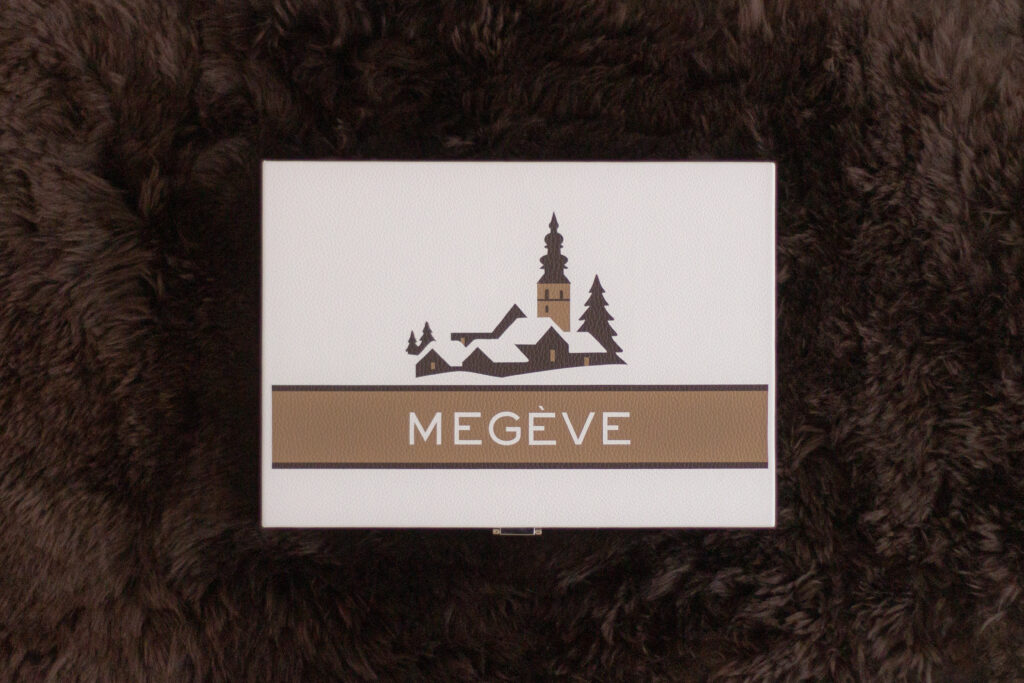
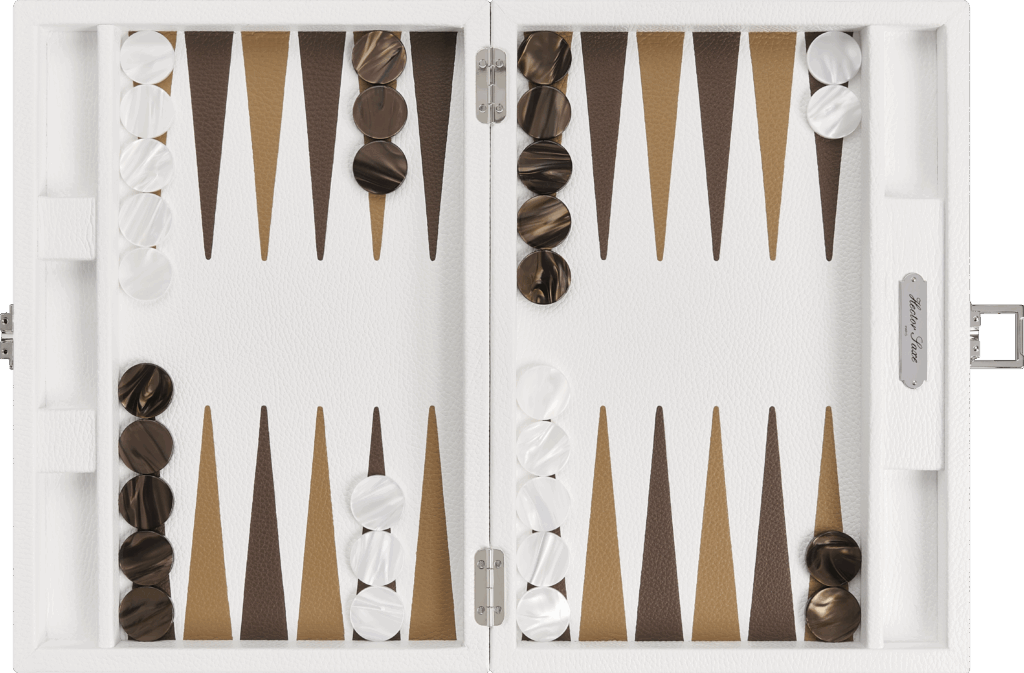
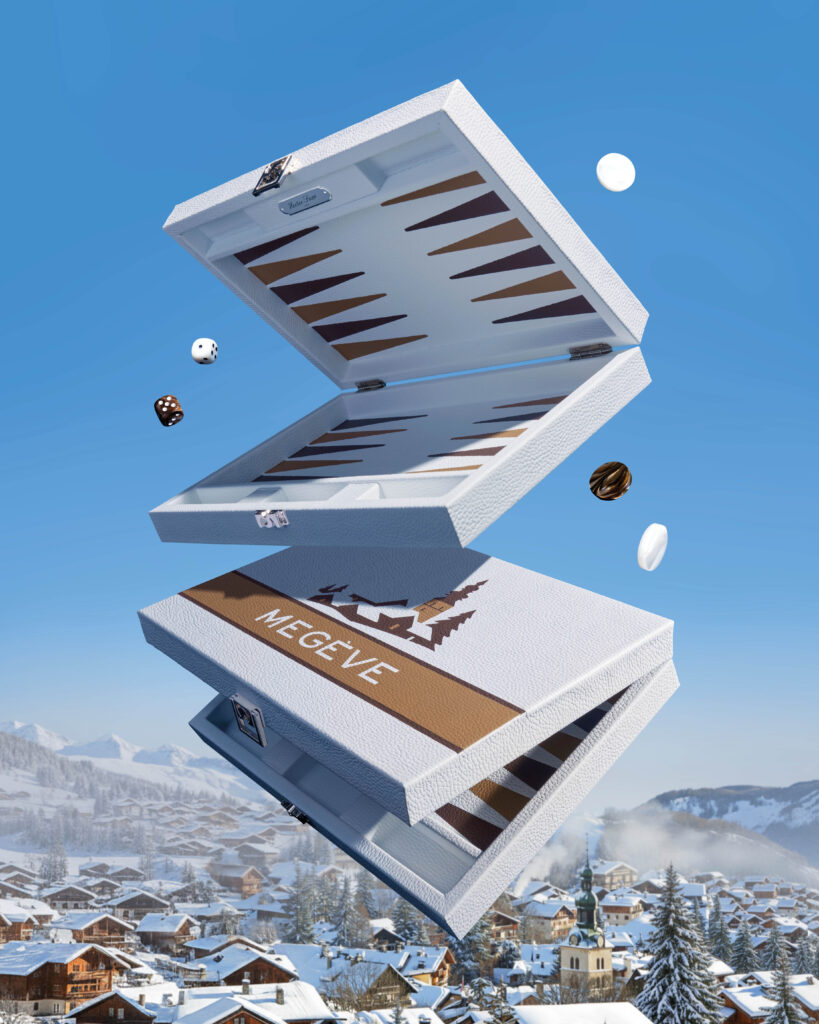
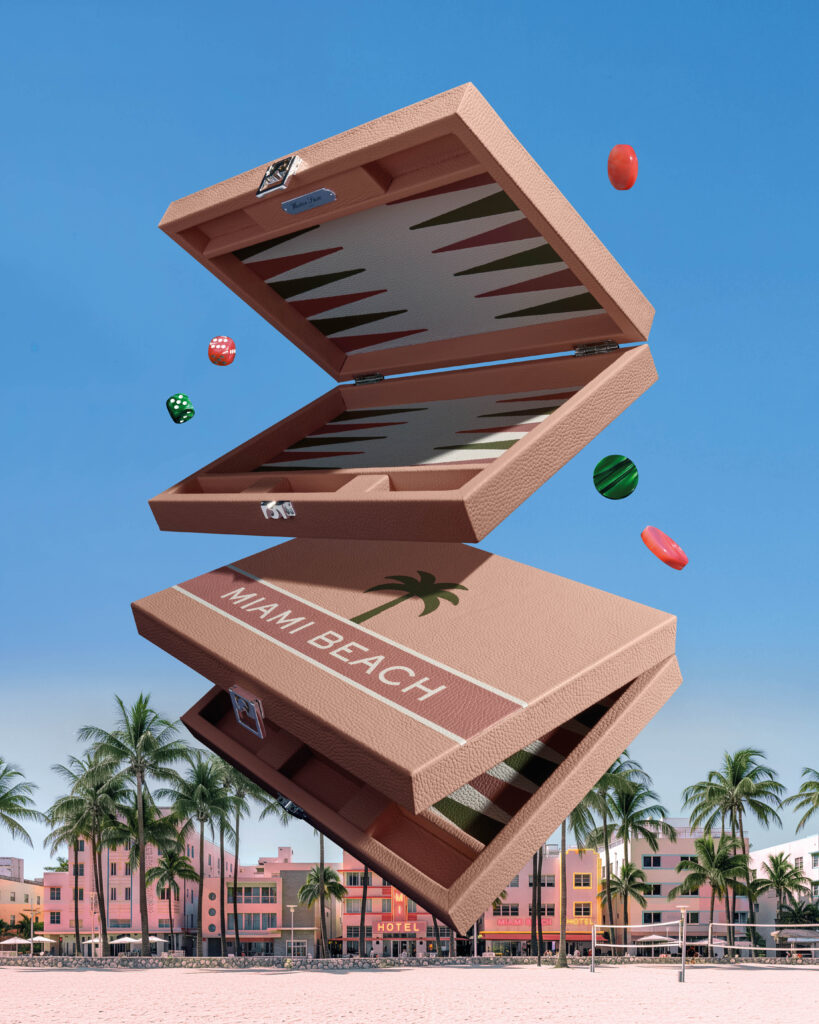
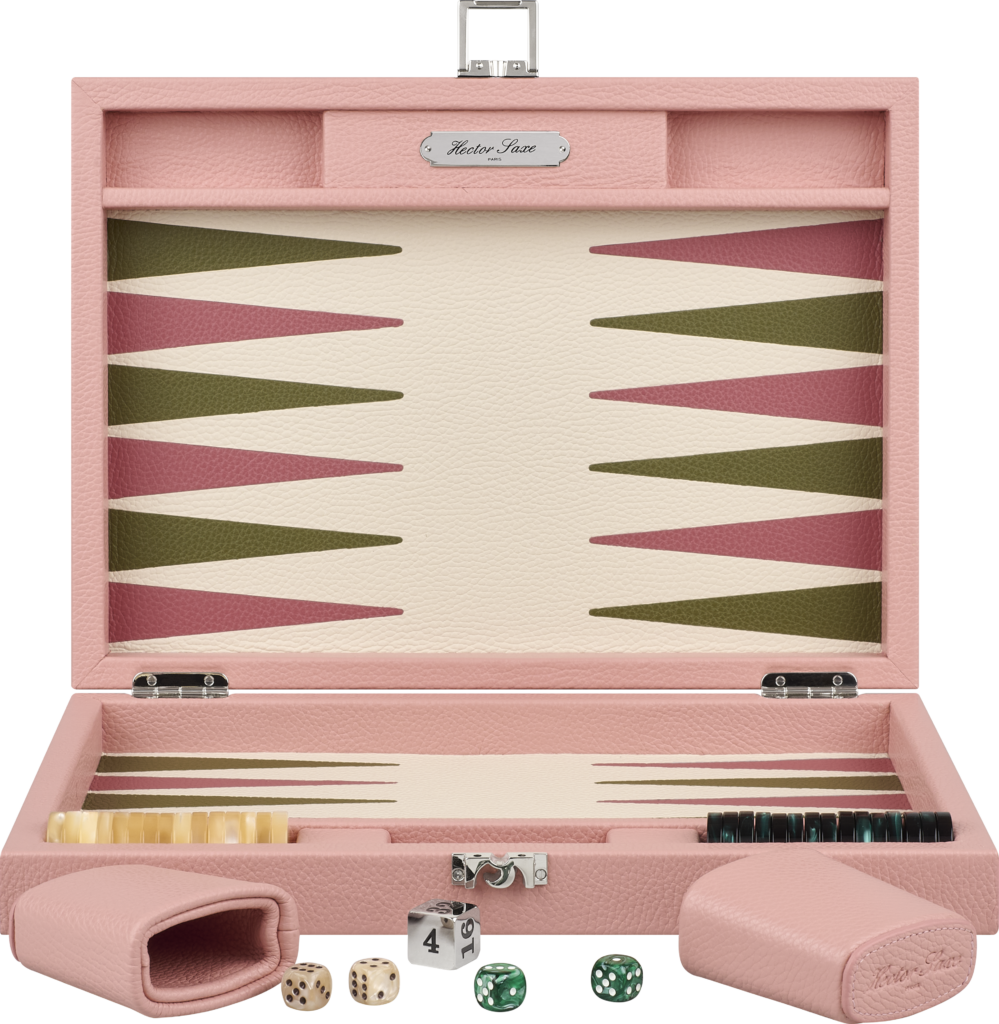
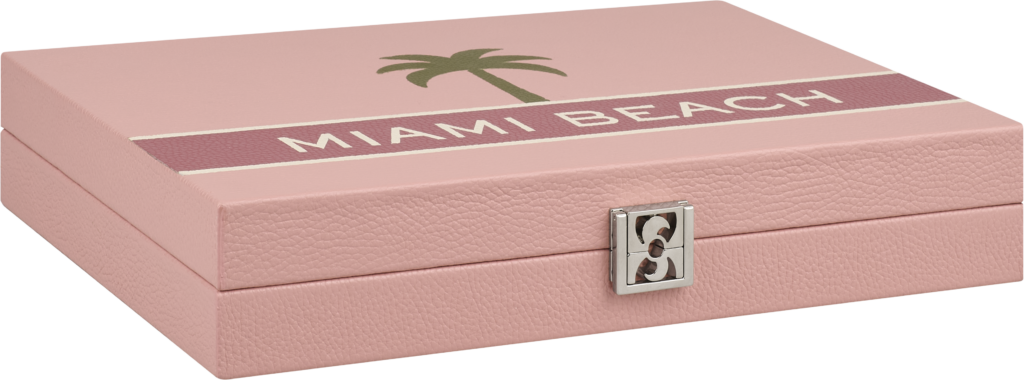
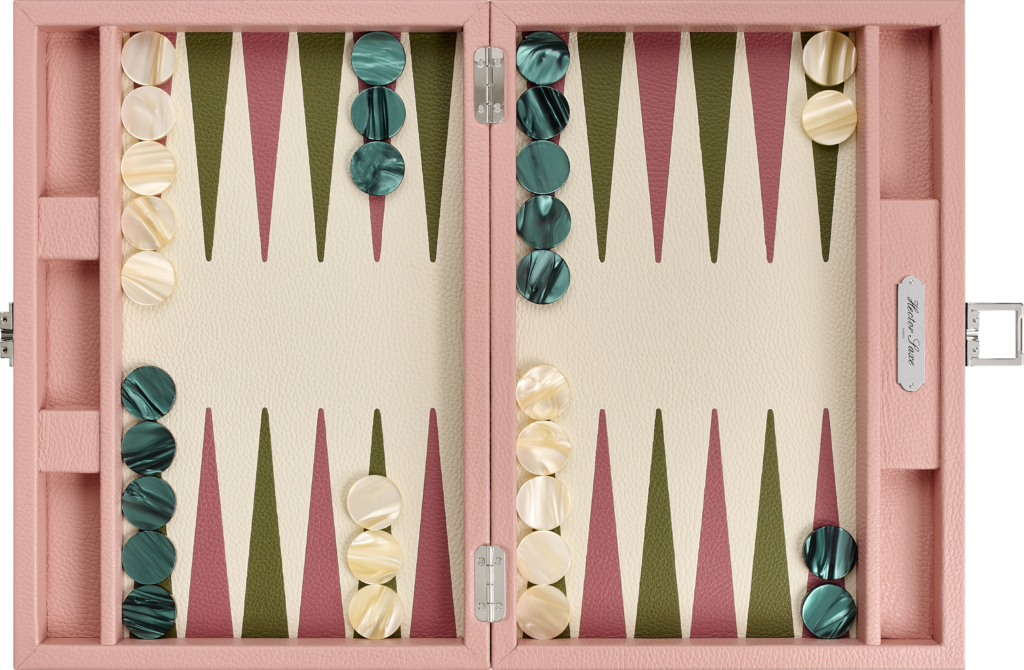
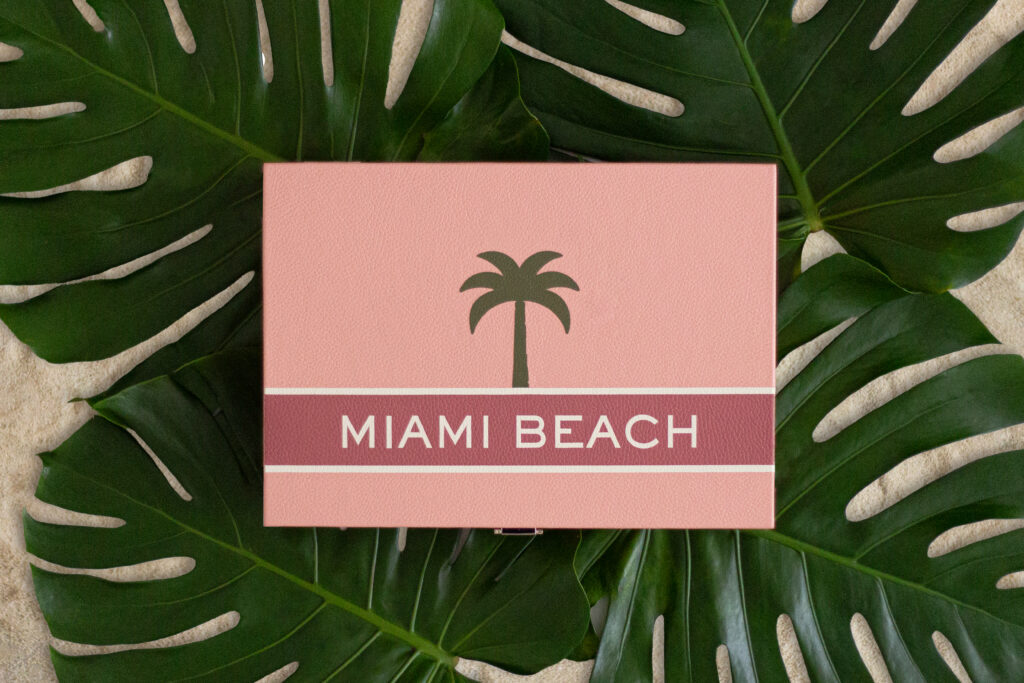
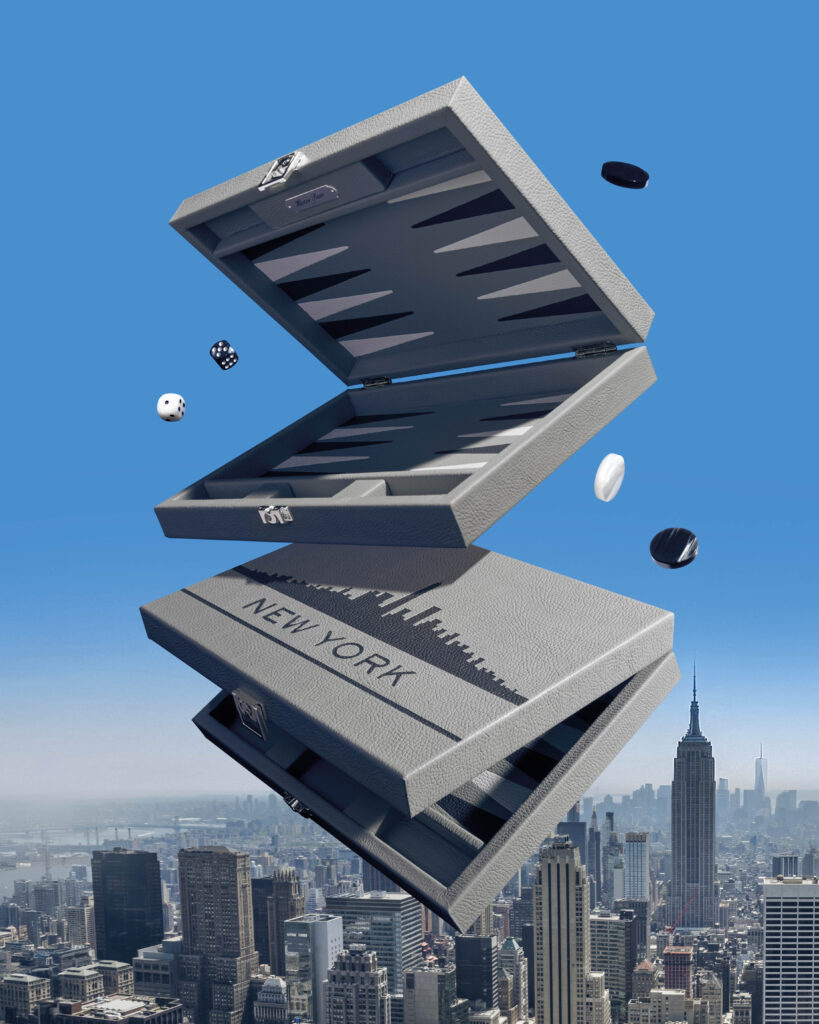
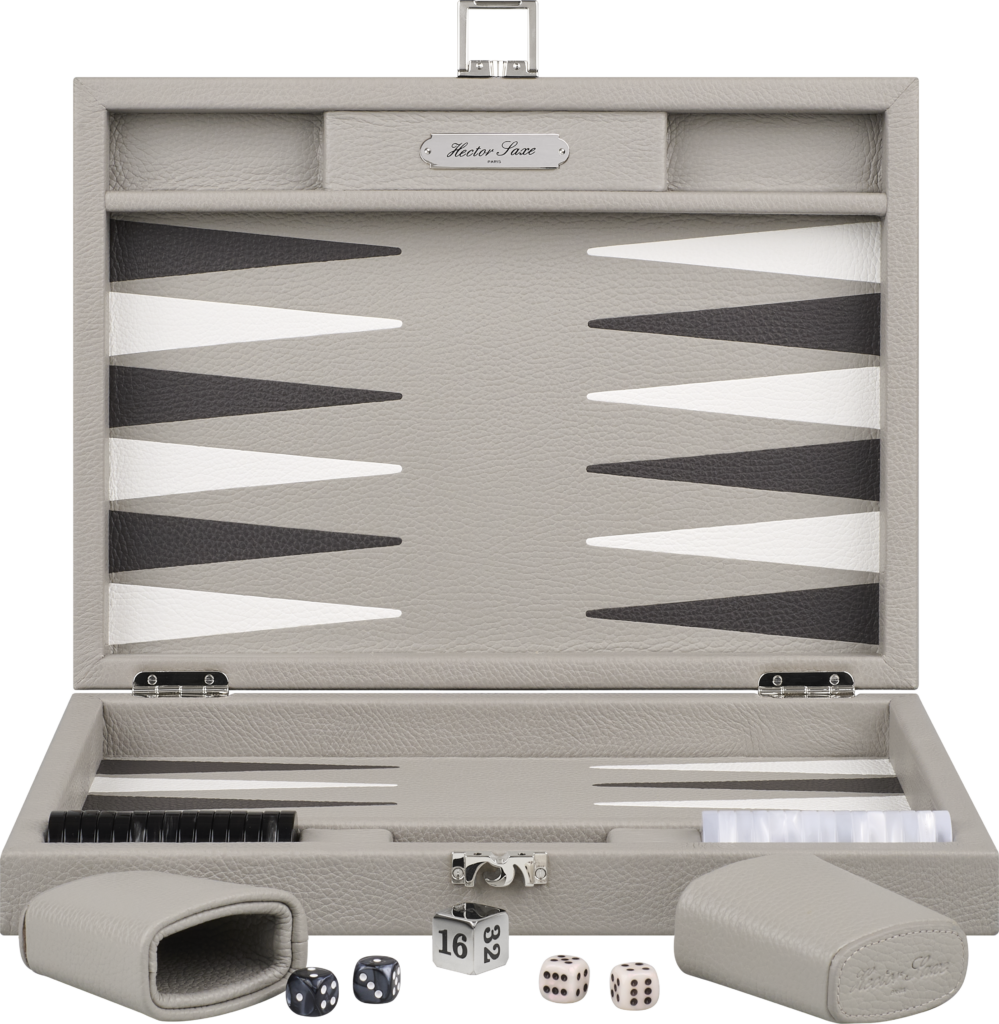
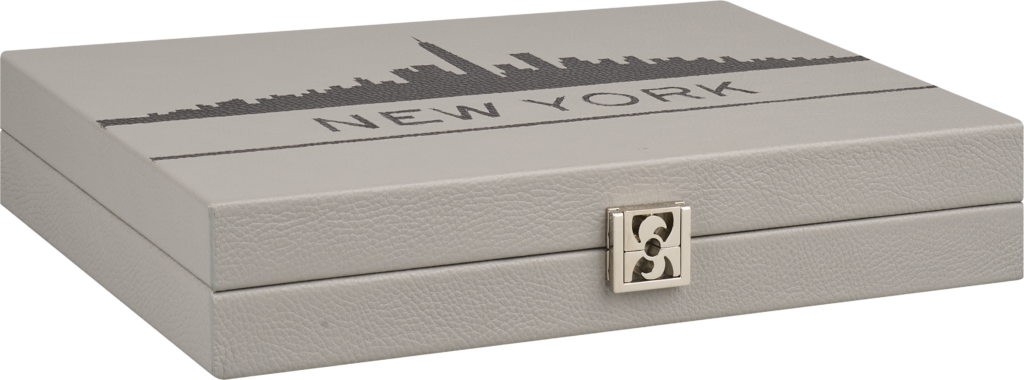
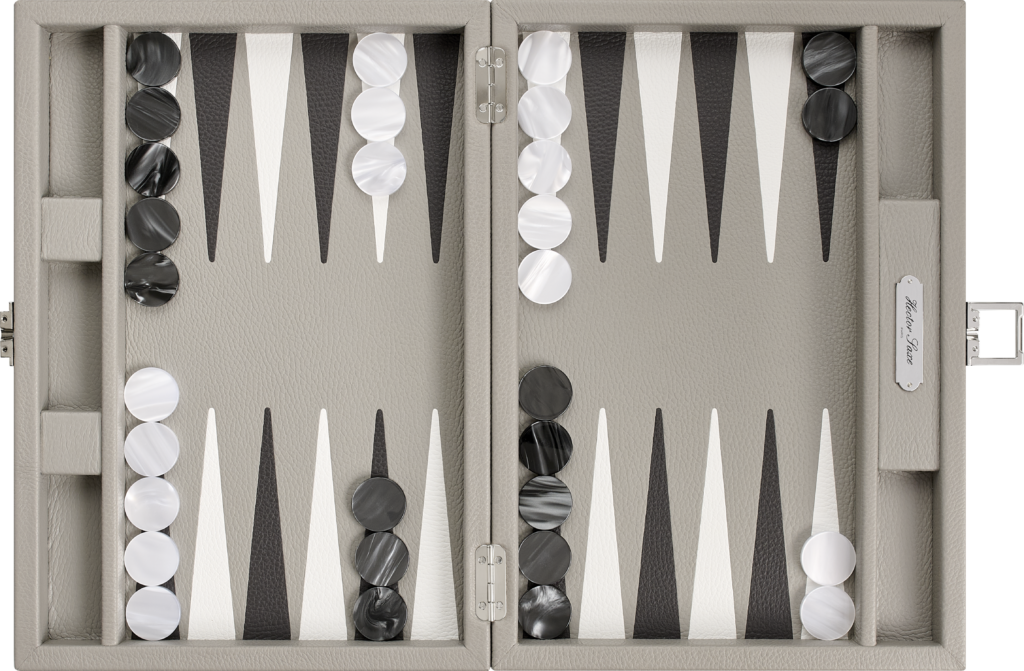
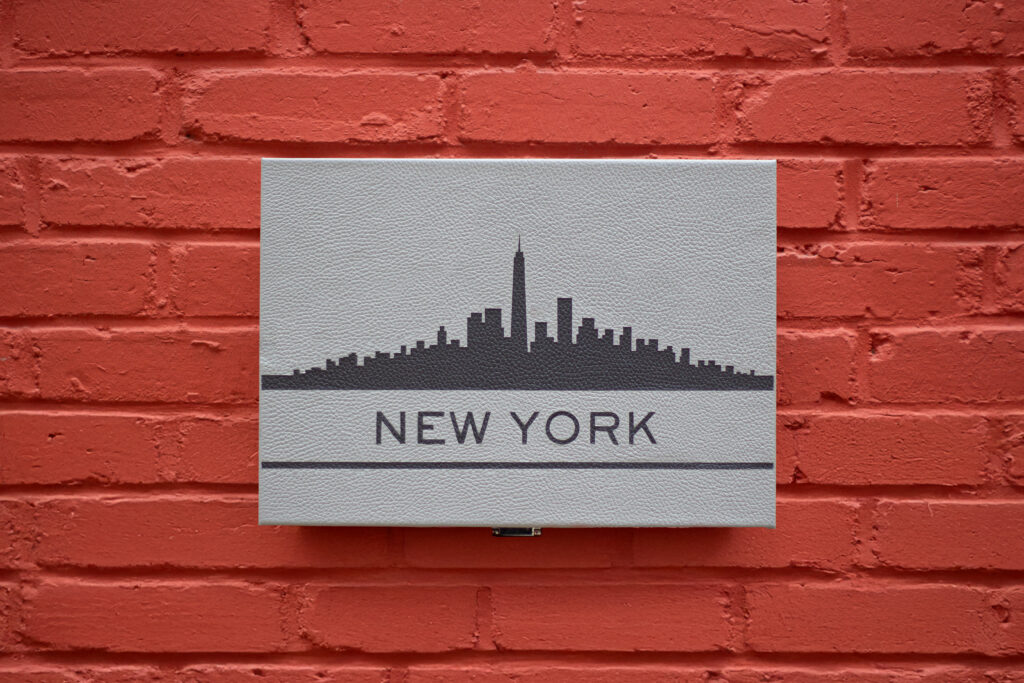
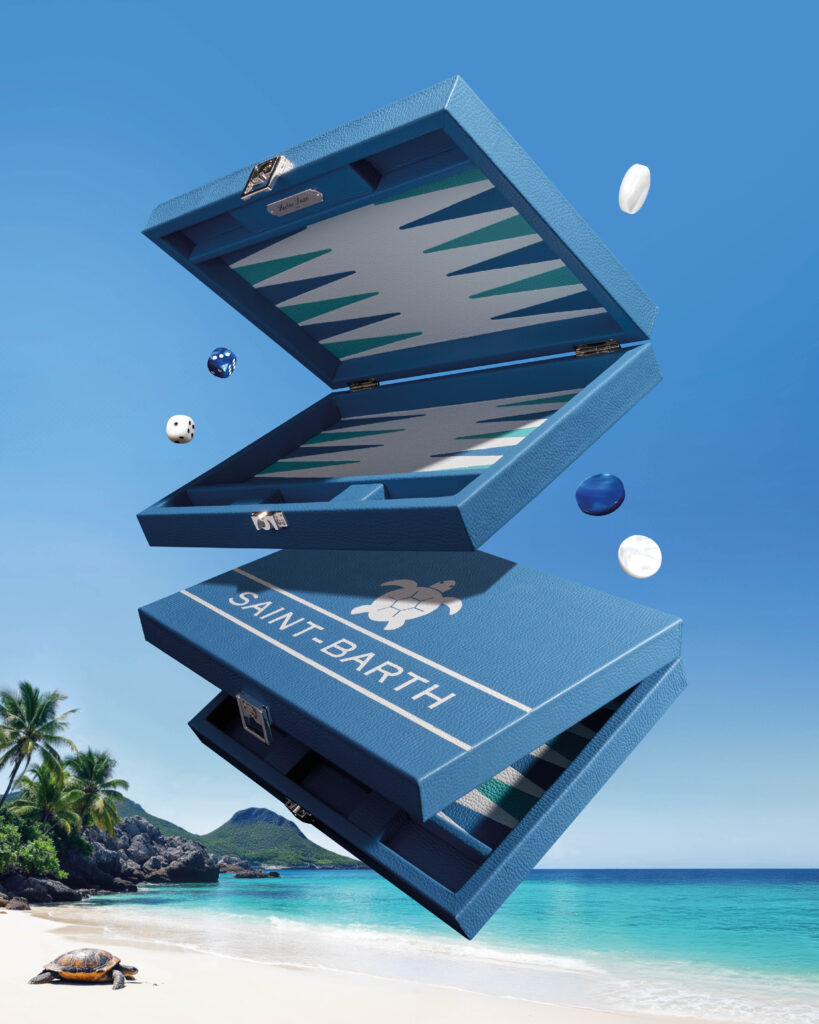
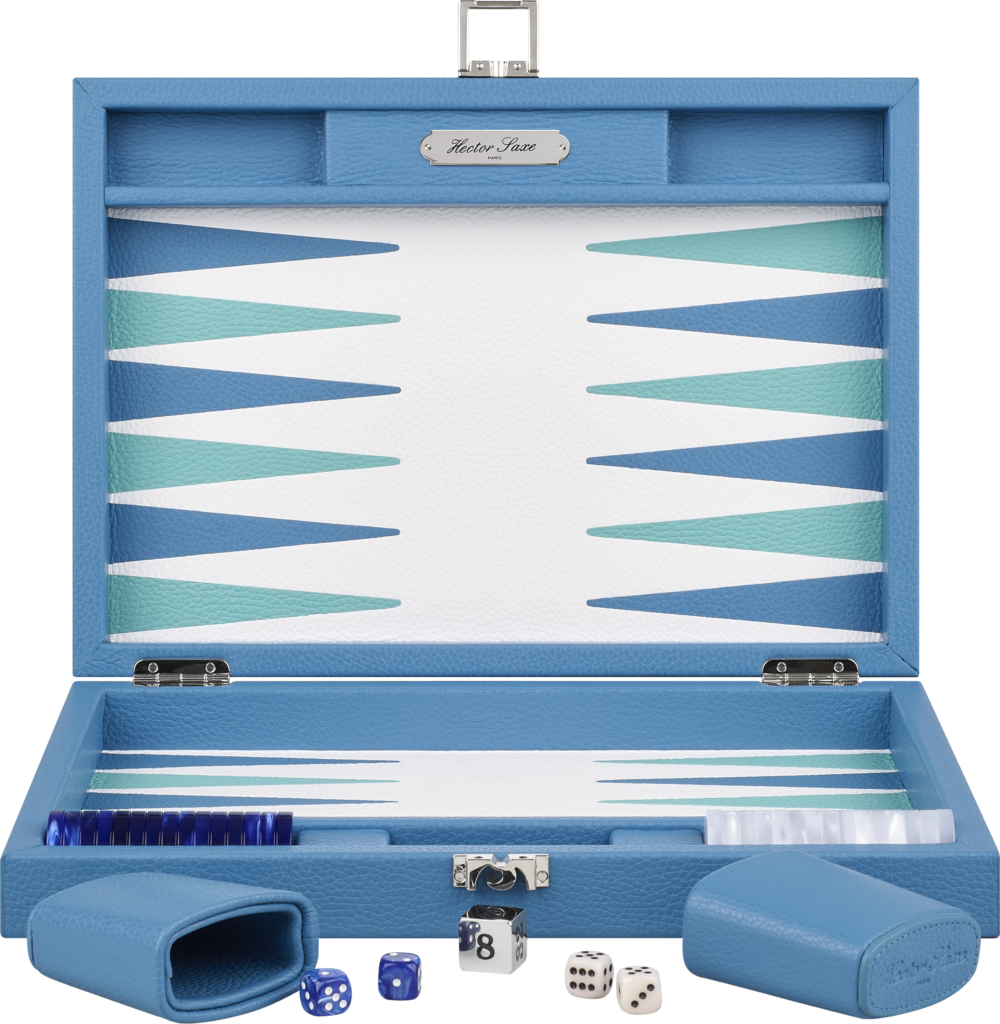
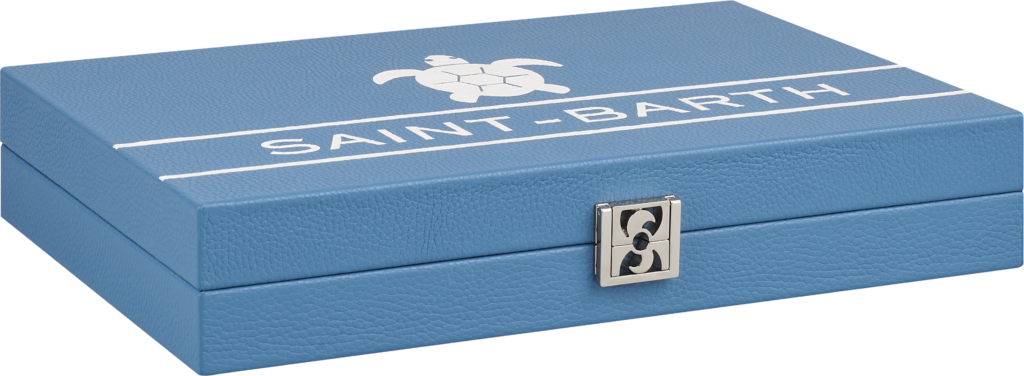
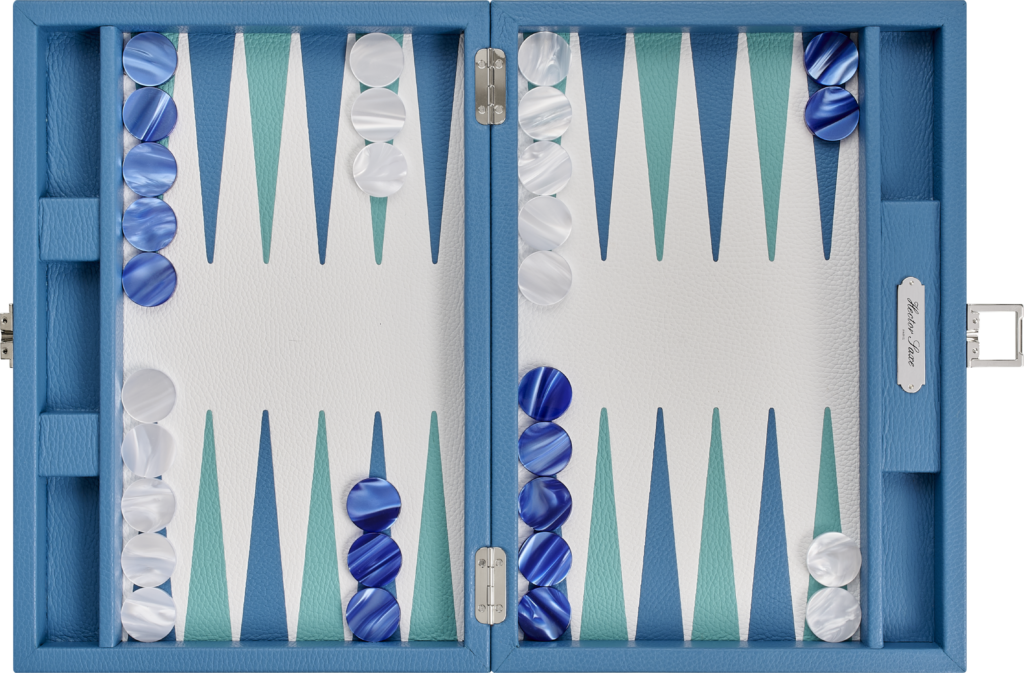
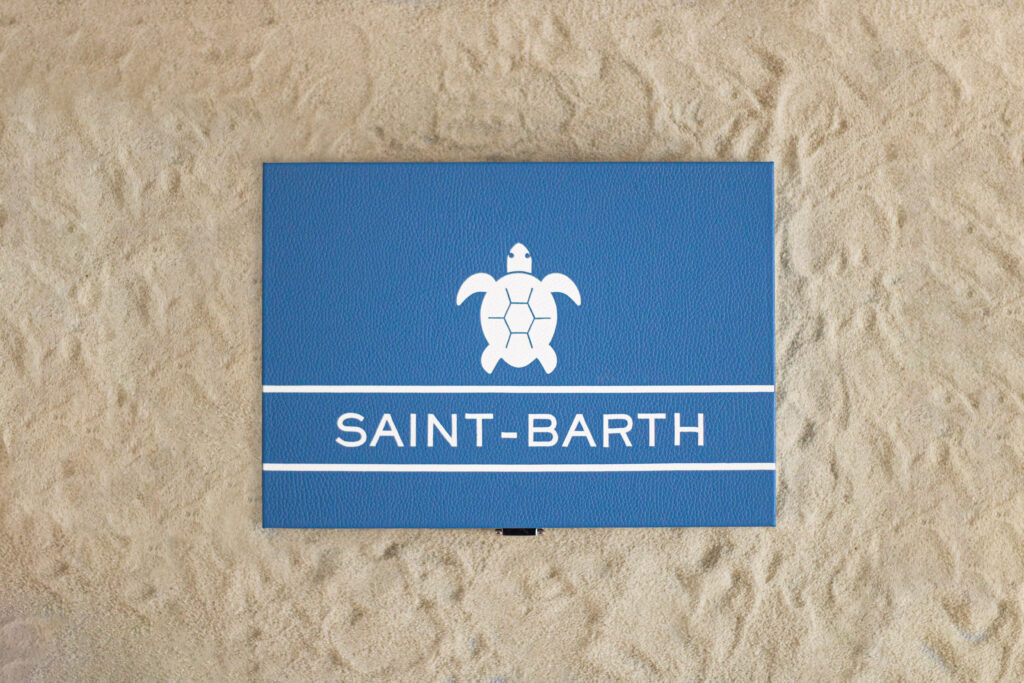
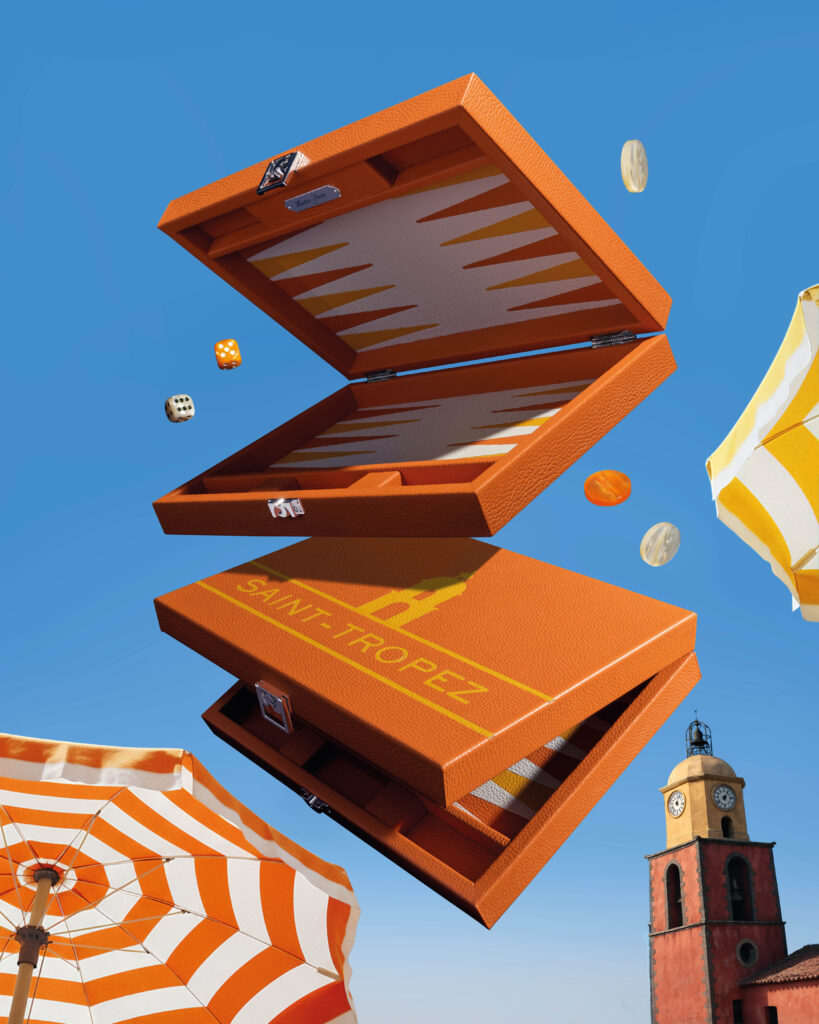
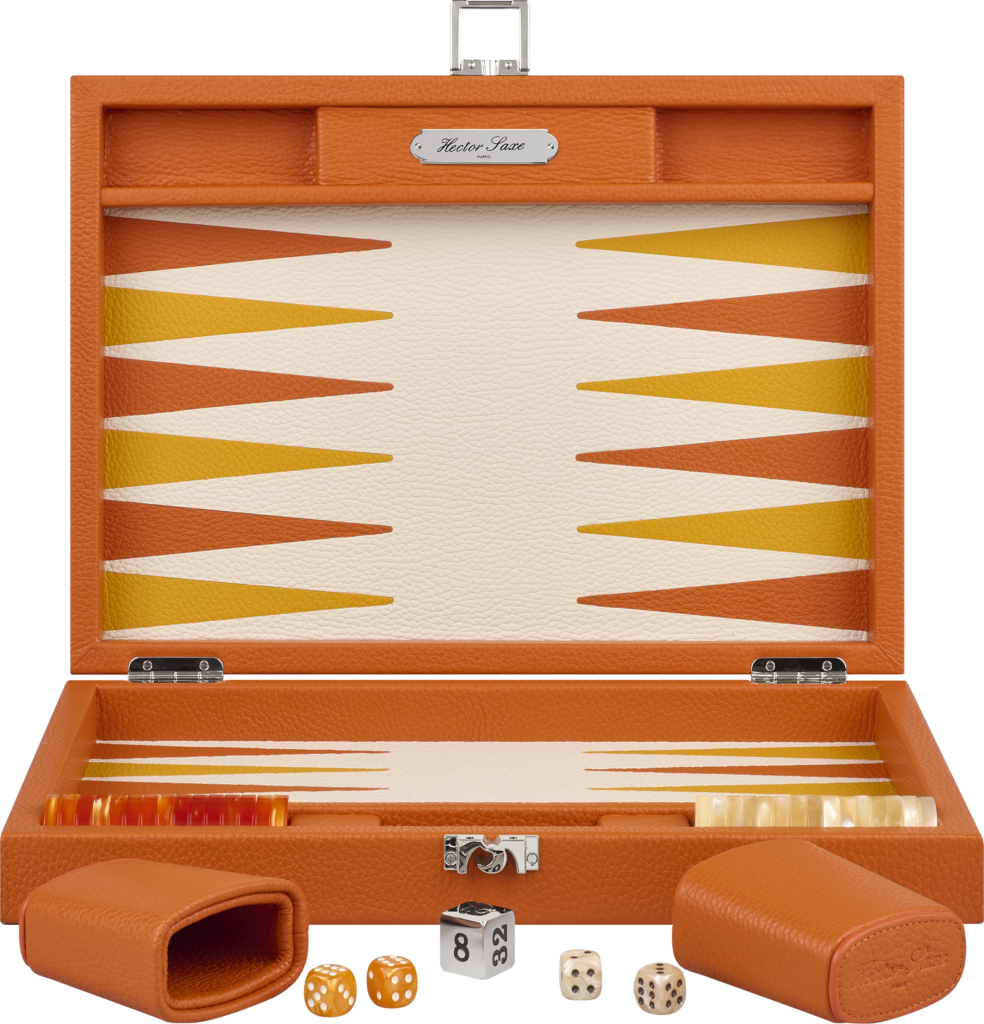
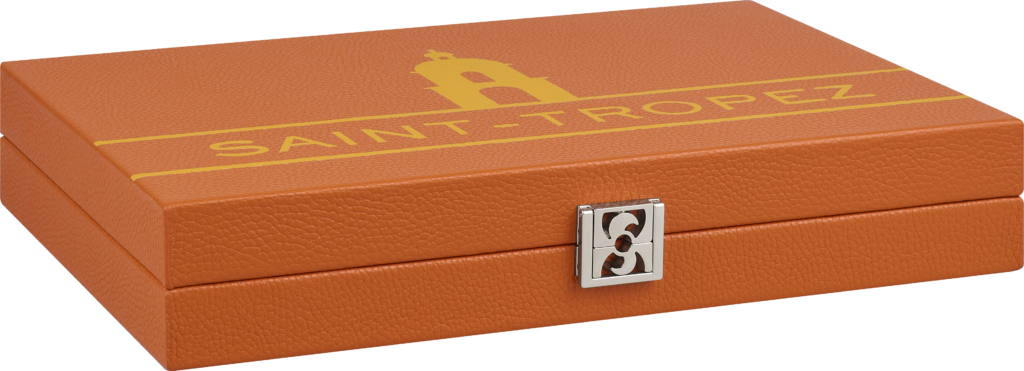
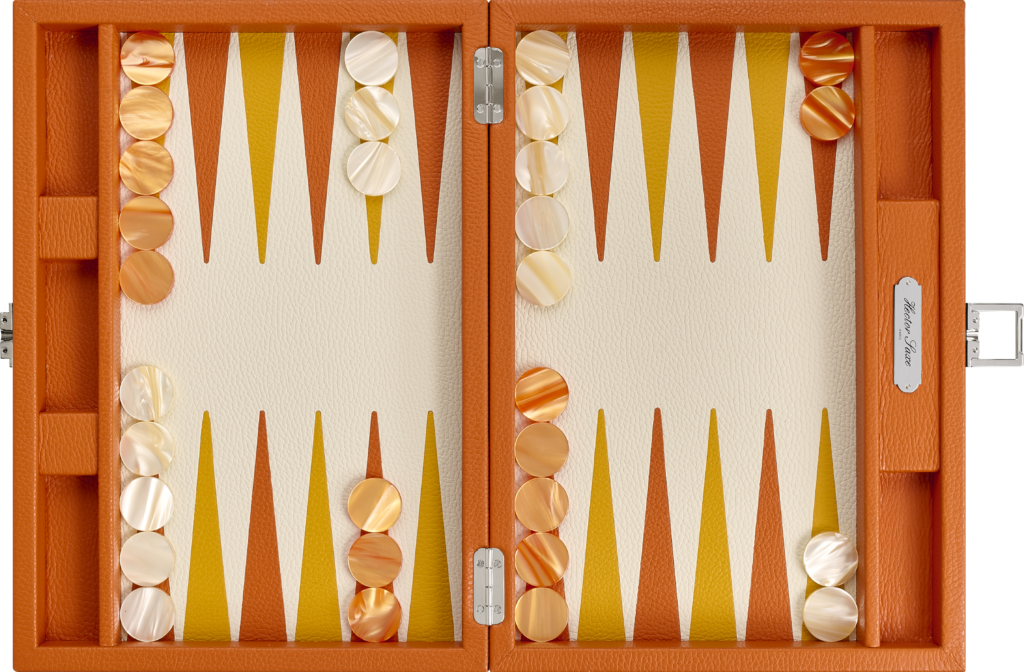
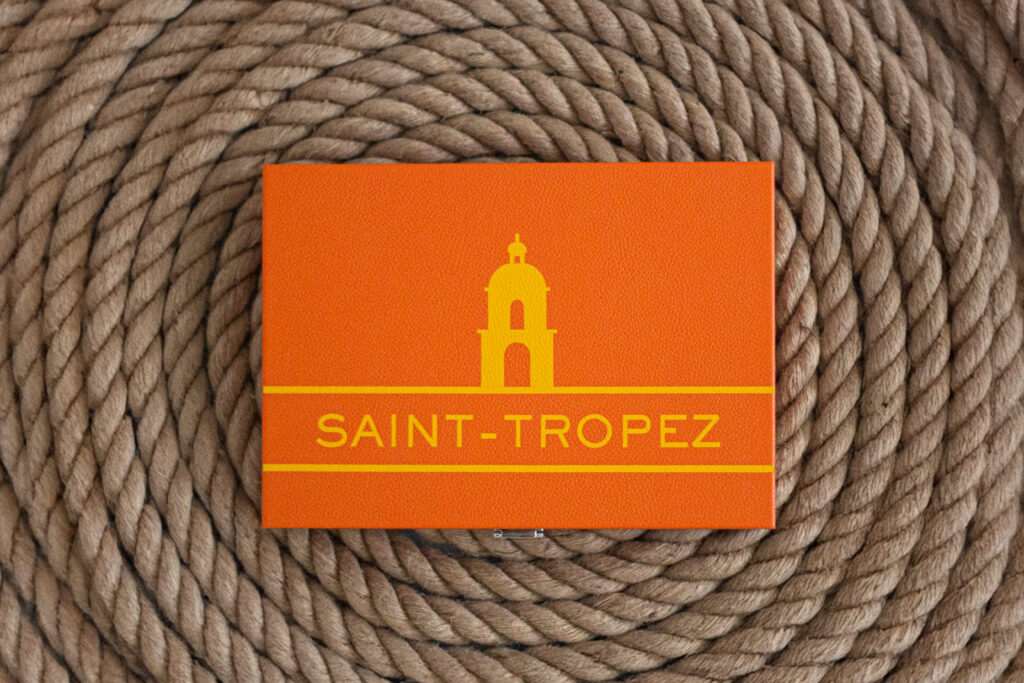
Technical Details: Each Destinations model is crafted from grained cowhide leather and comes in a Medium size (25 × 37 cm when closed, 50 × 37 cm when open). The inlay work consists of assembling panels of different shades in defined areas, with no visible topstitching on the front. Six destinations available: Miami Beach, Saint-Barth, Saint-Tropez, Megève, New York, Bastille. Uniform price: 1,680 €.
The question the collection raises—without actually stating it—is that of the status of the game as a travel item. A backgammon set that you take with you to Saint-Tropez is not used in the same way as one that stays on a shelf. Hector Saxe does not say whether his pieces actually travel—but they are shaped as if they do.
Hector Saxe and Jorelle: When a Wooden Toy Manufacturer Dating Back to 1864 Leaves the Trade Show
There is a turning point in the history of board games: the moment when they moved from the dining room to the garden. For Maison Hector Saxe, this shift took the form of a collaboration with Jorelle—a French manufacturer of wooden games whose history dates back to 1864—to produce a covered croquet set.
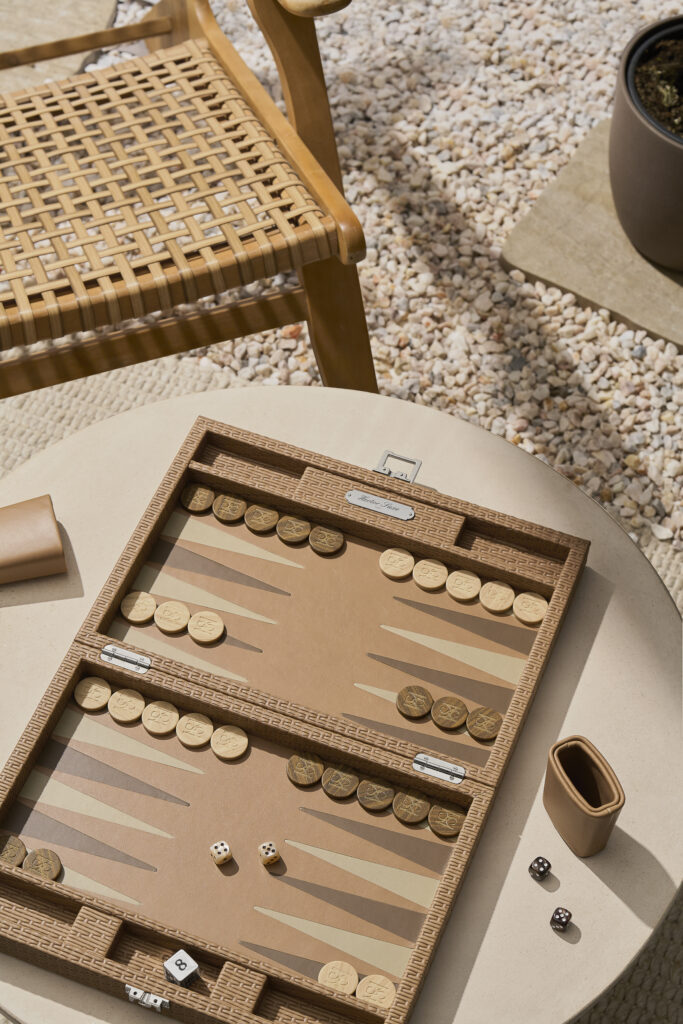
The result is a set consisting of twelve wooden balls, six mallets, six hoops, and two stakes, stored in a chest entirely covered in Roche-colored braided leather. The assembly is straightforward: twenty-six wooden components sourced from a workshop that has been crafting games since before the Third Republic, enclosed in a case with a surface finish reminiscent of a travel bag. The chest is sized to hold what a piece of furniture can hold, and the braided leather—the brand’s signature feature for its outdoor line—uses the same process as the outdoor backgammon sets in the collection.
This weaving technique deserves a clarification: it is not a veneer but a covering made of interwoven strips on a rigid base, which gives the case greater resistance to moisture and temperature fluctuations than smooth leather, while retaining the visual flexibility of a lattice. The Jeux de Saison backgammon sets incorporate this principle by distinguishing between the exterior (braided cowhide) and the interior (grained cowhide)—two different characteristics of the same material, two distinct textures to the touch, all within a single, closed case measuring 25 × 37 cm.
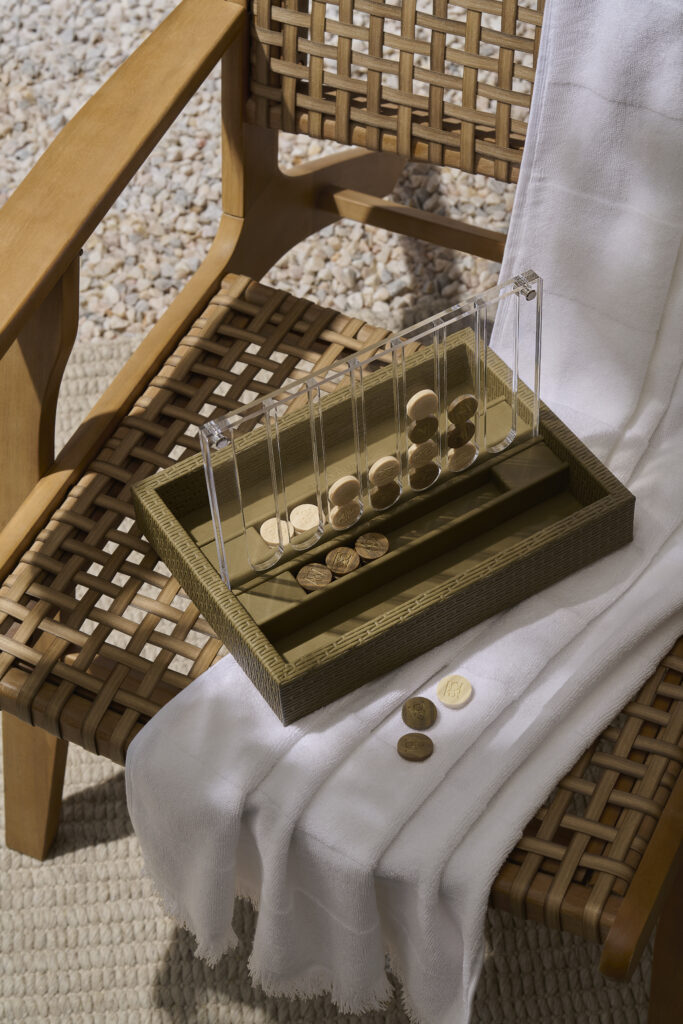
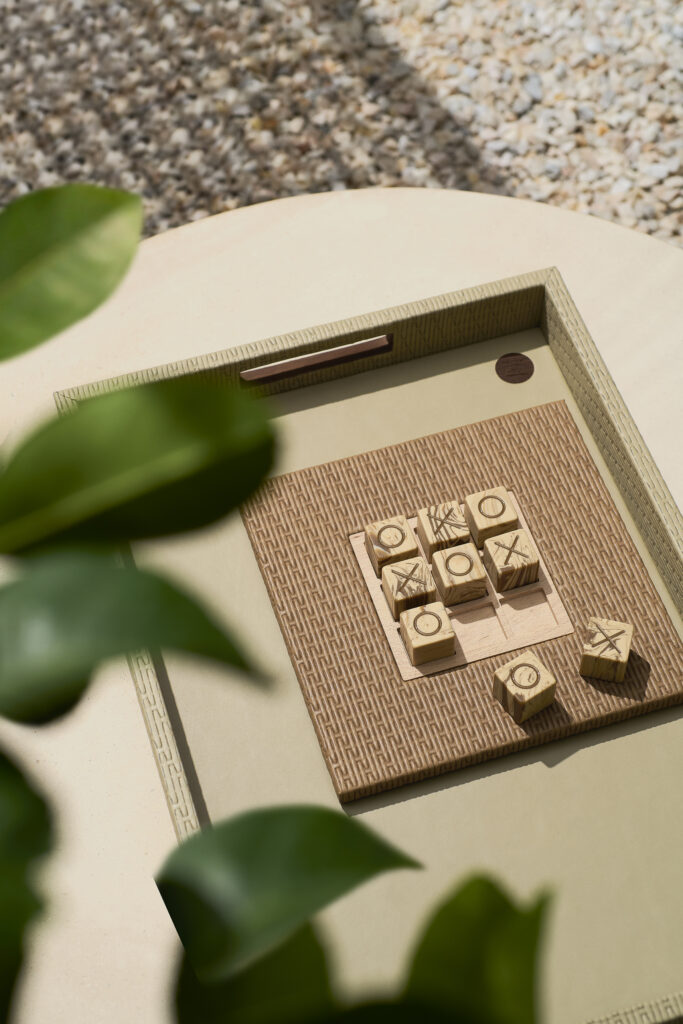
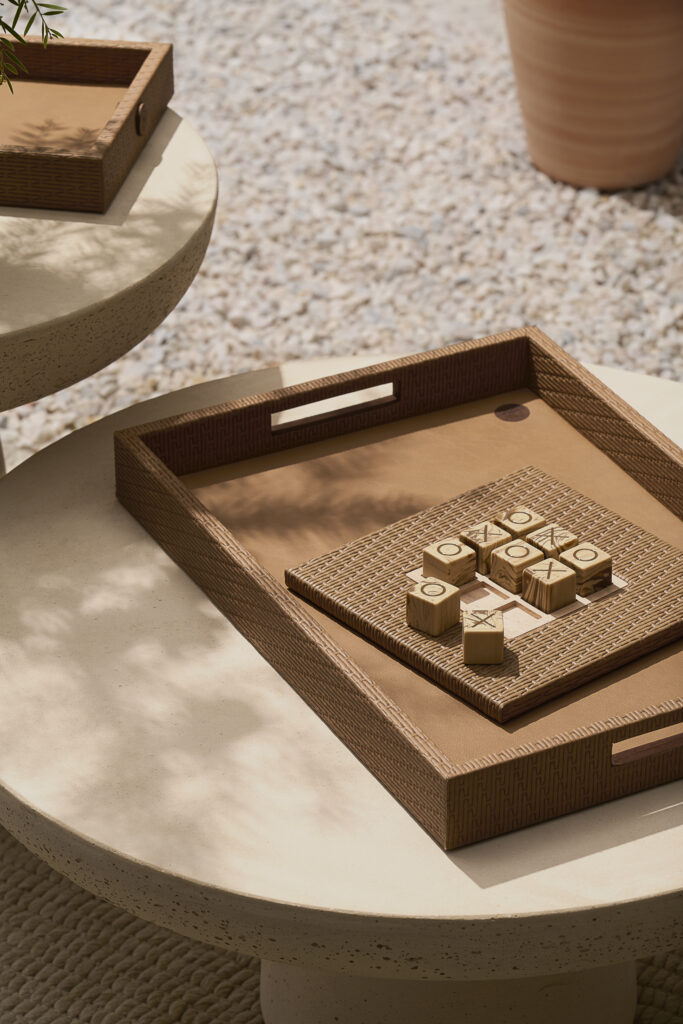
The game pieces are made of wood-effect acetate and engraved with the HS monogram. The dice are made of pearlescent resin. This choice of materials for the game pieces—neither solid wood nor injection-molded plastic—places the collection in a coherent middle ground: too refined to be purely recreational, yet too functional to be merely decorative.
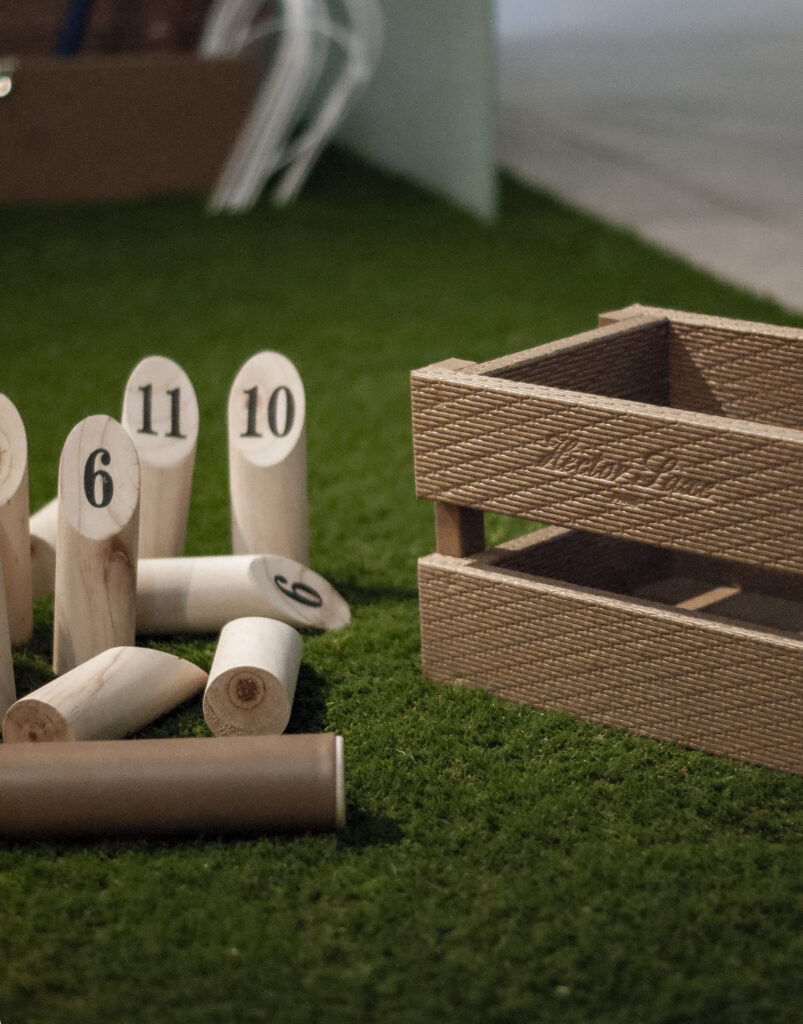
Finnish skittles (twelve numbered skittles, a smooth leather-wrapped throwing stick, a woven basket, €1,080) follow the same design philosophy. The game itself is old—Molkky and its Scandinavian roots have been played outdoors for at least two centuries—but its storage solution is new.
Details — The Jorelle Collaboration: Jorelle has been manufacturing wooden toys in France since 1864—that is, before the industrial standardization of toys. According to the file, it has had a long-standing partnership with Hector Saxe. The Jeux de Saison croquet set is their joint creation, available in the “Roche” color with a braided leather case, priced at €3,480.
What the “Jeux de Saison” collection does is shift the implicit boundaries of how the Hector Saxe object is used. Until now, the leather-covered backgammon set was a piece of living room furniture used only occasionally for games. Moving it onto the deck of a boat or the edge of a pool—as the brand suggests—means asking it to take on a functionality that the woven leather makes possible but that the object had not yet claimed. If the braiding holds up to humidity and direct light, the question at hand is no longer an aesthetic one. It is a practical one.
Cette publication est également disponible en :

