
Setting a table with care isn’t about piling things on. It’s about harmony: between the materials of the tableware, the lighting in the room, the rhythm of the meal, and the attention paid to those seated at the table. The art of luxury table setting begins long before the first course is served.
What the Table Says Before the Meal
A beautifully set table conveys something even before the host enters the room. The whiteness of a starched tablecloth, the thickness of a porcelain plate placed flat, the sparkle of a glass held up to the light—these cues are not merely decorative. They indicate a level of care, a relationship with time, and a form of consideration for the guest that isn’t spoken but is felt.
France has refined this art form over several centuries. The Sèvres National Porcelain Manufactory, founded in 1740 under royal patronage, laid the foundations for a porcelain aesthetic that remains a global benchmark—not because it imposed a particular style, but because it elevated ceramics to the rank of one of the most demanding applied arts. This status was not established by decree: it was built piece by piece, firing by firing, generation after generation of porcelain painters trained in the precision of their craft.
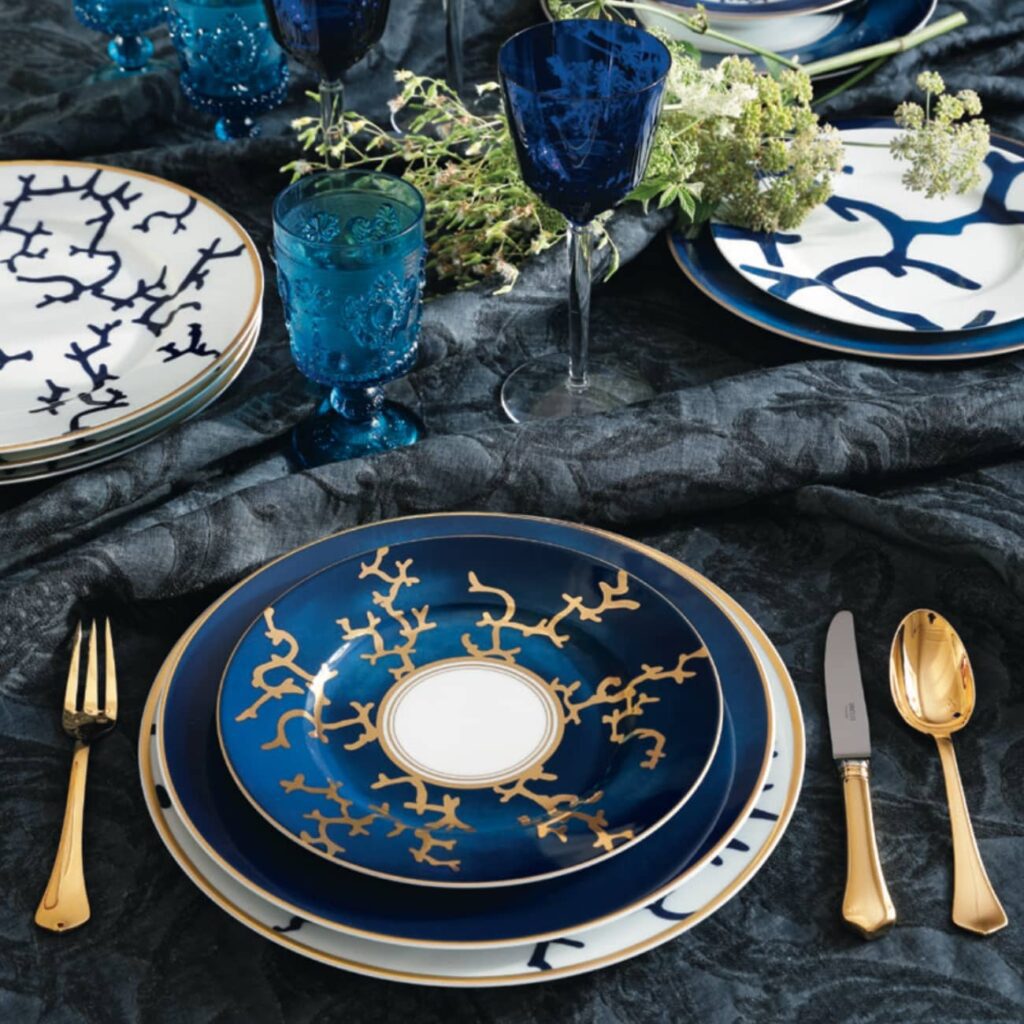
Maison Raynaud, in Limoges, is part of this tradition. Its porcelain is not just a white surface: it is a realm of decoration, high-temperature firing, color, and durability. Each collection involves technical choices that determine what can be applied to the piece, how it ages, and what it can withstand in a professional kiln. These details aren’t listed on gift cards, but they make all the difference in everyday use.
Reading Porcelain
Tableware porcelain is distinguished by its density and translucency. A thin piece allows light to pass through when held between the hand and a direct light source—this is a traditional artisanal test, not a marketing claim. This translucency is the result of high-temperature firing (between 1,260 and 1,400 °C, depending on the composition), which vitrifies the clay until it acquires this distinctive quality.
The “Porcelaine de Limoges” geographical indication, officially recognized in 2013, defines the manufacturing conditions that qualify for this designation: kaolin mining in the region, and shaping and decoration within the designated territory. This framework is not an administrative constraint—it is a guarantee that the expertise passed down in Limoges workshops remains rooted in the geographical conditions that gave rise to it. Kaolin from Saint-Yrieix-la-Perche, used since the 18th century, gives Limoges porcelain its characteristic whiteness and density.
On a dining table, porcelain serves as a backdrop: it complements the meal’s colors without competing with them. A design that’s too busy can clash with the food. A simple piece—pure white or with a subtle border—allows the plate to take center stage without making the tableware disappear entirely. It is this balance that the grand dining rooms of luxury hotels and Michelin-starred kitchens strive for with every new service.
Reading the Crystal
Crystal engages other senses. Its weight in the hand, the sound it makes when gently tapped, the way it refracts light depending on its size—these qualities are perceptible even before you take a sip. A hand-cut glass doesn’t feel the same as a machine-blown one. You can feel the difference right at your fingertips.
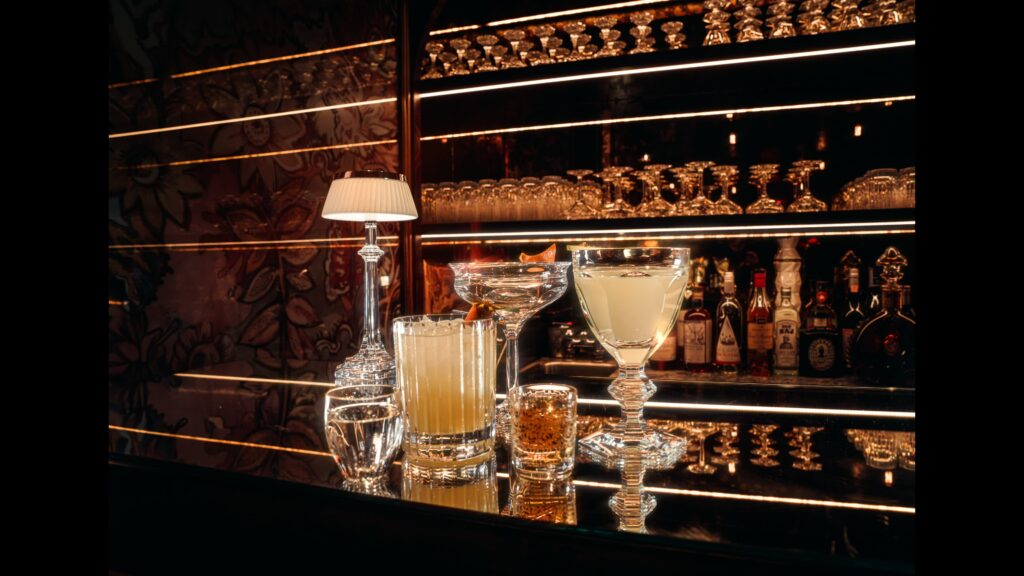
Baccarat, founded in Lorraine in 1764, has established crystal cutting as an art form recognized by the Ministry of Culture as part of the arts and crafts sector. The House’s cut glass—found on the tables of luxury hotels, three-star restaurants, and in private collections—features designs, some of which date back to the 19th century. The Harcourt, designed in 1841, has remained in continuous production ever since: its hexagonal faceting, designed to refract candlelight, has lost none of its appeal in the age of soft LED lighting.
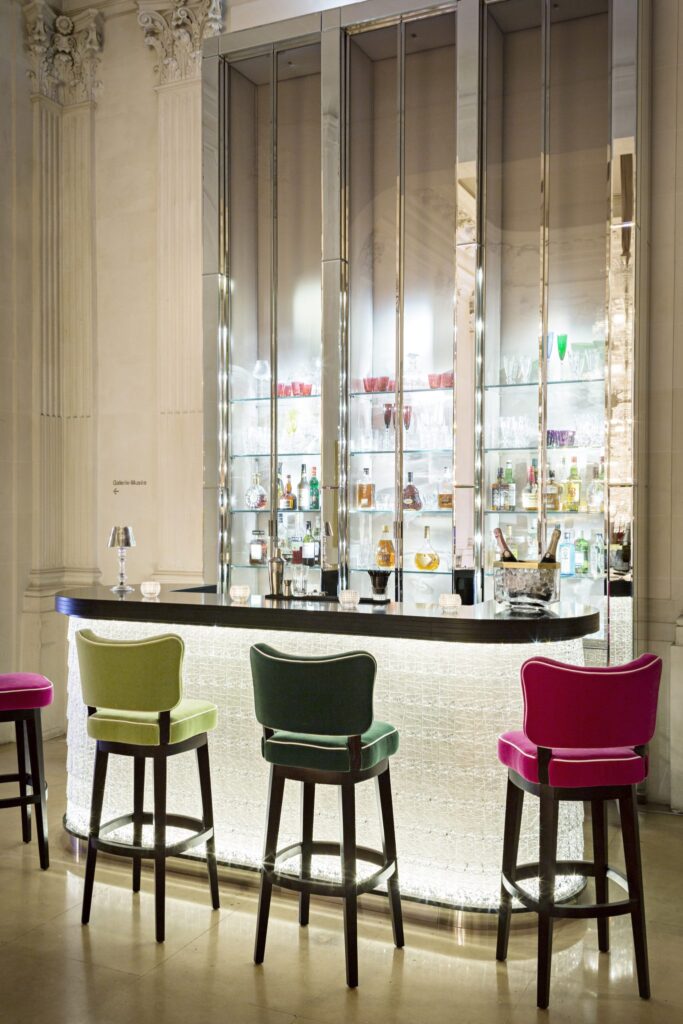
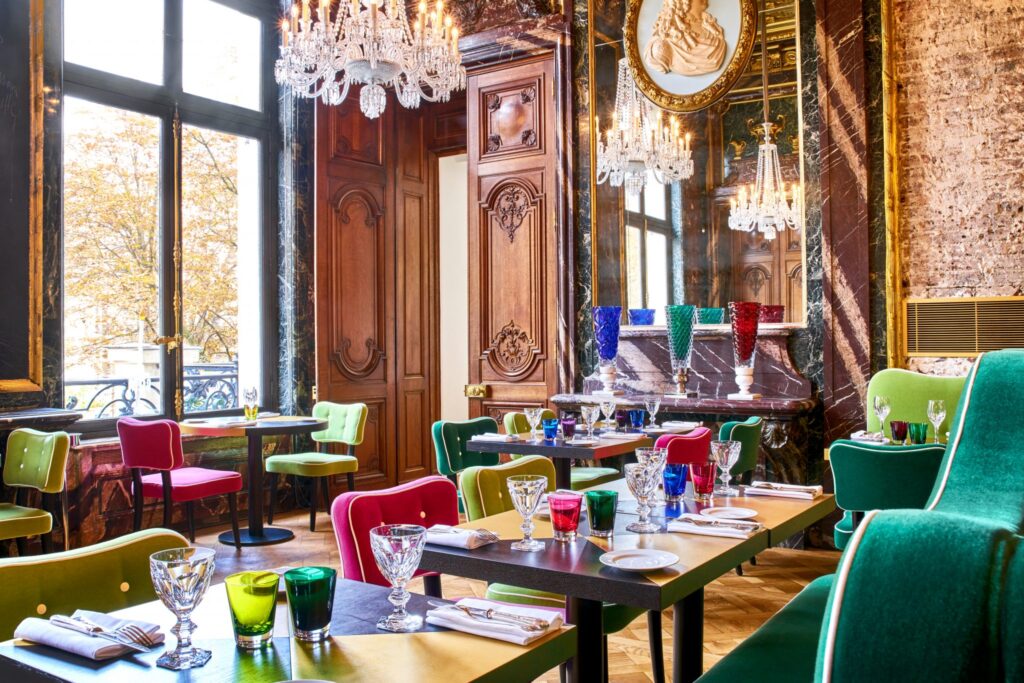
The Baccarat Cristal Room in Paris and the Baccarat Room in New York illustrate how the House has expanded its scope beyond the object itself: the dining experience is staged within an architectural setting where crystal becomes the environment. This shift—from the art of living to the art of entertaining on a grand scale—says something about the evolution of domestic luxury: the art of entertaining is no longer learned solely within families; it is also experienced in places that present it as a cultural offering.
Consistency as a Discipline
A successful table setting is not simply a collection of remarkable pieces. It is a harmonious balance between distinct elements: the porcelain and crystal must complement each other without overshadowing one another; the linens must enhance the setting without dominating it; and the flowers—if present—must not obscure the faces across the table. These rules are not constraints: they define the conditions under which each piece can express its full potential.
Light is the ultimate judge. A candle reveals the beauty of crystal in a way that electric light cannot. A table set in broad daylight and the same table in the evening are two different experiences. Choosing pieces that work in both settings—that do not lose their quality when the context changes—is perhaps the most demanding criterion in the art of table setting.
Entertaining in the French style is not a rigid set of rules. It is an art of paying attention: to the materials, the light, the guest, and the moment. The objects that serve this purpose best are those that do not stand out—those that you only notice when they are not there.
See also
Cette publication est également disponible en :

