
As temperatures rise, skin doesn’t just react – it reconfigures. Behind the apparent suppleness of summer, a deeper hydric deficit sets in. Elizabeth Arden responds to this dissociation between surface and structure with a product designed not as a corrector, but as a regulator.
The proposal is less cosmetic than it sounds. It’s based on a seasonal reading of the skin: heat, UV rays, air conditioning and pollution act together to accelerate water loss while stimulating sebum production. The result: a skin film that is visually comfortable but physiologically fragile.
Rather than compensating by overloading – the classic strategy of rich textures – the formula adopts an accompanying principle. It relies on a so-called “self-rehydrating” complex, structured around three distinct functions: mobilizing water already present in the tissues, improving its circulation in the superficial layers, and limiting its evaporation by reinforcing the cutaneous barrier.
This triptych outlines a quasi-hydraulic approach to skin. It’s no longer a question of providing, but of redistributing.
In detail, two active ingredients structure this architecture. Squalane acts as a cohesive agent: it supports the barrier function without creating occlusion, a decisive point in hot environments. Ectoin, a molecule derived from extremophilic micro-organisms, acts on environmental stress – stabilizing cell membranes and attenuating the signs of dehydration linked to external aggression.
The choice of these components says something about the times. Hydration is no longer seen as an external input, but as an internal management of resources. A logic of functional, almost organic sobriety.
The galenic formulas are an extension of this approach. Light texture, absence of fragrance, non-comedogenic formulation: all signs of adaptation to summer and urban constraints. The product is positioned for mobile use – an exposed day, a reduced routine – in keeping with fragmented rhythms.
Most notably, the promise of continuous hydration for up to eighty hours – the result of a limited clinical study – introduces an extended temporality to care. Not an immediate effect, but a measured persistence.
This shift – from corrective action to regulation – is part of a broader evolution in contemporary care. Less accumulation, more precision. Fewer layers, more understanding.
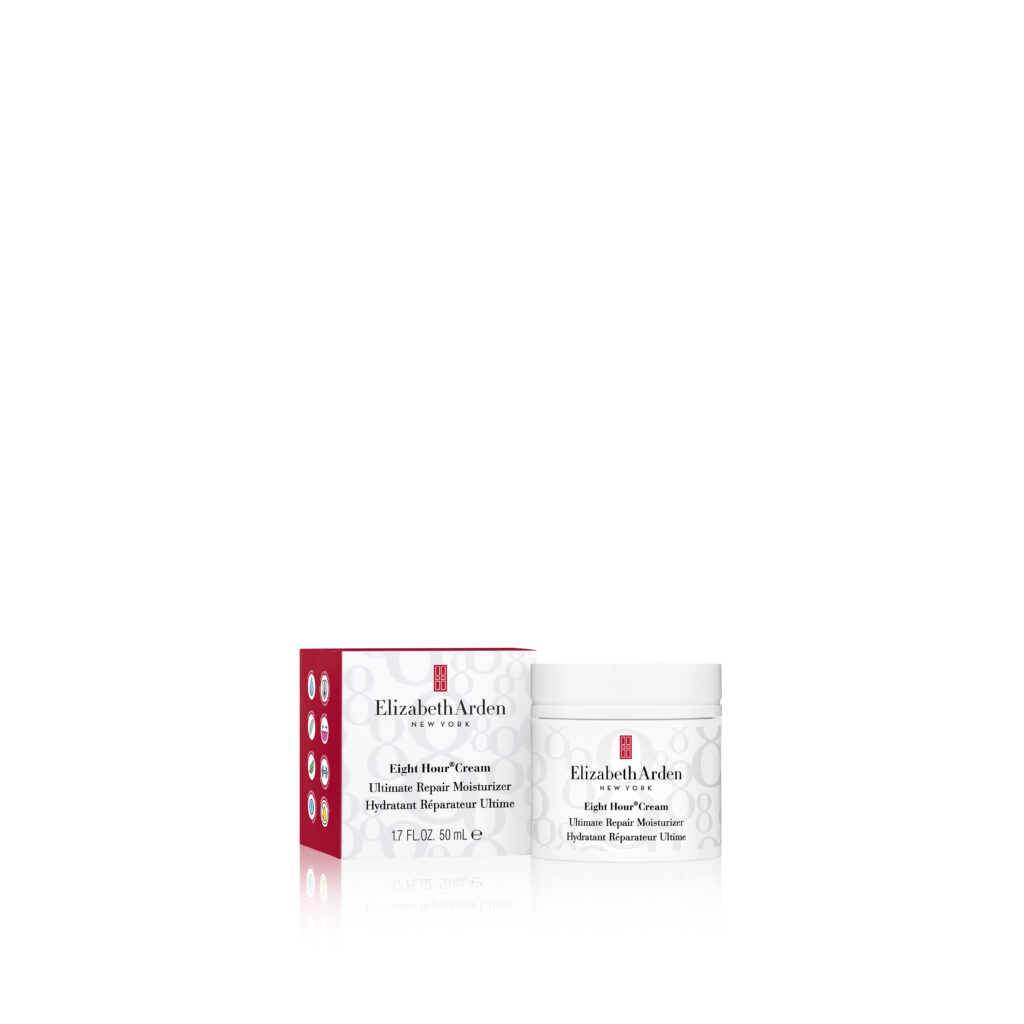
At Elizabeth Arden, this piece is part of the Eight Hour® line, historically associated with repair. Here, repair is no longer a matter of urgency, but of anticipation: maintaining a balance before it gives way.
In a market saturated with promises, this approach deserves attention for what it reveals: an attempt to reconcile cosmetics and physiology, in a context where the skin is becoming the primary means of adapting to unstable environments.
A discreet but structuring transition.

Cette publication est également disponible en :

