
In Cannes, hotels no longer just sell overnight stays. They are now building ecosystems centered on well-being: dining, sports, aesthetic medicine, and longevity treatments. The arrival of Maison La Prairie at the C Club Spa at the Carlton Cannes, announced for May 28, 2026, signifies less a cosmetic partnership than an evolution in contemporary hotel luxury: that of a luxury hotel transformed into a sensory retreat.
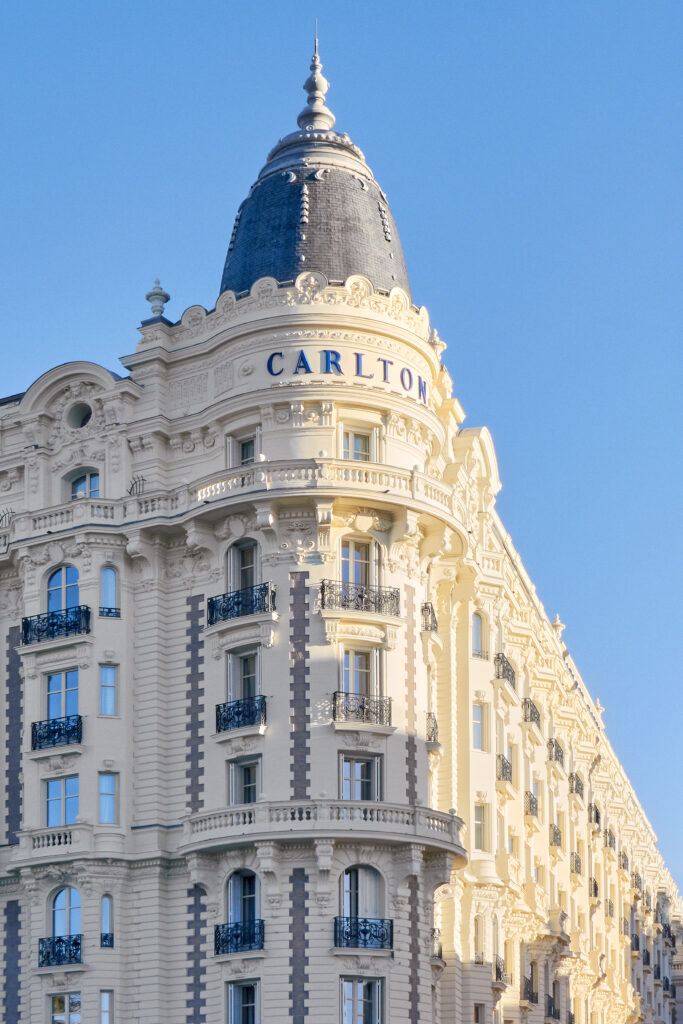
This is not just a Swiss issue, by the way. It is deeply rooted in Cannes. Since its renovation was completed in 2023, the Carlton Cannes has been seeking to redefine its role on the Croisette. Long a social hub associated with the Film Festival, the InterContinental luxury hotel is now seeking to establish an identity centered on a quieter, less event-driven form of luxury—one more closely tied to well-being and the long-term experience. The opening of the C Club Spa was already part of this transformation. The partnership with La Prairie now gives it a more international flair.
La Prairie’s appeal lies precisely in its ability to occupy a hybrid space: that of clinical skincare transformed into cultural language. Since 1971, the Swiss brand has built its narrative around cellular science. More recently, it has shifted this vocabulary toward the concept of “Haute Longévité,” notably with the Life Matrix collection, developed in the wake of Clinique La Prairie.
Contemporary luxury loves this shift in terminology. We no longer talk about anti-aging but about longevity; no longer about cosmetics but about skin architecture; no longer about spas but about regenerative ecosystems. Behind these words lies an economic reality: the premium wellness market is becoming a major strategic driver for the European luxury hotel industry.
At the Carlton, this approach is reflected in a discreet design. The spa has its own entrance on Rue Einésy, far from the bustling crowds of the Croisette. The press release emphasizes this notion of a quiet, almost residential entrance. It’s a way of repositioning spa treatments as an intimate experience rather than a public spectacle.
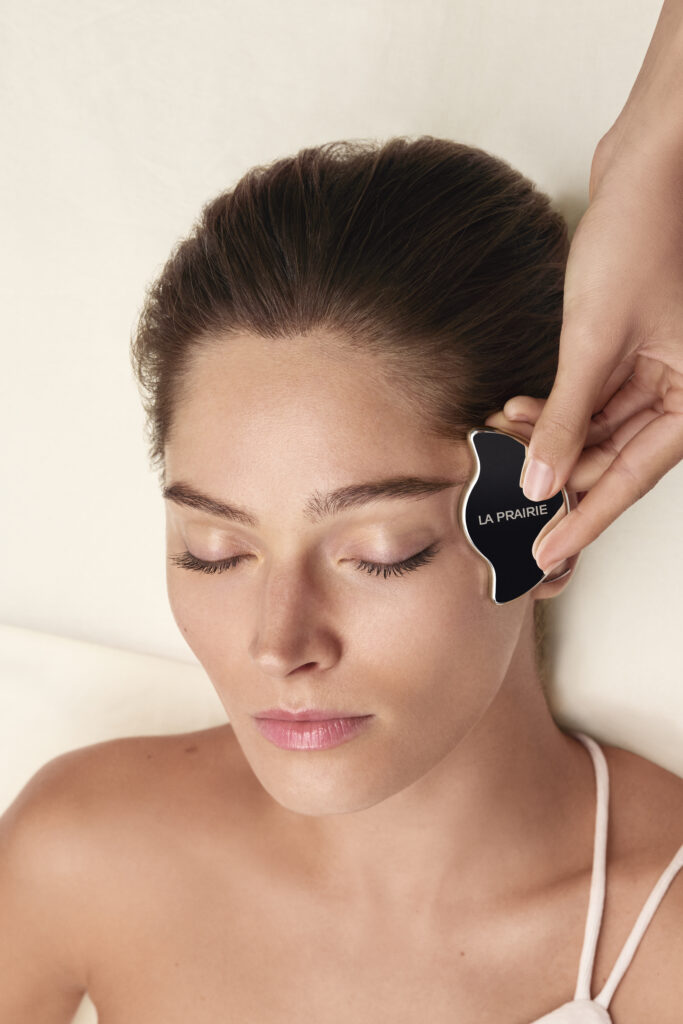
The signature treatment developed for this location embodies this philosophy. Ninety minutes. Preliminary skin assessment. Personalized selection of formulations. Use of specialized tools and targeted manual techniques. The treatment protocol relies less on machines than on the therapist’s touch—an element that has become central to the high-end repositioning of international spas.
In the world of premium skincare, the human touch is once again a rare commodity. Technology is everywhere; human time, far less so. That is likely where true luxury in hospitality lies today: in the opportunity to receive an hour and a half of continuous, quiet attention, tailored exclusively to a single person.
La Prairie, however, retains an aesthetic distinctiveness unique to Swiss skincare culture. The press release mentions rituals inspired by Alpine lakes, lithotherapy, aromatherapy, and exclusive massage techniques. Behind the sometimes predictable vocabulary of contemporary wellness, one constant remains: the Swiss ideal of purity, precision, and sensory control.
The partnership with the Carlton is therefore no small matter. This Cannes luxury hotel belongs to a generation of historic hotels that seek not so much to preserve a sense of nostalgia as to translate their heritage into contemporary expressions of luxury. Today, a grand hotel can no longer rely solely on a spectacular lobby or a legendary terrace. It must become a place capable of supporting its guests’ new rituals: physical recovery, sleep, nutrition, wellness, and slowing down.
In Cannes, where the economy of the image remains ever-present, this shift toward longevity also has a cultural dimension. The body is no longer merely displayed; it is maintained as an aesthetic and social asset. The spa thus becomes a natural extension of the luxury hotel—no longer a peripheral service, but a strategic asset.
And perhaps that is precisely what this partnership between the Carlton and La Prairie illustrates: the gradual transformation of hotel luxury into the art of time.
Cette publication est également disponible en :

