
A worldwide exception
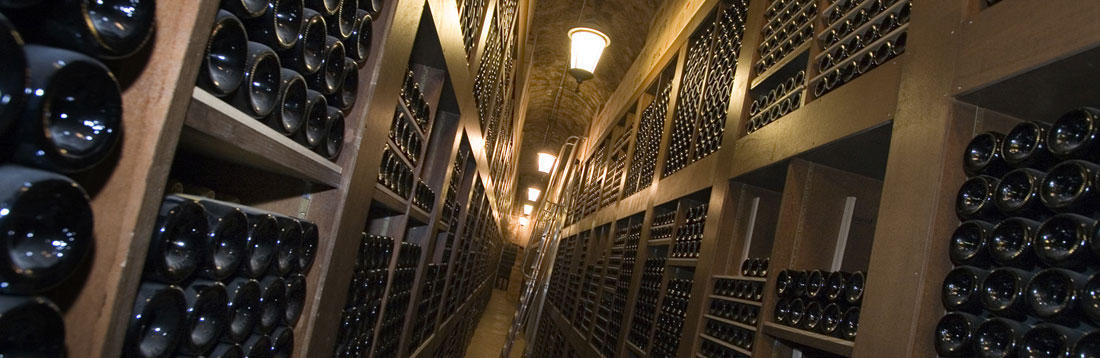
Excellence lies in attention to the smallest details, in what can be seen and what cannot. Hidden from view, between the Hôtel de Paris and the Hermitage, in the hushed world of the cellars, lies a priceless treasure trove: some 350,000 bottles, 5,700 items between wines and spirits, rare vintages and mythical elixirs no longer found anywhere else. SBM’s Cave Centrale, commonly known as the Cave de l’Hôtel de Paris, is unique in
its history, its wealth and the rarity of its collections.

The imprint of a woman
The Caves de l’Hôtel de Paris were born of the vision of a remarkable woman, Marie Blanc, wife of businessman François Blanc, founder of modern Monte Carlo. In 1874, ten years after the inauguration of the Hôtel de Paris, she decided to endow the establishment with a cellar to match the demands of its clientele. Two years of Pharaonic work, financed from her personal fortune, mobilized the forces of a hundred or so workers. Modelled on the cellars of Bordeaux, a succession of small cellars were dug into the rock, ten metres below ground, to house a kilometer and a half of crates, a gigantic surface area for the time.
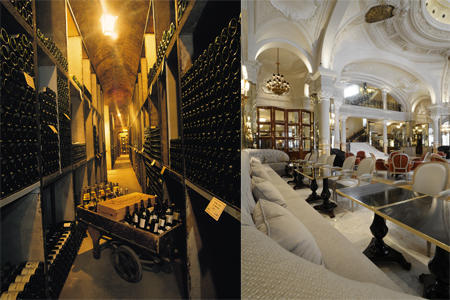
Today, the cellar, which became Cave Centrale because it supplies the group’s thirty or so sales outlets, including 22 restaurants, totals 1,500m², 400m² of which was added to the original surface area to create an ageing cellar and tasting room. Anthology wines and precious eaux de vie, exceptional champagnes and primeur wines destined for ageing are stored here in optimal conditions. The temperature is ideally maintained between 13°C and 14°C, and the humidity level is a constant 80%.
In 1990, a museum named Marie Blanc was created in situ as a tribute to the founder of the company. The oldest bottles can be admired here. The last historical testimonies of a vintage, they are voluntarily withdrawn from sale.
A little further on, in the cellar master’s house, are jealously preserved the great vintages and rare labels that will be offered for sale in the years to come. This part of the cellars was walled off during the 2nd World War to prevent looting.
As for the grand crus classés that feature on the estate’s wine lists, they are stored in La Chapelle, the old vintages cellar. Petrus and Châteaux d’Yquem have been stored there since the 1945 vintage, with the oldest label dating back to 1890.
Every year, over 300,000 bottles, including around 110,000 of champagne, are brought to the surface to offer a moment of magic and pleasure to guests of the SBM Monte-Carlo Resort.
Hôtel de Paris: a label of breeding
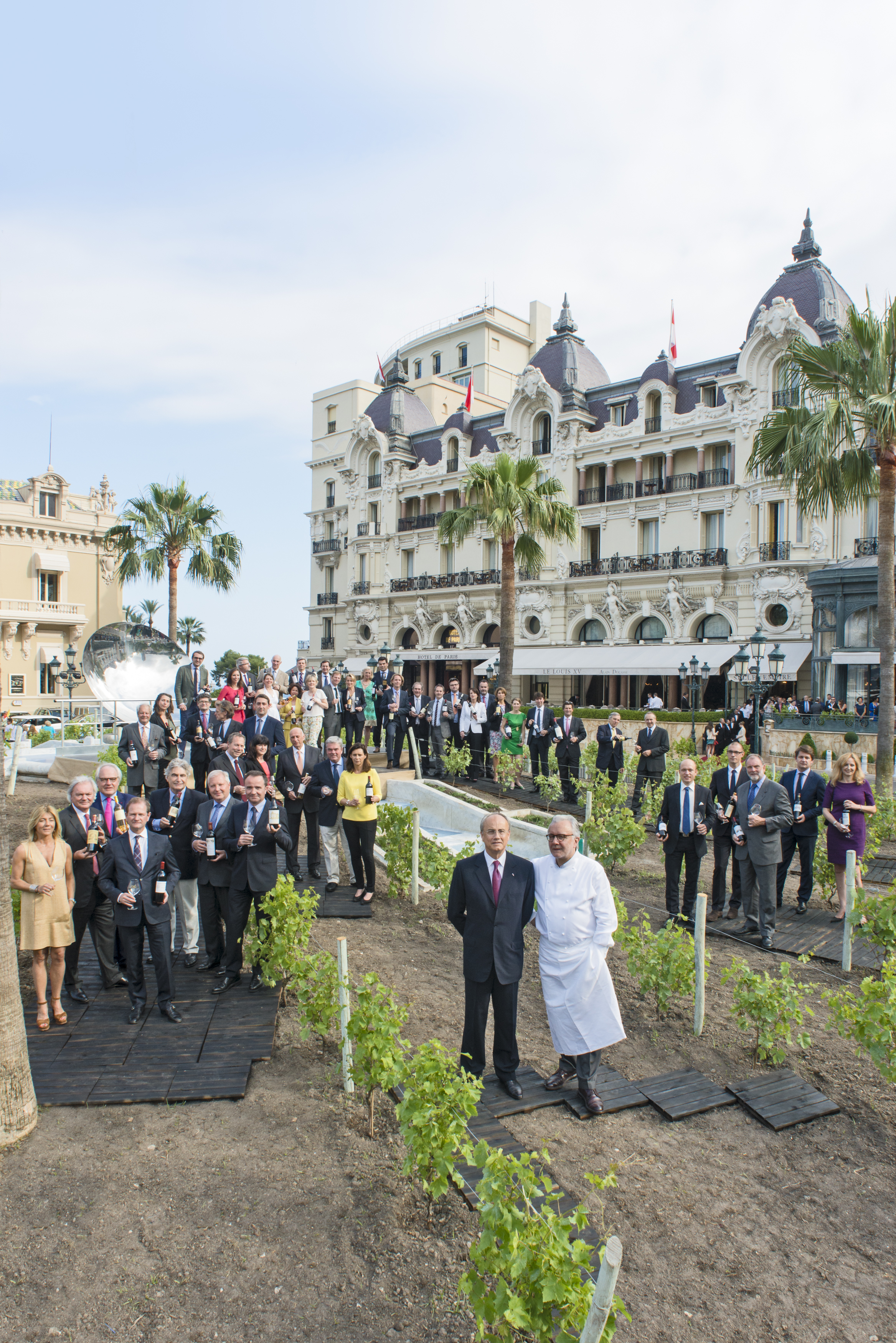
150 wines to celebrate 150 years of Monte-Carlo SBM. From left to right: Jean-Luc Biamonti, Alain Ducasse
In the cellar hall, people are constantly coming and going. While some of the staff use their wooden carts to prepare the internal orders that will supply the day cellars of each establishment, others receive the cases and carry out quality control. Stock management is now computerized, but traditional working methods have been preserved.
Before entering the hall, you have to pass between hundreds of crates bearing the stamps of the greatest Bordeaux châteaux. These are the arrivals of primeur wines, destined for bottle ageing. The Cave de l’Hôtel de Paris’ close ties with Bordeaux wines are historic in nature. At the time of its creation, Bordeaux was the only wine-growing region, by virtue of its geographical position and access to the ocean, to market wines by sea to the Mediterranean basin and Europe. The wine was packaged in tuns or barrels, and the Cave de l’Hôtel de Paris held the concession for bottling. This practice continued until the late 1930s for Bordeaux grands crus, and until the 1960s for fast-moving wines. Even today, to perpetuate the tradition, old Cognacs are blended and bottled on site. Two tuns are used to age these century-old eaux-de-vie: the Réserve 1er Empire dates back to 1810, while the Réserve Louis-Philippe dates back to 1865. The Monte-Carlo SBM Group is one of the very few hotel and restaurant companies to buy Bordeaux wines en primeur. Every year in early spring, the Tasting Committee travels to the estates to discover the new vintage. At this time of year, the wine is not yet made, but it already offers a glimpse of its potential. Selected Bordeaux wines return to the Caves de l’Hôtel de Paris around two years later. The wine is purchased for ageing and continues to mature in the cellars.
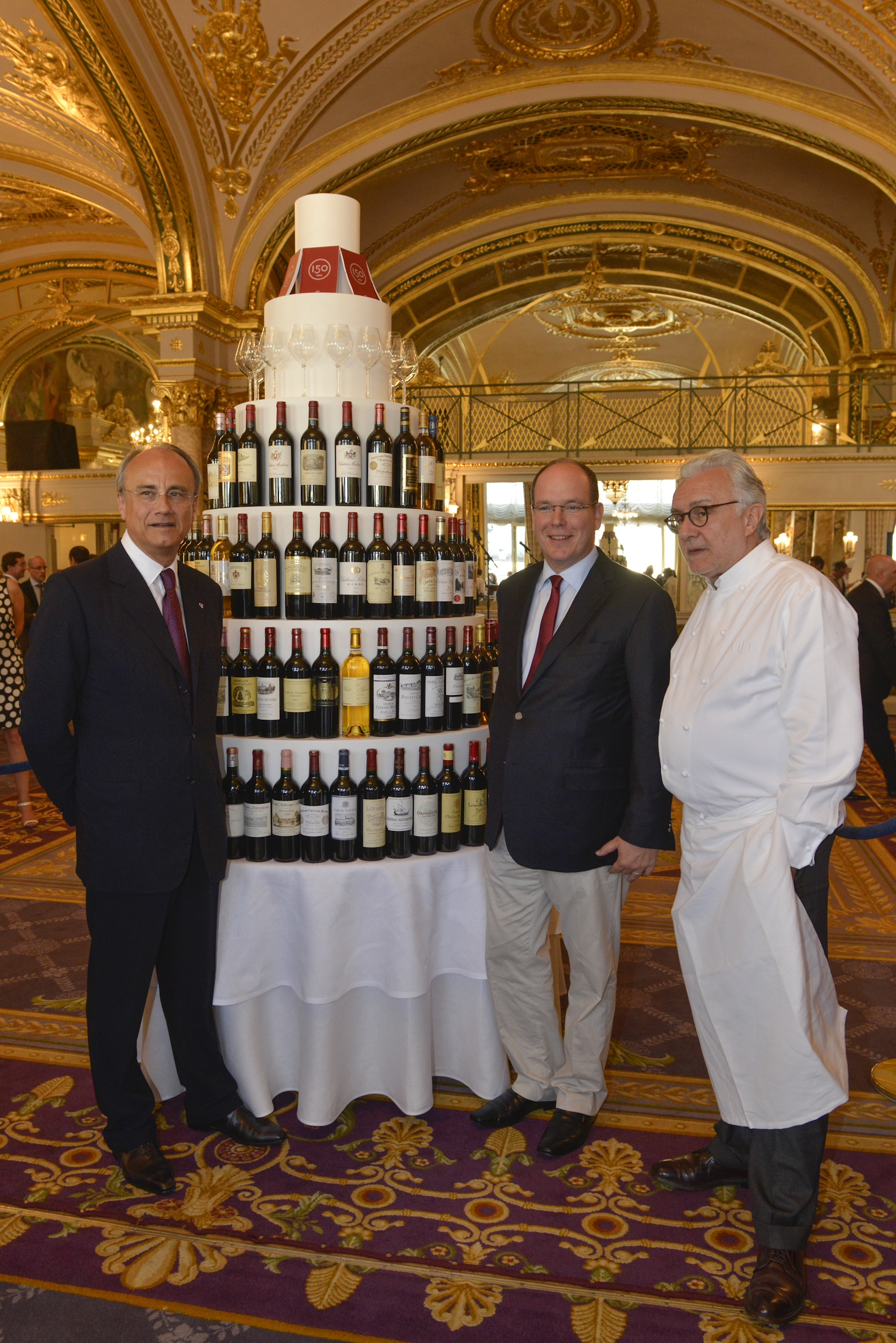
Jean-Luc Biamonti, HSH Prince Albert II and Alain Ducasse around the 150 wines
All bottles in stock come directly from the estates. This guarantees the traceability of the product and its ageing conditions, and ensures that the wine has not been altered in any way. This is the Hôtel de Paris label.
Creating the exceptional and the rare
Investing in en primeur allows you to bring wines to their highest level of quality, to create the exceptional and the rare, because it’s time that makes the value of a cellar. Now that the premise has been established, it remains to determine the exact moment when the wine, having reached its peak, is ready to make its debut on the various wine lists. To this end, a Tasting Committee has been set up, bringing together all the professionals who wish to invest in the development and proper management of stocks. In 1998, a tasting room was even set up. Here, tastings with the head sommeliers are often blind. 99% of the wines are tasted. These exchanges with the growers enable us to anticipate the needs of the restaurants. This committee is responsible for the selection of wines on the menu and for the purchasing policy. To the eternal question “What makes a great wine?”, Gennaro Iorio, the head cellarman, takes time to reflect: “Beyond nature, climate and the work of man, it’s time: a great wine is one that still gives emotion after 30 or 40 years. A great wine is not necessarily famous, but it is the expression of the terroir of which it is the fruit.
http://fr.hoteldeparismontecarlo.com
Cette publication est également disponible en :

