
“It’s often been said that Chanel liberated women. She did. Years later, Saint Laurent was to empower them…” Pierre Bergé
For the first time in Paris and until August 29, 2010, the Petit Palais offers us a marvellous journey into the life of one man: Yves Saint-Laurent. Forty years of creation by an exceptional man who has always put his genius at the service of women. The challenge was both ambitious and audacious, given how complicated it seemed to approach the work of such an emblematic designer. And yet, the impression of having traveled through the life of Yves Saint-Laurent is very real. All along the way, the spirit of Yves Saint-Laurent was certainly at our side, telling us the story of an artist who was always ahead of his time, in tune with the vibrations of an ever-changing society.
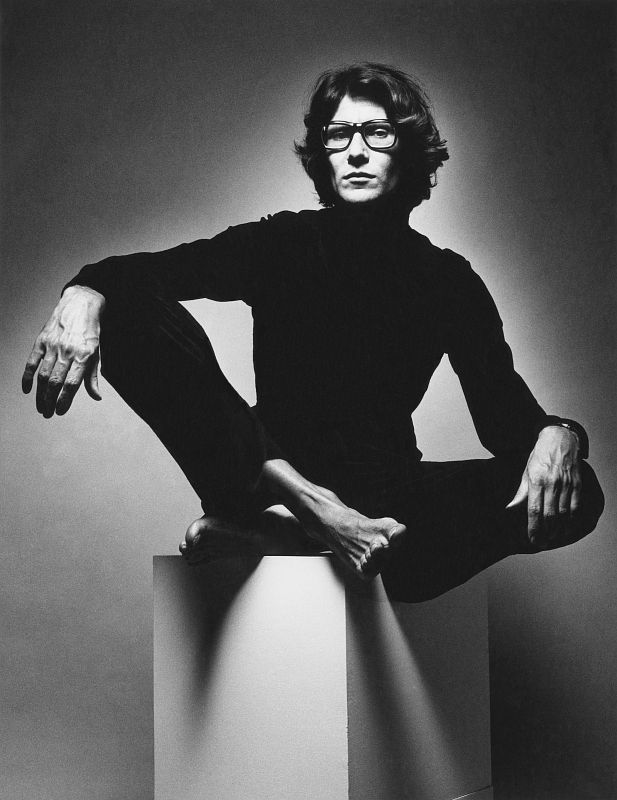
(c) JeanLoup Sieff - The Estate of Jeanloup Sieff 1971
Yves Saint-Laurent was more than visionary in drawing inspiration from the men’s wardrobe. The designer perfectly assimilated the codes and adapted them to the feminine wardrobe, but his creations remained resolutely made for women, all seduction and distinction, a far cry from unisex fashion. The strong pieces of the men’s wardrobe have “slipped from a man’s shoulders onto a woman’s”, as Pierre Bergé puts it. From the traditional pea coat to the trouser suit, from the famous saharienne to the Norman blouse, and finally to his most emblematic piece, the tuxedo, Yves Saint-Laurent, like an artist, recreated the codes of women’s fashion to reveal a modern woman firmly rooted in her time. “Fashions come and go, style is eternal” said Monsieur Yves Saint-Laurent. The man was indeed an artist who drew on the masterpieces of other artists, and succeeded in giving women allure beyond his own cracks.
The exhibition presents a chronological overview of the late master’s work, from his beginnings with Christian Dior’s famous “Trapèze” collection in 1958 to his last fashion show at the Centre Pompidou in 2002. In 15 rooms, over 300 haute-couture models are presented, accompanied by a selection of photographs, drawings by the master (collection drawings and the comic strip La Vilaine Lulu) and films, such as Isabelle Poudevigne’s“La main à la plume vaut la main à la charrue“.
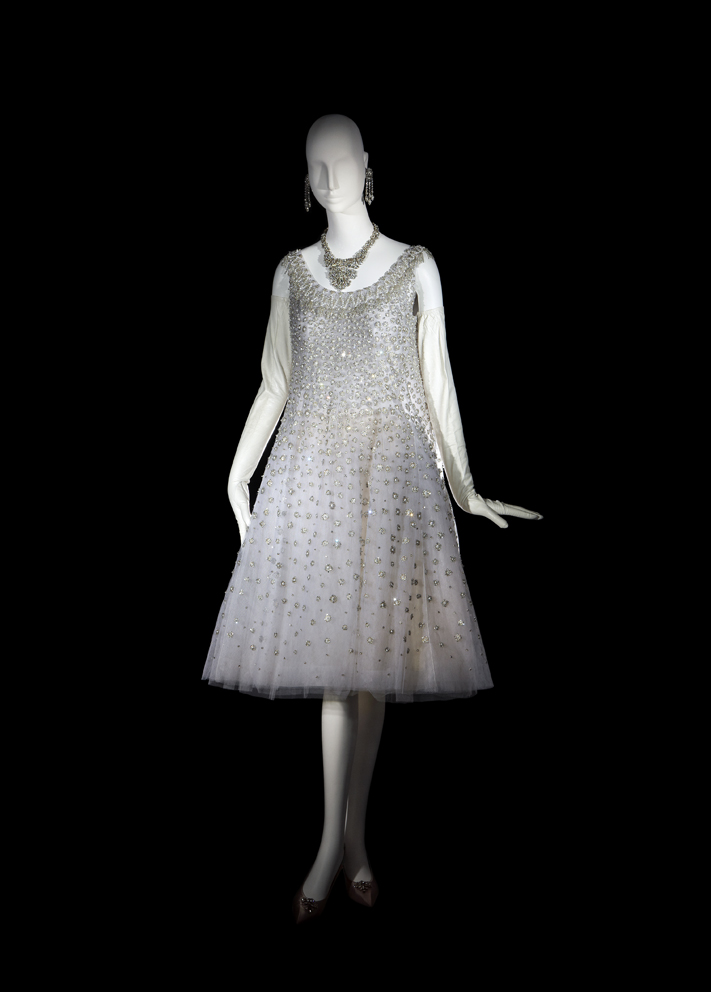
Collection haute couture printemps-été 1958 Dior © Alexandre Guirkinger
“What was the happiest moment of your life? Meeting Christian Dior “said Yves Saint Laurent. The designer started out as an assistant to Christian Dior in 1955, who appointed him as his successor. He became his successor after Dior’s death in 1957, and in 1958 proposed the “Trapèze” collection, a veritable masterstroke showing a garment that gave women freedom of movement by untraining the body.
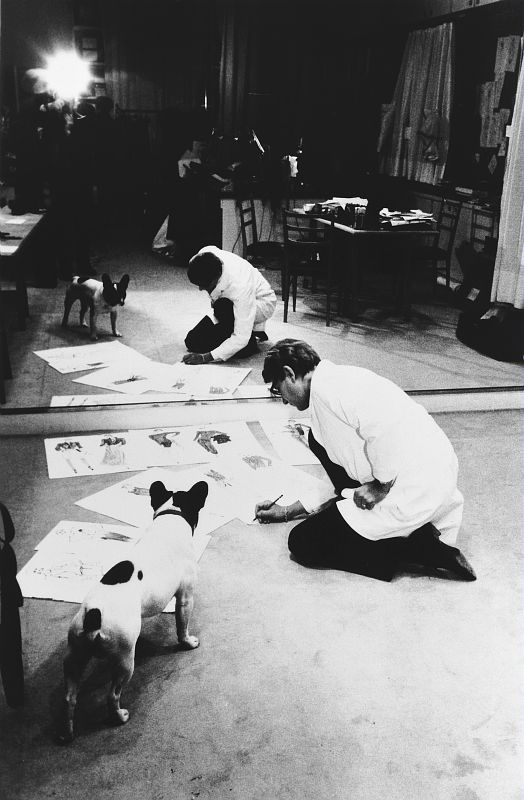
(c) Pierre Boulat - 1982
“In the beginning is the sketch. It’s the verb for all of us. It’s the guide, the referent. Then the canvas, which allows us to judge, interrupt and continue. Then the fabric, which marks an essential stage, that of daring and risk. Finally comes the model, who dares to take her first steps before joining the others and forming the collection. “. Pierre Bergé
This retrospective immerses us in the designer’s mind, with the Studio Mental / Studio Real space. The Mental Studio takes us into the designer’s imaginary world, presenting us with the painters, musicians and writers who nurtured him, while the Real Studio evokes the Avenue Marceau studio where the artist unrolled fabrics on mannequins and created his collections. His desk: a simple board on wooden trestles, covered with objects dear to the designer.
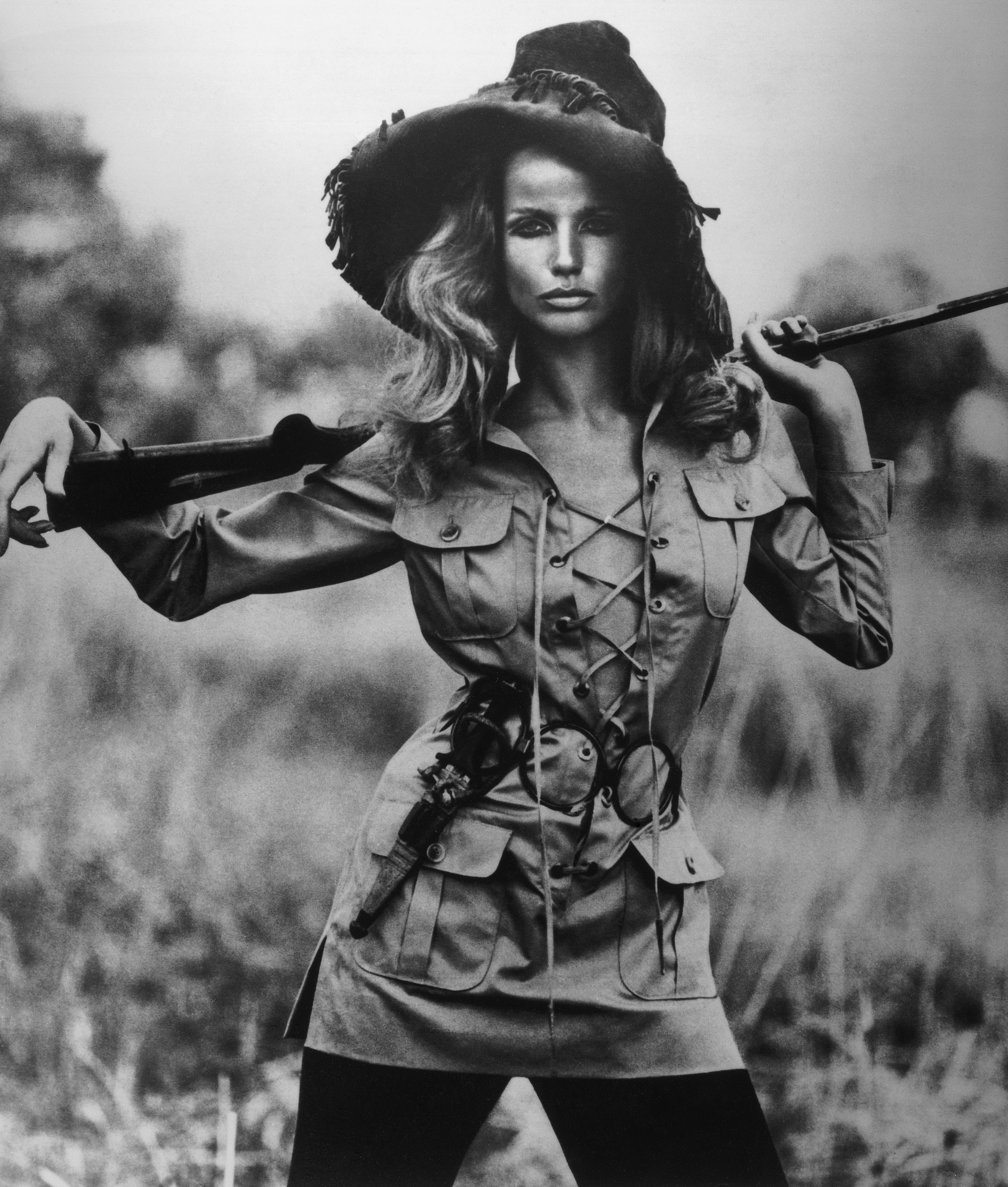
© Franco Rubartelli - Veruschka (safari) 1968
The Gender Revolution space introduces visitors to the designer’s true trademark, through a moving series of fashion photographs featuring Yves Saint Laurent’s must-haves, followed by 43 models illustrating his emblematic creations, right down to the accessories chosen (caban, saharienne, pantsuit or skirt, blouse normande versus tunic and jumpsuit). Aware of the upheavals to come and the rapid evolution of women’s image and place in society, Yves Saint-Laurent had the brilliant idea of marrying the allure of the men’s suit with the seductiveness of the women’s suit as early as the 60s, thus laying the foundations of a new wardrobe between feminine and masculine conceived as the mirror of a new lifestyle. It reflects new consumer habits and a new image of femininity.
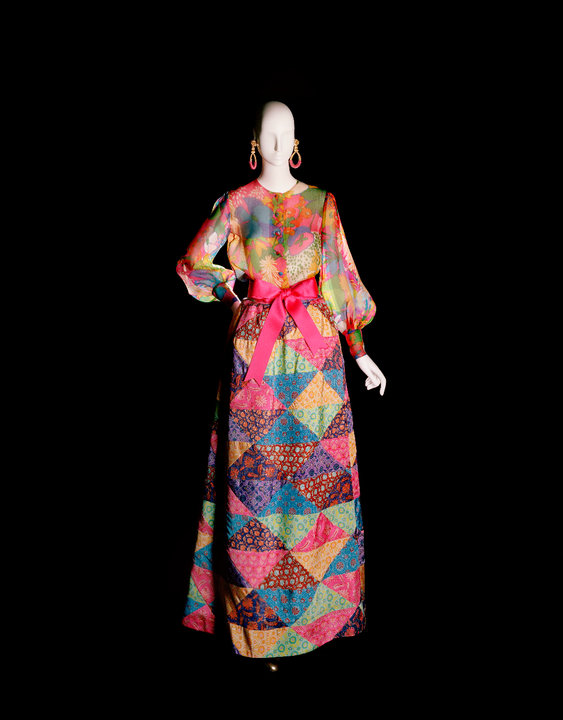
Collection haute couture printemps-été 1969 © Alexandre Guirkinger
What would this retrospective be without talking about Yves Saint-Laurent and women ? The designer saw his profession this way: “My dream is to give women the foundations of a classic wardrobe which, escaping the fashions of the moment, allows them greater self-confidence“. Throughout his forty years of creation, his career has been marked by exceptional women, from muses such as Loulou la Falaise and Paloma Picasso to Haute-Couture clients loyal to the famous Maison. In 1966, the designer offered them a wardrobe in which every woman could find her own style through the Yves Saint-Laurent Rive Gauche label, a pioneer in luxury ready-to-wear. The label was an instant success, foreshadowing the success of today’s global brands. The Yves Saint Laurent style became accessible to a greater number of women, and was established worldwide through a network of hundreds of boutiques. Unfortunately, no pieces from this label are on offer, but they will be on display in a forthcoming exhibition at the Fondation Pierre Bergé – Yves-Saint-Laurent.
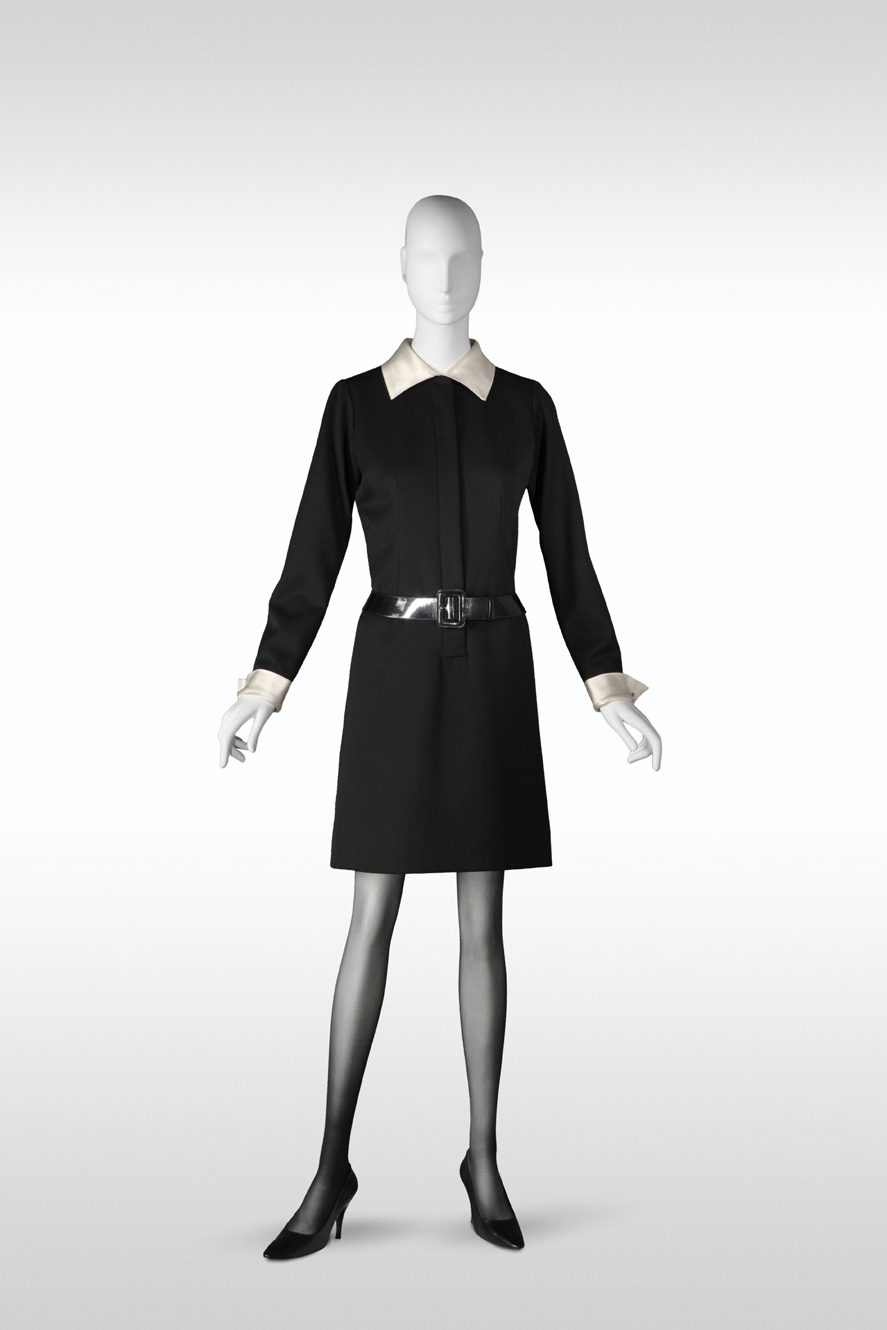
1967 Belle de jour © Alexandre Guirkinger
But if we had to remember just one, it would have to be the exceptional relationship between Yves Saint-Laurent and his ultimate muse Catherine Deneuve. Ten major pieces from
Catherine Deneuve’s wardrobe are presented, from the black powder grain and ivory satin dress created for Belle de jour (1967), to the long evening gown in tango red satin crepe (1997). Never has the relationship between a designer and his muse been so strong, flamboyant and precious, a true love story, as Barbara sang.
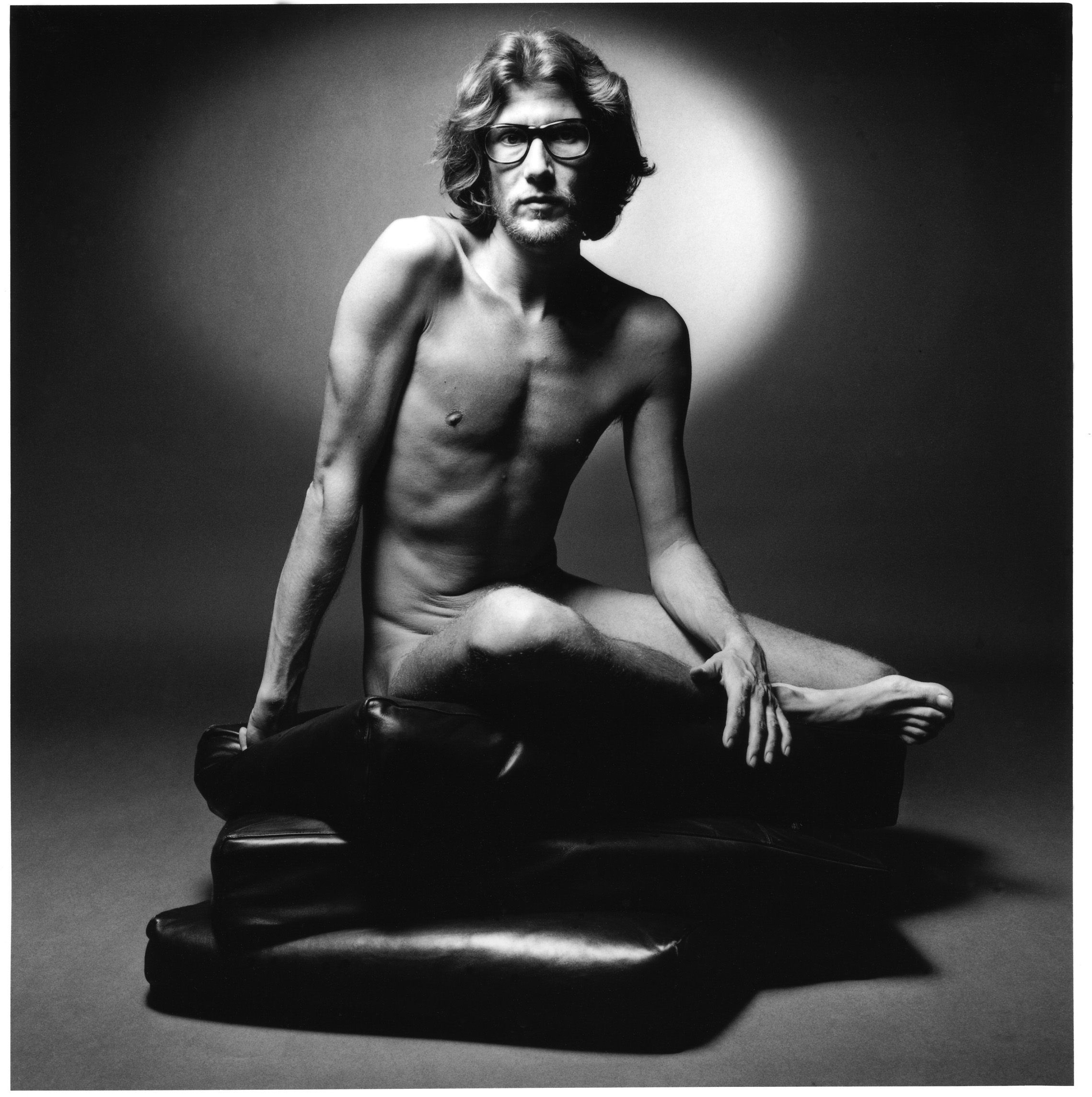
Yves Saint Laurent nu, 1971 Photographie Jeanloup Sieff © The Estate of Jeanloup Sieff
Emotions ran high in front of these mythical prints of Yves Saint-Laurent portraits by JeanLoup Sieff. In 1971, Yves Saint Laurent posed nude before the lens of photographer Jeanloup Sieff for the publicity launch of his first fragrance for men, despite his immense shyness and legendary restraint. This image, incredibly audacious for its time, acquired iconic status. The set of photographs from this shoot, preserved by Barbara Sieff, is presented to the public for the first time. I was only familiar with one of them, so the opportunity to discover the others, with their almost imperceptible changes, was a royal one. The Christ-like designer exuded his aura over a fragrance and then a brand like no other. As the precursor of a new form of advertising and the formidable staging of a designer’s image, the retrospective offers one of the most beautiful gifts for the photo-lover in me.
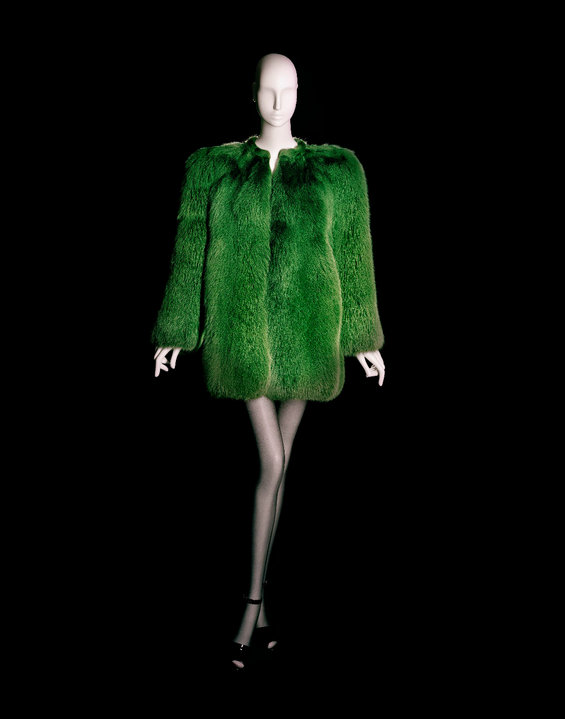
Collection haute couture printemps-été 1971 © Alexandre Guirkinger
For summer 1971, Yves Saint Laurent presented a collection inspired by the ’40s that caused a scandal and was roundly condemned by the press. More than the reminiscences of wartime and the Occupation, it was the type of woman imagined by the couturier that shocked the public: wedge heels, green fox jacket, he proclaimed the femininity of the ladies of the Bois de Boulogne by crossing it with that of the Avenue Montaigne. The 40 collection came as a shock in the midst of the hippie and feminist movements, and ushered in the return of sophistication and glamour. The street was quick to embrace it, and a glimpse of it shows just how avant-garde it was, with its palpable modernity.
In the Obscures transparences showcase, three black models reveal the audacity of Yves Saint-Laurent: under the chiffon, no embroidery or veils hide the breasts, while sublime lace dresses a delicate back! One of these models once again caused a scandal, worn by Laetitia Casta at the recent César Awards.
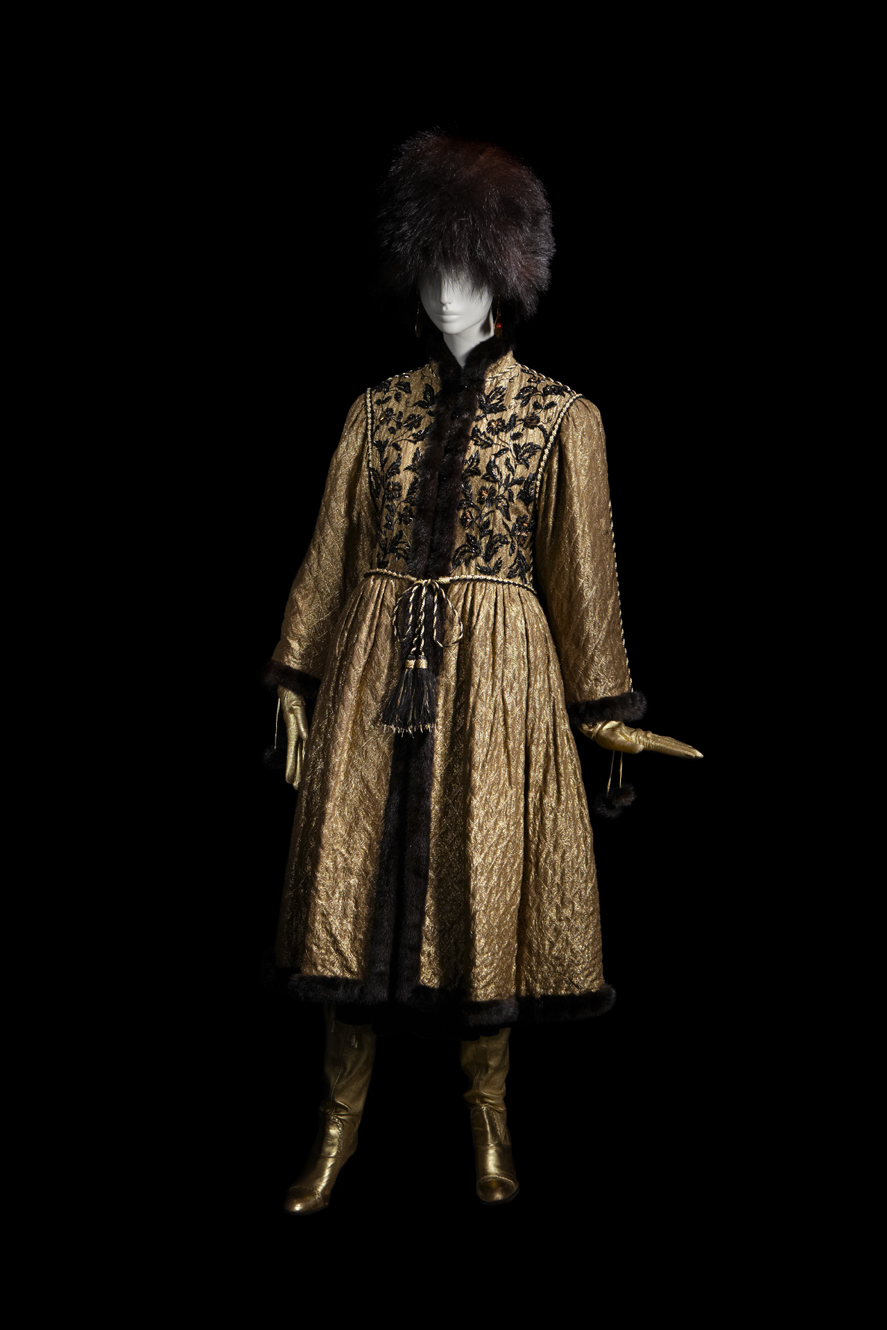
Collection haute couture automne-hiver 1976 © Alexandre Guirkinger
“I exercise my imagination about places I don’t know. I hate traveling. If I read a book about India, with photos, or Egypt, where I’ve never been, my imagination takes me away. That’s where I make my most beautiful journeys. “. Yves Saint Laurent, interview with Catherine Deneuve in Globe, May 1, 1986.
The enchantment of exoticism is a wonderful invitation to travel, yet it also bears the stamp of the couturier’s Moroccan passion, even though he hated to travel. He imagined models with an exotic magic, like the famous coat of multicolored pheasant feathers, or this fabulous coat protecting us from the extreme cold. His taste for color, gold

Collection haute couture automne-hiver 1965 © Alexandre Guirkinger
“Mondrian is purity, and that’s as far as painting goes. The masterpiece of the 20th century is a Mondrian. “. Yves Saint Laurent.
Another highlight was the room dedicated to his many conversations with the artists and writers of his day. In 1965, Yves Saint Laurent launched a collection inspired by the painter Mondrian, which quickly received a standing ovation from the fashion world. From then on, the couturier regularly created encounters with the art world in what he called his dialogues: Mondrian, Van Gogh, Matisse or Picasso, Apollinaire, Aragon, Cocteau and so many others. These artists enabled him to reinvent a language that became his own. And here, majestically, stand these famous Mondrian dresses, albeit a little tarnished by time.
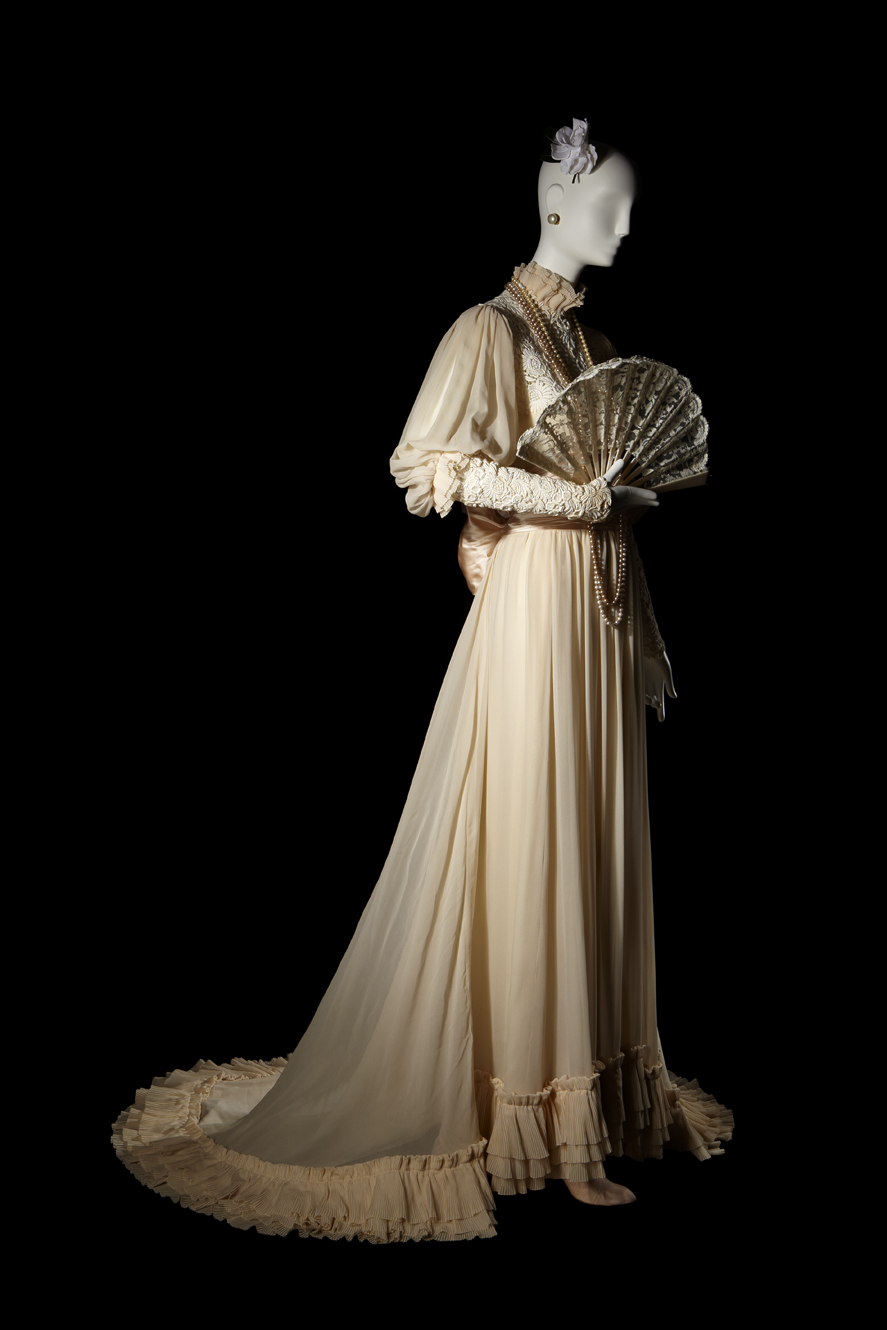
(c) Alexandre Guirkinger - ROBE BAL PROUST 1971 DONATION JANE BIRKIN
Yves Saint-Laurent takes us to the ball in the grand hall, and all we have to do is choose our dress to attend the grand ball in Visconti’s Le Guépard alongside Alain Delon.
“I love Visconti and troubled times like Senso. Decadence attracts me. It heralds a new world, and for me the struggle of a society caught between life and death is absolutely magnificent to watch.” . Yves Saint-Laurent
From the domino of Chinese yellow faille and black velvet and lace sheath (1983), to the white gazar and ostrich feather coat, white satin gown (2001), sixty-eight evening models are on display in a room covered in red velvet with crystal chandeliers, demonstrating the designer’s savoir-faire and magic in creating exceptional gowns. In this ultra-glamorous setting, dream gowns that have dressed Hollywood stars rub shoulders with the famous black velvet sheath adorned with a large pink satin bow, created for the release of the Paris perfume.
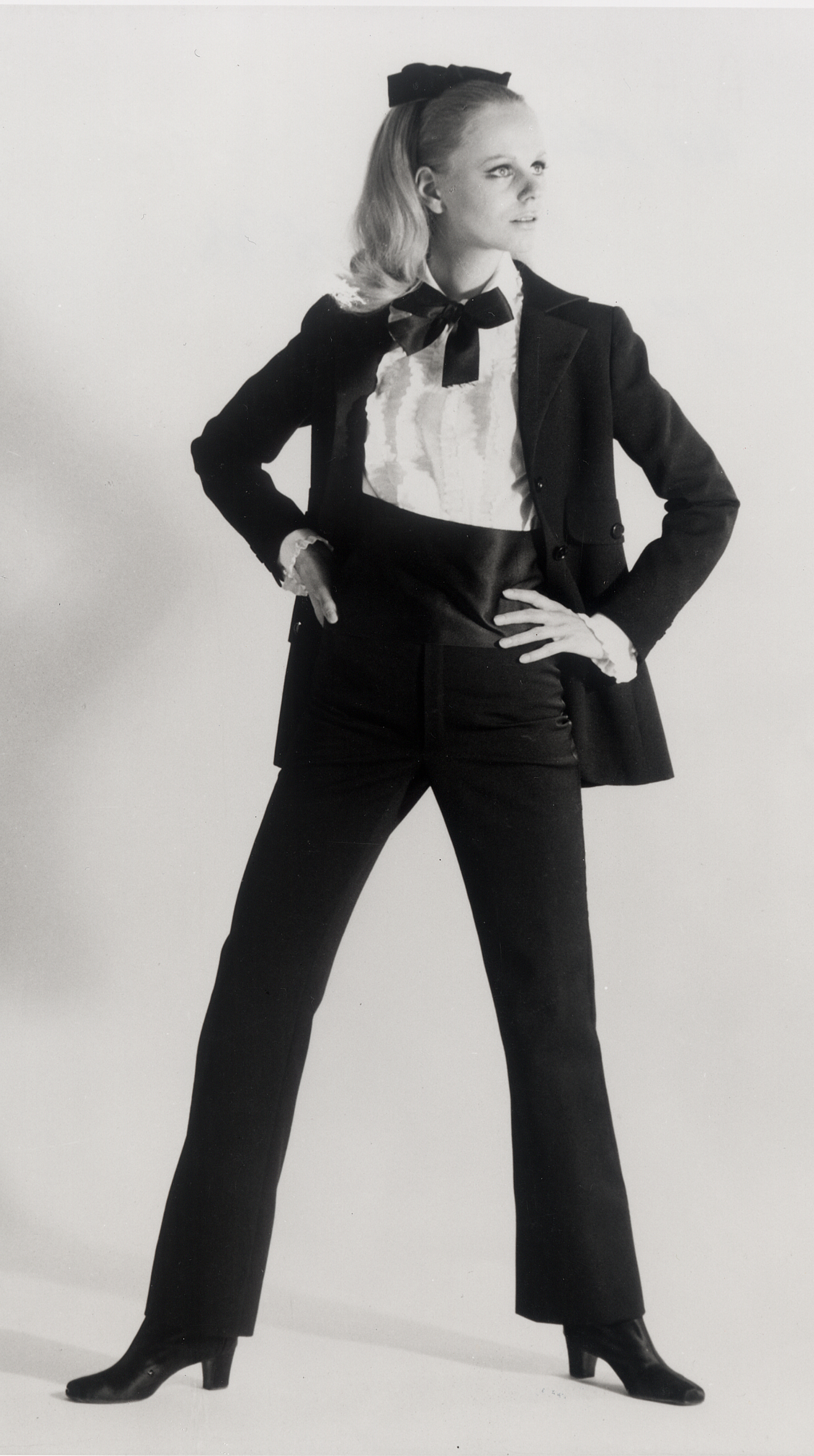
Collection haute couture automne-hiver 1966 © Fondation Pierre Bergé - Yves Saint Laurent
Unless it’s the famous tuxedo for women, the black star, which is winning our favor. A whole room is devoted to the famous tuxedo.
“For a woman, a tuxedo is a must-have garment with which she’ll always feel fashionable, because it’s a style garment, not a fashion garment. Fashions come and go, style remains “. Yves Saint Laurent
In almost forty years, the designer has constantly reinvented the tuxedo, a piece he created that has since become the epitome of chic and, above all, the emblematic piece of the YSL style: a chic, elegant woman with a profoundly Parisian allure.
I could have gone on for hours about the quality and rigor of the creations on display, the perfection of a fall, the distinction of a model, the brilliance of the colors and, above all, the prodigious inventiveness of the models, but I prefer to let you discover all that, because this exhibition is truly one to see again and again.
However, nothing is said about Yves Saint-Laurent’s relationship with the black woman, whom he was able to impose on the catwalks and covers of major magazines, a real regret given all he did for this cause. He didn’t limit himself to a simple ethnic endorsement, no, he showed how much a fabric, a color could shine and have style on all women, his message of universality. Every woman is unique, and he spoke to all of them.
Yves Saint-Laurent loved women in the most beautiful way: he gave them power, allure and distinction, accompanying them throughout his life. And for that, we all have him to thank.
Hats off to Monsieur Saint-Laurent, I love you too.
Musée des Beaux-Arts de la ville de Paris, avenue Winston Churchill 75008 PAris
Tel: 01.53.43.40.00
Open Tuesday to Sunday, 10 a.m. to 6 p.m., Thursdays by night.
All the models presented in the exhibition come from the Fondation Pierre Bergé-Yves Saint Laurent collection, with the exception of three models on loan: two from the Comtesse de Ribes, and one from Charlotte Aillaud, sister of Juliette Gréco. The hairstyles are by Alexandre de Paris.
Information on www.petitpalais.paris.fr
Full price:11 euros
Reduced price: 8 euros
Half price: 5.50euros
Marie-Odile Radom
Cette publication est également disponible en :

